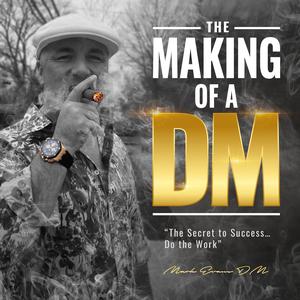
EP 181: 11 - Lessons I've learned Losing MILLIONS So You Don't Have Too... RAW TALK!
18 Sept 2024 · 37 min
Mark Evans DM lost millions over three years and shares 11 lessons for investors. Stop chasing social media hype, verify everything, understand your risk tolerance, demand partners have skin in the game, and focus on velocity of money to recover and redeploy capital.
Chapters
Welcome to the making of a DM. 11 lessons I've learned on losing millions of dollars. And I'm going to share them all with you right here and right now. So with that said, let's get started.
I'm here to help and teach him what I know and how I did it to discover freedom. There ain't no question mark. Kevin's when he's stepping the do, he's closing deals. Time to tell him what the DM stand for. I'm a deal maker. A deal maker. But I'm not just a deal maker. I'm a dream maker.
Hey there, it's your boy, Mark Evans, dm. Welcome to another Making of the DM podcast show. That's right, you are the deal maker and dream maker of your life. As I'm sitting here in beautiful Ohio smoking a cigar down in the cigar lounge at the house. It's late night, about 8 o'. Clock. I will be in bed by 9 though, trust me on that. I wanted to do a podcast show here today before I head out. I'm getting ready to head out for three days to go to a big event. There's about 14,000 people hanging out in Boston and I'm an attendee. Me and a couple guys in the DM family, we're going to roll down there together and connect with a bunch of tech business owners, entrepreneurs and just techie people in general. I like to go every year to a couple events that are totally out of my day to day. My life right where I go out. I'm a fish out of the water. I'm 100% the dumbest guy in the room by far. And I just roll in and I take a massive amounts of notes. I'm very quiet, I observe a lot. I'm paying attention to who the players are, who the talkers are and most importantly who the doers are. And just having great conversations and being massively valuable. I have nothing, I have no agenda. My agenda simply is to learn. That's my agenda. I guess I'm not going there to make money, but typically from my experience is there's opportunities galore in rooms like this because they want to know what I know and I want to know what they know. And sometimes that works, sometimes it doesn't. But also I have another one I'm going to. It's a big agriculture event where 1500 people in a room, this is actually beginning of next year and I'll be sitting in a room. And again, I'm not in the agriculture business, but guess what? Agriculture people are very smart business people, hardworking, smart business people. And they own a lot of real estate. I do real estate. I'm a full time real estate investor as well. And they own lots of companies, they do a lot of cool stuff. So I like to go in these rooms just to kind of observe, see what people are talking about in different industries and different opportunities that exist and just expanding my brain. And these costs, these are investments. I mean, event. I'm going to, I leave tomorrow morning. I don't even know what it is. About $10,000, give or take two, about three days of my life and probably 10 to 20 grand. I don't, I don't know, 10 grand at least and go there and learn. And I'm always amazed that people don't do this, get out, shake hands, meet humans, connect with people, have great conversations and all that. But I'm getting ahead of myself as I always do. I get excited to talk to you guys here. I just wanted to take a second and say thank you guys so much. If you're brand new to listening to the show, welcome. It is a very real, raw, direct, as if you're sitting here in my cigar lounge with me smoking a cigar. If you don't smoke a cigar, you don't have to. But we're us talking and me guiding you on my 28 and a half years lessons in life and in business. And my goal is that you make a lot more money than I do and avoid a lot of pain and problems that I've dealt with over the years and continue to do and just make you better. I have nothing to hide. I'm here to share everything with you openly and raw. I wish this existed when I was starting out. I'd be a thousand times bigger. Some people will listen to my voice and say, man, I like this guy. Some will say this guy's a pain in the ass and cusses a lot and he screams a lot or whatever. And that's cool too. I'm not for everybody, but I am for somebody and I hope that somebody's you. So if you guys are listeners and you've been here for a minute, you know, I always talk about sharing the show. I do this every day. I make it a point to share any show I'm listening to to at least three people I care about. Could be my wife, could be my buddies, it could be anybody I know or thinking about. If I'm listening to a show and I hear something, I'm like, aha, that's a Great lesson. I'm going to send that to my wife. Hey hon, listen the show, this show between minute 15 and 17, big point here. And, and or just tell her to listen to the whole show. I do this to lots of people in my companies if I'm listening to management, productivity, vision, frameworks, ideas, et cetera. So share the show. I do this for free. I don't do ads, I don't do any of that crazy stuff. So take a minute and show the show. It actually takes about 12 seconds if you have, if the show's impacted you at all, love for you to leave a review, five star review at any of the big sites that you're watching and listening to me on. That means a lot because that gets pushed up in the algorithms. People get to see it and we can help more people. And that's why I'm here, to help people. So today's show, last week's show was huge. I've had more downloads on in that show than I've ever had. It's in about and if you haven't listened to it, you should listen to it. I don't want to give it away but like it is a very impactful, profitable show for you as a listener. If you're struggling beating yourself up about trying to grow a business, I'd recommend you stop growing a business and go listen to that show and see why I say that might surprise you. So let's move on. So I'm sitting here just kind of doing some auditing. I call it thought auditing. If you read my book Magician Vers Mule, I talk a lot about thought auditing and what thought auditing is, is like. Have you ever asked yourself where your thoughts come from? Where do they come from? Grandma, grandpa, mom, dad, mentors this person, that person. And how often do you challenge your thoughts like this is the way it is and this way it always been, it's always the way it's going to be. Okay, well that sounds just like my grandpa. And you know, and I look at my grandpa, he's a great dude. He's no longer with us, he hasn't been with us a long time. But like he didn't have what I wanted, money. So he always had this ideology about money or lack of. Everyone's trying to take it, it's so hard to make, etc. I don't know if it's hard or easy. That's relative again, that's another thought. What's hard mean and what's easy mean? Right? I know it sounds Like a answer, but that's the truth. You know, there's people I meet and they're like, man, that's easy. And I'm looking at it like maybe they're in the gym and they're popping up 350 benching. Well, it's easy to you because you've been doing it for 20 years, right? I've been doing business for 28 and a half years. So tonight, I might say stuff's easy or hard or simple, but what I really mean is it takes experience and it takes you doing the work to discover what's easy and hard for you. And I was just thinking about, I took a lot of losses in the last three years. I'm talking like major, major, multi, multi, multi, multi, multi. Millions of dollars of losses. I'm an investor by nature. That's what I've been doing my whole life. I have risk tolerance. It's not. And by the way, every, Every time I lose, I get mad at myself and realize, man, why didn't I do that? Or whatever. So I took some time and I wrote down 11 or 12 lessons that I want to share with you today. Hopefully, this will help you through the journey of investing, because being an investor is an amazing thing to be. You know, it's really cool getting money coming in daily because you made investments. There's a one thing working for money, and there's an amazing thing when your money's working for you. And inside of that, sometimes we have to work for free. And sometimes when you put your money out to work, it doesn't come back. So you have to learn from it or you will perish. And we'll talk a little bit about that today, actually, a lot. So I just want to say this. I'm not giving any investment advice. I'm sharing my lessons that I've experienced in my 28 and a half years and still experience today. And also, I, 100% have never met a real investor that hasn't lost money in business or on a deal or lending, et cetera, ever. I've never met one. So if you've never lost money, you know, you might be thinking, well, I got this figured out. And I would bet you don't have it figured out. You're probably just not doing anything or you're doing very little, you know, through volume, just sheer volume, you will have losses. And the goal here is to minimize your losses and maximize your wins. And everyone always says, well, Warren Buffett says two things about investing. Don't lose money, and then go Back to rule number one, don't lose money. Well, he loses money, we've all lost money. It's part of investing. It sounds cool, but it's, at the end of the day, it's not realistic if you're trying to grow. And if you do not lose money, you're just not growing to the level you can. And I'm not saying be reckless. I'm not saying all that shit, so don't get it twisted. I'm just saying that memes are way sound, way cooler than in reality when we get down the brass tacks. So let's go ahead and get started. I want to talk to you about lesson number one. So I got fell into this trap. This was a seven figure loss for me. Don't do it to be in the cool kids club. See, this beautiful thing called the Internet is very cool if used right? And there are some guys, about three years ago, everyone's like, I'm investing in them. I'm investing in, I'm investing in them. And I took my eye off the ball, right? A lot of businesses were doing really well. Some were not, some were. But there was a lot of cash moving around in different environments. And I felt comfortable at that moment with the investment because I felt comfortable with the people vetting the investment, everyone saying, I'm in, I'm in, I'm in a man. Therefore, I tossed in money, not doing what a real investor should do, even though I am a real investor. Investors break rules sometimes. And this rule cost me millions of dollars and lots of my buddies, many millions of dollars as well, to the tune of nine figures as a collective with me and my buddies and all that good stuff. So I do want to share with you. It's. I was watching these people from social and I use social media as the gauge if it was working or not. What I didn't realize, and by the way, the people I'm talking about store online, they're still doing the same shenanigans. It's just a lot of people are starting to catch on because they're good at getting your money, but they never pay it back. They never pay royalties, they never pay anything. They have this amazing lifestyle, they have their jets, they have their cars, they have some cool stuff it looks like online, but their life's in shambles. They're cheating on their wives, they're, you know, cheating on their business partners. They're stealing money from us. And you know, it is what it is. It's the, this happens. It's my fault at the end of the day, 100% accountability is my fault because I made the decision. No one held a gun to my head or any of this crazy shit. I made the decision to make the investment, I sent the money, and it's never coming back. Ever. Now it sucks. And we'll talk about more lessons inside of that, but it's part of the game. And the point here is, don't do it just because cool kids are doing it. By the way, this happens in every level of, you know, lifestyle. If you're, you know, in the lower level, middle class level, or upper top, super, super top, right? This is a Bernie Madoff thing back in the day, you know, oh, that guy has 400 million in it. I'll toss in 100 million. What's. I mean, this guy vetted them. They've been around 23 years, blah, blah, blah or whatever. I. I don't know the gig, but like, whatever it is, that's kind of how that stuff works. And that means being in the cool kids club, like, just to say you're part of it. I was doing it to be a little strategic, to be honest with you. But once I got installed how the sausage was made, I realized I didn't want to be a friends with any of these individuals. And I requested, you know, send me some money back. I didn't care if it was all just send me something because I knew it was built on a house of cards. Once I got in there, um, if I was smart, I would have realized this prior and I'd never made the investment and that money would be sitting in my bank account now. So don't do it. To be in the cool kids club. Lesson number one. Lesson number two, Trust but verify again. I trusted these people, but I never verified. My verification was through other people, not through fundamentals. Get inside the business. Let's look at the PNLs. Let's look at products they've really created. Let's see what's working, let's see what's not. Let's get a gauge of what's going on in the market. Let's see if this is even a valid thing. And does it match my investment strategy? Does it match my outcome of what I'm seeking? Like trust but verify, verify numbers, verify relationships. And what this is for me is honestly a slow things down. My personality is, I like to go fast. That works really well. Sometimes it works really bad, sometimes it's really happy. Medium's tough. And again, I'm just shooting straight with you. This is a Personality thing is like, I'm ready, fire, aim. This particular situation, it should have been ready, aim, aim, aim, aim, aim, and maybe fire. So slow it down and trust, but verify. Lesson number three. Have a clear understanding of your collateral, assets or investments. Meaning know the risk versus reward. If you're not okay with worst case scenario, do not do the deal. Let me say this again. If you're not okay with worst case scenario, do not do the deal. In this particular situation I just shared with you, I was okay with worst case scenario because I didn't believe it would happen because there was too many cool kids in the club. Therefore, I thought, there's no way in hell these individuals would steal from all of us. And they did. So what I mean by have a clear understanding of collateral, assets and investment strategy is what kind of collateral are you getting? In this particular situation, there's no collateral. I was investing in a business, right? I was investing in a business. So there's really never collateral. It's more like, hey, I'm going to put some money here. Hope like how it works. And if it does, here's what the returns look like if there's assets. Like, what's cool about real estate is if I invest in a $100,000 house and I give them 50 grand, worst case scenario, get the house back. And I have to do some work to get my money back. But I could liquidate it for 50, 60, 70, maybe it's fix it up, make some more money. I don't want to do that as an investor. If I wanted to do that as an investor, I'd simply do it myself and not have to deal with an individual. I would just do it because it's a lot quicker, cleaner and easier. And I know how to do that as well. So I am dealing with a couple deals right now, six to be exact, with investors in real estate that did not pay back. And they're doing the right thing. This individual is doing the right thing and he's simply deeding me over some assets. I do not want them. I will not keep them. I'm actually going to have them sold before I get them taken back this week. Actually, when I'm traveling, they come back into my portfolio and I will liquidate quickly. I will not recover 100% of my money. Not because I can. It's because I'm looking at velocity of money. We're coming into winter. These properties are in Pennsylvania. I don't want to hold assets in Pennsylvania during the winter. In this asset class, they're too Small, it's a distraction. So I'd rather take 70% of my money that they owe me, do a fast liquidation, give an investor a great deal, I get some of my cash back and I take that 70% on and I move on with my life and I go create more income with those investments for velocity of money again, no velocity money. If you don't understand velocity of money, it's like, you know, is 100 grand today better today to have in your hands to go do something, or would you rather have $150,000 in 10 years? I don't know the answer. I know what my answer is. Give me the a hundred grand a day, I'm going to go make money. So sometimes that happens. You liquidate for a discount and you move on. In the real estate world, that's known as a short sell, right? I'm not doing a short sell because I'm actually going to own the assets, but I am going to short sell my equity. If it say it's a hundred grand, I'm willing to take 70 and just move on. Make it a win win. Give them a financial reason to move fast, they move fast, I get my money and I get it back in play and I can start generating revenue. And more importantly, and I'm saying this about me and maybe you, depending where you're at in this journey is if the investment's too small, what's going to happen is I could get these properties back and they're too small and I'd actually forget about them. They would go to the by the wayside. There's tenants in some of them, some tenants not, you know, it's in the winter, the property lines freeze. Cause the management didn't do their job or what. You know, all these things, these thoughts and these problems and these things that can occur for my investment strategy. I liquidate, move, get my cash and go redeploy and bigger stuff. So I'm not in the business, by the way. I don't want to take assets back. However, that's my collateral position and I will take them back, obviously, but I don't want to do that. I want the investor to win that I'm partnering with or investing with. I want them to win, I don't care. I want them to win as big as possible and they pay me back. And repeat process. One thing with me, if you default and you don't do the right thing, I will never ever, ever do another deal with you. And you would put on a blacklist with me and my Buddies. So that's one thing you don't want to do. So that's lesson number three. Lesson number four, understand your risk factor. And what I mean by that is you gotta understand your risk factor. Not mine, not your cousin, not your brother, not your mom and dad. Your risk factor. When you're looking at a deal, what is your risk factor? Maybe you have a gauge. One to ten. Ten being it's super risky, one being you know, or. And one being not so risky, you know. Do I have collateral? Does it make sense? Is it 50 cents on the dollar? Yes. Cool. That's. That's probably like a one. It's like, hey, you know, this is a new investor, new business owner. They've never done a deal. They need a hundred grand and they promised the world, but they've never. They've never done this on their own. So give them a hundred grand, that's like a 9 or 10, depending on the situation of risk. So if you're cool with that, do that. I've done that many times over. I might do more in the future. But what I'm really doing is banking on the jockey. Not necessarily the idea, obviously, the idea's got to make sense. But I'm looking for the person that has the hustle. I'm looking for the person that, you know, can get punched in the face. I'm not looking for the guy or gal that has it all figured out, because we don't. No one has it all figured out. What I find is the guy that has it all figured out or the gal has it all figured out. They aren't willing to change, they're not willing to adapt to the situations at hand, and they just dissolve and they move on. And they're like, oh, sorry it didn't work. But I learned a lot of lessons. It's like, wait, you learn a lot of lessons on my money? And now what? You know what I mean? It becomes very awkward for everybody. Lesson number five, understand your bag allocation. What do you mean, Mark? Bag allocation? Well, let's use that. A hundred thousand dollars again as an example. Maybe you're like, mark, I have to have a little bit of risk in my life because it makes me. It makes me feel like on the edge. Kind of like gambling, if you will. Well, maybe that's 20% allocation. So if I have a hundred grand, I'm gonna invest $20,000 in like the riskies of the risky. But if it works, it pays off huge. And then maybe I take 40% of that 40,000 and maybe I Put it in medium to low risk, right? Meaning that, you know, this investment, you know, it's a, it's a 12 month investment, it's paying 10%, 12% a year, monthly, quarterly or accrued interest coming back to me. Ideally it's monthly or quarterly max, by the way. But you know, I just want to see some drips coming into my account, keeping me focused, keep me excited. And then I might take another 40,000, which would be the last 40,000, and I might put that into a simple cash account. And I know a lot of people, I do. If your money's not invested, it's cash, blah, blah, blah, could make so much more. Well, my money can always make more, but it also could make less. And not only that, I'm looking for liquidity. So if you put it in a high interest bearing savings account, making five, five and a quarter, that money becomes very liquid. The problem is at $40,000 for anybody like you or I, 5%'s only 2 grand. It's not changing our life. And that's where we fall into the problem. Because my goal is that it's not 40 grand, it's 400 grand or 4 million in the future if you do what we share and you learn on the making of the DM podcast show, or you're part of the DM alliance or DM family, right? Like how do you get that to 4 million or 40 million sitting in, you know, an interest bearing account popping off 5% now that starts getting interested now it's not 2,000, now it's 20,000, now it's 200,000, now it's 2 million a year popping off to you. I know it sounds crazy right now, depending where you're at, but that's very, very, very, very, very doable. If you are building companies and creating revenue. And listen to my last show I did last week and you know, get out there and make some money. So, and again, you could play around with these numbers. Maybe you're like, screw you, Evans. I'm a hundred percent full risk, let's go do it. I'm cool with that. It doesn't affect me. I'm just trying to make your life better. I always understand downside. I understand my bag allocation. I know how much access of cash I need, not just for my investments, but also for my businesses. Right? So, you know, are you investing in money or businesses or whatever? Okay, lesson number six, you must create better underwriting processes. So when I'm taking L's, I get pissed, as we all do, but I Don't get pissed at them. I get pissed at me because I made the decision. I said yes, I sent the wire, I did the deal. They just brought it to me. I could have easily said no. They had to go found someone else, but I didn't. So what it does, though, is I sit down with my lawyer or whoever that's helping me do what I do, and I talk to him about how could this be better, how could we caught this, how could this been avoided, what can we put in place to protect us, what can we add to the underwriting process to make sure we have better collateral, more visibility, et cetera. So you just get better at underwriting deals. And for me, what I've done over the years is I personally, since the last. Probably last 18 to 20 months, is I actually. Deals come to me daily. I get deals every day from folks like you, listening to my voice, people on social media, and just people I've done deals with over the years. They send me deals literally every day. And I say, hey, thank you, and I send it to an underwriting team and they underwrite the deal, and then it's hands off with me. And the reason is, like I said earlier, is I tend to move fast. I tend to like people. I tend to like. I'm very optimistic. I want to be a part of stuff. I like seeing people grow. I want to see. I want to help them grow. Like, I genuinely like that. That's why I'm here for free, teaching you my lessons, because I want to help you grow. And so I send it to an underwriting team, and that's my buffer. It minimizes my losses. There's still losses in there sometimes, very rarely, though percentages wise, it's drastically lower than if I'm doing the deals myself. I'm just not good at it. And I've realized that over the years. I've tried to buck the trends. I pay attention to data now, and it's worked out very well. And you got to pay these guys for that. But it's worth it in the long run. Lesson seven. You have to say no more. Yes. It's okay to say no. But, Mark, they're my friend. Cool. They can still be your friend, just not with my money. Right. Like, I have friends I don't invest in. Not because I don't like them. It's actually because I do like them, but I don't like their strategy. I don't like their execution, and I don't like the way they. They make moves. I pay attention to that kind of stuff because it's bit me in the butt like I said earlier. However, lots of my friends ask me for money for deals and business and stuff. They do. I say yes, send it over, goes to underwriting. And now I'm not the bad guy. My underwriter says no. It just doesn't fit in our wheelhouse. I'm not the bad guy. I can guide them on what I would do differently, how I'd present it differently, how to go source money somewhere else differently. But it's okay to say no. I wish I'd have said no a lot more, but I didn't. And I am now, I'm saying no a lot more. Lesson eight, they have to have skin in the game. Oh, this is a big one. I had a guy snag me for a lot of money out of Philadelphia. He, he says he wears his heart on the sleeve. He's like this real honest guy, he's a hard working dude, blah blah, blah, blah, blah blah blah. Well, what I didn't realize, he was so full of shit talking that he didn't have time to do the deals and actually close the deals. And the reason I bring this up is because I was bankrolling a hundred plus percent of his asset, his business, his real estate deals and he wasn't doing the right thing. I wasn't trying to trusting and verifying. I was sending money loosely because I thought he was a buddy of mine and he was in my ecosystem for a long time. And I just come find out he was just a con man. He was literally out there stealing from me, a guy that's helped him a lot. I helped him make a lot of money and he just didn't do the right thing when it came time to do the right thing. So what I realized though, if I look back again, this is my fault, not his. He just took advantage of me and I allowed it, right? So this is called putting on your big boy pants, sucking it up and realizing I just didn't underwrite him correctly. And he never had skin in the game. He was always borrowing more, more, more, more. And I just kept loosely giving it to him blindly because I thought he had my back and he didn't. The only thing he cared about was him and his wife and whatever BSC was up to. So if he had skin in the game, I could have took the assets back, I could have, you know, cross collateralized. He would, if he had done the right thing, he could have signed him over to me. But he couldn't because he was so far in debt, he ended up going bk and just cutting his loss and moved on with his life. And I haven't talked to him since. So again, looking back, big boy, pant time. They have to have skin in the game. Lesson number nine, this is a big one. So please listen to me. Do not abuse yourself for a loss. Too many do this. I get it. But learn and acknowledge it. Like, acknowledge the loss. Get pissed off for a minute. Ask yourself, what could I have done better? In your brain, I know you want to shoot this person and burn their house down or whatever. In your brain, you're thinking, beat them up, whatever. But realize if you're in control, you made the decision, you said yes. No one held a gun against your head to make you do this. Does it suck? Does it sting? Does it hurt? Does it make you want to cry? Does it make you want to scream? Does it make you look at people a little different? Absolutely. But it ain't going to change me being an investor. It's going to make me a better investor. Don't abuse yourself. Please do not abuse yourself. I've done this way too many times. It does not serve you. Trust me. I'm telling you, I'd literally for months abused myself. So now what I do is I just make a list of people that stole from me or took from me or didn't do the right thing. And I get really mad and I go out and make a lot of money and I make a lot of money and I laugh because I know they can't. And I do believe in karma. Karma works in both ways. I literally say, hey, karma's on you, brother. Karma's on you. And I move on and I get to work. Because if not, what happens is they keep winning. They keep winning, they keep still. Like, literally, you keep losing and they keep winning. If you let this abuse you because you're going to get mad, you're going to get stuck in a rut. You're going to feel like they stole from you. And they may have or may. I don't know the situation, but that's how we feel. And again, thought auditing is very important during these times. Getting the thoughts out of your head and put on paper when this happens is very critical for growth. And you look at this and you dissect the data. Not the drama, the data. And ask yourself, where did I miss out of these lessons? Mark's teaching me right now. Don't do it to be in the cool kids club. Trust, but verify. Have a clear understanding of the Collateral asset investment strategy. Lesson 4 Know your risk factor. Lesson 5 Understand your bag allocation. Did you mess that up? Lesson 6 Create a better underwriting or buffer. Did you do that? Lesson seven. You should have said no. But you didn't say no more, right? Lesson 8 Did they have any skin in the game? Probably not. And if they did, they don't typically give up as easy or as fast as but again, Lesson nine do not abuse yourself. This is way easier said than done. But next time you have a loss, I want you to remember this podcast show and I want you to listen to this and come back to it. This is a podcast show you can listen to multiple times and gather different insights at different times depending where you're at in the journey. Do not beat or abuse yourself because you took a loss. Every real investor loses time to time. The question is not when you lose, but what you do when you lose. Very critically to uncritical to understand that. So I need you to get back to work. I need you to get focused. Go make a lot of money. Make so much money that the loss becomes your fuel to go get more of it. To earn, to reinvest, to get better, to make more. And remember the individual that took from you. They're still going to be a peon. They're still going to be talking, talking. They're still going to be doing what they do. And karma will catch them when karma catches them. Very important. Lesson 10 this is going to sound silly but I see so many people do it and lawyers love it. Stop throwing good money into bad. Lawyers absolutely love to get you route up. They love to tell you stuff like dude we're going to take we can take everything we do, blah blah blah. Again, if you think you have a shot I guess do it. But I promise you 90 plus percent of these the lawyers make all the money. And not only that, it's a very slow and expensive process. It could take years to prove a point. Years. And by the time you're ready to prove a point and you're six figures deep with lawyer bills then they go bk and then you get zero and or they something else happens and you get zero and or let's say you win you very ultra ultra ultra rarely get anything max like anything worth it back. And the lawyer loves to get you heated in these situations. They will talk you into it. I'm not saying do what you want, you're a big boy or girl listening. But I've seen too many throw good money into bad situations that will never pay off not only move the money to the side, the emotional warfare. It's like an ex, right? Like an ex girlfriend, ex boyfriend, whatever you don't like. It's like literally. Or an ex husband or ex wife. You literally go through two, three years of a divorce. And for the next two or three years, they literally. It's a mind control game. You guys are playing games back and forth, back and forth, back and forth. They keep winning. When that happens, cut it and go earn it will be way more productive, way more enjoyable, and way more profitable as opposed to letting a lawyer get involved in doing what they do. And they will. They will literally promise you the world, give you the insights, tell you stuff. But now you're on depositions, you're doing this, you're doing that, you're doing that. Like, it's very brutal for everyone involved except the lawyers, because that's how they get paid, and they love it. So stop throwing good money into bad. And lesson 11, this one may shock you, but this is all perspective. Be grateful. You're like, huh? Be grateful I just lost money, dude. What are you talking about? When this happens to me, I swear this is my default thing that comes to mind immediately. It could have been a lot more, and thank God I'm still alive. Thank God I still have my brain, and thank God I can go make money. And most importantly, thank God I'm not that dipshit. Those are the things that come to mind immediately when I take an L, immediately when I get taken advantage of. I'm not saying that to be silly. I'm being dead serious. This happens when an employee steals from me. This happens when a vendor steals from me. This happens when I loan money and they steal from me or don't pay back or whatever. I go immediately to gratitude. And immediately I. I say, man, it could have been a lot more. Yes, I woke up. I have another day to go earn money I don't want to lose, by the way. I'm just saying I switched the gears to gratitude, not frustration. Because again, beating yourself up is the number one reason I see people never get out of the rut. They just keep digging in the rut. Digging, digging, digging, digging. And you know the best way to get out of Ruth? Stop digging. Get the gratitude. Start building a ladder out of it. Get out of it and go build more. Go get more, build more and be more. And I've had this happen many, many, many, many times. And it wasn't always gratitude. But when I shifted that many years ago, it really changed my perspective. It got me back down to reality and got me very focused on working again. You're here listening to this podcast show because you want to produce revenue, you want to earn a lot of money and you can do that, but it's hard to do that when you're dealing with a lot of negativity, a lot, mentally, emotionally and financially. So if you, if it, if it is zero, you can't. I always have a saying. You can't get blood out of a turn up. So if they have nothing to get and you're trying to get, you're literally working so hard emotionally, physically, mentally, spiritually to try to get something out of someone that has nothing. They don't have morals, they don't have, they don't have, they don't have anything. And you can't understand why they did what they did. But how can you understand it? They don't even, like, we just messed up, we made a wrong decision. Own it, understand it, become better from it and go get more money, build a bigger business, create better underwriting, make better investments, understand your bag, understand risk, reward. Because remember, all this stuff takes way longer than you think. It's way harder than you think. But it's way worth it. It's so worth it. And all I could say is don't stop. Those are my 11 lessons that I wrote down that I wanted to share with you tonight before I head to bed. If you can't hear my voice, I'm already getting groggy and tired and it's not from the cigar, but I want you to know I'm here with you. I take Ls, I have wins, I have good days, I have bad days. I'm not 100%, nor is anybody I've ever met in my life because it's called being a human. But I'm aware and I thought on it and I journal daily. And I'm going to keep fighting, keep, I always keep my feet moving. I'm always learning, I'm always gaining perspective. I'm very grateful to be here tonight talking to you or when you ever listening to this, if you're on a, you know, treadmill or you're driving in your car. I just want to say thank you so much. I appreciate you. I love you guys. I, I, I want to, I want to do more with you. I want to be here for you at a higher level. I know all these podcast shows, we always talk about earning and making money and it's big and it's easy and it's quick and it's fun and blah, blah, blah. But listen, this is real life shit. This is real losses and real stuff and real business. It's going to happen. So if this show's made an impact in your life in any way, shape or form, or gave you some perspective to help you gain clarity on where you're at and where you're going, shoot me a message on Instagram @Markevans DM and say podcast 11 lessons. And again, that's Mark Evans DM on Instagram. And just say podcast dash 11 lessons, I'll know what it means. I'll give you a shout out. Share this show on social media, I'll reshare it, get you some followers. Let me know you're paying attention. Let me know you're here. Let me know I'm not the only one losing once in a while by letting me know what's up on Instagram at Mark Evans DM and just say podcast 11 lessons and we'll see you next week. So with that said, it counts.
I'm here to help and teach him what I know and how I did it to discover freedom. There ain't no question mark Kevin's when he stepping the doubt, he's closing deals. Time to tell him what the DM stand for. I'm a deal maker, a deal maker. But I'm not just a deal maker, I'm a dream maker. The journey's where it's at. It's all about the process. Time to get over to the DM project from a small town in Ohio so I know how it is. Can I come from a lot of money. I remember as a kid, wanted to make a honey rack. Didn't see no one making more than that. Graduated high school with a 1.8. Probably should have held me back. I hope my principals and teachers are alive just to witness this. I'm a own boss. I'm out here running two eight figure businesses. I can walk away from it all and I'll be good. But I've been called to help people just like y' all learn to get guys. It's time to ball everybody chasing the money. But I'm not chasing the money. I'm out here chasing the purpose. Yo. I've been working my whole life. Got us where we at. Is it gonna get us where we wanna go? It's time to push. Time to learn, time to grow. I'm over Kevin's dm. I'm here to help and teach him what I know and how I did it to discover freedom. There ain't no question mark? Kevin's when he stepping the doubt he's closing deals? Time to tell him what they DM stand for? I'm a deal maker, a deal maker But I'm not just a deal maker I'm a dream maker? The journey's where it's at it's all about the process? Time to get over to the DM project I'm more G O maker Deal maker maker Deal maker, Deal maker D.
Project this is the podcastfactory. Com.