Behind the Host With Pamela Holt
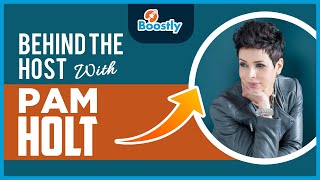
Pamela Holt talks about building a career in short-term rentals and launching the Happy Host Academy. She's working on the Hospitable Hosts project, a book featuring stories from 40 hosts about their experiences in home sharing.
Questions this video answers
June 3, 2022.
Email: hello@thehappyhostacademy.com
Chapters
Okay, so welcome to the behind the Host podcast. And today I'm so excited we've got Pamela Holt, Pam, as she likes to be called here. Pamela is the host of Been a host for three decades. She's also just started the Happy Host Academy, which we're going to dive into and find out a lot more about. And also she's part of the Hospitable Hosts project, which is where 40 absolutely amazing hosts from across the world have all come together to write their chapter within a book. And I'm excited to find out about that today as well. So thank you very much for coming on, Pam.
And yeah, I'm so happy to be here. I'm so excited to talk to you.
I'm excited, too. So just tell us a bit about yourself. How did you get into hosting and how. Who is Pam Hull?
Well, it starts a long time ago. I'm a real estate broker. My entire career, I've been a real estate broker and attorney and in Chicago. And so I do downtown, you know, for sale and working with buyers and sellers. And that's what I've always done. But in addition to that, my family has had a vacation rental since I was a teenager, and I could never convince my family to actually make it a business. And so every now and then we would rent it out. And my family hated it because we didn't know what we were doing. And we always had, you know, bad guests, and it was always a bad experience for them. So I can't hold that against them. But I will say, if we had just done a little bit, I would be retired on a beach right now. And instead I'm not. So we had it in the family. I never really thought that much about it until it's about six years ago now. I was going overseas. My daughter was doing some service work in Africa, and I was going over to meet up with her, and a friend of mine was like, well, you're going to be gone. You know, you should put someone in the house while you're gone. And I thought that was the most ridiculous thing that I have ever heard because. Because it's my house. It's my house where I live with my two kids and my dog. And so I'm thinking, you know, who would want to stay in my house? And. And how can I charge anybody to stay in my house? And, you know, how do I do it? How do I get started? And so I had no idea. I took some iPhone pictures and I wrote up a really bad description, and I kind of put it out there. And almost instantly, I had my first couple of bookings. And so what we do, my daughters and I, is that we rent our house, but when the guests come, we travel. So we've been all over the world, and guests have paid our way, and it's been fantastic. We've been to well before COVID We probably got in 10, 12 countries, different visits multiple times at different places. And on our first trip, I still wasn't convinced when we. When we had the first guest who came in, but while we were there, because I was only planning to be gone for, you know, it takes a day to get there, a day to get back. So I figured five days. But as soon as I got there, I started getting more and more and more bookings. And so we extended our trip. We made it into three weeks. We went to three different countries. It was fantastic. So I was like, you know, this might be something, because, you know, it just. It kind of pulled together all the things that I've always done. So my undergraduate degree is in design and architecture, and then I've been a real estate broker, and I've been an attorney, and I really pretty much spent my career in customer service. I'm like, this might. This might be something. So. So I rented the house out a few more times that year. And so that was, like, from July to November, because in Chicago, no one comes to Chicago from November to March. It's just got awful weather, and nobody does it in that time frame. The house that I live in with my dog made $50,000. And so I was like, that's not a bad thing. Especially when, you know, I didn't do much. I didn't do any marketing. I didn't do any particular preparation for the house. I spruced up a few things, but I was really panicked about it because I'm like, I really need to redo my floors because my dog scratched them all up. And I'm like, I can't have any guests in here until I redo my floors. But I didn't have time, and I wasn't sure this was really going to work, so I just let it happen. And, you know, many years later, no one has ever cared about my floors. They've never commented on that. That's not what they're focused on. And the following year, when I rented the house for a few more months, it made $100,000. And so, yeah, so. And that was me, you know, fumbling around with the pricing, being wildly insecure about the whole situation, underpricing it, having decent Amenities, but never really understanding or doing the research to find out what guests really wanted. And the most important or the biggest mistake that I made is that I had the wrong ideal customer of mine. I live a block away from Lake Michigan, which is a big beach here. And so I thought, I've got four bedrooms here. I thought families were going to be coming here and they're going to go over to the, you know, the new harbor and the beach and they're going to hang out. And so I have, you know, blow up furniture and the noodles and the chairs and all. That's not who comes to my house. I live walking distance from one of the largest convention centers in the world. And so I get business people who are traveling with their colleagues who come in for the conferences and the conventions and you know, they're on a corporate budget and, and they are not bringing their children. And so I was completely wrong with who I was trying to, or who I thought I would attract.
That is amazing. The couple of things there that you can sort of, that we can unpack is that first of all, wow, you've had an amazing journey from, you know, being an attorney, customer facing and that side of things as well. And there must have been quite a lot of transferable skills. This is things which, I mean, I'm from retail myself. There's a lot of amazing people based skills that you need for hospitality industry, isn't there? And when it comes down to identifying your guest avatar, you know, it is something which we figure out as we go along. Hospitality and particularly, you know, putting a property on Airbnb and short term rental, it's quite forgiving, isn't it? You can kind of figure this stuff out if you don't know straight away. And that's one thing which, which is great that, you know, I don't think there's another industry out there where you can, you know, you couldn't just open a shop and figure it out as you go along is this.
But you know what? I guess depends on your background, how easy or how foreign is going to be. Because I think that for some people who have no idea about customer service or hospitality, they could not be prepared for the level of expectation that guests have these days. And they could, you know, if you, if you fumble a couple of bad reviews, you know, you are going to soar. I don't know how the algorithm works or how they do it, but you know, if you get anything less than a five star review, you really have to hump to get back up there. You Know, even based on one bad review. So I think, yeah, you can. It's, you know, the barrier to entry is really low, which is fantastic. But once you get in there, I really advise that you got to figure it out. But I hope you figure out fast so that you don't waste time and leave money on the table. That's what I did. I left money on the table because once I figured out I had these corporate budgets that I was working with, then I was like, well, this doesn't hurt my feelings to charge you a whole lot of money.
Definitely, definitely. And the one thing that you said from the start and even obviously before this, sent across the information about your business and that side of things, the one thing that really sticks with me is you've got guests coming in and they're paying for your adventures across the world, which is absolutely amazing. I mean, that's because they're coming to your, you know, so your accommodation because they want to have an adventure there or they want to check out the conventions and that side of things. And isn't that great? Just paying it forward, just being able to do that. I really do think that's. That's fantastic.
Fantastic. And in my description, I tell people, you know, you know, I'm always available to you, you know, through the platform, you can always reach me, but I'm traveling. I am in, you know, I'm in London, I'm in France. I am gone. I have someone on the ground, of course, for emergencies, but, you know, I'm having a ball. I hope you're having a ball, too. And, you know, and that's how really this should work. It really should work for guests and hosts. And so I wish that for everybody.
But, you know, the one thing I always see consistently, it's got to be fun. You know, there's a lot of people try and do things and it becomes difficult, whereas it's got to be fun as part of why, you know, why we don't go and work a 9 to 5 or do some of our previous careers, you know, this, this is more fun. And I can't think of anything better than, you know, getting to do that while people are coming to your. Your place, doing the same and experience in somewhere different. So that is amazing. So obviously you've, you've got your, your accommodation, you're getting to, to, you know, sort of travel and that side of things. How did you adjust? So the. You say you've got people on the ground and that side of things. How did that side of things form did was that from day one you kind of had people on the ground or did. How did you figure that side of things out?
I didn't want to ever have a situation where guests were unsupported. And the fact that I'm on a beach is not their problem. They should still have everything they need whenever they need it. And so I've always left someone sort of in charge. Not officially a co host, more of a support person in the event of an emergency. Thankfully, I've never had to call them in. I haven't had any issues. The only time I did have someone locked out, I was right down the street. So it was. I was able to come and take care of things for them. But, you know, I absolutely recommend that if you're doing something like this that you have, you know, a person, a team, someone you can call because you don't want to leave your guest in a lurch. I mean, that's just. I feel like you have to treat them like you would want to be treated. And, you know, nobody wants to have the hot water heater, you know, explode and then, you know, you're not there. So. So I always have somebody who's very familiar with the house. In my case it was a friend who's also an electrician who's been familiar with the house. Done a lot of work in my house before. So, you know, he already had access to the house. You know, of course I've got a contactless lock, so he already had his own code and, and he can come and he knows everything that, that there is to know about the house. So. So I always feel comfortable, you know, leaving.
That's one thing that I see a lot of the time with successful hosts is that we rely on our wider network, our friends, our family, our team members. And also it's not being afraid to take action and reach out to these people who they're quite happy to help, do you know, I mean, so it's just reaching out and taking that action, which is awesome.
Family think it's a blast. They can't believe how well it's going. So I often get. Can you show me how to do that? So, yeah, I can, I can. Because who knew, you know, it would be this successful? Not me. I did not see this coming at all. You know, it's not like Chicago is a resort town or something by any means. I'm situated fully in a residential urban neighborhood.
So it's so nice when, you know, it's not everyone pitches with short term rental. Airbnb they might picture the place by the lake or, you know, sort of beachside. And that side of things. They, what people don't always consider it can literally be any property, providing you've got a demand in that area. And as long as you've got the demand and like you say for your case, there's conventions, you have got a secondary avatar where they may come still for the beach. And you've got that kind of flexibility.
Yeah, sometimes. But the other thing that's really been interesting is I also live fairly close to a couple of large medical centers. So I get people, in fact 2020, which I thought was going to be a completely devastating year for obvious reasons. I had a couple of rentals, just literally just a couple. But someone came in for three weeks because they were with a family member who was undergoing medical treatment. And so they, you know, it was, it was a longer term stay than I'm normally accustomed to, but it worked out great. And, and I was happy to accommodate the family because, you know, it was a very serious situation for the dad and the whole family came in town and it was really, you know, it was really something I could feel good about doing and it worked out well for them. So there's, there's, it's good to have your primary avatar, but, but don't close the door on other kinds of guests. That might also be interesting.
Just on the avatar side of things, what did you do once you realized that your main avatar was not contractors, people coming for the convention? Then what changes and what aspects of your business changed at that stage?
Well, when I finally realized it, one of the things I had to do was switch out my bed count because I have unrelated colleagues traveling. And so one of my bedrooms had two twin beds and unrelated, most of the time, unrelated, you know, different sex colleagues don't want to spend time in the same bedroom. So I cut down. So now where I could have accommodated eight very easily. I'm more of a four person kind of situation now because everyone has their own bedroom, everyone has their own bath, and I think that works really well for travelers. And then I got a bar with a whole bunch of bar glasses because there's a lot of drinking for my guests. And I really kind of put in a few more luxury, kind of adult luxury items like the fluffy robes and just some higher end features that I didn't have and didn't want to have when I thought I was having children and younger families. So the high chair and the temporary bed thing that I have for the babies, all that's in the garage now. So if you want it is there. But that's not getting that much use for my house anymore.
No, that's quite good. And that could help. I mean, you mentioned the change in revenue and sort of making these little changes, little touches. It appeals more to that target guest. And there's one thing which, you know, we teach in the boostly academy is the first thing is to really identify that guest avatar. Once you can sort of anticipate what they need and what they want and their reason for staying, you can tweak your listings to really, you know, the vibe of the listing attracts the tribe, if you know what I mean.
Right, exactly. And you can adjust your pricing because my business travelers don't flinch at the high price that I have. My house I was able to triple the price, my nightly price when I figured out who was actually coming and who was paying. And so now I don't host quite as many people, which is just fine with me. But it, like I said, it's three times what I started off with when I went to Africa that one time. So. And there is really no, I don't want to say there's no end to sight. There's. I haven't reached the highest level of pricing that I can get to, I'm sure. But things are just starting to pick up again. Of course we didn't have in person conferences for the last two years, so they're just starting to come back to Chicago. So I'm kind of testing the water at this point on some ridiculous pricing and you know, we'll see how it works. And if it doesn't work, if it's beyond their tolerance, then, you know, I'll make that adjustment as well.
So, you know, that's a great point as well because there's lots of tools out there that you can get, you know, dynamic pricing tools and stuff like that. But if you know your market, you can can test and tweak and that side of things. And another thing I see from a lot of host is they just want to be 100% occupied. And I always say, well, why do you want to be 100% occupied? You've got then the wear and tear you've got, you know, if you're 100% occupied, your pricing's wrong. Whereas if you're a bit like what you're doing now, if you can achieve the same result with much higher prices, maybe less occupied, but actually if you're reaching that headline revenue and headline profit that you're looking to Reach. Well, happy days. You know, that is the best of both worlds.
My occupancy figures aren't fantastic. If you would look at it, you might say, you know, whoa, your business, what's happening here? But it's just perfect for me because like I say, this is my home. I don't want a lot of wearers here. I do, I do want the revenue, but I like the fact that, you know, I will have. Last year I had 10, 10 stays over the summer. And that doesn't sound like a lot, but it was a lot. It was $75,000 worth of summertime income for me.
That's a lot of adventures.
Right, right, right. So we didn't get to go last year, but we're heading off to Egypt to go scuba diving. Yeah. Next month. Thank you very much. To my next guest. So, yeah, we're trying to take advantage of these adventures and my daughters and I are trying to hit as many places as possible.
That sounds amazing.
It's a good lifestyle, you know, it really is. And even though I've sold real estate for 100 years almost, I really like the way this feels and I really like where I'm going with it in terms of teaching other people how to do it. And if I could talk a little bit about that, I just. Absolutely, yeah. So I'm really passionate about teaching women. My audience is largely women, but I want to teach people how to use home sharing, the age old art of home sharing as a revenue source during a transition. So if you. I was on statistic, Airbnb said 84% of hosts become host during a period of transition. So that's divorce, marriage, or, you know, empty nesting or death or relocation. So I'm, I mean, I would have never done. I would have never welcomed guests. My dad lived with us, but once my dad passed, you know, it freed me up to have more space and also to not feel as emotionally connected to the house and more interested in having the experiences with my children rather than, you know, oh, my goodness, somebody's going to sleep in my bed. So I, you know, once I was able to make that mindset shift, it all came down to how can we welcome guests, how can we earn an extra stream of income and how can we have fun with it? So I really like to teach people the basics of how to share guests in your home. Whether you're there or not. You might share a room. A lot of people have a spare room. If you've got kids that go off to college like I have, you've Got spare space. So I want you to turn that spare space into spare cash. And, and you might not do it all the time and you might not do it right now, but if you have the skills, you can pull those skills out. And if you have, if you decide you want to go on a trip, you can set your business up and take advantage of it. If you decide you want to relocate. I have a lot of friends that are relocating and sizing down, but they don't want to get rid of the property that they were living in before. So I'm like, well, you, you can do a long term rental or you could really make some money and convert it into a short term rental and I can show you how to do that. So I want especially women because a lot of times we are in these kind of vulnerable income situations. If you can pull this out of your purse, these skills and set it up, you are in complete control of it. So you decide how often you want to host, you decide how you want to set it up. Is it a full time situation for you? Is it just occasional? You know, are you, are you just doing it on the weekends? I mean there's some, obviously there's some nuances and some things that you have to finesse within a business. If you're only going to do it part time, it's, it's. That calendar becomes real tricky. But you know, once you, once you understand that it is a very acceptable and viable source of income and I want people to know that, that they can do that. And like we said, the barrier to entry, what other business can you start, you know, and then start and then start again and then, you know, and you know, jump right into it with, you know, with some training hopefully, because you can do it without training. And I think some of the platforms do a good job of kind of providing some tips and things. But you will, I guarantee it, you will make mistakes. Because even after all of my expertise, I made mistakes. I bought the wrong sheets, I, you know, had the wrong avatar, I, my pricing was too low, I did, you know, a bunch of things that left a bunch of money on the table. And so I'm trying to help people just, you know, cut down on that learning curve and just kind of jump right into the good part.
That's exactly where that you've made me think of a quote which is if you want to go fast, go alone, but if you want to go far, go together. And that is where go and you know, getting some help from somebody who's been there, who's done that. And what a great thing to do just to, you know, take people who are in a situation where they might a need the extra income at that, at that time and be where there's extra space within the property to be able to utilize, you know, and actually, you know, bring in income from that. And you got me thinking about a friend of mine. He's literally just moved into his first house and he's got a three bedroom house. It's just him. And he turned to me, he said, what should I do with the spare rooms?
Well, you know, there you go. You know, it's, it does. The spare room situation obviously is very different from the entire home. And so there are nuances. Again with that. But once you understand it and once you're comfortable with it, once you set up all the safety precautions, which is the case for everything, then it really is, like I said, it really is viable. And for a lot of people who don't do it full time or don't do it on a regular basis, it goes to a lot of them end up spending the earnings on staying in that property. Actual living expenses not split around in Europe, but actually paying the bills. And I can't say that I haven't done that too. I replaced the roof here and the hot water heater and all that was paid for by guests. So, you know, I want people to know that they can make their real estate work for them. Yeah. Even if they don't, even if they don't see it, you know, they, they, I want to show them how they can make it work for them.
And is this how the concept of the Happy Host Academy came about?
Yes, yes, yes. Because I spent hours and hours and hours looking for advice, looking on the Internet, trying to figure out how to, you know, hop over some of the pitfalls that I was, you know, wallowing in. And, and, and so, you know, there are things you can piece together from the Internet. But what I really wanted was to ask somebody, you know, who had already done it, like, how'd you do this? Or, you know, were you, were you scared to do this? Or you know what, you know, because I have a friend that I, as a private client, and she literally said, I wanted somebody to hold my hand with me. I wanted somebody to tell me was gonna be okay. She hosts an English walkout basement in her home. So she's in the upper floors and then the guests have the lower floor and a separate entrance. She's like, you know, that's very close to me. My family's here. So I want to know what precautions I need to take. I want to. I want to, you know, call you or whatever. I want to text you if I'm having an issue. And I think that's really important because I do think you can be kind of in a silo by yourself if you don't become a part of some kind of community. You can kind of just be out there, because not a lot of people are doing this. So, you know, you could find yourself, you know, kind of lonely. And, you know, if you can. If you can attach to a community, it's a lot more fun and it's a lot easier, and you will avoid a lot of headaches.
That's so true. That's so true. And that's why, I mean, I've started WhatsApp groups for the local hosts where I am in the uk I know Mark Simpson, who started the hospitality community, the Bouchely Academy. A lot of the reasons to start this is because business can be a lonely time. When you're encountering these problems, you sometimes think, well, who else has gone through this? It can't just be me going through this. As soon as you reach out to places like Clubhouse or to, you know, sort of the Facebook groups, any communities, even the local, you know, sort of groups that you can reach out to, you find that a lot of people are going through the same challenges, the same problems, and that there's somebody who has done it before, like. Like yourself, who. The concept of, you know, taking your own home and putting it on Airbnb and then traveling while somebody's using it, that's not something which I think is publicized as much as either the spare room or taking, you know, an investment property, you know, and that sort of thing. So there's a whole nother model there which can be. Can be utilized by probably many of the people listening to this, thinking, well, actually, you know, I'd love to go on holiday a few more times a year. Well, could my property be perfect for it?
But one of the things that I like most about hosting is that you can do it so many different ways. So, you know, I do the way I do with my house, but I've also had an arbitrage rental unit that I've. That I've rented before. I've, you know, I've helped people with purchasing and identifying investment property. And so there's just so many different ways to do it, and you just have to find the way that fits your lifestyle. And then if you want to go on and do something else, a different kind of, you know, scenario. You can do that. You can stop doing it. You can. There's so much flexibility that it is a really, an intriguing aspect of real estate that I really enjoy. It's, you know, I utilize a lot of my real estate skills, of course, but this is kind of a, it's a different niche and I love it. It's really, it's really quite fun.
If you had to name some of those skills which have been brought across just so people could identify who are listening, what would those be? Is the transferable skill?
Well, one of the things, I mean, my, my undergraduate degree is in design, so I think I can set up a pretty decent looking interior.
But that shows, by the way, in the background. That shows. That is an awesome, that looks like, it looks like a picture from Airbnb. That really does.
It is. But I also, as an attorney, you know, I read the fine print and the, and the guarantees and, and the, and the rental agreements and you know, the co hosting contracts, you know, I read that stuff and I will modify it. My situation and my circumstances and an eye for detail. Yeah, I mean, I know what those, I know what you should have in a document and you know, I know what's going to protect you. So that part with the real estate, I also, I mean, I've done a lot of real estate marketing, so I know what the photo should look like and I know how to position a property. I know how to tell a story. How you need to weave, you know, your story, your personality into the description that you have in your listing and how that can, how you're selling a mood and not just a, you know, I tell people that real estate photos are very different from short term rental photos.
Oh, completely.
Real estate photos are wide angle, you know, show the whole room. Everything's sterile. But you know, short term rental photos are moody and you know, there's a cup of coffee and there's a, you know, a throw and, and so it's very different photography. So that's, I think photography's got to be one of the places where hosts, a lot of hosts could really use.
Improvement because 100%, it's the first thing people see. Those first five pictures especially. But just in general, some people I know will try and use real estate photos instead of, you know, you know, and the trouble is with that, like you say, it's wide angle, there's no feeling and what you're actually selling is the result of what they'll feel like when they come and stay in your home, you know, whereas that is something which real estate photos don't necessarily convey. But one thing is really clear is obviously your knowledge and your experience around doing this is vast. And, you know, people can obviously reach out to you and we'll give them the details as to how to reach out and, you know, sort of contact the happy host academy. But one thing I'd love to come on to is the hospitable host project. And yes, I am so excited to, you know, a be part of myself, but also find out about everybody's story. So tell us a bit about what made you join the hospitable hosts. And for anybody who's listening, who hasn't, who isn't aware, basically, Jody Sterling, a wonderful, she's a UK host, originally from Australia, started a book project where she got 40amazing hosts from across the globe, anywhere from all the way from Australia, obviously the us, Europe, literally all four corners of the globe. And she's got them all together to present their stories. Anything from how to get started or sharing advice or even just interesting antidotes of their guests and that side of things. So, Pam, obviously you've joined the project. How do you, what got you involved in that and how do you feel about it?
You know, I thought the idea was fascinating because who doesn't want to hear, you know, 40 different stories about, you know, something, a topic that they would be interested in and because like we said, you can do it so many different ways, I can't wait to see the different ways that everybody comes to it. Because in addition to kind of traditional hosts with maybe multiple properties, there'll be brands that support the hospitality industry. So there'll be the designers and instructors, educators and management companies. And so it's going to be really fascinating to see everybody's point of view. And I can't wait because some of the folks in the book have really been doing, I mean, they're top of the industry and so that's very cool. And you know, the level of camaraderie that we all will get from just being a part of it, that's pretty spectacular. But from someone who's thinking about becoming a Host, to have 40 different perspectives, I mean, you know, I wish I had that I would, you know, you don't have to fumble along. If you're kind of unsure how you want to do this, you finish this book. And then I think you'll have a better sense of what feels right for you. And it's going to be fantastic. It is.
And one of the things that, for anybody who reads the book, which really struck me is that they can these isn't just reading it and then finding that, you know, they've read the story, they've learned something, they can actually reach out to them, the people behind that chapter and actually, you know, speak to them. And this is the great thing, and we mentioned earlier on about community and how important it is to help you within hospitality and actually just to gain knowledge and to excel your business and push it to the next level. So this is something where people can read these books, read these stories, really identify with the authors and perhaps even reach out and speak to them.
So can you imagine that? Can you imagine being interested in like the music industry and, and calling up, you know, you know, somebody who's top of the charts? Are you kidding? That's what it's akin to. It's like, you know, top of the charts hospitality, short term rental, host property owners, it's, it's the real deal. And we're all making ourselves very accessible. And so I think that's a super cool idea.
I absolutely love that. Absolutely love that. And I mean, just in general, what does it mean to you to be a hospitable?
You know, I, you know, I think there's some people who are just born hosts and caregivers and nurturers and I, and, and that's who I am. And so I like to extend that to my guest. So I like, and I'm also kind of a perfectionist, so I like things really nicely done and I like a really high level of service, which I'm accustomed to anyway because of, that's what I have to do with my real estate clients. And so I want you to come to my home and feel like everything has been thought about. I've thought it through, I know what you need, I got you. And you just need to enjoy and then come back next year. And that's, you know, that's how I like to, that's how I like to do it and that's how I like to teach it. And that's why, you know, just the name hospitable hosts. I was like, oh, yeah, I like that.
That makes sense.
So, yeah, that's, that's my interest, having.
That ability to be able to put yourself in somebody else's shoes, to empathize with people. And that is just such a great trait within the industry, isn't it? So that's fantastic. So I'd love to talk to you more and more about this and I can't believe how quick time has flown. So I'm just going to do a couple of quick fire questions. The answers to these can be as quick, quick or as short as you like. But yeah. What was the first album that you bought?
I. I bought a Parliament's Funkadelic album.
Nice. Funkadelic. I like it.
Yes, A Funkadelic album. And then subsequently went to my first concert which was a George Clinton Funkadelic concert. And I will never forget it. It was way over the top and you know, still talking about it, you.
Know, after this, I am going to be putting that on on the music just to, just to listen in. I love finding out what people's first album what what would be again, another just bit of fun. What would be your favorite quote or favorite piece of advice for those who are listening?
Well, you know, I already said it. Spend some time on your guest avatar. You know, really think it through. Have an alternate or a second avatar. Don't be afraid to have a negative avatar. I have a very fully fleshed out negative avatar, someone I don't want staying with me. I'm very clear on that. And keep it in mind for everything. Photos, marketing, social media platforms that you're on, the amenities you buy. Everything comes back to who you're hoping to attract and positioning your, your business so that you attract the perfect guest for your space.
100%. And I couldn't not ask you this obviously based that, you know, people come and stay in your house and you're traveling. What's your favorite travel destination? Where. Where do you like to go?
You know, I went to when I was in Africa, we went to Mozambique and then we went to a little island off Mozambique. So we're in the middle of almost nowhere that we were on a deserted island there, it's uninhabited and the tour company threw us a party so they made us a whole meal on the beach. And I thought, you know, thank you guests, thank you. Because if I had, I probably wouldn't have done that. If someone else wasn't paying for it, I don't think I would have spent the money on it. Wouldn't splurge like that. But it was one of the best memories that I'll ever have.
Love that. I love that. And what a perfect way to end on because that is, you know, like you say, that little moment of gratitude of the things that short term rental has allowed you to do. And for those who are listening, if they want to get into in touch with you to be able to, you know, take part in the Happy Host Academy. How do they do?
So oh they can email me at hello@the happyhost academy.com they can find me on Instagram. I'm on all the socials under the Happy Host Academy and I would love to talk to people. I'm always interested in what they're doing and how I can help them do it better.
Amazing. And of course they can also now buy the book and your socials will be in there as well. Is good. So it's been an absolute pleasure having you on the podcast. I've learned a lot myself. I am going to be checking out the Funkadelic album after this and yeah, just what a pleasure. So thanks again and yeah, I look forward to speaking with you in the future.
Take care Liam. Thank you. Bye.
Thanks very much.
Having a blast.
Gonna get it on the Bruce Lee podcast. Bruce Lee like Bruce Lee Cause it's so hard and the T is loose leaf making up those rhymes don't write.
It just do it loosely.
More from Mark







I Tested AI Search SEO for Rental Hosts... Here Is What Happened [Live Training]



