Building A Unique Stay For Your Guests
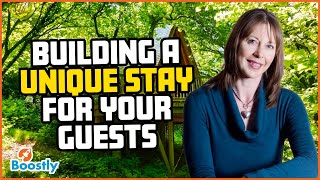
Sarah Orchard built a 55-ton framed A-frame treehouse in the UK called Huddles Hideout, which opened in February 2020 after five years of planning. She talks through the engineering, design choices for romantic stays, and why researching your market and defining your ideal guests matters more than just building something cool.
Questions this video answers
February 2020
About five years
55 tons (about 100 tons of materials brought to site)
Two
Children and dogs
Chapters
One thing we always want to try and do as short term rental hosts is build a unique experience which is very sought after from guests. And that's what today's subject is going to be about, is building a unique stay. Some of the challenges that can come along with that and to help us with that, we've got an excellent special guest who has got a vast experience who's over here in the UK and has got something very special. So in a moment we're going to be welcoming along that guest. But if this is your first time listening to this podcast, this is the Boostly podcast and it helps hosts with the tools, the tactics, the training and the confidence so you can go out there and get more direct bookings. And this is the mini series where we actually go behind a host's journey. We get their experience, they get to share some of the tools, the tactics that they use within their business. And to help us with that, today we've got Sarah Orchard who is from the Huddles Hideout. Now this is really special. This is a, the only, a frame tree house that I know of in the UK and perhaps Sarah will just let us know if there's any others in a moment. But let's welcome her along and let's dive into her business and how building this unique stay has, has I guess changed her life. So welcome along, Sarah.
Hi, thanks for having me.
So Sarah, before we get started, I know I've given you a bit of a, a bit of an introduction there, but can you let us know more about your business, more about your journey and give yourself an introduction?
I will indeed. My name is, as you said, Sarah Orchard. I'm the co owner of the Huddles Hideout. I actually run the business with my husband Aid and I'm also, as you said, a best selling author in the book Hospitable Hosts and I'm the creator of get fully booked.com which helps fellow hosts with their marketing and basically moving from being invisible to visible and fully booked with more direct bookings. We opened the hideout in February 2020, which was an interesting time because obviously we got shut down five weeks later. So it's been a bit of a journey to be sitting here today, sort of three day, three years later from when we opened the actual business. But it took us over five years to sort of fulfill our dream and create the Hideout. So it's, it's been a, it's been a quite a long journey.
Where did the idea come from? How did this happen? Yeah, take it away.
Why build a Tree house, yes. Not the easiest of things to build. I think a lot of our friends thought we'd slightly lost the plot. We actually went traveling in 2004. We left our corporate jobs. We both had sort of traditional corporate jobs. I've worked in marketing since I. Well, 30 years now. So we've been doing the very traditional sort of careers. We decided to go traveling. We went around the world. It took six and a half months and we stayed in some amazing backpacking places, particularly in New Zealand, Australia. And our first tree house we stayed in, in Salt Spring island, which is just off the coast of Vancouver. And we decided when we came back from traveling that we were probably going to emigrate to New Zealand and set up a backpack as we really loved the sort of quirky accommodation, people using raw materials, recycling, repurposing things. We didn't really know about an industry that was now called glamping. Obviously we were just backpacking, but it inspired us. We thought about emigrating and then we sort of had a bit of a reality check. New Zealand is a long way away and we had family in the UK and we thought, well, we probably wouldn't see very many people very often. So we started looking for somewhere to create something different in the uk. So we did a lot of research. We went to things like the glamping show, Farm Innovation. We went and visited other people running tree houses because at that point we really did want to create a tree house. So we went and talked to some other owners, sort of learned from their pitfalls, things that they'd made mistakes, things that they wish they'd known at the beginning. And then we started looking for somewhere to move to because we were living in Guildford, which is a quite a large town not far from London, didn't really have much of a back garden, definitely not big enough to build a tree house in. So we were going to have to move and relocate. So it. It took us five years to. Well, it took us about two and a half years searching for the actual house. And in the end we. We had to have a little bit of help from a TV show called on the BBC called Escape to the Country. And we bought house number three that they showed us and as they say, the rest is history.
Did you have any experience with construction, building tree houses, anything like that, or is this literally, you've come to this absolutely fresh?
No, we're definitely not. We're not Even very good DIYers, actually, and doer uppers. So it was a bit of an ambitious. We did work with A professional company to help us, both an architect and also with other industry experts and the tree house builder. The treehouse weighs 55 tons and we had about 100 tons worth of materials to get down to the site. So it's definitely not something that probably most amateur builders would be able to have a go at. And also it has to comply with all of the modern UK building regulations for, for a new build house. So it's quite a complex structure to put together and it's got full utilities in terms of, you know, underfloor heating, you know, lighting. It's a very cozy sort of on, on grid rather than off grid space. So it's definitely not an easy build.
So how many people does it sleep and who do you tend to host in the, in the property?
It sleeps too. It's a very romantic space that is designed for couples. We don't accept children or dogs. Dogs mainly from a safety point of view and also with children. It's got, you know, it's got a mezzanine bedroom, it's 4 meters off the ground, so it's, it's not ideal for sort of families. But it's very much a sort of romantic space. And when we designed it, we designed it to try and get people as close possible to sort of nature. So hence one of the reasons for an A frame. We wanted a big glass front to the, to the structure and we deliberately put the bedroom right up on the mezzanine, close to the glass so that people are literally surrounded by the tree canopy. They have a bird feeder where they can sit and watch the birds feeding outside the bedroom. We haven't put things like curtains up so that they actually wake to the sort of sunrise and can see nature sort of all around them. So it's, it's got an outdoor bath, we've got a saun, they've got a private lookout bar to take in the views from our location because we're on the top of a hilltop. So it's very much designed with a sort of special occasion and romantic stay in mind.
What would you say has been the biggest challenge and something that you'd like other people to know if they were looking to undertake this sort of venture.
Oh, where do I start? There's so many things, I think there's. Do your research. You need to understand sort of who your ideal guests are. Obviously I'm a marketer, so I came at it very much from a marketing point of view in terms of thinking about who we wanted to attract and building the experience around it. I think often hosts fall in love with a property or maybe like they're renovating something and you become very, we all do it. We become very obsessed with the actual build process and the renovation process and actually getting it sort of ready for our first guests. And we often don't think about who we want to attract and engineering the experience to them. There's, there's things in the hideout that are definitely. You wouldn't put into a normal house, but you would have curtains. You know, if you were living in that permanently, you wouldn't want to wake up to the sunrise every morning at sort of you know, 4:30 in the UK in the summer. But obviously people are on holiday and they are, you know, we, we're giving them that immersive experience. So we very much have, have done things differently to how you would do it if you were sort of, you know, designing your own home. But people often just feel that they've built it and they will come. And the market definitely there's a lot more supply in there, there's a lot more saturation. So it is harder for, for hosts and the short term rentals to you know, to get those direct bookings without having to rely on, on the agents. The. So I definitely think if you start with the end experience in mind and design your, the total experience and your property and your short term rental around it, it'll be successful.
Having a blast Gonna get it on the Bruce Lee podcast. Bruce Lee like Bruce Lee. Cause it's so hard and the tea is loose leaf Making up those rhymes don't write it, just do it loosely.
More from Mark







I Tested AI Search SEO for Rental Hosts... Here Is What Happened [Live Training]



