How Hailie Runs 70+ Holiday Lets at 95% Occupancy – Fully Remote with Tech and Teams
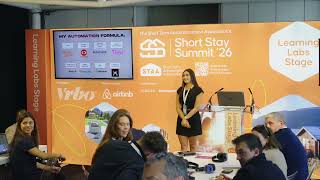
Hailie, 23, runs 70 U.S. vacation rentals generating over $200K monthly at 92-95% occupancy while fully remote. She automates with tools like Hostaway and PriceLabs, delegates to a remote team in the Philippines, and uses daily check-ins and SOPs recorded on Loom to keep operations running.
Chapters
Hello everyone, thank you for being here. I literally was in the other room earlier and I was like, no one's gonna show up to my session, so this is kind of crazy. Thank you guys for being here, um, this is very full circle. I first want to say thank you to Mark Simpson and everyone at the UK Summit for having me. I am from America, so I flew all the way here just for this event, and I'm super excited to share everything that I've learned with you guys over the last 3-ish years since starting. And we only have 45 minutes, so I'm gonna set my timer and I'm gonna try to go through as much of this as possible. There's a couple activations, so definitely like take pictures. I know the TV's kind of small, so if you guys need to come up to take pictures, feel free to. Take pictures, ask questions. I'll save time for Q&A at the end. But yeah, thank you all for being here. Okay, so today we're gonna be talking about how I run 70 SDRs with a fully remote team. And all I do this with is tech and virtual teams. So we're going to be covering both of these today. Now you're probably wondering these 3 things: who I am, why I'm up here, and what I do. So I will cover them very quickly. I am Haley. I am 23 years old. I almost said 22. No, I just had my birthday. I'm 23. 23 years old. I started vacation rentals when I was 19 years old, fresh out of high school. I graduated a year early because COVID hit and I was like, what do I do? I saw TikTok videos about UGC, about dropshipping, and as you can tell, or if you can see, I've done kind of everything. When COVID hit, I had a yard card business when everyone was like too afraid to meet up with people in real life and we didn't want to be close to anyone. I sold yard card signs and it's called Card in Your Yard. And literally it was like happy birthday, happy graduation. Outside of that, I've also done a ton of UGC. So I created ad campaigns for different dropshipping companies. I did email SMS marketing. I also worked at Target. So yes, I did come from a 9 to 5. But yeah, life before short-term rentals was a little crazy. I've tried it all. Some of it worked, some of it didn't work, but nothing has worked like short-term rentals has. This is me now. I have so 70 short-term rentals in the United States. So I don't actually have properties in the UK or outside of the US, but definitely open to expanding nationwide. Outside of that, I mean, I started when I was 19. I travel all over the world. I share my story, share my secrets, and honestly, like, just want to help as many people as possible. I know some of you are probably like, what is this 23-year-old girl doing up here? But give me 45 minutes and then if you're still judging me, I respect it. I also don't live where I host, and I think that is like the biggest thing of all of this. Whenever I wanted to start entrepreneurship, I heard a lot of people being like, "Oh, when you start entrepreneurship, like, I built myself another job." That was not what I wanted. I didn't want another job. I wanted an actual business, and that's what I've been able to create. I started when I was 19, and I call myself a digital nomad to an extent. Um, my base is in Florida, but I am always on the go. I am always traveling. And I think that's like the beauty of this. Like, I didn't want to be tied to, you know, my house or the United States. Like, I wanted to be able to travel and go wherever I wanted. And this business that I built has allowed me to do that. And it can allow all of us to do that as well. I hosted over 11,000 nights in a year with 92% overall occupancy. This is my main Airbnb account. We already saw numbers, but just in case you guys didn't believe me, I do over $200K a month on one of my accounts. This is a combination of tech and teams. Like I said, I am an advocate for whatever you cannot delegate to a human, we automate with tech. And between the two, that is the dream combination. Now, in my session today, I'm gonna cover these three things. I'm gonna cover automation, delegation, and how I've been able to scale using all while using both of those. So the first thing I want to cover is tech. I know out in the vendor booth there are so many different tech companies, so many different, you know, of the same exact thing but a little bit different. So just because my tech stack works for me doesn't mean it will work for you. But I do think that tech is super, super important to integrate into your business. And if you're not using it, you are going to get left behind. And this is my current automation formula. Some of these are actually out in the vendor booth. So if you, you know, get the chance to go say hi to them, feel free to. And we're also going to take a break here in a couple of minutes to give you guys the opportunity to chat with some of the vendors who are actually in the room with us right now. But I will break it down quickly for you guys if you're unfamiliar. So for my property management software, I use Hostway. I have tried basically every PMS and have landed and stuck with Hostway. I've been with them since I had about 30 properties, and I've been able to scale to 70 while using them. So a lot of the other ones, I was noticing that as I was scaling, some of the basic functionalities weren't really working. But Hostway has been amazing, and this is like the hub of my business, essentially. This is like the engine of our car. Outside of that, I pair that with my dynamic pricing software, which is PriceLabs. I actually have been paying for PriceLabs since I started my first ever Airbnbs. And it has been a very big learning curve. If anyone in here has used it, you open it up and it's like, oh my gosh, like numbers, numbers, numbers, numbers. It's a lot when you open it, but it is amazing. And I think mastering PriceLabs— not— I'm not a master. Trying to master PriceLabs has been such a game changer for me as an operator and just my business as a whole. Outside of that, we also use a revenue manager and AI listing optimization. So we use AutoRank and OTA Miser. Honestly, these are newer integrations into my business, about a year in. Life-changing. I was doing all of my revenue management myself and I was trying to optimize my listings myself. But integrating AI into that process has not only bought back so much of my time, but has also made me so much more money. And I feel like that was something I was kind of leaving on the table for a while. 'Cause I was like, "Do I really need to invest into that right now? Like, I'm not a huge operator." But bringing that into my company has made me so much more money. Guest verification. We all know how important that is. I use Truvy. All it takes is like one horror story to make you need to create better processes and systems. We can save my horror story for another day. I don't wanna trauma dump right now. I had a really bad experience and I was like, okay, I need to verify my guests better. So we use Truby for that, paired with Bestie AI for all of our guest communications. I'm very big on both tech and teams. I do not think that AI is replacing humans, which we will touch on, but a big part of my communications is actually done through AI now with Bestie, as well as my guidebook. So I've been able to merge the two together and buy back a lot of my team's time through using AI. Also, direct bookings, Boostly, the best. All of us, if you're not, if you're not taking your business off of the OTAs, you don't actually have a business. You are, you're just the middleman. So we want to own more of our business. Direct bookings is the way. If you're not doing direct bookings, you need to start now because every day that you host a guest on the OTA, yes, you're making money, but you're also losing money because you have no, you have no direct communication to that guest. You cannot market to them. You cannot upsell them again. You just have to hope and pray that they come back. And I mean, why are we going to work this hard to not actually own our business? So I think all of us collectively as a whole want to own more. We could do that through direct bookings. And then these last two, you are not going to see in the vendor session. But I use a CRM. This is also a newer integration for me. It sounds very, very intense, but it also has been a game changer. Boostly has a CRM as well, but I use two. So I use GoHighLevel as my CRM. This keeps all of my client information, their phone numbers. We can call them through there. We can remarket to them through there. It has been a game changer for also increasing our revenue as well. And then lastly, this is Kendo AI. This is a newer software, but I've been using it for about a year now. It is actually AI training and management. So again, I'm very big on teams. I think we all know that. I use AI to train my teams. So I will cover this a bit more in some of my following slides. But a lot, at least myself included, like I was so scared to bring on new hires for so long because I thought I don't have the time to train them. Like I'm too busy, you know, follow my SOPs and like do the job. And then I would catch myself complaining that they weren't showing up how they were supposed to show up. But that's because I wasn't showing up as a leader to train them properly. So to kind of reduce that friction, I implemented AI into this process as well. So now I use AI to train all of my employees. They go through an intense AI training on top of internal team training with me and my team. So a combination of the training with the AI and the management has saved me so much time. Instead of going through and checking every call or every message or every email that they've sent, AI will then flag it for me. So when I log into the dashboard, it's like, hey, this is a red flag, this is a green flag. And then it reduces my time spent on management as well. So this is my tech stack. Again, just because it works for me doesn't mean it will work for all of you. But I was lucky enough to have some of the vendors in the room today. I think they're a little spread out. I actually don't know where all of them are, but There's Pricelabs in the back. We also have Hostaway and Bestie. And is there anyone else? Truvy. And I think Automizer's here as well. But I wanted to break for questions. So the vendors are literally here. If you guys have questions about any of the softwares that I just mentioned, I'll go back on this screen as well. It doesn't actually have to be 10 minutes, but I wanted to bring them here to be here for you guys if you have any questions. So does anyone have questions for any of them? Don't be scared. Yes? Which one? Boosli? Mark? Where's Mark? Is he here? There he is. We have a question for you. He wants to know how Boosli works. What's the question? How boosting works? Uh, who's got that question? Hello. Uh, so if you want to get more bookings, you want to get more bookings, come speak to me. I'll get you more bookings. I tell you what, I don't want to get in the way of Hayley's session because this is a stunning session. No, come and find me after. Okay, fair. Listen, if anybody wants more bookings, you can find me online. It's not hard. Boosting UK. Come and chat to me after. Thank you. I'll give you a quick rundown. Essentially, it's a direct booking engine outside. It's not attached to the OTAs at all. So, I mean, a lot of like PMSs will have direct booking websites. Like Hostaway has a direct booking website. It's amazing. But if you can have it where you actually don't— if you stop using Hostaway, your direct booking website also goes away. So Boostly is just an extension of that to own more of it. So it's not tied to any of the OTAs at all. and then you can host directly through your direct booking website on Boostly. You must be linked to the host hosting it, yeah? You can, yeah. They're, they're, I mean, it's separate. They're separate, yeah. Yes? So is it like a generic website provider like IONOS? IONOS? I don't know what that is. IONOS. Oh, okay. Yes, it's separate. It's completely separate. Yeah. Any other questions? Why do you have a separate guest verification if you've got PMS Hostaway running? Don't they have that system integrated? So I use Truby because they have the sex offender checks, which, like, for example, in Arizona, it's illegal to host sex offenders. I mean, not that I want to host them anyways, but it's illegal. So like, to be compliant, you really need that. And then also they have criminal background checks as well, which is different from a general— a generic screening. It's actually a criminal background check, which most PMSs don't offer. Doesn't that create a huge time lag? That's a good question. That's a really good question. She asked if it creates a really big time lag. So like when someone books, waiting for them to fill out the application for Truvy. No. So it's all automatic. So as soon as someone books, we have an automatic trigger that Truvy will send out to complete the application process. And then for us, we just make sure that your code isn't being sent until the application is completed. So the code will not be sent out to the guests until they complete the form. If you have instant bookings or anything like that, you can still create that trigger as well. Can I ask a question? Yeah. So I live on a small island called Guernsey, and so it's a different government, different legal system from the UK. We don't do invites to the world guests directly. We don't do that. Okay, right. Is that— is it a big thing in the UK? Do you have to do— is it a legal requirement to do guest verification? Is it a really key thing that people must do to be safe now? So I don't operate in the UK, so I can't speak too much on that, but what I can say is that even if it's not required, you should be doing it anyways. I'm telling you, all it takes is one. I didn't do it for the longest time either, and then I got PTSD, and I was like, I'm scared. I don't want that to happen again. And I'm telling you, integrating that has saved me so many problems, especially when you're working with owners and, you know, other companies. Like, you're trying to get ahead of the issue before it becomes an issue. So this helps me ensure that I can try to prevent those issues from even happening. You're welcome. Any other questions about the tech stack part? Yes. Do you find people don't book because they can't be asked to fill out the form? Yeah, so sometimes yes, but honestly it was pretty minimal compared to what I thought it would be because that was my initial reaction too. I was like, oh, people are going to be turned off by this. But I do have to say, if someone is turned off by it, they're probably not going to do something good anyways because like I know like if I book an Airbnb and someone asks me, I don't care. Like, here's my ID. I'm not going to go damage your place. If you need my ID so I can stay here, take it. So I mean, probably yes, but the quality of guests has significantly gotten better. Yes. [FOREIGN LANGUAGE] It's international. Yeah. Yes. As which one? Like revenue management? I believe— do you guys offer revenue management? They do. Are you asking why I'm using someone else? Honestly, one, I didn't actually know they offered revenue management, but two, I got a referral from one of my good friends who has way more properties than I do that use AutoRank, and I was like, okay. So it's been a really good experience. Before them, I was using— I think it's called like RevRabbit. Um, I think revenue management is a tricky one because handing over the most important part of your business is really scary. I've gone through two different revenue managers, and I was like, third time better be the charm. Like, if it's not the third time, I'm done. Um, and they've been really communicative I'm very hands-on but not at the same time. I really oversee the revenue management side of things. And if I'm like, hey, I'm not liking how this is looking, their communication has been great. So it was kind of third time's a charm. Yes. [FOREIGN LANGUAGE] I use it for everything. So I keep all of my guest information and then I remarket to them. So it's mainly for my direct bookings, but also for my outreach on my acquisition inside. Yes, yes. Yeah. GoHighLevel is very, very, very intense. Like, you'll get a rep that can help you actually build it out. So I started building mine about a year ago, and it started very basic, just like communications, like phone numbers, emails. But you can build out email flows, SMS flows, campaigns, like whatever, you can build it all out in GoHighLevel. And you'll get like a rep that can help you build it out. So if you have a vision and you're like, hey, I would really love to have, you know, this report, they can help you build it out in the CRM. You're welcome. The VA is doing— yeah, to build it out. Well, they communicate with the GoHighLevel team and then they build it out. Okay. Oh, one more question. Yes. I'm not gonna be able to hear you, so I'm gonna come. [Speaker] How many VAs do you have? [Speaker] 12. [Speaker] That's not very many. [Speaker] I'm gonna get there. Okay, so this is the tech stack part. Great questions, everyone. If I didn't get to them, you can find me later and I'll answer them. Then, whatever you cannot automate with tech, We delegate to teams. So this is my amazing team. I actually flew to the Philippines to meet them. Not all of my team is based in the Philippines, but the majority of them are. And I actually hosted a team retreat, which is now an annual thing. So this was us doing some yoga together. They hated me for this, but they did it, and it was fun after. We had, I rented like a huge Airbnb, had to stay on brand, and it was amazing. We did intensive team trainings. We did a bunch of fun things, we played games, like we did it all. And I left this retreat honestly super inspired with a whole to-do list of things that I needed to work on as a leader, which was really hard to hear, but I was like, tell me what I need to do better at, please. And then I did the same thing to them. So it was amazing and I left with a lot of things to build. So yeah, this is me and my team. The problem with doing, everything yourself, I feel like we probably all know this, but burnout, micromanagement, and limited scalability. Whenever I first started, I was stuck in that like operations trap. I wanted to do everything. I thought if I didn't physically do it, then it was not going to be done good or wasn't going to be done good enough. And the second that I took my— I became my own bottleneck essentially. Like everything was running through me, all communications were flowing through me, I became the problem. I don't say that very often. I was the problem. Like, I literally became the number one bottleneck in my business. And the second that I decided to build a team and place myself in higher ROI things was the second that my business scaled tremendously. The solution to that is to build a remote team to scale. And that's what I've been able to do. I hired my first VA when I had 13 properties. And since then, I've scaled to about 12 VAs. And with a combination of both AI and VAs, I honestly don't spend much time day to day inside of the business. I primarily focus on scaling and figuring out these bottlenecks within my team and figuring out solutions for them. So everyone in here, if you have a team, whether it's 1 VA, 2 VAs, 100 VAs or whatever, a team of any sort, a cleaning team, a maintenance team, raise your hand. Okay, like everyone. Love that. Okay, now on a scale of 1 to 5, 1 being the worst and 5 being the best, how responsive do you think your team is? Everyone has to put their hands up. There's a lot of confident people back there. Everyone put your hands up who just— what? No. Wait, okay, keep them up though. 4, 4, 4, 5, 4, 4. 5 is the best. Okay, I was like, one, really? We need to have— come find me later. I was like, we'll work on that. Okay, now. I'm going to test it live. So everyone put your hands back up. If you don't put it back up, I remember who put your hands up. OK. So I'm going to pick one of you, and I'm going to call your team right now and see how responsive they are. Queenie. [SPEAKING RUSSIAN] That's like 3 rings too many. It's because it connects. It goes through different providers. Oh, got that. Hi, thank you for calling PB House. This is Queenie speaking. How can I help you? Hi, Queenie. I'm with Sebastian, and I just want to say you're doing an amazing job. He's at a conference right now, and we were testing to see how responsive you were. So good work. Okay, thank you. He said you're getting a bonus, girl. She thought that was funny. Okay, thanks, Queenie. You too, bye. You better give her a raise. That's amazing. Okay, all right, well, he proved me wrong, which is better than the last time I did it, so good job, Sebastian. Now, I'm not going to call anyone else because I don't want to put anyone else on the spot, just Sebastian. I lost my clicker, um, but I think everyone— thank you— everyone should do that, whether it's you or your friend calls your team. I call my team all the time. I'm literally like an insider. I call them all the time because you want to track this kind of stuff. If your team is slow at responding or they pick up the phone in a way that you actually don't want them to be talking to your guests, there's no better way to know than to actually do the call yourself. I challenge all of you to go home today or this week and do this yourself because I promise it's very enlightening. I've called VAs before, past hires that I've had. The way they picked up the phone, I was like, "You're fired. Like, this is the last time you're picking up the phone." So I challenge all of you to do that. Good job, Sebastian. You better give Queenie a raise. And yes, that's our first challenge of the day. Touching onto that. Speed and accuracy are so important, I think, in every business, but especially this business. If I'm a guest checking into your Airbnb and there is an issue and I try to call you and I can't even get a hold of you, that's a problem. But if I call you, you pick up fast and you can't solve my problem, that's a second problem. So you need both speed and accuracy in order to scale and keep and maintain your guest experience. Now this picture is actually— I just threw my own mastermind last week, and I had to call a bunch of people to get t-shirts made. And I'm very Type B in a way, and I waited until like 3 days before the event. I forgot I needed the shirts, and I was like, oh no, I need these shirts like tomorrow. So I call all these different shirt companies, okay? I called 1, 2, 3, 4 4, 5, 6. 2 people picked up the phone, only 2. And out of the 2 people, only 1 could actually get me the shirts in less than 24 hours. I mean, in 7 minutes maybe after I hung up the phone with him, I had already paid the invoice. So you need both in any business, okay? If you're— there's a problem at your Airbnb and your team is not answering quick enough and they're not solving the problems with accuracy, that is going to relay into the guest experience. I literally will never do business with any of those people again. If I ever need shirts made again, I got T-Shirt Man in my phone that's gonna make my shirts. So it's the same thing in every single business, and you should be tracking and monitoring that within your Airbnb business as well. Next, roles to hire. I'm sure most of us know this, but I wanted to touch on it briefly as well. These are kind of the four pillars that I have. So So I have my virtual assistants that basically do literally everything. Anything day to day that I would do, they do. They give me the ability to stand up on this stage for 45 minutes and not check my phone at all. They do all my guest communications, all of my outreach, all of my claims, all of my extra fees, all my reviews, cleaner management, task management, maintenance teams, anything you can think of, they're the ones handling it. I have a head VA. Who manages all the other VAs as well. So if there's a problem, it gets escalated to the head VA, and then from there it will trickle down. We also have cleaning teams, handymen, and runners. So typically you can find your runners and handymen within your cleaning teams. Like, you know, your cleaner has a husband and he knows how to fix the fan. Like, that's typically how it goes. But if you can't, having both of these on call is really, really important for little one-off tasks or things that you may need. Where to hire? So my virtual assistants, I get through Plug and Play VA. They are fully trained VAs ready to be placed into your business and start working from day one. So whether you need cold callers, whether you need executive assistants, you need property managers, you need literally anything, whatever you need, they come fully trained, whatever role you're looking for or you can plug them into your business. Outside of that, I use a lot of Facebook groups for finding cleaners and handymen, as well as runners, and TaskRabbit as well. So I go into local Airbnb groups looking for these specific roles. Airbnb-specific groups are great because there's a lot of people like us in them. So if someone asks for a handyman, I'm like, "Hey, I've got one." So I've had really good success with all three of those. Now, green flags in hiring. Okay, this is kind of like relationship. We're like dating them kind of in a way. So first green flag: curiosity. The amount of people that I've had to hire because they just don't have a bone of curiosity in them is crazy. Um, you want someone who is curious. You want someone who is open to finding new solutions or maybe brainstorming ideas on their own and bringing them to you. Like, curiosity is— you can't really teach to be curious, and I've noticed that that's a really, really good sign when hiring people is if they come in curious. They're asking questions. They have problem-solving skills. Strong communication is very, very important. I'm a very involved leader in a way. I'm very communicative. I'm like, even if the truth hurts, I want you to tell me. So if they have strong communication skills and they're willing to work with you, then it's gonna be your dream team. Technology proficient. As you guys saw, I use a lot of tech and they need to be able to use it and understand it as well. Good time management obviously is very important. Process-oriented. I'm an SOP queen. My whole business runs on SOPs. Handles constructive criticism and also very creative. Red flags: slow response time, no questions, late to interviews. And if they have multiple bad past experiences and they try to tell you that they're not the problem, they're probably the problem. Probably the problem. And no, you can't fix them. Okay, I'm guilty of this myself as well. I was like, oh, I can fix them. Like, I can solve all of your problems. No, if it was a red flag before, it's not going to turn into a green flag most of the time. You don't need to fix everyone. You don't need to be the hero. Look for people who have those qualities and then you can build them and train them to be the perfect match for you and your team. Again, you don't hire talent, you actually build it. So I'm very big on if you can find people with those specific qualities, then you can build them to be the perfect person for your team. No one is perfect. No one's gonna come perfect, you know, ready to work and fit into your business from day one. But if they're trainable, they're then they are perfect. SOPs for everything. Like I said, I'm the SOP queen. If you haven't started documenting your SOPs now, like, please do that today. No matter what it is that you're going to do, you need to be documenting it. Even if you think I will never ever in my life outsource this, I guarantee you, you probably will. So you should film it now so that you don't have to backtrack and then create your SOPs. 'Cause there's nothing worse than trying to hire people and not having SOPs created. And then you get in that same operations trap where it's like, oh, I need to go do X, Y, and Z. Let me just go do X, Y, and Z 'cause it's easier and faster than trying to teach and train my VA how to do it. And then you just stay in that constant cycle of you always doing it instead of actually delegating. So create SOPs. I use Loom. It records your screen. It's super cheap. It's very easy to use. And then I literally just upload it into a Google Drive Google Doc. That's it. It's super simple. It doesn't need to be crazy. You don't need to have a whole built-out platform for it. Just go back to the basics. Have a Google Drive, have folders, and keep all of your training material in there. My head VA is actually the one who trains all of my new hires as well. So I've trained her how to train all the other VAs using these SOPs. So whenever we get a new hire, she goes through all of the training material with them. Guides them through the training process, helps them with the graduation calls, the screening, and then from there they're graduated and fully hired. You also cannot improve what you are not measuring. So it's really cool to be like, oh, go follow this SOP and go do this. But how do you actually know what they're doing if you're not tracking it? This is a big part where I was falling short in the beginning of my entrepreneurial journey. It was really cool and really fun to go tell people what to do and say, hey, go do this and go watch this training material. But then I like wasn't actually tracking what they were doing. So it's like, yeah, you could go do that, but how are you actually performing when you were doing it? That's where I was lacking. And I don't know, maybe it's just me, but I definitely was lacking on this. So I have a lot more tracking material now than ever before. This is one of my cleaner review systems that we use. So I have Claude. If none of you are using Claude, I also challenge you to go download Claude and talk to it and learn how to use it because it's completely changed me and my business. But essentially Claude will pull all of my reviews from all of the OTAs. And then from there we log each review, we assign the review to the proper cleaner, and then that's where the pattern recognition begins. So if you're getting a lot of— I noticed I was getting complaints about certain cleaners, but I wasn't actually tracking it. It's really hard to track. You know, you're like, oh, this cleaner had an issue. You call the cleaner out and then you forget. But when I pulled all the reviews and I started tracking how many cleaners had similar issues, it was insane. I fired like 5 cleaners. So yeah, we pull all the reviews with Claude and then from there Claude will identify the pattern. So if there's one cleaner who always gets complaints about pet hair, it's flagged. If another cleaner always has complaints about being late during turnovers and it's in the reviews, it's flagged. So I literally— it pulled a report from me, which I have on the screen here, of what the most common complaints were, how frequently they were happening, and which cleaner that they were attached to. From there, I was able to be like, oh, this, this— I knew this cleaner wasn't great, but they're really bad. Like, that's really bad. And all it took was something of being like, hey, we need to invest in this product to help you better remove pet hair, and the solution could have been found. But I wasn't tracking it, so I didn't know how repetitive it was. So this is something we do all the time now. Um, we're constantly tracking our cleaners. We also have like scorecards. So like 4 strikes, you're out. 3 strikes, you're out. I stand firm on that, and I use AI to help me track that. And these are some of the graphs that Claude created me and also charts as well. So top recurring issues, suggested solutions, if it was access issues, parking issues, maintenance issues. And it's super easy to just log in and like see all this instead of trying to go track it yourself. For task management, this is what I use. I use Time Doctor to record all of my VAs' screen times. And then I also use Asana. So Asana is just like a really high-level task management software. It is kind of hard to build out, but luckily we have Claude now. So if you ask Claude to help you build it out, it will help you build it out. Um, this is where I keep all of my SOPs and literally any frequently asked question, anything that the team would need, any building details is all kept in here. So every single day, all of the VAs have access to all these files. We have AM daily checklist, PM daily checklist, general daily checklist, restocks. We have claims, bad reviews, blacklisted guests, building units, and details. So literally like all of our addresses, the unit numbers, lockbox codes, emergency maintenance teams, security teams, any frequently asked question is in here. That way, I— they shouldn't have to be asking me these kinds of questions, they should be able to go to our resources, go to Asana and figure it out. If they can't figure it out, then it gets escalated to me. And this is also where I can track everything they're doing on their shift as well. I mentioned Kendo a little bit earlier, but I do use this for roleplaying in terms of my cold calling team and my customer service team. So this is integrated through our CRM as well. So every single call that we make, whether it's inbound or outbound, is tracked and managed as well. So this is a score actually from one of my cold callers. On day 1, he did an outbound call practicing for outreach of getting new listings, and he scored a 42% on objection handling. 42% is really bad. That is really bad. You should not be on the phone. But after 7 days, he went from a 42% to a 72%, which is a very drastic jump. And this is all based on objection handling. So instead of burning through qualified leads, I was having him practice with Kendo, so fake AI prospects, and burn through those and get better at handling objections before I actually put him on the phone. And then by the time he got onto the phone, he was at 80% or higher. Therefore, I'm not burning through qualified prospects. So AI is a lot more than just guest communications. I know we hear a lot about guest communications, communications. We see a lot of it out there. It can also be used for training, management. I mean, there's so many more things we can do with it. Let's not be boxed in just guest communications. I also use it for performance tracking and management as well. So this is another screenshot of Inside Kendo. But as you can see on the— this picture right here, whenever I log into my dashboard, instead of trying to scroll through and figure out, like, review every single call, which is what I said I was doing before, but I wasn't. This flags all of the bad calls. So I just log into my dashboard. It says, Haley, you have 2 flagged reps. So I click that and it will show me the call. This is the call and it will give me a transcription of the call. It'll tell me what they did well at and what needs improvement, and then also give me the prospect score so I can listen to the audio. This call was 17 minutes and I can see exactly where they went wrong and exactly what I need to do to train them better so that they can get better at handling that objection. So yeah, I mean, this has been a game changer. I never had time to review anything because it just takes time. It takes a lot of time to actually track and manage these kinds of things. CRM, customer relationship management. I use GoHighLevel. Talked about that earlier. I don't have too much on it in here, but If you want to ask me questions, I'm happy to help. Your team will also meet you at the bar that you set. I am an advocate for this. It starts with the little things and it will always, always be the little things. I kind of wanted to mention the string theory really quickly. I know I'm running out of time, but essentially every morning when my guests and every morning when my team clocks on, they say, good morning, Haley. "Hope you have a good day. We have this many vacancies and this is the price that they're set at." Now imagine if I didn't say good morning back. The string would be like this. They'd be saying good morning and this would be the string because I'm not responding. So every single day, I don't care where I am, if I'm on the airplane, if I am traveling, if I'm skydiving, I don't care what I'm doing. I am responding to their good morning text because then the string goes like this. It is something so simple. But if you don't show up in the little ways, your your team is going to slack. They're going to be like, my CEO doesn't even care to tell me good morning. Why am I going to do what they say? And I know that sounds silly, but it's so true. Like those little tiny things compound over time. And the way that my team outwardly expresses their gratitude for me doing those little things is insane. I was guilty of being like a year into it. I stopped responding good morning because it's like, good morning, you're clocking on to your shift, you're doing your job. But no, I respond every single morning. I don't care what I am doing. And it goes so, so far. So if you're not saying good morning to your team, this is your sign. Say good morning. How many? I mean, when you wake up in the morning and someone texts you good morning, makes you happy, right? Right. It's the same thing with your team. Like, hey, like, there's Haley, there's my boss. This is why I'm showing up every day and this is why I care. So say good morning to your team. Also, build your team culture remotely. My whole team is based international. So a big question that people get is how do you instill culture? How do you make sure that the accountability is there if you don't actually go into an office and see them every day? A lot of this, again, is just how you show up as a leader. I do daily check-ins with my team. It could be the good morning text or it could be a meeting. It just depends on the day. We do weekly calls. These are non-negotiables. Non-negotiable. Every single Friday I am on that call, whether it's for 5 minutes, 10 minutes, or an hour. I show up every single Friday. Hey team, how was everyone's week? You excelled in this, you need to improve in this. And whether it's 5 minutes or 10 minutes, it makes a difference. Just showing up as a leader makes a difference. Scoreboards. We keep track of everyone, how many people— I think praising is really important, especially in remote culture, praising them for their wins, but also being able to critique them on the things that they can improve at. So having a scorecard and kind of like gamifying the process makes it really fun and they get kind of competitive, which is good. Remembering special occasions. I have all of their birthdays in my calendar. It took me maybe 5 minutes to do. I asked, hey, what's your birthday when you get hired? I add it into my calendar and then from there, every single birthday I send you a gift and I tell you happy birthday. It's so simple. It makes the world of a difference, I swear. And treating them like humans is really important as well. Yes, they are your employees, but they are real people. They have real families. They're showing up as their job. And when you break down that more personal barrier with them, they will continue to show up bigger and better because they feel like they are a part of something bigger than just a job. And that's essentially what you want. This is me in the car, actually. I was actually on the phone with them on the way home from Disney, but I still was on the call. Still on the call. You also want to empower your team to make these types of decisions without you. There's nothing worse than building a team and then they literally ask you for help on every single thing. It's like, that just defeated the purpose of me hiring you. Like, why are you gonna ask me all these questions? So you want to empower your team. Give them the tools, give them the resources to show up and do their job properly. And when you do all those things I mentioned prior, they have the confidence. They're borrowing your confidence, they're borrowing your skills, and over time they get more and more confident to do these things without you. And then that's when I can be up here for an hour and not have to worry that my business is burning down because they're empowered to make those hard choices and decisions without me. They're so confident that, hey, if I need to refund this guest, Haley is not going to be upset me, she's going to be happy, she's going to be proud, and I have the ability to do this without asking her. That's how I want my team to be, and that's how we all should want our team to be. Again, this is me and my team. I just love them so much. It— going on this retreat was really like life-changing for me. I know I mentioned it earlier, but seeing that they were able to run my business for 2.5 years straight before I ever met any of them was really, really crazy. These are real people like running my business and I fund their whole lives. And you know, it's— they— my business would not be my business without them. And I also get to live the life that I live because of my team. So I'm very grateful and have a lot of gratitude for them. And yeah, so today we learned about automation, delegation, and scale. We need a combination of both tech and teams to to be able to scale and then live our dream life. So I just liked all these pictures, so I wanted to show you guys, but this is me traveling, literally living my dream life. I know I'm young, I'm only 23 years old, but every single one of you in this room is capable of living your dream life. I am no different than you. I probably know less than half of you in this room, I'm being honest. I am just a 23-year-old girl who just accidentally created an empire. But you can do whatever you want. I travel wherever I want. I go wherever I want. I get to do whatever I want, and I get to help so many people all over the world. And I want that for all of you. It doesn't have to be 70 units. It doesn't have to be 5,000 units. It could be 5 units that change your life with one VA. So do not be overwhelmed by all the information. I hope it was helpful. Um, if you guys want to connect with me, this is very 23-year-old of me, but this is my Instagram. I am on LinkedIn. My socials are the same on every single platform, so feel free to connect with me on any social media platform. I share a lot about my journey on socials. I post a lot of free educational content. But if you shoot me a message, I also— I don't have a VA who manages my communications on Instagram. I still do that. So if you guys have any questions, I would be happy to help you. But yeah, I just want to say thank you everyone for listening in. Sorry, I'm like speaking so fast, but I only had 45 minutes. So hopefully you took pictures. If you need anything, feel free to reach out. I'd be happy to help. And thank you all for being here.
More from Mark







I Tested AI Search SEO for Rental Hosts... Here Is What Happened [Live Training]



