How to Profit from the Hospitality Industry
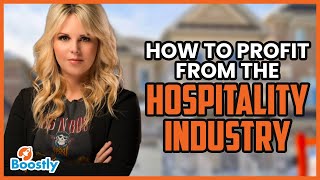
YouTube podcast episode (Boostly) where host Mark Simpson interviews Avery Carle about investing in short-term rentals. Avery describes her background (music, marketing), how she entered real estate after 2009, and how short-term rentals acted as a "cash flow turbocharger" enabling rapid portfolio growth. She reports owning 245 doors with eight short-term rentals, runs The Short Term Shop brokerage (offices in 15 US short-term rental markets), and highlights a standout beach property (property #6) that yielded ~30% cash-on-cash the first year and ~40% later after ~$150,000 rehab. Key advice: choose a good market over a quirky market, prioritize cash flow and people over tech, be adaptable, and use tools like Hospitable and PriceLabs plus MLS searching.
Questions this video answers
245 doors
8 short-term rentals
2015 (Avery: "I think we bought our first one in 2015")
May 2009
Offices in 15 US short-term rental markets
Chapters
Having the right market with an average property or having a unique property in an average market, I'm going to go.
Better market average property because none of my properties are what I would call like a unique stay. And but the tourism is there. If the market is good, then the property, I think you're going to be better off with an average property than going to a weird market which, you know, maybe there's not as much tourism or maybe the regulations are wacky. So I'm going to go with the stock stability of a good market, but an average property.
Okay. You are listening to the Boostly podcast. This is the podcast that helps hosts all over the world get the tools, the tactics, the trainings and most importantly, have the confidence to go out there and get more direct bookings. Today we have a very special guest who is a short term rental host. She is a real estate investor who along with her husband established a highly successful real estate firm called the Short Term Rental Shop. She's a best selling author of the book called Short Term Rental Long Long Term Wealth, a book which I highly recommend you go and check out. It's in my audible sort of favorites. She's the host of the epic podcast series the Short Term Rental show. And overall, just one of the biggest influences in the short term rental space. And I'm so excited. If you hadn't already guessed it, we've got the amazing Avery Carlon with us today and she's sharing her vast experience on what you need to be considering when you invest in a short term rental. So, so why don't we get started in the way we normally do, which if, if you can just introduce yourself and share any facts that somebody may or may not know about you.
Yeah, sure. So my name's Avery Carle. I'm a real estate Investor. I have 245 doors, eight of them are short term rentals. And the way I kind of look at short terms is as a cash flow turbocharger that has a place in any real estate portfolio. For me, short term rentals were the my first investment. So five of my first six investments were short terms. And because they cash flow so much heavier than traditional long term rentals, we were able to scale our portfolio much more quickly than if we just stuck with traditional long term. So I'm not one of those short term rental influencers that is going to say short term rentals are the right and only way all the time. We have long term, multifamily, long term, single family. We've got a little bit of Everything. So I think that short terms are definitely the path to get your cash flow where you need it to be to grow your portfolio in whatever way you want to do that. So whether you want to have a thousand short terms or maybe you want to mix it up some, that's kind of my strategy. I also run the Short term shop, which is the US's largest and maybe only short term rental specific real estate brokerage within the brokerage of exp. I have to say that or else I get in trouble. And we focus only on short term rental investors. We've got offices in 15 of the top short term rental markets in the US, opening a few more this quarter. And I think that's about it for now.
And it's an amazing story in your book as well, isn't it? Because for anybody who hasn't checked out the short term rent long term wealth book, it's a really interesting story about how that all comes around, which is amazing. And if you could take the listeners back. What did you do before? Before getting into this part of hospitality and I guess what did you do before? Before real estate in general.
So I worked in the music business in Nashville. Before that I was a marketing manager. Before that I was bartending in New York City in Austin, Texas. And I graduated from University of Texas at like the worst time in the history of the world to graduate, which was May of 2009. So there were no jobs. We were right, you know, in the thick of the Great Recession. So I played music, toured playing guitar in a bunch of sloppy punk rock bands, toured Europe a few times, Japan, the US a bunch of times. I got to do a lot of really fun things that I would not have been able to do had I been able to get a job directly out of college. And I, over the course of time I went back, got my master's degree and started working on the business side of music. And what I thought was my dream job up, up until then, and I was about a year in and I was, my boss, did not like me. I was on what's called a performance improvement plan, which is basically when the HR department tells you, hey, you're doing a really bad job here, we're giving you 30 days to get it together or else you're out. And usually that they're not actually going to give you a chance. It's just like them letting you know, hey, we're going to fire you in 30 days. So that happened to me twice in a row and I realized I am not a good employee. And I also realized I did not want to sit in a desk all day and be at the mercy of someone else. So. So we decided to invest in the Smoky Mountains, which is three hours east of Nashville. And we'd just been there on vacation and we'd stayed in a rental cabin and everybody else that was there was staying in rental cabins. And we said, well, somebody owns these. Why can't it be us? And we kind of were off to the races at that point.
What's one perception that's changed, particularly about short term rental, from the early days when you got your first unit to how you feel now about short term rental?
It is a lot easier now than it was then. When we first started. I think we bought our first one in 2015. There weren't really any property management softwares. There were probably at the time, but they were like in their infancy. They weren't as accessible as they are now. And there weren't. There were definitely not any education platforms. No, there were no influencers, there were no courses, there were no masterminds. And we kind of had to figure out how to do it on our own. At the beginning of every month, I would look at our calendar and write out our cleaner schedule and send it to her. And there was no automation. And so now that you can streamline all of that stuff, it just feels a thousand times easier than it did back then, having to do all your pricing by hand and all that. So I feel even better about it now than I did then.
What would you say has been your biggest win, particularly with short term rentals so far?
That first one was a big one, I would say number property number six, which was our first beach house down here in Destiny. That was probably the biggest win. It had been foreclosed on twice. It was just sitting right there on the MLS for everybody to see. And it had been on the market off and on for two or three years. And we were able to get it for a couple hundred thousand under market because the pictures were terrible. All the flooring was ripped up. It's. It still is a little bit of a weird floor plan, but we were able to make it work really well. It already had a pool and it really just needed some love on the inside. Like the kitchen was horrible in early 2000s and the granite color looked like dog throw up. But so it was enough to deter just a normal second home buyer from clicking through and investors maybe didn't want to mess with the work. We put maybe 150,000 into getting that up to speed. And that includes all the rehab and all the decor and all the furnishings. And it's worth triple now what we paid for it. And the cash on cash return is about. That first year was about 30%, I mean, but it's easily 40% now. So that property really was just like a, a diamond in the rough game changer for us.
So what I wanted to do is to make this a little bit more fun, a little bit different. What I'm going to do is give a multi choice game. So these are all going to be questions related to short term rental in general. Basically, Avery, all you got to do is choose out of the two choices and written on the back of each of those choices is a couple of options. And basically we are going to discover what you pick as the perfect Valentine's Day date for somebody out there. So just for a bit of fun. So first of all, we've got short term rental versus long term rental. If you had to choose an investment, what would it be and why?
Well, I do love them both, but I'm gonna have to go short term rental because that really was, you know, the life changing thing for us. We love our long terms, but the short terms were what made everything else possible.
That's cool, that's cool. So the next one, let me just see if I've got these in the right place. Sorry if you can hear paper moving about. And I'm glad you said short term rental because that is the whole of our audience pretty much agrees with you, which I'm sure they do. So when choosing an area to invest in, what is more important would you say that the having the right market with an average property would be more important or having a unique property in an average market? If you had to pick, and I know a lot of these aren't, you know, sort of you, you can find ones which are a good property in a good market. But if you had to pick between.
The two, I'm gonna go better market, average property because none of my properties are what I would call like a unique stay and but the tourism is there. If the market is good, then the property, I think you're gonna be better off with an average property than going to a weird market which, you know, maybe there's not as much tourism or maybe the regulations are wacky. So I'm gonna go with the stability of a good market. But an average property.
If you had to choose only one of the following, would you choose to have more asset appreciation or more cash flow from your properties? Cash flow, always lovely Cash flow, that's what we like. Is it better to have the right tech or the right people?
The tech is only as good as the people on either end of it. So I'm going to say good people.
Good people. Awesome. What tech especially do you use to help you find deals? And again, a bit of a loaded question because you've helped me with some of your training videos with this.
So. Well, in terms of our management, we use hospitable and price labs in terms of tech to help us find deals. So being a real estate agent, I do a lot of MLS looking and so. So I use the MLS a lot.
Is there any tips in general that you could share with the audience that you think is essential when it comes down to running a successful short term rental?
It's really important to be adaptable because things are going to go in ways that you did not expect or did not want them to go. Some of the ones that I see people complain about on Facebook groups all the time is, you know, they're watching their camera and they saw somebody did something they didn't want them to do that they never would have known that they did had they not watched their camera, didn't damage anything or anything like that. So if you are somebody who can't just kind of roll with the punches and let that slide, as long as there is no damage and you know, not micromanage people, then this business is going to be very difficult for you. So I would say being adaptable is a very important thing.
I know you've provided so much value this evening or today on this podcast and there's so much. First of all, I get the optimism. I get the fact there's loads of opportunities in that side of things and I know there's going to be a lot of people excuse my camera as.
It changed.
Technical difficulties. How can the people listening come and get in touch with you?
Yeah, so the best way is probably on Instagram. It's at the short term shop and then I have a link tree there with links to everything else that you could possibly want to do with the short term shop.
That's cool. That's cool. And was there any questions I missed or any final thoughts before we bring it to a close?
I don't think so. You did a great job.
Thank you so much for spending your your day with especially Valentine's Day with us. And thank you too. If you're listening in on the Bruce Lee podcast, we know there's a lot of places you can put your attention. It is your most cherished asset. And thank you for putting your attention with us. We really appreciate that. We hope you've picked up some awesome tips, some good, inspiring sort of stories in general and generally the positivity from this show. So thank you so much. That's it for myself. And that's it from Avery. Thanks again.
Having a blast. Gonna get it on the Bruce Lee podcast. Bruce Lee like Bruce Lee cuz it's so hard and the T is loose leaf making up those rhymes don't write it, just do it loosely.
More from Mark







I Tested AI Search SEO for Rental Hosts... Here Is What Happened [Live Training]



