Mastering Hospitality: Adapt, Market & Thrive with Ger
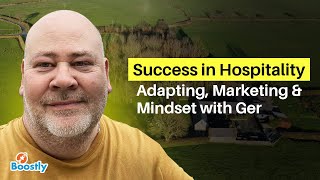
Ger runs holiday cottages near Snowdonia and has watched 20 years of hospitality change. Guests now stay shorter, so he targets marketing carefully instead of hoping people find him. He converted farm buildings into self-catering units and keeps a personal touch rather than automating everything away.
Chapters
Hi everybody. Welcome back to the Boostly podcast. This is the podcast that gives you the tools, the tactics, the training and most importantly the confidence to go out there and get yourselves more direct bookings. We do a Behind the Host podcast and this is where we dive into real stories, real hosts. It's the stuff which they can tell you about their journey and their experience which you can then take and put into your business, your hospitality business. So it'll save you time, save you money and ultimately improve your business. And the key thing is the reason we do this is so it makes you realize that you're not alone with hosting. Other people go through similar challenges, similar successes and as a community, being in hospitality is one of the best things to to be in. So hopefully you'll agree. And ladies and gentlemen, today we have a friend of mine, he's an amazing host, G from Wales. G is a top Welsh host. He's somebody who truly embodies mindset of continuous learning and adaption. He's been in hospitality for over 20 years. He's co authored a chapter in Hospitable Hosts a best selling book. He's known for his motivational posts and action driven within the community. He takes on board all of the information and he goes and implements it. And if there's one thing that you can take away from today's podcast, it's going to be that you can't rest on your laurels. That hospitality is always changing and so should you, you know, be be ahead of, of the curves. We're going to dive in. Welcome along Gur. Thank you for joining me today.
Good morning.
So I know I probably murdered the name of the business there is obviously based in Wales, it's a Welsh name but just cover the name of your business and where you are in the world.
Yeah, our business is called Being Heathland Bach. Being small, we actually live in a property called Hrosyth. So the natural progression was to name the business Rosseth Bachelor. Wales is a lovely place but it's quite, it's not large but it's got different sections to it. We, we basically are based on the northwest place called Thin Peninsula, which is lovely Pentheirn in Welsh and it's just off Ururi, which is again English is Snowdonia. So we get lots of people coming here who've been to Snowdonia or Uru supposed to call it now they've changed the name, been to Anglesey and never been any further. So they just, they just carry on going and they end up in an Absolute oasis of beauty. Here again we sell the place on its coastline, 60 miles of lily coastal path. Some call it like a mini Cornwall, but not as busy.
What is the one thing you want people to take away from listening to this episode on the Boostly podcast?
The one thing I think to take away is to be confident about running hospitality business, especially in today's climate. There's an awful lot of negativity out there, especially in Wales with tourism tax and 182 day road this and that. But you know what, at the end of the day you've got to look through all that. It's potentially every business has issues, be it in sort of exports, imports, manufacturing and hospitality is getting it now. So just be confident and believe in yourself and believe in, in the fact that you can actually run a very successful business.
So you've been in hospitality for. You mentioned before we started recording for, for 20 years. But before we we dive into some of the lessons you've learned, can you just give me couple of minute version of how you got started and what drove you into the hospitality industry?
Yeah, you could say Pentland is very, very much hospitality driven. We've got some lovely beaches. Abbasour is a very popular place. Botelly is world renowned for sailing. So since I was like 10, 12 years old, I've been involved in it. When I was about 16, I went to work at a local attraction. It was a local shooting school which I helped run and I actually taught people how to shoot there. And I very, very quickly got to understand that dealing with people who are on holiday is much easier than dealing with people who need stuff and it's a pleasure for them, they enjoy it. So that was that. And in about 10 years later, when I was about 30, the opportunity arose to buy quite a rural property, an old farm. So I bought this. No intention of opening a hospitality business but three years later there was a set of outbuildings which we didn't buy, which is adjacent to the farm and they went on the market 20 years ago, believe it or not, £18,000. We only paid 40,000 for the house. It's hard to believe. So we bought it. Wife wasn't too happy because I spent all the money we had on restoring the house, on buying the buildings. We thought, right, what should we do afterwards? We actually bought them to stop anybody else buying them and opening a big barn there or something. So yeah, cut a long story short, we converted them into at that time three units, one sleeps six and one sleeps five and one sleeps four. Used to be an old pig farm. So they're all joined together, which was quite nice. And yeah, I did most of the animation myself. I've got background in, in flooring and interiors and I'm quite practical so I could do most of that in between working as well. Yeah. And then at that time we set it up, things were changed a lot. I can remember going out and buying my. I had to have a laptop to do some work in and out, this and that, and buying an Acer Ferrari, which cost me a thousand and a half. And you know, you think how much a laptop cost you nowadays? You know, I invested what, two and a half grand in a website 20 years ago and it was lots of money. You had to have it because we were rural as well. We're about 10 minutes from any beach or the coastline. I think it, you, it gives you more drive. You have to work harder to make it work. So. So 20 years later, we're still here.
So across those 20 years, what's been the biggest shift that you've seen in the hospitality industry?
I'd say that the biggest shift has been the, the time scale that people actually come on holiday for. When I first started, I joined a local, sort of local group, basically 14 housewives and me, and it was like a farm stay thing and I, I joined in and brought some new ideas, this and that. And it's quite strange, in down the road is a place called Abbas. People heard them and I think 50% were from that area. And they literally, in the summer they only let for a minimum of 14 days. First two weeks from holidays, middle two weeks from holidays and last two weeks Easter and wit and that was it. And when I said I, I left it going back 20 years, I'd left for three or four nights. They just look, they just looked at me in amazement and said, wow, that's not even worth it. We wouldn't do it. So after three years I left the group and strange enough, I'm. I'm still in contact with a few of them and I help them out with, with their. And they're now taking two and three day bookings. So the market, the market shifts. I'm not saying it's right and I'm saying it's wrong. You know, it's nice to have long bookings. I've just taken one literally this week for three weeks in August, which is amazing for me. But then they, things change and, you know, and you've got to embrace that change as well. No point staying on the same spot otherwise. Life takes, you know, life just overtakes you.
What's one outdated practice that used to happen a lot 20 years ago that you still see people doing now where, which they probably shouldn't be and they need to let go of.
As most people will know, I'm a big, big supporter of customer Persona, customer avatar. I'm also studying for a degree in marketing. So I've looked into that side of things. Years ago, people still do it. Nowadays it's a case of one box ticks all they just like, we've got to hold the cottage. We don't care who we take. We'll take retired people, families, couples, whatever. Now you people must have a much more targeted approach to it. Again imagine it to having a net and throwing it, just a standard net in, in the sea and dragging it up and you'll catch, you'll catch a few fish, a bit of this, bits of that. But it's quite low value. Rather than having a specific net going out and targeting a certain species and then, and catching that search certain species, which is of greater value. Now I'm not saying you only take one customer. What you've got to do, you've got to look at two or three types of customer and target them accordingly and that's the way forward, be it retired people, be it couples, be it contractors, as we discussed earlier. But people have got to get out of the mindset and thinking, yes, we'll just take anybody because anybody inevitably is nobody.
Your mindset when it comes to change, what advice would you have for people who maybe don't have that same change mindset and what advice can you share of how you deal with change? When it comes to business it is.
Difficult because we all do what we've always done and then simply do that. You will get what you've always had. Now you've got to change. Change is inevitable, isn't it? So my logic is you, whatever the change is, you've got to embrace it or give it a chance by bracing it. Look into it. Now again, there's a lot of changes. Like there's, you know, with the CRM, I'm not even started with that yet. I will get to it. But sometimes if people are following change, they try and do everything together. Now cut it into bite sized pieces. If you're not, you know, never ever gone on social media before, fine, just set up a Facebook account and do it slowly. Make emailing lists. Just, just, just start off slowly. One email every six months. Do it in bite sized chunks. Don't Try and do everything together, otherwise you'll get overwhelmed. When you get overwhelmed, what happens? Nothing. You just give up and salt can go away and then in three months time they'll come back again and try it again, just, again, just embrace it, you know, be positive about it, but do it in small, small chunks.
What's more important to you in your business? And I, I expect I know what you're going to say. More important or is the personal touch more important and if so, why?
Personally, I think it's the personal touch, but I'm only a small operator. I've got four cottages because although I've got automation in there, I do think that to retain clients or customers, it's important that you give them the personal touch. That's the difference between us and booking.com or Sykes Cottages. They, they, they. One part of automation I do not like is lock boxes. I know they're going to come and it's easy for people, but there was an interesting piece by Deborah Laby a few months back about how she, she has lots of lock boxes in her properties but when they arrive there's a, there's an automated video of her welcome to the property or she sends somebody over there to welcome and show them around what's what. And again, I know it's not. That is personalization as well, isn't it? People around holiday and they, they want to buy into the place, they want to know what to do, where to go, what to see. So I think that, that, that I do that because it drives repeat customers and to me that, that, that is, I would never, I would never ever drop that over automation.
So what is one action that you think everybody listening to this right now should go and do in their business?
Embrace what they're doing and be positive about what they're doing. You know, sort of look at business, look at what the pluses and what the minuses are and go with that. Do what you're happy in doing, do you're happy in doing and just, and carry on doing it.
The one thing I'm really taking away from this is that if you're in hospitality, it's about injecting your own personality and just be who you are. But also don't be afraid to start putting stuff out there, testing the waters with all of the new tech and all of the things that you can be using in your business because ultimately that opportunity is right now compared to, you know, 20 years ago. So thank you Girth, for coming on, sharing your behind the host journey in hospitality where can people go to check out your business and find out more more about you?
We're obviously you go to my website which is Prossedbach.co.uk Again we're on most of the socials, Facebook, Instagram, if you're in Facebook. You know I'm always posting in hospital in the hospitality group as well as Bruce Lee. So I'm out there. Just, just search for G. That's cool.
And I encourage everyone, we'll add the link somewhere around where you're listening or watching this to go and check out his website. It's beautiful views. If you like rolling green countryside and you know, really beautiful Wales, then please do go check out Gur's place and go and stay with him. You get to meet him and and see what an awesome chap he is. So Gur, thank you so much for coming on the Boostly podcast today and for sharing your journey. Thank you too for listening to this on the Boostly podcast. We hope you've enjoyed this. If you know somebody else who will get value from listening to girls journey, please do share it with them. If not, come and join the hospitality community on Facebook and we can continue the conversation. Thanks very much.
Having a blast. Gonna get it on the Bruce Lee podcast. Bruce Lee like Bruce Lee. Cause it's so hard on the T is loose leaf making up those Rhy don't write it, just do it loosely.
More from Mark







I Tested AI Search SEO for Rental Hosts... Here Is What Happened [Live Training]



