Mike Michalowicz - Keynote at STR Wealth Con
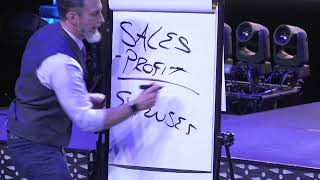
Mike Michalowicz argues profit should come first, not last. He walks through his Profit First system: split each deposit across five accounts and take a fixed percentage as profit immediately. For a $1M business, he shows the exact percentages to allocate and when to distribute.
Questions this video answers
Income; Profit; Owner's Compensation; Tax; Operating Expenses (OPEX).
Allocate the income account on the 10th and 25th of each month (the '10/25 rule').
Every 90 days (quarterly distributions).
Profit 15%; Owner's pay 20%; Taxes 15%; Operating expenses 50%.
Chapters
All right, how we doing? Clap it up one more time for Mark and the amazing Minoan team. All right, who's excited for our keynote here that we're going to bring out in a second? I need some. I need to make some noise louder than that. Come on, guys. So this is somebody that I have looked up to for a very long time. I've been following his content for a very long time. Big shout out to our boy, Mark Simpson, for helping connect me with this gentleman's team. And I just found out he's an amazing guitar player. We were just jamming out to Metallica back there, so super pumped. Just want to make sure that we are good to go over here with that other. Are we bringing. There we go. There we go. So without further ado, ladies and gentlemen, we've got Mr. Mike Michalowicz. He's the entrepreneur behind three multimillion dollar companies, the author of Profit First. A lot of you up here in the VIP have that Clockwork, the Pumpkin plan, and his newest book, fix this Next. Mike is a former small business columnist for the Wall Street Journal and regularly travels the globe as an entrepreneurial advocate. Everybody, I want you on your feet and get as loud as humanly fucking possible for Mr. Mike Michalowicz.
Thank you, brother. Than. Thank you. Thank you very much. Thank you. Thank you. Thank you. So we're gonna pack it with business tips today. I got my first tip for you. Ready? Don't dress like this when you go to a saloon. I'm leaning against the bar when I got here, and someone goes, pardon me. Keep. May I get a tonic? And I'm like, oh. So there's a little tip for you. Don't dress like this. I got a question for you. Good to see you again. I got a question for you. Have you ever been lied to by a loved one? Someone who cares for you but lies through their teeth at you because they think it's in your best interest if you've ever been lied to, raise your hand nice and high. Okay. All right, interesting. So about two thirds of the audience, Let me start a little test here. By a show of hands. Who has hands in this audience? Two thirds. Okay. All right. Just measuring participation there. So it sounds like all of us have been lied to at some point by a loved one. And so I've been thinking about this, and I think I found ground zero, like where it first happened. And I think it's when you turn five or maybe six years old. So to give you some context, I grew up in the 70s. And I grew up in this stranger danger generation. You know, that's where my mother and father worked. And I'd come home from school in kindergarten, whatever. I'd walk in the house, I had to slide the bolt closed, swing the chain in there. I would take a chair and lean it against the doorknob to make sure it couldn't be opened. And I'd watch chips on Erik Estrada driving on his motorcycle. It's pretty cool. And wait till my mother would come home. And she told me, there's a real simple rule to follow. If there's a stranger, they are dangerous. Don't make any eye contact. Don't look at them. Avoid strangers. Remember that. Remember that instruction. Stranger equals danger. My mother comes to me and she said, when I was losing my first tooth, I was in, I think, kindergarten, so 6 years old or so, she came to me and said, mike, you know that stranger danger thing? I said, yeah, yeah, Mom. She goes, well, there's one stranger who's okay. I'm like, really? She goes, yeah, yeah. When you lose your first tooth, there's this woman who will crawl into bed with with you, will take a body part from you and then leave hush money so you don't talk about it. I'm like, oh, that sounds great, Mom. The tooth fairy. Now, not to burst anyone's bubble, but that's a total myth. There is no tooth fairy. I know, I know. And I think that's ground zero for when we are told myths. But sometimes myths become so fixated that we believe in them. We actually call them axioms, an established belief that just perpetuates through society. Do you know in the BC times, like 500, 1000 BC, that humankind, we thought the world was flat? I don't know if you remember from history class, if this was a world map here. In the corners of the world, maps they made back in the day, there was sea. Sea serpents and monsters. Remember that? Those were there to dissuade sailors from going too far in the ocean because you would fall off the edge of the planet. So people didn't circumnavigate the world. If you lived in Italy, you'd navigate along the coast because you were afraid of falling off the edge of the planet. True story. Around 500 BC, Greek philosophers challenged this notion for the first time. And as the story goes, there was a master philosopher and his apprentice. The master philosopher is, you know, eating, I don't know, a pear or something. And as he's about to bite into the pear, he notices there's a spot on it. So he just notices that. And he kind of turns the pear. And as he turns the pear, the spot goes away from his vision. He can't see it. And as he turns it back, he sees it again. Well, he and his apprentice are sitting near a port, and they're watching boats go in and out of the water. And they notice that as a boat goes out, all the work starts to see sink below the horizon. As it comes back into the port, it comes out of the horizon. He turns the pair, he looks at the boats, and that's when the master looks at his apprentice and says, do you understand what this means? He goes, the world isn't flat. And the apprentice says, that's right. The world isn't flat. It's round, Master. And the master philosopher looks at the apprentice and says, it's not round, you idiot. It's shaped like a pearl. That's the best fucking joke I got. I gotta be honest. That's about the limit. Thank you. Thank you very much. Yeah, thank you for the. My mom's here, apparently applauding. Oh, gosh, this is. This is not good, Bill. Okay, so that was an axiom. That was an established belief. Humankind. We thought the world was flat, and we behaved accordingly. It took another 2000 years. Was it 1492. Christopher Columbus sailed the ocean blue. So it was another 2,000 years before humankind circumnavigated the world and the economy exploded. So we knew the truth 2000 years prior, and it took us longer to figure that out. Axioms are the most dangerous thing for business owners. I'm going to share perhaps the most dangerous axiom of all. But first, I want to share. There was a worksheet handed out. It looks like this. So I'm going to give you the fill in the blanks. We already started. Number one, society is addicted to axioms. So the first little blank there is, society is addicted to axioms. We hear things, we're told they're true, and sometimes they're not. Now, in business, I want to show you the most established axiom that exists. In fact, I would argue every person in this room knows it inherently. You've been trained on this. It's in thousands of books. It's in our vernacular, and here's what it is. We've been told the foundational formula for profitability is this. Your sales minus your expenses in your business results in profit. Who's heard of that formula before? How about the handless people? Have you heard of that? One, Ted. Okay, we know this formula. It's taught in thousands of accounting books. In fact, it's in our vernacular, we call profit the bottom line, the year end. There was a study conducted by the sba, the Small Business Administration, along with a large bank, and they identified that of the 30 million small business owners in the US and the 320 million small businesses global globally, that 83% of us are surviving, check by check, 83% of businesses. That means 83% of the people in this room statistically don't have enough incoming in coming in right now to pay rent. If your employees pay your employees, let alone pay yourself a reasonable salary. Most of us are just getting by statistically, so that means you are barely making it. And listen, if you're crushing it, it's the person sitting to your left and to your right who are struggling statistically. Thank God it's not you. I would argue that the reason you got into business and doing what you're doing, short term rentals, is probably twofold. I bet you got into business because you want to experience financial freedom, right? Not to ever worry about bills. Okay, good, good. That's my uncle, that's my mom. My uncle has a very female voice, by the way. It's cool, it's cool. The other reason you probably got into business is for personal freedom to do what you want when you want. Yet for most businesses, we don't get those dreams. We have the nightmare of not making any money and working our asses off not to make any money. What's wrong with us? And I realized perhaps there's nothing wrong with us. Perhaps there's something wrong with this. Because when we're told something comes last, when something's the last consideration, the bottom line, the year end, when something comes last, it means it's not important. If you love your family, do you say, you know, I love my family so much, I've decided to start putting them last. I really did. If you are concerned about your health, you say, I'm so concerned about my health, I've decided to put my health last. Of course not. When something comes last, it's the Mignana syndrome, it doesn't matter. It can wait until some future point. What we prioritize always comes first. If you love your family, they come first. If you care about your health, it comes first. And yet we're told that profit comes last. And for most businesses, perhaps people in this room, you haven't been profitable. And you wait till the end of the year, which is right about now, right, April 15, tax time comes around, your accountant comes out, shows you that worksheet, and there's nothing there, no money. And we're like, oh, shucks. That's the exact word you use, by the way. No. Oh, shucks. And we say, well, maybe next year. And we kick the can of profit down the road yet again. What I'm going to share with you in our hour together is this. Profit does not come last. Profit is not the bottom line or the year end. Profit comes first. Here's the new formula I want to introduce you to. Did I hear another family member yell sales minus profit equals expenses? This is the new formula. And what I did here is real simple. I did what's called a variable swap. Here's the old formula where profit is last. Now, in the new formula, profit comes first. Every time you have a transaction in your business, every time you generate revenue, every time a deposit comes in, we're going to take a predetermined percentage of that money, a percentage as profit. We're going to hide it away from your business. And then your business is going to tell you what's truly available. What's available to operate your business, we can run your business off of. We're going to apply the pay yourself first principle and into your business. We're going to pay your business your profit first. Now, let's just go on with the worksheet. This gentleman is so unimpressed already. He's like, I'm out of here, I'm out of here. Number one, society is addicted to axioms. If the prior generation says it's true, the current generation assumes it to be true, right? We were told the world is flat and generationally we believe it. We've been told for 300 years, since the invention of generally accepted accounting principles, GAAP about 300 years ago, we've been told profit comes last and generally is what we're doing. As a result, today, 83% of businesses, small businesses under $25 million in revenue, I suspect that's most of us in this room, 83% of businesses are surviving, check by check. Here's answer number two. Profit is not an event, meaning it's not an eventuality. We don't wait to get profit. Profit is a habit. So the answer to number two is profit is not an event. Profit is a habit. We're going to bake into every single transaction in your business. Now, I'm going to show you in our hour together how to make this happen in your business. But I do want to Share a little bit about my story, perhaps because you probably don't know who I am. Just to give you some context of why this is so important to me, why I'm so committed to making your businesses profitable. In fact, before we are done today, I am committed that you will be permanently profitable and that by tomorrow you have a system that will bring permanent profit to your business. Now, why am I so impassioned about this? Just to give you a little bit about my background, I've been an entrepreneur my entire life. Ever since I graduated college, I've been a business owner. My first business, I was in computer systems. I was the computer guy. I would go and fix your computer. I usually make it worse and leave and charge you for it. Don't know why that business wasn't sustainable, but after eight years of working my butt off, I was able to sell the business. Now, the business was never profitable when it was running. We were always just getting by. But I was able to grow it, and I sold it to private equity. And admittedly, I did not make FU money, but I did make f me money. I don't even know what that means. I don't even know, but it feels good. It feels good. I effed me and my second business. After I sold that business, private equity, I started another business in computer crime investigation. And we got within six months of starting that business. The Enron trial. Yes, I investigated the Enron trial. I was not the prosecution. That was the FBI and the CIA and the atf. But our business did the defense analysis. So if you remember the names, like Kenneth Lay and Andrew Fastow, they were my clients. And thank you very much. And we did the analysis and the evidence is no longer sequestered. So a lot of people approach me and are like, oh, that's. That was a big trial. Everyone knows the Enron trial. Can you tell me about that case? Absolutely. They were guilty, and I was their defense. You know, guilty. That business, right place, right time, got the Enron trial. Then all these marquee situations and cases were calling us. Michael Jackson's attorneys call us when he was being prosecuted. When Christie Brinkley got a divorce for her first, second, third, fourth, fifth time, or sixth, fifth or sixth time, she divorced a guy named Peter Cook. We did the investigation. Lots of small business owners in here. I had 30 employees at the time. But you know this. You got to sacrifice yourself. So when we landed a case with a supermodel, I had to manage that myself. I had my wife's like, that's bullshit. And this Is a true story. Christie Brinkley apparently had a birthday yesterday. She turned 69 years old. And my wife texted me and said, you, girlfriend turned 69. Your favorite number, isn't it? Oh my God. And like it is actually my favorite number. Subsequently that business was acquired. I sold it to a company called Robert Half International. It's a Fortune 500. In that time I made fu money. I was 33 years old, became a self made millionaire and decided that I needed to show the effects of success. I was rolling in cash. So what do you do? Well, first thing is you buy your childhood dream car, which was the Dodge Viper. So I bought my Dodge Viper jts, I bought a Land Rover and a BMW all within four hours. Yeah. And you can do that. I'm from New Jersey. If you didn't figure that out, I'm from New Jersey. I moved to. Anyone here from New Jersey? Nice, nice. So I moved to a town called Mountain Lakes. It's in northern New Jersey. But listen, if you're not from New Jersey, you do know this about New Jersey. We don't have mountains and we don't have lakes. I moved into Mountain Lakes, which is really hilly puddles, to be honest with you. And I moved in there because I wanted to show success. I wanted to have the biggest house I needed to show the effects. I also got a place out in Hawaii. There's an island called Lanai. I got a house out there for a sabbatical and everything to show the effects of success. I had absolute confidence and admittedly arrogance. And I knew I was successful. I had to keep this rolling. So I also started a business as an angel Investor. I started 10 companies simultaneously. Oh, by the way, I looked up in the Webster dictionary, what's the word for someone who has tons of arrogance and confidence needs to show their success? There's a word for it. It's dick. I was a dick. I was a dick. A dick. And I didn't know it. I didn't know it. I didn't. So I thought I had to continue this success. And what I did was become an angel investor. I subsequently found out that I was the worst angel investor of all time. I started 10 businesses simultaneously. All of them, all of them collapsed within six months. I was spending good money after bad money, just blowing money away because I knew I was here. Of course we're going to be successful. Took me two years to wipe out all my wealth. Everything. Which by the way, today I'm going to teach you how to accumulate wealth. If anyone wants to know how to lose money really quickly. I can help with that, too. Just start off with buying. Buying a Dodge Viper. Oh, and by the way, I looked up once, I looked up the word for in the Webster dictionary and found Dick. It also said next to it, in parentheses, it said, the winning trophy for Dick's is the Dodge Viper. Go figure. Go figure. Sorry if there's any Dodge Viper owners in here. Really sorry. So I lost all my money. On February 14, 2008, I got a call from my accountant. He'd worked with me for every business I've had. And he said, mike, I can't believe this, but we've been reviewing your numbers and it's pretty bad. Now, listen, I saw the bank accounts dwindling. Logically, I saw the money fading away like this, but emotionally, I wasn't ready to accept it. Maybe you've been there, too, where the money's just going away, but there's this kind of last hope that a big opportunity will come your way or maybe someone will buy your business or customers will start flowing in. So logically, I saw it going away emotionally, wasn't ready to accept it. On February 14th, Valentine's Day, 2008, Keith, my accountant, called me and he said, mike, I can't believe I'm going to say this to you. With all that success you've had, it's our professional recommendation that you declare bankruptcy. And I was like, are you kidding me? Is there an alternative? And he said, well, you have a tax bill due. He goes, oh, I got an idea. He goes, don't pay your taxes. And I was like, are you serious? And he goes, no, I don't know. First of all, that's the most perverted joke on the planet from an accountant. Second of all, do you know how accountants, you ever notice how they start laughing and it reverts to like a snorting sound? He's like, you have to pay your taxes. I'm like, jesus, what, are you kidding me? He goes, no, you have to pay your taxes or you're going to go to jail. So instead, he goes, you can go on an installment plan, which I don't know if anyone here has ever been on a tax installment plan with the government. It's the legalized mafia. They get you. And that's what I did. And he said, you have to liquidate your remaining assets because you're not going to declare bankruptcy. The only thing I had was my house, a few vehicles, and admittedly, I had not been telling my family up to this point. Our condition. I came home on February 14, 2008. I'll never forget it. I met with my wife and my three kids. They had prepared dinner. We were going to celebrate Valentine's Day. I came home and I actually couldn't walk inside. Listen, you are a provider as an entrepreneur for yourself and for your family, for your community, for our world. We've decided to become a provider. And the one thing I couldn't do wasn't doing was providing. I was taking things away. I came home and I was sobbing when I walked in because I hadn't been telling my family what's going on. I remember walking to the door, my wife sees me, and it wasn't like just like tears coming down. It was like snot bubbles popping, you know, like legit sobbing. Thank you for laughing at that. I appreciate it. We're that close already. It's amazing. It feels good. It feels really good. And I walk in and my wife is like. She goes, mike, Mike, who died? And I didn't know how to respond. I said, I think I did. I've lost everything. She sat me down. The food was cold. My children were sitting there. And if you have kids, one of the scariest things to see is your parent breaking down in front of you. And that's when I said, we've lost everything. We're going to lose our house. We lost it 30 days later, thank God. There was neighbors in our town, the Smiths, Jenny Smith and Frank Smith. They actually volunteered. They gave us their house. They were going away for a work sabbatical for a couple years. They said, we heard about your situation, Mike. We got you. They saved me. Thank you. To them. I had a look at my daughter. My daughter was 9 years old at the time, and she loved horseback riding. She would go to a weekly group class. It was about $20 for the group class. And seven or eight kids would go in circles and do horse stuff. And it was a half hour. It was $20 to go secession. And I had to look at my daughter and tell her, I am so sorry, but you can't do that. Now, as I said that, my daughter got up and she ran out of the room. I mean, ran away from me. It's the darkest moment in my life. And listen, I'm not sharing this story to seek your empathy or your sympathy. I do not deserve that. I'm simply sharing a story because I kind of suspect that yours. I don't know if you've experienced financial loss or something far more traumatic. Sadly, in this room, I know it's happened Horrible things that we can't even talk about. I do know when that trauma happens, the best solution is to run away. That's the first solution as painful as to see your own daughter run away from you. I also respected it. The thing was this. My daughter ran to her bedroom to grab her piggy bank and she ran back as fast as she could and she put on the table and she goes, daddy, since you can't provide anymore, I'll do it. Yeah, if anyone in this room starts effing crying, I'm a co crier, so that means I'll start crying. So do not cry because I'll go hook, line and sinker with you. That was the darkest moment in my life. It also became the inspiration for I'm going to teach you because I set out to fix everything. I know about entrepreneurship and I didn't realize how little I knew. I do want to share this. There is a beautiful saying about rock bottom moments. And you've been there and you've heard the saying. As horrible as a rock bottom moment is, at least you're at rock bottom. Because there's only one way to go, which is up, right? Have you heard it? It's beautiful. It's total bullshit, but it's beautiful because the reality of rock bottoms, you get dragged along the ocean floor, shards of seashells and glass tear your body. Just to put a little bow tie on my story, the next two years, I went through depression. It's something I'm not proud about, but it's something I proudly share. Because the most afflicted community in the world with depression is us. It's entrepreneurs. I didn't seek therapy. I'm not proud of that. I do now. Hope you do too, if you're ever in that situation. And I started to drink really hard. I'm not really a drinker. Maybe once a month I'll have a margarita or something, but I really don't drink. Except for then I drank a lot. And since we had no money and we did get a house, effectively donated to us, couldn't afford anything, including television, which I don't know if you know this, if you can't afford cable television, they still broadcast over antenna. Did you know that in high def, nonetheless, you got about four channels. And I remember this one night that changed everything for me and maybe will change everything for you. I was sitting back on the couch watching tv and it must have been two or three in the morning and I had booze on the table. I was wearing a T shirt with Cheeto stains on it. And I don't even eat Cheetos. And I'm Jesus. And I'm watching this. And on tv, all there is is infomercials. And there's this infomercial from this celebrity from the seventies named Suzanne Summers. If you don't know who she is, she's bleach blonde. And I'm talking about her skin. It's bleach blonde. And she has bleach blonde. And she's demonstrating this product called the. The Thigh Master. Have you heard of this thing? Do you have it? You're like, you don't have to demonstrate. She just did this. Yeah, I know what it does. If you don't know what it does, she's right. You put a stick between your legs and you do this until you're ripped. Ask the Thigh Master. Apparently you own it. Yeah, get out, Susan. And I'm watching. It's like, what am I doing watching this stuff for 30 minutes? And I turned the channel, and the solution to why businesses aren't profitable came on. There was a fitness instructor, and what you're about to learn is physical fitness translates to fiscal fitness. It was an instructor that went on. It was a public broadcast channel. I guess it was something that was recorded. And she shared four core principles that I'm going to invite you to learn, too, Just so that we're on the same page. We did answer number two, and we're about to. Number two, by the way, was profit is not an event. Profit is a habit. We're about to do number three. It starts off like this. The fitness instructor. Oh, here's my pen. The fitness instructor shared that in the American Diet. I don't know if you know this, that plates have doubled in size in the last 300 years. Back when our country was founded here in the US Plates were about this size. So what we consider like a coffee saucer or a dessert plate today was an entree plate. Now, the interesting thing she shared is we are best served to achieve an outcome not by changing ourselves, which we're often told, she said, but instead channeling ourselves. In other words, don't change who you already are. Keep doing it, but set up a around who you are to drive the results you want. And she explained in diets that in the last 300 years, plates have doubled in size. It's about the size of a plate today. But our behavior for humanity hasn't changed at all. Back 300 years ago, we'd fill up a plate, as our moms told us, we'd clean up the plate. So George Washington and his buddies were just filling up their little plate and finishing it. Today we fill up our plates, which are now this size, and we, as our moms told us, clean up our plate. So double the portions, double the caloric intake, and societally double our waistlines. She said the solution is real simple. Get smaller plates. It's crazy, it sounds like, but it restricts our portions. And I'll give you proof of this. I ran a test. Let me ask a question. Anyone here have teenage boys raise your hand nice and high. I'm sorry. I'm deeply sorry. I'm sorry. I'm sorry, Ms. Thighmaster. Because they're not called teenage boys, they're called creatures. The food consumption is ridonkulous. I have two of these monsters. Here's how it works in my house. My two boys will wake up sometime around the ass crack of two in the afternoon. They come walking and they can't speak at all. They're like, there's hair. The only thing in front of them is their stink. There's a smell. And what they do is they grab the cereal bowl, they fill it up with Cheerios. There's Cheerios everywhere. They reassemble it like it's a Jenga tower of Cheerios. Then they pour milk on it, explodes again and they leave this sticky mess and they go back to their lair. So. So I tried out this concept of reducing the size of the plates or the bowls. All of a sudden Daddy O got real clumsy. I broke all the bowls. I didn't know what I was doing. And I went to the local store and I bought bowls that were slightly smaller. Not these itty bitty tiny things, but slightly smaller. And they didn't notice hats crack at 2 in the afternoon. They come walking in, they fill up those new bowls. Same problem, same explosion, but they consumed less. I did this four times over about six months. I got the bowls to half the size and the goons never noticed. Never noticed. And our food consumption, we used to go through a box of Cheerios every hour or so. We were going through a box Cheerios. Now, in about three days, which if you teenage boys is an absolute miracle, our consumption was reduced. This is the key lesson I want you to take away. If we reduce the size of the plate, we reduce our consumption. Here's how we do in our business. Now I gotta ask you a question, Two questions. I want you to be totally honest here. By your show of hands, even the handless people, I need you to raise your Hands too. If for your business, you have what's called a primary checking account, you deposit all your income into it and you pay most your bills from it. If you have that, raise your hand nice and high. Hi, everyone. Okay, okay. I'd say almost 100% of us. Awesome. Okay. If you just raise your hand, I commit. We're going to make you wildly profitable because that is the natural normal behavior of entrepreneurs. Second question. Even though your accountant may say, read your income statement, your balance sheet, your cash flow statement, know your KPIs, your metrics. Yeah. Even if you're. Even if your accountant says that, who here follows a simpler system of managing money by checking your bank account? At least I check once a month. And if there's no money in there, I panic. If there is money, I celebrate. Who checks their bank account at least once a month, Raise your hand nice and high. Okay. Any once a weekers, keep your hand nice and high. Weakers daily. You're checking right now. She's like this. She's like, holy shit. Yeah, I'm with you, my friend. I'm with you. All right, get the camera on her. If you check your bank account at least once a month, but most of us here doing weekly or daily. Awesome. Awesome. You are positioned to be wildly profitable because that's the natural normal behavior of entrepreneurs. Don't change yourself. We're going to channel you to get the outcome we want. Here's what we're going to do. Whatever bank you work with today, if you like them, you can keep working with them. For now, I want you to set up five accounts at your bank. First account is called income. Second account is called profit. Third account is called owner comp. Fourth account is called tax. Yeah. And the last account is called operating expenses. Because we're being cool, we're going to call it opex. And this is on the worksheet. This is the number three, I think on our worksheet. That's the answers to them right there. Let me explain what each account does. These are going to be small plates for our business. And we're to carve up money for its intended use. We're going to pre allocate money in your business for what it's intended for before we spend it. This has to be your bank because we want to intercept that behavior. You log into your bank account. Awesome. We set these accounts at your bank, the income account starting today. That is what's called a depository only account, meaning money goes in and we never again pay a bill from there. I call it the serving tray. Thanksgiving, this past November, we celebrated at our house. We had like 15 people over. It's interesting. It's always the same thing. We pull the turkey out of the oven, my wife and I, and then everyone's like, oh, my God, I gotta put this on Instagram. Because no one's ever seen a turkey before. Everyone takes their stupid pictures. And then I didn't say, hey, everyone, grab a knife and fork. Fight for it. Who wants it the most? No, we carved the turkey. And the reason you carve the turkey is to assure that every guest at the table gets a piece of turkey. And if you celebrate Thanksgiving, I suspect you carve the turkey too. And actually, whenever you host a dinner, if you have a serving tray, I suspect everyone's not eating off the serving tray. Everyone takes their portion off the serving tray. The income account starting today is the serving tray of cash. It's the cash turkey that we're going to carve up. When money comes into your business, it has multiple guests to serve, not just the next guest that's hungry has to serve all the guests. And we're going to allocate money to the following four accounts. Profit being first. The profit account is a reward for starting a business. I don't know if you know this statistic, but about 17%, it's actually more 15% of the world population will ever start or operate a business. 15%. So if you look at your kindergarten class, mine had 13 students in it. That's about four kids. I'm sorry, we had 30 students. That's about four kids that ever started a business. So you're one of the weirdos from your kindergarten class. I don't know if you knew this. You're the exception. And there's another statistic. Only 20% of people who start a business are successful in maintaining it for over five years. So that means 15% times 20%. That's 3%. That means out of your kindergarten class, one kid actually made it. And you're the kid. You're the kid. You know, the rest of the class, the rest of the world is actually looking for a good job with a good company. They'll treat them well. The majority of people want to work for a business. The weirdos want to own the business. So thank you for what you do now. You wooed that you're a weirdo. I just want you to know that. But here's the deal. Write this one out as a little bonus comment so you can put this one in the back. The job of an entrepreneur is not to do the job. It's to be a creator of jobs. Your job is to create jobs, not do jobs. If you're doing the job right now, maybe you have to because you're starting it up. Your job is to get out of that job because you are stealing it from people who want to do good jobs with good companies. Your job is to build a good company. Now, profit is the reward for doing what you've done, taking on this risk. The world thanks you for doing this. I own some stock in ford. I own 100 shares. I'm like a heavy investor. I got a distribution last quarter for $14.15. Woo hoo pizza, no toppings, one slice in new Jersey. Here's what I didn't do. I didn't call Ford and say, oh my gosh, I don't deserve this, I need to plow back and reinvest. It goes back to the company. No, I took risk. I want the valuation to go up. When money comes out for profit is for you to celebrate and reward yourself. It doesn't go back to the business, you don't return it. This is a thank you. And I didn't call Ford and say, hey, I get down to the factory and work for this. No, I took risk. Profit is a thank you for being a contributor to our global economy. Thank you for being the one kid from kindergarten who pulled it off. Owner's compensation. If you work in your business right now, like the majority of us do, if you work inside your business, what if we had to replace you? What if we had to hire someone to do all the stuff you do? Finding properties, renting them out, caring for the properties, selling, communicating with customers, doing customer service. What would you pay? What would you have to pay someone to work as well as you do, as hard as you do to sacrifice time with their family? I suspect you sometimes work through holidays and personal time just to keep the business afloat. Would you pay that person 50,000? 100,000? A couple hundred more? I suspect it's a real big salary. And you know your company has found that person. It's you. You're the person. We need to pay you what you deserve. Because if we don't, it's just a matter of time before you resent the business. I don't know if it's going to be six more months from now or a couple years, but the days that come, it's like, I can't put up with my own company. It's not paying me squat. I hate this. The Company needs to pay you. And paying you fairly is in addition to rewarding you for contributing to our economy. Next count. Tax. Do you know the biggest bill associated with operating a business is the tax bill? The tax bill. April 15th rolls around, we're like, I owe how much to who? Who is this dirty Uncle Sam? He sounds like a real bastard. Curious how you sign. Bastard, Bastard, bastard, bastard, Bastard. Okay, I guess that's it. Okay, I'm sorry. I'm a bastard. All right. Tax bill. The biggest bill associated with operating business is tax. And we're not prepared for it. We get caught off guard by your business can pay your taxes and should pay your taxes. I don't care what kind of business you have. Llc, llp, Hybrid, S Corp, C Corp, doesn't matter. Your business can pay your taxes. And the last account here is opex the operations of your business. We have to pay you through a reward. We have to pay your salary. We have to pay your taxes. And this is what's truly available to operate your business. Now, just to give you context, say your business has a million dollars in revenue. I know we have businesses that are smaller and bigger in this room, but let's just pick that as our number. Comedy has a million dollars in revenue. Me and my business partner. Oh, my business partner is here. Jennifer, could you just raise your hand real high? Just stand up. Okay. That's my business partner, Jennifer there. If you've any. Thank you. If you have any questions around profit first. She's wearing a green jacket, so you can see her. Ask her, because I got a split pretty soon, but she'll help you out. So if you have a million dollars in revenue, an allocation based on percentages may be something like this. 15% of your revenue is going to profit. 20% is going to pay you. 15% is going to pay taxes. And then the remainder, which is 50%, is used to operate your business as an example, which means $5 million business. 15% means at the end of this year, you're getting a $150,000 bonus. Check. Thank you, Property business. Plus, you're paying yourself a nice salary of $200,000. And if you're making this kind of money, you're going to have a big tax bill, but your company will pay that for you. 150,000 and your tax bill. And what's left to operate your business in this example is 500,000. Now, here's the deal. You may be looking at this and say, this guy is an idiot. Does he know anything about our industry? The Guy's clueless. In short term rentals, it takes $1.5 million to make a million dollars. I thought that was funny. No, no, that was stupid. All right, that's an insider joke. It was pretty bad. Go back to the pear joke from the beginning. That was your good one, pal. Here's the deal. You can do these numbers or you can do these better. If you understand the most important concept I can share with you. It's called Parkinson's law. If you look at your notes here, we're going to put this in. We answered number four, by the way. The income account acts as a serving tray. That's number four only. You deposit income and then you allocate it out to the other accounts. We're about to go into number five and we're going to talk about Parkinson's law. The concept of Parkinson's law. Now, this has nothing to do with Parkinson's disease. Parkinson had, I guess, a brother who did Parkinson's law, and he was studying human behavior. This is back in the 1950s, and notices something interesting. He noticed this concept of supply and demand, something perhaps you're familiar with. It's an established axiom, established belief. And we've all been told as demand increases, that supply will increase to meet demand. It's economics 101. But Parkinson said, oh, no, no, it's actually the reverse. He says, in most cases, for humanity, it's as supply increases that our demand will increase for that supply. We already talked about it. The supply of food's gotten bigger. Bigger plates, bigger bowls. We consume more. The more that's put in front of us, we eat more. I don't know what your addiction is when it comes to food. I love chocolate chip cookies. Love them. If you put one in front of me first, I'll be like, no, I really shouldn't. Then I'll be like, okay, and I'll have a cookie. If you put a dozen cookies in front of of me, I'm not going to limit to one. I'll be like, I'll eat it all. As the supply increases, our demand increases. And then Parkinson explained if we simply constrain supply, this is the supply line now. Demand becomes less. It's called force, frugality. As less stuff is available, there's less cookies. Only one. You can only eat one. And we become very innovative. We find ways to keep getting value out of it instead of just jamming the whole cookie and not break into small pieces. So I can stretch the delight. This concept of Parkinson's law, if you Master this one thing from my presentation will transform the way you treat money forever. And it's wired into every single person in this room. It's actually going to happen tonight. Tonight. When you get ready for bed and you're ready to brush your teeth, why don't you think about me? That actually sounds really creepy. I want you to think about this presentation. But here's what's going to happen tonight. And actually, one person in this room is surely going to experience this. There's one of two scenarios that's going to happen tonight when you get ready to brush your teeth. Last night when I got here, standing down the street, I opened my bag, I pulled out my toothbrush, and this is my toothbrush. I also pulled out my tube of toothpaste and I had a brand new tube of toothpaste. So what do you do when you have a big tube of toothpaste? You put that long bead on it. You know, it goes, put it on there. Now I turn the water on here. I'm not from Nashville. I don't know how your water system works, but the water pressure is off the hook. I don't know what you got going on. I turn it on and it goes. There's toothpaste splattered all over the sink. I think some hit the wall over there. I looked in the sink and I'm like, I am not going to touch that toothpaste. And this isn't a Covid situation. This is because I'm in a hotel room and we all know what happens in hotel rooms. So I'm like. So I took out my brand new tube of toothpaste and put some more on there. And for many of this room, this has or will happen. When you have a brand new tube of toothpaste, you can use it in excess. Large amounts of supply. We use a lot. But someone in this room tonight is going to experience what I call the turtle head of toothpaste. I'm looking for the sign for that one. Is it this? Here's what's going to happen. Here's what's going to happen. You're going to open your bag tonight. There's going to be an empty tube of toothpaste. It looks like a shriveled up prune. And you're like, thank God I started working out again. I've been waiting for this moment. You do that kind of cocky walk in front of the mirror, you check out your butt kind of walk. You grab the tube of toothpaste and what do you do? You start to give that torque, you twist as hard as you can. You're like, come on. Come on out, you filthy, good for nothing son of a bitch. You wanted this. You really wanted this. Don't say you really wanted this in a hotel room. From personal experience, you twist it. You roll it. Some of you learned how to do that in college. That technique, if you're laughing, you did learn how to do it in college. You roll it. Sometimes the only way to extract toothpaste is with the double thumb grip, right? That's where you have to put your toothbrush down, because there's so little toothpaste. But if you put both of your thumbs behind the toothpaste and you push down as hard, hard as you can, and you start pushing, and that vein on your head starts pulsing, all of a sudden, the turtle starts coming out. It's like, hey, hey, you looking for me? And you're like, yeah, you filthy, good for nothing son of a bitch. Gotta brush my teeth. But there's a problem with the double thumb grip, and we all know it. The only way to catch that turtle is by releasing, just for a second, just for a second, releasing one hand as fast as you can. So what do you do? You're like, all right, all right. You eye up your toothbrush as fast as you can. You're like. And you grab for your toothbrush. But we all know turtles are smart. They may be slow, but they're freaking smart. It's heads out there. And as you grab for that toothbrush, it's like, did you call me a son of a bitch? Because you're the son of a bitch, right? And it shoots back down. You ain't gotta me. If you laughed, it's because you've lived it. If you've lived it, it means you are the walking definition of Parkinson's law. As the supply decreases, we find innovative ways to keep extracting toothpaste. I bet you an empty tube of toothpaste can last weeks for you. Oh, just one droplet on one bristle hair. I just brush one tooth a day. Humanity, all the people in this room, all of us, are uncannily effective at finding ways to keep extracting value when there's less and when there's more, we find ways to get it all out. That's why we struggle with money. When you have one bank account, all the money goes in there. You lose it all. And perhaps you've seen this over time. Hopefully, your income is doing something like this. It's increasing over time. Have you noticed? Almost uncannily that expenses increase at the exact same rate. That's not uncanny. It's called Parkinson's law. It's human nature. The more is available, the more we consume. What we're doing in the system is we're starting to constrain it. We have an empty tube of toothpaste on, on purpose, and you will run your business more effectively. Innovation will kick in. It's human nature. So I'm watching this fitness instructor. I'm sitting there, I'm like, I have so much clarity. Use small plates. She went on to share three more principles. The next principle she shared is the sequence of things. When it comes to food, usually food is served simultaneously. Everything is put in front of us and then we choose what we like most. The most important food item, arguably is vegetables. And she said there's a real simple way to consume more vegetables. Only serve vegetables first. Put them out. We have some. You get the fibers, nutrients, vitamins you need. Then you'll eat the rest of your meal and you'll eat less because you had your vegetables first. In this system, what we're going to do is when income comes in, we're going to allocate money to profit first. That's why I put this first, because it is a race reward mechanism R for reward, there's a dopamine and serotonin release. Perhaps for the first time ever in your business, you have money come in, you've allocated money toward profit. My gosh, you're like, I just made a profit, cash profit at the bank. You can see it sitting there. It builds our muscle. Then we allocate money toward paying you. The most important employee in the company, I'd argue, is you. Now you've rewarded yourself, it builds more muscle, more dopamine, serotonin comes out. Then we allocate money toward taxes, which admittedly is not a reward, but it does protect you. So we'll put a P there. It does protect you from going to jail because you do need to pay your taxes. So in this process, we reward, build that muscle, reward you, and then we protect you. And the last thing we do is we serve the business. So it's rewarding. Reward, reward, protect and serve. It starts building this rhythm of reward, reward, protect and serve. So the sequence of how we do things matters. And you do this at your bank. That's answer number six. The sequence of how things are presented to us dictate our use of those things. Now the next thing we're going to do is we're going to remove Temptation. I told you, I'm addicted to chocolate chip cookies. This fitness instructor shared something that was real simple. She said, whatever you like, but is not good for you, remove its availability. So I did a real simple process. I don't have chocolate chip cookies at our house because I can't stop myself. I try to use willpower, but willpower is like a muscle. It fatigues. If it's accessible, it's just a matter of time before we use it. If the money is allocated to a profit, it sitting and waiting for you. If money's allocated toward taxes to pay the government at some point, it's just a matter of time before willpower fatigues and you're like, I need the money to pay bills. Let me take it from my profit account. That's the big mistake. Because here's the lesson. We have to live off the empty tube of toothpaste. If you want to be profitable, if you want to pay yourself well, if you want to take care of taxes, this is what you must do. And if you can't pay your bills at this point, that's your business time telling you you can't afford your bills. Fix the business. We're reverse engineering profit, but it's so easy to steal from profit. So here's what we're gonna do. We're gonna find a second bank. Now, by chance, there's a great bank here called Relay Bank. I don't know if you saw them walking around, but look for Eleni and Lee. Are they you guys here? Oh, there they are right there. That's Relay bank right there. They're the only bank with two people ever. It's just the two of them. So find a second bank. I love Relay. Just like to shout them out, but find Bank 2. The goal of this bank is to transfer money and hide it away from you. So that profit, once we allocate profit there, we're going to set up two accounts at bank number two at Relay here. One is called profit hold and the next one is called tax hold. These are holding accounts for your money. So we allocate profit here and then we transfer it over there. We allocate money toward taxes we transfer out here. The goal is to get out of sight and out of mind. You don't want to see it, so you don't want starter checks. You don't want that shiny ATM card. In fact, we use Freelay bank for ourselves. We set up a real cool system in our office to make sure that I don't go in there there and steal it the president of our company, her name is Kelsey, has the username for Lay bank and I don't. I have the password and she doesn't. So the only way we can get into this bank to access those accounts is like turning the nuclear keys. The two of us have to log in three, two, one simultaneously so we can access this. Because remember, profit is only used to reward you. The shareholder is the only time we take it out. And taxes are used to pay the government. When we can't pay our bills, we have to fix our business, remove the temptation. The fourth and final principle is to get into a rhythm. I was watching this fitness instructor and she explained, for most of us, we eat three meals a day and we often will eat too much food, we'll overeat and perhaps we'll. One of the best things is to get into a fasting rhythm. Perhaps you've heard this has become very popular recently. It's not what you eat as much as when you eat well, you know this. Physical fitness also translates to fiscal fitness. We can get into a rhythm for our business. That's how it works. We're going to use a technique I call the 1025 rule. Stands for the 10th and 25th of the month. This is how it works. This is your income account. Remember the serving tray of cash, the cash turkey. And today is the 20. Oh my gosh, something just fell off. Today's 21st. So the next trigger day will be the 25th, and then the 10th, and then the 25th, the 10th, the 25th, and this repeats on into perpetuity. What happens once you set these accounts up? Starting today, money comes into your income account. So you get some deposits. Today, it just sits there. Remember, it's a depository only account. The 22nd, hopefully some more money comes in. It just sits there. And then on the 23rd and 24th, the money just sits there. On the trigger day, which was the 25th, all the money in the income account gets allocated out based upon percentages in the sequence. We reward you, we reward you, we protect you, we serve the business, we hide away profit, we hide away tax, we pay you your salary and the business operates off of this. Then on the next day, the 26th money comes in and then more money will come in and you keep doing this process until the 10th. And then we allocate all the money in the income account and we do this repeatedly. And the pattern may look something like this because there's volatility in our income, but it looks like that. Now here's the power of the system. When I asked you if you check your bank accounts monthly or weekly, every hand went up. And I told you that's amazing. It really is amazing because that's the best behavior you can have. What I want you to do is every time you log in on these particular days, just see what the average is. Maybe you expect I'm just gonna pick a number. $10,000 in the income account, typically, well, some of those days there's gonna be less than you expected there. Other days there'll be more. But regardless of the circumstance, if it's less or more, that's when you call your accounting professional. That's when you call Jennifer and you simply say, hey, what happened? I have less money than usual. What do I need to fix in my business? Or if there's more money, say, this is wonderful. How do we keep this going? This is the most simplified cash flow statement in the world. You don't know, you don't have to know how to read a cash flow statement. And honestly, I don't know how to read a cash flow statement. And I wonder if my accountant knows how to read a cash flow statement. I don't know. I don't know if you know how to read one. But you don't have to just log into your bank account as you always have. Now, we don't have time to go into these advanced topics, but the reason for the 10th and 25th those particular days is because when you do these allocations on the 10th and 25th and you hide money away and you fund your tube of toothpaste down here, you'll be able to pay bills on the 10th. When you pay bills on the 10th, they arrive usually mid month. That's when you should pay half your vendors. So you're paying them on time. When you do this process again on the 25th and you pay your bills on the 25th, it'll arrive in their pockets by the 30th, and that's usually when your other half of bills are due. So it gets you into a rhythm of paying your vendors on time. And it's the best way to monitor your, your cash flow. Now, one other rule, that's the number 90 is the 90 day rule. And what we're going to do is every 90 days, that money that went into our profit hold account, it fell down over here. Let's go through all this. There it is, the money that went to our profit hold account right here. We're going to allocate it to you. We're Going to reward you. I'm not necessarily a fan of these mega corporations. I vested in Ford. I don't aspire to have a Ford or Amazon. That's wonderful. I love small business, but I do admire what big business has done. And one of the greatest disciplines they have is every 90 days, you reward the shareholders. You do the quarterly distributions. They can only achieve that size if they are actually fiscally disciplined. And, and they know to keep shareholders engaged, keep giving out distributions to keep you engaged. Every 90 days, we're going to pay you your profitability a thank you. And it is really, really exciting. Now I think I'm ground zero for the system. I started it for myself 15 years ago. I did have desperation when I had no money. 2008, my first profit distribution after 90 days was a whopping $8. Period $8. I remember going to the bank, had the profit hold account. I walked over there, walked up to the teller, I said, I'd like to withdraw all of it. And they said, what denomination? I'm like, quarters. And I walk with my quarters across the street. And I'm like, I'm going to go crazy. I play plopped it down, spread it out on the Starbucks counter. And I said, give me everything you got for this, which is like a little tiny coffee at Starbucks casino for eight bucks. But I will tell you, it was the most delectable coffee in the world. For the first time ever, it wasn't expensed. I didn't have to use a credit card. My company gifted it to me. And I've done this now for 45, 50 consecutive quarters. And the profit distributions have just gotten bigger and bigger and have been transformative. And they will be for you, too. But we got to start this today. Number seven. We answered, if something is not accessible, we don't use it. We also answered number eight. Peaks and valleys in supply cause our utilization of the supplies to be reactionary and emotional. So seven was accessible. Eight is peaks and valleys. We also answered number nine. Remember, profit is used to celebrate. It's to reward you. So the blank is celebrate. If you plow back or reinvest, that's the other two. Blanks the money into your business. You're training yourself to completely disregard profit and avoiding the call for innovation. That's Parkinson's law, efficiency and frugality. Now, here's the deal. I raced through some of those questions you may or answers. You may have missed them. I don't know if you've noticed. You probably didn't because that's a behavioral Tendency. But at the bottom of the paper, all the answers are already there. Oh, my God. I thought that was like a disclaimer. I didn't have to stay for this fucking presentation. Yeah, no, you could have left. You could have left hours ago, honestly. But nah, nah, I got you. Yeah, all the answers were there. I know. Here's the deal. We raced through profit first. Usually I dedicate three hours to teaching what we just did in 60 minutes. But I still left something out, something that is critically important because I did promise you by tomorrow you will be permanently profitable. But I learned something when I was in Copenhagen that I didn't share with you yet, but I'm about to share with you. That opened my eyes to how to become profitable. I was in Copenhagen. This is about eight, nine years ago. They had me come out there. I spoke to a group about this size, about a thousand people, two thousand people. Spoke with many of the entrepreneurs. Hopefully I'm going to see you in the VIP lounge. We're going to hang out, have some dinner. But I spoke with the entrepreneurs there, and most of them were living check by check. And all of them were logged into their bank account to see their bank balance. What we all do. They were all struggling. This isn't a US problem. It's a global phenomenon. So I taught them the profit first system. I said, you don't have to change your behaviors. Keep logging into your bank accounts, keep checking it. This will serve you. And they said, we want this. They said, hey, we'd like to come back next year and do a keynote on the advanced topics. I spent another four hours doing the advanced topics. I flew back a year later in Copenhagen. I came to to the audience. I did the old Anthony Robbins run on stage. Hello, Copenhagen. I can't hear you. All that nonsense. Almost fell off the stage there. Anthony Robbins would have. And I did that. And I then asked the question. I said, hey, who saw me last year? And it was the same audience. Everyone's like, oh, we saw you last year. Even the handless people raised their hand. They went, who saw you last year? I said, great. I said, you said you needed profit from. It's so transformative. We're a year into it. Who's doing profit first? And all of a sudden everyone had to start taking notes. Do not make eye contact with that guy. It's the same technique everywhere on the planet. Don't look. One woman started dry heaving. She looked at me, she's like. I got so red faced. I'm like, are you kidding me? Copenhagen I just gave you the solution to profitability. Keep doing what you're doing, dispensary system and you'll be permanently profitable. And you're not doing it. What's wrong with you? Copenhagen, which I don't know who here is a professional speaker, but professional Speaking tip number one, don't yell @ the audience. Does not go well. As I'm getting all red faced and yelling. I then had the epiphany. This is like you want to run a marathon. You aspire to run a marathon and, and on your first day of practice you run a marathon. No, you have to stretch. You have to learn proper form. You have to start slow and let it grow. So I added one thing in that presentation and forevermore, and I'm going to teach it to you. There are simply two steps you need to take to become permanently profitable. And I'll share one final story about this before we wrap up. There's this book called Decisive. It's by Dan Heath and Chip Heath and in their studying human behavior and they found that most of us have been told to raise the bar. What's your big hairy, audacious goal? What's your 10x factor? Push yourself. How bad do you want it? And they said, what if more success doesn't come from raising the bar but from lowering the bar? They ran a fascinating experiment. They took 200 people that were looking to get cardiovascular fit. They put 100 people in the control group, the raise the bar group, and the other other hundred in the test group to lower the bar group. And the experiment was like this. If you want to be cardiovascularly fit, if you can run five miles three days a week at about a nine minute clip depending on your age, that achieves a high level of cardiovascular fitness. So they went to these hundred people in the control group and said, hey, do you want to get fit? And the group's like, yeah, how badly do you want it? So badly. Yeah, I don't know why they were doing that, but whatever, it's research. And the researchers go, well, here's a deal. Start running five miles three days a week, get out of here. And they go running out the door. Hopefully they didn't run like that. It's kind of awkward, but we don't know why we can't run faster. Then the researchers went to the test group, they said, hey, do you want to get cardiovascularly fit? And they're like, yeah. They said, how badly do you want so badly? The researcher said, before we give you the direction, we have one question for you do you like to watch television? And the group's like, we do. Some dude's like, have you seen the current TED Lasso? The researchers then said, when you are watching television, do you sit on the couch? And the group's like, we do sit on the couch. My God. The researchers then said, we have an exercise regimen for you. Next time you turn on the tv, simply stand up when you watch TV instead of sitting on the couch. Talk about lowering the bar that's below the earth's crust. That's below the earth that's in thigh master territory. Could you stop that, please? She's thighmastered me. I'll see you after the show. Okay? They lowered the bar. Two weeks in the experiment, they come back. This first group, the control group that's running five miles three days a week had like over 70% of people fail. One dude had a heart attack. Yeah, sure, he appreciates that you laughed at that, but that's true. There's like 20x people left. So the researchers say, you're the last people standing. Push yourself. How bad do you want Raise the bar. And they go out. They're like, okay, we got this, we got this. Run, run. They went to the test group. Test group had a hundred percent success rate. They were standing in front of the couch. The researchers then said, hey, since you're standing in front of the couch when the TV's on, could you simply march? You're already standing. And the group said, yes, talking about lowering the bar. They lowered the bar one month into experiment, 100% failure rate. No one could sustain running five miles three days a week at a nine minute clip. And I'll tell you, if you're not cardiovascular fit, don't start that way. You may be the next heart attack victim. The researchers went to this group. After one month. They had a 98% success rate, which does beg the question. Those two people, those two people are like, oh, did they say march in front of the couch or sit back on my lazy fat ass and eat Cheetos? I don't know. But whatever. That experiment continued. The next month was when you had the TV on. Since you're marching, start doing calisthenics when TV is on. Then Cal Sands came to running sprints. The second, a commercial. Come on, touch the mailbox and come back in. It did take, admittedly six months, but after six months, over half of them were running five miles three days a week. The majority succeeded by lowering the bar, and everyone failed by raising the bar. What I just shared with you is the raise the bar. I want to give you this final thought of lowering the bar two steps. And literally, you can do this by tomorrow. And if you do this by tomorrow, I guarantee you'll be permanently profitable. So you don't have to commit to me, but commit to yourself. If you want it badly, it's real easy. Step one, call your bank. Tomorrow, maybe call relay. But you can call your bank, accept one additional account. If you're happy with your bank now, keep using us. Fine. Call them and say, I'd like to set one additional account. And call. Call it profit. Make it a business savings account. Call it profit. It may take an hour of your time, but it's a worthy hour. Then step two, allocate 1% of any deposit that comes in to your profit account. That's it. $1,000 comes in. I'm saying take 10 bucks. Because if you run your business off a thousand dollar deposit, you can run off $990 and take the 10 bucks and put in profit. I know what will happen is the muscle will kick in. You'll start seeing that you can make a cash profit. I'm proud to report that we have over 700,000 businesses doing profit first today. My hope is we have 701,000 at the end of tomorrow being permanently profitable. My final thought for you is this. It's the answer number 10. We've been told forever that profit comes last. But what comes last gets ignored. And that's why most businesses aren't profitable. Profitable. Starting today. Take your profit first. Because what comes first gets done. Thank you very much. Thank you. Ladies and gentlemen, give it up for Mike McAlloway. Let's get a standing O here. Come on. On your feet, everybody. How about. Come on. I'm gonna film this and start yelling. Go. Give it up. Give it up. Let's go. Mike's also got. He's got some T shirts and free tickets. Load it up. Is this loaded? There you go. There you go. Oh, wow. I wish there was two at once. I gotta do two at once. Nice. You gotta push it down further. Is it good? Meet my little friend. All right. Thanks.
Guys.
Absolutely. Thank you. One more round of applause for Mike McCallitz, everybody.
More from Mark







I Tested AI Search SEO for Rental Hosts... Here Is What Happened [Live Training]



