Much needed essentials to get yourself started in Serviced Accomodation
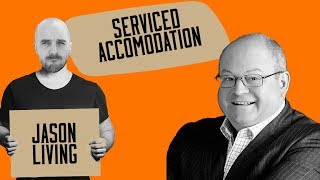
Mark Simpson and Jason Living discuss how to start in serviced accommodation, covering the business model, common beginner mistakes, and what you actually need to get going. Jason also introduces Short Stay Living Academy, an online platform for learning the industry.
Chapters
Hey, welcome back. So over the course of this series, you're going to find out everything that there is to know about serviced accommodation. And I wanted to go through in this episode and talk about what is serviced accommodation, how is it affecting the world of hospitality hotels? And most importantly, just find out a little bit more for the people that are making a difference in this industry. I've got guests that are going to come in and I'm going to speak to the people that are really making a difference in this industry today. We've got a gent called Jason living.
Hello, everybody. So my background is very much from the property side. I qualified as a childhood surveyor sort of more years ago than I care to remember, sort of early 1990s and worked as a commercial planning consultant in London and, and had a property there that I'd originally bought, then moved out of and rented out. And then I moved up to Yorkshire and worked in the Northeast from the sort of late 90s. And when I got there I started buying investment property, residential property to let out and built that up to a pretty significant scale through the 2000s back into 2007, 8, 9, all became rather difficult and we sort of scraped through by the skin of our teeth and really then set about, I suppose, climbing out of the hole we'd fallen into. And part of that was really looking at the properties we got and trying to find ways of maximizing our return from those properties. And one of those that I became aware of was people letting property up on what was termed serviced accommodation. Now that is typically just taking a residential rental property and letting it out on a shorter term basis. So it's really self catering accommodation, but not necessarily unlike a lot of the hospitality industry, not necessarily in either holiday or pure leisure destinations. So these might be, you know, city center or even just generally urban areas, anywhere where people are going and, you know, working away from home.
Where was the term service accommodation first coined, do you remember? Or is it just.
No, I'm not sure. I think it's one of those things that's been about for years and I think another misconception is this is something that has just happened in the last few years. Absolutely not the case. I can remember staying in a service department in London 30 years ago. So this sort of short stay accommodation has existed for a long time.
What was the catalyst for this? So where you see now all over the country and in towns and cities, you've got people that are taking a residential home and changing it to shotstay accommodation.
There's never sort of one specific factor. I think it's a number of things. I think the, I think the rise of, say, Airbnb is a significant factor. You know, that certainly kicked off the idea of people renting out a room in their home on a short stay basis. And that business model has morphed into people letting whole properties. You've then got the likes of booking.com and the other typical platforms starting to embrace this. Looking at it from the property investment end, there were some changes to the tax rules which sort of came in two years ago now, about the ability to offset mortgage interest as a cost. And the ability to do that within a standard rental property is now, is now limited, particularly for high rate taxpayers. Whereas if you're doing short stays, that's effectively regarded as a business activity rather than investment activity and you can offset all of your interest. So there's a significant tax advantage in doing short lets versus normal longer lets. So I think there's been a series of things.
Explain to me the different types of service accommodation. Explain the different types of businesses that are coming into this, which can sort of maybe explain why it is booming so much.
Sure. I guess at the simplest level, you've got somebody who owns a property that they want to look at maximizing their income out of. And a lot of people are getting into this market by renting properties from a landlord. And you know, if you look at hotels, I mentioned Travelodge earlier, basically that's what Travelodge do. They don't own the buildings they operate in, or in the vast majority of cases, there'll be an investment company that owns that building, they will lease it and then let out the rooms to their guests. You can manage, you could approach landlords and say they look, rather than getting 600 pounds a month on a rent, I think we could get an extra £300amonth or we could get an extra £600amonth and we'll split that. We'll take half as the management fee and you can take the other half as extra profit. So you might do a pure management model or you might do some sort of part management, part profit share, sort of every variation really.
It seems to be like lots of different variations of getting into this business. How easy is it to get started? Save at me. Never done it before. How easy is it for me to get started? Is there any rules or regulations I have to go through any accreditation or can I just simply just start doing the research and get started now?
But you know, there's no, there's no strict Certification of anything that needs to go on. So from that point of view, yeah, it is, you know, it is relatively easy. And in terms of approaching landlords, if some people, I would say, sell them an idea that something that maybe they've got no understanding of and that can sometimes be a little bit challenging, some people find it, you know, easier than others. One of the things that struck me in terms of. In terms of getting out there and marketing is because you can immediately jump on the likes of booking.com and Airbnb. You can start this with nil marketing budget because you only pay those guys when you get a booking. But you can, you can start, you know, with, you know, with very little capital.
Next thing then, that I'm really interested to know is that if people do jump on this, they do a bit of research and they get started. What is the most common mistake that you see people making in the industry when they're getting going?
Depending on what their background is. I think if people have come from the hospitality side, then they probably don't make some of these mistakes. But one of the big mistakes, particularly coming from the property side, is not. Not understanding that you need to actively manage your pricing. Your pricing should be very dynamic. Typically, Friday and Saturday are probably your busiest nights, but equally, there are locations where your midweek market is stronger than your weekend market. And you've got. So you've got to know your market. Your Monday might be one price, Tuesday might be a bit more. So it's that initial pricing, you know, you don't just say, right, it's £70 a night across every day of the week, every month of the year. You know, you've got a different price for every day of the week. And then what you've got to do is constantly review those prices, you know, I would say probably at least every week, to see, you know, what's the demand in the area, what are my competitors doing? You know, are they. Yeah. And whilst, if you like, you're not directly competing with the Travelodge down the road, they're a useful indicator because, you know, if they start putting their price up, it's because they've seen an increase in demand. Now, you may not have seen that increase in demand yet, but you can pretty much guarantee if they have, you will. So you can afford to start pushing your prices up even before the demand hits. And I think people look sometimes at their operational side far too much from their own perspective, in terms of what suits them, in terms of when do I want people to check in and out when non refundables, deposits, cancellation periods. Because in an ideal world from, from, you know, from an operator point of view, you want everybody paying 100% when they book, you want them paying a deposit, you want them all turning up between 3 and 4 in the afternoon and all leaving between, you know, 10:30, 11:30 in the morning. But you know, if that's the way you approach your business then effectively what you're doing is you're massively constraining your demand. And the way it's been described to me is, you know, you need to look at your business from the outside in, that is from the guest perspective. Whereas too many people I think look at their business from the inside out and say I'm going to run my business to suit me rather than actually thinking about the whole guest experience.
We've talked about common mistakes and I think, as you know, I know everybody that is listening to this who is in the essay world is. There is a lot of advice given. A lot of it is good advice, a lot of it is bad advice. But what is the one bit of advice that you've seen in the industry that you don't agree with?
Some of the bad advice around planning about planning use classes because basically a residential property to get into sort of bit of geeky planning is use class C3. And use class C1 is hotels, guest houses and boarding houses technically, which obviously includes B and Bs and sort of similar establishments. Now there are people who are going around saying that to run a, let's say just a bog standard house as letting it as a whole house to a family that you require C1 planning consent. But absolutely you don't, you know, it's not a hotel, guest house or boarding house quite clearly. And I would say to people, you know, most holiday accommodation, it's just a standard residential use class. Any property that's let for short lets commercially for more than 140 days a year should be on business rates. There's another big tax advantage called capital allowances, which hopefully people in the more commercial world, the BNB's, the hotels, pubs of this world should know something about that. And if they don't, I'd encourage them to go and find out about capital allowances because it may actually significantly reduce your tax bill. Certainly if you've bought a property or renovated your property at all, then go and find out something about capital allowances. And again you don't need to as a short stay operator of a residential property, it does not need to be C1 to claim capital allowances. So there's a lot of bad advice around that.
So what are you doing now moving forward to help the industry, help sa, help people who want to get into sa.
I recently launched the Short Stay Living Academy, which is an online membership platform. And each month what we do is we have an expert guest and Mark's been our most recent guest talking about marketing. So we've had a guest on talking about working with letting agents and landlords. We've got a guest coming on next month talking about the whole pricing thing I was talking about and how to manage your prices. So an expert focus each month.
And.
We do live Q&As with those experts so people can digest the content, digest the information, come back and ask questions. And, you know, my whole focus with that really is to give people massively valuable but implementable information for a relatively low monthly cost. We will be launching an online course alongside or as part of the Short Stay Living Academy, and hopefully that should be launched by the end of the month. Sorry, not end of the summer. There's a lot of information to pull together to launch that again, really, to give people real nuts and bolts as to how to launch and run and scale a service accommodation business. Like you, I just really enjoy helping people and seeing the results that those people can, can achieve, you know, with, with the right help and support knowledge.
That's. That's amazing. That's really good. So if they want to go and find out more about you, more about the ssl, more about anything really, to do with yourself, where's the best place for people to head to? Jason?
Probably the best starting point is I've got a Facebook group, a service accommodation group on Facebook, which is fantastic. Got nearly 10,000 people there, called the Service Accommodation Network UK. What I'd encourage people to do is come along and join that. That's free. And there's some really, really helpful. What I would encourage people to do rather than just launch in and say, because you get people coming on and their first question is, how do I run a service accommodation business? What I always say to people is, look, just spend some time trawling through, there's an awful lot of information on here, and then come back with some specific questions. So that's a free starting point, but from that please come on and ask questions and we talk about the Short Stay Living Academy on there and put forward various offers. People will get an offer when, when they join the free group to come on board for the Academy. And I'm, you know, if you can contact me. Jason, living on Facebook via Facebook Messenger. That's probably the. That's probably the easiest way and I'll certainly do everything I can to help.
Thank you very much for coming on and talking about that. And hopefully by now, if anybody's never heard of service accommodation, they have a better idea of this and moving forward. And like you say, if you want to get started, the best place to do it is the Service Accommodation Network. Is it uk?
Uk? Yeah.
Because there are few type in service accommodation Facebook. There is a lot you're going to get presented with. So it's Service Accommodation Network uk. Just look for Jason, he's the admin of the group. And thank you very much for tuning in. And we will catch you for another episode of the Boost Hospitality podcast very soon.
More from Mark







I Tested AI Search SEO for Rental Hosts... Here Is What Happened [Live Training]



