PR Marketing Masterclass LIVE
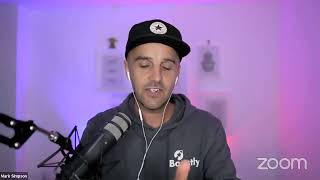
Mark Simpson talks with Megan Allen of Rural Roots Media about PR for small hospitality businesses. She explains the difference between PR and advertising, why building relationships with journalists on Twitter matters, and how a Guardian placement can boost your long-term SEO and visibility.
Questions this video answers
June 2, 2021.
www.rural-roots.co.uk
Chapters
Of the Boostly podcast recording is in progress. So as we go. So this is now being streamed live on YouTube, on LinkedIn, on Facebook and wherever else it is being restreamed live. So I just wanted to say welcome, welcome. Thank you so much to tuning in with us live or if you're on the replay, what you are looking at right now is a zoom room. So in the zoom room, as we normally do, we've got myself, we've got the amazing guest that we're going to give a big intro to and as well, we have got all of the Boostly Academy members. So wave and say hi just as I throw you're all up onto the screen. So we will have the Boost Academy members back very shortly, but for this live video and as the title suggests, we are going to go and delve into the world of PR and. And our guest this evening was introduced to me by a Boostly Academy member, somebody that has been working with Megan over the course of the last couple of weeks, some months, and was raving about it. And whenever I get a Boost Academy member, reach out to me and saying, you need to speak to xdm, we get them on. And it's. I'm really looking forward to it because I mentioned to the group just before we stream live, we haven't really delved into this topic before. So the way it's going to work, I've got some questions that I would love to chat with Megan about. We're going to let her give a big introduction, we'll delve into them and then Academy members as we're going along, we'll be able to ask questions live. And if you want to find out more about the Boost the Academy, I've mentioned it a few times. You're thinking, what is that, mark? Go to boostlyacademy.com and you can join today. So, Megan, thank you so much for doing this. If you could just give us a super quick introduction about Rural roots, about yourself, about how you came to doing this. Let us know where you are in the world. It looks like in a lovely attic in a sunny part of the UK somewhere.
I know I'm kind of regretting sitting up here now. It's so warm. Yeah. Hi, I'm Megan Allen. I'm the founder of Rural Roots Media. We are a PR agency that works exclusively with rural tourism businesses in the uk. I'm based in Rutland and I bet a lot of you are thinking, where's that? So it's a. It's an independent county, just sort of Between Leicester and Peterborough. So in the East Midlands. Absolutely. Absolutely gorgeous. And very, very rural. My background is journalism, so I started out as a journalist and side stepped into marketing and pr working for a farm attraction over in Peterborough. So worked with them and when I was made redundant, my manager at the time actually advised me to go freelance and said, why don't you start doing pr? It's clearly where you're skill set lies with the, the journalism background. You're great at identifying stories, you've got loads of great connections. So it grew out of that and it's been five years now. So I work with, with, with sort of, I say small businesses generally, but I actually work with some larger destination management organizations as well, like the Neen Valley, like Discover Rutland and I also work with Farmstay. And then I also. You know what, my real passion for what I do comes from helping making PR affordable and accessible for small independent tourism businesses. Because I know not everyone has a huge PR budget and, you know, any skills that I can pass on, ways that I can teach people to tell their own stories, identify their stories, which is often the biggest challenge. They don't even know what their stories are. Work out who their audiences are, what magazines, newspapers, they might be reading, all those sorts of things, then we do that. So that's me in a nutshell.
Amazing. And congratulations on five years in business.
Thank you.
And you've also got members of staff, growing a team, which is exciting.
Yeah. There's six of us now, which is crazy. In the last year, this time last year there was just me and believe it or not, during lockdown, we did a lot of work on why PR was still so relevant, even when you're close and keeping those conversations going, keep your reputation going, that we managed to grow, which bucked the trend hugely. But it's been lovely, been able to help more businesses to tell the stories.
And when did the connection with hospitality come in? You mentioned Farm Stay, which for people who don't know, is a big hospitality association in the uk. But when did you sort of, sort of make that connection with hospitality? Or has it always been there? Since. Since the dot, since like 2016.
I've always worked in hospitality myself, so even when I was a journalist, I was still working in pubs. Journalism doesn't pay very well, so. But also it was a great way to get stories from, you know, my patch from the town, so you're chatting to people behind the bar. So I've worked in hospitality since I was 16 and then when I decided to go into Marketing. I went to work for a farming charity, food and farming charity, which was also a tourist attraction. They did camping, but they also had, you know, a farm park and all those sorts of things as well. And when I left there, I worked in heritage. So what's in huge heritage projects. So always within pr. So even when I started the agency five years ago, I originally intended to just work in Rutland, but I soon realized that actually my passion was in hospitality and tourism. That's what my connections were. That's what I wanted to talk about. And I just want to get people out of the cities and into the countryside. A spending money, but also just appreciating what a gorgeous country we have. And I think, well, that's one good thing that's actually come out of this lockdown situation is suddenly people have opened their eyes to the UK and as a tourist destination.
Yeah, definitely. Whether they wanted to or not.
Yeah, exactly. It's been forced on them and they love it. Especially when the weather's like it is at the moment. It's glorious here.
Okay, so let's delve into pr. Those who are watching this and haven't got the first clue about what we're. What we're talking about. In a nutshell, if someone says to you, megan, what is pr? Why should we be paying attention to it? What is the most simplified version that you would say to somebody over the last five years? Small business owner.
It is the protection and building of your reputation. So it's. Aside from marketing, a lot of people get advertising and PR mixed up. And, you know, advertising is what you pay for. PR is what you pay for is a really good example of that. So PR is actually other people talking about you. So if you can get a journalist coming along and talking about you, or work with the local newspaper or local radio station and they're talking about you, then that is pr. But then in this digital world, it's things like your Facebook review, you know, people tagging you on Instagram, anything that's going to build your reputation in the eyes of other people. And in hospitality and tourism, visitor experience massively comes into that category as well. So. And that's what sets PR in hospitality and tourism apart, really. The visitor experience side of things.
I'm glad you mentioned the tagging on Instagram, because it did remind me of one thing that I would love everybody to do. Boost the Academy members are in the Zoom Room and those that are watching live with us. What I would love for you to do at some point is grab your phone, take A picture of the screen of Megan and I and then go and post it on Instagram. Go on Instagram and I want you to tag in at Ruralroots PR I U R A L R O O T S P R and Boostly uk. Put it up on either stories or your post and I'll just pick one person at random and I will make sure that you get some Boostly goodies in the post because I would love to get more attention to this and Instagram is a fantastic way of doing so. And even if you want to do it on Facebook as well, if you do it on Facebook I won't see the tag. So make sure you send it to me message and I'll just take everybody, put all the names into a hat and I'll make sure one person gets some lovely Boostly goodies in the post. Okay, so let's start then with small business owners. I love that where you say advertising is something that you pay for and PR is something that you pray for. That's fantastic. So let's say that small business owners and you see them using piano. You've been in journalism and you've been doing this, you've been on both sides. Now where do small business owners get it wrong? What's the most important mistake that you see people make when they, when they try and do this? So whether it's from a journalist side or you on like the agency side helping, where do you see when people are getting started without your help and guidance? Where's like the main way that they go wrong with this?
That's a whole can of worms. Well, obviously the biggest mistake they make is not doing it for a start. They just think that their business isn't important or no one would be interested in this story. And actually people are hugely interested in the story. Think about the posts that actually do do well on social media. They're usually the ones with you in them or the ones where you're talking about your story. So first mistake is always thinking that they shouldn't be doing or they can't do it. The second one is not having good images. So anyone who works with me will know that I talk about this a lot. But having decent images is so vital to PR because without them you're much less likely to have your story published. So making sure you've got really good high res images is vital.
So images, let's say that somebody comes to you and goes, okay Megan, so I'm not a photographer, I've got a phone, it's got A decent camera on it where like, do people have to go down the route of getting a professional shoe or can they get away with it by, by using one of these? Like where, where does it draw? Where do you draw the line in these recommendations?
No, camera phones are so clever these days, so you can take your own images. All I would say is everyone generally holds their phone like this, don't they? Portrait. If you want to work with the press and the media, turn it that way and do landscape. So, you know, make sure you've got both, that's fine. Sorry, I'm probably making everyone dizzy. But try and get some really good landscape images and if you can get people in them, that's really vital as well. I even saw a journalist tweeting about this a few weeks ago saying that a home had just sent him 150 photos and only one of them had people in. And they want to show people experiencing that hotel, not just pretty landscapes or just an empty restaurant. They actually want to see people enjoying it. So make sure you get people in them is really, really vital too.
Okay, so let's go down the route of that. We want to get involved in NPR. Now from what I've learned, my knowledge is very slim on this. There's two types. There's proactive and there's reactive. Now can you please just very quickly cover the two types of PR that is out there and we'll start with proactive and work on reactive. If there's any more actives, throw them in as well.
Yeah, sure. Proactive is obviously pre planned, so pre preplanned PR activity. So if you have an event coming up or a new launch or something along those lines you planned in that PR activity for, you will know weeks in advance what you need, will do lots of planning on who to contact. You'll do your research on what journalists to contact or you know, what social media posts you're going to put out, what blogs you might write, what newsletters. All of these fall under the PR category as well. And there's a huge crossover. So that's proactive. Reactive is where something happens obviously in the press, in the national arena, international arena, or even just locally that you can react to that you can jump on the bandwagon of or what we call in the industry as newsjacking. So you will newsjack that story. So for example, I mean, basically in the last year all we've done is reactive because we've not known from day to day what we can do, what we can plan in. There's no point in promoting something in advance, especially events when events haven't been able to take place. So we've been just newsjacking everything and making sure that we can react as and when we need to.
So let's talk about the newsjacking because I think when it comes to. Because we'll very quickly go back to proactive in a little bit. But I think this news Jack in this reactive PR is really important because this is where your business can get in the eyes of so many people in such a quick amount of time. In my, when I've worked alongside this, it can be one of them where it's literally so quick paced because when it is reactive, a journalist will want to speak to you and it's got to be there and then, and then it's literally out that evening potentially because it is just nowadays. So how can a business owner set themselves up the best to be able to take advantage of reactive or newsjacking pr? Like what can they be doing, whether it's on Twitter or relationship building or how they structure their website or their social media profiles or just anything like what are some of those quick fire tips that you usually like to give out to somebody when you're doing something like this and explaining to a host or a business owner?
You've just listed most of them, to be honest. I mean, building a relationship with the press is really, really vital and Twitter is absolutely the tool for that. So using hashtags like journorequest on Twitter is a really great way of keeping on top of what journalists are looking for in articles. So if a journalist is writing an article on particular subject, they will look for sources of information and they will go on Twitter and use Journal request. They also use platforms like Trav Media ResponsSource, but they all cost money, whereas Twitter is a free resource. So you can keep on top of what they're looking for. And if you can just reply to them or ping an answer back to them, a lot of the time they will put their email addresses in as well and send them some information that's relevant to that request that you can jump on top of and you can use Jack, then that's a great way of sort of a building relationships because if you start reacting to them, they might not use you straight away, but three or four occasions down the line they'll get to know you. They'll get to, you know, recognize your face or your Twitter handle or whatever and they'll know to look out for you. Or if they're Writing an article and they know that you've responded to them before, they might just come straight to you, which has happened to a lot of our clients a lot of the time. Sometimes journalists just pass us by completely as an agency and go straight to the client now, because they know they can give that information.
That's. That's interesting. So apart from Twitter, is there any other ways that they could help build these relationships? Because obviously we're not talking about national. A lot of the times. A lot of the times it could in the local or the county level. So would you recommend even maybe doing a bit of research in this, finding out who the local journalists are in their area through, like, LinkedIn and things, things like this, or is it literally the best way without being super starkey is just Twitter?
No, I mean, research is the base of any PR campaign. So researching A, who your audience is and B, you know, what magazines or newspapers or media that they are using is really vital. So the best thing you can do is pick up a copy of that magazine or that newspaper and, as you say, research who the journalists are, ping them an email, just introduce yourselves. I think, Janice, actually quite like just hi kind of emails. They're so used to people just wanting stuff from them all the time. Sometimes it's nice to just build up relationships that way. Normally I'd say, you know, you could always pick up the phone, but at the moment you can't because everyone's working remotely. So knowing who to call and where is impossible. Or sending them something like snail mail is so underrated. So, you know, sending something in the post. But yeah, doing your research is really, really vital for that. So making sure you're building up those relationships that way and just reacting to things as well, reacting to them on Twitter or Facebook or just, again, getting your name out there.
It's. It's funny because again, I think right now, journalists, especially when it was in 2020, they were looking for good news stories because everything was so bleak and so were able to pivot the business. I'm thinking of a host right now in Torquay who bed and breakfast owner, who, during the pandemic, couldn't open the actual bed and breakfast, but has started to do paintings and she got local press. That was a good news story. Host couldn't do a business pivot. And it's a good news story. And I think, again, if you've got some good news, it's worthwhile to share. And I think this is the problem. And I. And it's always the. It's Always the trick is that you want to reach out to newspapers, you want to share your good news, but you don't want it to come across as too salesy because it's all cases where you send an email to a journalist and say, oh, this is fantastic, we're doing X, Y and Z. And it always comes back to saying, yeah, sure thing, here's the sales team.
Yeah.
So how do you decipher. And this is. I know this is something that you teach and you know, we're definitely going to get people to go to the website where they can find out more. But how do you decipher what is newsworthy or what should actually not go to a journalist and what should stay on your blog, your social media, etc. What's like the tipping point and how do you judge it if you've got any. Any recommendations?
That's a really tough question because, I mean, there are some times when I thought, oh, I don't think that I'd make a huge news story, but we'll send it out anyway and it gets some really great hits. So there's a few factors into that. Obviously it's what else is going on locally if you're looking at the local, because if they've got the space for you, they'll put it in. Obviously, if it's something that's quite small, that's going to just affect your followers or the people who interact with you on a regular basis, then that's much better suited to your blog and social media. And to be honest, any news I'd always recommend putting on your blog because you know it's going to help with your SEO and all those sorts of things that I don't really know that much about, I just know it helps. But being able to differentiate between sort of a news story and what's not, I mean, it's all news. It just depends on which platform you put it on. And I think one of the things we're really advocating this year is you are the media. So actually you need to be telling your own story as much as relying on the press or the media to tell it for you, because you've got the it's all at your fingertips now you can. Before, people had to rely on traditional media to tell their stories, whereas now with your blogs, your websites, social media, all of those sorts of things, you can tell any story. And actually one of the brilliant ways that this works is sometimes you can put something out on your social media and the local press might pick it up themselves. So they'll see that you're doing that and come to you and say, can we write about this as a story? So I would never ever just, you know, wash over something and think, oh, it's not important. I think it's really, really vital. I mean, key news stories tend to be, you know, if something's new, from a local interest point of view, are you creating employment opportunities, are you raising money, is it a charity event, is it going to, how is it going to impact people? Locally is always, you know, really, really vital to local news stories. But as you say, good news stories as well. They love good news stories. Anniversaries. We got a good piece in our local press recently because of the five year anniversary and all those sorts of things. Really, I just wouldn't wash over anything.
Well, that's good to know. So, yeah, and I think it's really important that people are picking up on that little segment that you just mentioned about there of things that people are looking for now. So obviously you're on Twitter and you've got some real good relationships with journalists and you see the things that are being asked for. So what could be some things that hosts right now bearing in mind, and this is going to sound like a very UK specific question because I've got people tuning from all over the world and the way the world is now, people have been open for a long time or people are just reopen. So bear it in mind that staycation is big right now and host to reopen what should be. And again, this is very, you know, I know that we're recording this in June 1st of June 2021. So if you're listening to many months or years later, then obviously this may have passed by. But what could be something that host could be paying attention to now in terms of what potential journalist could be looking to cover, whether it is on their newspaper or radio, TV etc. What would be some sort of things that they could be looking for right now to maybe potentially talk about?
The first one is always stats. So if you can go back to them with some really good stats, either from your website or something along those lines, you know, records, figures, record numbers. Again, all of that positive news. That's a good one. How, how's it been for you? So a lot of the newspapers are covering this at the moment because we're obviously reopening in the UK in stages. The next stage is in a few weeks. We're now a few weeks into the second stage of unlocking, which was B and B'S glamping. Well, anyone with shared. Shared facilities, you're a few weeks in now. How's it going? You know, have you had. What reaction have you had from people? Have you had a positive reaction to things that you've put in place? Have you had any interesting guests along? A lot of people are finding that they've got people coming back to them who maybe haven't been for years. Can you do a before and after photograph of their experiences? All of those lovely stories? I mean, PR is all about stories and telling stories. So you can find a lovely story from guests of, you know, what they're up to, what you're up to and what they're enjoying. We recently published in our local newspaper, I've got a new account manager in PR and she came up to Rutland. She'd never been to Rutland before. She actually wrote an article on her first experience of Rutland and what she thought of it and the local paper published it as, you know, first timers view of Rutland kind of thing, just for a bit of fun. And people locally loved it because they were like, oh, yes, it's such a great county. It's so lovely to see people finding out more about it. And, oh, this is our people sending their recommendations of things she could have done and all things like that. So, yeah, any ways that you can newsjack? So this is a newsjacking opportunity. What's happening currently in the bigger picture that you can show journalists, either locally or nationally, some good news and some good reactions. And also, how are you feeling about the 21st of June? Are you, you know, if you host weddings or bigger events, how are you feeling about it? Are you positive? Are you confident that they're going to go ahead? What do you have coming up? So what's new? All of those sorts of things. All really, really good opportunities right now.
That is amazing. And there's some very good things that you can be doing right now. Hosts that can be listening to this, watching this to be putting into practice. And you may be thinking, well, this all sounds good, but what is the benefit? And you mentioned it before about SEO. You mentioned it about, about in the ranking and your website up to date. But you've got to look at it the other way around is that these newspaper, TVs, radio show, whatever it is, they've got a really high domain authority ranking with Google, so it can actually get to the point when somebody could Google your business name. Now, obviously your website is going to come up, but also news articles will start to appear as well and I know Melanie and I know other people have been visible still many years later after appearing in the Daily Telegraph, etc, new big newspaper organizations. So it has got a lot of power, it has got a lot of clout and it's not only a case of the readership now, but this will sit on the Internet on a Google search for months and years to come. So it's all about building relationships and we talked about this a lot about building relationships in your local area. But don't just stop at local businesses, look at the people that are working at the local newspaper or whoever it may be and Twitter is the place to start. Do a bit of research, go on LinkedIn, which is fantastic. So Megan, I really do appreciate that. Before we let you leave, where is the website that you would love people to go to to find out more about getting PR tips? I've been on your website today and there is a lovely pop up that is getting people to get more advice on PR tips. Where, where can they find that?
We're at www.rural-roots which is r00ts.co.uk and if you sign up to our newsletter you get exclusive PR tips and exclus as well. And we're about to launch some really exciting things, so if you can join us over there, be lovely to see you all.
So before we go, I'm going to basically do this to Melanie. Melanie, I know you're there in the chat box. I'm going to ask you to unmute yourself because you've just put something into a chat box which is a really good way to end this live broadcast. So melan, if you could just unmute yourself as you are doing so.
Yes.
Hi, Melanie, how are we doing?
Hello.
I'm fine, thank you.
Hi, Melanie. Hi Megan.
You just put in the, in the group chat, The Guardian newspaper, January 2016. Can you explain to us the benefit that it still has from what, five years ago have been in the paper?
Well, this was a totally random journal request, I think. I was out when I volunteered at a charity shop and my husband saw it and it was like basically a journalist from the Guardian saying, can you send some photographs? And so luckily my husband did send some photographs and we were picked up randomly as a top 10 farm stay for families. Of course, all these years later, if you do a Google search for farm stay, that article comes up and if people are looking for a farm stay or a farm holiday, being in that article validates us as a business. So we have that on our booking form when we ask for booking source as an option. And we are still getting people that say that was how they found us, even though it's only five years ago. I'm just going to add very quickly, as Megan knows, the journo request that Megan prompted me to do when I did a seasonal storytelling request, there was a journalist that did a journal request looking for interesting stories of people moving from the town to the country. And so I did my little written spiel and the journalist, several weeks later, because I, you know, I've forgotten about it, said, oh, sorry, I've been busy, but can we have a telephone interview? So we had a telephone interview and it's a zoopla sponsored which for those overseas, they list houses for sale and they're doing an article about, you know, various people who have moved the little feature about us. It will be our move from a town reading to the countryside, Cornwall. And so I did the spiel and the journalist spoke to me for about an hour because I can talk for a long time, so I'll shut up in a minute. And then I got an email last week saying, we'd like to send a journalist from the Guardian to take a few photos of you and Mike together. And you know, I did go back and said, wow, because us say this just happened to be the Guardian newspaper and say, well, I love the Guardian because we, you know, we're still getting all these referrals from, from five years ago. So we do, we, we do very much like, like the Guardian and you know, that has all come from Megan and this, this journo request. But we are lucky because we are near Padstow and a journalist, you know, PA Gladstone, it's just one of those Cornwall staycation. We're very lucky to be picked up like that. But I'd never have thought, because I don't Twitter, of looking at that and looking at the term journal request. Is this a worldwide thing, Megan? Does this apply to other countries as well as the uk?
No, generally just UK one, but there's probably other. There are. I'm sure there will be locals probably.
Do something similar on Twitter or something.
Yeah, thank you.
No, that's all good.
Great, great little story. And again, it just shows the power of it. So thank you very much, Melanie, for coming on and sharing that story. Megan, thank you for coming on tonight. And again, it's rural roots.co.uk I will make sure that it appears in the post. If you're watching this on social media, I'll make sure that it appears on the blog post and if you're on the audio version again, just, just come and find us because it's. It is really worthwhile going. Leave your email, get the tips and find out more about how Megan can help any small business. So again, really do appreciate it. Make sure that you please take a picture or a video, whatever you want to do from tonight's session and go and upload it to the Instagram. And then again if you want to tag in at Ruralroots prior a R U r a L R O O T S P r people shouted at me for saying it too fast. So go and do that. Tag it on on the Instagram tag as always and I will make sure that you all get entered into a hat. I'll pick one name out and you'll win some boostly goodies in the post. So thank you very, very much for doing that, Louise. I know you've done that, so thank you. All right, Megan, I'll let you go. Thank you so much. Go and enjoy this lovely summer's evening.
Thank you so much for having me. Thank you everyone and great questions.
My pleasure. I do like to ask those questions. All right, so before we go everybody, let me just make sure you turn your cameras on and we're going to do the thing that we always do if you've got a boostly mug, if you've got anything nearby, if you could do me a favor, I'm going to do a very cheesy goodbye that we always do and I'll go and get this uploaded. So let's do this. All right everybody, on the count of three, give me a very cheesy bye bye bye. One, two, three. Bye bye bye. Look at you. You look amazing. Thank you very much for being part of this tonight. Thank you very much for tuning in wherever you are around the Internet and we will be back again to do something very, very similar when we can. I've got lined up a very interesting guest, amazing guest, all the way from Los Angeles, California. I got introduced to this gentleman a couple of months back when we're doing the Clubhouse and I'm very excited to have another marketing masterclass coming up in a couple of weeks time. But until then, thank you so much for tuning in and I will be back very soon. As always, stay reactive. So proactive, don't be reactive. Let's go get some direct bookings and wherever you are in the world, I hope that you have an amazing summer and get tons of these books.
More from Mark







I Tested AI Search SEO for Rental Hosts... Here Is What Happened [Live Training]



