The real story about Lee Chamber's BBC Interview
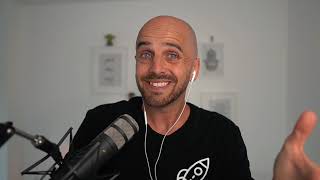
A recorded conversation (May 20, 2021) in which Mark Simpson interviews psychologist and coach Lee Chambers about a recent BBC news segment (journalist: Coletta Smith) that featured Chambers and his family. Lee explains the fuller context: they had two holidays booked during the COVID-19 period (a Forteventura trip and a Norfolk B&B), both paid in full with flexibility and an intention to give at least a month’s notice if plans changed. The BBC trimmed an hour-long interview into a short segment whose headline and clips made the couple appear selfish, which triggered heavy social media backlash and trolling that affected the family’s well‑being. The discussion covers how media editing, click-driven social platforms, and polarized public sentiment amplified the story, and calls for more context and empathy online.
Chapters
Those of you that are out of the uk, you will not know what I am talking about. But those of you that are in the uk, and particularly those of you that are part of the hospitality community or just on Facebook or just checked out the BBC news in the last 24 hours, you will recognize this piece. It was a feature, it was on, on the TV and obviously on the website of a couple in the UK, Lee and Louise Chambers, who were interviewed by the BBC and in that interview they said that they've booked two holidays, one to SP1 in Norfolk and they were going to cancel one or the other depending on the situation. Now I've been very fortunate, reached out to the guy on LinkedIn, turns out he's a very successful business owner in the Northwest. And you will be not surprised that there is a ton of context around the story. We had a good 40, 45 minute Zoom chat. It's totally unedited. I just said listen, I just want to speak to you directly. I want to get your. And the thing that hit me is about halfway through the interview it got a bit emotional and I want everybody to realize that when it comes to a news piece like this, there is always context around it. Is why I got this tattoo. This tattoo in Viking means focus on what you can control. Focus on what you can control. And what that means to me is don't pay attention to the news. Is one of the main reasons why I stopped reading the news. I've always had this last little motto from the last year is that if it's really important, I'll find out about it. My mum will WhatsApp me if it's really important. So focus on what you can control and always remember that everything has got context around it. And Lee's story from the last 48 hours is, is pretty crazy to be honest, and not in a good way. And I wish there's a lot of people who are watching this and I hope none of you who are part of my world are responsible for the some of things that have happened. And I won't give too much away, I want Lee to explain it. So we're going to hand. I'm going to flip straight over into the zoom and we're going to hear from Lee and we're going to have a chat and then what I would love for you to do in the comments is just let me know what you think of the piece, your takeaway from, from this and take away from the BBC, the journalist and the whole story and the whole narrative around it. Um, it is a. It is good news in the end, you know, But I really want you to watch it. Let me know what you think and leave that in the comments below. And if you've got anything you want to say to Lee or the BBC or any form of media or journalism, then please leave it below as well. All right, so we've got Lee with us. Lee, really do appreciate your time. I can imagine the past 48 hours have been a little bit crazy. So just before, just as we start, if you could just, um, basically introduce yourself, your company, like where you are in the world and then let's just get straight into it. How did that interview come about?
Yeah, so I'm Lee Chambers, psychologist and coach, founder of Essentialized Workplace Wellbeing. And a lot of the work that we do is with SMEs, looking at wellbeing strategy, looking at how they can ensure their employees are in a good place to perform well, to, you know, be healthy and ultimately make a difference. But also we do coaching and look at ways that we can develop learning strategies for companies as well. And I do a little bit of individual coaching of athletes, directors and just getting people clear on where they want to go, what they want to achieve, and creating pathways through psychology, through mindset, through goals and direction about how they're going to get there. Based in Preston in the Northwest, where it's, generally speaking, wet and windy, has been today, but it's all good fun and, yeah, ultimately ended up being interviewed by the BBC. And I suppose the premise of the story originally was to look at really how the hospitality industry was struggling, but how individuals were struggling as well. Trying to make flexible plans, trying to book things with government constantly changing traffic lights, constantly changing moving times, new variants causing potential lockdowns in certain areas, and how government ministers don't even know about how the traffic light system should affect hospitality and hotels, and telling people you can go, you can't, and just the lack of clarity, meaning that businesses and people can't prepare.
So the journalist, if I'm right, was Coletta Smith?
That's correct, yeah.
At a BBC now, how did it come about? Because you're not the only guest whose book a stay in 2021. There's loads. So how did it come about that she got in contact with you?
Yeah. So I think it was originally based off something that I'd written quite a few months back about being functionally optimistic about booking holidays and about kind of understanding that from a psychological perspective, it's a lot of excitement and anticipation for going Away, especially over this past year that we've had and most of us have been either stuck in our houses, are continually working on the front line and having some kind of separation and something to look forward to. So I originally wrote and offered a piece looking at flexible planning is actually something that's quite powerful, something to fall back on if we don't have our first option, for example, so that we're not just left all of a sudden with nothing, having anticipated we'd have something. And obviously the idea of booking two holidays together in that piece was actually booking two holidays at the same time originally, not at the same time in the future. So obviously that has then generated some interest previously from journalists when they started to announce things like testing to go on airplanes and stuff like that. And I kind of said I'd be happy to do a story around this kind of thing. I think it was back in March that originally, I think BBC 5 Live put a question out there about it and. And I think I probably ended up on a database and I just got phoned out of the blue last week to kind of ask, you know, would you like to come and do a piece about holidays, about that kind of double booking aspect. And I said, well yeah, let's go. And you know, I'm happy to speak about why I wrote that piece. I'm happy to speak about what my family's done and ultimately, you know, be able to help people understand why I was putting that message out there. And yeah, simply that initial phone call then became a filming session and really we were interviewed for. Well, they were there for about an hour. So that gives you an idea of the amount of content that they filmed, obviously to then very much condense it down and because a lot of that interview was kind of, I suppose, laughing at government ministers ineptitude, a lot of the clips are actually quite light hearted and smiley, which doesn't really help when it's then been articulated in quite a. Well, in a way that makes us look particularly selfish and then looks like we're laughing at being selfish.
Yeah. So for anybody who doesn't know how these things sort of work and if you haven't been on the other side where you've been interviewed, the way that it normally happens is that you get a journalist come down and you do a lot of filming, you do a lot of talking, you get asked a lot of questions, but obviously they then got to take it back to their editor and their producer and they've got to trim down what is an hour conversation like. You say, into a very short news segment, because this isn't News Night. This is, you know, this is, this is, this is where the problem arises and this is where obviously. And we'll talk about the aftermath, it makes you to look bad because what they've had to do, they've trimmed it down. And like you say, laughing and joking about something that is, you know, you know, can, you know, is obviously very topical right now when it. And it. And it made it look like you were laughing and joking at the situation, when really is a serious situation, because this is what you deal with and you know, it doesn't, it doesn't turn out well. So can you then just sort of, for anybody who doesn't know, because we've got people tuning into this from all over the world and obviously this is only a UK specific piece or English piece and etc. So just basically explain and break down then for everybody who's watching and maybe a hospitality owner who's watching this who just wants to know the sort of. The full story and the backstory, not the edited BBC version. What's the.
Yeah, what was the.
Basically, what did you do and what was the full story around it? And then we'll sort of tackle the aftermath.
Yeah. So the full story is we'd originally booked a holiday to Fyotaventura last year and that had been pushed back once into. Further into last year, but then it got to a point where looking like the realization that it wasn't going to happen, we pushed it all the way to this summer. We get into January and that third lockdown comes in and I speak to my wife and I say, realistically, we're back in lockdown again, we can be optimistic for the summer and the summer holiday. And I know we'd really like to take the kids away because we're kind of thinking about the summer holidays we had in 18, in 19, how much fun the kids had and really it was like, we need to make sure we got a holiday in for the kids and being able to then book that in the summer holidays. We've been to Norfolk a number of times as well and we know B and B owners down there and have relationships because we've been a number of times. So what we actually did is booked in with one of those who we know and we paid in full. We'd also already paid Forteventura in full last year and on the basis and explained and they understood the situation that we're in and also understood that if we could give them at minimum A month's notice, when things were a bit clearer towards the summer, that they'd then be able to rebook that and allow us to. Not to cancel it, but to move our booking with them to a future point in time. So obviously, that's the kind of like the crux of the story. Obviously, having paid for them in full and got that flexibility and having both of them fully paid for wouldn't have made a great story. Mom books two hotels pays in full. That's not going to be newsworthy, is it? Obviously, that's got to a point now where people are not aware of that full picture that we paid in full. It looks like we might just decide to cancel one right at the last minute, which, you know, I understand the challenges of the hospitality and tourism industry over the past year. You know, ultimately I've got friends who own B&Bs who own wedding venues. I actually work with some people in the hospitality industry. At the end of the day, it's been made out like, you know, we're selfish, we're going to cancel at the last minute. I've had a few, you know, B and B owners message me, asking me to be considerate and I appreciate them, they've messaged me nicely. But the reality is a lot of people have just seen the tagline of the headline and for. These people are incredibly selfish. And obviously it's descended from there.
Yeah, well, we'll definitely, we'll definitely crack into that because it is interesting about social media reactions and. And the like. So I think when it comes to anything media related, and this is really topical and it's really present because it's over the last year, I believe that journalists are now our celebrities. Politicians you've never. Politicians you've never heard of. In 2019, everybody now knows of them in the UK, the household names, just because they've been everywhere. And especially with the year that everybody's had, not just hospitality, every business owner, every person has had a story. And it's not just now where tensions are high. All you have to do is just cast your mind Back to June, July 20, 2020, when things were starting to reopen and it was. It was really hard for hospitality businesses because everybody was trying to keep your head above the water. But if you were looking to take guests, then, you know, you had a lot of local uproar in Facebook groups, et cetera. So it has been really high. So the tensions are just so tight and they definitely don't help. And it's really unfortunate that, you know, what, what came from an article and a piece that you put together in March. The BBC obviously reached, saw that, reached out, you're on a database, got in contact and then had a real long chat, you know, explained all of this in full. And then they just take little screen grabs, you know, and at the end of the day, it's not Coletta's fault because Coletta will have done that whole hour taking it to the station where she's based, probably at a Manchester office and she's taken it to her producer and she's got. They've gone, right, chop, chop, chop, chop, chop, now it's newsworthy. So totally understand and I can totally see where you're coming from and this is why I really appreciate you coming on and doing this, where we can just do the full story, you know, 20, 30 minute version, put it out and just. And just say that, listen, two holidays paid in full, one was actually booked last year. Everything has changed. And then obviously you've got a relationship with some hosts in the Norfolk area, fully explain the situation and looking to give a good month, which if you look at it from speaking from somebody who's volved in the hospitality industry for many years, especially the peak season, having a month's notice is fantastic. It's the ones where you get, you know, your four or five, six days notice is the one. Yeah. So that's good that you've come on and fully explained that. Now, let's talk about the aftermath. Now, obviously it's, you know, to me, looking from the outside in you, dealing well being, you know, you know, mind space and all of that. And then you have it, like, thrust it into the forefront of this. Because if you just Google your name, you know, you're a very popular, a business owner, you've got radio, you know, social media, you know, all you have to do is Google your name and you're going to come up and that's good and bad in times like this. Twitter, everything. So the news, I think dropped, if I remember right, it was yesterday morning and the last sort of, yeah, 36 hours being, being like fit for yourself and something like this way where your name is like so public in a very, you know, a lot of people in a very short space of time. What was. What's been like the sort of ramifications of it?
Yeah, I suppose in a lot of ways, Mark, for me it's. I'm not really active on consuming social media as a business owner. I have to create as kind of part of that wider picture. So I completely stayed away from social media yesterday, taking a probably even more mindful approach of not finding myself falling into other people's comments. Obviously, unfortunately, it's a piece where, again, the premise wasn't to put ourselves out there as selfish people, because my whole family were in the broadcast piece and actually my family were more in it than I was. What's kind of come is obviously, once it's been posted on social channels, then it's kind of out of the BBC's remit. What's commented, or at least they would kind of say it's been now put into the public domain and let the kind of lines come to feast. And like anyone who kind of generates a story that creates polarity, especially in the current climate that we're in, where people are struggling, where people, you know, feel like they should, you know, be able to get some separation. So it's just descended into, you know, a lot of posts on those posts, really, you know, ultimately some quite nasty stuff has been said about me and my family. And I can sit here and say, those people don't know me. And the people that do know me who've seen them, some people have gone and called these people out, some people have called people to talk about the post that they've put on and, you know, ask about a bit of reason. People have said, oh, I just got a bit emotional about it all and that's why I started putting, you know, rude things on the comments. And I suppose at the end of the day, Mark, you know, there are always going to be some people. I'm, you know, probably more out there than some people. But what that does mean is I'm very acutely aware that I'm not everyone's cup of tea and I don't work with everyone. And I'm realistic enough to know that not everyone is going to like me and I can handle that. I can deal with that. But when they start to talk about my kids, there's a bit of a line that can be drawn there. And the fact that my kids have been getting trolled because of this is unacceptable in my eyes. So what I do honestly feel is that there was a number of hospitality business owners who've been very fair, who've messaged me, you know, asking, saying, look, our livelihoods are at stake. If people listen to this and do what you're doing. And I've replied back to them saying, it's not everything that it looks like in the. Because you've only got such a little bit of information, I've expanded the information for them and they've been complimentary, they've been on hospitality forums and boards like sharing that. And ultimately again, it's just understanding that it's very easy in this modern world, this attention economy. It's their job to get clicks and if they get comments and it rolls and it creates maybe a little bit of disgust in people, that gets people commenting, it gets people jumping on to fuel the flames. So yeah, it's not been the easiest, you know, 48 hours, you know, I have had a few personal messages which not really going to go into on this. But again those people are, they need to take a step back and think more about them than about me because if they knew the whole picture, they'd probably be less likely to say it. And if they were to meet me face to face and you know, get to know me, they'd also be unlikely.
To say that as well, I think. Thanks for sharing that first and foremost. And it always comes down to something that I've learned early on because as soon as you do something like this, what you're doing, what anybody does, where you put your head above the parapet, you're going to be put yourself out. And I always remember something that somebody said to me when I first started. Hurt people, hurt people. And it's very, very, very, very, very prevalent when it's something like this and very. You get reminded of it. And I believe that the reason why I'm so glad you said, yeah, let's do this is because again we can have a 20, 30 minute chat and we can explain the full story. And we aren't the BBC. We aren't, you know, any news organization where we have to put it to an edit and have to trim it down. We can just, we can just say it as it is and put the message out there. I think for me personally what was an eye opener but it was the BBC and it wasn't somebody like you know, insert red band newspaper. And that's the, that's the thing that got me was that. And again and I know how they work and when I first saw the post of the news article, my eyes were like, oh. And then you know, you sort of look back and you see all the comments and you go, yeah, this is bad. And then you go and find you and then you look at the Twitter and the first thing I saw that you put which, which instantly to me knew that something was not right is that you said, I explained in the interview that, you know, we had it wasn't it Wasn't the version that you saw something like that? You know, it was on Twitter and I was like, okay, well, this is where, you know, I want to reach out to you and just, just get you on. Because then this is the problem with social media. This is the problem with anything. Everything goes on a clickbait. Everything goes on that tagline. And, and yeah, you're right, the way that they, they broke it down didn't put up in the best light. But I think everybody's got to, got to remember that. And it's not like you and your partner are the only people to.
Stay.
And this is really. And the problem is, is that this is really common right now.
Yeah.
So many hosts who have got lots of bookings and the cancellation rate at the moment is only 4%. Really long four fingers up. Normally it is about 20, 30%, which is really high. But what a lot of people doing is they are just, just waiting, just waiting. And you know, it's, it's, it's really hard. Especially what happened in 2020, where there was just so much lost revenue because of everything that's happened. And it's not just hospitality, it's everybody. And if there's anybody from my community who has come to come at you, I apologize. Forum. I don't know everybody in the community, but, you know, I represent quite a lot. There's like 6,000 plus members in there. But what I want to everybody is just like anything. There's always context. There's always a story and there's always more. And unfortunately, when there's a news article, when there's a, when there's a piece online, there isn't a little bar that just highlights up and says, here's the context around the story. It's a shame I always say that on social media. Like when anybody puts a little comment on social media, it's a shame you can't hover over it and have the context around the situation. Maybe in 20, 30 years time when we're all got these virtual headsets on and maybe so, but right now we can't. So I just want to say appreciate you coming on and doing that. And, you know, I really hope that, well, just like anything, it's fish paper. It'll just be, you know, newspaper in the fish and chip shops. Next week, life will be back to, back to how it were. And whatever happens, I hope you and your family have a fantastic holiday and a vacation. And is there any final words that you'd like to say? Not just to hospitality, just to Just to everybody regarding the situation. Regarding, regarding anything, regarding, well, being, mindset, etc. Anything you'd like to say?
Yeah, I just think I'd like to kind of end with the fact that ultimately what I've kind of experienced over the past 48 hours is what, you know, a lot of famous people experience every single day. And I can fully understand why, you know, they have some of those struggles. But more than anything, like the piece wasn't actually that badly written and the report wasn't, you know, overly directed towards us. It was just how it was placed. It was, you know, unfortunately on social media people aren't reading the whole thing. People are literally just reading the headline and then someone's comment. And when people have, you know, people don't have that context or they don't even read the story to see that actually, you know, we're going to give notice because it does say that in the report that was on the, on the breakfast and on the news and it probably says that on the article as well. And obviously, you know, social media can become an echo chamber. It can really become a place to kind of confirm people's biases and people will happily type things that they wouldn't say to your face. But ultimately everyone has well being and actually maybe take a step and think about how you're impacting people's well being when you leave a comment online. Because behind every profile is a real person.
Yeah, 100%. Again, thank you so much for doing that. Thank you very much for being part of it. And yeah, I just want to say good luck for the rest of year with EssentialEyes and everything. And again, thank you very much for doing it.
Appreciate it. Mark.
More from Mark







I Tested AI Search SEO for Rental Hosts... Here Is What Happened [Live Training]



