Why Guests Don’t Trust Your Direct Booking Website
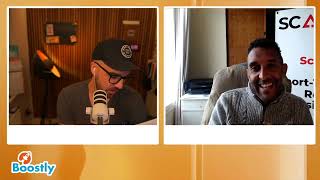
Mark Simpson and SEO expert Damien Sheridan explain why guests distrust direct booking sites and how to fix it. Add HTTPS, a phone number, live chat, and a dedicated Trust page with accreditations and reviews. Put a prominent Book Now button top-right and use custom domain email instead of Gmail.
Chapters
All right, everybody, welcome back. We are cracking on, we are ramping up our Book Direct Live stream. And when it comes to direct bookings, uh, there's a mind that comes up to me more than often, the most, and that is the person who started the very first Book Direct sort of conference and show way back years ago now, which is Damien Sheridan. Um, so I asked Dame if he could join us to talk about a couple of things, direct bookings, and definitely about websites and all that good stuff. And we're going to talk about about some events that are going to be coming up this year, which everybody has to have on their calendars wherever you are in the world. So, uh, first and foremost, get ready. We've just had a little break. Um, we're going to be talking about actionable things in this next sort of 20, 30, 40 minutes. So Damien, very first, and just to kick things off, just give us a little bit of background about Direct Bookings and, and, you know, from your SEO journey to starting a conference on it and, uh, and everything else in between.
Thank you, Mark Simpson. Thank you for inviting me today. Happy Book Direct Day. So yeah, for those who don't know my story, I worked in many years as an SEO, a search engine optimization consultant for property managers in our short-term rental industry. Did it for about probably the best part of 10 years. And then yeah, pre-COVID, that's how far back we go. It was actually only about a month before COVID we had our first Book Direct Show that you you were there for and many others in London and really grew since then. So yeah, so that's the Book Direction. We've had 7 now. We have our scale events that many people might know about across the UK, across Central and Eastern Europe that we had Boris. We have Boris arranging for us. But yeah, one of my loves is direct bookings, SEO, everything really related to property managers kind of regaining control themselves and, you know, taking after— taking control of their own business effectively. So yeah, delighted to be here to talk about websites and book direct goodness.
So we're not going to bore everybody on SEO because that could be— that could be a massive conversation in itself. But obviously you have looked at a lot of websites over your time. And obviously now, uh, in the capacity of what you're doing, and you, you know, people are coming to you saying, hey, we've got an event coming on in, uh, wherever, you know, where do you recommend we book? And I guarantee you still see a lot of websites. So let's focus on there. That's obviously what we do here at Boostly as well. Now, when it comes to a solid direct booking website, um, from, from all— well, we'll start from the guest aspect, and then we'll talk about the business owner aspect, and then we'll sort of finish with like the search engine aspect to it as well. So from a guest perspective, with a booking website, uh, what is like the key essentials that you would be looking for and recommending people do on how they lay out their site to make it as easy as possible to, to, to do that booking? Let's start there.
Yeah, well, look, yeah, as I said, I'm not going to talk about SEO, social media, or how we get people to our websites. I'm going to assume that everybody listening to this has a website and is driving some element of, of traffic or visitors to their site. So I think we all know generating direct bookings is actually really, really difficult from your own website. We can have repeat bookings and that's great and probably the easiest way to drive them. But really to get somebody to come onto your website and book is tough. And I know you have millions of pounds that you have generated in direct bookings. But I think for the average person who's considering this and has maybe had a website for a year or two, it is particularly tricky. So really what I just wanted to do was highlight a few things that really help generate trust, especially on our websites. So, and things that I've been looking at for years in my capacity as an SEO and even looking at all the websites of attendees that join us at our Scale and Book Direct shows. So really the main focus is on trust because you know your website is trustworthy, but doesn't the average person who hits your website? Most probably not. And we've all had experiences whereby they might jump back to Airbnb or Booking and book there, which is hugely frustrating, but it's because they trust those sites. So I just wanted to highlight some things. First of all, HTTPS or a security certificate. I know you have them in place for all of your websites, Mark Simpson, and I think the majority of people will have that now, but in case you don't, please make sure you do because search engines will flag that and they won't even let people get straight straight to your website unless you have that certificate in place.
It's crazy talking about that, that one, because that was such a big one, I think, around about the start of the, the decade. And it's one of those things that, like, I remember the amount of conversations that we had to have with people to just go and get it activated on their, on their domain. Luckily for all of you that are new and you're recently set up a website, it's pretty much standard if you haven't got that HTTP P-S, like that security thing. I'd be very surprised if anybody set up a domain and hasn't done a standard. But yeah, it's mad hearing that. I literally just got déjà vu. I've got PTSD of all the times I've had to have this conversation with people. But yeah, there's a huge one.
It's very unlikely that new websites really developed over the last few years will have that issue at all. It's normally standard, but sometimes it is sites that are a little bit older, perhaps 5, 6 years, that really haven't been maintained at all. It's just, it's absolutely essential. It probably won't affect most of the people listening and watching today. One of the biggest things and one of the simplest things I would say is add a phone number, a very prominent phone number to your website. Now, maybe we can ask you, Mark, in terms of Boostly sites. I'm going to put you on the spot a few times here, by the way. Adding a phone number for me makes a website and a property manager or host much more real, less anonymous. You're basically saying you can contact me on this number at any time. I should pick up or I should have some way of communicating back to you, but to make sure it's real and a clickable option on mobile. So dare I ask, Mark, is that the case on a Boostly site? Or should we just skip?
No, 100% is, because the reason being is we have some advantages when it comes to direct booking websites that the OTAs don't have. So if you look at Airbnb, there's no live chat, there's no phone number to contact, right? Expedia, Booking.com is the same. But, uh, there was a, a survey done at the turn of the decade, and they interviewed 15,000 to 20,000 travellers. And one of the questions was, during your booking process, if you had a question, would you like to speak to someone? And over 70% of people said yeah. So when it comes to direct bookings, that's our superpower. We have the ability to offer up a conversation with a human. What I will say is, uh, having a live chat box— bot box on your website. A button on your— on your website is also advantageous as well. Give them both options and make sure that phone number and that button is on every single step of your booking, booking journey. Uh, there's some cool, really cool tools that are available now. Obviously AI has massively helped with this, where you can have like an assistant, an AI assistant answer questions for you, and there's loads of third-party solutions that help with that. Uh, we use GoHighLevel as our CRM that has that built in that you can train these up, and that's the one we put on our Boosty sites. But having both options is great, just giving that option for the guest to call you. And, you know, always look on your avatar. Who's the, the, the person that's going to be on your website? If you specifically speak to boomers or Gen X, they love a phone number. If you're predominantly targeting Gen Z, they hate picking up the phone and speaking to people, you know what I mean? So we do it on all of our sites. We give the option for all of our customers and hosts to do it, and whether they choose to have it on theirs or not, it's up to them.
Yeah, that's exactly it. Some people do still like to call, you know, and if you've got a larger property whereby people are spending a lot more money on it, or they're going to have a big group of people, for example, they need to ask certain questions that one of their buddies asked, just give them the option at least. Chances are you may not get many calls. But at least give people that option. Yeah. And really kind of alongside that, just, just making your, your website less anonymous for me is really important. So a couple of things on that. Um, having an About Us page I think is, is absolutely vital. Make yourself more real. And with photos as well. Again, I'm sure there's a couple of people watching here might say, I don't want my photo on a website, that's the last thing I want. I don't want people knowing all about me. But there's a reason people do this. It makes you much more credible, much more relatable. And that you have a team of people, or if it's just you. I rented an apartment in south of Spain for many years and it was pretty much just me. But people knew me, they got to know me, and they know who they're speaking to if they click on that phone number as well. So add an About Us page.
That's the one part that I'm going to kick back on this one. We stopped doing About Us pages, and I'll tell you why, is that we all know that the majority of people start their search on mobile phones, right? So if they're going to search for a place to stay, they start on a mobile phone, and they're not always going to have Wi-Fi or 5G, right? And the phone reception may be a bit whatever. And we looked at our stats, and we were very lucky that we can look at a lot of websites when we come up with, with a synopsis. And we found that by having your homepage, which is an absolute standard, by having more pages in the potential booking process was actually a large factor on why people were bouncing. Number one, people weren't going to the About Us page, which is interesting. They go from the home to the map, right? Or they'll go from home to a specific property page, but they weren't really going to the About Us page. So we got rid of it, and what we did was we had a section on the homepage that was a very solid section where it's about the owner. So it's not a full dedicated page, it's a solid section on the homepage. And we turn the homepage into like a really cool, almost like a magazine where you start at the top, you've got your hook, you've got the above the fold, and you get people to scroll down. So a little bit about the properties, about the business, how it can— why is it for them? And then just below the actual properties itself was the About Us. So it's a nice big picture of the, the host or the host and their partner or the host and their family or the host and their team. And there's a good solid paragraph on that, but we didn't need anything more than that. What we instead did and encourage all of our clients is obviously to utilize social media as they're getting to know the business, getting to know the host, getting to know the team, whether it's through Instagram, LinkedIn, Facebook, or whatever. And that's what we did instead. And we did it purely for an optimization of the website, just purely because the amount of time that pages can get to load from Home to About Us. As we all know, the attention span of humans now is less than 3 seconds. And if a page doesn't load within 3 seconds for whatever reason, they'll bounce and they'll go and they'll go bored and they'll go somewhere else. So we do believe in About Us, but we don't believe in a dedicated page to it.
Yeah, that's fair. As an SEO, I would disagree on that, but I think that's what this is all about. I think additional and optional pages for people to visit is always important. But that's a really good point. But alongside About Us, I think we need to think about how people are contacting you. I see so many websites out there where there's a contact page and that's great. And you jump on to that page and it's just a standardized anonymous form to say, "Contact us." And there's a subject, there's a field for your name. There's probably 100 fields actually, far too many. But it's just, there's no mention of who you're contacting, a phone number, details of that property manager or host. So with that contact area, if it's on your homepage or if it's a specific page, just make it a bit more personable and just give someone a bit more information about you and not just a standardized form, which is so dull and so anonymous and boring.
Yeah, on that, we don't— we got rid of the contact page as again, because again, contact pages, it's 9 out of 10 times boring. Nobody really, you know, if you do it well, you can have your contact information on every page without having a specific page of a, of a, of a contact. And what we're finding as well is, uh, with contact forms that were on your website, they were an absolute gateway to getting malware on your site. Um, just, you know, these bots and these whatever, these scammers can get in in many ways to your website, but coming in through your contact forms was one of the most easiest ways to go about doing it. So we got rid of contact forms, uh, we just had your phone number, live chat, uh, button instead. And as long as you have that information in regular places in your footer and around the sites, then it was a— you didn't need a Contact Us page.
Yeah, that's good. Yeah, but I think you still see it. It's very, very common just to have that just standard contact us page with, with a form and nothing else. And it's, it's a terrible user experience.
Yes, good. I like this. All right, so we've gone through HTTPS security, phone number, about us, contact page, a little brief little mention of SEO, which we are going to come back to at some point. But what's the next one?
I don't want to send people to sleep with SEO, but we can get back to it briefly. Um, trust us page. Why trust us? Um, again We know we're trustworthy, but does your prospective guest? Most likely not. So give them the reason why you're trustworthy. And that's not only just a bit of information about you, but tell them about your accreditations. Tell them how they can verify you. You know, are you IPRAK approved, for example? Or do you have a company registration number that they can look up and see details about your company? Tell them you take credit card payments or PayPal payments, for example, so that they're protected. Using something like Truvvy or some kind of verification or insurance. Give them the reasons to trust you and don't just assume that they will because they don't. You know, the vast majority of people that come to our websites, they don't trust us and they'll go and they'll book where they feel like their money is secure. Let them know that they're secure with their experience on your website.
Yeah, definitely the trust you have to get over straight away. We find Uh, and I don't know if I'm spoiling your, your upcoming things, but reviews work really well on this.
Um, that was my next one.
Oh, is it? All right, well, let's combine it. But 93% of people, uh, of all purchases that are done online are on the back of social proof. So if you want to block off trust, great to have, uh, reviews. We'll, we'll talk about that in a second. But you mentioned two companies. So iPrac is an accreditation, um, blockchain certification, whatever, that, you know, you have to have it on your site. It's unique to you to show that you've come through that. Other people, a lot of our clients, they'll whack up their Superhost badge, which is, again, it's cool as long as it doesn't link off anywhere. That's cool.
Exactly.
As long as it doesn't link off anywhere, that's sound by us. Uh, obviously I'm not a fan of it being there, but you know, what needs must. Any awards that you've won, obviously have them on there. And as long as it's not just spamming the site, as long as it looks good in a special section— again, we don't believe in a specific page, but a special section on that homepage, it always does, does well to build that trust. Because you're right, with any business, if anybody's going to separate themselves from the money, especially if it's going to be a stay, and especially if you're going to be bringing your family with you, uh, you know, partner, kids, grandparents, whatever, you want to make sure that the place that you are staying at is actually going to be there and it's, it's, it says what it says it is. And so if, however you can eliminate that Fear factor, build that trust between arriving on your site to then check out. Brilliant. So trust. All right, let's combine it with reviews. So what's your opinion on reviews on sites?
I think we're long past the days of just type manually copying and pasting reviews you have into a reviews page or onto your listings. It needs to be a lot better than that. So you will know of services like Reviews with Christophe. Aggregators where you can bring in your reviews from Airbnb, from Google, from various sites to all show up in your website on your listing pages. Just tools like that where you can show, hey, I am a Superhost or I have got a 4.8 on such-and-such a site. People need to know that. They need to know that you are, that you have a really good offering and that you're a sound, credible host.
So I've got some breaking news that I can reveal today on Book Direct Day. We've been in discussions with Christoph and the team for the last couple of weeks now. It feels like years, but last couple of weeks on how we can utilize reviews at Boostly for our clients, because we've been using a tool called Elfsight. Uh, we've had a special agency agreement with them for— with Elfsight for ages. We just could put unlimited sites on there for X amount of money. Um, Elfsight have just very recently come to us and tried to absolutely catapult that price up. And so I went to Christoph and said, what can we do? And we've worked on an agreement and we are literally, if I haven't done it, um, by the time that you all watch this, which is obviously Book Direct Day, uh, I'll be amazed. So we're going to basically have reviews working on Boostly sites, which is cool. So we're going to have all of the reviews, which is R-E-V-Y-O-O-S. We're going to come onto the site, which has got— again, the cool thing about that solution is it's got massive SEO benefits, which we'll talk about. But also as well, it means that I can work with a company that is specifically designed for this industry. So really excited. Uh, all Boostly customers are going to get moved over automatically. You don't have to do anything, which is, which is cool. And yeah, we put reviews on the sites, um, because it's, it's huge. Like I say, 93% of people of all purchasing decisions check on social proof, and reviews is one of the easiest ways of doing it.
Yeah. Yeah.
All right. Breaking news then. Breaking news. All right.
On reviews, one other thing I would add is consider the power of video reviews, which nobody does. Ask your regular guests, will they send you a short video with a review of them in your property saying how much they enjoyed it you know, if it can be with a view in the background or, you know, in front of your nice pool table or something like that. But it goes such a long way in terms of putting that on either your homepage or on your individual listing pages where people can actually see themselves in that particular spot and they see someone else has been in there. It does make such a difference in terms of giving people that sense of trust for a particular property. So consider video reviews. For those who've seen me speaking about this at conferences, I apologize. But it's something I bang on about and have been for about 3 or 4 years. Still, less than 1% of property managers and hosts actually use it. But you'll be surprised at how many of your regular guests especially will do this, no problem. They'll send you a little video on WhatsApp. Use it. Honestly, it can give you so many more bookings. I've seen some companies increase their bookings on particular listings by 40%.
Content. Yeah, it's definitely untapped, and there's so much you can do with a video as well. Uh, and again, people will trust it because it's come from a person and it's not an AI video, which, which other thing to get into. But talking about video as well is that you can put it on YouTube. YouTube is a search engine in itself. Uh, and again, it just goes further. People love it. You can turn it into multiple layers of content for your social medias, and again, it's Uh, it's a, it's a, it's a one of those easy little hacks. And if you have to give a little incentive to someone to do it, so be it. Send them a bottle of wine, tickets to your favorite football team of choice, or whatever. It's like, it will— the return of investment on that is, is huge.
Um, yes, so absolutely do it, do explore it. Um, connect with me on LinkedIn if you want, and I'll give you some examples of some companies who, uh, who have done this off the back of me me speaking. And it really, the most important thing actually here, it does not need to be a professional production at all. In actual fact, it works better if someone is just doing it from their shaky phone. It looks actually a lot more real. So yeah, so please just explore it, especially with those who are likely to do it, and they are your repeat guests. I've got so many things here, Mark, but maybe we should, if you want to talk about SEO, I'll just give a couple of final just things on websites. Email address. Craig Webb mentioned this in Manchester at the Scale UK event. Have a customized email address. Don't use a Gmail address. If you've got a domain, get the email address for that domain, even if it's just info@ or dave@. Having a Gmail address listed on your site for, for contacts is not a good idea. and it just doesn't scream professionalism at all. So get a customized email address. It's really cheap. It's a few quid.
Yeah, exactly. It is so simple. It is amazing how many people come through the Bruce Lee universe and they are using their Outlook or Gmail or whatever as their business email. So again, we're getting everybody professional on this one. And again, just takes 2 minutes to do. Super simple. Go and set that up. Which again is a nice little one. All right, have you got one more before we talk about SEO?
One more. Have a Book Now button. Make it prominent on the site. I guess that's possibly one of the most important things. Get the flow right. Make sure that it's very easy for them to see where they can book. And also I'd say alongside that, make sure the booking funnel is as simple as possible. So you're not asking for too many things. Now, I don't know with the Boostly booking funnel or many PMSs out there how many clicks it takes from start to finish, but simplify it and just get the information that you need. Again, I see so many sites that are asking for details like your job and, you know, your title and things like this. Don't have like 10 or 15 things that you're asking for. Just get the essentials, the email address, phone number, name, and payment details. You can do your upsells later on and you can find out the requests and stuff like that, but don't get them to have to register like that. So keep it simple and make that booking book now button very prominent.
Absolutely. I feel like the biggest mistake that we see when we're doing auditing of websites is the book now button is there, but it's hidden, which is mad. Like, the key to any website is you've got to be able to, within the first 3 seconds of somebody opening up your website know who you are, what you do, how I can buy. And the Book Now button, a super simple hack, takes 10 minutes to do. Change the color of the button so it's different to the rest of the text on that top line of the header. It's so simple. You got to make it stand out, um, and it's got to be in the top right-hand corner. For whatever reason, uh, when people are making purchasing decisions with websites, our eyes naturally go to the top right-hand corner of a website. So obviously if you're on a laptop This is why everybody's checkout section is in the top right-hand corner. So if you go on Amazon, go on any site, the checkout section is in the top right-hand corner. So you have to do the same on your, on your website and make it a different color so it stands out. That is key. And yes, the booking flow, we try and make it as simple as 1, 2, 3. And this is where having Goliaths like Airbnb, Vrbo, Booking.com, Expedia, Marriott, it's fantastic because we can just go and look at what they're doing and mimic Uh, and if you can have your website as simple to book as homepage, map, listing, checkout, you're good. Again, don't try and make it hard, don't try and make it confusing, because when you confuse, you lose. So definitely aligned on— 100% aligned on that, right? So let's very, very quickly talk about how and where you see in this world of AI in 2026 and these new things that people are talking about. People have just managed to figure out what SEO stands for, but now they've got to learn this thing called geo and LLMs and whatnot. How important do you see personally, from your own personal view, search engine optimization, doing your website so it is readable by Google, Bing, etc.? How important is that when So many people now are going to ChatGPT or Google Gemini, Perplexity, your large language model of choice to search for websites.
It's not really important at all. Jokes. It's still hugely important. Absolutely. I personally believe for the most part that as long as you're doing a good job with your SEO, you should be picked up by LLMs. This is if you've built up a sense of expertise in your local area. You'll have heard of EAT, just building up that trustworthiness and authority in your given area or whatever it is your website is talking about. From what I'm learning, the main difference is mentions. So whereas with traditional SEO, links were hugely important and it was all about getting links, links into your site, third-party links and follow links, etc. And as SEOs, we looked at that for many years and keywords, et cetera. It is a little bit different with LLMs and we're all still working that out. Don't let anyone tell you they've got it nailed because they don't. We're all still figuring out what it is that actually LLMs pick up on. I'm reading a lot about YouTube and Reddit being some of the key indicators, but it's still, nobody knows exactly. That said, mentions are important, but Google still has a monstrous amount of traffic. So let's not all think, oh, we need to now be looking at ChatGPT, that's where it's at. It's one of many distribution channels. So, and we've also got to think, where are people actually likely to book? You know, are people ready yet to do everything or can they even through LLMs? I think we're some way off that still. So whilst we want to be mentioned and we want to have distribution channels, get the basic SEO right. And when I say the basic SEO, that's another 2-hour session in itself. But I think the principles haven't changed significantly. But we do need to look in different ways as to how other sites are mentioning our brand. And I think brand is really important here as well because it's not just Jim's place in Sheffield. We do need to build brands up more in order for LLMs to understand the importance of us and why they should be including us in an answer to a prompt.
It would be amazing if there is a Jim who's watching this in Sheffield right now and his ears are just pricked. So let's talk about— because obviously there's a wealth of knowledge that you have and obviously doing SCaLE for so many years, there's like a wealth of knowledge that have been shared at these sessions and you've decided to put it all into this community. So very quickly, talk about SCaLE, the community, where people can go and just give like a little synopsis of the events that are coming up this year with the SCaLE brand and what you're trying to do this year.
Yeah, well, people have seen Boris speaking. Yeah, we have an event coming up. The next one actually is in Sofia. In Bulgaria at the end of March. That's for our Central and Eastern Europe, European kind of market. But we have events, we have I think 8 this year, 8 or 9, UK, France, Dubai. I know I'm going to miss some here. India. We've got a lot going on. Essentially they are events for professional property managers. So Those who are doing this full-time usually have about 10+ properties, and we bring people together for 2 days. You've been to many of them now, Mark Simpson Simpson Simpson, for really just 2 days of networking with like-minded, ambitious property managers who really want to grow but learn from each other, as well as all of those extraordinary speakers that we have as well. So we have lots of events. The Book Direct Show is— I'm not sure this year exactly how that's going to work, We might have a little hiatus this year. We've also got a— yeah, we've got a community that we're redeveloping at the moment. We've got The Wire, which Louise is working on, which is a news outlet now for the short-term rental industry. We've got a supplier directory coming out at the moment called Connect. We've got a lot of little things happening. But yeah, if anybody out there is interested in joining one of our events, if you just look up the ScaleShow events calendar. You'll be able to see them there.
And that's scalerentals.show. Head over to there, uh, go and check it out. And Damien is Damien Sheridan, S-H-E-R-I-D-A-N, on LinkedIn. Um, go out and see all the stuff that he puts out on, on there. And any final little words before I let you go and get my next, uh, go and grab my next speaker?
Um, uh, you put me on the spot there more than anything. Um, no, I just, uh, look at It's always nice to be involved. BookDirect is kind of where my heart is. All due respect to our OTA partners out there, I think it's really important that everybody out there should just at least be looking at distributing their inventory across different channels. We know that the big OTAs are really important. I think actually my main message here is let's not whinge about the OTAs. Let's not complain. You know, it is what it is. We're in a situation where we live in a sharing economy. There's always going to be some behemoths, some big companies at the top. You know, you think of Uber, you think of Deliveroo. These are companies that have done an amazing job in the OTA space. Airbnb and Booking have pushed our industry forward like we could not have imagined 15 years ago. So let's actually, for me, let's be appreciative of that. But at the same time, and let's use them, but they are tools for us to use for our business. And let's not make it the other way around whereby we're just abiding with all of their algorithmic changes and having to do everything the way they want. Let's shift it. Let's make sure that they are tools that we use, but we explore all those other ways that we can drive direct bookings. And there are an infinite amount of ways. You know, you've been speaking about them for years, Mark. I have been. SEO is one of thousands of ways that we can push more direct bookings.
Yeah, absolutely. Because at the end of the day, and this was Phil Cannard at Futurestay who told me this, and then AutoRank backed it up, 65% of all bookings that are direct start their search on an OTA. So you need to be on there. It's all about the billboard tactic that I spoke about loads of boost over the years, but you got to be on there. To be able to grab that attention, to then take them from that part of the funnel to Google, to your website. And everything that you've laid out in this last, what, 30 minutes is exactly what you need to have in place to turn a looker into a booker. Um, the problem is that only 0.4% conversion rate from a traditional vacation rental website. So if you can do these things, then you can get that conversion rate up so you don't have to get so many people to your site to be able to turn it into a booker, whether it's first time or repeat. But brilliant. Go and check out scalerentals.show. Massive thank you to the Scale family that's helped put this all together these past few days, alongside obviously Hostfully, Guestway, and Flataway. But we'll let you go. Right, I've got my next speakers just joined the green room. Damien, thank you very much. Can everybody just say thank you in the comments, in the chat, and we'll see you all very soon.
More from Mark







I Tested AI Search SEO for Rental Hosts... Here Is What Happened [Live Training]



