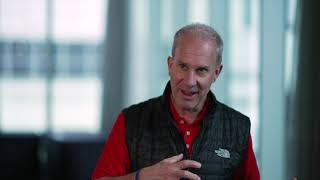
Global Livestream: Visionary with Mark C. Winters

Mark C. Winters discusses his book Visionary with host Carrie, covering who qualifies as a visionary and why you need roughly one integrator for every four visionaries. He introduces ten pillars including Know Thyself, his Exponential Freedom framework, and the Surround Yourself pillar with seven forces.
Questions this video answers
About one integrator for four visionaries.
Roughly one in five.
Businesses between about 10 and 250 people.
Ten pillars.
"Know thyself."
Chapters
Are you a visionary? I'll tell you what, listen up. Tag somebody who is. Maybe you are yourself. You're going to find out very quickly. Mark C. Winters, how you doing today?
Great. How are you?
I'm doing fantastic. I love this book. I love eos. I love Rocket Fuel. We're going to get into all this today, but first of all, for people who are just tuning in, how much of the population are visionaries? I know you shared integrators are more rare, but how much of the population do you think are visionaries? I don't know.
Yeah, so, I mean, it's, it's pretty small. So. So you, you can almost kind of think about the, the visionary and integrator population sort of clustered together. Right. And, and maybe one in five is one of those sort of to the scale where we look at kind of 80% or higher on the, on the crystallizer assessment that we, that we do. And then within that, it's interesting, right? There's sort of one integrator for four visionaries. So it's really kind of an interesting composition of the, of the wiring that we have as people.
You know, I shared yesterday, we have an IP podcast coming out soon, but I shared how Rocket Fuel hit me at a time in my career that was so providential. You know, I was trying to do it all myself, like a lot of entrepreneurs in the beginning, and I think we almost think, well, I can do it all because I have to do it all. You know, like most entrepreneurs start out doing the books, doing the sales, and they just kind of pick up all these tasks. At what point do you think the visionary needs to be like, I'm only going to focus on my thing and I'm going to bring along an integrator?
Yeah, so that's a great question. And so there's sort of two paths that I see for how people get there. The one is really the entrepreneur that's climbing that entrepreneurial hill for the first time. And just like you said, there's so many things that you sort of have to do yourself because that's all you can afford. You don't really know a different way to do it. And in the process, you get pretty good at some stuff. Right. And then as you begin to get to the point where you, you're building a leadership team from an EOS perspective, we talk about our target market as businesses that are somewhere between 10 and 250 people, because typically that's when the organization is getting to a place that the founding entrepreneur is not doing it all themselves. They've got some other people around them, and they're actually starting to take those folks and elevate to form a true, what we would call a leadership team. So that's sort of the first place that a visionary would hit it on that path when they're again climbing that entrepreneurial hill for the first time. But what's interesting, Carrie, is I've got clients that I've watched go through the cycle more than once. And so they go through that cycle, they have their first visionary integrated relationship. It's powerful, it does great things for their business. It's successful, they exit. So they, they sell that business and they're ready to, you know, maybe move on to, to the next thing. Then they come around to that next business and guess who their first hire is.
Integrator.
It's an integrator. Yeah, it's because, because they just, they've got it now crystal clear in their head and they're like, well, why would I start with anybody else? I'm going to bring in a great integrator first, and then I'll use them or work with them to help me figure out all the other missing pieces that we need to put in place.
So good. I love everything about this book. I love the, the COVID I love the, the forward. Gino is a friend of yours and mine. He's amazing. The subtitle, though. How Driven Entrepreneurs get what they Want without. Without Doing It All Themselves. Unpack that for us.
Yeah. So, you know, there's a couple of, couple of important questions there. One is, is this idea of what, what do you want? And, and, and getting clear on that. A lot of visionaries, I feel, are, are not. And, you know, you, you ask them, and a lot of times they just sort of are maybe doing what others have, have asked them to do or needed them to do. And, and, and what they really want is sort of an afterthought. And so if they spend some time to get clear on that, and we've got a structure in the book to kind of help with that process, many times they'll see that it's not something that they can do alone. Right. So they may be trying to do it alone, but a lot of times these are grand ideas, grand plans, things that they want. And so they need to be able to work with other people. And, you know, visionaries being sort of a force of nature, working well with others isn't always easy when it comes to the context of a business. So there's, there's certain structures that we need to put in place to help them know where to push hard and maybe where to let somebody else push hard so that the whole thing works and is actually going to be effective to actually make these things that they want come into. Come into existence.
I love it. Well, we are live on a lot of places. I'm. I'm live here on Instagram. Yeah. Wow. You got people jumping on there. But we have YouTube, we have Twitter, X, we have Facebook. So I think, Mark, that there's going to be some extra prizes. I, I'm on your email list, by the way. I highly encourage people. Get on that. We'll share a link here in a moment. But what are we giving away? What's. What's a special prize today that we're giving away?
What are we giving away?
Well, I think it was like. Was it. Do you know, by the way, because I saw it on your email.
Well, we've, we've talked about it, but maybe you have the list. I know that one of the things that we talked about was a, you know, a special, really one on one call with me.
Exactly.
To kind of for a visionary to talk through and kind of let me get into their head a little bit and see if there's something I can help them with. So that's probably.
I mean, that, that was what I was thinking of the grand prize. Because that thing is legit. Just spending time with Mark over the years. Every time I do, my thinking is elevated. And in fact, that's a whole EOS concept. Right. Delegate and elevate.
Elevate. Yep.
Yeah, yeah. But you have, you have family jumping in. Let's go, Dad. I love this. Austin's here. You got, you got a whole big crowd here, but we're gonna tell people, listen, the way you get entered to win the grand prize is number one, get the book. Okay, so Tanisha's dropping in the links right now. This is a book that you want to get. It will save you time. It's will save you pain. But get a book and then just post in the comments.
Book. And then what we'll do is we'll draw from people here and Mark's team will come back after the event and kind of like pick somebody. But Mark, what types of pain? Because I really believe nonfiction books solve a problem. What pain is a visionary in?
Yeah. So one of the biggest pains is just the frustration of not being able to see their ideas become reality. And yes. Right. You've probably felt that yourself at times. Right. Every visionary has. And so for Visionaries coming up with the ideas is that's like falling out of bed. I mean, it's, it's not hard. It's, it's actually super easy. And so they'll have drawers and stacks and drawings and, you know, whiteboards and whatever, just covered with all these amazing ideas. But when it comes to execution, that's not so easy and it's not as obvious. And in fact, the interesting thing about that is the fact that they have another great idea coming right behind that one. That's actually the greatest threat to that great idea that they had just started. Because they get distracted, their gaze now turns to the next thing. It's more interesting than the first thing. And so it works against them in that, in that regard. So that really, again, the idea of bringing someone alongside you that is execution oriented and able to kind of drive the details to make that idea come into existence in the world is, is a, is a pretty big solve. It's a pretty big pain relief. And you know, for the, for the visionary, you know, another thing that they feel is just, it's all the frustrations that really anybody has in leading and managing people where people are complex, right? We're hard, we're hard to deal with, we're hard to understand. And visionaries, again, that's not their gift. You know, I like to tell people that I've managed as many as probably 45 people directly. @ the time, I, I thought I was doing that pretty well, you know, but, but now I watch somebody who's a, who's a great manager and really good at, at, at holding people accountable and following up with them and it's just, I was, I, I was not good at that. I'm on a good day. Maybe I'm, I'm good for, for managing one person directly, but, you know, if that person is my integrator and they're great at leading and holding the rest of that leadership team accountable, and each of those are great leaders and they're great at holding their teams accountable. Then, then that's what all comes together at scale to allow you to take some of these big ideas and make them a big.
Reality. Managing 45 people gives me.
Chills. And maybe I've done that in another life because I'm bald. So, so. But we got a lot of people jumping in. Look at this.
Ryan. Yeah.
Ryan. Comments book, Andrew. Comments book. All right, people over on LinkedIn. Yeah.
I need an autograph. So you got a lot of love here, but let's now unpack the pillars. You got 10 pillars, which I love, the IP, the intellectual property, all around that. What are the 10 pills? What are some of.
Those? Yeah, so I don't know if you want to kind of ask me some and kind of go from it. Let's start with the first.
One. Yeah, let's do.
This. So the first one is simply know thyself. And again, what I see in a lot of visionaries is they sort of have ended up here. They've spent a lot of time thinking about their idea, they spent a lot of time thinking about how they're going to, you know, build their business and make this thing go. But they haven't spent so much time really looking internally. Wow. At. At who they are, how they're wired, what's really driving them, you know, back to our first point, you know, what they really want to, to make true in the world. And it turns out that the answers to all of those questions are super important to being able to discover what the right answers are for how you actually make it happen. We talk about the visionary integrator relationship as one example. So think about the visionary and the integrator as a two piece.
Puzzle.
Yep. That we want to fit together in a very complimentary fashion so that we don't have just tons of overlap. We're not just the same, but between us we don't have lots of gaps where neither one of us is really great at something. We need to just fit together like a, like a perfect two piece puzzle. Well, if I don't understand the shape of my edge of that puzzle, how am I ever going to figure out what the shape is of the other piece of the puzzle I'm looking for?
Right.
Wow. You've got to do that work. You've got to look inside. And now there's some very practical applications of that. But then you kind of zoom out and you think macro, you think big picture. And ultimately, at the end of the day, you need to understand why in the world you want to do this business. This business stuff is not easy. It's hard. And some days it's really hard. Right. And so you need to be crystal clear on what it is that you're trying to accomplish, the impact that you're trying to have with this business, and how does it fit in your framework, how does this business really serve, where it is you're trying to go and what it is you're trying to get done and what you're trying to make true for yourself. You know, I talk about this concept of, of unique freedom and you know you and I have talked about this, Carrie, but it's the idea that everyone's definition of freedom is different. And so what my wife's looks like, what carries looks like what mine looks like, they're, they're all different. And that question led me down a path to try to figure out, okay, I don't know what, what the heck does my freedom look like? What, what do I want to be true? And that is in one of the other pillars, I introduced a structure that I call the Exponential Freedom framework that identifies these nine domains. So, interesting story, I did kind of a research project where I pulled all these different lists from gurus that had their seven things, their five things, their six things, their nine things, whatever, right? And I put them all on a board and I started moving things around to look for things that, that seemed to align with each other. You know, this was just a different way of saying that. And so, so you kind of get these clusters and fit it all together. And what I learned, Carrie, is it turns out there are nine. There are nine different domains of freedom. And everything that I've been able to come across since then, I did this about 10 years ago, fits into one of those nine. So I think it's a, I think it's a complete model. And so the process you've got to get clear on as a visionary is, all right, what do I want to be true in all of those different areas? Right. And it turns out there's trade offs, you know, if I want this to look in a certain way, well, that may limit what, what I can make a different area look like. So you've got to decide what's most important. You've got to decide how you feel about those trade offs. You got to paint that picture of what you want the future to look like. And then from that future, you sort of draw a line back to today and you can get really clear on the practical applications today for what the things are that you can focus on habits, the priorities, the things that you're doing right now that are ultimately going to give you the highest probability of creating this future that you've decided is important for.
You. I love that. Couple thoughts here. If you're just jumping in. We are talking to Mark C. Winners about the brand new book Visionary. He has a grand prize. One on one coaching. It is a session, it is fantastic. It's worth several thousand dollars. And here's the point. You get entered to win simply by getting the book right now and commenting book in the comments. Another value add would be share this. Share this. Mark. I'll tell you why I want people to share it. I'm a visionary. It can be a lonely place. Maybe you talk about that, that Steve, Steve Jobs talked about. Staring into the, the abyss and eating glass, you know, is the plight of an entrepreneur. There is some amazing benefits, freedoms that you talk about, but it's also tough. Why do you think this book's going to help people be like, he gets it, I get.
It. You know, so, so, so great. Another great question and absolutely true observation. Many times visionaries feel like they're alone and just by the nature of the position that you're in, you end up with things that you feel like you don't have anyone to talk.
About.
Wow. And you know, some of those things are good things and if you were to say those things, it's kind of like, oh man, they're going to think I'm bragging and I don't want to come across like that guy or whatever. So you don't want to talk about those. And then on the other end are the really bad things and that's the stuff that's scary. You know, as, as visionaries, you sort of have a different level of armor that protects you from the scary stuff because you know you're going to be okay. But these other people around you don't know that. And whether it's the people that work, you know, with you for you, or maybe even your family, you know, if you talk to them about it, the freak out factor can get pretty high pretty fast. Yeah. And so as visionaries we, we tend to just kind of hold this stuff in and, and, and that's eats at you that makes you feel this sense of isolation. It's just, it's not a healthy place to be. So in the, in the surround yourself pillar, I identify these different posts, the seven different posts that are, that are essential to have around you and not only to have around you, but to have filled with someone who's truly great and can truly support you in that, in that role. And then along with those seven posts are these seven forces that, that come together and are delivered and brought to you by these seven different posts around you. And, and that's a whole different kind of fuel, a whole different kind of force that can help sort of prop you up and drive you forward and in a sense, you know, protect you from the outside world. I. Did you see the movie the.
300? I've not seen that one, but. Is that about the.
Greek? No, it's right The Battle of Thermopylae. So the Spartans. Right. And so great, great movie if you. If you like that kind of. That kind of thing. But there's a real famous scene in there where they're gathered, they're about to engage in battle, and the, you know, the general, you know, says the command of. Of shield wall. And so they all drop their shields into a certain formation where together, locked in together, they are able to protect themselves from. From the attacking forces. And that's sort of the picture I have in my mind of the Visionary, where there's all these, you know, alligators and bears and hyenas and whatever. They're just kind of yipping and nipping at you from. From all different directions. And so you've got to build a shield wall around you. And that's what those seven posts are. That's what those seven forces are. And that can make all the difference in. In being able to survive and.
Continue. I love it. I know you have a fantastic website with all kinds of cool programs. You. Is. I don't want to ask, but is. Is the new website live or not yet.
Today? The landing page. Yeah, so the landing page for the book is.
Live.
Okay.
And.
Visionarybook.Com visionarybook.com and when people go there, they will be able. You can see my screen with the new one. Okay. Oh, I like the colors. So what's going to happen.
Here? Yeah, so, I mean, here's. You can go and kind of learn more about the book. And if you scroll down a little bit, obviously there's a place to. To order the book. This is kind of a cool thing that lets you dive into the. The ten pillars a little.
Bit.
Yeah. And you kind of see what's going on there and kind of get a little synopsis at a high level. Yeah. Isn't that kind of.
Cool? That is very.
Cool.
Yeah. Okay, so there's the 10 pillars.
And then, you know, just some. Some comments. You know, I've really been fortunate that some of the test readers that I had read this had really, really nice things to say. And there's an embarrassing picture of.
Me. I get you, I.
Guess. And just folks that I've worked with. So, so, you know, this is. This is the. This is the place to go to order. And then, you know, the, the more interesting thing is once you order what I've offered to all the people who, who buy the book is we have. We have bonuses in the book. Right. So they just need to. There's a link right on that page. Click that and we'll send you, you know, a link to the secret place you.
Go.
Yeah. To get all the different bonuses related to the tools that we begin to unpack in the book. And so. Yeah, so that's, that's what we have going on.
There. Okay, so what do you see? I mean, what do you see happening with this book? I'll, I'll pull a. Dan Sullivan, our mutual coach here. Yeah. You and say, hey, you and I are chatting in three years. And you're like, oh my gosh, Carrie the visionary. What a great move. Why, what, what.
Happens? So I want this book to truly unlock for the visionary entrepreneur their path, to make that freedom, that future that they want real. And so this is for them. If they've decided that they are in fact a visionary and they are in fact going to operate in, in that role, in that visionary role, then this lays out the pathway for, for these 10 different pillars that they have got to be really strong, really great in each of these different areas. And if they will do that, if they'll commit to that, then they're going to drastically multiply the probability that they're actually going to be able to make this thing work for them and make that true. So, you know, if, if two, three years from now we can say that we've got, you know, a hundred thousand visionaries that have been positively impact in that direction, you know, buy this book, then I would, I would be happy as, as I could.
Be. Yeah, well, you know, you got this tagline in the book too. And, and it's, it's the ten pillars of greatness that will make your vision a.
Reality.
Right. So let's, let's pick a, let's pick a skeptic out here, Mark. Not saying, not saying we have any on right now, but because honestly, I don't really even see any. But I'm going to ask the question.
What, what gives you the, the right to say, hey, I know a little bit about visionary because I saw your numbers and I already know the answer. But like, for the person who doesn't know you, how many people have you worked with? Like, what has been your journey of distilling these 10.
Pillars? Yeah, so I've, I've worked with a lot of visionaries. So I mean, it kind of starts with, with myself. You know, I'm at the point now where I've had 15 different companies that I've either started or acquired or shut down completely or sold off or something, or across all different industries and you know, all different levels of Success, frankly. So. So there were some where we, we made out, we did really well, and there were others where we lost the whole thing. And. And so, you know, I have lots of scars on my body to show for that experience and lots of questions that I had asked that I needed to figure out to help myself. You know, there's a. There's an old saying that we tend to teach the things that we needed the most. And so this book is really that as I looked at my own journey and then as I began to move into, you know, more of an advisory role. So it wasn't just me or my visionary friends that I, you know, hung out with, but it was people that I began to work with as a, as, As a coach, as a. As a teacher, as a facilitator for their teams and, you know, lots of different formats, whether it's, you know, private coaching or, you know, big workshops or big talks or whatever. You know, I've, I've worked with, live and talked with a ton of visionaries. And so these patterns just began to emerge. You know, the common questions, the pain like we talked about at the beginning, and the missing pieces as we work to solve them, you know, for how we. How we make it come true. And that's where the ten pillars come.
From. I love it, folks. Beauty. This. You got audiobook, you got hardcover, you got paperback, you got ebook, and this is fantastic. I'm an audiobook person. Mark, how was it reading it? Did it come alive in a different way? Are there things that are in the audiobook that aren't in the other one? What do you.
Think? So, so great, great question. And, you know, it's been over 10 years since I recorded the audio for Rocket.
Fuel. Oh.
Man. And, yeah, so. So my memory of that was pleasant. It was kind of cool. I got to go to a really nice recording studio and, you know, all that. And so. But that's really all I remembered, is, okay, that was kind of cool. That was kind of neat. And so we did this one. And you know, candidly, it was a beating. It was not a beating, but it.
Was. It was a.
Grind. Yeah, it was. It was, it was. It ended up being four. Four three hour.
Sessions.
Wow. To get. To get through it. And labor of love. Labor. Labor of love. And to the. To the audio team's credit, I mean, they are amazing in terms of the ear they have for detail and being able to go up. No, Mark, you garbled that one. Stop. Back up. Read that one again and whatever. So we got through It And I think we've got a very, very high quality product there that, you know, hopefully people can listen to. I love audiobooks too. I'm like you. And I listen to, I listen to them fast. So I typically list. Listen to people at about 1.5x. Yep. Unless they have a, you know, an accent, like a British accent or something, or they just talk really fast. And I'll, I'll back those down a little bit. But hopefully this is at a, at a pace where people can, you know, adjust it to their desired desired intake. But it's all in there. So everything's in there. We've got the, the visuals that, you know, if you, if you get while reading the book, we're actually putting them up on that, on that resource page so that they can, they'll be able to get those and, you know, have, have a complete experience and, you know, do all the work on themselves so they can get strong in these 10 pillars along with everybody.
Else. Well, I'm going to be in the room in Chicago tomorrow with 50 visionaries at strategic Coach. You bet. I'm going to be talking about this book, folks. I think this is the book that we need to really come behind, not only selfishly for ourselves, which great, you know, get in order, get in alignment, but every vision I know hangs with a group of other visionaries. We do tend to flock together. And so you're actually going to be helping out a friend, a fellow visionary, because you nailed it. Like, getting what you want is huge. I think it's Tony Robbins who says, like, all pain in life is result of lack of progress. Like, if you're a visionary and you don't feel like you're making progress.
It'S a big weight. So, Mark, as we land the plane, I know you shared kind of the big vision of the book, but let's take somebody right now who's like, literally in pain. They're a visionary. They're thinking maybe even today they woke up and said, should I quit? I don't know. This thing might be too tough for me. What hope does the book provide for that.
Person? So the way I think of it, Carrie, is it's a, it's a path. So you find yourself on one side of a canyon and. And you look across and all you see is, you know, the, the chasm. Right. The. This, this big thing that you. Too far to.
Jump.
Yeah. It's not obvious how to get from here to there. And so what I was really hoping to lay out in the book and I think we've done is, you know, step here, step here. Yeah, up.
Here. Well, that's.
Good. Here. And if you will follow this path, it's worked for others and it can work for you. So that's, that's the hope. There's. There's a way. You're not alone. You're in pain. Right? In fact, I got a. I got an email this morning from a woman who, you know, I, I can't share it, but the. I mean, it brought tears to my eyes. I mean, honestly. And she's like, I don't know why I'm writing this, but the message just resonates so strongly with me. You know, I'm in this place right now, and she's struggling. She knows she has a good idea, she wants to get it, but she just keeps hitting these walls and hitting these walls. And, you know, the, the bottom of the email was, this is giving me hope, and I look forward to today when I can write you a letter, when I can tell you how, you know, this was able to unlock me and, and allow me to make, make my vision a reality. So that's the point. That's why, that's why I do what I do, because I, I have a great appreciation for those people. They're out there in the arena doing the thing. And, and, and frankly, entrepreneurs are the answer to most of the problems that we face.
So. Amen.
Let's. Let's help them.
Out. And I agree with.
That. Get it.
Done. I agree with that. Big thanks to also our mutual friends at eos. EOS Impact was a dream. It was a vision. Hey, let's get out the right authors out in the world. And so we are getting those books out in the world. Mark, you're one of the top people that we're publishing all year in terms of the EOS Impact. So thank you to Eos and thank you to Mark and even Gino that. That's how I met you, through Rocket Fuel. Get both of those books, folks, and you will be blessed. Thanks, Mark, for joining us.
Today. Thanks, Gary. Bye, everybody.