8-figure biz owner answers avid viewers' burning questions w/ wife Sammi
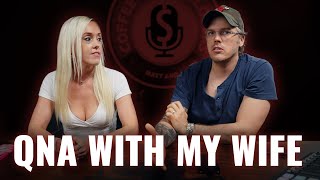
This is a YouTube video titled "8-figure biz owner answers avid viewers' burning questions w/ wife Sammi" created in September 2021. It features a conversational interview between Matt Ryder and his wife Sammy, discussing their personal and business journey, including their relationship, financial struggles, business growth, work-life balance, and money mindset. The content is an informal Q&A style discussion providing insights into their lives as entrepreneurs and parents.
Sammy the business bitch. Hey guys, what's up? It's Sammy here and today we're here to talk about mine and Maddie's relationship over the past couple of years. Since starting sales Sniper and going from not much to a lot. We are in Sydney. We've been in lockdown now for like three or four months. I don't remember how long it's been. So please, no judging on the roots, the lack of nails done. I know this is mostly boys watching.
I haven't had a haircut.
But girls, if you're watching, please.
Hey, what's up? Matt here, this is my wife. So you can tell I'm good at sales today. What we're going to do is a quick Q and A. So over the last, say, couple years, started sales sniper, went into seventh level and have grown, I guess, sort of two eight figure businesses in that time. And I put it up on my Instagram and I was like, hey, has anyone got any questions about, you know, building a business, what it's like to be married to a douchebag that does nothing but work and a salesperson and then you sort of doing that with kids in the mix and all that kind of stuff. So we've got some good questions that we're going to answer. We'll go back and forth, talk about the journey that's kind of been happening. So I can actually tell, I can talk to the story about how we met. We met at a personal training course.
Yeah, we both used to be personal trainers.
Yeah.
You were in the military before that? I was in school before that.
Yeah.
Because I'm four years younger than you.
And I was a bit verbose as a younger man.
What does that even mean?
Like a bit loud and obnoxious.
Yeah. But it was good arrogant. You know how there's bad arrogant and then there's good like cheeky arrogant. That's what I'm attracted to anyway. Bit of weird, bit of banter.
Yeah.
So what we with my intelligence and wit.
Yep, yep, that's true. We had a, like an introduction and I stood up and I said, hi, my name is Matt, I'm a special forces sniper. And yes, ladies, I am single.
Like, not for long.
So. Yeah. And then from there we started dating. Straight away, I had an international because I just got out of the. I was actually technically still in the army when I was in that course. But a couple months later my, like, I was out and then I had like, I was going to travel for an entire year because I just kind of wanted to decompress and learn how to be a human being again. And so.
And we knew that going into the relationship. Yeah, I wasn't impressed, but I knew it going in.
Yeah. But then. So I kind of went overseas. We left it at that. And then we stayed in contact. And then, I don't know, about six or eight weeks in.
Yeah.
I said, hey, do you want to come over? And then I had a bunch of money saved from the army, and she was only 21. She didn't have any money. So I was like, just come over and we'll travel together. And then we traveled together for like, another, what, four months?
Yeah, something like that.
Yeah. Sammy came back home, Europe and America. Yeah. It really solidified our relationship because I guess just to travel. To travel and kind of live in each of those pockets, that early on, I guess it's kind of was a bit of a test, but we passed it.
Yeah.
I then traveled for another six weeks, I think, and then came back.
Sounds over it.
Yeah.
I was like, I need to go home.
Yeah. I did like, another six weeks around, like, Eastern Europe and China. And then. Yeah. And then. So, yeah, came back and began my life as a personal trainer. About two years after that, opened the gym. And then after that, we opened a bunch more gyms with a guy who had a few gyms.
When he says way, he doesn't mean him. And I. I had my own personal training business at a separate gym because we needed to have, like, our own.
Lives as well that was doing really well. And then I completely burnt out. Got very angry with the structure and how things were being run. Had a few choice disagreements with the way in which things were being handled. So I left. Just left. Came back to my other business. He decided that even though we'd gone into partnership over here, he decided that he didn't need me anymore over here. So. Said something along the lines of, well, if you do come back, I'm just gonna shut it down and fire everybody. So I said, well, that doesn't seem fair. So anyway, best thing that ever happened to me, because then I started the sales sniper, and now I make more money personally and every single month and that business has ever done in a month. So I'm pretty happy about it. I wish all them all the best.
Anyway, of course, it was the biggest cliche, like, you know, best thing that ever happened to you.
Yeah, it really was very hard at the time. I reckon I gained, I don't know, £40 from the stress. I was in a bad way.
Yeah. I was like seven Months pregnant or six months pregnant. Summer, our second baby.
And then I didn't really know what to do. So the business that I'd been running for 10 years, I was no longer a part of the business that I've been running for the two years. I just left, like, just left it because I was like, just done and I had no things. So the one, I was a full.
Time mom, so I wasn't working because I had Jack.
Well, we had a. Like a two year old and she was seven months pregnant. And I was just like, well, I know how to do fitness sales. So I just started contacting gym owners and saying, do you want me to do your sales? And I was lucky that because of the business that I'd been in, they. That business was known for its sales, and I was the guy who ran the sales. So I managed to get a few gyms from there, a few more gyms. I reached out to James, who was the manager of one of the gyms that I was running, and then I was like, do you want to do it with me? Sweet. And then anyway, Marco was the head of sales, was. Was like the. The main sales guy for the other gym. Gym chain that I was. I used to do sales for. And then, yeah, sort of. I brought on Marco on a salary because he. He demanded a salary to move over, which is totally fair enough. And he demanded a higher salary. I couldn't afford it. So I think I just told him we could afford it and then figured it out. Figured it out. Yeah, I think. I think I had.
We paid some people's salaries just out of our own pocket for a little while.
Yeah, I paid. I paid salaries. Yeah. Instead of paying me, I paid them for a little bit. And then it all just kind of started to work out.
Yeah. It's hard to remember specifics.
It was very quick.
Yeah. It was very like I was in the newborn haze as well. Like, I had. I wasn't part of it.
It was. It was truly driven by the need to succeed because the. The consequences of failing were catastrophic because.
Of me and the babies.
Well, we would have been destitute.
Yeah. Yeah. We would have just had to have gone back to being personal trainers.
Well, we would have had to moved in with your parents. Yeah.
Yeah. Yes.
Nobody wants that. No. Nobody wants that. I might even join the army again. You never know.
No.
So one of the questions comes from Stefano. He's Italia. He says, how do you prioritize things between business and family?
I'll just say straight up that Matty and I met, you know. How long have we been together? 12 years, I think.
Yeah, I think so.
So I'm 33 now, he's 37. So we met when we were 21 and 25 and then had babies about six years later. I think it was after we were married and stuff like that. And he's the sort of guy, as I'm sure a lot of, you know, is very, very strong willed, optimistic, not risk adverse. He's a strong person and he needs a strong lady beside him, which is. I like to think that I am. So with relation with regards to this question, you know, I play a role in that. Like I make sure he does prioritize some time with his family and spend time with his family. If I didn't say anything, I feel like you would probably work. You love being with the kids.
But I find it very hard to turn off.
Yeah, you find it very hard to turn off. So I get very, very bossy and I make sure he does.
We have a very traditional relationship as well. So I'm the breadwinner and Sammy handles the entire household.
Yeah. But that's all by choice. Like I wasn't forced into that position even when I was 21 and we first met. That's kind of. I knew that I always wanted to be a mum and that was going to be my main focus in life. All things mum, which I love. Obviously it's the hardest job in the world. It's exhausting, but I love it. So it's not like Matt was dictating saying, oh, I'm going to be the breadwinner and you're going to stay at home. Not the case. This was something we always had an open conversation about and we're happy to do.
Yeah, yeah. So essentially I don't, I don't manage work life very well, I think is the. Is the sort of short answer. But I'm helped that by Sammy holding me accountable to doing things and then. And then on the weekends I don't take my phone out with me. I try to do that as much as possible because then I just don't think about it and then I can just be totally in the moment. Otherwise I'm getting like, we have like 96 staff now, so I'm just getting like constant notifications and if you think about like the logistics of that, it's two birthdays a month.
Yeah.
Two birthdays a week and it's day.
And night because we're in Australia. But he's got a lot of stuff and clients in the States. So like as we're going to bed, you're getting messages from people waking up in the States.
Yeah. And we have, we've done a pretty good job business structure wise, which will go into like another one that I'll answer later in putting in like an up and over structure which is a very militaristic like management structure where there's like not direct access to anyone who's 200 levels above you. But in saying that we're pretty open people so people can message us and book us times, all that kind of stuff, but that's kind of how we manage it. But I'm not that good at work life balance. I work way too much. What was your first money splurge after making lots of cash? I think I'll preface that by saying I don't think I make lots of cash. I think I make lots of cash compared to what I used to and compared to traditionally what we've done. But like, compared to some of my clients we're poor. So like my, my, my contextual, like we're, we're doing around $2 million a month gross revenue at the, at the time of filming this. And we're, we're pulling in a fair around. It's usually, it's usually well over a hundred thousand dollars a month that we pull in personally. But. Yeah, but, but, but in saying that like I have some clients that pull in 10, $15 million a year personally. So like I don't feel like we, we are. But in saying that what's the first splurge? I think like things like that.
No, it was the Rolexes.
Oh yeah, yeah, the first splurge was.
Yeah, it was when we were living in Perth. I'm not wearing mine. Wearing a Dior today. I remember we went to the Crown Casino in Perth and they had a Rolex. It's not a Rolex shop, it's a Kennedy shop. They sell all sorts of fancy watches and we both got like a his and hers Rolex.
We got his and hers Rolex. That was probably the first ridiculous thing that we bought.
But yeah, this is another one of many. Yeah, this is vintage Chanel, FYI from I think the late 90s, early 2000s, something like that.
Yeah, we both like, I dress pretty casually but we both like sort of the more luxury kind of designer stuff. The only thing I really wear in that realm is shoes.
We like the fun things in life. Yeah, we always have, even when we were poor. But now we actually get to enjoy it.
Yeah. So there you go. That's what we splurge on that. And holidays.
Yes, holidays. We really value travel.
Yeah. We have like decent cars and everything. But we haven't bought a lamb or anything stupid like that. Well, nothing stupid, but I haven't decided to buy that. But holidays we really love. Like, it's like really not over the top, but like we'll get the best thing that we can possibly get on holidays because we both grew up in families that did holidays. And we really value that.
We value it because we know it's creating such beautiful memories with our children. And that's like the most valuable thing.
Yes, yes, the kids. Yeah. Would you consider yourself financially free now? What are your financial goals and how will you get there? No, I don't consider myself financially free yet.
We live in a very expensive city in Sydney. I think it's the third most expensive city in the world, More than New York, more than London, if that gives you any kind of guess. And we live in the most expensive area of Sydney as well, which is the eastern suburbs.
Yeah.
So, I mean, we feel very comfortable, but like we're still to buy our family home. Like we have investment properties, but not our actual family home, which we're hoping to do within the next year.
Yeah. And to be perfectly. It's just really difficult to buy houses in Sydney.
It's a supply and demand thing more than anything. There's so little available that's good. Or even in general, at every auction there's hundreds of.
Anything below 3 million is a shithole.
Yeah, 3 million Australian. And the problem is everything goes to auction and the listing price is almost always 500,000 to a million dollars less than what it ends up going for.
Yeah.
So.
So it's just hard to judge. But there's just a lot of demand you'll get. You go out there and there'll be four or five hundred people at an auction. So it's just difficult. So I think for me, financially free means that my investments cover my lifestyle. So, like the passive income stream that I generate from the like, individual wealth. Not like. Not like, say, like the business treasury. Like I might have a couple million dollars in business treasury, but that isn't really my money. Like, that's set aside for specific purposes. Everything that I pull out of that and then put into like, say an index fund or crypto or property. Like when those can sustain the lifestyle, that means that I don't have to work anymore. And anything over and above that is just for fun. So that is what I would probably consider financial Freedom, for me, that's around 30,000amonth. That's sort of the number that I'm trying to get to with. With sort of passive investments. The plan to do that is just to keep pulling as much cash out of the business as reasonably as possible, given the growth targets that I have. And then from there, investing that in crypto, property and managed funds.
And because we lived so much so paycheck to paycheck for most of our time together. Yeah, like, it's been a very short while that we've not had that, you know, in the, you know, timeline of us being together. So it's still very new. And, you know, there's always that thing in the back of your mind, oh, what if that goes away tomorrow? We've got to go back to how we were. Okay, let's make sure that we can do that, all that sort of thing. Obviously, I don't think that's gonna happen really, but it's always in the back of your mind, especially with, you know, how things have been going while you've been starting this. We've been in the pandemic which has thrown the world into chaos. So, like, anything can happen, I guess, is what we've learned. So we, yeah, we. We're aware of that. And yeah, we're not gonna do anything crazy until. Yeah, until we do feel.
I also comfortable. Yeah, I like. I like being uncomfortable in certain. So, like, I'll spend a lot of money the moment we have, like, a lot of money. Like, last month I spent $65,000 on courses.
Yeah. You mean you'll invest?
Yeah, I'll invest. Like, yeah, like last month I invested in two different business. Well, I gave out two loans for businesses, invested in one, so bought equity, another one that was a couple hundred thousand. And then from there I bought about $65,000 worth of courses, which is an investment because, like, we had built up a fair bit of treasury. And I was like, okay, when things start to get comfortable, I like to do things and do sort of sometimes over the top things to create an element of discomfort within, which then for me, like, drives me forward in the business realm and puts me in a position to where I feel like I have to be successful.
He doesn't ever want to be lazy. He's so aware of not being lazy, which he's definitely not. But yeah, really, he's very, very driven. He always has been. Always.
Yeah. And so, like, I remember, like, when Sales Sniper had sort of was very young and it was probably only doing. I don't know, 10, $15,000 a month as a business. Right. Not as like personal take home or anything like that. I met Jeremy, Jeremy Minor and his coaching program at that stage was 40,000 Australian for the year. It was like paid in full only. And we had like 50 grand cash and I gave 40 of it to Jeremy. I didn't tell you. Didn't ask you.
No, I think you did, but I think I thought it was the business's money, not our personal money or something like that. We don't keep, we don't, we have shared accounts. He doesn't like control of the money. Like it's completely, if anything I have more control over the money.
Yeah, yeah.
I pay all the bills.
Yeah. So. So, so, yeah, like I just, you know, I don't have a problem doing that. I'm like, I like. I think risk is a good thing. I think if you have a mentality where you're like one, if you're holding on to cash, I think that's probably not a great way to be one because cash just does nothing for you past a certain point, which is actually kind of a difficult lesson to learn, to be honest. And then like second of all, like if you, if you sort of create that comfort level around yourself, then you struggle to kind of drive yourself forward. So I'm always kind of aware of that and doing things to kind of create discomfort in order to, to kind of move the things forward. How do you manage your finances between balance of needs and wants?
Well, I guess living from paycheck to paycheck for so long, we're pretty aware of what our like weekly costings are or monthly costings. So we have, well, we have an account where we have, you know, silly spending basically. What did we call it?
The fun fund.
The fun fund, yeah. So after we've paid all our bills and all that sort of stuff for the month, we then put a certain amount of savings, a certain amount into investments and then a certain, a certain amount into the silly spend. Fun fund.
Yeah.
Account.
Yeah. So what I try and do is from that sort of things is all of our, all of our income goes into one account and then from there we have like a couple of our major bills come out of one account. So that, that is a separate account where those bills come out of. Then from there I have an investment account. So whatever I want to put into investments, that, that, that goes into there from, from the income. And then I have a fund fund, which what I use usually do is I have whatever we made last month from our passive investments. I'll take like a good chunk of that, put it into the fun fund.
And then that's to spend on, like, frivolous things like handbags or whatnot. That's not to spend on like clothing the kids need or dinners out. That's kind of.
Use gift cards for that.
Yes. That's a whole nother story. Yeah.
So that's actually. It's a part of it. So I use amex. I have two amexs. I have a Platinum and a black mx. And then I use them for most of the business costings. They require points. I probably acquire a million points a month for that. I get gift cards and we get about 4 or 5,000amonth.
Most people will turn that into frequent flyer points, which we'll probably end up doing eventually, perhaps. But because of the pandemic, Australia's been closed off to the world, even domestically, like, you haven't been allowed to leave your own state. So there's been no travel. So we were like, what's the point of collecting all these freaking fly points? We have no idea when Australia is going to reopen. We still don't know, by the way. So we thought, well, let's use them. Put them into Westfield, which is like our giant mall here in Australia. Or our supermarket gift cards.
Yeah. And then we give them to staff.
And yeah, give them out as gifts as well.
Yeah, everyone for Christmas is tax free.
More.
How do you process mentally handle being in debt and getting out of it? Up until, I don't know, somewhat recently, maybe like a year ago, like, we were poor.
Yeah.
We made decent money, but we're broke.
Yeah, it was. Yeah, probably two years, I reckon two years ago for sure. I'll give you an example. Like, okay, so my daughter, she's turning three in December, and when I was about eight, nine months pregnant with her. This is just as you were starting Sales Sniper. Yeah, just as you were. So Matt basically had left his previous two jobs and yeah, we were kind of like, what are we going to do for an income? We were really poor. Like, for example, I wanted to buy this little wooden sign for my daughter and it said, welcome to the world. So it was like something that you just put on your baby's tummy when she's born, take your photo, and it's like, welcome to the world, she's here. That sort of thing, which I thought was so cute. And I armed an art about it for probably four to six weeks. And eventually I didn't buy it. It was $30 so there was a.
Medical test we wanted to get that we couldn't afford to get so we had to ask my father in law to borrow the money to get the medical test.
Yeah, it was for part of the pregnancy. It's called the Harmony test. It's where they test.
She's two and a half.
So she's two and a half now? Well she's almost three. She'll be three in December. Yeah, she's currently September but yeah so like yeah we were, we were, we were living paycheck to paycheck and then we were a little bit poor for a while as well to be honest.
Well the thing is like if you just had a look on paper like it was probably making a hundred thousand a year. Probably yeah, maybe 120.
But our rent was 75000 a year.
Yeah but yeah and so and this was like for just a normal. We like we tried our best to not live above our means but it was nearly impossible because we even had just one car.
Like we sold one of our cars. So we just had the one car.
One car between us. I bought like a really cheap motorbike that I could just tool around on cuz it was cheap on petrol.
We lived in Kmart. Clothes.
We lived in Kmart.
I never bought anything.
Cheapest food shops, super cheap food shops.
Our own house, no cleaners, nothing like.
Yeah, yeah and we just lived in like a normal sort of house. Yeah right. It was in a decent area but it's because we had to be cuz that's where my work was.
But it wasn't a fancy area. It's not the fancy area.
No it's not. We live now but kind of standard but yeah. So yeah like we did everything our best but we only made enough money to cover the bills without paying tax so sort of put ourselves into a pretty decent tax debt. It's all gone now probably. I don't know, it's probably like an $80,000 tax debt. And then like when I opened the gyms I'd put myself into like a $90,000 overdraft at 18%. So this is years before, years before this was like. Yeah, so I got fairly comfortable being, being in debt but I think like to get out of debt like you have to have a strategy if you want to Google there's two major strategies to be used called. One's called Snowball, the other is called Avalanche. I've helped a bunch of our sales guys at Sales Sniper get out of debt because you know it's Just one of those things like you have to accept that you're in debt. You have to accept it, you have to change your lifestyle accordingly and then you have to have a plan to get out of it because if you don't like, you're just going to be in a cycle where it's impossible to get out of it. We, we, we were lucky I think to get out of it as, as, as we did because I was able to kind of like purchase my parents home and they sort of did what's called an arms and transactions. So essentially we purchased it without having to put down a deposit and we moved to Perth so we could catch up financially. So Perth is a, is quite a cheap city to live in. Sydney's very expensive. So we actually packed up the whole family we over Perth so that we could afford just to live. And that is when I tripled down on sales sniper and put every dollar we could into it because I knew that, that by then we'd started to gain momentum. We were getting up to 20, 30, 40, $50,000 a month and it was sort of growing quite quickly. And so having that mental space to be able to just go breathe like I don't have to make 15 to 20 thousand dollars a month month just to pay bills, like that was a huge thing for me to be able to just go and just steam forward. So yeah man, like if you guys are in debt, like change the way that we did it. We just changed our situation, did the best that we could, moved into a cheaper area, reduced all of our expenses, had a plan to get out of it, did it. And then really when the money started coming back through, we moved back to Sydney because that's, we just found we were happier here and you know, moved into a place that's three times, two and a half times more expensive and I literally don't even notice when the rent comes out. And our rents are, our rent's about $15,000 a month. I don't notice when it comes out. Yeah, so I guess like, you know, I don't know if we ever talked about this. Like what, what's it been like for you?
Well, like I married Maddie for richer or poorer. Like money for me was never, ever, ever a factor when choosing a partner. Never has been. I don't know if that's like a luxury, like I've not had to worry about it or something, but it's never been something that I've considered in a partner as long as they're not like a lazy prick or whatever. But yeah, it's surreal. I'm so focused on our family side of our life and my children and making sure everything is smooth transitions for them. Matt doing well in his business makes him happy and that makes me really, really happy. And the money side of it is fabulous because it makes the life, our life just easier. It means all the things that I do with the kids, you know, the activities, the schools or the daycares they go to, the things they need, toys and clothes and stuff like that, that's all easy now. So it means I can focus even more on them and the happiness and the well being of the family. So that's the awesome part for me. Yeah. And it is surreal. And obviously I love being able to buy myself nice things too. That's so good. Obviously I'm a girl, I love to shop but, but it's more just, it's more, the, the less stress on the family and just more happiness, which I love. And they say money can't buy happiness and I agree with that. But it sure makes things a lot easier.
You can buy a jet ski. I've never seen somebody without smiling. You know, they come off like, we're not like kajillionaires or anything like that, but we're pretty comfortable. But like, you know, it's sort of like I want to do this video because it's, it's sort of one is like it's amazing how fast financial situations can change.
Yeah.
I think. And for me a lot of that comes down to first of all, like, I've always had the drive to do that and I always worked very hard, I think and I, I have a relatively decent business acumen which I can thank my dad for by making me do like business plans and shit. When I was a kid when I wanted to like go on a holiday, like send me a business plan, something like that. But now it's like, see how that paid off because I can take over a business like we took, We've taken over nine businesses this month. Cleo is doing like maybe 60 million a year in terms of like what we're kind of bringing as a business. So it's, it's, it's super interesting but like the skill set of sales, like meeting Jeremy was like a total and complete game changer for me because like that methodology of any pq, like I just understood it and I was like, ah, this is the way to communicate with people. And that like literally took me from I think a good closer because I had 10 years of fitness sales experience. So when I came into, like, sales mentor, I was the best one there by a country mile straight away, without using any of their methodologies, just using the stuff that I learned how to do in fitness. But then when I adapted any pq, literally became like, nearly unstoppable at it. And then by showcasing that to Jeremy, he asked me to come and sell for him. And then when I saw kind of the mistakes they were making in business, I made some suggestions. And then from there nepqed my way into running the company. And now I run both of them. But it really is amazing, like, how fast when you get a skill set like sales or, or something like that, that you can. You can really kind of turn the tides quite quickly. And so I know it can be scary, but, like, I think, you know, it might not happen fast for everybody. And I don't think it happened fast for me if you take into account the 10 years of sales experience I had. But I think, like, there really is, like, that hockey stick type growth where it's like, if you start here, the moment you get to, like, this level of skill set, it really, really just kind of goes like that. And like, for us, the trajectory of the company and the trajectory of us as a family is pretty cool because, like, I know where it's going to be in six months, I know where it's going to be in 12 months, I know where it's Going to be in five years. And I look forward to doing all that stuff and, you know, looking back and going like, okay, now we've got Bradley as a client. We've got Ryan Serhant as a client. We've got all these phenomenal business people, entrepreneurs, coaches and consultants, and all these kind of people that we work with. And being able to surround myself with those people, it just drives me to go harder and harder and further and further. And that's kind of what I love about it. I had an interview on our podcast, which is right here with a guy called Taste. He's one of our clients. If you don't, if you guys don't know him, we'll drop his Instagram, or if he's got like a million Instagram followers, makes a ton of money, like private jets and Bentleys and Rolls Royces. That's all he knows. I mean, he was super poor, super poor growing up. His mom is a single mom making 20 grand a year, raising kids right, and he grew up in the ghetto and all that kind of stuff. But he's super interesting. And I talked to him about money mindset. Because he's a very wealthy man. Like so wealthy. He bought a Lamborghini and cash over Instagram, right. For 700 grand. Us. Right. And so he was like, you know, one of the. And Ryan Sirhan said the exact same. Same.
Oh, my close personal friend.
Yeah, your close personal friend Ryan Sirhan. You, you know, you broke it a deal with him. Yeah. Ryan said the same thing and I said like, what's the difference between millionaire and billionaire clients? And they both, it's really funny, they both use the same technology. They both said that the billionaires don't see money as a resource, they see it as a tool.
Yeah.
And so, and then Tay took it even further and he said he, if you want to get there, you have to start using it as one.
Yeah.
And so I think like I was kind of thinking about that after the thing and I was like, it's the interview. And I was like, I think I kind of do that. I see money as a tool and I think I started seeing it as a tool. And I think the, the trajectory and the growth of my personal income in the business has been a direct reflection of this is because, like, I know I can fill that bucket. So like I'm happy to empty it because I know I can fill it. And so I think like, it might not be, I might not be there yet in terms of being able to see it as a pure tool.
You're definitely using it as a tool. Lately though, I've noticed with the investments and the growing the wealth and like long term strategies, like you said, not just keeping money in a bank account, like using it to grow more money.
Yeah. I don't give a fuck about cash.
Yeah.
I've learned that lesson from seeing the guys that I see and what their investments are do for them. I'm like, I've had enough rich people tell me to not hold cash.
Yeah.
Like, ok, I'm going to listen to them now. You know, like even the amount of cash that we hold in, which was.
A hard mindset, it's way too much cash. No, it was a hard mindset for us to get out of because we always had like $0 in our savings account. It was so reassuring to have like a little lump sum of money in our savings account.
I reckon three years ago we had less than a hundred dollars, less than $100 in our bank account.
I think the lowest we had was $4,000.
4,000, which that's not anywhere near as fancy.
Well, when you're paying fifteen hundred dollars A week in rent that goes in less than a month.
Yeah. It's just terrifying. Yeah. So we probably had. Yeah. About a week at a time.
Yeah. We were paycheck to paycheck.
Yeah. Yeah. And that was after we sold the car and then didn't pay off the loan, which is a bit.
The loan to my dad.
Yeah. It's a bit dodgy. Yeah. But I think that that whole resource and tool thing, and I think that the more comfortable I get and the, the more reassurance that I have in my own skill set that I know that no matter what happens, like I can refill that bucket. I'm more than happy just to use what's in the bucket to, to, to do things that I think will better myself, my employees, my family, all that kind of stuff. So I think, like, that's a big one and it's a really hard thing to do, especially early on, like if you're a sales guy watching this and you're making five, six grand a month or whatever. Like, it's hard to do that. But you really do need to start realizing that, like, money is fluid and it can come and go and hopefully we only go up from here, but there might be times where it goes down, all that kind of stuff. So like. But we have to use that as a tool that's going to allow us to, I guess, just, you know, be able to create more things. So that was a really handy thing. And Ryan Sirhan is an incredibly way more successful guy than me and incredibly good at what he does. Tay, again, much better at what he does than what I do, clearly, you know, and so I'm going to take those guys advice and take that on board and go, okay, well, if I can adapt that kind of mindset, then I can keep pushing everything forward.
Yeah. And it inspires you as well. It's good to have people that are better than you in your life because it makes you better.
Yeah. Like there are some young guys that we have on our books who are clients that make good money. Like I'm talking 22 year olds that are bringing in personal incomes of 200 grand a month.
Wow.
You know, like. But their businesses make nowhere near as much money as I do. They just choose to take far much more of it. But they will only listen to me because I make more money than them. That is the only reason. So like, I'm the one that has to guide them and tell them what to do and like, because they can, you know, it's just an interesting mindset. I Don't think it's the right one. But that's why I can tell them what to do, because they know that I'm. I'm further along the road than them. But I think you need to have people in your life like that, who you can sort of, you know, who you can have as like, kind of a light at the end of the tunnel, and then you can get to them, and then hopefully you pass them. And that's the whole point of mentorship, right? Like, hopefully you mentor people so well that they surpass you, and then you can see them as, you know. The next thing you might be noticing that we're wearing different clothes. It's because a lot of people submitted more questions after we'd filmed. So now we're going to come back and edit these in.
That's right.
Okay. Good question from Fabiola. How do you say. Say I'm working late again? I don't, though, very often, do I?
No. Well, you used to just say it matter of factly to me and be like, hey, by the way, I'm finishing at this time tonight.
I'm very important.
And you would do it, like, last minute. And like, when it was just. I mean, obviously we've always had children since Sales sniper, so having children and him telling me that last minute is not cool. So I've kind of drilled it into him that he needs to give me notice if he's gonna finish late. He almost always knows his whole schedule, though, when he starts in the morning. So it's rare that you finish later than you've told me already, within, like.
15 to 20 minutes.
It's pretty rare. I always want him to be home because our kids go to bed at 7. I always want him to be home, you know, by 5, 5, 30, so that he can actually be there for them during dinner and bath time and all that sort of stuff. Cause they're only little for a small amount of time, you know?
So the answer is carefully. Okay, so date nights. Well, I mean, with COVID we've been locked down for four or five months.
Now, but normally we're really good for date nights. It's something we definitely prioritize because, you know, your relationship needs to be strong for your children. So we used to have a date.





