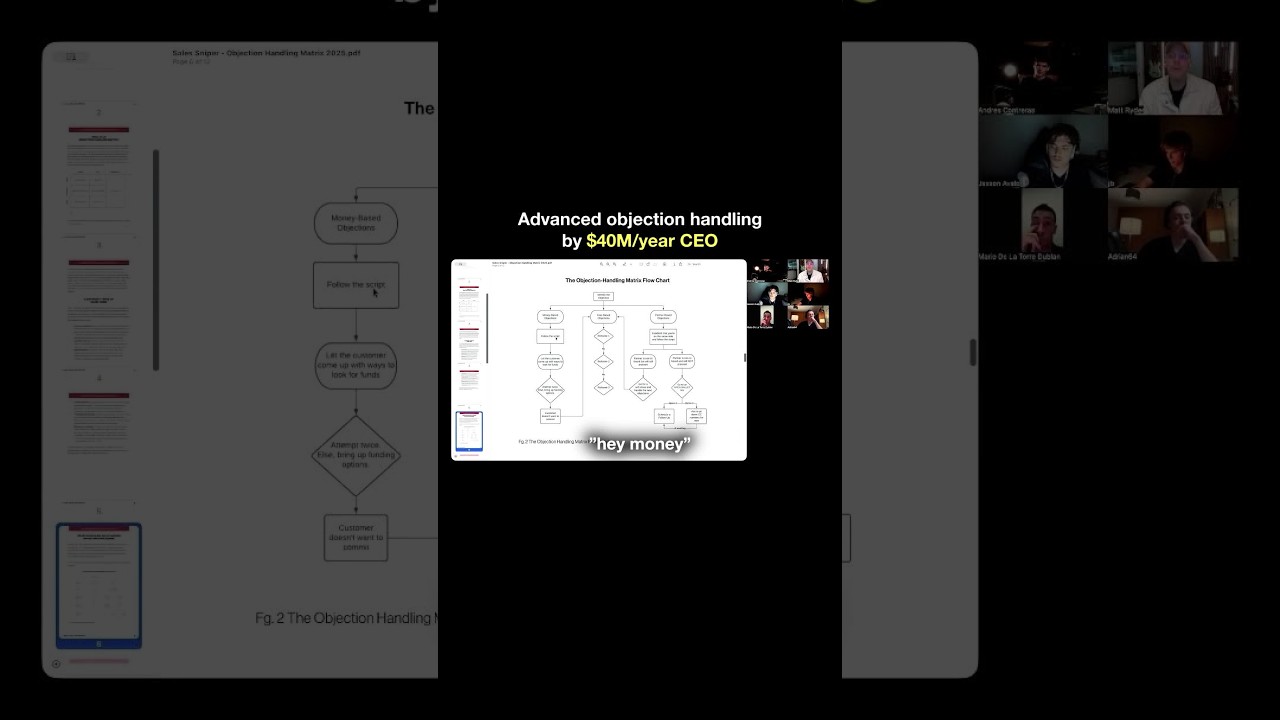
Matt Ryder, a $40M/year CEO, explains how to handle price objections by asking prospects if they'd buy the solution if cost didn't matter. He warns against mentioning financing early in the pitch, saying it invites negotiation. Instead, present the full price first and push for a paid-in-full commitment before offering payment plans.
Chapters
So the script on money is like, hey, money aside, do you feel like this could be the answer for you? What it is not is, if you had the money, would you do it? The reason for that is because it places the transaction and it's also a very different question. What I'm asking is, let's just remove the money. Is this solution something that could work? I'm not saying, would you do it? It's a completely different question. It's like, money aside, do you feel like this could be the answer? And then we probe, why is that? What is it about what we do that would work for you? So now what I'm doing mentally is I'm making them go into the pitch and then I'm having them draw out the thing that actually is of benefit to them. And it goes, is it the upfront Or if we broke it up, would that help you? Oh, you can do that? Yes, I can. Do you want to have that conversation? Yes. Never say payment plan or financing in your pitch. If you do that, you will shoot yourself in the foot. If you say, hey, the funding required to work with us is $10,000 and we have some payment plans and financing available, how do you want to proceed? What's the first thing they're going to say? What are the payment plans? Is that a genuine question or is it just like they're asking it because you're putting it there? I can offer those things, but I'm trying to get a paid-in-full first.