Advanced Sales training LIVE -
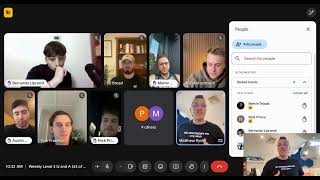
Matt Ryder leads a live sales training session covering objection handling, pricing strategies, and email marketing. Participants including Big Shay ask questions about communicating value and closing deals.
Hey, hey. Ho ho. Okie dokie. How's everyone doing? We all going well? This is a Q and A. So you guys got the Q's, I got the A's. Let's do it. Well, I mean you guys are shy.
I mean. Yeah. I got a question to be fair. Are you doing your, are you good man?
No complaints. Yeah. Nice. Nice bro. So, yeah.
So yeah. So now when it comes to so so me I, I saw in the face to face now home improvement field and I feel like one of the biggest issues that I face now mainly is that I often get a lot of price objections just because the sort of people that I sell to, they, they just sort of compare like prices now. So, so I would say the only, the only good thing that we have is that we are the best home improvement company in, in the UK anyway. So so pretty much selling them on the, on the actual product and the value on the company is good. However now the only issue that they usually have now is that they feel like they can, they can get windows now somewhere else for cheaper which is the case because let's, let's like say doing a full house of windows cost about 6K. We come in at at least 12.
Yeah. Are you better?
Yeah, yeah we are better in terms of products, in terms of a well known company however.
So I'll give you, I'll give you a bit of an example, right because so I remember I was buying a like years ago, I was buying, I was getting a new garage door for my house, right And I got three quotes right and I went with the most expensive guy. It wasn't because I'm like balling out of control and like it was like. Yeah, it's just he had what I considered to be the most professional. He was the most professional out of everyone by a country mile. And he also had a back end service which was like an automatic maintenance where it was like really simple and easy where they came in every six months, right, did maintenance on it and it was like a regular continuity thing. So it's a really good business model. But he was like really professional. The way he came in, his quoting was accurate. He like assessed the problem and the needs that I had. It's just, just a garage door mate. But he was. There's different types of garage doors, there's different types of windows. And it's about value is simply like people are like, like you have to kind of get it out of your head that people are going to be based buy basically pure purely on price, right? So the moment you start thinking that, then you'll start going like, oh, you know, and you will make a series of assumptions on people that, like, hinder your sales dramatically. What you have to focus on is establishing the most amount of value. The way that you do that is by listening to people and they feel like their problems are being understood, right? Like, that's, like, that is the way to combat it. Because you can't make your company cheaper, nor should you. So what you have to do is establish value. The way that you do that is understand their problems and then you link your solution to their problems. If the standards guys come and go, yeah, man, we're going to do this many windows, they're going to look great. They're going to be like, this is going to cost this much money. But if your pitch is like, hey, based off what you said, this is the windows that I recommend. Remember how you said this? Well, the reason why I'm recommending this is that. Right? And because what I want you to do is prevent this long term. Because I know that this and this and this is, like, likely to happen as it comes into winter, okay, the UK gets cold. We're going to prevent some, you know, some unnecessary heating bills, right, by having your, like, triple glaze windows. And you actually present things in a way that solves their problems and then you present the right solution for them, not just the one that kind of makes sense or fits within, like, their budget. And that's because, like, you know, I've gone into. I. I've sold things for 7000 with a retail price was 1500. It's not because I was being a douchebag, is because, like, I thought it was so undervalued because it was such a good product. And I was like, oh, I reckon I can sell this for way more. And then sold it. And it was like, people will buy whatever, you know, and the value of something like, you know, you have to look at a Louis Vuitton bag. Does it cost much more to make a Louis Vuitton bag than what it does to make a Michael Kors bag? Not really, you know, of course. And so, yeah, yeah, they buy because there's a perceived value attached to it. And so your job is to. How do you, how do you invoke that? And the way you do it is like, by extreme professionalism. Going there, like, and creating the theater that's required in order to, like, demand the value. Does that make sense?
No, it does, it does. So I would, I would like to say in like my sort of scenarios now. So like, let's like say you, you now want a door installed in your house now. And now the biggest reason why, why you just want to do installed in your house now is just because of, of the way it looks. Let's just like say there' with the door itself. Now you just want a new door.
Because problems that I don't know about, like, is it a front door? Is it an interior door? Do I need like front door? Okay, so is it, is it going to be solid? Is it going to be all weather? Is it going to swell in the winter time? Is my wife going to be able to open it when it swells? So do we need to go with more of a hardwood that doesn't swell so that we don't then have to get a chippy in to come in and shave it down, Right? And then all of a sudden we've got a draft in the, in the summer and we've got it so tight in the winter, we can't even, we can't even open it and close it. Does that make sense? Like, there are, there are problems associated with things that people don't know, and it's up to you as a salesperson to understand those problems that they may or may not even know about and then ask the questions to get the answers so that you can go, okay, well, you know, we have a couple of options based off what you've said and based off where you are. Also, what direction does your house face in Australia, if your house faces north, like, you're getting an awful lot of direct sunlight, right? So like, you know, that will change how the wood weathers and how it weathers. And so like, there are a lot of variables there. Like, you know what I mean?
Yeah, yeah, yeah, I completely understand that.
Yeah.
But it's like, it just, it just seems in like, in like my scenario. So for example, I'm not sure how much doors cost where you are, but like here now, you're able to buy a door now for.
I'm gonna stop you, mate, because what, what you're doing is you're, you're, you're wanting me to tell you that it's okay, man. It's just people buy on price, right? Like, there's, I sell my dialer is like three times the cost of most, right. Do you know what I mean? And so like, I'm telling you that the answer is you need to like, get out of the headspace that price matters. Like, be hyper confident. I have a guy on My committed coaches team, everyone's like, oh, the leads are, you know what I mean? And they're broke. And meanwhile, this guy comes in and he's selling everyone at like 600 bucks, right? And then I have a goal setting session with him and I go, man, what the you doing? Like, how are you gonna make any money? And he goes, oh. And then he's like, oh, I need to sell them for 2000. Then just start selling everyone at 2000. Then he realized he needed to sell at 3, 400 on average to make the money he wanted to make. He then shifted his pitch to 3, 400. Obviously it's a different, you know, like deliverables. He only pitches that his close rate is higher. It's the exact same leads. Is higher. At 3, 400, it's Godwin. Yeah, he's a savage, right? He's gonna make 35 grand in combs this month doing outbound selling supplements to like 70 year olds, right? He's just savage. And it's the exact same leads, exact same dude. Like, he just put together a 3400 bundle and he's selling it at a higher rate because he's more convicted and like, that's what he needs to sell to hit his goals. And he thinks it's a better package and it's the same everything. So what I'm saying is like, mate, just like be. If you are trepidatious in what you sell, nobody will want to give you money, right? You need to be hyper convicted and be like, yeah, you can go the cheap option, but it's your house, it's your front door. It's the barrier between you and the rest of the world. If you want to do that, mate, and you want to get the cheapest one possible, by all means. But for me, if I could put a goddamn steel vault in the front of my house, you better believe I'm doing it. Does that make sense?
Yeah, Yeah.
I gotta move on though. But I hope that helps with Big Shay. Yes, Matt.
Hope you're doing well, man. By the way, Dialer's been doing a great job on one of the accounts I'm managing. Highest pickup rate.
Which one?
So that's hcos. So that's. Hello, CEOs.
Hellos Here.
Yeah.
My friend.
Thank you, bro. I was gonna say the other thing is I'm gonna start managing a trading account. We have over 30k buyer leads just sitting there. So I was gonna ask you, what do you think is the best approach? We could either go down the roof.
Sorry, email. Email.
To booking a call. Or do you think just outbound closing.
Email to hand raise, hand raised to outbound. But you need a good copywriter and you need to do segmented testing. Don't you dare just send 30, 000 emails all at once. You need to do a test of like doses of like say 250, 300 people. You, you do different, you do like different headlines. You do a subject and then you have like your, you know, you have your headline and then you have your copy and then you have your cta, right? So obviously the open rate is going to be dictated by the subject. Okay. You know what I mean? And then you've got like how many people read the email and then click onto the thing and then how many people like kind of raise their hand or whatever, right? Or like, or like do the action. So you've got to do small, tested, segmented emails. Okay. And then from there you find the winner and then you blast it. Okay, now you, you probably also would want to consult someone who knows a little about email because like 30,000 is a big enough dose to where you could fuck your domain if you do it badly. But if they're all buyers, is the list being emailed at all?
No.
Terrible email marketing. Terrible.
So like there's, there's some trickiness to that. Like you might want to look at someone who really knows what they're doing, right, who can help you out with that. Because like you can burn domains. Email and phone number are really similar and where like, if you, if you just start fucking blasting out emails like in, your open rate is shit and you have a high bounce rate, like your whole domain gets flagged. And then you can't even fucking get an email for like a reminder to come to a call to go through.
Yeah, that makes sense.
Set up like a different domain, put them over, do some tests and try and come out. Yeah, okay.
Thank you, man.
But I wouldn't just call 30, 000 people. It just, it's just a monumental effort. And like the amount of you're gonna get back, it's gonna be. So I would just, I would do email.
Perfect.
Sweet ass. All right, who's next? No one.
I had a question about fear objection handling. Does it, does it matter like which order you do the reframes in? Because I've seen a couple of videos where you say to like railroad into Ireland. And then I've seen a couple where it's like you do the perspective first. Does it matter or does it just matter that you have like Three or four that you go to. So then you just sort of cycle through them.
Yeah. So the easiest way is to use like a perspective type reframe first because like, it's just a, like it's borderline logic trap. Right? So like, but you have to have gone through like your logistical. So if someone's like money, deal with money, time, partner, whatever. And then if you've gone through that and there's no kind of like logical reason to not move forward, then the, the easiest one is like, well, okay, well, based off where you are, it kind of makes sense that you're thinking that because we all make decisions based off our current perspective. Do you agree? Yeah. And they go, yes.
Yeah.
Then you're like, now you're on my train. And then from there it's like, the only problem is if we continue to make decisions in that manner and with that perspective, it's the only place that we can ever be. Right. And so like, let me give you an example. And then the island analogy, like, it's good, but it's hard to pull off, you know, I mean, like I, it's like I used to do it, I probably wouldn't do it anymore. It's still good. Like, it works, don't get me wrong, it works like it's a very visual, like it, it puts somebody, makes them very introspective. But if you're not good at pulling it off, like if you can't pause at the right places and use the right tones and stuff like that to make something use. The difficulty with that one is that you have to use the correct first and third party, right? Like you have to be able to interchange that at the right times. Because if you want someone to become introspective and have a more associative feeling, they have to be in the first person. So that means looking through their own eyes, not looking at themselves like a video game. So you know what I mean? Does that make sense?
Yeah, yeah, yeah, it does.
Difficult. But there, there are some easier ones. There are some easier, more logic trappy ones which is like, you know, like, let me ask you a question. Are you happy with where you're at right now? And if they go, well, if they say yes, and you can argue with that and go, well, really? And then you can go like, scale of 1 to 10, then you can get them back down because, like, they're not close to their goal. You know what I mean? And then it's like, well, so, okay, so are you happy where you're at? No, I'm not. Why is that? Well, this, this and this. Okay. In the decision making process, I really try and avoid the term mindset. Mindset is a very triggering word. Right. So it's like, so the decision making process has got you to be where you are and that's causing you to feel the exact way that you are right now and have these feelings of hesitation and like, you know, because we know the money works, we know that the program works, we know that this is, you've said this is the best move for you. How much longer do you want to allow that decision making process to dictate your life and your results moving forward? And then you make them agree on a timeframe. So it's like, do you want to allow it to affect you for two more months, two more weeks, two more days? Like, how long? Well, not much longer. Yeah, but how much longer? Well, I don't, I don't really want it to. Well, why not? Okay, so what do you need to do to put yourself in a position to where you can actually start moving forward? So like, you see how like that kind of like it's quite an easy, you know, like one like once they agree to that paradigm, it's really difficult to sort of get out of logically, you know. So use with caution, I would say.
Yeah, if they still went.
People have taught that I made that up. It's one of the only things that I'll say, I, I, I made that up. I, I scripted that myself.
If they still went like, yeah, but I just still need to think about it. Would you then go to an analogy from there or.
So I mean, you're like, yes, okay, but like, you need to, so then you're, you want to remove the, the decision to, to transact and you wanna like, so if someone's like kind of on the fence and scared, right? Like the, it's the transaction that is the scary bit. So what you're looking to do is move them forward in like small periodic chunks of like low commitment, you know, so it's like, you know, from a hug to a kiss, from a, you know, from, you know what I mean? You're moving the ball forward until you're, you know, tied up and you can't, and you can't speak. Right. So, you know, but it's a series of kind of escalating events, you know what I mean? And, and so, you know, these days I think it probably happens a bit faster, but. Oh, so, you know, you're looking at like, okay, man, like, like that makes sense. And, you know, you don't have to purchase, but, you know, what do you need to do to put yourself in a position to where you're actually. Okay. Where you're actually moving the ball forward and. And moving towards your goal? Well, I need this. Okay. And how much longer do you want to put off getting that? Well, not much longer. Okay. Why not? All right. And so it's not about you buying today, but it's about you committing to do the things that put you in a position to be able to win. Because, dude, there's no guarantees. You. You could do this, and it could flop. You could do this, and, you know, it could work out great. Yeah. I mean, but if you do nothing, the only thing I can guarantee is that you'll be in the exact same position of where you're at. Right. So, like, what do you need to do? And then you just keep coming back to that and you remove that barrier of like, let's not commit to transact. Let's commit to commit. Once we commit to commit, then we can commit to a next step, which might be like, well, you know, I really need to get some help with xyz. Okay, so now that we know that, do you commit to getting help? Yes. Okay, when? Then it's like, well, what's the point of putting it off, essentially? You know what I mean? It's like, well, if you're committing to this, we know it works. We know you can afford it. You know, you're doing that, you know, and then you get to the point where you've set all that up and you've gone through a couple, and you go, hey, man, like, just between me and you, like, what's holding you back? And just be quiet, be silent, and just allow them to fulminate in that. And if they're just like, dude, I'm just super scared to move ahead, and it's like, I get it, man. But you know what I tell my son is that, you know, being courageous is the only thing you can think and actually be. Because if you're terrified and you do it and you fake not being terrified, but you do it anyway, dude, that's being courageous. So you can sit there and do nothing, or you can.





