Awarded the $25 Million Award at ClickFunnels 2022 - CIFC Episode 131
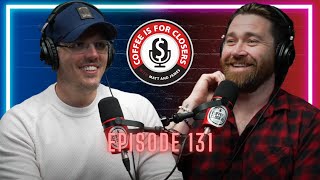
This is a YouTube video titled "Awarded the $25 Million Award at ClickFunnels 2022 - CIFC Episode 131" featuring a multi-speaker podcast discussion recorded in October 2022. The participants include Matt Ryder, Jeremy, Marco, and others, who discuss sales methodologies, the ClickFunnels event where Matt Ryder received a $25 million sales award, business growth, venture capital, and related entrepreneurial topics. The conversation is informal and covers personal experiences, industry insights, and anecdotes related to sales and business scaling.
You don't do it, you find yourself doing it. That's what, like the NEPQ methodology allows you to attain that.
Okay.
Whereas a lot of the other ways of doing things are just a little bit too ethereal. They're not granular enough to where you can really dive into the detail and specifics on it.
Yeah.
I haven't run into a sales training methodology that's as well thought out or comprehensive or large in scope. Like, we have hundreds and hundreds of scripts for all different industries. Like, and then we have stuff in the portal for everything. Ex Special Forces sniper turned entrepreneur. I've scaled numerous businesses to eight figures. My name is Matt Rider. This is my podcast and I'm telling you to put that coffee down.
Welcome back to another episode of Coffee is for Closers. I. I'm Pat Stewart. This is the man, Matt Ryder. He's finally back. Let's talk about your trip to America.
Yeah, I went to America.
How was it?
It was good.
That's it. So what'd you go for? Tell us about what I went for.
Funnel Hacking Live, which is the Click Funnels event which they use to trick people into buying their stuff.
Okay, so how's that work? It's a big event and the reason that you were there was as part of Seventh level.
Yeah.
You and Jeremy were there to receive the 25 million DOL award.
We were.
And. And if I understand correctly, that means that you made $25 million worth of sales through one funnel. Is that one of these?
Yeah.
Okay. That they host?
Yeah.
Right.
That's the important part. Right?
Yeah, of course, of course.
No, it's, it's. I mean, it's interesting. Like, it's obviously it's a. I actually thought it was going to be mainly coaching and consulting and it sort of was skewed that way. But there are tons of solar, tons of insurance platforms that go there and it's sort of like, I don't know, it's like the most professional circle jerk I've ever been to. And I've been to a few. Right. So. But like, not. I don't even say that in kind of a bad way. I say in kind of a silly way. But. But it was like a. It's a celebration of making money. And it's sort of. It's an interesting juxtaposition because you have everyone who is there to get the content didn't win an award.
Right.
And everyone who's there to get the awards doesn't give a. About the content. It's a very Interesting. Like, a lot of the people with awards, there's like a kind of a special room for you, and then you're. They give you, like, a little pendant and, like, what award you won.
It's kind of like that you wear the whole time while you're there.
The whole time? Yeah, because I was the coolest dude because I had the biggest award.
Is that the biggest award?
It is.
There's no bigger award.
Well, you can just do increments of 25. Okay, 50 hundred.
Okay.
So.
So you didn't get the biggest award?
I guess not.
Is anybody putting 50 million through one funnel?
Oh, yeah, dude.
Who's doing that?
Lord Payne, I think, seems to be doing the most. There's a dildo salesman who does really well. Really well. He was the first guy to get.
The 100 million dildos or vibrators.
I mean, we can. That's another podcast.
You're right.
We'll record that later.
So, yeah, so. But there was a couple of solar, like, solar marketing companies and stuff like that that put a ton of money through a guy called Lowell Payne. Really interesting cat that I met. Kind of a, like, African American entrepreneur guy. And he was. I was chatting to him, doing like three, $400 million, and he was like, yeah, I get a business to 100 million, then I get bored, and I just kind of sit and forget it. Put it in my team, and then I move on to the next one.
Stump a do.
I was like, all right, seem to know what you're doing.
Then what's he. What kind of stuff?
I mean, that's a good question. You know, Like, I think he has, like, seven or eight different businesses. He gave like 10 million to charity last year. Nice. It's a good guy. Really nice. It's funny, like, apparently he used to be real hypey, like, real, like, what's going on? Like that. And I met him this year, and he's like, hey, what's going on? Like, really, really quiet. Had a business partner with him that definitely buries the bodies.
Okay.
I looked into his eyes and I was like, I recognize you. I was like, okay, I see.
This is good.
Yeah, yeah, yeah. Always be scared of the one white guy.
You know what I mean?
So. But yeah, and then he has, like. So he has, like, a fitness business. Coaching. He has a supplement company, has a fitness company. And he has, like. I think he just. A bunch of stuff. I don't know. It's a pretty overarching. Makes a ton of money. Really nice guy. Very, very smart entrepreneur. We could probably link his YouTube channel somewhere.
Okay.
He's sitting there.
Should look at getting him on. You should do an interview with him.
Yeah, I'll try to have a chat with him. Probably won't talk to me, but, you.
Know, try your best. You've only got the 125 million.
I know he hasn't been.
100 million.
Yeah.
So just talk me through exactly like how that came to be. Because last year you got the 10 million.
Yeah.
And then this year 25 million. For the same funnel.
Right.
Like it's the same thing. We're selling. Seventh level.
Yeah. Well, the same funnel, though, because we have other things going and we make money.
Right.
So that funnel made an additional 15 million.
Right.
And we made other money through other means, but it's from that funnel.
And give me a breakdown of the numbers because it was like when you're talking growth, because that. That's a part of that as well.
So seventh level is the 391st fastest growing company in the US according to the 5000. Obviously you've got to register.
Yeah.
For that. Most high growth companies do, though, because it's a good way to get VC funding and stuff like that. And we were this. We were the. I don't misquote it, but I think it was like 21st fastest in the US in services.
Okay.
Right. So we did really well. It's a very fast growing company.
Can you give me some context to that? Like that's a number. 21st fastest growing or one of the.
Few companies that made it that didn't take capital.
Okay.
And I'd say we'd be in the top. Like if they had an category for non fundraising companies, we'd be in the top, you know, 30 or 40, I would say. So we went from. We had some sort of like 576% growth and we won it in 21. In 2020. 2020. We were like 1200 in 2021, which is the last one. Because it's kind of retrospectively, it's based on finance. You have to submit your financials. Like it's very. You can't fudge it, you know.
So I was gonna lie and say for the audience to help them understand, but for me, to help me understand, taking capital would mean that a business can go from zero. They've. They borrowed the money, but then they grow fast because they just like, huzzah, We're a giant business immediately.
Yeah.
Whereas you have bootstrapped it. Yeah. So didn't take any money from everyone. From anyone. Each Sale goes to the financing of building the company and going from there.
Yeah, yeah.
So like when you, when you take funding, like when you go and raise capital, it does a few things. One, like it gives your business and probably an artificially high valuation because there's different modelings of. There's like a financial valuation which is like, hey, you make this much money, there's a standard multiplier of your ebitda, right? Which is, you know, your earnings, you put back in all this stuff. And then from there there's like a standard industry multiplier. And then when you get vc, when you start looking at money, what they'll do is they'll have a look at like an internal rate of return. So it's like, well, if we're going to come into this business, what can we get out of it? So they'll give you much larger multiples, right? So then all of a sudden you, you have a business doing a million dollars a year and it's valued at 900 million, right? You know, like, I know a business at the moment, they have an app, like a business card app. They do a million dollars a year revenue. They have a one billion dollar valuation, right?
Because it's getting it like that.
No, that's not, it's not what you think.
It doesn't have to do with it. Like, we see the trajectory you're on.
Not really that valuation. It doesn't have to. It can have. What does it provide me in my other businesses, like, if that person has a huge user base, right? But the revenue will never get above, say, 10 million. But it has an enormous user base. Like WhatsApp, for example. Like WhatsApp was bought by Facebook for a crazy, crazy, crazy, crazy multiple because it had the database of people and it could now communicate with people on a separate means and then get that database in, right? So the internal rate of return for Facebook is enormous because now it's got more people for its advertisers to go after, right? That's why they went after Snapchat and Snapchat didn't sell, and now they're worth fucking kajillion, you know, I mean, but like Twitter, for example, has a multiplier of 170 times revenue, right? Twitter doesn't make that much money. So, you know, it's like it's less than $100 million a year Twitter makes, right? That's not that much money, you know, so Floor Payne's making more than Twitter.
Yeah. So the value is not in what it. The money. It Makes. But the other ways you can make money. By owning the data that it has.
Exactly. Or data or whatever else the. The VC sees in that business, you know, so venture capital, they'll. They'll own pieces of 4,000 businesses, and if they can plug something in that goes and spiders out, that's phenomenal, you know, so they get a massive internal rate of return. Then all of a sudden they're like, oh, shit, we could make this much money off doing this. Like, okay, cool. You know, and then they get to feel good about themselves. They're kind of in a sticky spot at the moment because, like, like over the last three years, like, VC was. Funding was really easy to get, and they were giving people crazy multipliers and doing all kinds of stuff because they're like, yeah, this is so much fun. And now everyone. Everything's kind of drying up because, like, not many of those projects came to pass.
What caused that trend? Why were they throwing out so much money? And when you say they. Venture capitalists. Like, who.
Who specifically say, like, BlackRock. Right. BlackRock is a huge VC firm that owns, like, all the houses in the U.S. okay. Right. Like, they own Triple Canopy for a while. Like that, you know, that huge. Huge, huge. One of those monstrously evil companies.
Yeah, yeah, right.
That will, like, like buy all the foreclosures and then kick out families and go beta losers.
Right? Yeah, yeah.
So, you know, like, they just went through. So a lot of. I don't really know why, because it was kind of weird because there was a while there where, like, private funding was, like, crazy and this is going back like, just six months ago where, because, like, the markets are all really hot and things were happening and then now that, like, the economies are all kind of cascadingly tanking all at once. Right. And with, like, the. This might be super boring, people, but with the. With the. It's really unappetizing to do business with the U.S. right now because of the strength of the U.S. dollar. But the U.S. dollar is worth less in the U.S. yeah. So it's a really odd time where the U.S. dollar here is insanely strong.
Yeah.
Like an inflation here. Like, this might put me out of fucking touch, but it doesn't seem like it's hit that much. But I don't look at the prices at the pump.
Yeah, yeah.
I don't buy my own groceries. And so, like, I don't. Haven't. Haven't felt, except for the housing market inflation here. That much. I could be wrong. But, like, in the US it's crazy. If you go over there and you're like me, a coffee is like $7.
Yeah, yeah.
You know, and so the U.S. the money's not going to far, but it's going really far elsewhere. Okay. So what's happening is like export and import in and out of the US is grinding to a halt because I don't want to buy products from the US because they're now more expensive because it's worth less in the us but the US dollar is so strong, there's like a factorial.
Yeah.
On what I'm paying for a fucking T shirt. So I'm just going to go to China or Australia.
Yeah, yeah.
So reasons it's becoming more difficult to do business in the US is twofold. So you're getting stung twice. It's doubling it up.
Exactly. And so like for us at Sales sniper, for me personally, it's phenomenal. I get paid in USD. I have a 30% bump or whatever it is, 20% bump. And for guys making USD in other countries, this is like best case scenario. Right. But for businesses like, for us to pay out our USD guys is tough. Like a $20,000 a month salary. That's $240,000 a year usually is now $370,000 a year.
Yeah.
Australian dollars, a pretty, pretty big chunk.
Yeah.
You know, so it changes like. And I had a look last month, I look in our piano, last month we lost $23,000 in our foreign currency losses because of that. And what that is in like bookkeeping speak is the difference in the foreign exchange rate of when you sent the invoice to when you got paid. And in that eight to ten day period, we lost 23 grand.
Wow.
Just in the fluctuations of the prices.
Because we, we sent it at that day, it was paid on that day and that money had changed. And the month before it was like an increase of 11 grand. So it's really odd, man. It's a very peculiar time in terms of running a business, man.
I remember back in like, I think it was 2011.
Yeah.
We overtook them. Do you remember that?
Yeah, yeah. For like a little while.
Yeah, yeah.
And that's when I got married in the States then. And so we're killing it. Oh, mate, we're like rich. Lonnie bought a car, drop, why not drop 23 grand on a Mustang? Just like, why not? It's the cheapest I'll ever have the opportunity to buy this car. Brought it back and sold it pretty much straight away because it was the like cheapest opportunity you had to do it.
Amazing.
But I remember those ODA guys coming out and were on exchange at the.
Time, and they were for the people in the camera.
Oda, it's a different special Forces unit that exchanges with ours or our former unit. And so they were. They were hurting, man, like, because they're getting paid in US Dollars, but they're in Australia for six months or whatever. It was worth less. They were. I think that we got to like a $10 or something like that.
Yeah.
I remember I went over to New Zealand once when it was like the New Zealand dollar had tanked. It was like double. And I went. I remember this is years ago. I bought a pair of Oakleys and It was like 40 bucks.
I was like, what is happening?
I was just in the. I was just in the airport because I wasn't. I was going to New Zealand to go somewhere else.
Yeah, yeah.
And I was like, did the cows buy that?
Yeah.
Thank you very much.
Yeah.
So. But it. You know, and it's another thing I never really thought about, but then when I have a look at, like, our P. Ls, and I'm like, man, like, we might need to get someone to hedge our money. Yeah.
So explain that to me. What can be done about that?
So, well, first of all, you can try and reduce your cash flow cycle. Right. So what we've put in place is a meeting. So we're getting paid no more than seven days after invoicing.
Okay.
You can lock rates as well. You can, like, lock a rate at the day of invoice, and you have to get approval for that from the, you know, if you're the vendor, from the person that you're sending invoice to. But you can lock rates to kind of stop the manipulation of markets. Because, like, a good business would hedge.
Yeah.
So you'd have a CFO that would go pay them now like that. Right. To. To give yourself the best chance. But you can also employ companies to hedge your money. So instead of it being paid to you, it get. All their money gets paid to them. They act as, like a suspense account. And then. Then they. They hold your money. You have to have a good amount of cash to be able to do it.
Yeah.
Because you might be four or five days out, they'll hold your money, and then they'll transfer all of your money at once on the greatest possible day, and then they take a clip of what they make you, and their job is to make you money on all. So if you're. If you're moving it really only works if you're moving millions. Like, but if you're moving, there's a great sales clip, right, which we. Which we'll try and find and put up here. It's a Jordan Belfort pitching for Goldman Sachs to get the business of an Australian dairy farm that has most of their farms in China. And the whole setup. Is that the guide? Belfort didn't know he's being filmed. And the CEO is an actual business of an actual very large Australian dairy farm. Like, you know, one of the big milk companies. Right? Big milk. You know those guys, right. It was actually an experiment to see the efficacy of sales styles.
Okay.
And Belfort came in and the guy had to say no. That was the only rule the CEO had to say no. If you wanted to do business afterwards, he could. Right. And he had like seven people from very large firms come in and pitch the hedging of the four of the foreign exchange. Right. Which is a big account for a business doing hundreds and hundreds of millions of dollars. And Belfort was so good, he got the account there and then.
Right.
And the guy had to say no.
Right.
So, like, he just is like, they put Belford Belfort's a great salesperson. I don't like his methodology, but he is incredible. Um, and so he just hammers this dude, just gets after it, gets after it, gets after it. And the guy just fucking does the deal. Because he just can't not tease that.
Out a bit for me. Like, how is it that he's good at it, but you don't like his methodology? Like, open that up. What is that?
Well, you can. Like, just because you're good at something doesn't mean it's translatable.
Okay. Right.
Like, if I tried to systemize what Marco does, it's very difficult.
Sure.
Now he uses any pq.
Yeah.
But the way in which he does it and some of the layering that he does is like, it's elegant and beautiful and very hard to represent, replicate. Whereas, like, the way that Jeremy teaches to sell is. Is very much replicatable. And so the. This, like, for me, anyway, personally, like, I've done the straight line. That's Belforts one. It's good, and it gives someone something to. To deal with. It's just not. It's just not exact enough.
Okay.
You know what I mean? So it's like, it's a good in. To me, it's a decent interim way of doing things until you find a really precise process.
Okay.
You know, like, and you might take straight Line. And then you might develop that into your own thing when you've been in an account for a while or selling something where you can make it your own. But for me, like, the problem with it was I was like, yeah, I get it. But I'm still relying on my sales acumen.
Yeah.
You know, I'm taking someone through a pretty wishy washy process, which is, like, fastest way to hear. And here is a straight line.
Mm.
That's my. That's the sales, like, straight line.
Okay.
Right. That's what it is.
It is that symbol.
It's not. It's not rocket science.
Yeah. Yeah.
And he isn't. He's gifted. Yeah, he's gifted.
Yeah.
Jeremy's not gifted. Well, he is probably the greatest.
Gifted in a sipper, in a separate way.
Gifted in a way where he could. He could break it down.
Right.
And, like, when you can break down a process step by step and not have to yell and scream and go, rah, rah, get your mindset together. When you can break it down the way that he does, or sometimes the way that I can in certain situations, it makes it easier to learn and adapt. That's why I like the methodology of an epq, because I can, like, I can be hungover and I can do it.
Yeah.
It's just like, you know, we're talking about one of the other podcasts where it's like, you don't do it, you find yourself doing it. That's what, like, the NEPQ methodology allows you to attain that.
Okay.
Whereas a lot of the other ways of doing things are just a little bit too ethereal. They're not granular enough to where you can really dive into the detail and specifics on it.
Yeah.
I haven't run into a sales training methodology that's as well thought out or comprehensive or large in scope. Like, we have hundreds and hundreds of scripts for all different industries. Like, and then we have stuff in the portal for everything, which I think is why, like, we have eclipsed most sales trainers. Because our tam, like, our total accessible market, is just much bigger. Like, you look at some more of our competitors are stuck in coaching and consulting, and some of them have come to us and asked us to help them get out of it. And I told them to go kick rocks. They're like, oh, you know, we'll do an exchange and we'll teach you this. I was like, bro, you got nothing else. Like, you know, just, like, straight up, I'm like. We're like. I go, jeremy's the Best at this man. And none of you guys can compete. And I'm gonna ride that pony all day long.
Yeah.
Crazy not to, I think. I mean, we're off topic a little bit, but it's worth investigating. Do you think that the system is so much better, or do you think it's because he's kind of figured out how to break it down and teach it in a way? Like, do you think if Belfort spent as much time systemizing it and writing the scripts and really coming to understand it, break it apart, and be able to teach in that way, it could be as effective?
Probably.
Because I think that's one of the things I see not just in. In sales training, but, like, sort of across training in general is people who really are really good on the tools often do things that they're unaware of themselves.
Yeah.
Like, I got asked one time, you know, like, when you. When you look at, say, in my space in dog training, there's people who, you know, most people teach everything that they have to teach.
Right.
But you'll never be as good as them. And so just have.
There's something.
Yeah.
And very often they're not withholding anything. It's not that they're like, no, this is my secret bid, and I'm not going to pass this on to my students.
Yeah.
Is that they often don't realize how important that piece is.
Yeah.
Where it seems to me like Jeremy has pulled it apart so many times.
Yeah.
So he's pulled it apart, put it back together in a different way. Pulled it apart, put it back together to the point where he's like, oh, it. It's like this for all these reasons, and passes on that information as to why it is rather like, there's no feel. He has a feel and does it intuitively, but has pulled it apart in order to put it back together in order to explain it to others.
Yeah. A good. A good. A good example of that is Eli Wilde. So, Eli Wild. Like, if I wanted to learn how to sell from stage, Eli is the person I would speak to.
Okay.
Now, like, Myron golden is arguably better.
Okay.
On stage, Myron golden is like, he was at the Clickfunnels event. So was he. Like, I met him for the first time in person. It's good. Really, really nice guy. But Myron's doing stuff Myron doesn't understand.
Right.
Yeah. Yeah.
Right. And, like, he's admitted that he. But he's so good.
Yeah.
Like, that dude can sell.
Yeah.
But Eli can tell him exactly what he's Doing when he's doing it, why he's doing it, how he's doing it.
Yeah.
In ad nauseam detail and in real time.
Yeah.
Like, he could, like he could color commentate what's happening when Tony Robbins is on stage.
Okay.
And I've seen him do it and it's like I knew he was good at what he did. And then I saw him do a breakdown of last year's funnel hacking because they have all these speakers and the peak. The speakers are. They're having to secret sell because they've all got something to sell, but they can't hard pitch. Tony's the only one that's allowed to hard pitch at the end.
Okay. Right.
And then Brunson does a pitch as well. But that's.
Do you mean really he's the only one allowed?
Pretty sure, yeah. That's what it seems like. I mean, I haven't got confirmed, but I would, I would say that would be pretty true.
Okay.
Right. Tony does whatever Tony wants.
Yeah.
I was gonna say that's what I mean, bro.
Tony was slated for 90 minutes. He went for eight hours at. @ the last one.
Okay.
He might have done the same thing because he's almost always the last speaker.
Yeah.
And his speaking fee is crazy. I think it's like 700 grand for an hour.
Fair enough.
You know what I mean? And like.
And you have to retrospective Bill, if you book him for 90 minutes and he goes for eight hours.
No, I wouldn't think so.
Are you sitting there going, but I'm.
Pretty sure you have to fly in private. You have to do all these things. And if you push back on anyone, he goes, well, you. That I'm not coming.
Yeah.
And it's not like they're outrageous, but it's just like, I think you have to have a fifty thousand dollar miscellaneous fee.
Yeah.
The red M M's that have to be on the table.
Yeah. Like, if he wants something, he should be able to get it. And there's a $50,000 dollar, like buffer in order to do that. And, and I know a guy who said, well, can I get like an itemized list of what that would be if I'm gonna pay that? And they go now. Yeah. And they just said, we're not doing it.
Imagine having that like, capacity to do that.
He's a fully blown billionaire.
Yeah. What would he be worth?
Like, oh, he's worth. He's worth in the billions.
Because like many billions or tens of maybe.
Who knows? I guess it would depend on how you valued him, but like, he, he wouldn't be a cash billionaire, I wouldn't think. But. And he owns a lot of businesses because his like top level Mastermind. It's like a seven year waitlist. Obama's on the waitlist. Right. Like, this is no joke. It's like a million dollars down.
Yeah.
And then I'm pretty sure he gets 50% upside of whatever your business does after you engage him.
Okay. Yeah.
And it must be worth it.
Yeah.
I mean, if you want to hang out with Tony Robbins.
Yeah.
A lot of those things are. If you want to hang out with.
Yeah, yeah.
You know, so like the one that we got pitched. This is probably way too much inside baseball, but I really don't care.
That's the point of a podcast.
Yeah. So like, you know, we're in the 25, by the way. The rooms, bro, were ridiculous. Right. So they have the award ceremony at the very end and it's way too long.
Is it? Does everyone. Is there clapping after?
No, but like, they're like, hey, listen, Russell and Todd want you to know that they love you all very much. Don't speak to them.
Are you allowed to make eye contact?
I don't know.
I guess they don't want to get. They just don't want to get.
Dude, they can't all day. I know, but like, they're not too many people. No, no, no.
Everyone's one.
I. I got. Listen, I've, I've. I've had my hand around him for a photo. That's it. But I get kind guy.
Okay.
That's the vibe. I get kind guy. Terrible taste in watches. He has the old original Jacob terrible. Anyway, good on him. Super expensive, terrible watch. Right. But like, seems like a very. I've never heard anyone say anything bad about him.
Sure. Right.
But like, you get like. They have 451 million dollar award winners. They all have to get a photo.
Okay.
They're first. Those are in a goddamn cattle. Like in a cattle press. Right. And like the line is huge because everyone gets their photo and just boom, boom, boom, boom, boom, boom. But that takes a few hours. Yeah, yeah, because it's like, you know, at 25 seconds, 30 seconds per person.
Yeah.
You're looking at 450 people. It takes a while.
Then you got covert after that too.
All right.
For sure. And then you get the 10 mil, then you get the 25.
Yeah, right.
There's only 10 people getting the award that I got, bro. The room had 10 chairs, no snacks.
So you're just waiting in no Water?
No. Tea? Coffee? You just sitting in there for hours. And I tried to eat, like, oh, no, don't leave. I was like, I said, mate, good luck stopping me. Like, oh, no, you gotta stay around here. I was like, do I, Do I have to? What if I don't want the award? Because, like, I got the 10 million and the 25. Because obviously you have to go through that again.
Right?
Right. So it's 10:10.
Oh, so you have to be at the presentation of the 10 as well.
No, I chose not to.
Right.
They're like, oh, go up and get your footed twice. I was like, I'm not doing that. I was like, nah, like, I gotta wait in line and loop back around. That seems like a bad idea. I was like, I'll just wait until the very end. And I just, like, I literally, like went into the presentation area, just sat there and then tagged on to the end. Like, we did a ton of networking, got a few clients there, which is. Which was great. But, like, once I felt like I kind of tapped the keg, I was like, I'm out of here.
Yeah.
There was like, no air conditioning. Nothing, bro. And I said, I mean, no air conditioning. It's in Florida. Was it? Yeah, because it was just like, just these back rooms, like, and it was just hot and maybe the air conditioning just wasn't working. But I literally went to them, I said, hey, next year I'm probably going to get the 50 or the 75. I will forward $20,000 to click funnels to cater this area. I said, I'm 100% serious.
Yeah.
But like, you cannot have a bunch of people that make a shitload of money in a fucking room for four and a half hours.
Yeah.
And they're like, the fuck? We can't. Like, I mean, it was like, then don't do it, motherfucker. Don't get your photo. What do we care?
My. My brother told me a story once about how he got a private jet out of Monaco after the Grand Prix.
Yeah.
Yeah.
And he said that it's the funniest thing you'll ever see in your life because the private jet terminal is tiny and most of the people who are getting their private jets are coming to pick them up. Don't wait for anything anywhere, ever. And. But they have to there. So they're in this shitty, pathetic little terminal which can't hold them all. And they can see their jets. Their jets are just right there, allowed.
To walk to it.
You have to wait your turn. And he's like, because you want to see stress? That's where you'll see stress. Like these people are melting down and, and they're. They're all people that have staff and their staff are running around trying to solve the problem for them, but it's a problem that cannot be solved.
Right.
And they're all, they're all more important than each other.
And.
Yeah, he said it's the funnest thing he's ever done. Just sitting there watching a. More Milk.
I tell you, we flew private from Florida to New York.
No.
Yeah. So because there was six, I'd expect no less because there was six of us and it was fashion Week or un. Or whatever. And clickfunnels was on and traffic and conversions was next week. The flights were outrageous.
Right.
It was the same place to get a jet.
Right.
So I got a heavy jet. I got a G4.
Oh, snap.
A do.
Yeah, nice jet. Yeah, yeah, it was great.
But Anyway, to get 10, 000 photos next to it.
I didn't know photos. Oh, none Hardcore. Yeah, yeah. Yes.
You're an experienced private jet.
It's my second time.
The pilot must have been like, really.
Made me want to buy a plane. Yeah, I looked it up. About 8 million, 10 million US. You can buy a G4 and you can rent it out, break even on it. Yeah, it seems like a good idea. I really want to plan.
Yeah.
I mean, for the two or three times a year you'd use it.
How dare you, sir. But yeah, so it was great because like we got there. I also got the kids. They're like, yeah, they just loaded up. They're like, when do you want to leave? I was like, oh, even a few minutes. Like, yeah, sweet, man. Do it if you want. And the guy was like, what are you finding JFK for? I was like, I don't know. New York. That's where the guy told me to go. He's like, ah, that's stupid. And I was like, what do you mean? He's a really cool pilot. He's like, I'll go to Tutor Bar. I was like, all right. He's like, give me a minute. And he just caught up. He's like, yeah, we're not going to jfk. We're going to Tobara. He's like, yeah, sweet. New flight plan. Yeah. Let me know when you want to go.
Yeah, so what?
That's a smaller, more convenient.
It's closer to Manhattan. JFK's miles away. Yeah, yeah, it's like a 30, it's like a 40 minute drive.
Yeah.
Like eight minutes with no traffic, but in New York, 45 minutes, not a thing. And then there's no landing fee.
Right.
And you can get picked up on the tarmac, whereas jfk, you can't get picked up from the time.
Yeah.
You're just in the giant airport.
So.
Yeah, so it was, it was really good. They like made us food on the plane.
Amazing.
Kids are sitting there with their iPads, sitting on a big, like having a nap on the, on the, on the, on the couch and. Yeah, it was really good.
Yeah.
Yeah. But it costs the same as business.
Right.
So Back to the 25 million award.
Yeah, yeah.
The, the whole point of that thing, like, obviously it is a huge accomplishment. It's a huge achievement. And to go from the, the 10 mil last year to that and to be on that progression to, you know, fast growing, because that's a separate thing. Right. But it's, they're intertwined because the Inc. 500 is.
The 5000 is a separate thing. Yeah, Just there. And really, that is literally a front to get. It's a front for a couple of things. One, it's like they, you pay to be like extra promoted by them. So it's like a press grab. It's like a PR thing. It's actually a really smart business model. And then from there they sell your data to VC firms.
Right? Okay.
And then they take a cut. We'd be fairly positive they would take a cut of whatever VC funding, like as a brokerage, like a referral fee of whatever anyone comes through.
Okay.
Because like you, in order to accept the award, you have to agree that your stuff will be sold, it will be given to VC firms.
Okay, Right.
Which makes sense because fast growth companies, you get money, you grow faster.
Yeah.
Right. Because you can cash burn. Right. So it's a very clever business model. And then from there they can be like, oh, do you want all the awards? You can just pay a couple grand and we'll give you all the awards. Like you can get all the, all the plaques. You want the plaques, right? Oh, you want the email signature? That's 500 bucks. We'll get you the email signature. All kinds of. Right. Like, it's really good. Like, oh, hey, do you want to come to our events and be featured in our events? Only 5,000. We can speak on stage and you'll be featured. And I don't want any of these things.
But so with ClickFunnels 25mil award. One thing you said that was interesting was the way that there's like Seminars, like people teaching.
Yeah.
What are they teaching? And, and really they're good at. It's just a pitch fest.
Right.
Realistically. But they're not allowed to pitch.
It doesn't seem like it. There was one guy, actually, I. The one, the one that I watched was a YouTube guy.
Okay.
And he's an organic YouTube growth guy. And he was. He knew his. I can't remember his name. David Kennedy, I think it might have been. I wrote it down on my phone. But he talked about the algorithm.
Okay.
How the algorithm works and algorithm and how you get picked up and how you. The challenge that he's grown and all kinds of stuff like that and why they grew and how he grew it and the, the very targeted and selected kind of stuff they did in order to get what happened. And then there was guys doing like sales workshops. There was motivational speakers. I watched a little bit of Jordan Barrow. Jordan Barrow is a very, very high level wrestler.
Okay.
He's Olympic champion. World champion.
Oh, real wrestling.
Like a real wrestler.
Yeah.
Right. Like savage of a wrestler. And, and he had a really interesting background story. He says very motivational. Just like Tony Robbins come and do motivational stuff. And there's all kinds of like, experts, but all those people are in Russ inner circle.
Okay.
Right. So the things that I started to put together was like, okay. And I watched the people who went on stage. There's 5, 000 people this event, and every seat's packed. And they all stand there for eight hours a day listening to people talk. I don't know how they do it. I couldn't physically do it, but they all love it. And then they all became like these codified experts because Russell comes out, the mc, introduces people, says what a badass this guy is. And he talks for 40 minutes on stage. And I was like, this is super interesting. The one thing that they all had basically had in common is that they're all in one of the inner circle programs.
Okay.
Like category Kings are one of the, the 50, the 150, 250,000. And I was like, this is super interesting. So essentially like you're. You're able to then borrow the credibility of the stage. It's not that you make the stage credible. Stage makes you credible. And so we signed up to his mid tier one, just 150 G's.
Oh.
And so we signed up to his mid tier one, just 150 G's.
Oh.
Which you have to pay off in three months.
Okay. Right.
And it was quite funny because it's like it wasn't an anti sell, but it wasn't a sell. They do a lunch, which I didn't go to because I wanted to go to Disney with the family. Right. But Marco and. And Jeremy went, and I told Marco very specifically, no purchases are to be made without my consent. So they're literally calling me while they're doing the pitch, going, this is what it is. What it is. And I was like, all right, well, if we think we can get on stage, then I'll do it. That's literally the only thing. Thing that I want out of it. Right. Because it's like you get a Slack channel, a portal, a couple of events. One of the events was like, seven days after I was like, oh, I'm back.
Yeah.
And then it was three weeks after that.
Right. Okay.
I was like, night. Now I'm supposed to get to the. Which you have to pay off in three months.
Okay. Right.
And it was quite funny because it's like, it wasn't an anti cell, but it wasn't a cell. They do a lunch, which I didn't go to because I wanted to go to Disney with the family. Right. But Marco and. But anyway, like, in. In Russell's only a part of the middle and the top.
Right.
So like the 50K, you're kind of like.
So you're buying access to him.
Yeah.
Potential access to him.
Potential.
Yeah.
And so it makes sense, though, that they then draw, like, I suppose.
Yeah.
They. They can. They can sort of vet.
Yeah, exactly as I was gonna say.
You know, over a year, period. They can vet. And like, I get it. Like, you should prop up your clients.
Yeah.
The people paying you $250,000, like, throw them a bone.
Yeah.
But more than that, like, I suppose.
You also have to win the 25mil award or above, I'm pretty sure.
Okay.
To even do Atlas.
Yeah. Okay.
And then you have to do a CC award in order to get into the 50, and you have to do a 10 to get into the middle, I'm pretty sure.
Okay.
So it's sort of segregated in that.
Yes.
People tend to go, well, I want to do the big one because.
But I was like, well, you're not ready for it. No, I don't mean you. I mean, like, if people want to go straight for the big one.
Yeah. Only making a million a year, they'll bankrupt themselves.
Yeah.
But it's pointless. It's like. It's like the same as you selling someone into Jeremy's inner circle straight from the street.
Yeah. But it's Also, like, also I did a cost benefit and I was like, the 50 makes no sense.
Okay.
For me because I only want to have an opportunity to get on stage and maybe we learn a few things and we get to network with people and we'll get consulting clients and for you clients, clients and sales training clients out of it. Right? Yeah, Sales training teams so that none of those people are in that one. Now we could do that one and we could bully. Sell all the people who made the 1 million award. And that was a serious thing that I considered. So we could be the big thick dick in the sea of pencil dicks. That was one consideration that me and Marco considered because we could just send Marco there and he'll bully all those people.
I will admit being a big fish in a small pond is a wonderful feeling for a little while.
Yeah, so we considered that. But I was like, no, the real play is getting Jeremy on the main stage at funnel hacking 2023, or worst case, 2024, of which, like, he's a well known entity. Everyone knew Jeremy like when we got there. So that was really good. So that's kind of where we saw the benefit for it. But it was just very interesting because, like that, you know, clickfunnels makes well over 100 million. They make like potentially in the 200s. I don't really know, but I know they make a lot of money. Like their, their monthly recurring is well over 10 million.
So forgive my ignorance. Like, how do they actually make that money?
Well, it's. They get a commission or. No, it's 97 or 297amonth for ClickFunnels.
Right.
Okay.
Like that's how they make.
So they don't take a piece of the sales that go through the funnel. They just. It's a flat fee.
Yeah, that's what Lightspeed does. That's why ClickFunnels are so much bigger.
Right.
You know, and then ClickFunnels 2.0 has the functionality that Lightspeed has. Oh dear, oh dear, oh dear indeed. Oh dear, oh dear, oh dear. Not all of it, not the interactivity, but it hosts content.
Right.
I think they might have bought Sam Ovens School and they might have bought it. And then they also bought Lady Boss, which is a big fitness company.
Okay.
So they're buying up.
So like ClickFunnels 2.0 for that because.
They can see the success of the companies in the back end and yeah, just figure out which ones they want to buy.
Yeah, it's really smart.
That's genius.
Yeah, he's a very clever man.
Yeah.
And you can see, like, just don't.
Look him in the eye.
I don't. You look at him. So, yeah. Like, I don't know what their whole thing is. They got offered, like, well over a billion okay. To sell, and they said no.
Yeah.
Okay. So that they're killing it.
Yeah.
Oh, good for them.
Yeah, good for them.
Yeah.
None of he seems really happy.
No, it makes. It makes total sense. Like, and. And well, we have a laugh. But it makes total sense that they say, don't harass him.
Oh, there's 5, 000 people that I said, being up there and being him right now is would be my personal health.
Yeah.
Be exhausting.
I don't want to speak to people. I don't want to borrow that.
Yeah.
Like, I would do it as a group. The 1 million awards, they got to get rid of that photo.
Yeah.
They should have a cardboard cutout. Right? They can just CGI that shit. Hey, man, don't worry about what CGI it happened. Don't worry about right now. Is. Would be my personal health.
Yeah.
Be exhausting.
I don't want to speak to people. I don't want to bar of that.
Yeah.
Like, I would do it as a group. The 1 million awards, they got to get rid of that photo.
Yeah.
They should have a cardboard cut. Right. They can just CGI that shit. Hey, man, don't worry about what CGI it happened. Don't worry about it.
Yeah, they have a cardboard cut out of him like this. And you got to, like, climb in underneath and get the hug photo.
40 of them at once.
Yeah.
Do you have to take the photo yourself or is there a real photo? So you don't, like, ask someone with your iPhone?
Yeah.
It's funny because, like, I found the whole thing really funny because I don't take it very seriously.
Yeah. Yeah.
And they said, Russell and Todd really want you to know they love you and they think you guys are great. Just don't speak to them. And I was like, everyone's looking at me. I was like, that's amazing.
Yeah.
I was like, until Russell, he's not allowed to speak to me either. It's fucking great, man. It was really funny.
And if you're passing me the whole way, you just have to be like.
Sir, don't you say so? Yeah, but it was. It was really funny. It was funny to see, like, some of the people who took shit really seriously.
Huh.
And I think, like, that's one of the reasons why I found snipers difficult to be in. It's because, like, I just didn't.
Yeah, they have a cardboard cut out of him like this, and you gotta, like, climb in.
And so obviously, that's a very serious job.
Yeah.
But you don't have to be serious.
Yeah.
And, like, people took themselves very seriously in that job, and I just didn't. And I think, like, that. Like, that wasn't funny in that environment. I found it funny, but no one else did. But in this environment, it's hilarious to me how serious some of the people take it.
Yeah.
It's like, bro, you just got a business that's doing better than that, guys. Yeah, that's it. But, like, he might make less money, but a lot more profit. Like, you're not. We're not talking about profit here. We're talking turnover.
Yeah.
And so it's just money that goes through that funnel.
Yeah.
Where it goes after that, nobody knows.
Exactly. And, you know, like, I know guys that are running affiliate marketing where 50% of their revenue immediately goes to the affiliate. It's not much left. I even spoke to, like, Lower Payne, and he was like, oh, my margins are razor.
Yeah. Right.
You know, on some of his. Some of the things that he does, there's the razor thing, but it's a volume game.
Yeah. Yeah.
So he makes, you know, a margin on a shitload of money. You know, like, they're just different ways to run a business. Like, I met a guy there who was doing 6 million a year, but, man, like, he did nothing for that. Six million.
Yeah. Right. Yeah.
He was like. I was like, so, what do you do? He's like, oh, we don't have any paid ads. I was like, what are your sales team? He's. I don't have a sales team.
It just sits there.
I was like, what do you do? He's like, well, I automated the course, like, two years ago, and I have a webinar. I was like, what do you charge? He goes, 18K. I was like, how do you sell it? He goes over a video. Because what does it convert at? He goes, 12%. It's like, teach me.
Yeah.
Don't change it.
He spent, like, 20 years doing, like, 200 stages a year.
Right. Okay.
And like that. Like, then he just, like, put it all online. And he has such a huge list, like, hundreds and hundreds and hundreds and hundreds of thousands of people, really active list. And it's just like, two days. They do. He does one live webinar a week. That's it, man.
Perfect.
Dude works a couple hours a Week living the dream. And like, everything else is done for him. Automated. So you. Really good chat with him. He was a really cool guy. He wants to ramp it up. So we're going to do a sales and marketing for. But it's just super interesting. That guy was crushing it. But, like, in these guys doing 20 million a year, it's like, yeah, but that guy makes a shitload of money.
Yeah, yeah.
You know? Yeah.
So, yeah, he turns over six and a half, but six of it goes into his pocket.
Yeah, exactly.
Yeah.
You know, so it was just super interesting. Like, and I think, like, people obviously, like, there was a couple of God complexes in there. And I think just like, also people who, like, everyone who knows who I am knows my background and, like, I don't think they know how to take me, which I like.
Yeah.
One thing that I think does get a little bit overlooked and you have to be careful how you explain this, but I think that a lot of ex special Forces people have a hard time actually making male friends. Have you ever noticed that. That, like, people get afraid to approach you because there's, like, some, like, I don't know, expectations.
Yeah.
Going on. Yeah.
And it's very often not the case. You're like, most of the guys that I know from back in the day are the nicest dudes you'll ever meet in your life and the most open, sort of social guys you're gonna meet. But yeah. Yeah, I mean, that's right. You wouldn't want to be on the opposite side of the battlefield. That would be a disaster for you.
Yeah.
But to hang around with. They're lovely. But I think there's a little bit of hesitation there in that sort of space.
Yeah. And I think also then you get the opposite of people who try and overdo it. Oh, yeah, that happened a few times.
Yeah.
I was like, this is interesting. So it was really interesting actually walking with Jeremy.
Yeah.
Because, like, we've. We've put a lot of effort into making that diet somewhat famous. And it's working.
And deservingly too.
Right.
Like, for sure. Nothing but happy for it.
Yeah.
And to watch him kind of walk around in literally every 10 steps. Can I have a photo? Kind of a photo. Kind of a photo. And people are like, oh, my God, I've been watching your reels and watching this, watching this. It was really cool to see. They took it, like, took it like a champ. Loved it.
Yeah, of course.
But did it the right way.
Yeah.
Didn't ask for it. And making that day somewhat famous. And it's working.
And deservingly too.
Right.
Like, for sure. Nothing but happy for it.
Yeah.
And to watch him.
Anyone not to talk to him?
No, no. I mean, that's next year. That's me. Don't talk to me.
Yeah.
But it was really good to sort of see, I guess, the fruits of a lot of our labor kind of paying off.
Yeah.
And then. And then sort of seeing where things can go, I think was super interesting. But, yeah, I had a lot of fun. Like, Disney was great. So, like, I didn't take it too seriously.
Yeah.
I went there with an expressed intent of, like, we will get some things out of this. And we got the things that we wanted perfect. So that kind of worked. And then once I ticked the box, it sounds like I'm ripcording the out of here.
Yeah.
Because this is not the environment that I. I really enjoy. And. And so had days. We had the VIP days with Disney. So we, like, no lines.
Yeah.
Went straight to the front. The Guardians of the Galaxy ride is incredible.
Really?
Oh, bro.
Let's check it out.
Yeah. It's crazy. Like, they've. What Disney's done, really interesting is that they've incorporated, like, light and screens, virtual experiences with real experiences. So, like, you know, instead of using animatronics, now they're using light on, like, statue.
Okay.
So it looks perfect and they can make it do whatever they want and they can change it, you know? But it was incredible, man. Like, they use this, like, forced perspective. So, like, as you're in, like, Pandora, you're looking out and it looks like the mountains go on forever because the mountains just get smaller and smaller. They're tucked behind. You know what I mean? It's really cool. But I always like going to Disney because it's like, from a business perspective, it's just incredible to watch everything run so same famously.
Yeah.
And yeah. And then we went to New York and met Sirhant, longtime client. Got to have a meeting with him, talk about some we needed to talk about. He was really cool, just a totally normal dude. And speaking of, like, when you're saying the people who have it. You know what I mean? I was talking to his head of marketing, Raph. He's a savage marketer guy. And he was like, you know, we sell this course and it's like one of the things that we're struggling with, with that course is like, what's the end state? Because the end state can't be Ryan, because Ryan is a phenomenon. He's not a normal human.
That's unattainable.
It's an unattainable goal.
That's hard.
So it's like, it can't be be Ryan because you're never gonna replicate it. He's a trained actor because that's what he was before he was an actor. And actors are savages on camera. Like, savages. One of the things that we've explored is having paid actors do the ads, and it works very well.
Yeah.
Like, it's just so much better. We actually got a couple of actors to come in and do outbound for us because they get paid nothing. So you can just go and pay an actor, like, hey, we'll pay you a couple grand a month. They're like, oh, yeah, sweet. Thank you. And you give them a script, and they're like, yep, like, what? Okay. You need to be empathetic.
You are the character of a sales guy.
Yeah.
You need to be empathetic here.
Yeah.
You need to convey this tonality here. And they go, okay. And they just do it perfectly. And it's really interesting to watch.
Yeah.
But he has the ability just to turn on camera. Like, he's just a normal guy. Hey, man, how's it going? Like that. When Sammy came in, he was Ryan Sirhan from television.
Okay.
Like, hey, Sammy, how's it going? Like, super nice. And like, oh, my God. So good to meet you. Because she helped him out. She was on Million dollar listing. Yeah, yeah, I remember. I mean, she. She. She's definitely a broker from Sydney. He sold a house to. James is definitely a real estate investor.
It upset me quite a bit.
It upset me quite a bit to see the. Behind the curtain like that.
Anyway, so. But he was really, really nice to her. Took a selfie with her and stuff like that. But yeah. And then when it was just like, okay, it's just like, normal dude, but you can tell, like. And I had a chat to him. It was really interesting, and I was like, so, what's your play here, man? Like, are you ipoing?
Or.
He's like. He said something really interesting, which really got me thinking. He goes, I've never met CEO of a public company that was happy.
Wow.
And I was like, oh, you've thought about this. He's like, and they're all fat. I was like, interesting. So I never thought of it that way.
Yeah, yeah.
The amount of pressure on the CEO of a public company is.
Yeah, yeah.
Like, unpleasant. I never really thought about it because we've rallied around about ipoing one day and. And hearing him talk I talked to him a little bit more in depth about it, but he was like, they're not happy people. He's like, listen, maybe someday someone offers me a shitload of money and I take it. He's like, ask me next week. I might have a different answer. Which was actually really comforting for me to hear because they have a very large business. Very large. Like, they're doing over 100 million, you know, I mean, and to hear him say, like, ask me next week, it might be different, was kind of like, oh, sweet. I'm not crazy.
Yeah. Yeah.
Right. You know, like, that dude's definitely got his shit as one sock.
Yeah.
So I think. I think that's a byproduct of being passionate about anything.
Right.
So, like, when you're really passionate about doing it.
Yeah. You.
Your passions within the space can flick.
Yeah.
So, like, he loves doing what he does, but he likes making money, and making money is part of what he does.
Yeah.
So there's like a. Probably a sort of a bit of a duality between.
I talked to me a little bit more in depth about it, but he was like, they're not happy people.
It's like, listen, maybe someday, like, I like the control. I like doing things exactly as I like to do them. But the reason I like to do things exactly as I like to do them is because I like making a ton of money. And so, like, if I can make a ton of money doing this now, I lose some control or I'm more accountable to people when I'm not accountable before. So, like, that. That needle has to just bounce back and forth between what is it I really like here, you know?
Yeah. Because being like the head of a large company, like, I'm the head of sort of a. I would say like a decently sized company. Like, we're not even a medium. I know. I guess we are probably a medium sized business now. I think it's 50 million, so I think all up, probably close to that.
Okay.
But anyway, it's a pretty decent size. But, like, as it gets bigger, I could see it getting. Getting not as pleasant, you know, like, you have to remove so much of yourself from the decision making. Like, and then the separation of, like, who you are at work and who you are at home has to be become separate. Like, we're going through like a weird time at the moment. So I won't go into too much specifics, but it's definitely made me more of an.
And it's hard to turn that off when you go home.
Super hard yeah. My wife is like, dude, you got to chill the out.
Yeah, yeah.
Because, like, she'll make a mistake. And I'm like, like a mistake. I don't know how. Whatever. Right? And it's like, up, you know, like, straight onto it, like, no mercy, you know? And it's like. And you got to check yourself. And you're like, yeah, I'm. I'm sorry, but, like, right now, my default is what the are you doing?
Yeah.
And like, it's. It's so funny because, like, I think in small business land, especially coaching consulting land, we fight against the corporate mentality so difficult. So, so much. But there is a reason why every Fortune 500 and 1000 companies run in the same way.
Yeah. Yeah.
And there's also a reason, and this is a very recent realization in my head, why the discrepancy in salary is so important. So there's a huge discrepancy between the mailroom and the CEO.
Yeah.
Look, at a bank, right? Like, I'm talking, you could take everyone from middle management below combined, and they make as much as the CEO.
Right.
So what I've kind of figured out is that that is a necessary evil, because the CEO of Telstra, I don't remember who was telling me that CEO Telstra went and did a talk at a university, and they said, how much do you get paid? He goes, $17 million a year. They're like, that's a lot of money. They're like, what do you get paid for? And he's like, listen, HR would want me to tell you all the things that I do. I get paid to make decisions. And they said, how many decisions do you make a year? And he goes, the real answer is about 8. But they're very important.
Yeah.
They're binary decisions that can make or break.
And so it's like, those decisions take a lot of computation.
Yeah.
And the outcomes of them are very difficult, and no one can help you make them. And so, like, those like. And the people who can make those decisions confidently and deliver that. Where people are going to go out there and do difficult things or unpleasant things in order to get that done, to be able to drive the ship where it needs to go. Those people are rare, the people who can do that. And so, like, you've got people with high salary who require zero input. And that's really what a high salary is designed to do. It's zero input. Like, even with you, like, I don't need to tell you to do anything. There's zero input required for me you need input for me just to get stuff done to be here. But other than that, like, I don't need to do anything. Right.
Where.
So. Whereas I could get someone for a third of the. Right. And tell them exactly what to do and they push a button. And so, like, the. The world is segregated by people who need to be told what to do in sequence and then monitored to make sure that's done correctly. Which is like what middle management is. Middle management is like a vacuous hole of no movement. Right. It's what it is. Like, it's so hard to get past middle management, what a high salary is designed to do. It's zero input. Like, even with you, like, I don't need to tell you to do anything. There's zero input required for me. You need input for me just to get stuff done. Because, like, you have to do something outstanding to be noticed to move up further. And then there's something called. I think it's the Peter Principle, where then you run the risk of promoting people to a state of incompetence.
Yeah, I've heard of that.
Right.
So I remember what it's called.
But yeah, yeah, it's something like the Peter Principle, something like that. So what you do is like, oh, you're great. Fantastic mailroom guy. You should definitely be the mailroom manager. Oh, my goodness, you are a good mailroom manager. You should be the managing supervisor of the area. You are okay, managing supervisor, but you've been here for five years. You should probably do the next thing and then you're fucking shit. You are shit at this thing, but you've been here for too long to go, right? And so you just do a poor job at this. And then that flows down to everyone else doing a poor job because the leadership is poor. And that's a really common thing, which is why a lot of big companies don't internally promote.
Yeah.
And so, like, these are things that have. Like, I've always. No, you internally promote. It's like, that's not what's necessarily best for the person. What's best for the person is for them to reach a ceiling within your company and then go and learn a new skill set in a new company with new people so they can diversify what it is they know, so they can move up themselves or realize where their ceiling is. You know what I mean? It's really interesting. And like, all those things are kind of necessary because if you have, like, your middle management or your upper management paid too much, then, like, these guys can't get paid enough.
Yeah.
And then your margins are and everything kind of you become top heavy, which is no bueno because like when you're top heavy you lose agility and if you want to steer the Titanic, the first thing you have to do is cut weight.
Yeah.
And cutting weight from the top doesn't always make sense. Right. So anyway, it's just interesting, right. The bigger the business gets, the more I understand corporate and why it's structured, how it is and how important some of those structures are whilst trying to avoid some of the pitfalls of inefficiencies and. But man, they're hard to avoid, you know, like. Yeah, it's really difficult. Marco was tearing his hair out because he wants to move someone from an account has to submit a support ticket.
I bet that's good here.
Lose his mind. But there's 15 processes that have to happen.
Yeah.
And is he gonna dumb. No. Right. So it's.
But he has to support, put in a new ticket to hire a VA to do that.
No. Right. It's just really weird, man. I don't know if anyone gives a.
About this, but I'm sure that it's very interesting.
It is.
Yeah. So I think like, you know, it's funny, right? Like I think if I, you know, could go back to myself five years ago, I'd probably hate the thoughts that I have now and how things should be done.
They just didn't know.
I just, I just didn't know, you know. And I think like I look at the coaching industry and I was like, oh, you just don't know yet. And. But most coaching businesses, right, like they're all flash in the pan businesses, they get like that twice. See people on Stage @ClickFunnels 1 year Getting an award and you never see them again, you know, so because they just sort of no corporate like you have to adopt some of it if you want any sort of like longevity even like one of the big shifts that I will be making at some stage is like at seventh level is like paying comms on an accruals basis instead of a cash basis which like high ticket closers won't like that. Right, Right. So but like it's in reality, it's the only way that you can do it and have a sustainable business model. Because like right, right now, right. Like the way you do a $15,000 paid in full, here's a 20%.
Right.
But the business has incurred a six month liability.
Yeah.
So I've now paid out all the cash. Right. And.
And you may or may not actually make that money.
Well, I've made the cash.
Yeah.
But I might not realize all the revenue.
Sure, sure.
Right. So what you got to do is realistically, you need to run an accruals basis. And if you ever want to grow your business, you have to run an accruals because it, it just gives you a far more in depth level of insight. Because you're not looking at cash, it's not emotional, you're looking at revenue. And in the coaching business, people think revenue is more than cash and it's sort of not, right? So people are like, yeah, what do you make? Cash? It's like, well, yeah, that's fine. But in a good business, sort of your cash is higher than your revenue.
Okay.
You know, because like the, the realized revenue is only a percentage of what you collected.
Okay.
So like your, your overall contract value might be $4 million, and then you only collected 400,000. And then all of a sudden if you think you're spending based on 4 million, which is the pitfall of, you know, contract value, but that's not really revenue. It's different, right? Realized revenue is like, hey, I got an $18,000 paid in full. It's actually, that's a six month thing. They pay the equivalent of $3,000 a month. I'm going, I intake my $18,000, but I know that is six months worth of money. So then I, I take that and my asset, my asset balance goes up, But I only realize the revenue once the month is complete. And so on my cash, on my balance sheet, I've got asset liability, owner's equity. The owner's equity is where realized revenue sits. So it's like when I bring my 18,000 in, I go up in 18,000 worth of cash, but I go up in 18,000 Worth of liability.
Okay.
And then each month that cash is used and the liability right. Then goes down because I now have a month left, and then that cash goes into realized revenue.
Okay.
So it chunks down like that, Right. And now as a business owner, I can look and I go, okay, cool. Like I might have a cash store of $8 million. And. But it means that I'm like, I'm just chugging along. And that means if everything turns off tomorrow, I'm planned out for six months, I'm good to go, commas and everything.
We should do a YouTube video on that. Yeah, we should explain that.
Yeah.
Feels like the place to wrap it up.
Yeah. Finals.
Had an awesome time.
Took a jet. Did not speak to Russell.
Did not. Did make eye contact, though.
I did. Sorry.
Got a photo.
Ugly.
All right, guys, that's it for another episode of Coffee is for Closers. If you like this kind of stuff, let us know. Give us a like. If you made it this far. If you're watching this, for God's sake, you can like the video. You've made it this far. My God. You can like it on YouTube if you're listening on the podcast app. Good for you in your car. Congratulations.
Yeah.
You did it. Leave us a comment. Get in touch with me. Let us know what you want us to talk about.
We'll.
We'll just do it.
Yeah. All right.
Goodbye.
Put that coffee down. It.





