Building And Training A World-Class Sales Team With The Head Of Sales Sniper Bootcamp - Epsiode 117
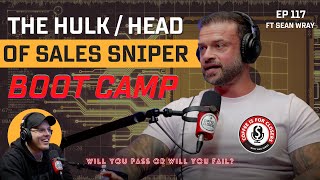
Matt Ryder and Sean from Sales Sniper discuss how to build and train sales teams that actually close deals. They cover recruiting the right reps, coaching them through objections, and fixing the lead generation problems that sink most teams.
What are we talking about?
Are we recording? The red light means it's off, right?
I think so. I have no idea.
Hey, guys. What's up? Matt here. Sorry if I sound crook. Today we're going to be talking about is with Sean now. Sean's our head of consulting. Also be running boot camping for other things. So if you're a salesperson who wants to get better at sales and kind of learn the way that Sean kind of did that thing, or if you're a business owner who's looking to kind of ramp your business up, we're going to be going into a bit of that as well. So. So make sure you stay the way to the end, like, and subscribe all that kind of good stuff and we'll get into it after the intro. If you listen to this podcast, you will make your first million within three years. We're here to make podcasts. You really want this? You listen and review. You here in Sydney?
I am. How.
How's it going?
Good.
Got in yesterday. 24 hour flight.
Yeah.
Straight in the office.
Beautiful.
Savage.
Savage.
All right, dude. So what do you. What do you do for us?
What don't I do?
Relentless sales beast.
Relentless. So I sit on the consultation side. So basically we work with businesses that are looking to essentially, you know, build out that marketing, sales process, sales kind of stuff, but also recruit sales reps. So we literally run the four week intensive into closing code, and then from there we just kind of bring in the best.
All right, sweet. And so when. How long have you been with Sniper Now?
When did I do one to one with you?
Oh, man, that was before we had the office. Yeah, yeah, that was in. I was in the O1. Yeah. Right. Okay. What made you do that?
You.
Oh, really?
Relentless in my dms. I got into closing code first.
Okay.
And then I followed you in closing code for ages. And then you hit me up and I think you called me at some point.
Sounds like me.
Yeah.
It was you.
Yeah.
When I've seen this. Yeah.
I would have picked my words when I signed up. Closing code. You DM me. And he said, I knew my milkshake would bring you to the yard or something like that.
Yeah.
So it was funny. But one of the things that resonated with me about you was because, like, the way I used to sell was very much like a boxing match. Like.
Yeah, yeah.
Described that before.
Right.
And so I wanted to keep that savage kind ofness.
Yeah.
And I resonate with you what you did and what you were doing. So closing code, first and then I think literally within about three weeks we would do one to one.
Yeah, perfect.
Yeah.
Entering one to one with you is actually really interesting because you asked extremely specific questions.
Yeah.
And I think we still like repurposed some of those.
Yeah, well, we started doing one to one. As I said, listen, I want to know, I want to know your thought process behind everything that you do.
Yeah, yeah.
Because if I understood the why, then the intention, the outcome was just like a matter of just semantics about words, but between the two. Yeah, but I needed to understand why. And so like for me, when I did one to one sessions, you, it was always about why do you say that? Like, where does that come from? Like explain that to me. It was the psychology behind it.
And that's super helpful.
Super helpful for me because I just understood.
No, it's really helpful for me though because like a lot of the things that I was doing, like, I was doing it, but I'd never really sat down and thought about some of the reasons behind so. Because like no one asks, you just kind of do stuff and you know, you're like, okay, you sort of think. But when you have a chance to kind of. That's why I think like what, coaching people makes you so much better at stuff.
Yeah.
Because you get a chance to like verbalize your own thought process in a way that you wouldn't normally do in a day to day environment. And then from there when you can verbalize it, then you can start to refine it a little bit because you're teaching it to people. So you always kind of do a better job of teaching it to others than what you would yourself.
You do get massively better by coaching. Massively better by coaching.
I think sales is one of the only things where that's a thing.
Yeah.
A lot of, a lot of times, you know, those who can't do coach, you know, but like it'd be hard to get better at Olympic lifting, teaching people how to do Olympic lifting. You know, like because of the physical nature of doing it yourself, you just need those reps. But I think sales is so academic.
Well, you see, you see like when I first kind of started following you, the, I suppose the migration of what you taught then and what you teach now, a lot of it has come through the coaching that you do.
Yeah.
And, and it kind of almost kind of like refining the process as you've been going along. But I think one of the things about, what resonate with, with you was the fact that you're still on the front line. Doing it. And a lot of coaches are not like, they're not selling. And so like I didn't get a lot of confidence from a lot of those kind of like gurus out there because they hadn't been on the phone in ages. And let's face it, you can always sell your own. Do you know what I mean? But you were still selling other people's stuff. And one of the things that, that for me it's not just about being taught, it's about being taught it from a person that's still doing it. And I think that was what really kind of made the difference for me with you is because it was like, yeah, this is what I'm still doing now.
Yeah.
And I'd rather be led rather than taught you what I mean.
Yeah.
So it's like that inspiration of like, that works. And so when I came into Sniper and you, you know, closing seven figure deals and stuff like that with the same process, it's like, you know, he's still using it, he's still doing it.
Yeah.
But that, like I said, like those, the word tracks that you've developed over the years has just gotten like this gets tighter every time.
Yeah, yeah.
And like that the process you teach all the guys and like within Sniper is just, it's so tight now that now the guys can, can really kind of take that and run with it because they, they now they understand it on a very, kind of like on a very deep level, not just like basic level. So now they've got that conversational flexibility where they can just go, okay, this is the intention, this is the outcome.
Yeah.
Matt's told me this is why I need to do it. And now they. There's the word track for it.
Yeah.
And I think with, with me kind of just watching the kind of the teaching that you've done and you still continue to do within the group, like everyone just gets better and better and better and better. And so you haven't just kind of just given people a portal and just got a see later. But it's been like a constant, constant like, like progression.
Yeah.
And that's why I, I kind of see our guys just getting better and better and better and better every single week, every single month, every single quarter is because, you know, you've spent a lot of time developing rather than just leaving the reps to it and just trying to get better through activity, which is great. But they still don't, you know, a lot of the kind of. And the reason why we have a lot of inquiries about businesses is because those reps don't get any better. Our reps keep on getting better and better.
Yeah.
Once. Once they get dotted in, it becomes a real snowball. And then like every now goes funny, like, because we sell for taste sweat. And they. I got a sort of like, I'm pretty open to doing training for the teams. Obviously I do my train that I do with everyone every, every week. But like I've now booked out. I've been working with Spencer to book out two time slots per week where there are two one hour spots. And it can be booked in for an individual or a team. And that can just be done at like Anthony. Like the CR level is like, okay, that team needs help like that. And then we'll just diagnose it and try and fix it. Because most things are pretty simple. But it was, I was able to like, okay, they're like a couple of guys are underperforming on the team. So I was like, give me the data, give me some calls. And I was like, this is nothing that's worth worrying about. Like you can just hear because the guys are actually really good. I came out of a training probably about two weeks ago and I was like, I think for the first time because I got a really high standard of what I think a good sales rep is. A good sales rep. For me to call someone good, they have to be very, very, very, very good. Right. And so I think I went for the first time in literally years. And this might hurt some people's feelings, but I was like, man, these guys are getting good.
Yeah.
I was listening to the role plays and I was like, okay, yeah. I'm starting to understand everyone's thought process and what they're doing and where they're going. And I can sort of see all the progression and then I can see all the conversion rates and all the commissions and sort of everyone getting better and better and better. And the people who show up to those trainings every single week, like there's a core group. Even though we have like 65 sales, there's a core group, 40 people that shop to every single one.
Yeah.
Or they watch it afterwards. And those people, like they've started, they.
Get really dialed in really quickly.
Yeah.
One of the things I noticed on recruitment side is the fact that, you know, you said it to me a long time ago when I started doing recruitment for Sniper, it was like, this is what I want and this is what I'm after. And it's, it's just a constant, I suppose, like we have that sniper standard that everyone's going to meet but board. It's always been culture first and then. I know. And I've always had the confidence that they'll learn the skills on the inside. Yeah, but I think you said it a couple of weeks ago so that you can't teach someone how to think. And so bringing them in, they've got to be of a certain standard before, you know, we can kind of bring them in for them to be successful. But they can be so successful so quickly. You look at some of the guys, they've gone from zero. I mean, you look at like Shane, for example, I come from zero in eight months to like really knock it.
Out of the park.
Yeah, yeah.
To being a killer in a very.
Short space of time.
Yeah, it really is a short space of time. I think that's why I try and do those like Q and A. We posted one up as a podcast a little while ago.
Helps massively.
There's a Q and A. I was like, you know, would you be happy? Like, let's just say Your goal was 50k a month, which is a lot of money. And I think people throw that number out. There's a lot of money, right. You know, and, and I was like, if you're able to get there in half the time. I did like, congratulations, man. Like you've got five years to do that, you know. And I remember like telling the story of when I was doing 100k a month. This is fucking nearly killed me, you know, because I wasn't selling really expensive shit.
So the low ticket stuff, Well, I.
Was doing, I was doing. It wasn't low ticket, it was like 30 grand. But I got a fixed commission, so I got a 1500 flat.
Oh, really?
Right. Yeah.
So I go, but I got it up front, right? So I got it. If I, if I did, if I sold it on a month to month payment plan, which is kind of a. Which was a bad way to do it because I would have sold way more paid.
I was going to say, yeah, yeah.
If I had a, if I had like a cash collection bonus or something like that. But then I was selling and I was selling inner circle. Yeah, but that was inner circle when it was brand new. But it was just the inner circle. That was it. And I think at the time it was like two training sessions a week in voxer. That's what it was. It's like quite rogue.
I remember hearing a few of those calls.
Yeah, yeah, it was quite rogue. I think Will Hingson was One of the first guys and Talis is one of the first guys. There's a corker. A lot of those dudes come in and we get a lot of our, our guys from inner circle.
Yeah.
Because I, because I do coaching in there still. And the only reason I do coaching in there, the only reason is because I get, I get to like first dips, pick and choose.
It's a great platform though, isn't it? Like having. Having exposure to those guys early on and just being able to assess them really quickly and go, okay, there's potential talent.
Yeah.
Well, there's a, there's a really. It's actually a real interesting argument between like, do you get people who are good or do you think you get people who you think can be good? Because it's actually quite difficult to tell because you can tell when someone's good. It's like, oh, they're good. And that's an easy one. But telling when people can be good is a more difficult one. And I think I can do that because I understand if I can understand the thought process of voice, like if I know where they're going. But their execution of it was just terrible. But it's like, but they're kind of edging down the right process. It's like, oh, yeah, that person's probably got a good intellect for this.
That's the thing though, in with those guys, like when you hit me up. So this, this guy or this girl be good. And I know very quickly you're coming at it from a. They could be great because you spend that bit of time with them, gone through that decision maker process and you know how they, they know how to think.
Yeah.
I think more importantly, you know that you've got the confidence to teach them the skills. And so it's like.
Yeah, it's a winner.
Exactly. It's a win. Like how you teach our guys, you know, fine. Well, like bringing in that right person that just maybe not has the right execution.
Yeah.
Can be, can be dealt with really quickly.
Yeah.
And you see them grow so fast.
Yeah.
And it's just like where did they come from? You know, the people.
It's the people who have like the, the right decision making ideas. The process and then, and then they have the, the work ethic to back it up with the guys who do really well. The people who I see who don't do well are people with natural talent and no work ethic.
It's so true though.
They just suck.
It is so true. Yeah, but you've said it before, like activity of a skill, like. Yeah, there's a bit of context to be kind of given to that. You know, you can't be complete, you know, numpty coming in. But I think from our perspective, we've always, we've always recruited people that are prepared to go the distance. And that comes from. It comes a lot from like your military background and your background in fitness sales, which is brutal. It's a great, a great way to start.
I almost want to do gym sales just so we can put people through it.
I think it should be a rite of passage. I mean, we had this conversation on closing code not so long ago, like, and I would love to get your, your context on this now actually, like, whether people should go straight into a closing role or they should start dm SDR role first.
Oh, SDR first.
Yeah.
You make way more money. If the thing is the, there's too much weight on a closer. Right. If we're talking about the coaching and consulting industry, which is predominantly where everybody's going to be from, there's too much weight on a, on a salesperson's shoulders.
Yeah.
Which means that like the, they'll never have enough time. So the thing you need. And I see people post all the time, you don't need to be a fucking this and that. It's like, all right, mate, like, show me your biggest commission check and I'll. And I'll debate you on this.
Yeah, exactly.
Because like, and people look at me as an example because I think like traffic and funnels and sales mentor. I was actually talking to Heather the other day because we just hired seventh level and she's like, yeah, I tried to recruit you for traffic funnels. I was like, yeah, I remember because I went into that competition, I won every, everything. Like, I won it every weekend that I was in it.
Yeah, yeah.
So people look at that and they go, oh, well, you got into the high sticking space and within two years you were killing it. Or within like six months it's like, yeah, yeah, but there was like 10 years of full time selling behind that. And so to be good because like I listen to most people in coaching and consulting and they're total trash. Like, they might even be doing fairly well, but like, most of them are so bad. And that's like, it's probably a fairly insulting and arrogant thing to say, but like, I've done so much more selling than most of the people that are in the industry because I sold full time 8 hours a day for 10 years before I ever even Knew that booked sales calls were a thing.
Yeah.
You know, and so I've taken more sales calls than most of those gurus combined. Not in the high ticket space, just sales calls. And all of those sales calls were. I got an Excel spreadsheet. Not a Google sheet, kids. An Excel spreadsheet emailed to me twice a day. Right. And then all I did and I had ridiculous KPIs of 50%. I had to sell 50% of the leads that I was given. So I was given 500 leads a month and I had to sell 250 of them. And I would do it, but I wouldn't get it from the leads. I would sell probably 180 from the leads and then I would do the rest. I'd do these huge referral drives end of each month and that's how I would get. And I have the ability to like discount, to do last minute discounts and that's. And I would get two for ones. And I do that kind of stuff to get my number because it wasn't about revenue generated, it was about the number of sales that I got. So I had the option to be like, hey, if you bring your husband, he gets it for 50 bucks instead of 197. Stuff like that.
But that level, that level of activity though, you don't, you don't see too much now.
No.
I mean you might do in the.
Gym space, but then like it's, it's, it's. And we, we've had this conversation before and I think it's, it's, it's. A lot of our top guys have come from either fitness sales.
Yeah.
Or had some kind of outbound background where they, they know how to put the activity in.
Yeah.
And what I'm finding right now in the recruitment is not a lot of people come from that space. And so when you, when you put those people side by side, the people that are just generating that volume of activity.
Yeah.
They just know how to self gen. Yeah. And they know how to put numbers on the board.
Look at like Will Odoms, right? This is fucking savage. Savage. Like he got, he made listen, like seven sales last week and he only had two booked calls.
Two book calls.
Yeah.
Right. He was like, well, I haven't got any book calls. I guess I'll just go out there and make shit happen. And even one of those book calls, he's, he farmed the guy and he's turned it in. He just sold a guy that he, that he first had a triage one year and eight Months ago. He's been farming him for a year and eight months. And then another guy, he's been farming for eight months. He's gonna pay 25k tomorrow. And then he's got 125 person B2B deal that. I just went over a war game to the presentation with him this morning. And like all that stuff is like a lot of it's self generated just from like farming and referrals and all that kind of stuff. And he's like a super consistent sort of 30 to 40k a month guy. Really, really consistent regardless of whether there's leads or not. But he just has his process and he just goes for it and you know, but he's been doing sales and taking it really seriously for a long time. He's developed all of his systems and structures and I think guys like that are consistently good and like you can have huge months as a closer without doing that stuff. But it's just they're few and far between because there's not many businesses out there that can provide consistently generation for long periods of time.
No way.
They just don't exist. And even the ones that we do the marketing for, it hasn't happened yet, but it will. Like one of those channels would go down 100. You know, like we had a up the other day, you know, our ad account got temporary disabled like because of a up that wasn't even to do with us. Anyway, it's all fixed now. But like, and then so we're war gamer. Like all right, cool. Like what are other channels? What are our organic methods? And you're like, yeah, we'll just go ham on the outbound because we got leads and all.
That was it. Like when that happened, you didn't panic because we knew that our guys would just default back to what they always do.
Yeah.
Which is just get the activity done and smash people around a bit. Yeah, they, they're always, they're, they're trained that way, you know, and it's like, how is it, how as a closer are you not able to, to do that level of activity to keep your head above water so that you can provide for your family, make the sales you want to make.
The thing though, what I don't understand is how do you learn under the environment where like it caught like because let's say the average sales call costs 250, right. And like if you're selling a 10k plus program, like that's. I think that's pretty good. Marco might say, well, fuck, we pay 100 but anyway, like, because I know, I know we pay 21 a booked call at seventh level, which is crazy cheap. I remember Marco's doing the marketing. So it's all there. Right. And then, you know, but from that, a sales call might cost, let's say 60. Right. But let's just say it's 200 bucks or whatever. And if you're closing at 20%, that means it's a thousand dollars in ad spend just to make that sale. You're selling a $5,000 program. I don't think 200 bucks for book call would be unreasonable for $500,000. $5,000 program and then you have the audacity of asking for 20% and you're just a closer.
Right.
So now it's $2,000.
Right.
For that person to make 5,000 before tax, before delivery.
Yep.
So, like, there's no money in it?
No.
So you, you like, I'll fall, fire that closer for closing at 20% like that. Yeah, but it's reasonable for them to close at 20% in the very beginning, especially if they, you know, they're not. So to me, it's like if I came in and I was a closer, now I would not want a book call for three months. No, I would say don't give me any book calls because I need at least a month to figure this out. Like, I don't personally anymore need any time to figure an offer out because I think all offers are the exact same. But if I was, I'd be like, hey, just give me like, just do a lead magnet funnel and I'll just do my own pipelining. That way it's, you know, it's only going to cost you three or four bucks a phone number. You know, it's going to cost you 50 bucks a book call instead of, you know, 200. And then I can just create activity and I have a giant row ass on me as a person. And then I can cut my teeth on cheap leads. Because that's what you want. You want, you want to be able to cut your teeth on cheap leads. If I'm cutting my teeth on a 400 sales call, fuck me, man. Like, the amount of pressure that you're under to close that is immense. You just can't do it. And so that's why I think there's always high turnover. People are, you know, I think businesses have unrealistic expectations as to how long it takes a person to spin up, but I don't think they have the proper processes to be able to do so.
Absolutely not. Absolutely not.
And it's just a big giant lose, lose.
And having conversations, both business owners and reps, it's always this kind of like question about who takes the bigger risk, you know, the business owner or the sales rep by coming in. And it's really interesting because most businesses that I personally speak to don't have the right process in place. And so what they're doing is they kind of. They're bringing someone in a complete unknown. Unknown with no proven track record.
Yeah.
And spending a ton of money on a complete entity. You might as well just say there's cash burning through because they don't know how to. How to build a rep up.
Yeah.
And it's.
It.
It blows my mind how much money companies are spending on ad spends, bro.
It's crazy.
On. On complete. I mean, I'm not going to say every rep is garbage, but on reps that are just not proven reps to. Haven't got any good KPI track record, not trained properly, don't have any processes.
Yeah.
It's just the bomb on a seat.
But even so, like, how can you tell if that person's any good?
No.
Like when all you're doing, like, you've got no lead quality, you don't really know, like if you're. If your marketing guys are telling your leads are awesome, like, whatever. So like we came onto an account. They're a big account, the one that Shane's on. And the marketing was a shit show. But anyway, I was like, hey guys, like, while you figure this out, just get a lead magnet out there. And they're like, why? This is a big marketing company that they're working with. They're like, why? I was like, well, you guys are shit in the bed when it comes to book calls. But I was like, I get it. It's hard. Takes a while. I get that. Just get us just like a value lead magnet. Get us phone numbers. And I go, my guys will just start out building and we'll just start making sales. You can get late phone numbers for nothing.
Exactly.
And they were just baffled at the idea. And I was like, you have a new sales team coming on. That should be the way that. Hey, man, we're going to. You guys are a new sales team. We'll just get you a shitload of phone numbers for the first two months while you guys figure it out. And then we'll do the book of call in the background and we'll start dialing that up. As your guys's close rate increases, it makes Perfect. Perfect sense, which is what we do when we do both. You know, it's just. There seems to just. I don't know, man. I don't know what it is. People just. There's a lack of common sense out there. If you have new reps, people, if you're a new rep or if you have new reps, just get a lead magnet going and get them to start outbound dialing. Like, it's. It's the easiest way because you can up and there's no real down.
There's no real damage. There's no real damage. And it's. It's. It's just blows my mind how people. How business owners just take that much risk straight away.
Yeah.
But also reps taking that much risk straight away. You know, if you haven't had, like, a decent background to you, that's a lot of pressure going into an account like selling a $10,000 package and you don't have the. You don't have the.
The.
I suppose that confidence going in.
Yeah.
Like, one of the things that, you know, when I first did one to one with you, it was like, I can go into any offer and close it. And it's not arrogance, it's confidence in the skill set you have.
Yeah.
To get the result. But for someone that's fairly new, like, zero to one years, even zero to two years. To be fair, if you haven't had that right exposure, you haven't had that right level of, like, training or coaching or whatever going in, you're coming into so much pressure.
Yeah.
And it's. And I. It's just. For me, it's a massive risk.
Yeah.
Huge risk.
Also if you have to adopt their sales process and style. Like, that's why, like, it's. It's kind of crazy to me that, like, people mandate a way of selling.
Yeah.
Like. Like we write the scripts, and I recommend that people. But like, if someone came in like, you know, Ben, we just onboarded like that. If he comes in, has his own style and knocks out of the park, what do I give a fuck? But, like, I know of people who, like, for example, one of the sales guys that I coached myself, he was closing at 60% using the script that I gave him. The business owner then was like, no, you can't use that script. It went down to like, 25% like that. And then they put him on fucking management. They put him on performance management and ended up getting rid of him because his performance was there. He's like, but I was closing at 60% with my script, you can't use that one. You have to use ours. Like, man, are you so arrogant.
Yeah.
That you're gonna make someone use your script which doesn't work anywhere near as well, at least for that individual. Because everyone can sell in different ways. But, like, for that individual, that script was killing it. Just take the money, bro.
But isn't it weird, though, how many. How many reps that we've trained? I mean, if you look at thousands of them.
Right.
How many reps we've trained where the business owner has said, don't use that even though it's outperformed. So their sales process. I don't get it.
I don't get it either. Because if someone comes in, they're like full, like, going crazy, like, say weird stuff, but it's working. I'll be like, hey, bro, don't. Like, for example, Will doesn't use. Really doesn't use any pq. He does, but he doesn't. Like, he has his own style. And I'm like, I'm not going to change it. I'll just give you the feedback on what you're doing.
Exactly.
In terms of, like, my perspective on things. But, like, I'm not going to change the way you sell. Like, you sell really effectively.
Yeah.
Like, I'm not so arrogant that I think everyone. My way.
Exactly.
Right.
You know, I'm pretty arrogant, but I'm not that.
But yeah, honestly, his, his style, he blows my mind with how he speaks and the way he thinks about things.
Oh, it's a beautiful mindset thing.
But you wouldn't take it away from, would you?
Just.
Just because you were that arrogant, you'd say it's either that or nothing. But so many business owners, like, you're not letting the reps just kind of sell the way that they need to sell.
Yeah.
To make them more confident with the process. And it's like, why would you just kind of burn money just because your ego gets in the way?
Yeah.
You know, but you, you are, you.
You do see a lot more of the frontline. Because I don't really speak to the, the business owners. I, I don't even know most of our clients anymore. But, like, you're on the front line of getting a lot of these people in there and selling them a lot of consulting offers that we have and stuff like that. What do you see as, I guess, the biggest things that they're lacking within their business that's causing them preventing them from making sales consistently and scaling up.
Honestly, it's like systems and processes.
Yeah.
Like, seriously, we. You speak a lot about this, like data driven decisions. And so a lot of the business owners we speak to. Good at marketing. Yeah, Good, but not great. You probably have one marketing channel, maybe definitely not two, which is a massive problem. All your eggs in one basket. And they, they don't have any systems. Like sales process system.
Yes.
Like the automation, the bookings, all that kind of stuff. The CRM's all over the place.
Okay.
You know, they've done like, you know, basic cut and paste kind of stuff. And then the scripts, they use a very cut and paste kind of scripts.
Yeah.
They haven't. A lot of the business owners you speak to haven't even sold their own offer.
Okay.
Which is.
That's interesting problem.
And they're bringing in, they want to bring in reps as I suppose. As I suppose like a, A plaster over a wound.
Yeah.
They haven't been able to sell their own stuff, but so they want to bring reps into.
It's almost like a solution to the problem they don't actually have. Like, the problem is they want more sales. I think they need sales people to do that.
Exactly.
Right.
So like those kind of businesses, they got one marketing channel, very little sales systems, and the owner hasn't sold themselves. I'll be like, no, you know.
Yeah, right.
Because you haven't, you haven't proven anything yet. You're not at a stage where that's a viable business to get into.
Yeah.
And so there's a lot missing with a lot of the businesses that come in. They literally just want to take on a rep too soon.
Okay.
And just hope that they can make their marketing work because they haven't improved it themselves.
Yeah.
So, yeah, it's a lot of the, A lot of the businesses are just too early. Like way too early. A lot of them.
Do you think it's from a revenue standpoint or just like, they're just, they're just not ready for a rep? Like, like, like. So, like what do you think? Because you place reps and help it, you know, whatever, all that kind of stuff. Like, what do you want to see from a business to be like, you are ready for a sales rep? Because I think we all use the same line. I got to look at this person in the eye. This is a good move for you and your family.
100%.
So what assurances do we have that we're not lying to these people?
Exactly. And I'll always place it like that because I got that from you and it's like, how can we best protect you, the business owner, and obviously our reps at the same time? For me, you've got to have at least two marketing channels minimum. Not only based in one basket. You've got to have assets that we can do outbound activity on. Must be. You have to have, you know, some decent processes in place. I mean, we can fix that. It's not a problem from a sales perspective. I want to see that it's been sold, it can be sold, and it in. There is a prospect of it being able to scale.
Yeah.
And I want to know that the business owner has actually sold it themselves. Like, okay, that gives me more confidence because I think that when you're dealing with businesses that come in and they just expect to close it, having never closed it before.
Yeah.
They have no idea what that conversation is or what it looks like or how. How it even should flow. And so for me, the marketing is the most important piece. If they can put 15 to 20 book calls per rep, you know, on their calendar per week. Yeah, it gives me confidence. But I still need to know that there's a decent level of conversion there in the first place for us to come into. Because otherwise you do not have a proven system. You do not have a proven process, and, you know, you. You can't fix something that's completely broken.
Yeah.
You know, but on the other side of the fence, you know, there's the whole kind of consultation piece that we do with you, Matt and Marco, where we can just literally take care of all that. But you've got to be open to the prospect of kind of coming in and having experts work with you to be able to do that, because otherwise, like, your business is just going to get nowhere real quick.
I think one of the problems that I've seen that we've identified at Sales Sniper specifically is that a lot of time we come into an offer either one, because no one else has been able to sell it.
No one has been selling.
Right. That's. That's the most common. But two, they've stopped marketing because they've done a sales team.
Don't have sales team.
So they've either fired everyone or they've worked with a different agency or hasn't worked or whatever. And that process of chin, chin, chin, chin, chunk, putting that diesel massive machine back up. Like, if ads are off, like recommendation out there, if you don't have a sales team, don't turn off your ads, just turn the budget down. Like, just don't turn them off because it can take three or four months. Like, we've come into clients before and they've been like, Yeah, I get 100 book calls a week. And then it's like, okay, well, you had that four weeks ago. Fantastic. Turn the ads back on. Nothing.
Nothing.
Nothing at all. And it's like, what the fuck, guys? It's just dead.
There's no amount of CPR is going to stop that one.
Yeah.
And it plays such a massive role. And, like, unless you have phenomenal media buyers, which there's not many out there, we're lucky. We have some really, really talented media buyers that work for us. And so we've been able to kind of, you know, work with them. But also one of the. One of the advantages. The accounts are redo the sales and the marketing. The advantage is we can go, okay, no book calls, just phone numbers.
Yeah.
And then we can go, okay, let's just do leakage. We can use those assets that you were talking about. We can go, all right, well, let's just use this. This is a strategy for this account for a little while. It's like, okay, let's start a Facebook group up. Because leads, ads to a Facebook group are relatively simple to set up. Like, what else do we have going so we can sort of create a comprehensive marketing plan, not just relying on a vsl.
Yeah.
One of the craziest things is, like, you know, that people are just relying on one marketing channel.
Honestly, it's crazy. Crazy. Like, you know, Mark Zuckerberg, shut the bed tomorrow. Like, your business is dead.
It's done.
It's over.
It's over.
And I think we have so easy to get your account disabled or banned or, you know, like, especially if you don't. Especially if you have an external marketing agency and they, like. One of the big red flags whenever we go speak to someone is like, what marketing agency are you working with? Right. And then speak to them. And what we now do is we inspect the ad accounts.
Yep.
So we have to. We have Marco and our media buying teams, but ad accounts. And we've had clients where it's like, oh, this is gonna be amazing. They're like, no, I can't do it. It's like, why? Because, like, because their ad accounts are basically banned from every single platform. They'll never be able to run successful advertising for more than a couple weeks at a time.
Exactly.
And it's just these dodgy marketers just opening up more business managers and more of that. And it's like, Facebook's recognition is so good that it recognizes, like, just the face in the ad.
Yeah.
So if that. If that person is in the ad, even if they're in the background. So you'd have to hire a fucking actor.
Yeah. And then.
Yeah, like, literally to do your ads for you. And then from there, like, the domain can't be linked to you, the ad account can't be linked to, compuled to your IP address, your family, anyone, like, anyone. So then you've got to, like, go up to people. I know of people who, like, go up to people on the fucking street and they, like, pay them to allow them to use their Facebook because, like, they've had a Facebook account for 10 years and now they turn into an ad account.
Exactly.
It's like, that is the dodgiest practice. And any of your marketers out there that are telling you that they'll get you verified, business managers and shit, they're charlatans who are just gonna ruin it. We were on an account recently, and this guy, man, and the chick whose ad account it was, she's, like, really well known. Oh, yeah, right. And like, she'll never be able to successfully advertise on Facebook ever again because of the damage this gu did. And it's a real shame because she's actually really good at what she does, but she just. She let some rando into the back of her ad account. He uploaded a bunch of dirty data, and that's what it is. They upload shitty data that hasn't been vetted properly, and so they take the data from all their clients, which is a dodgy practice anyway, and then they upload it, but they upload it incorrectly, and then it just. Immediate shutdown. So if that data has any metadata from Facebook in it, it's. You're cooked.
But the thing is, though, and I think this kind of leads to a good point, like these, like, business owners making decisions like that, you know, are you in the best place to make a decision to choose who. Because you're marketing advertising for you, if you're not an expert in it, then, you know, how can you make that decision?
There's a tough one. There's just not many that. There's just not many agencies out there that I think are that good. And the thing is, like, you say, oh, we'll bring it in house, which we managed to, but we only managed to because we make a shitload of money.
Oh, we had to as well. Like, yeah, we got fed up of just dealing with the same problem, and it was the same problem every single time.
Yeah.
Like your marketing's.
Yeah.
Like, yeah, we need to fix it. And it's. It doesn't matter how good the salesforce is that you're bringing in.
Yeah.
If you haven't got that front end piece, it doesn't matter how good we are. Like, we're always going to be at the behest of the marketing.
Yeah.
So really, we were kind of forced into it.
Yeah. And like, there have been accounts where I was like, I think that might have been us or. But we were always able to kind of address issues and kind of. We have enough reps, we can move around or we can usually fix problems.
Yeah.
And we can go, hey, that was us. Like this. They're not scratched. Like, we're going to fix that and stuff like that. But one of the most annoying things is, like when you just have just, you know, this is the constant argument, like sales and marketing and all this kind of stuff.
It's always a battle, right?
Yeah.
And we always have data, so we're always pretty good.
Yeah.
We can always go, hey, this is the data. This is what we're seeing. And we're pretty. Like, we're lucky with the guys who are client facing, like you and Will and me and Marco and Jeff, like, we're all pretty good at holding our own and creating an argument. So, like, hang on, champ. You know, like, it's not going to work that way. But, you know, dealing with good marketing companies is really difficult in the same way that, like, I'm just. I'm sure there are some fantastic marketing companies out there that are just fed up with shitty sales agencies because a lot of the accounts that we get, we get them after you. I don't even know what they're called. I think it's like consortium or something. I'm sure they're good at what they do. I don't really know anything about them, but I know like four or five of the accounts, big accounts that we have were with them beforehand. Again, I know nothing about them. I just know the name.
Exactly.
Yeah.
I literally, I know nothing. I don't know who runs it, who they are. But that's, that's the name that I think has popped up a few times. But, like, to be fair, those accounts are really hard to fix.
They're not impossible to fix.
Like, we had to throw the kitchen sink at some of those. Like one of the accounts that we just took over the marketing, we've been selling them for two years and they've gone through like five agencies and we've always managed to kind of make it work, but it's a really difficult thing to sell. And the marketing agencies just haven't had enough. And the only reason is because we've been selling it for two years now, we kind of know what has to happen. And now that we have the, the facilities to be able to do it now we've taken over the marketing. But kind of going back to that, like, I feel sorry for a lot of business owners because like, I think a lot of them want to take it in house. And I think having in house marketing is good. Anyone over eight figures, basically everything becomes in house. Like it's very difficult to hold an eight figure business as an agency. Like, it's just like they're just gonna do it in house. Like. And I've done the same thing. As soon as we got up to eight figures, I was like, that's all my. I can just hire people and save money. But like media buyers are very hard to find. Somebody places the ad. So like the people in Facebook clicking the buttons and putting it. And the real problem with the marketing industry is you've had this like cottaging right back when I first was doing. Because I do all the marketing for my gyms for a while I used to write the copy, do the landing pages and optimize press, right? I even made a membership membership site and optimized press once. And then I do them on funnels and I do my own copywriting, do my own landing pages, do everything and then I do the sales. And it was a pretty simple process. Like getting something up on Facebook was pretty simple. And then you could edit in, in the ad. So like I would crazy towns. Anything less than a 10 click through rate, I would edit. Whereas now if you got like a 2%, you'd be killing it. 10% was the number that I used to go for. And so I had like my little metrics and then I figured out what things like the headline and the photo or the video, like that was the click through rate. And then it was like how many people stayed on the post. Like if people stayed on the post for a long time and click through like that was the copy, the cta. And then I could kind of break things down, I think. So I could make all the adjustments. But it was a relatively simple process and your targeting was pretty simple. But Facebook, as it becomes better, has become more and more and more and more complicated. But and also then the funnels because, you know, like people get numb to advertising. So it gets harder and Harder and harder and harder to advertise. You know, so what I used to do, what used to take me six or seven hours a week as one guy, now takes five people 20 hours a week. So now you've got media buyers which are like, they're just placing the ads, but they're not accountable for the end result because all they're doing is placing the advertisement, right? So then you've got the people who make the ad creative, and then you've got the copywriters who do the ad creative. And then you've got the strategist over here telling the creative guys to make the creator. Then you got the ad copy. Then you've got that. They media buy that and they send it to a funnel, and the funnel builder builds the funnel, right? And then so you go, okay, so hey, your funnels not converting. They go knock as the media buyer. Shit, they're not putting in front of the right people. And you're like, okay, well, the media buyers fault. They go, now the ad creatives, garbage.
Yeah, you get stuck in the cycle.
And so you just get stuck in this cycle of who's to blame. And then everyone just blames the sales team, right?
It's the easiest option, right? It's blame sales.
And so that was a really frustrating process that really came to a head. And one of the reasons why we started Sniper Media was because at seventh level, which obviously we own, like, I was fucking sick of dealing with agencies, man. Because, like, we'd hired three marketing agencies. They're all garbage. All of our stuff, all of our money came from the Facebook group exclusively. Marco was running that based off the SOPs that I created when I was doing it myself. And he turned into a much better. A much better thing. And so we were like, well, we're making 3 or 400k a month from a Facebook group. And then we're like, fuck. And I was like, marco, you have to figure out paid ads. I was like, you have to figure it out. I was like. He was like, no. Sales was like, no, you're not sales anymore. You're an marketing guy. Fucking go.
Go.
Learn everything you can. So anyway, like. And it came to a head because I had this guy, and he wanted to charge me $50,000 to do a VSL. And I was like, all right, what do I get for 50 grand? And he's like, I'll make the VSO for it. And he's like, but I always stick around until you get a three times for an ad spend. I was like, school Three times roi. That makes sense. Like, I'd be happy to pay that 50 grand, get 150 back, you know? Anyway, he sends me the contract. There's no ROI in there. I'm like, oh, hey, man, like you'd said on the phone, this is what you do. He's like, I know. I can't. I can't guarantee that. I was like, what am I just saying, first of all, right? And then he was like, oh, but what if you're. He goes, what if your media buying isn't good? I go, what if your VSO shit, right? And then he goes, yeah. And like, I know, yeah, but like, what if your fun if your funnel isn't built probably. I go, yeah, what if your VIA sell?
Shit, yeah.
You know? I was like. I was like, there's no accountability here, man. Like, you want to pay you 50 grand to just make a video?
Make a video.
Like, dude, I can make a video.
Yeah.
You know, Like, I can make good videos and make them all the time.
An iPhone.
I'm good.
You know, fucking. We go 50 grams right here. So that was when I was just fed up with it. And I was like, oh, I see what's happening. And like, as it gets more complex, you get this sort of like cottaging, right? We're just like, it. We just need to take everything in house. And then I just cracked the. So then we just went on a. And a recruiting bonanza, trying to find the best people.
It made perfect sense. But then, like, you bring up a good point. Like, you have to feel for business owners these days because it's tough. They just get stuck in this endless, like, it's their fault, it's their fault, it's their fault stuff, and no one takes responsibility for anything.
Yeah.
But the one thing I kind of noticed when. When I first came into sniper was that extreme ownership. It's like we'd always blame ourselves first before we would ever escalate that up the chain back to the business owner. But the one thing you instilled in everyone is like, data driven. Everything we do is data driven. So we always have the metrics and the KPIs to just say, this is what it is, but there's no extra. It seems like a lot of the time, like, when we deal with businesses or when we do with marketing, there's no extreme ownership there anymore. It's just this, you know, I'm just gonna blame someone else because I. I've got no real kind of confidence in what I do. Yeah, I've not. I haven't got the ability to back up what I'm saying. And there's just business owners, they just get sucked in. A lot of the businesses that I speak to have been through that cycle of just being ripped off, you know, and it's like. And they're looking for guarantees upon guarantees upon guarantees because they've been mugged off five or six times before that and.
Chances are half the time it's their fault because they haven't provided the, the marketing company. Like, if you don't provide a marketing company with a mandate, these are. People don't understand. Like, when you, when you get an agency, like, what you should do is you should give them an agency briefing. And so I've never received one.
No, right.
Never. We are an agency, but I've given them. And so we give an agency briefing, which is, this is what we want from this relationship. This is the success metrics that we are going to be going after. And this is what I need in terms of reporting and outcomes. And you go, hey, man, perfect. I can deal with that. Because someone comes to me like, hey, I want a 60% closer. I'd say, hey, it's unrealistic, bro. Like, it's not going to happen. And then I could temper their expectations.
Yeah.
You know, so like when I get an agency on board, like we give them an agency briefing and they have KPIs and they have a tracker they have to fill out every week and all the agencies can see all the KPIs and everyone has to fill out the one tracker. Yeah, right. So they're all seeing all the other agencies kind of do the right thing. And if someone doesn't do it, I'm like, hey man, you haven't filled out your tracker. If you don't, you're not going to get paid because I write into the contract, you have to fill out your KPI tracker or you will not get paid. And so, like, I'd be happy to be held accountable to that. It's fine. But that's why, like, agencies, when they come and work for us, it's like, dude, you, you better do what you say.
Exactly right.
You know?
Exactly right. And then that, that makes them far more communicative with us.
Yeah.
Because they know they're being held accountable.
Exactly.
It's like, hey man, here you go. And so I think a lot of the time, like, for example, if you don't provide your marketing agency with a brand guide, you know, you're really like, they're pissing Against a hurricane, in my opinion. And so what we do, when we sign someone up for marketing, for done for you marketing, we go, give us your brand guide. They go, we don't have one. We go, okay, we'll make one for you.
Yeah.
And we just, for free, make them a brand guide. And that takes like 10 hours. Like, and a lot of people charge about $27,000. I know. Because I just got quoted $27,000 for a brand guide for scope.
Yeah.
Right. And I was like, I will just fucking do it ourselves, because you gotta do it anyway. But, like, it's a significant thing. And I don't think people give enough information to the marketing companies to have them be successful. And the marketing companies come in, they're just like, yeah, we'll just fucking slam book a call funnels, because that's what they think is gonna get them the best cpa. But, like, they're not. They don't understand sales process well enough to be able to. To go, okay. Like, they're just looking. They're going to be held accountable to very specific metrics that don't really matter at the end result. So it's like, you know, so that. That's why, like, when we. I think, like, the new messaging that we're doing at Sniper is like, we'll be the one asked to kick.
Yep.
It's marketing and sales. We'll do the whole thing. And I specifically. There's probably a fucking podcast out there where I specifically said I would never do this.
I think there is.
Yeah.
Because it's a. It seemed to me like a terrible.
Idea at the time.
Yeah.
I was like, but. But it's sort of like now it's come to the point where like, well, fuck, Every account that we do this on is killing it.
Yep.
Because we have our sales guys there.
Yep.
So we have to look our sales guys in the eye and go, yeah, we fucked this one up. Like, it was fucking brilliant. The other day. We have an account, Shopanova.
Yeah.
And we're doing the sales and the marketing. It's all brand new. It's all spinning up. And then the sales guy was like, these leads aren't very good. And Marco, typical of me guys are awesome. You know, typical, like, marketing guy. Straight away.
Yeah.
And then he listened to a few sales calls and he goes, those leads aren't good.
It takes a big, big boy.
Yeah. But it also, like, I can't think of any other marketing guy on the planet that has enough knowledge about sales to listen to a sales call. And go, oh, those aren't the right people.
But isn't that the thing though? Like. And the thing I love about what we do is the fact that you've done marketing before and you've done sales. Marco's done sales and marketing. And so we understand that process from front to back.
Yeah.
Inside out, back to front. And so we know how the two gel together. Yeah, but like you said, if you're decompartmentalizing your marketing and you know, and your sales, then there's always going to be conflict there.
Yeah, always.
So you gotta be on the same team. Yeah, it's really difficult. We work with a few marketing companies where we're on the same team. Most of the time it's just like a battle, you know, And a lot of time it's like us going, give us more, please. Yeah, like we need more, like please sort it out. And the big ones are really hard to deal with because they just don't give a. Or if they're, if they're like doing more branding efforts versus conversion efforts. And it's a whole show half the time. But like we make it work for a lot of our clients. But that's why we are moving to that model where it's like basically like we just, we'll just do everything.
But we've been forced to though, right? Yeah, let's face it. Because there's a lot of dog out there that's been.
Yeah.
You know, just people have been like a three day weekend and all of a sudden they're a marketing genius.
Right.
And so they, they, you know, I don't know how the, how they managed to do it, but they sell these business owners bless them and they fuck it up. And it's just like we're almost kind of like mopping up quite a lot of the, the tragedy and the chaos that has come before us.
Yeah.
And so of course a lot of the businesses that I speak to are very shy and very tentative because they've just been through it so many times, been promised the earth and just delivered to nothing.
Yeah.
And so I think for us it's just, it's just been a natural progression for us just to be able to just do it all and have that business owner just deal with like one person, just one entity. I mean like, yeah, thank God for that.
Yeah.
And they've got to be like, you can, if you're doing the sales, like that's where the majority of the money should come from. Like if we charge say 12,000 bucks a month into Your ads. But like, then we're getting our commissions. Like the commission should make up 90% of what we earn easy, you know, and so like, yes, we, we have fixed costs to pay, but we're not really making a lot of money in that. 12, to be perfectly honest. Like, our cost of delivering this. I know that to be true is fairly high. So it's like we're sort of counting on like. Yes. Making a small profit off that.
Like.
But it is very small. But then like we want to. It's. Then it's. The core mandate is to then create more leads, to create more money for the sales side and then that's how we get our revenue because.
Exactly.
Right.
You know, 85 of our total revenue is from commissions.
Commissions, exactly.
So. So it's like that's what we have.
We're still betting on ourselves, right? Yeah, we're still betting on ourselves.
It is.
But it's a weird space at the moment. Like there's just. So I don't know what will happen over the next little bit. Like, I have a feeling like the done with you a lot of done with you stuff is going to fall off when it comes to like marketing especially. And I think that like probably recruitment of like those niche positions will become a much bigger thing. Like a lot of the done with you marketing companies. I think what they'll do is they'll probably move into training and placement.
Yeah.
To then have internal. And then it'll be done for you or sort of do it yourself. Like there won't. I don't know. There's obviously still be marketing companies that do coaching, but I think for that side of things, it's gonna done with you is going to be hard to pull off.
No.
Especially with the rise of like, if there's any decent agencies out there.
Yeah. And you know, the whole done for you sales space as well. I think a lot of business owners now, they just don't want to deal with that. They just, I mean, if you think about the work that goes into a sales team, it's unbelievable.
Yeah.
Bearing in mind how many accounts we have. But it's sometimes it feels like, you know, I mean, like a tsunami of stuff going on. But you've got, you know, so much to do and. But it doesn't just stop when you've got a script and you've got, you know, guys and girls taking calls. It's a constant process of analysis and listening to calls and reviewing processes and reviewing scripts.
Yeah.
Because things change all the time.
Yeah.
Marketing changes. It has to have an effect on sales.
Trying to replicate what we do for reps is be difficult.
It's not impossible.
Yeah.
Because this is what we do. Only thing.
It's the only thing we do, you know. But I, a lot of business owners, for me, they struggle with it. It seems easy from the outside looking in. But you know, the reason why the people that we do this for are so happy is because no one realizes how much work that actually takes until it's done.
Yeah.
And it takes a truckload of logistics and people and processes and systems and just a weekly review of everything. Always.
And then we have a daily review of data.
Yeah.
And then you've got to go, okay, there's the data. Now I need to look at it. What's going on? How can I, how can I adapt? How I can do that?
Yeah.
Do I need to more do more training? Do I need to adapt this? Do we need to adapt that? And you can only do that.
Running a sales team is a full time job.
Full time job.
So like unless you want to employ a sales manager, which case like the mistake that most companies make is they get their best sales guy and they make them a sales manager.
Let's talk about that actually because that's a really interesting type of conversation.
We made that mistake.
Yeah.
You know, I think like taking your highest performing salespeople made them. It's just not a good idea and it's a terrible like when you think about it, like when you actually say it out loud you're like, yeah, that's obvious. But most people just take their highest performers and it's like that's not really where you want them to go. I think like you have to have the conversation with your highest performers and if they, if they want to get into management, all that kind of stuff. But I would rather put my highest performer into like a CRO position, you know what I mean? To sort of help help that way rather than put them into a sales.
Like does a top performing sales rep make a good manager?
No. No. You know, especially if they're like more of a lone wolf, unicorn style person. They're just a fucking killer.
Yeah.
Like you don't want that person touching your team because they'll just get, give them all bad habits and it'll go backwards. But also you'll see by taking your top rep like the 8020 rule is always like 20 of your reps, 80% of your revenue. That's kind of how it works. And a good sales manager will is focusing on the Bottom.
Yep.
You know, and trying to kind of build everybody up. But management is such a different thing than being good at something. And I think like I don't even know how to find a good sales manager to be honest, because it's like it's a very, it's a personality thing. It's. Are they good at training, are they compassionate, are they motivating? Or they have to be somewhat good at sales because they have to be able to problem solve things. But taking your best guy and making them your sales manager is just, you're just going to see an immediate decrease in revenue because you're taking your best guy off the floor.
Yeah.
When we typically work with businesses though, it's like what we found is appointing a tl.
Yeah.
And then having a team to essentially like a C suite team essentially just to kind of do that management bit is much better because you've got so many different dynamics and complexities. To have a look at the team.
Leader way is a much better way of doing it.
Much better way of doing it. I mean if you look at the accounts that we do that on, all of them like the way we used to do it compared to the way we do it now is just so much slicker.
Yeah.
And then they get an override and so their, their incentive they have to keep selling.
Exactly.
They get an override in exchange for that. Like they, you know, and the way we do it with the two SE is they get diary priority. So no, they will have to keep selling.
Yeah.
But it's like they're incentivized to bring up the bottom because then they get an override of the whole thing. It's really interesting like the difference between like recruitment in like normal world versus recruitment in like the military is recruitment in normal world picks from the top and recruitment in military it removes the bottom.
Right.
Which is the best way to get the highest average standard. So like what we do here is like we don't necessarily just cherry pick the top, we bring in a lot of people and then we through a board of studies you just remove the bottom. So like you should get a large group of people at the end that are all at a good standard because you don't need like the tippity top guys. Like you know there are some of them that would work out in like an agency type model but like a lot of them like they're real, real, real high perform. Like if they're born into the culture they'll be fine. But like those typity top like 0.5% sales reps, like, they kind of want to do their own thing half the time. Like, they're. A lot of them are unicorns, and they just kind of in work for three months, make 100 grand, and then off and then go back out and come back in and do that kind of stuff. Like, I know those guys, and that's fine. But, like, what we want is, we want a high standard across a lot of different people, not just like four or five high performers.
Exactly.
And so we actually have a fairly. It's a. It's still, like, there's still a concentration of money at the top in terms of, like, individual earners, but, like, it's a. It's a fairly. It's somewhat flattened.
It is.
Especially recently, like, it's not a big pyramid. It's kind of, you know, it's a little bit like that.
Right.
Because, like, sort of everyone's coming up at a pretty good rate, whereas it used to be, like, really, really pointy.
Yeah.
It was like, Marco.
Steep hill to climb.
Yeah.
I think now that. That, That. I suppose that is kind of created more. More effective and more efficiency. The guys that are just coming in because they know how quickly they can develop.
Yeah.
Because they see it in front of him. And it's, you know, it's been really good for us because we'll be able to develop people so quickly just because, again, having that process of development coming through is just so dialed in.
Yeah.
And, you know, having access to you and to Anthony in the inner circles and. And having our guys and girls trained, it's. It just. I don't know, it just makes them sharper so much quicker. So much quicker. So much quicker. And it's a lot of the businesses, again, that I speak to, they don't have, like, constant development or constant training. They just kind of leave their. Their guys and girls to do it themselves, which is.
Well, as Jeremy said, is training something you did or is training something you do?
Well, this is it. Like in the military, if you don't do pt, can you still be a soldier?
No.
Do you know what I mean? Like, you shouldn't be on the front line.
Yeah.
But, you know, there's. There's that. It constantly changes. And so just to kind of bring sales reps in and just to kind of leave them and just not do anything with them, it's just.
It's crazy.
It's crazy. And it's just, again, you may as well throw money out the window, because sales reps will always do one thing really well, they'll always find a shortcut and they'll take it. And then it becomes a habit. And then wonder why in three months time why the numbers are dipping and the manager will do the same thing. But I think it's really, really important just to kind of again, like create that culture which we have of just identifying people at an early stage that are just. And you said it to me myself when we had this conversation, it's like if you go into management level, you have to be very clear and that's what you want. Because the top sales guys, they're the ones that are making all the money, you know, you have to have that clear delineation of what you personally want and being able to identify that early on, but being able to just kind of make sure that they're on the right path. And again, like when, when we talk about business owners taking their top guys out to be managers, it's not the right move.
No.
You're taking your highest generator out of the equation and giving them spreadsheets to look at. Just don't do it. Yeah. Why would you do it? Sleep alone. Just take more calls.
Yeah.
I mean, get them a triage or something. Like just make their life a little bit easier. Exactly. And make their life much easier and just do it that way.
Yeah.
Remove all obstacles.
Yeah.
But it's like when people are given these like, sales leadership roles, they don't have any idea what they're doing. They don't have any idea about how to manage data, no idea about sales or processes, nothing that actually makes a team work.
Yeah.
And it's kind of like, well, why appoint someone like that if they haven't got the right skill set to do so? And so a lot of businesses we speak to, you know, we're coming into essentially a mess because the sales managers come from being a top sales guy and has no idea about the strategics or the tactics about how to actually do it. They're just still selling. And then they're trying to get everyone else to copy what they're doing, which, as we've just spoken about, is not going to work for everyone.
Exactly.
So, you know, so again, it's like business owners, if you don't know how to actually develop a team or how to actually get the get the job done, then just find someone that doesn't know how to do it.
Just hire us.
It's really simple.
Yeah.
You know, really simple.
I got a meeting. This is a good chat. If you guys like this kind of content, make sure you like and subscribe. All that kind of good stuff. Let us know what you think of Sean. He's fucking huge yoked, so it's good fun, though.
Yeah.
Make sure you stay tuned for the next one.
Cool.
Awesome. Bye. Put that coffee down. Coffee's for closers only.





