Building the Fastest Growing Company - CIFC Episode 129
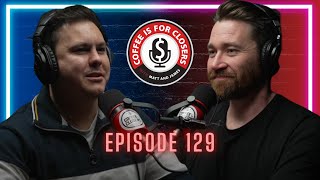
This is a YouTube video titled "Building the Fastest Growing Company - CIFC Episode 129" published in September 2022. The content is a podcast-style discussion primarily between Marco and another host, with references to Matt Ryder who is mentioned as being involved but not actively speaking in this excerpt. The conversation covers the rapid growth of their company from a small team to 160 employees, the challenges of scaling, leadership roles, risk management, legal and operational complexities, and personal reflections on business growth and education such as pursuing an MBA. The discussion provides insights into managing a fast-growing business and the evolving responsibilities of its leaders.
A cfo, right? A very, very specific role. You're never going to get a good CFO to come into your business if there's no platform set. They've got nothing to work off. You know, the same as a cmo, an operations manager, there needs to be some level of consistency and workability and. And systemization for a role to be enticing for them to come in and fulfill.
All right, guys, welcome to another episode of Coffee Is for Closes. Matt is currently. Where is he? He's in America. Is it Clickfunnels?
He is at ClickFunnels. As you're aware, there's a million dollar award there to collect the $25 million award.
25 million from one funnel.
Yeah. Which is like 25 of the regular ones. So anyone that gets one of those million dollar awards, just know it's 25% better.
But so it is. It's just me and James today. Boosh, run the intro.
Special forces sniper turned entrepreneur. I've scaled numerous businesses to eight figures. My name is Mat. This is my podcast and I'm telling you to put that coffee down.
And we're back.
Hey.
So it's been a while since me and you have been in this room and spoken and even longer still since it was just you and Matt. But a lot's been changing in the business. A lot has. Like, it's been a huge period of growth and what I wanted to talk to you about was like, obviously it started just you and Matt and like your role over time and how that's changed what that experience has been like for you. So like, hit me with how did it all start? Like, because Matt came to you and was like, hey, I need a. I need help. And you said, yes, but I'll be your partner and not going to work for you.
Right? Yeah, I think it was. It was a really interesting series of events. We kind of started this business I was working at somewhere else at the period of time and was kind of just doing some stuff on the side. Then we realized that, you know what, this might have a bit of potential. Then I think Matt, one stage, he was just on his knees. But yeah, Matt essentially like begged and out of pure desperation and acknowledgement for some real leadership and skillset with someone that knows what they're talking about eventually sold me into coming to work for him. He wanted me to work for him, but I just. There's no way I could do that consistently and without having a large say in things and don't really want to. To work for someone so the idea was, all right, look, if we're gonna commit to doing things, and we'll do it as business partners. Matt's very, very good at a lot of things, and he has a very strong skill set in those. I've also got a very strong skill set in some other things that he's not so good at, and he's very good at in things that I'm not so good at it. So kind of like a nice little merger, I guess, of, like, ideas. And the way that I look at aspects is very different to the way that he looks at aspects, and again, vice versa. So having multiple. Multiple different ways allows us to sort of sum up a situation better, whereas I look at things from more of a risk management as opposed to a let's go take on as much risk now. I love risk. I'm all for risk. My tolerance for risk is just not as high, and it probably keeps us a little bit safer in the way that we go about things in terms of how aggressive we want to go. Let's. Let's bring it down a little. So kind of having that. That relationship kind of worked really, really well to. To make it work long term. And I always kind of wanted to. The whole idea is, at least from my perspective, is, you go make us money, I'll make sure we keep it.
Yeah, that makes sense. So I'm curious, like, when you guys started out, was there a meeting of, like, this is the division of labor and this is how we're going to do things, or was it fairly organic in that it just kind of went the way that it went?
Yeah, it's. It's been. Been really organic, for sure. Like, my role has shifted significantly many, many different times. And part of that being is, for me, I like to feel like I've worked Matt out pretty well in the way that he works best. Understanding that it's just like, you know what, you just go do what you do best. That's going to be the best thing for us. So I think I'm pretty good to some of the things that he does, but also I'll give up those responsibilities knowing that he enjoys them and he's going to do a really, really good job, probably better at most of those things. And it makes sense. It's like, well, we can either just sit there and do the same thing, but it doesn't, you know, is that productive? Yeah. So my. My kind of thought process around things is like, okay, well, recognize what people are really good at and put them in the position to do that. And that happens with, with Matt. It happens with a lot of our other guys is like, for instance, the podcast. You're definitely better. Better at it than me. You should be doing it. Like, I have other things to do with my time that are probably more productive for us than sitting, filming and doing that. That type of stuff. Right? There's. And just having people in positions to do that. Like, we've got guys that are far more experienced than some of the business things than either of us are. So it's like, okay, well, you're going to do that. You'll also do your main job, but we will take your advice on everything that you say here because it. It's obviously worthwhile. So I've kind of like, particularly early on sort of realize, like, okay, well, these are things that are already covered. I'm gonna go work on this stuff because that needs to happen. And ideally kind of uses a stepping stone. Build out a system, build out a foundation. Try and figure out how that means and what this aspect of the business needs to be. Then hire a specialist. Once it's at a level that someone can come in and take over, I. E. Like, we've. We've done that with Ben, we've done that with Belint, we've done that with many things. And now it's at the point where a much bigger company. So we're going to learn a whole new set of skills. Nail that. Get it to a point at which for our business doesn't need a specialist yet. So like a generalist can kind of come in and take that role. Do it to a point where it's going to be. We get to a level of growth where it's like, okay, we need a specialist there now because those specialists are very expensive. And it's finding the right person for that role that has the level of understanding on the direction of the business and what we already have in place that needs to be a platform set. I like. I mean, as an example for a cfo, right? A very, very specific role, right. You're never going to get a good CFO to come into your business if there's no platform set. They've got nothing to work off. And not that we're hiring a cfo, but, you know, the same as a CMO operations manager, there needs to be some level of consistency and workability and. And systemization for a role to be enticing for them to come in and fulfill. I don't know if I just went on a tangent from.
No, no, no, no. It makes sense. Something I want to tease out about what you're just saying then is like when you talk about growth and fulfilling those like key positions and bringing experts into that. I think my sort of idea, what I want to talk to you about is like the growth of the company and experiencing that in that it's you and Matt and then Marco.
Right.
And now it's like 160 people. And I think to people who run a 160 people company, usually ran a 20 person company and then a 40 person company. And you have gone in two years from being a two person company to 160% company. And your job as it appears to me is like you're kind of the glue in the background that's actually holding all these component pieces together.
Yeah.
Matt's creating those pieces and you know like the outward facing, bringing people in. But then as he continues pushing forward, you're the machine behind that's actually keeping things going. And I want to sort of like what's that experience been like for you? Sort of at a personal level going from like you kind of imagined you would be in the position that you're in two years ago.
Right.
Even if you knew there was going to be big growth in the company, like at a personal level to now find yourself with 160 employees and thinking like, oh shit, I manage all these people. I have to stay on top of all of this.
It's, it's interesting, it's weird. You can see how people like change when they get into positions of things like that, both in, in good ways and in bad ways.
It's, you know, so you're like personal growth and the experience of that, in that the huge growth of the company. But then like your personal experience in your role change like you know, how have you prepared yourself or what happened along the way that you were like, was there ever a moment where you went like, oh, I have a really different role now to what I had six months ago?
Yeah, yeah, 100%. It's, it's interesting. You don't kind of prepare for it and that journey, like it's. For me there's been periods of going through a place, what the fuck is happening, have no idea what we're doing here. And then it's like, oh yeah. All of a sudden I got a couple things come together. It's like that wasn't so bad. So you kind of go through like a roller coaster of being super confident in what you're doing, then not then confident and not because you're going into, like, for instance, the role that I've kind of doing now is a lot of getting now risk mitigation, getting all of our legal structures and stuff set up with zero experience in that whatsoever. So that's. It's a big responsibility considering the impact, like, you fuck that up, there's nothing left, you know, so getting some of those things, it's going into that. There is a bit of like, oh, not sure if what the structure should be here. And there's. But then you go through it and you kind of build it. And I guess to a point like, that was actually not that difficult. Like, I could probably do this for a job if I wanted to. But not overly fun. Yeah, you know, it's. There's a lot of reading documents and going back and discussing with lawyers and accountants that was not overly fun, but necessary. So I've kind of looked at it always from the perspective of what's the best thing for the team, you know, and what's the best thing that's going to drive us forward or at least lead to a heavy stability, you know, and it's like, okay, just. Just do that. That's what it has to be. And I don't really mind that. I think is pretty good. Like, I think like a generalist role is. There needs to be someone like that always in any major company. And there's a couple of roles that. That transitions to, like in larger corporate roles. I think one of them is. I think the name of a role is general counsel or there's just operations or whatever the types of roles are. But you kind of wear a few different hats at any given given point. But in terms of preparation for it, there's kind of not really any. Yeah, you get to a point where it's like, okay, well, we've grown to this level, or we have XYZ in place already. And then you realize that, okay, we've got this problem. How does that problem get solved? It's like, okay, well, we're going to need this now. And those are problems that you don't foresee until they kind of happen. And those problems are kind of growing pains from a growth perspective. And an example of that would be like, once you get to that amount of people, you need a HR department.
Yeah, right.
I thought HR was just what happens when you slap someone on the ass or you tell a joke so good you need to speak to someone. Yeah.
You get sent to see the principal.
Yeah, yeah. It's like, no, that's not actually what it is. There's more to it. It's about actually managing people. Making sure they have what they need is like, oh, yeah, that kind of makes sense. Yeah. Yeah. When you have that many people, you need some systems and structures like that in place to be able to manage so many people.
Yeah.
Six months ago we wouldn't have known that that would be something needed in the future. We're lucky. Now we've got people advising us on some of these problems that you're going to run into in the future. But you kind of look at him and go, you don't know what you're talking about. And six months later that happens. Like, yeah, it was absolutely right. We needed it. They've been here before. So in terms of preparation. No, absolutely not. Because we neither of us have ever been in a position where that level of growth has occurred nor been in an organization of a similar size. At least in, I mean, at least in the capacity that we're in right now. Sure, I could have been an employee or. Yeah. In the army or what. But that's. You're sitting there looking at it from a soldier perspective, not from. Yeah. General or whatever. So because of that, you don't really have any expectation as to what the next problem is that you're going to need to solve. Yeah. Until that problem comes up and you're like, okay, well, we're going to need this now. We're going to need this now. We're going to need this now.
Yeah. And I think an interesting sort of extra layer to that challenge, especially the legal side, is like the multinational sort of nature of the business.
Yeah.
That you're not just dealing with like one set of state and national legislation. You're dealing with many across multiple countries and different states within those countries and dealing with different tax issues across all of that. I suppose that's the, the function of bringing in those experts. Right. Like, because there's just no way that you or anyone else really could be across all of those things. That's the, the function of bringing experts. And you're really probably like your role then is probably the management of those experts, right?
Yeah, yeah, yeah. Well, it's, it's also like bringing in those experts. They don't necessarily work for you. Some might, but they could just be consultants. And like an example around this is for us, our cold calling department. We'll just sit there, we'll call leads. Apparently that there's actually laws from the. Some certain act in the US that you're never allowed to call someone if they've asked you not to call them again. Like that could be they could press charges or something if they wanted to. The likelihood of it happening is not high.
Sure.
So when you have a discussion with one of those consultants, they'll tell you about xyz, you're like, okay, well, we do that, you know, not that we call people that ask not to be called, but there's certain things that you're just not aware of. It's like, I didn't know that was a problem. Yeah, it's like with your. Your dog, when you train the dog, they're like, oh, sorry, sorry, dad didn't know I wasn't allowed to dig a hole.
Exactly. And I think that's the issue of certainly in business growth like that is that you don't know what you don't know.
Exactly. Right.
And I think certainly you could easily get yourself into trouble quite sort of un unknowingly and quite innocently. And you know, unfortunately, ignorance is very often not a very good defense. Right. Like, oh, I didn't know.
Right. Or you should have. Well, I mean, it's funny because sometimes it is a lot of when. When you have like, director responsibilities, the way that a lot of it is governed is based on intent.
Okay.
Right. So let's just say you make. Have an issue with the ATO or the. That's Australian tax office. If you've done something that is like, they'll look at and go, hey, you're not allowed to do this. Typically they will give benefit of the doubt. They'll have a discussion with you is like, why this happened and if it was the fact that it was just. Unless it's like smaller things. Right. Obviously it's something major. Like, I funded all this money through here to do xyz. They'll look at it based on intent. Really?
Yeah.
And they'll say, okay. They'll look at you and go, oh, no, you're just an idiot. Yeah, right. You clearly, like, this wasn't done for the purpose of trying to do that. You've done. You've shown clear rationale as to why you made those decisions. Like, we will assume that I was done with that intent. So sometimes there is a pretty good leeway if you do make some of those issues because I think people understand that it's easy to make some mistakes because you don't know. But like, as an example with that cold call thing, with that advice, we would then go and have to create a whole bunch of SOPS systems for the sales guys as to, hey, once this happens. We got to rebuild the CRM so that if someone does this, we market as a certain thing it pushes them out the list so they're not to be dialed again so that we don't accidentally make a mistake. And in that instance, if someone was to assess like let's just say someone wanted to press charges because someone's made a complaint that we're calling all these people at, you know, not that would happen. Well, we could just show, hey look, we've created this SOP XYZ happens. We show that, you know, our intent is to not call these people because we've put this system in place. They'll probably say oh well you've called these three people that have asked not to. That's obviously a mistake. You've taken the intention to make sure that doesn't happen. Shit happens sometimes. And then they would be like, look, it's just a little fine. Right? Yeah.
It's not like you're getting off scot free but they're not going to go to jail you to the wall.
Yeah.
I think one of the things that I wanted to sort of discuss with you, sort of to get a little bit more personal in it is like your personal journey within the last couple of years. And you know, we speak about like, you know, how prepared could you be business wise and sort of knowledge wise in that way. But have you ever had a moment of reflection? Because like I suppose something we overlook here is how this is extremely fast growing company. Maybe the fastest growing company but possibly.
Yeah.
And like from organic growth without seed funding or whatever.
Right.
Like you've actually made the money to grow rather than being given the money to grow. We're probably the fastest growing company in Australia.
Yeah, it's so the afr, the Australian Financial Review, each year they do a thing on the fastest growing companies that are under certain years old. I put in the application maybe a month ago for that I calculated based off previous years year's winners, there's a couple of outliers in that. So we had, I think based on the numbers it was like a 460% growth over that, that three year period which last year's winner was about 760.
Okay.
Which is insane. You know, they didn't, they grew from a smaller portion in their first year. Right. Which always reflects better. But second, third, fourth, fifth, sixth, seventh, they were all between 230 and, and 210. So if there's no outlier we'd be pretty top. I'm confident we'll be in the top three, and hopefully we win. That's great. We also had to make a serious decision as to whether we would enter that or not, because it seems like a great idea, but when you analyze it, is it? Yeah, because one. All of a sudden, it puts you on the radar. Yeah. The high chance is that the ATO goes, oh, well, this company has three times as much growth as the next company. Maybe we should order them. You know, it becomes a trigger event for. For that. It also makes awareness to any competitors. And then big people with larger companies, they will start seeing that and they go, oh, well, we want to know what they're doing. You get a higher risk of people coming and copying your work, taking the business model, seeing all those things. So it's a very conservative understanding as to whether you decide to say yes or no to applying for something like that. This is super interesting. There's a lot more to it than just winning an award.
So let's tease that out a little bit. You're going to get audited. No biggie. Because everything's in place.
Yeah. Yeah, exactly. Right.
You bring yourself above the detection threshold of competitors. I'd say we've probably already done that pretty significantly.
Pretty loud. Yeah.
And I think, like, people attempting to replicate the business. I, I just, I think that. I can't imagine how that would go down. I can't imagine, like, what's happened here is such a unique set of circumstances that I don't know how anyone would. I mean, it's not like you hide anything anyway.
Right.
Like, it's all out in the open. Do this podcast every week and talk about the ins and outs of the business. We make a YouTube video with Matt every week talking about the successes and values of. Of the journey and growth and that kind of stuff. So, like, there's kind of nothing to hide anyway.
Right.
So that's the. The potential list of cons. We kind of like, well, we're doing that to ourselves anyway and accepting that risk day to day. What's the pros of that? Like, aside from the. Makes you feel good, the acknowledgment of it?
Yeah.
What, what, what do you get from it?
Well, then there's the, the. The award on the wall that gives a bit of the clout. Not necessarily the clout, but the credibility. Right. So with that credibility, it means that we're able to back up the claims that we're pretty good at what we do. Having those things. I like. The $25 million award proves that it. It reduces sales resistance and prospects that maybe want to do consulting with us. Right. Because you can't get to that level with well being shit at what you do. It just, it doesn't happen. You know, you can't become the best dog trainer in the world if you, you can't get the dog to sit. Yeah.
So, so you're kind of opening up. So by getting that award or even applying for it, acknowledging that the growth is happening in that way, you sort of giving a layer of credibility to the. Not what we're doing but are going to do maybe. Right. Like it's sort of showing like hey, this is the trajectory we're on. Get on board if you want to.
Yeah, yeah. Like for instance, if, if I was to go to like a large private equity or venture capital firm and said hey, we want, we've, we've grown this, this level I want to be able to get to here. You know, our track record shows that we're able to execute an xyz. They're far more confident to be able to give us something like that ever, if ever we did want to.
Sure.
But also the second major thing is the exposure to a list of people outside of our current clientele.
Okay.
So quite now we're pretty heavily involved in coaching, consulting and whatnot but we are trying to take on more consulting companies for larger corporations. We do have some with that. Like there's a lot of heavy NDAs that those companies don't want to know. But the people that read that those magazines are the people that are in, you know, corporate organizations that have the larger companies where we can go to and get larger high ticket items because they've got massive teams. We can go in and solve those problems at a larger level. Having that little bit of credibility and exposure to those audience just brings us leads from leads in which our typical marketing that we have now doesn't, doesn't go after.
I feel like that's one of the really super interesting things about those very lucrative, high paying consulting deals because when you sign that NDA, obviously it's awesome. You make the money.
You, you, you don't get to talk about it.
Yeah, you can't. So it's really hard to sort of say, hey, this is how good we are at doing this kind of thing because we can't even tell you about what we did because we're under an NDA for this company. And so you can see success of a. There's a great big company that's even more now because of what we did for them. But we can't go into any detail about what we did. And so marketing for that is tricky. And trying to position yourself as, as a company that can do that is tricky. It kind of reminds me of like, you know, when you deal with sort of what we call other government agencies. So like three letter agencies in the, in defense, once you get one contract with them, you get heaps because they can't go to tender. They can't, like if they need someone to do something, they can't put an ad in the paper and say we need it. We're a super secret government agency and we need this done. So they often, what they do is once you're in, then they say like, oh, can you provide this? And even if you can't, you go yes. And then you subcontract that to someone else and you can advertise it, but you can't say who it's for.
Right.
So it's one of those things that I see what you mean in that it opens up doors to those bigger level consulting deals that makes people look at you rather than you being able to go to those people and saying like, hey, we can provide you this. You need those people looking and saying what can you provide to us? And, and by getting those awards and proving that that clout, that credibility puts you on the list of companies that they're going to look at.
Yeah, well, it's also, if things start to work different in those arenas, like we, we don't need to advertise. Typical. It's going to happen. If you do an excellent job for someone in this, they've got friends that they work with in other companies, you're going to go have dinner with them, you're going to go on a golf day, have a, have a lunch or whatever and you just get chatting and it's via networking that all of a sudden that opens up a door. You know, you did a good job for Steve over at Apple. Steve at Apple knows Bob at Microsoft and you're going to hang out with Steve and Bob together and all of a sudden you're in discussions with people with Bob who knows these guys in Microsoft who can, who are the people to talk to.
Yeah, yeah. So like that brings me back around to the sort of where I wanted to go with this is like at a personal level. That's a big part of what you do now.
Right.
Is like dealing with this extreme growth and having conversations with people and dealing day to day with people that it probably wasn't, you know, people who weren't on your radar two or three years ago. Tell me about that experience for you. Like has that. Have you had a moment where you've been like, wow, this is a big deal.
Yeah, happens all the time. Like, I remember, you know, having dinner with Bradley last time I was in the U.S. i was like, oh, that's the guy that everyone says is huge. I never watched his podcast before. I didn't realize how big he was while I was having dinner.
He is the content.
Yeah. I was like, oh, yeah, okay. I can see, I can see what's happening here. And you know, I've sat down, had lunch with guys that are running hundred million dollar companies pretty regularly. It's like something that happens now it wouldn't have happened before. And when you do that, you're like, oh, all of a sudden the network of the people that you're talking to changes. And when you have access to that, those people got to that level of success for certain reasons.
Yeah, yeah.
Again, same example. Obviously good at what they do. That information and that discussion and the conversation that you have is very, very different. And that typically rolls over into personal life. You know, like if all of a sudden you've come from. Come from somewhere where, let's say you're not good with finance, you don't know anything about finance, you don't know how to get a. Couldn't afford a home loan. You start talking to people that have. That are property investors.
Yeah.
All of a sudden they know the things to do. Some of that starts to rub off on you and you figure out how to go get a loan or you go, I need to save up this much money and I want to buy these investment properties. So from a personal level, having discussions with people that are at high net worths, are in positions of more power and control, and in general higher intelligence with certain things, it just tends to rub off. Feels like they say, you know, you are the sum of the five people you spend time around. Like, the conversations you have with people are very different to what the conversations I was having. 5, 5, 10, yeah. 20 years ago when I was a kid.
Yeah, yeah, for sure. And I think that, like, that's interesting when there's people like Bradley's a good example. Right. They go out like, he's a person that, you know from the industry. He's a, that, you know, you look and go, oh, that is a. He's a successful person for sure. And quite measurably, you know, like you can say he, he, he is successful in the space that we Are in.
Yeah.
And then when you then go, oh, I'm out to dinner and this isn't like an honor for me. He's a peer.
Yeah, right.
So it's like my peer group has changed to be. To the point where you then go, oh, I'm one of them now. Like, I feel like just personally, that has to be an interesting journey to, to have undergone.
Yeah, it's, it's. It's interesting. I kind of get like, I go through a process mentally where all of a sudden you don't notice any of that. Like, I'm pretty oblivious to that happening. And then it's just like one day, like, oh, well. Oh, yeah, that's right. Like all this has happened. And then it's kind of like a game. If you, you play games and you get to the boss level, then all of a sudden you level up. Like, to me, it just feels like nothing happened for six months. And all of a sudden, like, there's that one trigger event. You're like, oh, no, I just, I just leveled up.
Yeah, right.
It's like, I know all this now and you don't. For me, it's. It's hard to conceptualize some of the learnings that you've learned until like some sort of trigger event hits you in the face. You're like, oh, wow. Like, we had one the other day. I was like, I now know what needs to happen right next in terms of. And that's a lot of like, understanding corporate finance. And when I say, I don't necessarily mean like a. A corporate agent is just like the word that they use for finance at a high business level is the term is corporate finance. Right. That could be like what you do with the capital that you have, what you do with the savings. Do you invest it? Do you make decisions based on X, Y, Z and how you forecast, how you predict and do all that stuff to say yes to? Okay, well, this is a good decision for the business based on how much is it going to cost us? What is going to be the return? It's like, should we pick X, eggsy or Y or there's company over there. Does it have value to us? Maybe we should go and buy them. That could have utility. So understanding how to manage that and knowing whether or not to buy a company is a good idea. Knowing whether to hire someone is actually going to be beneficial or are we just hiring them? Because it seems like a good thing to do. But does it make sense on a. A larger scale of achieving something?
Have you had many Sort of circumstances now where, you know, in the last couple of months you can. Knowing what, you know, the structures that are in place now, do you ever look back and be like, oh, yeah, bad.
I that up. Yeah, that up, that up. But at the time I was like, oh, this is, this is perfect.
This is the decision.
Yeah, well, based on a knowledge base. Yeah. It's like, okay, well, everything that I know about this shows that this is the best thing to do. Right. In hindsight. Right. You only realize that because you're like, ah, well, three months later, this new piece of information came out that I didn't know existed or I didn't know that this was a thing. Yeah. And I think like a lot of people get stuck in a trap of when they look back, they're like, I made this terrible decision. But even some of those mistakes that we made, like, you kind of have to make them to learn that stuff. Yeah. And if you look at it from the senses, like, I made the best decision with the information I had available. I think that's good enough. All right. Would you make the same decision? No. But you know, you don't know what you don't know, right?
Yeah, exactly. And I think that's one of the interesting things. I had a funny conversation with someone recently about school. Kids complaining about how hard school is. And as a 39 year old man, you go like, school's so easy. But it's like, no, as a 39 year old man, school would be easy.
Yeah.
But when you're there, it's the greatest challenge you've ever faced and the difficulties of interpersonal relationships and you like, you're, you're. It is the hardest thing because you haven't done anything hard. And like, so in this perspective of what's going on in the world, it's super easy. But for you it's not. And so your reality is that it's not. And I think the same happens in business and in life in general is that it's really easy to reflect on your decisions of two years ago and think, oh, I wish I knew what I knew now.
Yeah, yeah, yeah.
But you'll do the same in two years again. And you look at the decisions of today and be like, what was I thinking?
Yeah, yeah. And that's where the. As long as you made the best decision with him, like, I'll kick myself and go, oh, you're, you're a. If it's like, oh, you had access to that information, you just missed it.
Yeah.
You're like, you probably Weren't having a good day that day or.
Yeah. You know, and that's a different thing. Right? Like, like to, to have made a bad choice is a different thing. To have made the best choice you could given the information that you had. And I suppose the, the lesson in that is that constant striving to learn more, do more, like never go stagnant.
I suppose I agree. Like I'm. I got into the fourth ranked MBA in the world.
Okay.
Which is ironically here at Sydney. So I'll start that in. I was meant to start a couple of months ago, but I deferred it because we had so much on the plate that wasn't completed yet. And a lot of it was group assignments. I was like, I don't want to be that dick. That's not going to be that.
Yeah.
So start that in February. And it's, it's so interesting that. Look at that and look at some of the curriculum. Like, oh man, all these people say that university, isn't that a great idea? You can start a business without it. But if I knew all that stuff that in that curriculum back to front when we started. Yeah. The same with Matt. Like if the level of growth and how quickly things would have, would have went, it would have been like absurd by comparison to what it is now. And yeah, it's interesting.
I nearly did an MBA seven years ago, maybe more. Nearly 10 years ago while I was in the army, I was gonna.
You.
I had an opportunity to have it paid for. I could do like a long story, but I could do basically whatever I wanted at uni was going to be paid for and I would still be in the army while I did it. But then it was like the catch was you'll be out when you're done. And I was like, oh, you know, what should I do? And I'm looking it up and I was going to do an mba and then I sort of realized that it wasn't the right move because I wasn't in the role. So I think that it's like, I think that. And I've had the same feedback from people who have done an MBA while they're not in business.
Yeah.
Like, especially from people who are sort of in that sort of military sphere that try and do it while they're in. And then with the idea that you'll get out and go into it is that you often don't have like a very good frame of reference.
Absolutely. I think, I think the funny thing with MBAs is not many people in business do them people go into MBAs because they want like, it's essentially like if you were to be a doctor, you, you need to have gone to university to be a doctor. Like this. You can't just like, ah, you know what, I'll practice on this person. Like it doesn't work that way. I don't want a doctor that doesn't have a degree. Most people go into an MBA for a career path is to get a job, right. To get a good job at like a consulting firm or like one of the big four like PwC Deloitte. You know, most people will go into like a banking role with that MBA background so that they're at a level of competency that they're able to get those jobs. And most, most people that do MBAs don't start their own businesses. You don't need one to do one. It just for those good jobs like most. In the same way that you get an accounting degree, you go out, you, you know, at a good firm, you're probably going to get 100k years of starting salary with an MBA. Like if you have an MBA in an accounting degree, you go into one of those accounting roles, you're going to be able to actually use that information to one, no tax, but also advise your client. Therefore, that starting role now is 150k because you've got the extra thing. So most people don't use it to actually I'm going to take this knowledge to start a business because I need that to start the business. It's that I want to get a good job and this is the gateway to getting that job.
So why are you doing it?
Well, there's. One is the education, like there is a lot of good information there. Two is the, the people doing.
Yeah, I was gonna say the network that you come from.
Yeah. Like there is going to be a lot of talented people in that and because it's part time, so I'll do it after work weekends so I'm not doing like the regular. It'd just be too difficult. So. Yeah, specifically designed for people in the workplace that have businesses and it's just they push the curriculum into different areas is for that network, like I'll probably hire 10 people.
Yeah, that's what I was gonna say.
Plus like a lot of those people will have really good business ideas. Yeah, it's like, you know what, I'll come on as a director to your company or we'll bring that business into us because you got this great idea but you got no experience. Well, we have Some, some pretty good experience. So there's, there's an opportunity, a potential for opportunity. There's the third one is again more of that credibility. So going to like getting those larger consultants consulting deals. They probably want to see someone that in most cases isn't really covered in tattoos. Not really hard edge. Yeah but like with the top car, the scope, all that branding. Yeah. Having someone with those qualifications even just as an introduction point. Like if a couple of papers come across your desk, let's say we've spoken to Bob over at Microsoft and he goes, oh well these are the people I've spoken to. We've got sales sniper, we got client A, client B. Here's a list of, you know, people, here's their qualifications. They'll look at that. If someone else has like all those MBAs, it's like, oh, that's the preference because they have the background. Maybe, maybe not. Right. I like to think it's the same way as interviewing. If your resume is really good, you could be the best candidate. But if you've got a shit resume, then not. You're never going to get the.
Yeah, you don't get.
Yeah, we need to get in the room with people.
Yeah, right.
If I can get Marco and Matt in a room with someone like that, they'll get a deal done.
But that MBA is probably the in. That's the, that's the, that's the key that opens the door. And then when you're in there, you're.
You'Re working and the last thing is those universities, they want to brag, say like, oh, we actually have the person that is running the come through. And when I was weighing it up whether to go into it or not wanna. I had an interview with the director of the, the university and the question was like, well, for you, when you have like all of your, you know, you go to your bodies that are in these big companies and you get all these connections, like what is it that you want to brag about to them? And if I come in and crush it and just beat everyone else in your NBA just being better, what does it take for you to then go and talk about our company with those. And then that just opens a whole networking thing and going to those events where, you know, big companies sponsor them, it's like, it's a really good way to get leads, I think.
Yeah, no, that makes total sense. Matt, I know you got a call, so I better wrap it up. Thanks everyone for watching if you made it this far.
Thanks guys.
This episode we're gonna. We're gonna have another one before Matt gets back, so, like, share comments, all that stuff. See ya.
See you guys. Put that coffee down.





