Copy And Paste This Strategy To Overcome Any Objection
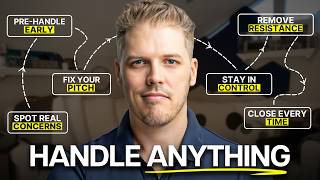
Matt Ryder breaks down objection handling from 50,000 sales calls. Objections are logistical barriers, real or perceived. Before handling pushback, collect what the prospect wants, their current actions, problem consequences, goals, budget, and clear value. Pitch the highest price first and present payment plans later.
In this video, I'm going to give you the exact framework and playbook that I've used over 50,000 sales calls to handle objections like time, money, think about it, partner, and even fear based objections. I'm going to teach you how to understand the concerns versus the objections, how to pre handle, how to see these things coming before they happen, how to actually pre handle these in your pitch as well so that you reduce, not induce objections. Okay? And then I'm going to show you exactly what to say, how to say it, when to say it, in what I consider to be the most comprehensive objection handling guide that I've ever seen on the interwebs. Okay? This is the framework that I've used and developed over like 15 years and 50,000 sales goals as a full time sales rep. So stay all the way through to the end. And if you want this document, it will be in the discord down below. So most reps treat objections like a brick wall, right? You know, they kind of go up to it and then they go like, ah, well, or they give a really, really basic and, and not very, I guess, commanding way through handling it. And, and what this I find causes is like people not being able to actually address and find out what the real concern is. In part one. What we have to do is we have to define what an objection is. Okay. Is an objection a, like what really is it? And what I consider an objection to be is a logistical barrier, whether real or perceived, that stops a prospect from moving forward. Okay, that's an objection. A concern is a simple question that just needs to be answered. And this is usually about proof or trust or that there's just not a big enough gap that's been built. And like most people fuck these up because they go into like full blown sales guy mode. And what they don't do is like actually answer the question. Well, that can mean a lot of things to a lot of people. When you say this like it's kind of silly. Okay. And then you need to also say whether there's no need, so objection, concern or no need. So it's like if there's no need, just too bad, so sad. Try again later. If they don't actually want it, they don't see the gap. That's not an objection. It's just a bad fit. Like you're a triangle trying to get through a round hole. Like you fuck something up and they don't really want it. Okay. And one of the big ones is that you cannot handle the objection that you don't get those are the hardest ones. And I find through training thousands and thousands of people over the years, what I see is that most people are bad at, I think, setting up the sales call to be able to get what they need, but also then actually getting to the underlying concern and answering that effectively. Okay, we don't turn no's into yeses. Like a no is a no. Like we're not, you know, there's no witchcraft here. Right. And so what we want to do is we want to turn the maybes into yeses and we want to find the people whose, whose problems align with the solutions that our product or service actually addresses. Okay. And if you get a no after the pit, then you've done something wrong. Now that we know what an objection actually is and the difference between a concern objection to someone who's just not a good fit, what we need to do is we need to work on like how do we pre handle an objection. I think everyone talks about pre handling objections, but nobody really sort of defines what it is when to do it. So this is diffusing something before it happens. Okay. So most reps will wait until the objection comes up before they deal with it. Right. I think that this is a mistake. If you hear something that you think is going to be problematic or counter to what your pitch is going to be, I think that you should address it there and then. Right. So pre handling is gonna equal is going to handle the surface level concerns because it's not pre handling objections, it's pre handling concerns. And so like, before we get into the details, can I ask, is there anyone else that needs to be involved in this decision or like, you know, that's if you want to pre handle your partner or bring them up beforehand. Right. If you're in a B2B environment discussing budget, discussing decision makers and if you're in a B2C environment, hey, does your partner know that run this cool or are we on a bit of a secret mission? Okay. If you hear people using constant future tense, okay, I will, I want to. I could, you know, I mean, we will. Oh, next year is going to be huge, then that should be a light bulb to you that they're not thinking in the now. And so that's going to be difficult for you to drive urgency because if you're going to do something no matter what, then why do it now? And so these are things that we need to listen for so that we can pre handle them so that we reduce the surprises and, and they don't compound. Okay. This Also has to do with things like if there are things that are coming up in the world, like an election or Christmas or fourth of July, we need to have things in our script in order to pre handle those. Because one of the great things about holiday or time based or situational objections is that chances are you know that they're coming. And what that means is that you can counteract it. Like if it's December 15th and you never bring up Christmas or the holiday break once and then they give you a Christmas objection. Like that's a you thing. Dude. You just screwed up. You didn't mention like the biggest elephant in the room, which is like Christmas. So you would put in a hook or something at the beginning. Okay. In order to help yourself pre handle that, like, hey, I just want to say that, you know, like, well done for being someone who over this busy period is actually doing something about this. I speak to a lot of people at the moment who are like going to put this off till next year. But you know, something worth doing, it's worth doing it now, right? Yeah. Sweet. So now that consists super basic and transparent one, but it's a good sort of framework for you to use because you can edify and codify that person. As someone who doesn't let that barrier become a thing, you can anchor that throughout the process and then it's very difficult for that person to use that as the main excuse moving forward. Okay. Part three. Okay. Which is this is what you need to have in order to actually be able to handle an objection. I see a lot of objection handling content online, but what I never see is there's no point handling objections unless you have these key things there. Because you cannot handle an objection. If one, you do not know what they want. Two, you do not know what they are doing to get what they want. Three, what are the problems associated with the current way of doing things that they are using to get the outcome? Four, what are tangible goals and emotional drivers to drive the urgency to change? 5. Okay. And stick with me. Okay. Because there's like 11 of these things, what they need some sense of urgency to change their situation, then they need what they want from a solution that solves the problem. So like if, if they want something that's totally out of the realms of what you can provide, you need to know that because that's going to be a huge obstacle. Okay. They need to have a clear vision on the solution and the outcome of not changing. Okay. So a consequence, you need to have a clear presentation that outlines the value proposition of your product and service. You need to have an agreement that the thing you're selling would actually help to achieve the outcome. And they need to have the budget or resources to be able to afford said thing, okay? Without that, you're trying to wizard people into doing things that they shouldn't or can't do. And listen, I love handling objections. I've built a career of handling objections. But you have to have these things in place, right? If you don't have these things, like, if you don't know what they want, then you're not really going to be able to extrapolate out the problems associated with how they're currently doing things. If you don't know what they're doing to get what they want, you can't get all the problems associated with it. Then from there, you can't get the real solution and the real tangible and emotional drivers, okay? That's going to build the urgency in order to change, in order to want to change, to get the thing if they don't have the budget and that they can't do it no matter what. People can't just miracle money. And I'm not a huge believer in financing. Say that what you will, but I've never sold a deal on finance once in my entire career, and I plan to never because I just feel like if you can't afford something, you can't afford something, right? Not to say that you can't sell it like that. I just haven't. I've done all my sales without using people borrowing money at 35% interest, okay? You need to have a really clear presentation that outlines the values of the products and service and also helps to push the sale forward, of which I'm going to be going on later on in the video. Okay? And if you guys are here this far, hit the go down to the discord, okay? Join the discord, and you can get this all kind of laid out for you. And while you're there, if you're not subscribed, do your boy a favor. Subscribe, okay? Then from there, you need to have an agreement that what you sell fixes the problem. Hey, do you feel like this could be the answer for you? Right? Yes. All right, cool. If they say no, you're like, oh, okay, that could be trouble, right? And they had to have the budget to do it. All these things, okay? Without these things, you're not going to be able to handle objections. And what you're trying to do is like Jedi mind trick people, right? This is the product you're looking for.
Hey guys, what's up?
Matt here. And I've noticed that a lot of.
You are not subscribed. So what I want you to do is like go over and hit little subscription. It really helps the channel out. And if you like the kind of content that I do and you're like, hey, how can I get similar content but pay for it, then I have a membership. You can go over and join that at any stage that you want. It's like $49 a month up to about $200 a do like live Q&As. We have a coaching call nearly every single day and there's like well over a hundred videos. And I upload like sort of private trainings and stuff that I do all the time. So if you want to check that out, go for it. You know, sign up through YouTube, cancel anytime, all that kind of good stuff. And anyway, back to the video part four.
So pitching to reduce, not induce objections. A lot of people are pitching and inducing objections because they are going very much into logistical and very nitty gritty. You should have that information at hand. But I want you to remember this, okay? You are a sales rep who talks to people for a living. And so your conversational stamina is quite high. The Army. Cause I used to be in the army. The army doesn't allow any lesson to go for more than 40 minutes because people just kind of tune out. And so what we want to do is we want to, we need to be aware that at the 40 minute mark, they're starting to data dump everything before that. So if you like have this super long sales call, right? And then you go into a really complex 20, 25 minute pitch with like a presentation, all these numbers and stuff like that, you are pulling them out of that emotional state and putting into. Into a very logical and like logistical state, which is not going to help you make that sale. Now there are environments where that kind of sale is necessary, which is more of a B2B environment, but they're far less emotional and they're far more like pragmatism involved. Okay. And so you want to have a specific presentation call for something like that, okay? And you're going to have to go through numbers, etc. But for a vast majority of people, and even in B2B people, they're too complex and complicated. And what they do is they induce objections in the same way where like if I'm sending out a B2B proposal, I don't send them a proposal, I present the Proposal to them on a call. That is best practice. Okay, here's what I like to do when I'm like putting together like a more B2C style pitch. Okay. One, I want to have like pillars, okay. That fix some of the goal link has scripting video down below where I go through that in detail. But this is more about objections. And so one of the things that I see a lot of the time is that people will have like, I'm just going to use a $5,000 offer and it's like 5,000 on a 1 pay, 2 pay of 3 and 3 pay, that equals 7,000 or whatever. 7,500. So it's $2,500 more for the 3 pay than what it is for the paid in full. And they're pitching it at 5K. And then from there they end up going like, hey, if you, if you want to break it up, we can do that. It'll just be three payments of this. And they go, oh, well, I'll just wait until I can pay in full. Okay, so what you're doing is you're going like, hey, you the guy that doesn't have much money, I'm going to charge you more. Which is kind of moronic when you look at it that way. So what I do is I would always pitch the highest price point first. So if it's three payments, that totals 7.5. Let's just say for this example, then I'm going to go, hey, it's $7,500. How do you want to proceed? Right after I do my pitch, I don't say on three pay, but that is the most expensive version. Which means that when I go into my objection handling and I like go through the money and I get buy in, I go, okay, we can do that over three payments. How do you want to proceed? They go, yep, sweet, right? Perfect. Right now if they go, I can. Yep, that sounds good. I'll do it in one. Be like, oh, hey, hey, awesome. You qualify for like a one pay discount. We'll give it to you for five grand. Happy days. Now those people are ecstatic. They're, they're cheering. Yeah, you're the best. Okay, so it's like I want to have a PIF incentive. I don't want to have a payment plan disincentive because that's just. It's a lot harder to push a rock up a hill than it is to roll a ball down a hill. If you do have like financing and payment plans as well, do not mention or say Financing and payment plans in your pitch. Okay, so that example I just. I've just did. It's like, okay, it's, you know, it's $7,500. How do you want to proceed? I'm not saying. And we have some financing available. Okay, I'm not going to say that. Because what they're going to say every time is, what are the financing options or what are the payment plan options? Okay, this is a nonsensical argument. This is just ridiculousness. And it's a useless part of the conversation because like, you have induced that as a concern or as a want, but then it's not going to go anywhere. So now then you have to go back and be like, money aside, right? So the funding required for XYZ so you can XYZ is $5,000. We have some financing and payment plans available. How do you want to proceed? They're always just going to say, what are the payment plans? Or what are the financing? Just say the funding required is $5,000. How do you want to receive? Right. There's no need for that. Cause you can go into the payment plans and you can go into the financing later on, but do not do it in your pitch. You're just going to adduce that same fucking useless line of conversation every single time, okay? It's not beneficial, it's hard to turn around, and it's just a name. Chit chat. Okay? So now that we know how to look at these things and how not to induce these stupid objections when we're pitching, okay, then what we're going to do is we're going to go through the hierarchy and I'm going to give you examples of all these things, okay, throughout this video. All right? So, but we need to establish a hierarchy. Because what you get a lot of the time is not just a single objection. You either get, like, very vague or. Or like this whole, like, hey, that sounds really good. What I want to do from here is go away and check with this and this and make sure this lines up, speak to my partner, make sure the finances all work out. And then what do we do? Like kind of just get back together in two weeks. Does that sound good? Right? And then they're kind of like selling you on this thing, right? And then all of a sudden you're trying to pull out every single objection. You're trying to handle everything that they say, and that's really, really difficult. We don't want to do that. What we want to do is you want to break it down into Buckets and then give yourself a mental hierarchy so that you can be in control of the process and not have the process done to you. Most reps are objections are being done to them. They are not in control. Okay, so you've got logistical and fear and then you've got smokescreen. But I'll talk about smokescreen. A lot of times smokescreen is just a really nice way of saying no. Okay. And then you've got partner, think about it and money. Now what I would do want to say is like money logistical is always the most important. That's why it's at the top left. And then you've got fear partner down towards the bottom. Okay. But logistical is always first. So if they're saying I need to go check out my partner, then you're going to go logistical partner first. You're not going to go into any fear based stuff. The reason being is because you have to assume that all things are genuine. And it doesn't mean that it's a lie. It just means that like it might not be a real objection, but they think it is in that moment. Okay, so logistical money, if it's, if the logistical isn't sorted, then the, anything else after that is sort of irrelevant. Also if they want to go in think about it, they're going to want to think about spending the money. If they're going to go and speak to their partner, they're probably going to speak to the money about spending the money. So it always defaults back to money regardless. So when you get a large blast objection then you're better off just going to money anyway. Right? So just default straight. And then my line is, well, money aside, you feel like this could be the answer for, for you. Okay, now that's very specific wording, but assume logistical first because if you start beating people over the head with a mindset bat and they're just like have a logistical concern, you're going to end up looking like an and you're not going to make that sale. Now that we understand all the things that go into handling objections, what you need to have and how you need to think about it and how to not induce them. This is like the step by step process of how you actually handle objections. First of all, stay calm. Do not get frustrated. It is totally normal to get a concern. If you get frustrated or angry or upset when someone gives you an objection, I don't know what to tell you. You're making your life way more difficult than it has to be. It's like going in the water being upset that you're wet. Okay? So it's a normal thing. And the frustration comes from the fact that you think that you know better and you for sure don't because you're probably retarded. Okay? You've known this person for 45 minutes and you're making a value judgment that says, I know about this. What's better for you than what you do, thinking that you have all the information, when in reality you're probably not good enough in sales to have all the information. They probably haven't given you all the information, nor could you get all the information such a short period of time. So to get frustrated is an ego thing that you need to sort out. Okay. It's a stupid thing to be. Don't worry about it. Step one, identify and isolate. Okay, money. Money aside, do you feel like this could be the answer for you? Okay. They say yes. You say, why is that whenever you get something that benefits the pushing forward of the sale, you get clarification. It entrenches them deeper into it. What is it specifically you feel like could be the key to the castle for you or some variant that the key for you to getting right. That what that's doing is it's forcing them to look back into the pitch and presentation that you've given, extract something that they feel is of most benefit. Okay. Then it's like, well, that makes sense. What are some ways that you can come up with the budget or the funds to get and then insert thing they said was the key for them. Okay, is it the upfront amount or if we broke it up, would that help you? Yes. Do you want to have that chat? Yes. We could do three payments of X over X. Does that work within your current budget? Yes. Sweet. You'd be surprised how simple and easy that is and how many sales you're constantly fucking up because you can't do that. It's identify and isolate, reaffirm the desire, solve the logistics. And then it's like, okay, if everything. And then. And then if they don't, then say yes. And you've handled all the logistical. Then we can transition into fear and cycle through that. And we'll go through that. Okay? But it's really, really simple. And here's an example of it happening. Okay, so part seven is all about objection cycling. So I'll link a video here where you can see that. But what it is, is it's a way in which you can naturally, and with an intentional escalation, keep objection handling going. Right. But without it getting combative. And so it all comes back to a variation of the question, what do you need to do to put yourself in the best position to be able to achieve your goal? And then what you do is you, like, escalate in specificity, tonality, and timeframe. So it's like it goes from that to what do you need to do to make sure that when you go to bed tonight, you're in the best possible position and doing everything you can as the leader of your business to be able to get to X? Right. So it escalates to that and it comes down to the answer being like, well, I need to X. And so let's just say you sell digital marketing services or whatever. And it's like, I need more leads. Well, I need more leads. Okay, well, do you think that what we do would help you get more leads? Yes. Why? Okay, cool. So how much longer do you want to put off actually making the decision to start to get more leads? Okay. So again, it's like, I need to. I need to think so I can act, so I can do. And it's a really, really good escalation tactic where you can keep someone rolling around for like a long time. I'll put in a clip here of me teaching it. Okay.
So it usually happens when you're into.
The fear because logistics kind of handles itself when it comes to doing some of the stuff that we said before. The bridging question that makes it easy to transition from logistical to fear is a question similar to. Well, that makes sense because we all make decisions based off our perspective. And they go, yeah, and they go, well, the problem is the only. If you're always making decisions based off where you are, it's the only place that you can ever be. So what do you feel like you need to do to put yourself in the best position? Okay, the reason why, what do you feel like you need to do to put yourself in the best position possible is because, like, we can't guarantee a goal. Okay. Like, I can't say to you that, like, you do my course and you will get X outcome. Or you can really decide is that doing the course put you in the best position to be able to achieve success. Said outcome. And that's not even like compliance standards, but that's from like a reality standard. There's like, you can't guarantee anything. Like, you just don't know. And you know, they could buy the course and be hit by a bus the next day so that they're not going to achieve the goal. But all you can do is, if you put yourself in the best position to be able to achieve the goal and you're doing those actions, then you have a much higher likelihood, or at least you have an opportunity to achieve said goal. If you don't do anything, the only thing that you can guarantee is that nothing will happen and nothing will change. You can't just like, you have to do stuff, right? And that's the same with anything. So if I was to take a person 600 pounds massively overweight, and I was taking triathlete and I was to swap their brains, that 600 pound body would start being a triathlete immediately because they would start doing things that triathletes do. So although you're not a triathlete until you compete in a triathlon, you have to be and act as a triathlete in order to be able to compete in a triathlon. It just makes sense. And in the same way where that triathlete body would start being an enormous fat shit, the reason being is because they would do the things to become an enormous fat shit. Okay? So like that's what that is, is a series of decisions, all right? And so in order to get the thing or be the thing, you have to act like it, which means you have to think like it, which you know, you have to think and then, and then you have to do, right? So that perspective frame is a way to be like, okay, the first thing we have to do is just shift your perspective slightly. Because if you shift how you think, then you can shift what you're doing. But we don't want it. We have a transaction at the end. We don't want to make the decision about the transaction or even about the doing. We want to make that initial shift about the thinking. So if you agree that because we make decisions based on our perspective, and that's the only thing that you'll ever be, if that's the only thing you ever think of, then all we have to do is step one, get them to shift their perspective of thinking. So then what they can do is different and then they can eventually transact with us. All right, so that's how that works. Okay. And then we're going to use that reset question of what do you need to do to put yourself in the best position to be able to. Okay? And then we just escalate that thereof. And that's how we keep someone in objection handling mode without it getting combative or weird. Okay, so to close off the loop, okay, the objection handling is not about clever lines and it's not about. It's not about word tracks. It's about having a repeatable and replicatable system that you can fall back on and never run out of things to say. Okay, you need to collect the right information, you need to pre handle early, you need to understand the hierarchy of objections. You need to be able to cycle through different objections and concerns without getting frustrated or weird and then you can win the sale. Until you can do that, it's just not going to happen for you. So you can do all the courses in the world but if everything doesn't kind of stack up and line up and the sales code doesn't do what it's supposed to do, objection handling is a waste of time. If you guys want the objection handing matrix that I've used and made and used on tens and tens of thousands of sales calls over the course of 15 year sales career, then it'll be in the discord which is in the link down below. Alright guys, I hope that was helpful. I'll see you in the next video.





