Copy This 6 Step Process To Close More Deals (I've made $1M+ from this)
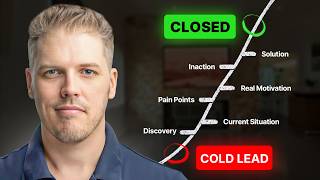
Matt Ryder walks through a six-step sales framework he credits with making over $1M: uncover what the prospect wants, discover their current approach, expose its problems, show the payoffs, quantify the cost of doing nothing, and deliver a structured pitch. He emphasizes emotional motivation over features and uses future-pacing to keep urgency alive.
Chapters
Most sales reps wing it and they wonder why their results are inconsistent. But after being a seven figure earning sales rep, being in sales for 15 years, having multiple companies that went to eight figures, and training people in 150 different industries, I discovered that there was something that just changed everything. There are exactly six phases that every single prospect needs to go through in order to become a buyer. And if you miss even one of them, you lose your chance to be able to consistently convert that lead. But if you follow this process, this exact process, then you can turn almost any conversation into a successful sales conversation. And by the end of this video, you'll have my exact framework, step by step, of how to consistently close deals, no matter what it is. Alrighty. So phase one is what they want. Sounds pretty simple, but it's basically someone comes in and it's like, hey, how can I help you? What do they want? What you're looking to get here is the overarching goal. So you can call it the connecting phase if you're an APQ or it's just the intro to the call. Now there are many different theories on this, but I don't really care about the specifics. It's just the phase one is to understand the overarching goal of what they want. Now, some people hear the, the default is to try and go too deep too early. But remember, in later phases, because you're, you're using a phase, we're going to get more insight and more depth into what they want. So we don't actually have to like kind of go too deep in the beginning because we don't want to be forcing the person to have a deeper conversation than what we actually or capable of having. Right? Like, so if you walk into an elevator and kind of go like, hey, what's your relationship like with your mother? That would be super weird. But if you got stuck in the elevator, you'd probably get away with that after a couple of hours, at least. Right now what's really important here is that your tone is just curious and casual. All right, so if I'm hopping onto a sales call and I'm like, hey man, the point to this call is that we're going to sort of learn more about you and just like, you know, it's just like, oh, God, go away. Nobody likes you. It's like, hey man, like, you know, point to get this call, it's going to find out more about you and see if it can help, like what prompted you into booking the call today. Okay. Like, that's the sheep and wolves closing, if you want to do it that way. But you do not want to be too serious. And I do. I've done enterprise. B2B. You want to be casual and you want to be calm and you want to be curious, okay? And that is how you get someone into a nice, deep conversation relatively quickly because their alarm bells don't go up. They don't feel like they're in a sales conversation, okay? So phase one, figure out what it is they actually want and do it in a nice, calm, casual, and curious way. Phase two is what are they doing to get the thing they want? Now, there is an easy way to do this and a hard way to do this, okay? And, like, they're a little bit different for B2C and B2B. And I'm going to go over both of those. But when it comes to B2C, a lot of people get really bogged down here because they're asking interesting, it ultimately unproductive questions. And the distinction there is that they're interesting, where they're somewhat relevant to what's happening, but. But they're not productively bringing someone down the chain. Okay? So I'll give you an example. Let's sell that. I sell sales training, okay? I'm just going to use that because most people are salespeople, so you might have experienced that in the past, so that you, you know, it's like ubiquitous to you. If I go, hey, what are you doing now for a sales process? I actually don't care about that, okay? Because it's not going to affect my pitch at the end. So if what you're asking doesn't change the prescription, then it's not relevant to the current situation. All right? Does that make sense? If it's not going to affect the prescription, the pitch at the end it ultimately unproductive information, okay? So I don't care how you sell. I care what you're doing to get better at sales. So my situation question or my what are you doing about it question is not going to be, so what kind of sales process do you have now? It's going to be, what are you doing to get better at sales? Because that's what you came here for, right? And you want to adapt that to, like, what you're doing and what you're thinking. Because what that does is, allows you to make the conversation far more pointy, more early. Now, when it comes to more B2B, you're going to have to do both because you need more of that. What you want you need a deeper understanding of what you're doing. So. Because you're going to need a much deeper and more broad problem statement. And when I talk about B2B, I don't mean like you're selling SMBs or SMAs. I mean like you're doing like a more enterprise level where you're not talking directly to decision makers. Now, the key here is don't get lost in the weeds, Keep it on track, and then learn the distinction and write down what is interesting and what is productive and then try and set that on track because it will significantly shorten your calls and lead to far less rabbit holes. Okay. All right. Phase three is the problems associated with the way that they're trying to get the thing. So phase one, what do you want? What's the thing that you want? Phase two, what are you doing to get it? Phase three, what's the problems associated with the way that you're doing it to get the thing, to get what you want? Okay, you can see how this is tracking. It's very, very simple. And I'm using this language on purpose because people try to over complicate sales to a crazy degree. But in reality it's like, what do you want? What are you doing to get it? What are the problems associated with that? And then it's like, let's say you could solve the problems and you actually get the thing. Like, what would it be like? What happens if you don't? Right. Boom, there you go. Sales in a minute. All right, so the problems associated. This doesn't have to be a huge section. People are generally problem aware, otherwise they would not be on a call with you or they would not have inquired. Okay. So the easiest way to get real problem and to have a good understanding is to go through and actually audit the marketing of the business that you're working for and figure out what are the problems that have caused people to actually want to know more information about what you can about how they can solve their problem. Okay. But also, like, most people are fully okay with living with pretty bad problems. Like if you're overweight, like you're living with that problem and you've decided not to fix it, or it's just not worth fixing yet. And so going deep into problem, I don't find is. Is massively productive. For B2C, you definitely want to touch on it because you want to understand it. But they're living it, they're breathing it, and it hasn't caused them to fix it yet. And most people, I find it's a more pleasant sales experience if you are talking about what they want rather than like what's going on. Now hope is a far more powerful motivator for most people and I'm going to go through that in the next one. Okay, now if you guys like this kind of information, I do have a school group. It's a nice affordable group. It's 69 dol a month. And then we have some other tiers as well. And we even have a coaching tier. It's $149 a month. That works out to a $50 per coaching session, right? Which is pretty good. There's like 25 coaching sessions a week for under 50 bucks a month. So if you want to go join that community, there'll be a link down below. I used to have a patreon and a YouTube. Now I'm just doing it through school and I'm way more active. And if you join as watching this in February we're doing a giveaway where I'm giving away a free custom suit and every month I do some sort of crazy giveaway whether it's watches or, you know, PSA graded Jordan rookie cards or whatever. All right guys, so now we know what they want, what they're going to do to get it, what the problem is associated with what they are doing. Okay? And remember, we don't have to go too deep into that one, but then we go into what do they get when they solve the problem. So this is like the next layer down from the initial one. So I'll use weight loss. It's like, hey, I want to lose weight. I'm going to the gym and going for walks and having a normal ass lifestyle. The problem is it's not moving fast enough. I really want to lose the weight by May because I have a wedding coming up and I want to look good in my photos and if I don't, then I'm going to waste all that money on photos and I'm going to feel like a piece of shit for the rest of my life. Okay, so now you're getting like that's the, the first. Those are those four phases, right? And there's only six. So we're almost getting done. What you want to do is you want to get a tangible and an emotional. Tangible is a thing. Emotional is the feeling. The reason why you need both is sort of like think of it as like left and right side of the brain. Okay, now what I'm going to do is I'm going to bring up a video Here. Okay. And I'm going to. I want to show you exactly why it's important to get someone's why, which is like that emotional, intangible outcome. Okay? There's a great line at the end of this little, like little one minute segment video, which is when you understand your why everything you do is more impactful. So it's like, if I know why I'm doing something, then I have a higher likelihood of actually. Of actually doing something about it. And when the going gets tough, you know, I. We actually stick around at the last
episode of Michael Junior's break time. Check it. So your musical director. Yes, sir. All right, so let me get a couple. Let me get.
So I've been watching this video and showing it to people forever. And I've even pulled it up on sales calls when someone is just not giving me the information. Because without understanding why somebody wants something, it's very difficult to create the urgency. The next phase is the cost of the inaction, right? And you can do that off problem, but it's far harder and it's much more impactful and causes people to do things that are in their best interest. Far more if they. If they do it based off never being able to achieve the solution. Because the solution is what gives you the hope and the feeling and the want, okay? And whether that's buying solar or fixing pickup rates or whatever it may be, there is always an emotional element to it because the emotion is tied to the outcome. And the outcome gives a feeling like nobody, like, dedicates their life to winning a gold medal because, like, they want to have, like the fastest time. It's because they want to have the knowledge that they are the world's best. They earn that gold medal. It's the vindication, the satisfaction, and like the knowledge that you are the best that exists. And that's what they're hunting. It's not the metal. No one gives a shit about that, Right? People sell them because they're usually broke.
A couple of bars of like Amazing Grace. Can you do the first part of that? Go ahead. Amazing grace how sweet the sound that saved a wretch like me wow, that bro could sing. You know what I'm saying?
I've watched this so many times. They're the exact same facial expressions as the guy in the video. So that was a beautiful version. Obviously the guy can sing. Okay? Now what he's going to do is give him a bit of context to the singing. And music is an incredibly emotive thing. There's a whole Bunch of guitars here. I love music. My wife is a like, trained, like violinist who can compose orchestras. And so music is a big part of our life and it's incredibly emotive. And so what it does is like, it. This. This blows up what this is. And you can see it in such stark reality and contrast that it's a really helpful video to understand what happens when someone understands why they're doing something.
Once you're giving a version is if your uncle just got out of jail, you got shot in the back when you was a kid. I'm just saying, let me see the hood version real quick. If you know what version I'm talking about.
Just see if that exists.
Let me see what you got. Amazing grace Praise how sweet
the. I get goosebumps every time I hear this. That sa.
But now, right now I'm fine but blind but now I.
See. Okay,
here's what I want you to catch. The first time I was in the scene, he knew what he was doing. The second time, he knew why he was doing it. When you know your why, your what becomes more impactful because you're walking towards or in your purpose.
Okay, so phenomenal line. When you know your why, your what becomes more impactful because you're walking to or in your purpose. But listen, I'm not a woo woo mindset guy, okay? I'm just not. But when you understand why you're doing something, it is incredibly more impactful and you are far willing to do stuff. When I joined the military and joined Special Forces, like nine, I was the exact age, okay? And I believe that was an inside job. And it was all bullshit. And it was basically a big recruiting scheme. And it worked beautifully because I wanted to go over and kill terrorists. Like, I don't want to kill people. I wasn't like, I'm not a fucking psychopath. I thought you weren't insane anymore. But I wanted to do my part, test myself and, and know that I could defend myself and my country. And so I went over and became Special Forces. And I had this. I had this like heroes kind of like I needed to become that, right? For whatever reason. But like, like I was willing to do tremendously difficult things. And there are people who came with me but quit, and it's because I believe that it wasn't because they weren't physically capable, because I'm not. It's not fitness, it's toughness. And so all that is, it's the. It's the willingness and determination to do extremely difficult things and face Grit, because the outcome is truly worth it to you and the consequence of not achieving it are so dire and unacceptable in your own head that there is nothing you won't do in order to achieve it. Obviously within the realms of reason and sort of like, you know, hopefully morality, right? And so this is, this is why getting, getting the tangible and the emotional payoff are so important. And then you juxtapose that with the cost of an action, which is phase five. It's the cost, the price of not getting the problem solved. Now, I want to have a little bonus in here. There's like a mini phase or a mini question, okay. A lot of the time, if you do a great job of future pacing somebody out, what will happen is that they will go into denial when you ask them a sort of consequence or a cost of an action phase. So what I started doing a long time ago was I. Once I get the sort of solution, okay? And again, we never promise anything. Like, I don't. Like, there's no guarantees in life, right? You can get hit by a bus, yada, yada, yada. But it's like, okay, like that is what you want. And if this, if you feel like this puts you in a better position to be able to get it, then perfect. If you feel like it doesn't, that's fine too. But that's really kind of what we're selling here, you know? But I like to do it like an awning question. So by awning, I mean kind of like, you know, jumps off and like instead of he falls off a building and instead of splatting on the ground, he hits like an awning and then he's fine. People need that sometimes because when you future pace out, they go into denial. And so it's like, okay, with what you have in place now, how close are you to really being able to. And then you give that emotional outcome and the chances of them saying I'm close is very low. They're going to say, oh, I'm not really that. I'm not really that, that close at all. Why not? Well, because this, this and this. Okay, what happens if that doesn't change and you kind of keep doing exactly what you've been doing and you don't ever end up being able to blank. That is the cost of an action question. But you have this bump question in now. If they say I'm pretty close and you. And you built a good gap, then you can just say, well, like, you know, I'm not a math expert, but if you're here and you want to be here. You know, scale of 1 to 10, 1 being you're nowhere near it, 10 being you're there, like where are you? And they're, you know, and it's very easy to then kind of bump them down to like say a three or a four and say, okay, why you're three or four, certify that point. Okay, cool. Do you want to change that? Yes. Well, what happens if you don't? Right. Cost of an action question. Cost of an action questions are to build urgency. The tonality is usually going to be like, you want to be careful not to go too low with it because like that can be a really stark contrast between like the interested and sort of like, oh yeah, tell me more, tell me more type vibe of the, of the phase four. But you do want to be like, just a bit more neutral with it. Okay, what happens if nothing changes? If you go too deep with it and what happens if, if nothing changes? You know, it's just a bit like, all right, we know what you're doing. Okay, so that's pretty much it. Build urgency. Phase five, phase six. The final phase is the presentation. I actually built a whole course specifically on pitches and presentation in my school community, if you want to go down there. And I also have, I think I have a video on the presentation in my YouTube which you can go and find. But really you just don't want to go in too much detail. Okay. Now there are some presentations where you're going to, like, if you're selling SaaS or whatever, you're going to have to go into some details. But what you want to do is you want to have like a pillar structure. This is the problem, this is how we solve it. This is why we do it this way. Does that make sense? If you put too much detail in, you want to have answers to the questions, but if you put too much detail in, it can cause issues. And I'm going to give you an example, a visual one and then one that's more like steeped in like reality. Right. The visual one is like one of the things that people need in order to move forward consistently is clarity. Now more information doesn't mean more clarity. And so if you're sitting there at the edge of a, at the edge of a river and it's crystal clear and you can see the bottom, right? Then you, you'll confidently walk across even if it's neck deep water, if, if you put any mud in there at all, right. If you muddy the water by putting More things in it. Gotta learn to breathe. Choked in my own spit. Aiden's gonna keep that in for sure. He's a piece of shit like that. But if you, if you add more things in there, then it gets muddy and people won't have the confidence to move forward, right, because they can't see the bottom, even if it could be like really shallow. And so adding more stuff just sometimes muddies the water. There's a right amount of information that, that keeps it nice and clear. And so I remember I used to sell this business coaching to trades. It was a $30,000 program. It was all like, you know, builders, you know, like usually, usually like 5 million plus revenue. And like what, what would happen was if I mentioned the in person events ever, they would always sort of go, oh, when are they? And then it would end up causing issues because if I give you 10 deliverables and say it's $10,000, your head is going to immediately kind of assign a value to each one. If you can't do two of them, then like you're, you're then going to go, oh, well, I now value this at 8 and it's 10. So I need to go in and think about it. And so there are things in your deliverables that, although are very valuable, are not that valuable to present with, right? Because they can cause logistic or administrative issues. And so I cut it down to like the minimum things. And then what had happened was they would go into the program and then they would be really happy because there was way more shit than what they had signed up for. And then I would get referrals that are the six phases of a sale. What do they want? What are they doing about it? What are the problems associated with what they're doing to try and get what they want? What's the payoff both tangibly and emotionally? Okay, what's the cost or the price of not solving the problem, not getting the thing, and then the presentation phase. Hope that was helpful, guys. Make sure you like and subscribe. Hit notification bell and share this with a friend, okay? And go join the school group, for fuck's sake. It's like cheap as shit. All right?





