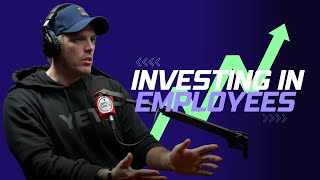
This is a YouTube video titled "Giving away equity in a company" containing a discussion between two speakers about employee share option programs, equity distribution, vesting periods, and incentives to retain key employees. The conversation explains how equity is used to align employee interests with company success and the financial implications involved. The content was created on October 18, 2022, and focuses on startup equity management and employee motivation strategies.
Put that coffee down.
Explain that a bit more because I think we make a lot of assumptions, you know, talk to us please in the comments if you're listening, you know, just the audio jump under the YouTube, find the YouTube video, let us know in the comments because I think we make assumptions about the audience is that they're all salesforce people, whatever. Right?
Yeah.
And I think that you explain a lot of things. You just kind of gloss over a lot of things. Right. That I think could be explained. So equity and giving it in the company, like to what extent do you give that away and what does that look like in reality?
Probably overly aggressively. So we have a employee share option program. So very expensive, time consuming to set up because they're like regulatory things that you have to have. But essentially people have options in our company. Right. So they're basically given a chunk of it right now that has what's called a vesting period, which is like you have to work here for 36 months. Once you're here for 36 months, you own that piece of the company. Right. And that can be however much we dictate. Right. So we have key stakeholders and then we have, you know, who have equity. So which the main is me, Marco and James. Like we have the largest equity stake and then from there we have like some other shareholders and then from there we have our ESL. Right. And so like I own like 35% of the company. You know what I mean? I could own 100, but I mean like how, how invested are the people going to be?
Yeah.
So they're just going to get another offer. Yeah. No matter how cool I am.
So the whole reason you do that is to give people skin in the game. And so that they're here beyond. I get paid to be here, but beyond, they have a piece of it. A piece of this is theirs.
Yeah.
And they're as invested in its success beyond their paycheck.
There's.
There's more beyond that.
Yeah. So the way the, the archaic way of describing is called golden handcuffs.
Yeah.
Right. So like let's say I give someone 2% of the company, whatever right now they might get, it'd be in shares, let's just call it like 100,000 shares. Right. So they would have a three year vesting period and I might say, hey, you've done really well. I'm going to give you 25% of your shares with an immediate vest, like a 48 hour vest. So it's like sweet. In 48 hours, from the time that we enact that you own 25 of those shares, they're yours, they're good to go. You could technically transact them, but that is now in on your wealth ticket, right? Yeah. Because it's valued at whatever it is per share. So you got that for free. You know what I mean? And there's ways that we have to structure that so it doesn't. Fuck people's taxes.
Yeah, I was gonna say. So that's kind of the issue, like for people listening, they may not realize that if someone gave. If you gave me half of this.
Company right now, you'd get an enormous tax.
Oh, you would bankrupt me in doing so.
Yes. Yeah, big time. But there are ways in which you can structure that to where that doesn't happen. Right. And employee share option programs are designed to be like that, you know, so it's not just giving you chunks of equity. It does not how it works. Right. So. And then I could go, okay, you get another 50%, 24 months after that, and then you get the remaining 25%, 12 months after that. So it's three years, you could do 10 years, five years, whatever. And everyone can be different. Like, it's the beautiful thing. There's no, there's very little rules with an esop, as long as you have it structured correctly. So. But in doing that, it's like, let's say I have a rock star, like a Will Hingson, right? I pay him very good money, but he might get another offer. But then he's like, oh, man. But I'm. I'm 12 months away from getting my shares vested. So I'm giving up on all of this to take more income. So I'm giving up on wealth to take more income. And then what you can do is you can come to me and go, I've been, I've been made this offer and then we can match it or we cannot, or we can, you know, have a bump or whatever, or even provide more shares. Go. If you knock that back and don't take a higher thing, I'll give you another 50,000 shares. And it's like, oh, fuck. All right, cool. With a, you know, a 12 month vest at the end of that, you know, so it gives you kind of like options in order to keep really good people. Also, like, those are dividend paying shares. So it means that like over the end of every financial year, you know, we have all the profit. So everyone's incentivized to not only grow the revenue, but grow the profit because they get their share in the Profit. And then if we ever IPO or exit or ever, then they would participate in that as well. And so it's like we're all kind of like, you know, and my job is kind of like the rah rah sis boomba dude is to buy in everyone on the ultimate vision, which is like the value of their shares. And it's like the decisions that we're making are designed. Are designed to increase the value of the company of which you have a share, a stake in. You know, so it's like when I give you your initial shares, they're worth 10 cents a share. In five years, I want them to be worth 72 cents a share. Hence, you have 7.2 times the amount of wealth just by staying in the company, you know, and so it kind of like, it kind of bonds everyone together.
Yeah, that's. I was going to say, I think that's one of the things that sort of makes others feel a little bit more interested in the accountability of their peers. Right. Because like, hey, where if you don't perform, it's not just you that is affected. I am affected by your underperformance.
Yeah.
Therefore, like, I will invest in you. I'll help you rather than just watch you fuck it up or like hope that you get fired because you probably. It's very unlikely that you will. So we, we need to work cohesively to. To push the machine forward.
And the way that we did it is somewhat interesting. I don't even know how much detail I can go in, but it. Whatever. Put that coffee down. New episodes released every week on your favorite podcast app or you can watch them on YouTube.