How a Former Pro Rugby Player Became a Successful Fit Biz Entrepreneur
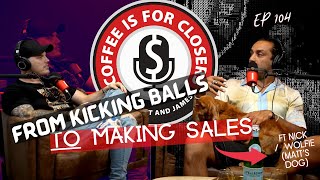
Matt Ryder interviews Nick Bradley about his transition from pro rugby to building a fitness business. Bradley discusses sales strategies, business coaching, and the challenges of scaling in the fitness industry.
Hey, guys. What's up? Matt here, this is another edition of Coffees for closes and we have Nick Bradley on today. Nick is a successful fitness business entrepreneur. Got a lot of stuff going on, so I wanted to get him on here today. Just to wrap. I've known Nick for a long time.
And we've gone through our own independent journeys and we've intertwined.
We sort of crossed in and out.
A few times, so I thought it'd be a fun conversation.
Nick's a cool dude, so make sure.
You guys stay all the way to the end. Make sure you, like, subscribe, hit notification bell, all that kind of good stuff. And we will see you after the intro.
If you listen to this podcast, you will make your first million within three years. I'm going to repeat that. You will make a million dollars within three years of the first episode. You listen to. We don't want pikers. We're not here to save the manatees. We're here to make podcasts. You really want this? You listen and review. Put that coffee down.
Nick. How are you, brother?
Fantastic, actually. It's great to be in this studio.
It must be. It must be really exciting.
No, no, because the gear. You've got all the best stuff. I know I've seen you on this journey escalate from little tiny pieces to.
Get to all of these. It's cool.
Yeah, yeah.
They say never meet your heroes, but here you are.
Here I am again.
Yeah.
Tell us a little bit about yourself, dude. Like, I've known you. Obviously, me and you used to be.
Pts in the same gym.
We were doing. Yeah, the hard yard of coaching at the start. Um, we were PTs in the gym. I kind of could see that was pretty limited early on.
Yeah, yeah.
Had a great client base. I was coaching CEOs, executives. They're flying me around the world. I was doing that whole thing with celebrities and all that kind of PT goal, but I could see I was limited. I was still on other people's time, you know.
Yeah, yeah.
So at that point I was like, I need to start a business. What was the cheapest way I could do it? I'd. My family had lost everything in the financial crisis in my.
Okay, yeah, mine too.
Yeah.
My stepdad lost his business, lost the house, everything.
Yeah.
And I had given all the money I'd made playing. Cause I was. I played rugby league professionally, so I played for Manly in the Tigers in the nrl, and then I was in the World cup for Fiji. I made this money, gave it to my family to sort of stave off bankruptcy. So at that point I was super risk averse.
Yeah, that makes sense.
You know, I was like, oh, I can't. I don't want to go fork out a whole heap of cash for another business. And I was like, how can I do this in a way that's cheap? And I looked around at community centers that I could refurbish. And I grew up boxing the PCYC in when I was a kid from when I was age of 4. And the PCYC in the city of Sydney in Woolloomooloo was quite dilapidated. And I was like, oh, I could do something with that. Like I could immunity put an awesome gym in there. And that's what we did. And then I think I started working with you at one point on Facebook ads because you, you had a gym and stuff was working. So that was the first place we kind of came back together.
Yeah, yeah, it was. And I sort of, I was doing.
A sports model project.
Yeah.
And then you and Flex came to.
Me and were like, hey. And I was like, well, you have Hattie. I was like, just do what I'm doing.
And I was like, here you go.
Here'S all the campaigns. Just go off and do it.
Yeah. So we did that in the gym and it was awesome.
Yeah.
And then you guys took that and.
Proper ran with it.
Well, at that point I was doing all the marketing and sales for the gym.
Yeah.
And then once we started doing the sports model project, I get on the phone with girls and like, oh, in Perth. And then I just started pitching them stuff on the phone. Like, we've got this program.
Yeah, perfect.
You know, and we just took the programs we're running in the gym and we started experimenting. Like, and that was before it was really popular to do.
Yeah.
That level of like high level coaching online.
Okay.
So we were really going to a lot of detail more than like, hey, here's a program with a couple of exercises. It was like really looking at this whole person.
Yeah.
Well, also like you've got, you've got.
A figurehead being Hattie.
That's right.
Who has like the most legit of credentials.
Like world champion gymnast trains with the strongest people in the world. Like big power lifters. Bow down to her because she's a weapon.
She's savage.
She is a weapon.
Yeah, yeah. People have ever trained.
They're like, oh, yeah, yeah, yeah.
She's really cool. Yeah, it's really funny. So like we started kind of working together and we were doing some stuff and we Always, like, sort of crossed paths and had a good relationship. And then we both opened up gyms.
At relatively similar times.
Yeah.
Like, you were in Willamalo and I was in. What a rough.
We were living the not dream.
I made less owning a gym than what I did just being a PT in fitness first.
It's way less, like, half, like, half.
Like, way more work. Way less, like, interaction and joy. It was.
Yeah. But it looked like I was having fun.
Yeah.
Yeah.
Like, it's. Jim's is a really interesting business. It's really funny. The guy that we just promoted to.
CEO of Sales Sniper.
Yeah.
Being Will, he owned gyms as well.
Right.
And I think, like, Jim's is the trial by fire.
Oh, he cannot think of a more.
Such good training.
Yeah.
It is. Really.
You need to learn how to fail.
You really know how to fail because you're going like, I'm enthusiastic. I'll do this. I'm that guy. And it's like, yeah. Oh, I need.
I'm lacking skills.
Yeah.
What do you think, like, especially from a sales perspective?
I think, like, if you can find a fitness person to sell for.
Yeah.
That is the greatest thing. And you really controlled the sales of that gym.
What was your. I guess, like, overarch. Do you have, like, a methodology that you were following or were you just.
Kind of flying by the city of.
In terms of sales? Yeah, yeah. I started working with a sales coach really early on. Like, I realized, oh, we're not doing well. We're going to go broke. And my partner at the time didn't want to pay for business coaching. So I just, like, stumped up 25k and said, teach me sales, Gulliver.
You know, like, yeah, yeah, that's Gulliver jobs.
Yeah, yeah, yeah, yeah.
And I was like, okay, yeah, teach me sales. And then I did that thing that everybody does relevant. Like, I did a quarter of what he said.
Yeah.
Half of what I thought. And then a quarter of not doing anything.
Yeah, yeah.
And then like a few months later.
I'm like, what's going on? We're not making any money. And I realized I'm a client.
Yeah.
I didn't do what he said. So I called him up and said.
Hey, listen, I want to do it again. And he goes, great, you can start. I'm like, look, I don't have any money. I spent it all the last time. And he goes, well, I don't have 25 grand. He has. Great. It's 35 grand now, so it's perfect. You can give me, five grand and get started. So I did. And I'd started doing the call. So I'd had the thing where I failed. Realized, oh, I need to actually talk to somebody who knows what they're doing, has a method. And then I got really religious. Like, I had a script. I called, like, you know, over five years, I made, like, $5 billion in phone sales for a four and a half grand.
Which is huge. Yeah, exactly. 50 grand offer.
And this was like calling a list. There was no bookings. There's no appointment set up.
Yeah.
I just called a list every day for eight hours. Spoke to, like, thousands of women about how they were feeling.
Yeah, yeah.
It's been trusting.
Yeah.
It's a big job. But I learned heaps.
And then I was a copywriter as well, so I kind of wrote. Had his, like, character into existence. I take, like, what she was saying, the essence of it.
Yeah.
We're hearing from them on the phone and just created this thing. And. And so then it's really powerful, like, if you're talking to people on the phone and copywriting to a list, however that list is developed now.
Yeah.
It is a really cool experience, copywriting again.
Like, I did John Benson's 3x VSL course.
Yeah.
And that made me so much better at communicating, selling John Benson's.
Like the godfather of ESLs. Right.
And I remember when I was doing.
The marketing for those gyms and I'd.
Gone through TJ's thing, which I'd realized.
Was an iteration of Gulliver's.
Yeah, it was a tag view. That's what I realized. That's how I got into it, actually. I did TJ thing. I was like, he didn't write this. This is not his stuff. No, he just ripped it straight from somewhere. And I traced it back, you know?
Yeah.
And then I spoke to Gulliver because.
I bought Gulliver's 10k thing. And I was like, hey, man, I just did this.
Yeah, I did exactly everything. I did have the same experience.
I did it word for word. He's like, well, I was like, dude, you gotta offer me something different.
I just did this. I'm sorry. This guy charged me less for this.
6,500. Oh, man, that's funny. But, yeah. And so, like, then I did John Benson's 3x VESL course, which is all about copywriting, because then I started writing.
All the copy for the ads.
Yeah.
And then that made a huge difference.
Actually having a structure to follow for.
Copywriting and then adding in, like, okay, now you Know what's being presented to the audience so you understand the messaging.
Better and how to get them enticed. Then the sales component becomes much more natural. You know what I mean?
It really does, man.
Yeah.
And like. But like for me I really like. Because I did Gulliver's stuff and I, I did it really well because I'm.
A pretty, like I can be pretty rough on people.
Yes.
I found as I got more nuanced and into sort of bigger deals and more business to business, I found like that like it was as a foundation to be able to like it's very slappy slappy.
Right.
It's.
Yeah.
It is harder for the reps, I think.
Yeah.
There's a, there's a level of like holding this. This level. One of the things I've enjoyed about your stuff is there's a bit more of a process on the front end.
Yeah.
If you're a really good salesperson, his stuff's great.
Yeah.
Well, I actually think it's perfect for.
A business owner who's selling their own stuff.
Yeah. Because you're passionate about it.
Yeah.
You want to go there and you can be authoritative. Yeah, authoritative. You have this belief in your thing.
Yeah.
It's a bit harder when people are coming on to do your stuff. That's. That's where it gets a bit more tricky.
Yeah.
And then like because when I was, I became sort of a sales guy and I was using combination of that stuff.
There's some other stuff that I've learned.
And you know, I mean, I think.
Through another guy like Andrew Sparks, another guy that we went do the same.
You know, I mean we, me and you did the Australian business coaching rounds.
Yeah, we did the thing.
I would say there's not many people I haven't done something with or bought something off.
And that's what.
That's cool because you get these perspectives.
You take stuff from people and then it seems like where you're at, you're getting your own nomenclature and you're developing conceptually like what's yours.
Yeah.
But one of the things I admired about your process, observing it is you went deep on the things like what can I learn here?
Yeah.
And also I admire that you acknowledge people. You know, coaching is full of like non acknowledgment of where you got your stuff from.
Yeah. Like listen, a lot of my stuff is very much any pq Jeremy Miner. But I have a very different background to Jeremy.
So like.
And I don't think you can try one of the things that I think people screw up, especially around sales, is trying to become the person that they're learning off.
Totally.
Whereas what you have to do is understand. And I think there's something that you probably do well as well with that obsession.
Like, you need to become obsessed with what you're learning and dive so deep.
Into it that you understand not only the what but the why.
Yeah.
And when I start to understand the.
Why, you start to go, oh, yeah.
Now I can dissect the thought process.
Of what they're doing.
Yeah.
Which means that I can then start to replicate the thought process.
But I can put my own.
Yeah.
Doing it. That Venn diagram that you've got that no one else has. Suddenly that all of that becomes much more relevant.
Yeah.
And like every. Especially like with selling fitness, like high end fitness. Like selling high end fitness is a.
Difficult thing to sell.
Yeah.
Because it's like it's a thing that doesn't exist.
Yeah.
Like it never exists. You're not selling them a physical thing.
They get.
You can't break it down. Like you say like a B2B sales. Like you can, you can reverse engineer that business and go, this is what's missing. It's a bit harder with fitness. And then you have to sell them something they don't want to do.
Yeah.
Like, and then get them to do it.
And you have to tell them to do things.
Stop doing things they enjoy.
They enjoy that they've done for ages.
Which they're pretty convinced they just do more of. They get a better result.
Yeah.
It's a really weird space I always have in fitness.
The reason why, like, all the best.
Sales guys that I know come from fitness.
Yeah.
Well, except for Anthony's out there who's.
Just a straight up, like unicorn killer.
But like, most guys come from fitness one because you get a really high volume.
You get tons of objections.
Yeah.
So, like you just learn how to. Like, if you hear 10,000 objections, like, you'll get pretty good at recognizing and figuring out.
That's the. Yeah, yeah, yeah.
Exactly. But you're convincing people to be in physical pain.
Yeah.
Stop doing things they love, like eating.
Chocolate and do things that they don't like. And like, it only works if they do everything.
Yeah.
Like, it's such a hard sale and it's so emotionally driven. Like, I guess, like, what are some of the things that you found, I guess selling that much fitness that are.
Like some of the core, I guess the belief structures that people have within.
I mean, they're all mainly belief structures. So you know, I actually get quite annoyed. I grew up with a single mom.
Yeah.
And as a kid, my mom would get up in the morning, we would go clean office buildings at 4 in the morning. And then I go to primary school, and then she'd go study all day and then she did the whole thing.
Right.
Savage.
Yeah. So my experience of my mom was, oh, if things have to happen, you just do them.
Yeah. Yeah.
So I get on the phone and I really hate, like, people giving things away to other people. Like, oh, my husband won't let me do it. I can't do it because I've got kids. I'm like, don't blame your children if you're not doing stuff.
That's really unfair that you've lumped, like, your lack of doing stuff in your.
Life on your kids. And it's a hard thing to say to someone. Right. Like, you got to live it out the right way. But the reality is, like, you have options. You're not taking them. You could work some more, sell some stuff. I've seen. We've seen people do that. You know, we go, do you really want this thing? And I think belief, or maybe what's hard for them is they really focus on this one thing. I don't have enough money, like today or next week or whatever.
Yeah.
And they're having a hard time going back from that and saying, like, of the two pictures, the little bit of lack of money I'm feeling all my life, like, which one of the two things is important? And that's the thing they get really focused on temporal things. Time, money, what their partner thinks. Like, the fact that you. With their kids and it's hard for them to zoom in and out of that, you know?
Yeah.
I think, like. I think people, like, it's like, it's.
The devil, you know?
Yeah.
And people.
Is one of the things that I.
Try and sort of let people know.
Is like, people will fight tooth and.
Nail to stay exactly where they are.
Oh, they love it. I want to argue for that.
Yeah.
Argue like that.
Like, they're adamant.
I cannot change this. Like, yeah, you're not doing anything.
You know, it's really funny. I had a moment, like, a few years ago.
Yeah.
When I was like, sort of like, this is coming towards the end of.
Me leaving RBT and all that kind of stuff.
And I was fat and unhappy.
Yeah.
I was 125 kilos.
Yeah.
I was very unhappy.
Yeah.
I just wasn't fulfilled in any way, shape or form. And everything was going.
I was Making you having that. You're having the business experience at that point.
Yeah.
And I was proper business owner.
Right.
And I remember, like, me and my best mate, Pat, we were like, hey.
We'Re both fat pieces. We should probably do something extreme and completely unsustainable to fix this. And we were like, that sounds like us.
Let's do that. And so we bought those mep. You know, those, like, it's those bands that you wear.
And then, like, it tracks your heart rate and then it gives you points.
Yeah.
And it's like one point, you know, and the higher your heart rate, the more points you accumulate. But you can create competitions in the.
App where you can see other people live.
Right.
And I went from, like, vehemently saying.
I am a business owner and a father. I am too busy to work out consistently.
Yeah.
To working out two to three times a day instantaneously.
Yeah.
And because I had the motivation of not losing, now I lost. And if you look on my leg, it says outmapped right there because I lost that competition.
Right, Right.
So that was the deal. The loser had to get out mapped because the map was the it's whatever measure it's point. But it was such an eye opener for me that, wow, like, motivation is everything.
Yeah.
And, like, I didn't want to lose.
To my best mate.
Yeah.
Right.
And he didn't want to lose to me. Now he had a lot more time. But now I have the tattoo to prove that I lost. But it was just like, there is no excuse.
Yeah.
If. Because if something is of value, I.
Will figure out how to make it work.
And I think that that.
That is one of the lessons.
Like, the moment I kind of, like.
I clicked into gear as a sales guy.
Yeah.
That.
Oh.
People just, you know, a myriad of.
Reasons will fight tooth and nail to stay exactly where they are.
My job just becomes to get them to make a decision.
Yeah.
And it's not even to buy.
The decision is to do the things required.
Yeah.
And then, like, everything from there will sort itself out.
Yeah.
And that's when I started to get.
Better at sales and started. I always had a process, and I.
Kind of think when you hit. When you say it enough times, you realize, like, it's just a choice. It's splitting at this moment.
Yeah.
Like, you're in that, like, sliders moment where you go down this pathway or this way. What's. What's it going to be?
Yeah.
A way in towards. Those are the only two options.
Yeah. There is no, like, there's no there's no third one. Like, you can't move back around.
It doesn't work like that.
Yeah.
And fitness is a particularly interesting one because I think you get the opportunity.
To get a tremendous amount of volume, have a lot of these conversations about deeply emotional things.
Yeah, right.
How did that affect you? That, like, I know how it affected me and I can go into that. But how did it affect you?
Like day to day doing that many.
I was really social person before.
Yeah.
Love to be with people, always around people and doing that level of emotional sales. I was like, I just on the weekend, need to rest from people.
Yeah.
I want to be on my own. I need to chill. You know, it was a different. It was a different type of thing, but I also got a real appreciation for what people are going through.
Yeah.
You know, I've been an athlete. I've always been like a successful, more or less. You know, I'd always achieve things.
You're driven.
I was driven. I've been that person, you know, like, you know, the story on television is I didn't do stuff with 20 years and now I think I want to be a singer.
That's not my story. My story.
When I was five, I was trying.
I worked as hard as I possibly could.
I went to university. I tried how to play football, and I did. And I started a business and I.
You know, yeah, that's. That's my story.
But I.
And I've been around people doing that for a long time. I've been exposed to elite stuff a lot and then realizing, ah, other people just haven't had anyone say to them, like, no, that's not good enough.
Yeah.
Or it's just a choice you're gonna make here. Like, all that stuff is noise. I can hear it. I'll listen to every piece of it with you and I'll handle that with you. But I realized, like, I can see from where I'm standing, that's just a decision that you're making. Like this or this. Which one of the two is it? And I realized that they just never had that, like, people don't get pushed enough. I don't think a lot of the time. And no one tells them the truth. Like, they won't say the truth and say, you have heaps of time.
Yeah, yeah.
You got as much time as everybody else.
You have heaps of time.
You just.
Elon Musk has the same amount of.
Time, same as me, Beyonce, whoever you're hero is.
Yeah.
Even like just people in your community that you say are they getting heaps of stuff done. They're the same time as you.
Yeah.
And people don't have someone telling them the truth often enough, I think.
No, I totally agree. One of my sort of lines in.
Sales is like, hey, everyone knows that business owner, that is a six pack single mom, four kids, seven figure business, doing warrior pose at 4am on the beach in the morning is like, what is the difference between her and everybody else? And it's like she understands what happens when she wins, but more importantly, she understands what happened when she fails.
Yeah.
And if you catastrophize failure, you have a lot, much more motivation to run away from it.
Like, you know, like people don't walk.
Out of a burning building.
Yeah.
They run out of.
Yeah, they'll jump off out of the third story window.
Exactly. Because like they understand that the devastating.
Consequences of the inaction.
And I think a lot of people these days, they just, they sort of somewhat contemplate the success.
I don't think they contemplate it deeply enough.
Yeah.
Like on the tangible and the emotional like nitty gritty of, hey, what is it like to actually get there?
Yeah.
Because that gives you a whole different perspective.
Yeah.
But the failure, like I hear all.
The time, well, I'm going to refer.
Like, oh, I'm going, no, I'm definitely.
Going to figure it out. And I always go, well, you haven't yet.
No.
And you've, you're six years into not figuring it out.
Yeah.
And you're like, yeah, when you started you were 30, you're 36.
It doesn't get easier when you're 42.
Exactly.
Like if this is your process so far, it's going to continue.
There's not some magical age where you.
Just figure, no, it doesn't just happen to you.
You just get more stuck in your way of doing things.
So when you're going back to your days at the gym and when everything's not going great, how, how does that affect the you in terms of like.
Well, you, you've had all this hard work and success leading up to that point. You've made this money, you've been a professional athlete, you've now handed it off. Now you're in a position where things aren't going that great.
No, I asked myself like some really serious questions like, oh. Cause I always felt like I could have had a better football career. There's not one athlete that doesn't think I could have done better. Like, Tom Brady just came out of retirement.
Yeah.
You know, did he really yeah, he just came out of retirement.
Oh, that is savage. Yeah, he's like, retired for a day.
Yeah, he retired for a day.
I'm still the best.
Absolutely. I'm gonna do it. I'm gonna show you guys, like, you.
Know, what a savage.
So I think that's a common experience for athletes.
Yeah. Yeah.
But I did. I looked at myself and went, what went wrong with that? Like, why didn't I do better as an athlete? And then I said, well, why am I doing better in business? And the answer I had in my language at the time was, I just wasn't coachful enough. Like, I was the type of person when I was younger to go work secretly on my own, like, practicing, but then not signing to the coaches or ask. Even ask for coaching. Yeah. As an athlete, you know, I just wanted to show them how hard I was working, and that's not enough. Like, there's a part of being mentored by somebody which is you humbling yourself, showing them that you want to receive the wisdom that you're in, that you're listening and you're part of the thing. And I realized the same thing with the business coaching. Like, oh, I haven't done any. Like, I haven't even humbled myself enough to say, help me. And people will look at me and go, you're super capable. Because I am. I can do lots of stuff. But to go to the next level in anything, you need to realize, I don't know that. Otherwise I'd be doing it. I can figure it out maybe, like, but I could cut.
But what's the time cost?
What's the time cost?
Yeah.
And then also the emotional cost. And there is so much joy in saying to someone, hey, can you help me with this? Especially if they can see you're the type of person that does the work. I've never met a mentor or a person who looks at me and goes, oh, no, I don't want to give you some specific help with that thing. Because they know.
Do you know what you just said? You said specific help.
Yeah.
And that is so. Because, like, you know, I get asked.
10 times a day on Instagram. Whatever.
Hey, I know we live in the same city.
Can I buy you a coffee and ask you a few questions? And I know you can't.
Yeah, like that. Like, no, I don't want to do that. But if you came to me was like, hey, I've been studying this, and.
I've listened to all your podcasts and watching your videos. I have one question about this.
Could I spare seven minutes of your.
Time and do that. I go, of course.
100%.
Like, oh, yeah, of course. Because you have been seen. Not that I'm the guru of all things, but, like, I'm good at a couple of things, but it's like, oh, okay. I can see that you have put in the effort to solve the problem.
You know what I mean?
And the big one, you got to see someone's trying to solve it, and then they respect you enough and your time and the level of mastery, whatever. However you put yourself in the pantheon of mastery of this.
Yeah, yeah.
That they respect because they're not in the same place yet, so they have to respect. There is this element. We've lost it a bit in society of, like, just respecting people with some level of authority for doing something.
Yeah.
It's okay to respect authority.
Exactly.
You know, to go, oh, that's great.
And then you respect it by showing, hey, this is my offering. I've studied all this stuff. I've tried this, this, and this. I'm stuck here. Can you give me some advice? And who doesn't like to do that?
Yeah.
And I think, like, people enjoy mentoring people.
I love it.
And I tried to explain this because, like, every mentor I've ever had, for.
The most part, I've ended up being quite entwined within business.
Yeah.
Like. Like with tj, he was kind of my first mentor.
Ended up going into the businesses with that, however it worked out, whatever.
But the next one was Jeremy. It was like, hey, I was like.
I need you to mentor me.
I paid in the money.
Right.
But I was like, okay, like, the worst case scenario here is that he's my sales coach.
That.
That is the worst case scenario.
The best case scenario is, is he.
Becomes invested in my success.
Yeah.
Now, how does. Why would someone become invested in your success? Because, like, if I go, hey, man, I want to be a super successful sales guy like you were, or I'd.
Love you to mentor me. I'll obviously pay you for your time. I don't want much from you.
Right.
I don't want things from you. But, like. Like, I'll just ask you certain questions, and if you would be willing to answer them, that would be great. But obviously I paid for the time.
And then it's like, oh, hey, man, I implemented that thing.
It made me an extra 20,000 bucks. I want to say, appreciate that.
Now, if I start seeding that as my success is your success.
Right.
Then when I ask for something that.
Will make me more successful, it by proxy. Makes the mentor more successful.
Yeah.
Therefore, I will get what I want. And, like, I remember going to Jeremy and going like, hey, I can run your business better than this. I was like, you need to give me the con. And I would ramp it up. He was like, okay.
It is a crazy thing that. And often your mentor, that there's something about them that they're embodying that you love.
Yeah.
They're the best person to hang around with for a whole heap of reasons, because, like, they're doing this thing that you're really into, you know?
Yeah.
And that was a lesson for me early on at the gym.
Like, I.
When we were working together, I was like, this didn't work in football, where I didn't talk to the mentor. So I just went and found the person with the best business, made friends with them. Brent. You know, you remember Brendan Harris that we used to work with?
Yeah. Yeah.
He had, like. He was basically just pitching the. The C suite of companies, signing a contract and then training all their top executives, which is a pt, is great. He left the gym and gave me his business because I developed. I. I humbled myself. Like, look, I'll cover any shifts that you need. I'll do anything you want. Basically, I learned from you. I paid him for mentoring, and I learned that when I was like, oh, actually, people love someone apprenticing themselves.
And.
Yeah.
I find as a business owner, I'm like, so many people come into the business. I'm like, you didn't really apprentice yourself, and then you left to do a thing, and you didn't really learn the stuff because there wasn't the learning that happened, you know, so it's interesting to say it in reverse as well.
Yeah.
I think that social media shifted things. It gives you an opportunity to meet mentors, but it also gives you an opportunity to go, I'm just doing this thing, and I haven't really learned yet.
Yeah, there's an expectation of, like, trying to shortcut the process. And, like, almost every. Like, I don't do a lot of.
Coaching or anything anymore, but I do, like, a weekly for, like, the, like, inner circle guys and for our guys at Sales Sniper. And, like, my advice is the same. I was like, you need to become obsessed with. With the why on these processes.
Because, like, if you just, like, I remember when I was trying to get good at any pq, because it's, like, a somewhat complicated.
Like, it's beautiful in its simplicity, but the implementation of it is difficult.
Yeah.
Right.
But once you get it, it's like, oh, this is like, I can sell anything to anyone now.
Yeah.
You know, And I remember, like, just.
Becoming obsessed with every line in my script. And I was like, I wonder why that's there.
I was like, because this can't be by accident.
This isn't like, oh, this is a.
This thing has been honed.
And it was like Jeremy was closing. He was closing 30 to 40K deals.
Of which he was getting, like, 10% comms, and he was making $3 million a year. I was like, that is a lot of sales.
Something, something. Lots of sales.
That's a lot of sales. So, like, and he was doing it in, like, 30 minutes. Like, the only way you can get the volume is to condense that down.
To, like, the most efficient technique available.
So therefore there can be no fluff whatsoever. And I was like, so everything in this script is. Is the most efficient technique available. And I need to understand why it's the most efficient technique, why it's stacked the way it is, and, like, the placement and then how to say everything to get a desired outcome. And if I do that, then like.
Oh, I just kind of envisioned the Matrix unlocking.
Do you find, like, people take the script and move things around and cut out the stuff and they don't realize.
They have all the time. That's the part you can't do that. It's very important.
Yeah.
It's because, like. And like, listen, I'm all for the innovation. Like, I've added to the script. I've never taken away.
Right, right.
It's like, like, I. The way that I look at it, I. I teach sales for Dummies. I teach the stupidest possible way to.
Get the best possible outcome. Because, like.
And Jeremy teaches the most beautiful and elegant way and Marco teaches the most.
Artistic way you can possibly sell.
I could say that.
Right.
Like, it is absolutely beautiful.
Yeah. Yeah.
I have no idea how it's done.
And I don't plan Italian enough.
I don't ever plan on breaking it.
Down, to be honest.
But, like, my way is like any PQ for Dummies.
Right.
And so I've gone like, okay, these.
Are difficult questions to ask for these reasons. How do I make them easier to ask? I'll add this in contextualizes. Makes it easy.
Yeah.
Right.
So that's kind of what I.
That's. That's the thing. I appreciate it. When I started looking at what you guys are doing was that initial part. There's no waste, you know, there's no waste in the start.
Yeah.
And the Questions you're asking are very specific where think a lot of sales techniques are. Ask a lot of questions to kind of hone in, and then you start to find a path through it.
Yeah.
It's the surgical part that I think is useful.
Yeah. The beginning, like those first couple of phases, like, I've gone to the stage now or confidently sell anything in 20 minutes.
Yeah.
You know, that's not like a B2B offering.
Yeah.
You know, I mean, like a. Like an enterprise or something.
But, like, I mean, I've sold $25,000.
Consulting packages to business owners in 20 minutes.
Yeah.
You know what I mean?
It's just because, like, now I know, like, as soon as you figure out.
What you're selling and what the problem is, you can get to problem so fast.
Yeah.
And then you just link that all together. Problem, solution, add in some consequence, and Bob's your uncle.
Well, that's the crazy thing you learn with sales and copywriting. Right. Is to start seeing everything. It's like the Matrix thing. Seeing it from their perspective.
Yeah.
Understanding really deeply what their problem is. And then it's easier to solve back to this thing. Right. Like, once you've got that worked out.
Yeah.
And then, like, talk about, like. Like a flow state or whatever.
I don't know what everyone. Whatever nomenclature people want to say is.
Like, I started to realize when I was, like, there was a point where.
I closed at 94% for six months solid of everyone that turned up to us.
Did you levitate out of the. Out of the shop at the end, dude.
Like, I, like, I was two people.
On the sales call. It was me, and there was me next to me going like, hey, he just did this. Yeah, he just did this.
That's cool.
And I was just like, what's happening?
And I, like, I remember, like, when I was closing, when I was the.
Head closer for seventh level, 94%, everyone who turned up, I was doing my own Legion.
Yeah.
And.
And so I was closing about, I.
Don'T know, like, a few hundred thousand dollars a month worth of contract value, collecting maybe 100 grand a month, something like that. At the time, it was just me.
And like, I remember, like, if I.
Didn'T sell someone, Jeremy was like, oh.
Do you have a call? I was like, yeah. I didn't say, that's weird. That was weird. I was like, that was weird. The volume's way higher now, and I.
Don'T think that's relatively replicatable with the amount of volume. We have, like, hundreds of sales calls a week.
Now?
Yeah.
Like, so, like, it was much more boutique, so I don't know how translatable.
That is, but I was like.
I felt like I could genuinely just. There wasn't a door that I couldn't close.
You were really at the end, Matrix.
Oh, man. I was like, what's. Like, I felt like I just unlocked something. And I was like, I figured it out.
And selling that one person to that one offer, I was like, I had that dialed in something chronic.
Yeah, man. So, like, explain to me kind of the trajectory that you've taken with your.
Business, because started off with the gym, then it was Sports Motor Project in.
The gym, then it was Sports Motor.
Project in Australia, now it's Sports Motor Project worldwide, and there's a whole subsequent series of things.
Yeah. So I was doing the sales and marketing. Business grew really quick. And the first thing I realized was, oh, we collect a lot of information. So this is like eight years ago, AI was like this thing that was like, for the future kind of vibe.
Yeah, yeah.
But I started doing seminars and stuff on, well, how are we going to use information later? So the first thing was like, I need to build some containers for all this data we're collecting. So we started building software, collecting data and then moving through. And always in the front of my mind was, we need to have a process for everything that we follow every time, and we collect information about the process as we go. So the company's always been built in this in a way, like a software company. That's how we've always been thinking with the idea in the future, once we collect this information properly, come back and analyze it. Like, you can always come back with machines and look at, like, what have you learned over the time. But the dark be pure. It can't be, like, messy. Most businesses are pretty messy with how they're collecting information. It's not searchable backwards.
So.
Well, which. What kind of information are you collecting?
Like, what do you mean?
So, like, everything about clients, how they're interacting, and then it's like interacting with our process, how they're scoring themselves, all those types of things.
Okay.
You know, so we're always collecting that. Because I. I felt pretty early on that there's a. There's a limitation to what you can do in a coaching, consulting, health business, for sure. There's a limitation to the amount of communication you can do. And there's a limitation to how much processing of everybody's information you can do. So at some point you make a decision, either make it easier for you as an operator, you dumb down the offering or you can only have a certain amount of people, or you get a really big structure in the business where it's like more and more management, more, more and more and more and more sales to people. The amount of people that slip through the cracks and leave increases. So you get this.
Scaling the cost benefit scenario to having.
A really large coaching business.
Yeah.
Like I always say, it obviously depends on your offering.
But let's say you're selling like a standard business coaching offer at about 500k a month. You have to make a call whether you're going to go to a million or you're probably going to scale Back to like 400.
Right.
To where you're like, oh, okay, I.
Can run this at a super high net at 400, but at like 700, I make less money than I do.
At 4, less money. And the headache of managing it, you're not big enough yet to have the team to do all of that.
So either do that or you go Tony Robbins.
Yeah, that's right. And they're your options.
So Tony Robbins is probably running at a 5% net. Like, I mean, so heavy.
It's a heavy business.
Yeah.
So we saw that because we've gotten big and then we're like, oh, there's only three of us. We can't do this. Yeah, we're going to die. So then we scale the business back and then, and then started building some infrastructure and then we did it again. Like, oh, we're not quite. We're not, we're not there yet. Yeah, bring it back a little bit each time. It was like collecting data about, okay, for another scale. What will we do?
Yeah, right.
So things that we realized. One, when you're working with lots of people and you're dealing with feelings in some way, shape or form, we're not therapists, so we don't do any of that work. But you still, when you're coaching people, especially in fitness, it gets real. It gets real.
Yeah, yeah.
You know, and you're a trusted person. So we needed a process to deal with that. We built like a neuroscience curriculum with the neuroscientist. And that's something that we've been working on for like three or four years. Like, how do we support staff so they can communicate really effectively with clients when they're going through stuff. Then we realized, oh, the volume of communications can be done much more effectively. So we, we work with a senior lecturer in communications on how do you communicate information effectively as a group to clients? And know that it's been sent and received and what's the most effective, like packets to send in what order? So those two things together, like neuroscience and communications theory, is all we've been working on for the last three years to go, how do you have this really transformational experience for people? We realized that a lot of the stuff we knew was just stuff we knew. We'd read some books. I was an athlete, I was a professional athlete. How do. He's a world champion. And it's like, here's what we know about this stuff. And instead we took a step back and go, what's the science? And we employed scientists to work with us on that. So that's where we've been over the last three years, is building those curriculums around, you know, mindset neuroscience and communication theory, and then creating software on the back end that will help us scale the business. So we're trying to solve the scaling problem that high touch coaching businesses have. And so we're like, we're six months into the AI part of the software build. At the end of these six months, we'll know what we've got. So at that point we can make a decision like, is this business scalable past 3, 400 people? Like, is it possible? Or does the service delivery drop to a point where we have to do either? We don't want to dumb our service down, you know.
Yeah.
But the other reality is, and you'll see this all the time in business, right. We've done so much work on IP technology, all this thing, we've put more and more stuff in the program, but now we've got to go back and do some hard work around. What's our offer? Because what we're offering four years ago was like this thing for this price. Now we have all this extra stuff and it gets confusing even for clients, salespeople, the whole thing. So I think our work now is to go, let's work out what our offers are, because it's not what it was three years ago. There's so much in this program. It's too much for six months. It doesn't work, you know.
Yeah, yeah.
Interesting.
And are you looking to potentially like, productize that, to be able to send.
It out to the market to where? Like other coaching business. Other high coaching businesses.
Yeah.
And look, with always with the software stuff, if you solve your problem really well, someone else is having the same problem.
Absolutely.
So that's kind of where at we're like, okay, let's say we got another six months of the build left. We're testing as we go. We're learning lots of really interesting stuff. Like we can tell now the exact day that people start dropping off in their process what communication is missing. We're rebuilding programs to incorporate all that stuff. We're starting to test what forms of communicate. Like you're, you know, in sales when someone goes missing.
Yeah, yeah.
Well, there's something going in the nervous system. Only certain types of communications work at that point.
Yeah.
You have to have a certain tone and you do that. Yeah. Maeves. Because it's light hearted and you're, you're bringing them back into a process of communication.
Yeah.
A lot of coaches, when someone goes missing, they kind of hate them because they're like they're not doing the thing. You've got to do the thing. And that, that just keeps this distance going.
Yeah.
Difference between sales and coaching is they're paying you. They're a client already with sales. It's like you're in a process with them to get them to pay, you know.
Yeah, yeah.
And so coaching businesses, they start to have this widening gap. People go missing, they got to go do more sales of marketing and it gets harder and harder because not retaining clients.
Well, yeah, it's a really interesting point. Like I sort of, I had a.
Really good, I guess come to Jesus moment when I was banging out sales and in the boxing match and doing the whole, you know, the hardcore selling sort of stuff. And I remember I had a guy.
He'S like, hey, coming back at 7.
O', clock, my CEO, CEO, CFO has got the credit card, he's down at doing XYZ comments 7 and I'll pay. I was like, sweet, man. Anyway, I sort of tried to suss it out. It seemed very legit to me.
Yeah.
So I was like, okay, cool, we'll go with that. Usually I would try and handle that.
You know, a couple of different ways.
Poke around a little bit because I've heard that one. Yeah, that one comes up the best is when someone goes, hey, my credit card's downstairs.
That's no problem, I'll wait.
Oh yeah, when you wait 40 minutes.
And they're like fumbling around, you hear gravel. I'm like, what are they, are they going to sound effects machine? What are they doing?
I remember one time I was reviewing this call. This guy goes, yeah man, this, it.
Was a high ticket fitness call.
Guy goes, yeah man, this sounds good.
My credit card's in the other room. I just go right back and get it. And he was on zoom.
He left the zoom and you see a hand come back in and just hit the exit button. The best, just a hand.
It's so good. Like that's something you want to keep forever. Like that's a momento.
Like make it into an nft.
It's like a piece of art that.
Yeah, exactly. But anyway, so I remember I was, I was this guy and I called him at 7.
Yeah.
Didn't answer. Called him at like 7:05, 7:10. And then like, he was like, hey, man, here. And anyway, like. And I look back and I'm like, what was the point? I sent him an email. Like, disappointed in him. It's like, this is disrespectful. And I look back, I'm like, what? But he was like, oh, hey man.
This is pretty disappointing.
It actually had a pretty significant personal thing happened. Got super busy, had every intention to sign up.
I just couldn't reply to your calls.
This shows me that you don't care about me.
You care about the sale.
And I was like, oh, snap. A do.
You are correct. You got me that.
And then he went around and he.
Signed up with the business owner directly, just so I didn't get commission.
And I was like, man, that is. And I called him, tried to get.
A hold of him so I could apologize, but he was like, no. And I was like, yeah, it's fair.
And I think like from that on I learned. I was like, ah. Because I was like, I have missed.
Phone calls, I have not replied totally.
And it's almost never intentional. It's just like, oh, I only have three minutes.
That's a 10 minute conversation. I will call him back. I'm an inherently disorganized person, which is why I have an assistant.
Right?
Yeah, I have.
I will forget you exist until you call me again. And then I may or may not.
Pick up, depending on the circumstances that I'm in.
It's not because I'm active trying to avoid you.
I'm not afraid of conflict.
Like, I have no problem telling someone no. But if I'm like, oh, there's.
Anyway. So I was like, man, that was.
A really good lesson for me. And then I was like.
And then I said, I said, from.
Now on, I treat everyone like my mom.
Yeah.
You know?
And I was like, I will give.
Everyone the benefit of the doubt.
And I have young sales guys coming to me, how do you do with this?
And I was like, mate, just give them the benefit of the doubt.
Yeah.
And they go, well, like, what can I say? I go, you can say nothing. There is nothing you can say or do that will get that person on the phone. Besides, hey, man, understand you're really, really.
Busy, and that's totally fine.
If there's anything that I can do.
Either now or in the future to help you kind of get to your.
Goal sooner, you just let me know.
If this is a now thing, that's cool. Let me know. If it's a later thing, that's great too. Just keep me on the, brother.
Yeah, you know what? And if you show up in a week's time and go, hey, how you doing that thing.
Yeah.
And then you show up a week later, and you show up three weeks later, the person. Other end goes, oh, that actually he was interested in me getting better at this thing.
Yeah.
You know, and showing up consistently. That's one of the things we say, to show up consistently in the same way with the same tone. People respond to that really well, you know.
Absolutely. And it's just genuine.
Yes, genuine.
Like, I have. I have an interest in you. And people always ask me as well, what's the best way to follow up?
And I go, well, you kind of have to ask the prospect.
Yeah.
Like, hey, do you want to follow up with you? Like, are you cool if I call.
You in a week, or would you prefer, like, two weeks? They go, no, no, week's good. Like, oh, sweet. This person. Like, this is gonna happen.
Yeah.
You know, I mean, they're like, oh, two weeks. Like, okay, cool.
So I'm gonna.
I'm gonna call you in, like, two weeks.
Gonna go over every time, man.
Yeah.
If someone gives you consent, like, call them back repeatedly.
Yeah.
And if they don't, if they say, stop calling, you stop calling. That's how it works.
Yeah.
Like, for all. You know, like, they are having stuff. Like, people can be overseas, things happen, People get sick, and they really appreciate it when you show up.
Yeah.
You know, and I think, like, you know, when. When I realized there was.
I had no control over whether there's someone bored or not.
Yeah.
Because you just can't. Like, there's no gypsy mind tricks that you can.
There's no thing. You're not that powerful.
No.
People like to tell you, like, oh.
You did this thing to me. We just talked, and then you gave me your credit card details on the telephone.
Yeah.
I can't do. Like, there's no trick here.
Yeah.
You know, the pressure you're feeling is because you want to do stuff.
Yeah.
It's not me exactly. And, like, it's Just as well. Like, for salespeople, it just helps them. And this is business owners in general. Like, if you realize that all you.
Can do is your best.
Yeah.
And like, if people buy, that's great. If they don't, that's fine too. It doesn't make them. One of the really things that really me about certain sales styles is like, if they don't buy their piece, it's.
Like, no, they're not. Like, if you walk into JB hi.
Fi have a look at a laptop and then go and buy a laptop from Harvey Norman, are you a piece of. I would say no.
No.
JB hi Fi doesn't care that they want you to come back some other time, buy something else, some other thing you want.
Like, and there's also no. This is off chance.
There's no such thing as competition.
Like, especially not in sales. Like, everybody, like, every company needs sales.
Yeah.
Everybody wants to sell more stuff. And if, like the pandemics and everyone wants to buy more things.
Yeah.
Like, there's just like a luxury amount of stuff.
I mean, it's gone ballistic.
Yeah.
Since COVID like, people are reaching out for things.
But, like, you know, there's so many. Like, I was talking to a coaching.
Guy the day, and he was like, oh, you know the competition. I was like, hang on a second.
I was like, how many.
If you had 300 clients, would you be happy?
He's like, holy. If I had 300 clients to be.
I go, okay, how many people live in this country?
Yeah. Like, how many people on the Internet?
Like, dude, you need 300 of them.
All those excuses even, like, no one's got any money right now. Australians have a record amount of savings.
In the bank account.
Everyone has the most money they've ever had right now. They know the government's going to give them more money if they shut things down anyway.
Like, like, it's a crazy situation where we're like, if things get bad, we get free money.
Yeah.
So people have money, they've got time, they want to buy stuff.
Yeah.
Just a series of objections you go through patiently with people having a problem. Like, they can't get to this.
It's actually one of the reasons why.
We'Re heavily pushing towards stocking up on Australian clients right now.
Right.
Because, like, the US is teetering, teetering on a massive recession.
And that might positively impact my business. Like Covid did.
Yeah.
It might go. Everyone wants to go online, learn skills. They'll cash in whatever they have to try and buy products and services and learn Learn stuff, which is probably what we sell online. Online training courses.
Yeah.
Or it will go the other way.
And I feel like your business in this is my, My sense of it. So there's a lot of get rich.
Quick schemes on the Internet.
Yeah.
Do you get that? I get them on YouTube all the time.
All the time.
So it.
They hit us up every day.
Oh, it's so crazy.
Yeah.
So that's one way people can go. And I think that's the stuff that will die when there's a big recession.
Yeah.
But there's a group of people, if there's a recession, they lose their business or whatever, or hungry and will say, oh, I want to do something to change my situation. Now your solution isn't, hey, like, do this stock thing or buy some products and sell them for $12 or whatever. It's actually like, hey, you're going to have to come and learn some stuff. Months, 12 months, two years. And then at the end of that, you'll have the ability to have this life that you want.
Yeah.
And I think that people in those times of crisis look for something that feels like it's real.
Yeah.
That's hard.
I completely agree. And that's why, like, I'm stocking up just in case.
Like, we've just signed in a whole bunch of new Australian clients because the economy over here is doing pretty good. Whether it's real or fake, I don't really know, but whatever.
It's like the lucky country just keeps on going and somehow we're just fumbling into, like, good fortune and money.
Just like head down ourselves.
Yeah.
Just going for it.
Yeah.
But it's super interesting. We actually get hit up a lot.
By, like, the business opportunity offers.
And that's a really difficult thing is.
To figure out which ones are good.
It's.
It's so hard to tell from the Internet. It's confusing.
Yeah.
The biz op stuff is really crazy.
Yeah.
Like, it's. It's funny.
Right.
Biz op is like, it's incredibly lucrative.
Yeah.
Right.
Like, so if I was a less ethical.
Less ethical man, I would have like most of my business in biz op.
Right.
But like, we have to be able.
To put our name against the selling of it.
Yeah.
So it's like that creates a liability.
Because, like, the SEC doesn't care. Like, it's the salesperson who's liable.
Oh, really?
Yeah.
There's so, like.
Well, because you're making a direct claim to the person.
Yeah. So like, when you sell something, like.
Like it's Any claims are responsible for the person who said them, even if.
You'Re representative of a company.
Right. So, like, we have to be really.
Really careful, like, in how we script things and constant auditing to make sure that we don't promise anything.
It's like, it's basically like, put yourself.
In a position to be able to instead of, you will get this.
You will get this.
Right.
But, like, we.
We've.
We've sold some biz op offers that have been like, I have found out that, like, And a lot of time, it's like, the intent is good. I haven't really met many people where.
Their intent is to scam people.
Yeah.
Like, and I've met a couple, and.
I was like, oh, that's super obvious. Like, that's doji. Like, go away. We don't want to speak to you.
But a lot of the times, like.
Those offers can take off and you've scaled a business too quickly. I've scaled a business too quickly. The wheels fall off the delivery machine.
But when the wheels fall off a.
Delivery machine of a $50,000 offer, that's a fully blown, done for you business opportunity that is terrifying. And I, like, we identified some. And we identified it early enough to be able to get out before it got too bad, I think, and be. It would, like, kind of try and massage, like, oh, this is happening.
But that is the problem. Like, if you have a sales force, like, if sales and marketing lines up perfectly.
Yeah.
You can.
You can grow quick.
You can grow.
People are quick.
Everybody thinks they want to get bigger, but they're not ready for it.
Yeah.
We had one client, we got them.
To 2 million a month cash collected in, like, two months.
Really?
Yeah.
That would have been a lot.
That's a lot of money. And, like, we onboarded close to 200 clients a month.
Right.
And it was like the bills we.
Were selling him were 400, 000amonth just in comps.
Right.
And so it was a team growing.
Well, that's the problem.
Right, Right.
And so the guy, the business owner called me and was like, hey, we gotta stop. I was like, what do you mean? I go, that's like, no, this is the machine.
This is like, I have built the perfect machine.
Yeah.
I was like, like. Because I handled that account personally.
Yeah. Right.
I was like, I. Yeah, I was.
Like, I started and I was like, I'm taking over.
I was like, that.
And ramped it up. And he literally goes, stop. No sales.
Yeah.
And they're like, we are going, like, we need to spend three months of pure infrastructure.
So they ramped down the sales to.
Be like just a small amount, but like that everything. And made it very difficult to scale it back up because like once you.
Get those working and the ads are.
Working, like you can't turn it off.
Yeah, that I even said I go.
Let me build the infrastructure, I'll have it done in two weeks. And they go, no, we're gonna hire internal. That was three months ago.
All right.
Yeah.
Because we. I don't know if you know. So at the end of last year.
I bought a marketing company and I bought an infrastructural operational build out company.
I knew about the marketing. I didn't realize.
Yeah.
So we, a guy called Spencer Burnett, like beautiful mind, genius when it comes to workflows and like can talk to you for two hours and then basically dissect your whole business.
Yeah.
And then like we use a business software called ClickUp.
Yeah, right.
ClickUp is like sort of like what.
Infusionsoft was when it first started. It's the thing that does everything.
Yeah.
The project management.
But only a few people ever figured.
Out how to use it properly.
Right, right.
So he's figured out how to use it better than ClickUp and they've said that.
Right.
And this is a $4 billion company.
Oh, that's cool.
Right.
And so what we did is we.
Essentially absorbed his company, brought him on.
And was like, hey, you don't ever.
Worry about business ever again. You just do your beautiful mind.
You so happy with that.
That is. He lives in Costa Rica.
I was like, hey man, do you.
Hate running a business? He's like, yes. I was like, how would you feel if you could make more money than you make now but not have to do anything you don't like? He was like, that sounds like a good deal. I was like, okay, this is what we're gonna do.
And it was like that.
And we're. And now so he built out sales sniper and all those. And then we bought a media company. So now we have like the full marketing with the Facebook groups, all that stuff.
Right.
All that capability is now within there. And then so we're building out the capability to be able to like go into a business and then like completely build out their internal operations and external operations. So it's like from the moment a client comes here, what happens? And then all the automations occur. It links back to everything. So we built it out and like.
We tested it at the challenge that.
We just did for seventh level where we sold a few hundred people in a day. And we're like, this will be a really good test. And everything's automated. And it's like that. And it all happened seamlessly. Onboarding of hundreds of clients in a day.
That must have felt amazing.
Yeah.
With no human interaction, like, yay.
That me as the head of that.
Business, I was like, oh, did we onboard some clients?
Yeah.
Cool.
You know, and to be able to.
Build that out and then like all.
The internal communication and software management, sort of like what you're doing, but very.
Like, nowhere like yours is like, seems like it's super. Like, how do we get the best experience for the client?
Yes.
Right.
This is like, how do we make the CEO's experience really good?
Yeah.
Right.
So you can run that business with, like, the slider. Like, for example, one of the things that I said to him was like, I want someone to be able to request leave and press one button and that activate everything that has to happen for everybody around them.
Yeah.
Like, an email goes out saying, hey, these responsibilities have been activated to you. A report goes out that the person fills in, which is like, these are the projects that I'm working on. This is who it hands off response responsibility to. It automatically tells the accounting team to set up the. The leave and do all the pro. Whatever it has to do. And then when they come back, they just press the button.
You're gonna be so popular.
Done. And I was like, well, it's me. Have it.
So, yeah, I said, you're gonna be popular with CEOs.
Yeah.
That's like.
So because for me, like, I'm. I'm essentially, I'm the head of coaching.
Company done for you sales company, a done for you marketing company, and a done for you operations company. So I'm functioning the head of all those operations, and I can't be in there. So I just need to be given reports information and be able to have a look and go, okay, this is what's happening. And I just see a whole bunch of green lights. If there's a red light, I go, why is that one red? Click on it and go, who's responsible for that? Click the notification button.
Why is this red?
They send it back to me. Like, sweet. That's fair enough reason.
Yeah.
Do we need to allocate budget, allocate time, allocate resource? What do we need to do to fix it?
And so then what's the goal? Like, what do you. What do you want to. Where do you want to get to now?
So the goal is to create the.
The a really good self licking ice cream.
Right.
So it's like we're the. The next company that will start will.
Probably be a consulting company.
Yeah.
So it's like it's a coaching company for entrepreneurs.
Yeah.
Right.
Which will be like proper business like.
Profit first accounting and.
Yeah.
All the stuff you need to actually run a business successfully. Not like be a month ahead in sales, marketing cycle. The clients, you know what I mean? Like all the other business coaches are.
And so then it's like someone can come in for.
Yeah.
Like just that thing of understanding balance sheets that no one gets taught. They just get stuck. How many ads can I run and how much.
Yeah.
Like in, in the course that we're creating.
I'm going to make everybody manually do their balance sheets and P and LS manually. Oh, that's not using an accounting system.
They learn what a ledger is and yeah.
You will, you will write this thing out. You, you will do it like that.
The old school way because then you will have a very in depth understanding of your business.
Business. You get a proper relationship with the money.
Yeah.
And then you know how money flows in and out because money doesn't flow.
Logically through a business.
It's weird. It's the weirdest thing to perceive, isn't it?
Yeah.
It's this weird cycle of like money.
In, money out, accruals and cash. And.
And how do you, how do you.
Get to points where you're doing really well and then all of a sudden you can hit a week where you got no money.
Yeah.
And you're like oh, that can send you broke. You know, if you're not especially like the scale that you're getting out with a lot of stuff. It's.
Yeah.
We had one client, we had to sort some.
Yeah.
We ended up taking a half a million dollar loss.
Yeah.
In of cash in like a six week period because of something.
But. And like that was we found ourselves.
With like basically no excess cash.
Yeah.
And I was like, yeah, it's a scary feeling.
Yeah.
And especially that one time I was like we're doing really well. No cash. And that's when I was like I need to learn accounting.
Yeah.
Like I thought we're doing great.
Yeah.
I did the Harvard online business school.
Finance and accounting course.
Right.
So it's like you have to like.
Literally manually do everything and then do all your balance sheets and PNLs and like all.
Everything you need to do.
Like from simple to complex.
Yeah.
It was really, really helpful.
What we want to do is essentially.
Create like a, like the, the world's greatest incubator.
Yeah.
Right.
So you can come in for done for you marketing and then if you're like oh hey this is going well, we can't support with the sales team. I'll tag in sales, we'll do your sales for you. Probably end up breaking the business because of the amount of clients. Head over to operations. We'll rebuild your operational capacity so you can bump up and scale faster.
Right.
And then the next step would be helping to raise capital.
Yeah, that's a big one. Yeah.
So we're getting our Australian financial services license.
That's cool.
Yeah.
So then what, what business are you targeting? Like what industries?
Well, right now it's like somewhat coaching and consulting based.
However, like I think that like you know, the play is to get bigger than that with some SaaS companies. We're doing some stuff with Lightspeed VT, which is, you know, Bradley's sort of SaaS company. So we're working with that at the moment to try and ramp it up and grow it and then sort of progressively go after sort of, I think software companies.
Yeah, there's such a big space there, right?
Yeah.
A lot of them don't really know how to make money.
Yeah.
Like they've done huge seed rounds.
Yeah, huge rounds. They've gone and found money like that. But actually like selling a product.
Yeah.
And how to connect with the customers that parts missing.
Yeah.
And so like we can develop all.
Those strategies and all the process around it and like input salespeople and, and then help with like alternate marketing strategies and stuff like that.
And sort of the goal is to.
Have just like a phenomenal incubator of like sales, marketing systems, coaching capital where it's like someone can come in like you and go, hey listen, like what can I do here? Like, all right, you're going to start here, you can go here, you're going to go here, go here. And then we just map the whole process out and then at the end of it like we have a really great seven, eight, even nine figure business potentially that has gone through the entire cycle and every single business like it's just a huge velocity of income but everybody wins.
Yeah.
You know, and so it's just sort of that's what we're trying to create, you know and it's been an interesting ride so far.
Yeah, it sounds amazing.
Yeah, it's been a lot of fun.
Yeah, man, that's an hour.
Yeah, one hour.
Yeah, that's good.
It's been A while since we've just.
Caught up school year. I mean I remember when like we first started.
I mean it was just this little thing that you were doing out of a pcyc.
Yeah. It is cool too, like because we've been in such a big like IP creation for three years and now I'm at the point where I'm like, oh, we can, we can spin this up into something bigger now, you know.
Yeah.
Especially on the software front. The big one, the big play for me over the past three years is like I need to get software because that scales everything else. Coaching doesn't scale that well, you know.
Yeah.
And there's plenty of other people that would love to coach. Five hundred, a thousand people. I don't necessarily.
Yeah.
Want to do that for the rest of my life.
Yeah.
That software play is, is, is massive.
Talking about it offline. But I mean there's a significant need for that kind of stuff because people cannot continue to spend and have the client cost of client acquisition that they're having in, in the industry. I mean it's madness.
Yeah.
And I'm a utopian. Like I think people get better with coaching.
Yeah.
Like how do we scale this out? How to get, how do you get more people to have like high level coaching from people that have done work in whatever of the domains of human excellence or whatever you want to call it.
Yeah.
More people need access to it, you know, that's the utopian part of me. That's why I built the software, you know.
Yeah.
It's funny, like Bradley Lightspeed, they're like.
Core value is getting the knowledge and people who have it to the people who need it.
It's the biggest problem we got like the transmission systems broken. Universities are too long. They don't give people what they need, you know. And I think coaching, we've got methods but we don't know how to scale.
Yeah.
There's no way that you can like tangent. Like a lot of these systems and coaching is like, it's just, it's basically YouTube.
Yeah.
It's like here is the information.
Yeah.
Yeah.
And I'm a performer. I'm really interesting.
Yeah.
That's kind of.
Yeah.
Like, if you have any questions, I'll.
Do a weekly Q A. Yeah.
Like that.
That is not an education delivery system.
Yeah.
So if someone can crack that code, like I think Lightspeed VT has done.
A great job with like having a platform that is actually educationally driven. Like it's not just a kajab. Like there's an actual there's an actual, like, learning element behind it. But if you can then plug something in the back end of a business to be identify the key things that people need when they drop off, why they drop off, and then start to create like a. Like a feedback loop for the coaches to be able to actually be able to measure communication.
Yeah.
Like, and what is effective, what's the most effective ways of doing it, and.
How do you do it?
And there's a lot in that, you know.
Super interesting. Yeah.
All right, well, thanks for stopping by, dude.
I really appreciate it. And I'm sure the sort of the. The listeners and the viewers.
Oh, it's been super fun.
Thank you.
Appreciate it. Awesome.
Well, if you do like this stuff.
Make sure you, like, subscribe, hit notification, but all that kind of good stuff. And share this to a friend who you think will find it valuable, and we will see you on the next episode.
Thanks, guys.
Bye.
Exciting.
No, no, because the gear. You've got all the best stuff.
I know.
I've seen you on this journey escalate yourself, dude.
Like, I've known you. Obviously, me and you used to be.
Pts in the same gym we were doing.
Yeah. The biz op stuff is really crazy.
Yeah.
What are you doing, Wolf? Just calm down.
We're just friends.
Yeah.
It's funny, right?
Biz op.





