How A Seduction Coach Optimized Our Sales & Marketing Company CIFC Ep 115
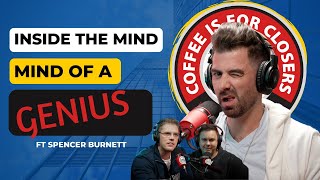
Spencer Burnett, a seduction coach turned operations expert, explains how he systemized sales and persuasion tactics to optimize a marketing company's workflows and roles. The conversation covers his background in influence and his approach to scaling business operations through better sales strategies.
Can tell by the red light.
Great, let's get going.
Hey guys, what's up? Welcome to another episode of Coffees for Closers. Got a special today. Got James and Spencer. So today I think we're just going to have a wrap. We're going to, we're going to talk about Spence. Suspense is the COO of Scope, which is like the hold code that, that houses sales Sniper and Sniper media ET James is obviously James. So we're all going to have a chat, going to find out like what's inside the head of the man that runs the operational fury that is Scope. So if you like this kind of content, make sure you like and subscribe, hit notification. But all that kind of good stuff and we will see you after the intro.
If you listen to this podcast, you will make your first million within three years. I'm going to repeat that. You will make a million dollars within three years of the first episode you listen to. We don't want pikers. We're not here to save the manatees. We're here to make podcasts. You really want this you list and review.
Put that coffee down.
Spencer, perhaps you'd like to introduce Spencer with a interesting story.
Interesting story. What story is that?
I don't know.
Just let's do one. Put you on the spot.
Oh, so. So we met Spencer a little while ago and so for context, people who don't know, we'll put the, the podcast where I shit mouth Spencer for 30 straight minutes up up here somewhere. But so Spencer is. It's kind of a systems guru and that, that goes back to things outside of business which I, which I really want to get into cause it's going to be a fun conversation. But we met Spencer because we needed stuff done at Sales Sniper because fast growing company and just all the kind of rigmarole that goes along with doing that. And then sort of realized that, you know, potentially what we do and what you do works really well together as more of a pairing and a marriage rather than just sort of like an agency style relationship. So we ended up kind of bringing Spencer into the fold. I think that did some good things for you, did some phenomenal things for us in sort of allowing us to systemize the business and sort of someone who could be like an extraordinarily productive stopgap to silly mistakes.
Right.
And that's kind of what I see as like the relationship and someone who can be like, well yes, let's do all those things. But wouldn't it be refreshing if we had a plan Plans are important.
Yeah. And there, there's a, there's a big difference between growth mentality and scaling mentality. And, and what was great about Sniper is your guys growth mentality and ability was incredible. Like best I've ever seen. And in my company was over infrastructured. So we focused on scale, but we weren't really great at growth. So when we originally met it was like, oh great, you consult for me, I consult for you. And then we just realized we were just like passing money back and forth.
And we literally were right.
And then when you took a look at it, we were just passing money back and forth. And you've got an entity with operations, I got an entity with sales. So it was like, let's just do what makes sense.
Right.
And just like, you know, let's combine it, combine it, come together, acquire my company and you know, it's been just nothing ever since.
Yeah.
What I'm sort of interested in though is like what is it that you think gave you the inherent capacity? Because like we're sort of talking yesterday and we were at dinner and it was like you're superpower. Like I'm good at selling people. Like I think I have a pretty good mindset or like, or like decision making process. It allows me to make, I think decent decisions when it comes to growth and scale and all that kind of stuff. But what I don't have is like the ability to sort of break that down into any sort of process that someone could follow. It's just like that's my brain works that way. And so like what is it that has allowed you, whether it be past, present, future lives or whatever it may be, that has given you the ability to go, okay, like I can extract things from people because like what I do with what I did with you yesterday was like I brain dumped with you for two hours and we came out with well, this is your, this is your work life.
Yeah.
And I was like, oh, that's like a way more reasonable way of doing it than what I have been. And it's going to be more productive. I will have more information and I'll be able to make better decisions with less actual work, which will give me more creative bandwidth and yada yada yada. And so like I haven't met anyone else who can do that. And you've been able to do that with people like myself, but more impressively people like Marco who are like beautiful mind geniuses at certain things and like English is a second language and you've been able to do it with a breadth of different people and different industries and stuff like that. So like, what is it that you think like, how did you get there?
I mean, there are some people that are just born with gifts. You know, seven year old kid just sits in front of a piano and just. It makes sense to them.
Yeah, right.
So a savant.
Right.
And I was just born with the ability to be able to deconstruct someone's consciousness and be able to show it to them and, and be like, is this what you mean? And so, and then it's like, yes, no. If no, well then what do you mean? And you extract more until it makes sense. And that's the totally different approach that I have to operations than everybody else is. Typically you get someone with a project management background and it's like, hey, here's how you do things and I'm gonna drive this thing forward. Whereas I extract the way that you function so life makes sense for you. And then I can do that with multiple people and then make all that work together. So essentially it's creating a giant brain from a bunch of different arms of genius. So it all works together.
Interesting. The reason I put you on the spot to tell a story about Spencer and introduce him is because when you first joined the company, we bring you out to our retreat about six months ago and I got really put on the spot to introduce Spencer and it turned out it was quite hilarious for everyone.
It depends on, but Spencer, right?
Yeah.
What seat you're sitting in.
And funny story for the people listening, probably a lot funnier for the, the others involved in the retreat. Will was supposed to introduce you.
Right.
He knew a bit more about what you were doing and had worked with you at that stage. I wasn't overly involved and hadn't gone through the process that you'd gone through other than us having that first initial interview with Spencer and discussing some side projects and whatnot. And two minutes before Spencer was about to come on and present and do his talk, Will goes, hey man, I've got to go, I got to take care of this. Can you introduce Spencer? And I went, yep, I've got a, a great story to tell. Which will really set the scene. So I go to Spencer, hey mate, this is what I'm, this is how I'm going to introduce you. And he goes, oh no, you, you can't say that. That's my entire presentation. And you ruin it. And I just went, ah, great.
Yeah, you're gonna tell the story of how I optimized Marco's Workflow to where he could start taking weekends to himself. And it opened up an hour a day where he was able to take five more sales calls.
And I'd love you to explain that. Right. To go into. Anyway, so I get up on stage and I'm. I'm going, so this is Spencer. And just went. What do I say? I just went, spencer is the worst sales guy I've ever met.
And immediately went, but it's funny because it's actually not, what a dick. But like, it's really funny because you're actually, like, you're actually. I think now that I've come around to understand the way that you communicate, you're actually really good at sales and like persuasion and influence. Not in like a traditional ISO coaching consultant type way, but you're an extraordinarily persuasive person. However, you need more time with someone.
Right?
So there's a difference between. There's a difference between sales and seduction. I'm great at seduction, which does require a little bit more time.
I mean, we can tell by the way you work in that mic.
I bet everybody can tell. Yeah, yeah. In, like, in the first conversation that I had with Marco, he didn't like me very much. And the first conversation that we had together, Matt, you were pretty annoyed by the way that I was pitching, you know, by my services. He's like, who the fuck is this guy?
Like.
Like, it didn't make any sense because I'm talking about calendars and shit like that.
Y. Contextually poor, but like, you know, but I think that that was actually more the fault of the people who had had me on that call and hadn't. Hadn't understood what was sort of happening. And I think that you had a. And it's actually really difficult to sell in an environment where you don't understand the core problem that you're trying to fix.
Right.
You know, it's actually basically impossible because you're just kind of grasping at straws. And for me, like, I'm. I am so, like. And it's a fault of mine, I'm so intolerant of, like, lack of being concise.
Right, right.
That. But you didn't have anything to be concise about.
Right.
And so it was sort of like there was a whole bu of things there, but as soon as there was a couple things that you said where I was like, okay, I think I can extract what. What you mean, and I can see value in that, so let's do that. And I'm very glad that I did but, but I think one of the things that I'm super interested in is like you, you said you can sort of keep extracting and keep extracting and that, that to me is like, does that come down to incredible curiosity?
Yeah, it's curiosity and patience. Like, you need to have infinite patience, amount of patience to be able to talk to someone and try to extract something from a genius's mind. So that most geniuses have a really time articulating how they do what they do. But the reality is, is that everything's a formula. It's just a complex set of formulas to create a skill set.
Right.
And so ultimately as well, like in order for me to understand that person and that person understand me, I have to speak their language or I have to teach them mine.
Right.
And so it's, I have found that it's much easier for me to just learn their language and shapeshift to the way that they receive versus being like, hey, understand me. And then trying to force it down their throat. So it, it's a game actually of efficiency. That doesn't seem very efficient.
Yeah.
You know, unless you have that skill set.
Okay, so, so like how, like, and where did you, where did you essentially first figure out that you had that ability?
I've been doing all the roles and responsibilities and org charts and stuff. I started a money making club when I was 9 years old and I was at a bowling alley and I, and I bought, I made up this game to gamble with people, basically hustle them at the bowling alley where my parents had a league. I taught other kids how to do it and I took a 30% rev share. And then, and then I.
What was the game?
So you would, so you would bet them on whether they could get a strike or not. And so like, I bet you a quarter you can get a strike. They get a strike, you give them the quarter. If they don't. I had the option to double down on the spare, but they didn't. So like it was risk mitigation.
Right.
So, so it was like one pin left. It's like, it's, it's like, sorry, man, but if it's 710 split, then I'd be like, okay, double down. And that, that's how I, you know, that's how the house.
Wait a second. So you're telling me Friday night we went out to bowling, had a couple of beers.
Yeah.
And you, you didn't mention this and didn't try and hustle?
Oh, man.
Disappointed.
You know, there's such an eclectic array of Stories that I have. And so. And so I was definitely during that.
I considered hustling you, but I decided not to.
Yeah, right.
For your benefit.
Right, exactly. So you're welcome.
I also didn't go home with your wife, so you're welcome there too.
I was generous all around.
Yeah.
That's actually a really good segue because the Spencer Burnett that. And I guess you are an onion of a human. I will say that some of it, like, the more I get to know you, and I think it's really, really fun getting to know you. You're a very interesting person, but you have clearly used your skills for good and a little bit for the dark arts, I would say. Well, for the betterment of.
Right.
I would say I've used my gifts for good. And I've also used my gifts for fun.
Is that camera on?
Is that a red light? The red light means it's on, James.
Okay.
So take me through the iterations of Spencer Burnett.
So I started in the fitness industry, right?
Yeah. As all the sales people in this company have. You, Marco, James, Will as well. Yeah, yeah. Will, we're in.
Jim, Jimmy, Sean, Jimmy, everyone.
Yeah.
Yeah.
It's a rough industry.
Tell me about it. And again, I had the same strengths and issues. Like, I built custom CRMs from scratch with a coder and a designer. And that's actually how I got funding. I didn't actually have any credit. They just saw how good my systems were and the bank gave me money.
Right.
Eventually, 2008 came. I wasn't prepared, lost the company. So then I. I was doing a little bit of fitness on the side, but then I started doing dating, coaching. And because a lot of guys struggle, you know, when it comes to, like, connecting with women. And. And I was like, I know so many great guys, but when I talk to women, they're like, oh, there's not any good guys out there. So again, like, there's. There's a disconnect. And. And so. And I started out by giving sex tips. And again, all that. All that good sex is, is truly understanding, like, what drives that other person and. And how to get from point A to point B to give them what they want, which is an experience, not just an orgasm. So again, it's that same element of deconstructing the mindset of another human being and shape shifting the way that you do things authentically. That's why it's not dark in order to. In order to give them the experience that they're. That they're looking for. And you Know, from, from there I, I started, you know, dating a girl who managed my career, was doing my social media. I didn't have any money at the time because I went broke from my fitness career. Started emceeing, you know, events, charity events and becoming a local celebrity. Then I broke up with the girl. She wrote a tell all story on me called Dating Chase Walker which is you can find on Amazon today.
And so if I buy it, we can get a signed copy.
Yes. And, and here's the thing. If you read that book, my mom read that book because I mean she had a huge. It is the like 50 shades of gray ain't. Like she wrote, she wrote like, hey, here was the two years of what it was like to date a dating and sex expert. And it's, it's raunchy. There was a, there's a lot of like creative things in, in the story and she goes into detail. So yeah, pick up the book on Amazon. I should get, I should get.
Yeah, we'll drop an affiliate.
Affiliate link, right? For sure.
Yeah.
So I think like that's really interesting because the world of sales, persuasion and influence, like is sort of a world like this is what we do. We sell, we persuade, we influence whether, whether it's in the, in the marketing capacity or whether it's in the sales capacity. That's essentially the core functionality of what we do here. And so I think that's probably one of the reasons why, and you correct me if I'm wrong, like why? I think that the partnership and sort of you, you coming into the folder sort of works so well because like your background, although it's not in sales, it's in persuasion and influence.
Yeah.
You know, and so I think you probably have a unique perspective and ability to kind of understand well, okay, I'm going to be able to do what Marco does in terms of selling a 50k product in 30 minutes to someone. However you understand the principles and the person that is required to do that on a consistent basis. Like if Marco redirected, he would be good.
Oh, killer. And, and, and Marco, interestingly enough, he's like, Marco was like, he's like, he's like, hey man, how much to work with me? And I was like, I was like, yeah bro, I'm retired. But like you can make me an offer, you know, and, and, and, and, and that's a great example of like my perception of, of how to, of how to do sales is like be, be intriguing, be trustworthy and, and then like give them a little taste of what you got. And eventually they pitch you. Because when you pitch them, you're a salesperson. When they pitch you, you're a consultant. And consultants are much more trusted than a salesperson.
Okay, so let me sort of break this down, because let's. I want to convert. I want to. I want to, like, turn this into a sales conversation. But, like, the.
It's coffee is for closer.
So. Yeah, no, but like, I think this is a more interesting conversation. So the element of being detached from the sale, like, from a more primal version, where does that come from and what does it do?
Being unattached to a sale is a. Is a demonstration of a characteristic. And whenever I was teaching, you know, seduction, it was like, never tell them. Demonstrate. Don't say it. Demonstrate it. Because it holds a whole lot more power. You demonstrate it. You can't argue it to be true.
What do I mean by that?
What do you mean?
Like a tangible.
Okay, so if we're talking about, you know, seduction, you know, with. With women, right? And. And, you know, she's kind of pushing back against it in your. Whatever. Like, you know, I got plenty. I got plenty of girls to talk to. That's saying it, right? But if I'm in a conversation with a girl, and I was sharing with Marco how to, like, work a room, right? Have a conversation, you can start to feel that it starts to die. And then. And so before she can see you out, you're just like, hey, it's been great talking to you. I'm sure I'll see you around. And you see yourself out. I'm demonstrating that I'm not attached to this conversation going anywhere, because I'm going to go create more opportunities. So a person that has, you know, think about it. How much easier is it to make a sale, you know, with. With a prospect when you got a six figures in your bank account versus you got pink slips in the mail of bills you got to pay, right? And so you can. They don't know whether you have six figures in the bank account. It's about the. How you hold yourself, how you carry yourself. And one of the. One of the reasons that I wasn't, like, fantastic at, like, one call closes is because with operations, it'd be like, hey, what's going on? Oh, man. Like, I can't take a. Even a day off without my company going under. All right, well, what's the problem? Tell me the problem. Here's a solution. And then they're like, well, you know, can I. Can I do it next month? And I'D be like, if you want to keep suffering for another month, yeah, sure. Like, I'm still eating, so do what you want.
It's funny, I think there's actually a phenomenon that when you start to understand something very deeply, it becomes very difficult to sell.
Absolutely.
And you just want to diagnose and fix, and that's not selling it.
Exactly. And. And I found as I got more into, like, applying my gift to operations, it became much harder to sell because I just had. I had no patience to. It was so black and white to me. Whereas, like, are you suffering? Yes. You want to stop?
No.
Like, do you want to stop suffering? Yes. Do you trust me? Yes. Then why would you not buy?
Yep. Yeah.
And it's like, you know, like.
Like Marco's not that good at selling media, Right. He just diagnosis and solves a problem, right. He just goes like, we're in a. We're in a call today with a. With a great company that has, like, a tech wearable, Right. It's a software kind of like they have. Technically sort of similar to our ring, but way, way better. And much sort of like it has a different functionality. They would be angry if I said oura ring, but, you know, so. And Marco, they're sort of looking at us to do their, like, full sale marketing for them. And Marco was just diagnosing and I messaged him and I was like, what are you doing? He's like, well, I'm fixing it. I was like, you're not here to fix it, here to sell it. So, like, it's different things. Like pulling out problems is different to sort of like presenting to sort of fixing those problems in the short term through just like, hey, well, here's what you do. And that is a way of selling. But you have to kind of. You have to be intentional about how you do it. Like, those are more like authoritative selling.
We've made that mistake a few times where we've been on calls and got to the end of, we're gonna move forward. It's like, now you solve my problem, I fix it. I'll just go away and do what you told me.
Oh, yeah, right.
Oops.
Yeah. That's why I sort of stopped selling the done for you. Because, like, I just started asking way too many questions. Like, I was so like, well, this, this, this, this, this, this, this, this, this, this, this, this, this. And it was like they clearly understood, well, this guy knows what he's talking about. But I was like, then by the end of it, I'd be like, okay, yeah, we can fix it, you know, but it was like I'd done nothing to sort of prepare them for.
Right.
I just, like, done. I just diagnosed.
So you gave him a free blueprint is what you did.
Yeah, yeah.
That's pretty much how we sold at the gyms, you know, before we knew how to sell. It was all, okay, I can solve this problem by doing this. So you want to do it?
Yeah, exactly. And then we just try an objection handle.
Yeah.
It was just. And then just sort of slash and bang, which wasn't very. Wasn't very eloquent.
Yeah.
You.
If you give me. If you give me a different offer. Like right now I'm supporting my brother in building a coaching business for. So for FRC training, essentially getting a better communication system with your nervous system to avoid injury.
Right.
And just like most experts, right. He goes into the detail of solving it and giving him advice on how to properly sell. I'm like, damn, I'm good at this. But then when it comes to my expertise, like, I'm just like, I don't know what else to tell you. It's difficult. It's difficult to read the label when you're inside the bottle. You know what I mean?
Yeah.
And it's also, you lack a bit of detachment, you know, so 100. And even if you don't want the money, you want to solve the problem, which I think is like, that's why. That's one of the reasons why I stopped selling done for you as well is because, like, I wanted to solve that problem. And sometimes it's not worth solving at least, like, with our guys and our time, our money. So it's like I was like, well, I'll pass it off to somebody else. And then they can be detached from the sale. And then they're not, like, emotionally invested in it. And then it's like, then we. For a while there, we had like, the guys who sell it would, like, manage it. That was a bad idea too, because then once they sold it, they're emotionally invested in the outcome.
Right.
You know, so it's like, then they won't cut ties early enough.
Right.
So you're dancing with that club with the whole night that's never going to go home with you emotionally invested in that relationship.
You've already bought her 10 drinks. There's no way you're moving on.
Well, that's.
There's the problem. Spencer wouldn't buy them a drink.
That's.
They usually bought me drinks if you play it right. And that. That's the difference between a, like a company that is doing, you know, 30 to $50,000 a month to a company that's doing a million dollars a month is. It's really. Everyone becomes such a specialist in what they do. You can get away with being a generalist at 30 to 50,000amonth.
Right.
But if you want to get to that, that million, two million, three million plus a month, you. You need specialists and specialists. You know, typically when you're focusing on. On one thing, you lose the skills of the other. When Jordan went to go play baseball and came back to basketball, his training regimen totally changed. And it. Something Grover was. Was his trainer's name. Tim Grover.
Right. He.
He was like, well, Mike, you want to come back? He's like, baseball muscles way different than basketball muscles. So, like, we've got to like, undo everything that, that we did. And he came back rusty, even even though that he's, you know, he's Jordan.
Right.
And so that in. When you guys gave me the opportunity to. To be a part of the team, I had to like, make a choice of, like, do I want to continue to be a. Somewhat of a generalist. I mean, I had a pretty substantial team, but I was still playing the role of CEO and a lot of the, you know, HR stuff and stuff like that. And I was like, wow, I could really just take the thing that I'm super passionate about that I really know that can help a company that's doing a lot of good in the world and that has good values, and it's just like, get in my lane and go as fast as I can and be like, hey, like, how. How fast can I really go with this? And one of the things you guys said to me is like, hey, dude, I think you're bored. I think when it. When it came to the system stuff, I was. Because I was helping, you know, teams of three to five solving the same problem. Exactly. And so, and so it was like, you know, become the specialist so I don't have to worry about being. Being on sales calls. Best decision in my life.
Funny you say that because you've came into the company at a time where you've seen the transition of particularly me and Matt being ultra generalists, and you've almost orchestrated through, like, the roles and responsibilities turning us into specialists in different specific fields of the company. Tell me a little bit about how and why, even for companies doing smaller amounts, why it's so important to get that and when they should start to implement more specialist roles to help see Them grow.
You have to find out like, what you are the best at. And you mitigate your weaknesses and you amplify your strengths. And so when it's time to scale, you take in, you take the thing that you're the weakest at and you, you find someone to do that, that role, and then you take what you're great at and you double down. And so when I came into sniper, there's 150 team members. There's 63 different roles in this organization. I don't know if you guys.
That's good to know.
Yeah, I don't know if you guys knew that. So, and so a lot of people in the organization were playing a generalist role because we grew so fast six months ago, a year ago, that was actually a good strategy. And now that we're, we're scaling, it's like, okay, we've got to find what you're great at. So literally I have met with, with every single person in every single role and just did my thing where we have a conversation. I hear the way you think, I see the way that you solve problems. I'm listening to the way that you communicate and, and from there I hear the things that you struggle with, things that you don't, and then I can identify. Here's what you're great at. And then here's how that plays a role in this giant machine.
What is the thing that's been the hardest about letting go of being the, the guy, the owner? Because like, for me, I couldn't function. Like, it's not even an ego thing. It's a, like, it's, I couldn't function in that environment.
Yeah, you don't like being told what to do at all.
It's, it's not even, it's actually not even that. It's not. I don't like being told what to do. It's. I'm very particular about who I will allow to tell me what to do. And it has nothing to do with, it has to do with like, I have to have supreme confidence that they are excellent at what they do, at what they do. And if I don't, I'm like, I, I will not. And I will dig my heels in like a 4 year old. I will not do what you say. That's why I've been fired so many times. I just built a company so I couldn't be fired.
Well, wait till we get the board of directors together and you're playing a different game. So a lot of people thought like, hey, is it Going to be hard because you're, like, not the man anymore from. From, like, an ego perspective. Honestly, like, I don't really care. Like, you know, I'm quite confident in who I am. And so, like, I don't need the recognition. I already know how fantastic I am. Yeah, so you tell us all the time.
Oh, yeah.
But it's not even that, though. For, like. For me, it's more like the. Because you were an entrepreneur for a long time. Like, entrepreneur, whole life.
Yeah. Yeah.
And so I think this. I could be wrong, but this is probably the first time or one of the only times that you. You've been, I guess, a part of an organization that has a bigger. There's people and there's a vision, there's a bigger thing, and you don't have direct control over that.
Right.
And so I can imagine. Like, listen, I think we tried and I tried my best and we did. To kind of free you up and give you, like, hey, man, like, we chatted. I was like, hey, just go into R and D mode, bro. Yeah, just kind of do your thing. But you're still kind of beholden to something, right?
So the hardest thing about, you know, coming into this company rather than having my own company is authority. Because it. Because it's like, okay, you. You trust me, and everyone here did trust me to, like, to do my job. But when it came time for others to have their opinions, at some point you gotta say, like, I hear you, and, no, we're not doing it that way. And that took a little bit of. That took a little bit of time. And this is the first time me and you are meeting each other face to face. Like, these two weeks that. That I've. That I've been here. And, like, one of the first things that we talked about was like, hey, like, I need the authority, man. Like, and, you know, we were putting together our whole database of. Of, you know, KPIs and everything, and we had 10 people working on 10 separate projects to achieve the same goal.
Right?
And at. At some point, I was like. I was like, dude, I gotta take over. Yeah. And Matt. And you were like, okay, done. Authority. And I'm like, great. And as soon as you did that, the very project that we've been working on, that you guys have been working on for 18 months to get proper data, I finished it in nine days. Once I had. Once I had the authority and I had the team, and the rest of the team understood that I had the authority, it was like, okay, just. Just let me go Sat with my headphones on for two straight days and sort my thoughts out. And then I just started extracting from people. And I mean, if you guys could see the boards behind us, like, mapped.
It all out, all nine of them.
Yeah, right.
And. And. And got it done. And so I would say that was definitely the most challenging thing.
That's why, like, after the roles and responsibilities and stuff, we did the org chart, I went to you and I was like, you know, you're like, my two. I see now.
Yeah.
Like, oh, no, I didn't. I was like, well, congratulations. Congratulations.
Yeah.
I was like, right.
You know, that doesn't mean, like, that's. It's just like, you're like, I need. Like, you're like, okay, like, we pass things down, you go get them done. So then you need to have all the. But you need to have the authority to be able to go, hey, this will be done in this way, on these timelines. You guys have to do this. It's been passed on down to me. And now you have to do it.
Yeah.
And I was. I was actually sharing. I was actually sharing with. With Ben as we were going over his chief of staff role is the conversation that I had with with you guys was very similar to the conversation that I have with my girlfriend, which is like, okay, you want all of these things. Awesome. The answer's always yes. You tell me what and I'll tell you how and when. And as long as you trust me, you can always have what you want. And so it's just not a matter.
Of you can have it now.
Right.
And so. And so that was the same relationship. It's like, yo, be as creative as you want, create as many opportunities as you can. The answer is always yes. That's for you guys to decide. But I'll tell you how and when. And then if we. If we can get. If we can agree on that, then I'll deploy the whole thing. You don't got to worry about it. You guys keep creating opportunities, finding new people, and. And I'll make sure that, you know, things get done.
But to add on to that is not just how and when, it's how much. It's like, this is what it's going to cost you to implement and do that.
Yeah, right.
What.
What's. What's required? Yeah, yeah.
Resource.
Right?
Resources.
Yeah.
I think one of the most interesting things has been. And in the process of having you here, which has been amazing, is sort of like, besides the fact that you're Getting a. An $8,000 whiteboard installed in your house. But that is.
That is a great benefit.
This is a great whiteboard. Do you want one? Yeah, you could. He's got to ask for one. Yeah, you can have it.
I didn't have to submit a form. I was just like, this is nice. You want one? Yeah. Emily, dispenser, whiteboard. Give me your address. I was like, all right. Well, that was easy.
Yeah.
It's just. Well, that's sort of, I guess, sort of how a decision making. Like, I know, I know how much money's in the bank. I'm like $8,000.
Is this going to allow you to do your job better?
Yeah.
Oh, then okay, you can have it, right?
Yeah.
And even so, if it makes you happier just being able to do it on a fancier board, like, that's. There's a. There's a tangibility to that too. Right. You know, so. But. But I think, like, one of the most interesting things has been sort of just like watching the extraction process and then kind of then seeing you go out and kind of do your thing. And for me, it was like the, like the. The day to day. And. And I think going through, like, from a salesperson perspective, like, when. When you did it with Marco, like, what was that process like? Because that dude is like the busiest human being I've ever met.
I mean, I have extracted from well over a thousand people. He's a creature unlike anything I've ever seen. He's an animal, bro. Like, and. And what. What's difficult about animals is they act on instinct. Like, a dog can't move like a cow. A dog barks like, you can't. You can't help it.
Right? Yeah.
Yeah.
And so with. With Marco, it. He took. He took pride in his ability to get shit done.
Yeah. Right.
And so if. But he also wasn't getting rest. So I'm like, how. He needs rest, but he also needs to have that. He also needs to work a bunch in order for him to feel valuable. And so now. Now we've got a math equation, right?
What's the red line? Like, what's the.
Right.
And so it's like, well, let's talk. Let's talk about efficiencies. So you can get the same amount of work done in less time if you make. If you make some adjustments. And so one of those things was batching admin. So as opposed to, like, doing your admin, as you go throughout the day, you inevitably fall behind and then things slip to the cracks. But if you just say Screw it. I'm just going to do my admin at the end of the day. You can stay in flow constantly.
Right.
And to do admin for 10 sales calls, instead of it being 15 minutes for each sales call, you can do it at the end of the day in 30, 45 minutes. And so what we were able. And once he understood that, I showed him how, how that worked. Also made some adjustments of like expectation management inside of your calendar. It's going to take you 45 minutes, book an hour.
Right.
So you're, you're not behind the gun.
Right.
And once we did that, Marco was able to finally take weekends off.
Right.
And he still, he still takes at least a day and a half off every single week. And we were able to open up an additional hour every single day of the week. So now he's getting the rest that's required and can actually have relationships.
And the conversation that I had with him was like, hey bro, I don't want to stop you from working, but I said your decision making process is going to become horrendous. Right. So like sleep is so important.
Yeah.
And like it's what allows you. There's a reason why it is called I want to sleep on it.
Right.
Because like that is how you problem solve. Like if there is a, like, I don't know if you ever played music, right? Yeah, yeah, but like I play guitar. And so if you're trying to figure something out and you got like an hour and you can't get it, you. You do put it away, right. Sleep come back and you will be able. It will put the neurons together of how to do that effectively.
Yeah.
And that's, that's why that expression comes from. And so for me, it was like when I was sort of mentoring Marco is just like, dude, like, I don't want you to stop and I want you to be as productive as possible. But like you have to put yourself in a position like now you're, now you're not dealing with you, now you're dealing with others. And I was like, if you're gonna, you're gonna fuck other people around if you have a shitty decision making process because you're tired.
Yep. Right.
Like, and tired is like, I've seen people tired. Like when I was going through all my SF training, we had four days, no food, no sleep. And that's just in the training, not, not including the stuff we did overseas. And like the reason why they do 96 hours with no sleep, where you get worked the whole time is they're trying to see because you can't hide that.
Right.
You're either good in that environment or you're not. And it's like it's genetic.
Right?
Right. So, like, for me, when I get super tired, like, I am fine. Like, my eyes switch over into like a different, like, I'm good to go. When I, like when I know I can't eat, I don't get hungry. Like, when I know I can't sleep, my body just goes, well, this is the situation you're in. Let's just work with it. And so I don't get upset, I don't get emotional, any of that stuff. Neither would Pat, neither would Ben or any of the guys that pass. But they're gu to like legit, like, freak out the moment you get like to the 50, 60 hour mark where you haven't slept, like, and you've been working like a dog the whole time. People's true inner core comes out of them and they can't control it. And it's really interesting. And so, like with Marco, I don't know who he is at that level. You know what I mean? And so I don't want to find out either, to be perfectly honest. So it's like. But now you're dealing with other people. And so if your decision making starts to unravel, like, you're gonna others around.
Right.
And I think, like, that's one of the things that as a critical company owner and like, what you've been, you are, you know, I mean, it's sort of, sort of like all of our decisions affect a lot of people.
Yeah.
And so like, you have to. That, that space that you require just to kind of sit back and have like, your diary might be empty for a couple hours, but you're, you're not empty, right?
Yeah.
Like, you're like, you know, like I had a, I had a conversation with a sales rep today who wanted to leave Sales sniper and sort of like, I understood his frustration, but you know what I mean? Because I've, I've sort of been there and I'm like, I am well rested and I. And I have the context of a lot of different things. Like, I was able to kind of extract the decision making process that brought him to that and kind of show him what was actually happening and then from there help him make a decision where he decided to stay. Either way, it would have been fine, you know, because I care. I just want people to win. I don't like tears somewhere else. Like, that would be unfortunate. For us. But hey man, that's what makes them happy. That's cool. But having being able to sort of sit back and do that like cohesively and not being emotional, not being tired, not being overworked, that's.
Or rushed.
Or rushed. That's a big, that's a big reason why like that is possible is because like the decision making is like, okay, I can start to extract this and I'm not attached or emotional. And like my father in law was the MD at the bank of New York Mellon, which is like a Bank of New York, like southern hemisphere. So a big job, right. I look at his diary that was empty, you know what I mean? And then like I'd see him in the park at like 3:00am sorry, sorry. At like, like at 3:00pm reading the paper and I used to think like, oh, he just all. But like now that I sort of run a decent sized company, I was like, no, that was like he had a couple of very large decisions to make and being in the park was probably more productive for him than being in the office. Yeah, being interrupted.
I found like through my development I've got to the position where I've understood how much space I need to be able to make the best decisions possible. And we, we've had many stages where we've been overworked and we've gone, oh, that was a terrible decision and have rushed into things because of back in the day when we're doing 16 hour days back to back every day and it just, it builds up so understanding and building into like calendar workflow management. It's like, well, if you need however many hours a day to sit and think to come to a position where you can make the best decision, you need to schedule that into your workflow.
And that's the difference between a growth mentality and a scaling mentality. If you think about it and you're trying to get someone to drive fast and they're driving a manual transmission, right? It's like you get the car up to 8,000 RPMs and then you're like okay, we need to shift and it's going to go down to 4,000 RPMs, but you're going to go faster. And they're like what? I have more RPMs means faster. It's like, well yeah, but when you shift gears, like we have higher leverage. So so now and then we ramp it up and then, and then we gear it down. And so that's why in, in, in the conversations that we had in like your next development of being A CEO. It was like, how do we get you out as out of as many meetings as possible when you're in a growth phase, maybe the first six months of the organization, it's like, book the calendar.
Right.
Just get me in front of. Yeah. As many people as I can. And so. And so.
Which is necessary.
Absolutely.
Right.
For a period of time.
Exactly.
Get it up to 8,000 rpms. But now you got to shift into different gears because you're higher leveraged and that second gear has a higher leverage gear ratio. And it's. And so you slow down and then you speed it up again. And then when we get to that next level, we have another conversation. Reevaluate your workflow and like, where it, where is your mind space most valuable for what you're accountable for in the organization?
It also solves in a different function as well, which. When I was having that conversation this morning with that sales rep, I sort of explained to him, I was like, I was like, let me ask you a question. Do you think that I'm more removed because I'm like looking to get out of the day to day so I can sort of sit back and do less? I was like, because if you do, that's fine. It's like. Well, I was like, I was like, I was like, I, I was like, I've. I've had to done do that. Not because I particularly want to, because I do enjoy sort of interacting with people and reps, stuff like that. And like, I'll have less interactions with people, which is like, not what I'm looking forward to, but it's sort of a necessary thing. But I was like, it was like one, it frees me up for better decision making. But the second thing is like, I am, I'm not guaranteed tomorrow, right. So like if I get hit by a bus and I am integral to the day to day functioning of this business, then 150 people lose their job. So I was like, that's why we all had to become CEO of Sales Sniper, which is the big revenue generator that we have. Because like someone. There has to be someone who can run the ship, you know what I mean? In terms of like just running the day to day and, and that, that's why we need to do that. And so like I, I can perform some function. I'm still the face and all that kind of stuff. But I was like, you know, there, there has to be a, a mechanism of protection against me.
Right.
You know, and so I was like, that's one of the reasons why I've done that because, like, dude, like, if I'm doing everything like I was a year ago, like, the moment I turn off, it's done.
Right.
Whereas now the machine can keep going.
Yeah.
You know, I mean, it's not going to be an easy time, I wouldn't think, but, like, the longer we do it and the more we sort of put in place, the longer the business has to figure out how the fuck they're going to solve that problem.
Right.
And that's a real thing that needs to be planned for because, like, I've employed my mother, I've employed my father, I've employed Ben, one of my best friends, Pat, one of my best friends, Tor, who's my, you know, daughter's godmother. Like, these are people that are important to me, you know? So, like, I have to have some mechanisms in place that are going to protect them, you know, and James and everybody.
Yeah.
So, yeah, that's. He was like, oh, that makes sense. And I was like, yeah, man. Like, it's not. I'm not lazy.
Right.
And. And Kim was talking about this the other day of. As you start to scale, you have to think, who's the next Matt?
Yeah.
It has to be a succession plan.
Exactly.
That's where the R and R, it comes into it.
Yes.
And that's all right. Exactly. Because it's like, who's the next Matt? Well, I mean, what do you mean by that? The next guy that's. That's like kind of a charming that, you know, that's good at sales. Right.
It's gonna be on my headstone.
Right? Yeah. Right. But.
But it's like, well, what do you mean by that? Well, here's what I mean by that. And then now you. Now you have your roles and responsibilities. What are you accountable for? What are your core competencies? What are. What are you responsible to doing? Now? We actually have a plan for a successor. We have a. We have a visual, an explanation of what it looks like and how it fits in the cog of the. As a cog. In the wheel of the. Of the machine. And so without that, you can't scale. You're just hiring on talent. And talent eventually dissolves, but infrastructure keeps on going, no matter, like, who's in there.
I love that. I've got two. I've got two. Two questions for you to finish it off so we can go eat our food.
Yeah.
Which is one, what is something that you would love to achieve in this business? Like, what is, like a massive box that you want to tick massive box. That's what she said.
Yeah.
So in this business is different than like what I want to get out of being in this business for like my life purpose type stuff.
Right.
I would like to, I would like to be. How do I put this? I would like to set a new standard of which operations is perceived. There's a lot of frameworks that I believe are really unique and it's really more so of an act of service to people as opposed to being a smart guy with a good infrastructure and good plan and, and just cracking the whip and getting people to do it.
You mean that internally to the company or.
Yeah, internally to the company. And I would love to be able to train people so they can, they can build their company and we can do the marketing and sales and we can, and we can help scale companies that are doing real things that are really helping people. But I don't think that, that, that most people look at operations as like an act of service. You're not that, you're not necessarily the coach, you're the lead blocker.
Right.
And I'd also, I'd like, I will do this, but figure out how to create really clear KPIs for operations, which is very difficult because it's kind of intangible. And I believe I can crack the code.
I'm sure you can.
Yeah.
I was actually speaking to Kim. Kim's got some good insight and stuff like that because he, you know, he was a CMO of Aldemec and he ran Yamaha and he ran Smirnoff.
Yeah.
And he's done like very, very large corporate. And corporate has stuff like that in place. But so I think being able to hear like what is being done, which is the hard part.
Right.
Once you know what is being done, then you can go, oh well, I can do that better.
Right.
And that, and that's the way that I learned like, I mean I'm, I barely passed high school. I read on a sixth grade level. The way that I learned it is like let find someone who's an incredible genius that has a hard time teaching it and just answer my questions. Let me observe you and answer questions. And essentially I can take on any skill set, you know, given it. Yeah.
Then just conceptualize it into what works for us.
Yeah.
And then improve it.
Yeah. And last question. What. What do you want to get out of, I guess this organization personally over the next few years?
My real, like when you, when you break it down, my gift is in deconstructing human consciousness and happiness. Is a, is a. Is a, is a personal metric that is. That is inhibited by behavior and the ability to, like, articulate truly what you. And to get over personal demons and life circumstances. So a lot of the spiritual healing for individuals is really the source of their power. And I really feel like that is really like my greatest gift. I'm much better at that than I told you at dinner. It's like, I'm great at operations then with women, and then the spiritual stuff is like, way up here. And so my intention is to take the wealth that we build together in this organization and to build a retreat center in Costa Rica where not only we can do spiritual healing, but we also can go there to do sales retreats and marketing retreats and have companies that have a really great idea, but struggle operationally and bring them in for two weeks and just do what we did here operationally. You know what I mean?
We could sell what we did over the last two weeks for, you know, half a mil.
Absolutely. And in a. And in a place that. That's like, you know, eco friendly and, and, you know, biodiverse, much like Costa Rica, is why I live there. You know, it's. It's just such a pure place.
Yeah. Right.
And so, yeah, that, that, that's. I've got a vision for that. And then I also have a vision for a. A new schooling system to teach kids how to learn for the real world. And I actually am starting that this summer. Oh, yeah, it's going to be dope.
All right.
I want to hear more about that.
I have one last question, but it's offline. And that's, what do you need from us to make that happen so you can think about that over the next few hours?
I mean, I can, I can, I can tell you, like.
Sure.
Authority, trust, Resources is it.
That's it, right? All right, guys. A little bit more of an outside the box sort of thing, but I think this will be helpful for everybody. And Spencer's an interesting guy. It's fun to listen to. So if you like this kind of stuff, make sure you, like, subscribe. Hit the notification bell, all that kind of good stuff, and we'll see you on the next one.
Thanks, guys.
Thanks.
Put that coffee down. Coffee's for closers only.





