How I got to 7 figures in commissions
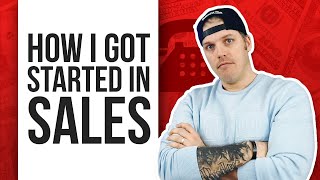
A former Australian special operations sniper moved from the military to fitness, then into high-ticket sales. He built a seven-figure commission business through his sales philosophy and coaching systems, sharing how he structured his approach to selling and content creation.
The day I knew I wanted to leave the army. So for those of you who don't know, I was in special operations in the Australian military. I joined when I was 19, left when I was 26, spent most of that as a sniper, did a few combat deployments, but I was 24 when. The day that I knew I was never going to be in the army for good. And I was on operations in Afghanistan, we were in the middle of the desert and one of the guys who'd been in for a long time, he's probably like 35, 36, probably my age at the time, my age now. And he was on a sat phone to his wife while she was having his first kid. And I looked over and I was like in awe of the dedication that it takes to do that. But I said, I'm never gonna be that guy. So it was that date that I kinda knew that I was, I guess, like my time in this regiment was limited. And that's kind of when I started to make plans to really sort of exit and sort of look for a plan. I don't really have a plan, to be honest. It took me kind of two years to figure out and really get the confidence to leave because the army, even though it's a dangerous job and it's a dangerous place, is actually quite a safety blanket financially because you can't really lose your job. And so I finally kind of hit my tether with a few run ins with people who I didn't really respect. And I decided, okay, that's it, I'm out. And I just kind of made the leap. So it took me two years to make the leap without even a plan. And so that was the day, it was In August of 2008, on my last rotation through to Afghanistan, that I decided, like, this is not for me. I'm not going to do this for the rest of my life. And so had to take the leap. So how did I get started in sales? Right. So I was in the fitness industry, as you can clearly see by my amazing physique. And I was put in a situation where I was kind of forced to learn how to do something that I really hated to do, which was selling. I wasn't good at it, I wasn't really confident in it. I was good at talking to people, but I was never really good at challenging people in a way that I felt was kind of appropriate in order to get them to where they needed to go. And I had a breakthrough one day when I had a young lady and her husband sit in front of me. And she was about probably 30, 40 kilos overweight, so, you know, close to 100 pounds overweight. And she was like 26 years old. And I didn't let her give up on herself. And that's kind of when I had the realization that if I could get the noises that come out of my face to convince people to do things that are within their best interest, then I can not only grow my business, help my family, but also help them in the process. So I was like, well, I might as well kind of go down the line of doing sales. So I went all in, went to a bunch of different coaching programs. Some are great, some were garbage, but you always learn something even from the bad ones, even if that's what not to do, right. And so what I did is I went down that pathway and I started to then do more and more and more in the fitness industry and my role from doing more one on one training to group training. And then we ended up sort of having a part ownership in a lot of gyms, around 15 to 18 gyms kind of fluctuated. And my responsibility was to train the sales staff, but also open the gyms. And so we had to do around 200 sales in a month, all over the phone, paid without ever coming into the gym. And so because I had to do such a high volume of sale, I had to develop a strategy that was extremely efficient so I could sell these people in 15, 20 minutes. So I started really having a very analytical look and I started looking at sales sales in the same way that I started having a look at my shooting when I was in the military as a sniper. And I started having a look at data, making the adjustments based off the low hanging fruit and then really taking it to a level where I knew that I could help people, but I could do it in a period of time that wasn't going to cause me to burn out and break down. And that really transitioned me into the high ticket realm where I've been selling for a while now. And I've taken that same approach and that same look at things and I've able to develop some systems and help some people sort of figure out how to make sales. Not gross, not icky, but really kind of help people transition into doing something that's for their best interest. Because people fight tooth and nail to kind of stay where they, to stay where they want to be. And people don't really act until they get outside their comfort zone. So we have to be willing to allow people and give them the opportunity to get outside their comfort zone, but in a way where they feel safe, they feel secure, and they feel confident in their decision making. Because that's how we're gonna create not a transactional sale, but a long lasting sale. And so that's kind of where sales sniper came from. We've grown really quickly and we've taken on salespeople not based off how good they are, how much of a killer they are, but just based off like, do they espouse the values of the company and are they a good cultural fit? Because I'm very conf in teaching people sales and I think that it's a very learnable process. I don't think it's a dark art. I don't think it's anything that people are born with. I think that if you understand the process and you can break it down effectively, then you can learn it in the same way that you can learn marketing, in the same way that you can learn any sort of step by step process, just like shooting. And so that's kind of where salesmember comes from. We do three main things, right? We do sales coaching, which is kind of not really the main thing we do, to be honest. We do done for you, sales. So coaches, consultants who are doing, you know, anywhere from $100,000 a month plus can come in, we can input a closer, a new system, and then we take commission only. And that's where a majority of our income comes from. Which is why the sales coaching doesn't really have to make money. We actually make money doing sales. And then the third thing we do is like sort of total process rebuilds. So for people who are doing really well, but they realize that they're, I guess the worst part of their business is their front end. And then we come in and fix it. Who knows what we're doing in 10 years it might be totally different, but that's where we're at at the moment. And yeah, that's what we do. Got a podcast called Coffees for Closers and we do a lot of content. So I do about 17 to 20 pieces of content every single week. And I do like 10 on Facebook, five on Facebook, business, five on Facebook, personal, five on LinkedIn, five on Twitter. And then I do a YouTube video. And then we have a podcast as well, which gets broken up into three snippets every week as well. So that's around 20 pieces, 21 pieces of content every week. And the reason why I did a podcast is because one, I love talking like I can just talk underwater with a mouthful of marbles. But I really kind of wanted a chance to speak to people that I didn't think would speak to me. And for some reason people think it's an honor to be on a podcast, whereas if you just pick up the phone, people don't talk to you. So I use it as that to begin with. And I got to talk to some really cool people. Jeremy Miner, Peyton Welch, all these kind of dudes who are really big in the sales industry and you know, people like Vince Del Monte and clients of mine that I got to have a chance to a really good candid kind of conversation. But you know, I love podcasts, I listen to them all the time. And I just really wanted a way that I could just sort of freeform express what I'm feeling about the industry, where it's going. The high ticket closing industry is quite new, it's quite young, so there aren't actually that many like thought leaders in the industry. And really no one that I thought was really just pumping out a lot of content on a regular basis. And so I wanted to be that guy. So most of my week is spent doing content to just try and help people kind of get better at what they do. And hopefully they get enough gold nuggets from the things that we say, from the experiences that we have selling for a lot of very high ticket clients, from Ryan Sorhant to Vince Del Monte and all these kind of big names that we sell for. We interact and we have so many different interactions that we get so many pieces of information and we have so much data that we get a lot of insight that a lot of people just don't normally get. And so that was one of the reasons for the podcast, so that we can really, just for ourselves and for other people, talk about that stuff and come up with the insights ourselves so we can use that moving forward. Because that freeform discussion is so powerful when it comes to that sort of thing. And you really get a chance to kind of flesh out your ideas and talk about them so that you can give people that info and then also absorb it yourself. Sam.





