How Political Leaders Sell Ideas - CIFC Episode 151
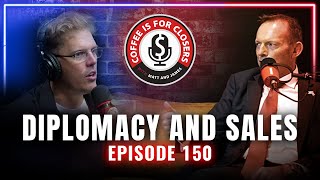
This is a YouTube video titled "How Political Leaders Sell Ideas - CIFC Episode 151" containing an English podcast episode recorded in March 2023. The episode features a conversation between Matt Ryder, a former special forces sniper turned entrepreneur and podcast host, and Tony Abbott, the former Prime Minister of Australia. They discuss political persuasion, leadership, international diplomacy, and the challenges of being a political leader, with insights into Abbott's experiences and views on politics and communication.
Hey guys. What's up Matt? Here for a very special episode of Coffee is Foreclosures. We have the former Prime Minister of Australia, Tony Abbott with us today. I've known Tony for a long time from some, from some family connections and I wanted to get him here today to be able to kind of. I thought it'd be really interesting to go over like the persuasion of politics and sort of like how, you know, a little bit of like, like inside baseball type stuff, but really kind of talk to you about like not necessarily policy decision making or anything like that but, but you know, our audience is predominantly salespeople and I can't really think of a more intense or meaningful thing to persuade somebody on something that you think is going to drive the country forward. Ex special forces sniper turned entrepreneur, I've scaled numerous businesses to eight figures. My name is Matt Ryder, this is my podcast and I'm telling you to put that coffee down. I've known Tony for I think like 12 years now or something like that.
I think we first met Matt at a military funeral back in about 2011.
Yes.
Up in Queensland. And of course you were going out with Samantha McGee at that stage.
Yep.
Now Samantha Boone. Lucky her. Lucky her. And of course your father in law has been a great mate of mine for 40 odd years since we met at university. So it's good to be talking.
So. Yeah, so I've had the privilege of kind of, of knowing you when you were the Prime Minister as well. We got to have Christmas lunch one day at the, at the house there and so it's been a very interesting to be able to see you kind of obviously come up and then you know, hit the ultimate, you know, political prowess and stuff like that.
You've seen, you've seen me get to the top and you've seen me topple off at Matt.
I was there for that too.
You've seen the high and the low. I mean obviously the, the, the highest high point you can reach in politics is to become Prime Minister.
Yeah.
At least in this country and, and inevitably the day that happens, election day 2013 is an extraordinary summit to have climbed. But then when you get turfed, that's a pretty low point as well.
Yeah.
And the interesting thing about politics is that you've got to have a very thick skin.
Yep.
You've got to have a very strong sense of self and it certainly helps if you've got conviction and courage because that gives you a reason to go on.
Yeah, I think conviction, it's a super like I talk about conviction a lot when it comes to selling things because like if you don't back yourself, it's difficult to get people to back you. And so there's that conviction where, you know, the more conviction that you can talk with and the more certainty that you can have in your voice, the more you can kind of persuade people. But I kind of wanted to go over like obviously being Prime Minister, like there's a. There's very few peers and I know like as a business owner and you know, even as a father and stuff like that, it can be difficult to find people. So from a personal perspective, what are like, I guess some of the watershed moments that kind of stick out to you, not only like not not like professionally, but personally from becoming that Prime Minister? Because I can imagine it would be very profound in the beginning and then there's so many ups and downs to that.
Yeah, I suppose there are inevitably a number of milestones in any life in politics. Getting pre selected is a milestone. Getting elected to parliament is a milestone. Getting into the ministry is a milestone. Getting into cabinets, a milestone. Getting to be the party leader and then the Prime Minister. They're all milestones in terms of particular highs. Well, for me, I guess coming to grips with the people smuggling problem with Operation Sovereign Borders and quite quickly solving what some people thought was an impossible to solve problem and stopping the boats, that was pretty wonderful. Probably the thing that I least expected, and which I get a lot of satisfaction from looking back on, albeit that it was a pretty tough time, was the way we dealt with the MH17 atrocity. You'll remember that. Yeah, MH17 was shot down by Russian missile battery. That.
Which seems incredibly relevant now.
Well, it certainly does. I mean it came across from Russia into Ukraine, brought down MH17, killed 298 people, including 38 Australians, and it went back into Russia and it was, it all happened in the context of the Russian seizure of the Crimea and then their infiltration into the Donbass as part of Vladimir Putin's campaign to effectively remake greater Russia. So what we're seeing in the Ukraine at the moment is really just a massive escalation of a campaign that Putin began back in 2014. Yes. What he's doing now is new in the sense that it's on a massive scale and it's across the board. But his first mini invasion, if you like, of Ukraine was back then. So MH17 was shot down. 38 Australians were killed in the early days after that atrocity, the Russian backed rebels were effectively picking over the wreckage looting the site effectively. And so Australia, the Netherlands and Malaysia, who were the three principal countries we needed to respond. And just for a period of time, it looked like it was going to have to be a military response into eastern Ukraine. In the end, there was a military element to it. We had quite a lot of our special forces on standby in the Netherlands, we had some on the spot in the Eastern Ukraine, but mostly it was a police operation that scoured the site for evidence to recover wreckage to ensure that there were no body parts left and. Yeah, and so on. A dreadful moment in one sense, particularly for the Australians who were bereaved. But it was also an occasion when official Australia worked well to organise a very swift and effective emergency response. To be completely uncompromising in our approach to the Russian dictator. And I think as a nation we can actually draw considerable satisfaction and pride from what we did in the Eastern Ukraine back in, in July and August of 2014. But, but, but what was clear even then, Matt and I know we're getting off the topic, salesmanship, but what was clear even then was the ruthless and brutal nature of the Russian dictator. Yeah, I can remember the famous shirt fronting discussion in Beijing some months later. It was on the sidelines of the APEC conference. I said to Putin at the initial reception that we needed talk and then the next day pulled him aside into an alcove for a proper discussion. And I put to him that it was clear what had happened. Russian missile battery had brought down this plane. And I said, look, I don't hold you personally responsible in the sense that you gave the order, but obviously you permitted this battery to be used to bring down planes over Ukraine and at the very least you need to offer an apology and compensation to the families of the dead anyway. He went into a long rant through an interpreter about how he's good at that the Ukrainian government were fascists, how the shoot down was a Ukrainian act of provocation, how the Ukraine was really part of Russia, how. And I responded that I got the Mother Russia thing, I'd read my Solzhenitsyn, I understood all about Kievan Ross and all the rest of it. At that point we were summons back into the conference and as we were walking in, he suddenly turned, grabbed me with both hands and said in English, he said, you are not a native Australian. I, he said, am a native Russian. And I thought to myself, what he's trying to say to me in this at one level rather odd outburst is that I don't get it. He does the blood and soil thing is a constant for him and he has almost a sacred duty to restore greater Russia. And that's why what's happening now in Ukraine is so serious. Not just for the 40 odd million people of Ukraine itself and their long term freedom and independence, but for all the other countries that were once part of the Soviet Union or Russia, the Baltic states, Poland, in the end, Moldova, Georgia, in the end, he wants to reestablish Russian overlordship of Eastern Europe. That's why this is such a serious, serious business for the whole world.
Yeah, so, so like when you're dealing with these world leaders at these large conferences because you also negotiated a free trade agreement with Japan, so I'm assuming you, I mean, I could be wrong, but you probably have different communication tactics with obviously different types of leaders. So can you, can you, can you talk to. Sure, I guess. Like how, like how do you get the most out of a relationship? Because it's give and take, but obviously we want to receive.
Absolutely, absolutely right. Look, everyone is different, I suppose. And I was a bit of a stranger to top level diplomacy when I became Prime Minister. My previous portfolios in government were workplace relations, where if you're a liberal workplace relations minister, you tend to be in a bit of a cold war, if you like, with the union movement. Because I had a bit of a DLP background, I suppose I was a little bit more appreciative of the union movement than your typical liberal workplace relations minister. But nevertheless, coalition governments generally want to deregulate the workplace. Unions generally want to regulate the workplace. Coalition governments generally think that individuals should be free to do their own thing. Unions tend to think that individuals are weak and in a sort of inferior relationship to the boss and therefore they need to be protected because they can't be trusted.
Protected from themselves?
Yeah, protected from themselves. And, and the boss. So look, I was probably a little bit more sympathetic to the unions than the average liberal industrial relations minister, but there were certain objectives obviously the government had to achieve and I had to push as minister. So it wasn't exactly great training in diplomacy. Then of course I was health minister again. I suppose there's a bit of diplomacy with the various powerful professions that operate in health and there's a bit of diplomacy required with the patient groups and pharmaceutical companies and so on. But, but international diplomacy was not my thing. So when I got there as pm, I thought, I don't want to pretend that I like everything about every country when I don't. But I want to try to begin all of these relationships by saying something to my principal interlocutor which is both true and helpful and that they will want to hear. So, for instance, first time I met President Xi, I said, Look, Mr. President, all credit to the Chinese people and government for what is probably the most remarkable transformation in history, lifting half a billion people from the third world to the middle class in scarcely a generation. When I first met as Prime Minister Shinzo Abe, I said, look, Shinzo, I just want you to know that as far as I'm concerned, Japan has been an exemplary international citizen for the last 70 years. And the last thing I want to do is use history as a stick to beat Japan. At that point in time, China was constantly using the Second World War history to attack Japan with President Obama. Given that everyone who goes in to see the US President either want something or wants to complain, I thought, well, I'm not going to make any demands on him. I'm just going to go in there and say I'm here to help. And even though there were some things that President Obama did that I wished he hadn't, I think he was at least appreciative of that initial approach. Australia was only too ready, willing and able to help. And I don't think too many people go into meetings with the US President offering to help.
What is the dynamic like with someone like a US President? Because obviously they're called leader of the.
Free world and the US President even now is the nearest thing to a leader that the free world has. Obviously a lot does depend on the character and personality of the particular president and on the circumstances in which the United States finds itself at any particular time. And like all countries, there are sort of waxings and wanings. But, but look, I reckon, I reckon the free world does need someone who can, if you like, organize us. And the obvious person to do that is the President of the United States by virtue of America's strength and benevolence. And I think it's so important for the long term future of the wider world, particularly the democracies that the United States is well and effectively led.
Yeah, I would love to think that we all move beyond high school. However, the older I get and the more experienced I get, I realize that human beings default to certain communication. And like, I know we'd all love to think that politicians are at some level above that, but I would have to think there would have to be an element within the international community of world leaders of like a just a natural hierarchy forming in the cool kids and the nerds. And I mean, obviously that's a bit of a sophomore way of looking at it, but does that formation happen and like, do the certain countries kind of just stick together like when you go to conferences and stuff like that?
I think there's probably a natural affinity between, for argument's sake, the English speaking countries between, say the countries that have a geographical proximity.
Yeah.
Western nation cultural proximity.
Yeah.
So for instance, as, as the Australian Prime Minister, I was determined to ensure that I had the best possible relationship with the countries of the Pacific, for instance, because they're our backyard.
Yeah.
I wanted to have a good relationship with the president of Indonesia because Indonesia is our largest and if it shows problematic neighbor. I naturally warmed to David Cameron, for instance, to Stephen Harper of Canada, for instance, to John Key of New Zealand, for instance. It helped that not only were these prime ministers English speakers, but they were all from the center right of politics.
Okay.
But President Obama, who I had many dealings with, brilliant, charming, charismatic. It was, it was certainly easy to get on with them, even if sometimes our perspectives were different.
Okay, that's very well put. So going back to you and I guess running, I guess like, you know, like running to become the Prime Minister and then getting public, getting, I guess, public buy in for your policies. You were a fan of like a three word slogan, you know what I mean? Is there any particular reason why you wanted to kind of convey, you know, stop the boats and ax the tax and all that kind of stuff?
Well, well, you'd know, Matt, I'm sure that if your pitch goes over people's heads, they're not going to buy. Now there's a bit of a difference, if I may say so, between I think commercial marketing or selling and political marketing and selling because you don't have to run down your competition to make a sale. But often enough in politics, it's not a question of persuading people how good you are because people have a general, I think, tendency to say a plague on all their houses in politics. So it's often easier to persuade people that the other mob are bad to persuade people that you're good.
Okay, so.
So, so I think political marketing, if I might put it as crudely as that, is a little different from, from others.
Must fail for you to succeed, essentially.
Well, that's right. It's as if politics, if I may say so, is a, is zero sum game in this sense at least only one person can be prime minister. And if I'm Prime Minister or Malcolm Turnbull is Prime Minister, by definition, no one else can be so only one person can have the particular job. And whereas if you're Ford or Holden, for instance, or Toyota or Nissan, there's market share. You. While your market share might increase at someone else's expense, there's no reason why both of you can't succeed together, even if one person's relative success might be superior to the others. So that is a bit of difference. But in the end, what succeeds in politics, in my judgment, is people have got to find you credible. They've got to at least have some rapport with your argument. And your job is to try to make the best possible case for the changes that you believe are necessary and at the same time do it in ways which build your personal credibility. So, for instance, I tried. I don't know whether I always succeeded. I tried never to personally run down my opponents. They might not always agree with that, but that was what my objective. Because whether it was Kevin Rudd or Julia Gillard, in their own way and by their own lights, they are trying to do the best thing they can for the country. So I tried not to attack their motivation, simply to attack their arguments and to put forward what I thought was a better policy alternative to the one they were putting forward. So you've got to have a good argument and that means you've got to believe in what it is that you are proposing. Because if you don't obviously believe it, no one else is going to believe it.
Yeah. Being that it's a zero sum game, like, it kind of brings me to the thought of like, you know, say like a land buyout. You know, like in Sydney, there's a lot of developments and there's one holdout that knows there's a land buyout going on. So they demand ridiculous things. So given that the fact that there is only going to be one Prime Minister, there is only going to be really one way of doing it. These backbenchers and people, you know, whose vote you need, like, they seem to have a tremendous amount of leverage. And I guess what are some of the. I guess persuasion or you could probably this worst thing called coercion. How do you get them across the line? Because you have to get the votes.
It's a very good question, Matt. And I really dislike this horse trading that goes on, particularly when it verges into not so much horse trading but sort of vote buying. Now, I can remember as health Minister, I had to get a certain now deceased, but once very influential Tasmanian senator across the line. And I think from recollection, and it's a long time ago. So my recollection might be imperfect, but my recollection is that a pet scanner for Royal Hobart Hospital was enough to sweeten the deal to persuade Brian Harradine to. To support a particular. To support a particular government policy. Now, I don't think there's anything particularly wrong with that because the commitment that the government made to secure his vote was an intrinsically beneficial commitment that was not going to particularly prejudice any of the other objectives of the government. One of the things I think I can honestly say I've never done is go up to a colleague and say, for argument's sake, vote for me and I'm going to put you in Cabinet. Yeah, don't vote for me and I'm going to drop you from Cabinet. I've never done that. Because while I think it's fair enough to say to a crossbench senator, the government really wants this bill to pass, is there anything we can do to make it easier for you to vote for it? I think that's reasonable in the great scheme of things. Appealing to naked personal self interest and putting someone into Cabinet who arguably shouldn't otherwise have been there in order to get a personal objective for yourself, I just think is the sort of thing that really turns people off. Politics.
I completely agree. Which is actually a good segue, I guess, into when you first became Prime Minister, there was nothing really to do with you, but there was an immediate scandal to do with the travel allowances. Now.
Well, actually, I think I did get caught up in it.
I think it was $170 or something you had to read, wasn't it?
I think it was an airfare from Sydney to Albury I had to repay because I'd gone down to a colleague's wedding. Now, my strong recollection was this was when I was Health Minister. My strong recollection was that I had coupled this with quite a few meetings, but I couldn't prove that from my diary. So I thought the easiest thing was just to pay back the six or seven hundred bucks or whatever it was for the airfare.
It seems easier. When I was in the military, we had Diners cards, we had Diners Club cards and they were issued to Special Forces in case you needed to use them. And we did have to use them in certain things.
But I didn't know there were too many restaurants in Afghanistan. That took time.
No, there are. There are in some of the Indonesian countries. But, yeah, I remember I was on a course and I had to buy lunch and I bought lunch on the course and it was like the world melted down. I was like, hang on a second, I'm supposed to be provided lunch anyway. So I definitely feel you're paying with that kind of scrutiny.
But there's a. People suddenly get very hoity toity about a lot of this stuff. Now I think when I look back on all the things politicians are allowed to do on the taxpayer and I think of all the things that I didn't do over the years in terms of flying the family to Canberra, flying the family around the countryside and so on, I think I've been pretty frugal when it comes to these things. But it doesn't matter what you do, the public tend to sit in harsh judgment. And that's why it's always better to say I may have made a mistake. Yeah, exactly, take it back.
Exactly. But like, what is the. Like you've just become Prime Minister and all of a sudden I assume all hell is broken loose. Everyone's freaking out, thinking about everything they've done. Like, what do you do to then okay, everybody stop. Because this is. You're brand new to this as well and you've just come up like, like what are the action steps that are taken just to calm everybody down and how do you deal with the media?
That's a very good question. Look, normally you have to do your best to find the facts in as calm and dispassionate way as possible. And then you've got to find a way forward which suitably deals with the facts as found. And in that particular instance from recollection, quite a few people ended up replaying a hundred bucks there, 1,000 bucks there, et cetera. But the interesting thing about politics is that that's never the only thing that's going on. And you can't let the crisis du jour deflect you from all the other things that need to be got on with. And you've got to have the ability to, in a sense, compartmentalize and not allow any of the stress that you might be feeling over embarrassing issue X to stop you from getting on with vital issue Y. For instance, just at the moment in Britain, my friend Boris Johnson has got the so called party gate issue to deal with, but he's also got a major historic security crisis to, to deal with as well. Now, now I hope Boris is spending 99% of his time doing his best to help Ukraine deal with this crisis and not fretting too much about whether someone might decide that actually he should have been fined 200 quid for attending A party in the wrong circumstances. Interestingly, I don't really want to get into the business of detailed commentary on British politics. And the data someone might decide that actually he should have been fined 200 quid for attending a party in the wrong circumstances. Interestingly, this idea that someone should resign from the greatest office in the land simply because they've been in breach of some trivial and over the top rule, I just think is wrong. Take Daniel Andrews for instance, the Victorian Premier. He was fined twice, twice for breaching his own over the top and ridiculous mask rules. But no one said Daniel Andrews should resign as a result. So you've got to be able to, you've got to be able to carry on with the important, notwithstanding the crisis du jour, because at least half the time in politics there is a hue and cry over something which is either trivial or confected. You can't not get caught up in it, if only because it will tend to be dealt with in Parliament. But you can't let it distract you from. Really want to get into the business of detailed commentary on British politics. And the date is always the main game.
Yeah. And like with Parliament, because I grew up in the us so it's a very different system. And that's. To be honest, most of my knowledge is about that system. When I first saw how everybody acted in Parliament, I was, oh, it was like, is this real? It just seems like a bunch of people yelling at each other. How productive is that actual process in terms of. Or is it just people like getting to grandstand and make themselves feel better to their own constituency?
Having been in the Parliament for 25 years and having been on the front bench for 20 years, I've got to say, and I do truly believe that the theatre of Parliament is a significant part of, of democratic accountability.
Okay.
But a lot of the time it is, to coin a phrase, full of sound and fury, signifying, if not nothing, certainly not very much. And what I think you've always got to try to do is to keep a sense of perspective about it. So if you're the opposition, you've got to maintain an appropriate level of outrage. What's more fun, you can't be equally outraged over everything. Ye. Yeah. If, if some things are genuinely minor transgressions or minor faults on the part of the government. So there's no point going from 0 to 100 decibels.
Yeah.
Over something which is really a, a mere, a mere indiscretion or misdemeanor as opposed to a political mortal sin.
Yeah.
And and look, that's, that's, again, it's a question of judgment.
Yeah. Do you feel like the system will remain. Do you feel like we're going to remain a parliamentary system?
Oh, absolutely. Look, Australia for all. It's very easy to be critical of our parliamentarians, of our elected leaders, and up to a point, much of the criticism is deserved because none of us are perfect. All of us make mistakes. There's always different ways of handling things. And most of us would accept that we're not every day our best selves. But if you think that Australia is a great country, and most of us do, the people who've led the place over the years deserve at least some of the credit. So for all the faults of individuals and for all the inevitable imperfections of our system, on balance, our political class has done well. And on balance, our system is about as fail safe and foolproof as as any system could be. Now, again, I don't want to get into the personalities too deeply, but I don't think someone like Donald Trump could become the leader of Australia. I'm not saying that Trump was a bad president. I think in some respects he was quite a good president.
Yep.
In any event, he was probably going.
To be president again.
And in any event, he was the leader of the free world while he was there, and it was our duty to be as supportive as we could be to him.
The goal can't be for someone to.
Fail, because I don't believe someone who was as technically under qualified and as much of an outsider as he was could come to the fore in a parliamentary system. Because A, you've got to be in Parliament, and B, you've got to have enough people in Parliament to support you to have the job. So you'd never get a Prime Minister Trump in Australia, you'd never get a Prime Minister Macron in Australia. Presidential systems are much more likely to throw up outsiders, for better or for worse than a parliamentary democracy is.
Okay, that makes sense. And I suppose there, there does seem to be like, you know, with the. There does seem to be at the moment in international politics, a little bit of not changing of the guard. But there seems to be some shifts with like, Macron, Trudeau, obviously very young as well, and then Trump and. You know what I mean? I think Biden is kind of a shift back to what was. Where do you think that's coming from in like, in particular?
Well, if you look at the US and I've never lived for any length of time in America, but obviously I've You've got to pay attention to what's happening in America. If you look at the US over the last couple of decades, successive presidents have, if you like, been a reaction to their predecessor. So Obama was a reaction to George W. Bush, Trump was a reaction to Obama, and Biden is a reaction to Trump. So we went from a very liberal, in the American sense of the word, President Obama, to the ultimate politically incorrect president in Trump, and we went from the ultimate outsider in Trump to the ultimate insider in Biden. So, as I said, there's the waxing. I think looking at the United States in particular, there are pressures in the United States which are causing stresses which are playing out in American politics. For instance, until very recently, at least, average wages had been stagnant for a long time in America. Globalization had been much more beneficial, so it seemed, to workers in other countries than to workers in America. America's role as, effectively, the world's policeman had disproportionately benefited other countries rather than America. So you can understand why there was quite a lot of pressure in the United States to do things differently. And this was where, when candidate Trump talked about draining the swamp, he touched a chord with a lot of Americans who had felt left too. Left out for too long.
Three words. Drain the swamp.
Exactly right. The boats.
Yeah.
The roads, fix the budget.
Yeah.
Okay, so you've got. You've got. You have got to say things to people which they get and which are meaningful, for instance, which they can emotively respond. In the 2013 election, I said, stop the boats, axe the tax, build the roads, fix the budget. In the 2016 election, my successor talked about jobs and growth. Well, what does jobs and growth mean? It's a sort of a motherhood statement. Whereas stopping the boats is real specific. That's a specific, tangible.
You're also held accountable to it once you've said it.
Exactly.
So I guess, like, I guess, you know, from a confidence and conviction perspective, you're like, well, this is a tangible that we can hold you accountable to. Yeah. So I guess, like, you know, just kind of traveling backwards a little bit. And let me know when you need to go.
I've probably got another five minutes.
Okay.
Perfect.
Yeah.
What?
What? How was that the ultimate goal? Like, I always say, like, you know, when I was a sniper, like, I saw a photo of a guy wearing black hanging off the side of a building, and I was like, I want to be that guy. I took it to Recruiter, and I was like, how do I be this dude? And he sort of Told me and I was like, okay. When did you know that you wanted to be pm?
Well, I don't think I ever really wanted to be pm. I wanted to change our country for the better. And the person who wants to be PM for himself or herself I think is in it for the wrong reasons. You should want to be PM because there are certain things that you would like to do for your country. And in my case, I became party leader because the then incumbent was making what I thought was a fundamental mistake in terms of our policy and ultimately the country's direction. And then I wanted to win elections not because I necessarily thought I was God's gift to politics, but I thought that what I was trying to do was gonna be much more helpful to the country and what not an end in itself, it was a means to an end. Not because I necessarily thought I was God's gift to politics, but I thought that what I was trying to do was going to be much more helpful to the country. And what the end was fixing the disaster on our borders. It was trying to ensure that government wasn't sponging off taxpayers to the extent that it was. It was trying to ensure that people's daily lives were better because we actually stopped the analysis paralysis and got cracking and building new roads and new airports and so on. So it was the things that I was trying to do that drove me not, and I hope I'm not kidding myself here, not lust for the particular position.
I would have to say that seems like you'd be the rarity from my own personal perspective.
Well, look, it is, I think the public's perception, general perception, stroke, prejudice, that politicians are in it for themselves. But I don't actually think that's fair, at least to a considerable extent. Most politicians start off at least doing it for the country and the ideals. Now, I suspect along the way, many of them get caught up in the drama of the game. And it does become, in a sense, well, I've got to win because I've got to win, so to speak.
You also can't hide anymore. I mean, everyone holds a camera and everyone holds a microphone. So there's an element of. There is no more veil, that's for sure.
I mean, talk about life in a goldfish bowl.
Yeah, yeah. So. Well, all right. I really appreciate you coming on. I know you're a very busy guy.
Well, Matt, I'm not as busy as I was. And the reason why I decided to come on was because a, you're the son in law of one of my best friends, but also because as someone who's served our country in uniform and taken risks for our country, the least I can do is offer you and your business some support and encouragement. And good on you for making a go of things in your post military life.
I appreciate it. And good on you for, you know, keep doing the thing and, you know, leading our country is much appreciated. It was a good time while it lasted.
I enjoyed it, even if it was a long time ago for a nanosecond.
Yeah.
It was an honor to be there, mate.
It was. All right. Thanks very much. All right, guys, thank you so much for, you know, watching. Make sure you, like, subscribe, hit notification, but all that kind of good stuff. And we'll see you in the next one. Bye. Put that coffee down.





