How to Fix a Sales Rep’s Performance (LIVE Coaching)
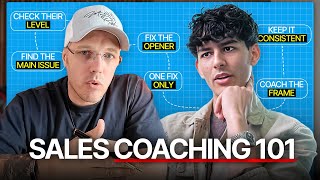
Matt Ryder coaches a sales leader through diagnosing why a rep's performance is slipping. They work through feedback techniques and role-play how to have the conversation that actually moves the needle.
Chapters
I've coached more sales coaches than what you could possibly imagine. In this video. I actually have someone who comes to me specifically so they can become better at coaching sales. And so what I do in this video is I teach him what to do, what not to do, how to give feedback, how not to give feedback, and then sort of how to diagnose and actually give pieces of feedback that are applicable and nuanced enough that the person can walk away, be able to make a tangible increase in their sales. So if you're interested in doing this for yourself and you wanna actually be able to coach yourself, then stay all the way through to the end. Watch the video. Because things that I teach them to do are not really taught. And so I hope you enjoy this and get something out of it. First of all, I love the fact that you came to me at this because, like, I think this is a lost art. Okay. In the whole sales community. And there are guys that know what they're doing, but they're not good coaches. Right. Like, a classic example is, like, someone that I used to work with who is a pretty talented sales rep, but, like, when you try and use his process. Right. Yeah. I mean, it's impossible to replicate. Yeah. I mean, it's like just a wild, abstract thing. You look at someone like Jeremy, who's very, very good and a good coach, but he's been so good for so long that, like, he. I think he actually, like, you know, dumbing it down, you know what I mean, Is actually a little more difficult. A lot of coaches as well will coach from a state of arrogance. And that's a really thing that you want to avoid. When I coach, I try to really explain or I try to really understand the circumstances that the person's in and all of the context. And I have to be willing to do a few things. One is, I have to be willing to say, I don't know, because there's nothing wrong with that. And I have to be willing to like, just kind of stay in the saddle and see if there's an actual problem to solve and try and pivot people away from. From solving, like, sort of unique, individual problems and try and take them towards, like, patterns. Okay.
Yeah.
So. So I'll give you a good example. So. Oh, yeah. And the other thing that you really, really want to get good at is you want to get good at only giving one piece of. Even though you see 10. Like, you're a Nat. You're a gifted salesperson, right. For your age, like, you are phenomenal. You Know what I mean? And so like, you want to listen for like the one worst thing that they're doing and it's the thing that's going to cause them the most amount of drama. And I think that's where I have a unique ability to coach people and is because I will always say the thing if someone's got like a ridiculous accent or like they just sound retarded on a phone call. Like I had a guy and I said this very specifically to him and I said, hey man, I'm gonna say something to you. It's gonna shock you. There's a hundred people in this call. And I was like, it's gonna shock you. I was like, but I'm doing it for a reason. When, when you talk on a sales call, you sound like a fucking. A gay Michael Jackson. Again, I'm using hyperbole to have it stick in his head. So like it's very intentional. My, my crazy words that I say to people is on purpose. Because if I say you sound like a little pussy instead of going, oh, you sound like that, then it will stick in their head and then they will dilute your message. So I have to go over the top with my coaching, right? So I have to, I have to take, I have to take it to the extreme and then sort of teach them through that. And so look for the one thing, because there are a lot of things in sales that cause so many flow on effects that the amount of variables that they're encountering is due to the fact that there's this one huge glaring issue and none of the other problems we can honestly say is that because of like the thing that they're like when I get an objection or someone does this like that, but like the beginning of the call, they just sound like fucking ridiculous, you know? And so it's like, okay, cool. Well, if I was going to give you one piece of feedback that you're going to go away and implement for the week because like, I have to know it worked. So if I give you three pieces of feedback, I get you to do each one, you implement all of them and you get a positive result. I don't know if two of them were negative and one of them was really positive. So I just give one piece of feedback and they're gonna ask you for more and you have to say, no, I'm the coach. Like, I'm telling you to fix this one thing. And it's because once you fix that, it may actually change all of the rest of it. So if we go and fix something here and something over here. It doesn't make any sense. Right? And so that, I think, is the hardest thing. And there's a great book called the Hard Thing about hard things, and it teaches. The Cliff notes are that the most difficult thing about doing difficult things is that when you can see like 10 things that are wrong and only actually attacking one. Right now the coaching question is how do I filter to figure out the one? The easy solution is go towards the top of the call, right? So fix things at the beginning. It's. It's a lot easier. Like, generally speaking, my hierarchy of coaching is. The last thing I'll change is a script, right? Do you know. Do you know why?
I assume because, like, it's like, about the implementation of the script.
Yeah. Yeah. So that's, that's. That's one big one. One. It's obviously like there's a. It's a huge shift away. So, like, if I come into a sales team and they're closing at 10% and things are bad, right? Like, a lot of people will come in and go, okay, new script. We're teaching this. Teach them this. The. I never do it that way. I, like, will do everything outside of. Even speak to the sales team first. Because, like, what I want to do is go, okay, let me have a look at all the show sequences, the emails, the text. Let me have a look at the funnels. Let me have a look if there's anything broken. Let me find the shit that is really dumb and then fix that first. Because, like, that might just get me an uptick without having to talk to anyone. You know what I mean? And then, like, that also for me, when I come into a team, it solidifies me as good. I'm like, hey, I fix these things. Everyone's show rates higher. Sweet. You're welcome, right? They're like, oh, fuck, this guy's not. Not after our jobs or whatever, right? Then the next thing is like, okay, I'll sort of go a hierarchy. I'm like, okay, if I'm going to work through, if I've got like the, the. The openers, right? If I. Then I've got like the main body and then I've got the pitch, and then I've got objection handling. A lot of people tend to work on objection handling, which I think is a mistake because they have to get through a lot of it and they have to want it for objection handling to work. I think people don't realize that you can't turn a no into a yes. You turn a maybe into a yes, and you want to confirm the yeses. Right. So we want to kind of go through it that way. Your question?
No, that makes perfect sense.
Yeah. Sweet. And so I'll usually air towards like, okay, well, let's work on just that initial phase. The reason being is because a lot of people's sales are sort of done the wrong way, though, if you. It ends up being kind of like a. Kind of like a triangle going that way and then it comes down. So they start off with a really specific opening frame and it's like, hey, you know, you're on the call here today because of this reasons. And the point of the call is this. And the next steps will be this. Right. So it's real specific. However, then what they do is they start going like, so what drew your attention? And then what they do is they go like with sales training, for example. So what I'm teaching the guys at the moment in Impact is like, hey, I don't want you talking about their sales process. I want you talking about what the processes are using to get better. Because we sell things to get better. We don't sell their sales process. Like, I don't care about that because it won't change the prescription. You're gonna cut 20 minutes off the call straight away. Right. And so if I can get. So a lot of people go like hyper specific and then it vagues out because they talk about interesting yet unproductive things. So productivity drives the sale forward and it's things that will affect or impact or be relevant to the pitch. Right. Like if I'm thinking productive, I'm thinking pitch. Whereas, like, if I'm selling you. Sales training is if you do straight line or any PQ or fucking whatever. Zig Ziglar. Is that actually relevant to my pitch? Absolutely not. Is it interesting and seemingly related? Yes. However, what it does is it leads to a rabbit hole and like, they can be difficult to get out of. Yeah. So like, that is how most. And they. They go out. And then what they have to do is kind of try and squeeze them back in towards like, problem, solution, rationale, stuff like that. My sales is totally different. I like to start wide. It's much harder. So I don't teach like beginners that way. I'll teach them to then, like, do both of the things, like set the frame and then like, then ask the question. The situation question should be about what they're doing to achieve the goal, not what they're like, not what the status quo is. And I think that's actually a big separation between me and like, traditional NDPQ situation questions are like, to address the status quo. I don't even want to talk about the status quo. I want to talk about, like, what they've been doing to move forward. And the reason why I do that is because my next question, instead of like, do you like, it would be like, well, what shifted recently to where you actually want to start doing something different to start getting the outcome of X. And then that, what that does, it just goes shunk like that. Right. So now the parameter of acceptable conversation is super short, right?
Yeah.
So if I can change something really small like that at the beginning, what I do for a team is tremendously reduce variables. Now I can coach them, right? Because without that, I'm having to teach them all these deflections and like, how to bring people back in when in reality, like, that's quite a difficult skill set. And some people, like, will take a long time to do that. But if I can teach them how to never encounter that or how to rarely encounter that by teaching them how to go like pain really, really quickly, then it's actually a very predictable chat.
Yeah, it makes sense.
So I really focus on that. And I spent a lot of time in like the first two to three minutes of the call making sure that their tonality is very similar. You know what I mean? Making sure that they have their key questions, your key questions. You ask the same way every time, knowing what that will induce. And that's that consistency is what breeds coachability. Because if you're saying things in different ways every time, my coaching is actually like trying to coach you when you're shooting based on wind gusts. It's like, I. Yeah, it doesn't mean anything, you know? Yeah, it's. It will also, like, I'm taking out the. I'm removing variables. Like, if I'm going to teach someone how to be good at shooting, I have to put them in like an indoor range at a set distance because I need to teach their body how to be good. Then I've got to teach their mind how to read the situation. Then I can bring them in harder situations. Right. So it's very systematic, but I need to reduce variables. So when you're coaching people.
Yeah, just to make sure I'm understanding that. Because, like, obviously when I was selling, if somebody like sales training, if they told me, like, oh, what? Like, oh, I need to work on my objection handling whatever, then it was like, what are you doing to get better at Your objection, handling versus if they're like, oh, I need to get better at like resistance or scripting. And then I would target that. But you're saying like when teaching the beginners, make it a generalized thing of like, what are you doing to get better at sales? I guess.
Well, no, so you can, you can do what you're doing. But a lot of people like will go, let's say I'm selling like digital marketing services. They'll go like, okay, so like what are you doing for like walk me through your current marketing. Walk me through your current marketing structure. Right? Like that's not. That's. That's most common is they'll go through that because they feel like it's relevant. What you did is perfect. Right? Because like I taught Yash to do that. Most the other guys where I used to sell would don't do that. I don't know if you know that, but they'll go like, oh, what's your sales process now? Okay, well, do you like it? What do you like about it? Jimin. Okay, if there's one thing you could change about your sales process, like, what would it be? And it's like the fucking long way. I was always dead set against it. I was like, no, no, no, just do this. Like, just say, okay, what are you doing to get better at sales? Well, I'm looking at YouTube. Okay, but besides the free stuff, like, what have you actually tangibly been doing on a day to day to get better so you can get the outcome of like, you know, higher commissions? Oh, well, not much. Okay, well what shifted recently to where you want to really want to start getting into this? See, now I'm at rationale, like immediately, like I'm a minute and a half in and I'm fucking blah. I'm through. Because I know that for me the selling is in solution and consequence, of course.
Emotional.
Yeah, right.
And then after you go, what shifted then I'm assuming obviously you go into the probing how long Impact, if it makes sense.
Yeah. So. Yeah, yeah, yeah. So. But impact I kind of stay away from for beginners. Right? Because it's harder. It's harder to pull off, you know, so you've got like, you've got the best way. Like how I sell is like, oh, hey, how can I help? That's how I open calls. I do not teach beginners to do that. Yeah, yeah, right. Like, yeah, you can't because like what's good for me is not good for you. Right? And so, and like, so I'll role Play different ways with, like, beginners. Oh, like, and I also ask when I coach someone, how long have you been doing this? Are you new to the offer? Like, are you new to the script? How long have you been in sales? Like, what's your sales history? Okay, cool. Would you consider yourself, like, skilled? Have you memorized the script? No. Okay, well, mate, like, I'm sorry, but the coaching I give you is going to be not massively productive, right? And so, and that's where, like, not coaching from a stance of ego becomes a really important part. Because you go, like, okay, give me the information. I go, mate, like, with where you're at right now. The only information I can give you is like, I need you to memorize the script. Because not memorizing the script means a bunch of things. One, it means that you're thinking about what you're saying. Saying. If you're thinking about what you're going to say, what are you not doing? Listening to the prospect, right? And then kind of going through that and going like, all right, cool. And being really, really like. People will then go, oh, yeah, but what about what I say when this happens? And I go, no, like, I know we're not going to have that conversation because if I tell you that what happens is then you come to me for these eggshells edge case use cases that you might be inducing because you're not listening to them in the first place. What I'm going to try and teach you is a way of selling and a way of developing yourself that is systematic and patient. Because if you want to be good, you need time, right? And so it's like, I'm going to be like, I really, really believe that. And so I coach everyone the same way and it's like, okay, like, break it down. What's working? I'm going to focus more on the openers than anything else. And then I will also, like, refine their pitch. Yeah, I mean, because like, so I'll go openers then pitch usually because, like, most people have really bad pitches, right? And. And like, a bad pitch will ruin a deal. A good pitch will not make it, but it will certainly help, right?
Yeah.
Now, now the elements that I consider to be in a good presentation are like, I think any PQ nailed this, where it's like no more than about 10% of the overall time the sale has made. So if you're on an hour long call, about six minutes, right? I like to have a pillar structure. I think it's really simple. And like, I like to have it break down where it uses a lot of their words. Okay. And like, when I sell, I will put those words. I will get them to use the word to. Then, like, you know, so I'll be like, it's not your fault, but it is your problem. And then when I say it the next time I go, it's not your fault, but it is your. And they go, problem. I go, exactly right. And then, like, you know, one of the.
Right.
Yeah, exactly right. So then one of the pillars will have that. And I go, the reason why we do this is because not knowing this is not your fault, but it is what? And they go, it is my problem. I go, exactly. So we're gonna remove that from you. We're gonna take on the responsibility, and we're gonna do you know what I mean? So I do it that way. So I like to be nice and short and sharp. So it's like pillar one, pillar two, pillar two, pillar four. And then what I'll do is I'll send you over my scripting document. Cause the pillars should be written, like, with the client avatar and like, the problems that you solve and like, bundled together into, like, emotionally relevant terms.
Yeah. The way I've been. Because I think a lot of it, I was lucky enough that it got passed down to Yash and then to me. Yeah, for sure that stuff is relevant. The structure I've been teaching the pillars is like, yeah, the first part we do is X. Because, you know, you mentioned blah, blah, blah. It's causing blah, blah. So what we do is. And then some kind of relevant based on whatever pillar it is. And obviously.
Yeah, that's perfect. That's exactly how I do it as well. There is a more complex structure called, like, a floating pillar structure, which I don't. Haven't taught many people. I don't even taught Yash actually, where you have, like, eight pillars, but you only present four of them, but you have eight available to you. And then, like, you substitute in the most relevant four for the person. Right. Like, it's complex, but, like, it's a good way of doing it. If you're doing, like, a lot of, like, higher ticket pitches, like 30, 40, 50 grand. You know what I mean? Where you kind of have the time and you can set it up like that. Yeah, yeah. And so. But yeah, so doing it that way and then getting them to really confidently, like, make sure that it sort of solves the. The problems that the person is in and then just making it structured the right way and then having them go, okay, Cool. And then it's that final line that I like is like, okay, cool. So in order for us to be able to allocate the resources to you so that we can do boom, boom, boom, boom, and put you in the best position to be able to achieve X, the funding required is this. How do you want to proceed? So I like just wrapping it up in a nice little bow, doing it that way. So I feel like if you can get the pitch to where like that pitch is solid and they know it and it's like, okay, cool. That's not gonna fuck anything up and then make the opener really good. That's like the lowest hanging fruit for most people. You just get those because it shortens the call. Because like long calls will calls. Think about it. Objections, you know, just because of like decision fatigue that people get. Like me and you talk professionally for a living. The average nine to five or the average person doesn't. Right. So like they get cooked after like a 20 minute chat, you know, like it's, it's true. But like as we talk a lot, you know, so. And they start data dumping stuff. So around that 40 minute mark, like you're pretty. I try and get everyone to start pitching at minute 25. That's probably.
Yeah, that's one question I have on that. Like an issue I've kind of had is especially in the VIP calls because there's so many people is the balance between. I've always been intentional about getting context of like how much experience they have and everything else you could also based on it and obviously like, do they know the script? All the basic stuff. But I don't know how deep to go into like their situation before answering the question or doing the roleplay or whatever it is based on the fact that that would obviously take away from my ability to like speak to somebody else as well.
Yeah. So I actually like, I hear what you're saying and I used to be the same way, but I will. I go deep to where I understand it. I just keep going until I get it. Then I'm like, okay, I get it. And then what I'll try and do is I'll try and make their specific problem a more ubiquitous issue that, that covers most people. Okay, so what you're saying is this. But what your actual problem is this. Like you are not driving enough urgency. Like I'm getting. Think about. Okay, sweet. So that's not driving urgency. That's where that comes from. Right. So it's like, okay, so like this is a problem that's like, we can address it in objection handling, but I feel like it would be better to address it further up the stream because, like, let's just have you not get that as much, you know? I mean, and it's like, okay, cool. Like, everybody learning note. You should. Someone should say they need it, they want it, they want it now three times before you pitch them. Right? Like, is everyone here doing that? No. Okay, cool. Everyone pull up your scripts. We're gonna add that in. We're gonna add in, like, here you go. Okay. You do this now or later? You sure? Okay, cool. You know what I mean? So is this something that's important to you? Yes. Like, is this something you want to kind of get in place now, or do you want to kind of push off to next year? No. Okay, so why is that important to you now, though? All right, perfect. So even if I get it two times like that, that will immediately drive urgency, you know what I mean? And help me prevent those types of obstacles, rejection. So I try and kind of lift it up to everybody. Jeremy, that makes sense.
So less people. But then apply it to everybody that way. It's like an actual coaching session everybody can take away from.
Yeah, exactly. And then what I'll do is I'll also. I'll ask for feedback from the audience. Like, okay, hey, what do you heard that? Role play. What do you hear? Because I want to make sure they don't turn off. Also be fine with telling people once you get your answer leaves. Right? Like, you're in this program to make money. Yes. Okay, cool. You know what you shouldn't be doing just watching me for an hour when you can be go calling leads, you know, and like, if you were in a sales training program, you would come on, ask your question, get it answered, and fucking bounce out. Because that's exactly what I would do. And that's everyone at inner circle who was, like, extremely successful. That's exactly what they did. You see them for.
Even with the best impact clients, that's. That's exactly what they do.
That's what they do. It's like, guys, you're here to make money. I tell the guys, like, committed and all this kind of stuff. I was like, do not stick around. Listen to me talk for an hour. I know I say funny things and I make fun of everybody and myself. And, like, it's a good time. I try and make it fun, right? Because, like, we're coaching, but we're also, like, entertaining. Like, it's supposed to be a good time until you get Them to come back, right?
Yeah.
And. And. But it's like, guys don't just stick around here, like, get your answer and off. Because, like, go make sales. Go use it, utilize it, or sit down, study. Like, do your thing, you know? And I think there's nothing wrong with that. And I think, like, you're their coach, so you. You tell them what to do, you know, it's like, hey, you want to be your fucking coach? Your best friend? All right, cool. As your coach, I'm telling you to get the off the coal and go make some calls because you have your answer, dude. Like, you don't need to stick around just because you fucking like hearing the answers, you know?
Do you keep. Because I think what I'm good at is on the calls, I can keep them very engaged with, like, humor and, like, making jokes and, like, poking fun at people or whatever.
Yeah, it's easy to meet.
But what other ways, I guess, do you have to engage people? Kind of like you said, like, asking other people's feedback, like, on the roleplay, et cetera. Like, what other ways do you do that? Like, more professionally, I guess, for sure.
So I actually send you some documents because, like, I've created, I think, a lot of quite unique role play mechanisms. Like, roleplay by itself is useful, but it can also be a little bit like, meh. So I like doing roleplay with specific intent, right? So a lot of people, I like to do role play where you have, like, 10 minutes to do the entire script, but you can't skip anything and you can't talk really fast. So what that does is it teaches people to be in, like, if you role playing and you can do that, then, like, the real sales call is slow motion. It's easy, right? So I'll teach that. But then what I'll do is I'll be like, hey, if you're here, your camera's on, you're listening, because I will switch to you as the rep at any stage. I'll go pause. Andres, you're in, right? And you have to pick that shit up. And if you don't, I'm gonna make fun of you, right? So it's like, you have to be switched on because the whole point of a role play is for you to. Can you figure out what the thought process is? And I'll. And I'll pause and I'll go, andres, so tell me what. Summarize the prospect for me. I'll go, sweet. It's like, dude, if you can't do it while you're watching then you can't do it while you're selling, right? Like this is a skill set. Like it's, you have to be able to watch, listen, summarize, retain, understand what's happening. Otherwise you're fucked. And so like there's speed. Role plays are really good for like getting people to see that they get way too much information and they're just like, they're just blowing things out for no reason. Because you can go, okay, and then I'll do an example. I'll go, okay, cool, put the timer on. I'll finish the whole thing in seven minutes. And I'm like, is there anything that I didn't get that I need to make a sale? Like no. I was like, sweet. So like I have the information, right? In seven minutes you guys are taking 90. What the fuck are you doing? Right? So let's go. Let's do it. That's a really good one. Another one is when you role play selling something you've never sold completely out of industry. That's a really good one. That's a really good one. The one I use that is because people, you need to rely on pure script and sales. There's no product knowledge, there's no industry knowledge or nothing. And it makes you think about, if you don't think about for a minute the problem that that product solves, you're fucked. And most of the reps don't even know the problem that their thing solves. They go, we get more leads. I was like, okay, and what's the outcome of more leads, dude? Well, I guess more sales calls. And what's the outcome? More sales goals, more money. And who benefits? Getting more money? These people. And what are they going to do with more money? Well, I don't know. Well, exactly, because that's the fucking problem that you solve, dude. Like you're, they're going to free them up from like being in scaling jail or you're going to yada yada yada, right? So that really helps.
You know what I think would be. So I just thought about this because one thing I noticed is with Platter, even the VIP calls people, after a while of doing the same role play calls and Q and A calls and everything, they kind of disengage after a while. I think if we added a call a week or something that was like speed role plays, like switching IT industries. I know because that helped me a lot when I was at.
I can, I can run, I can run them for a while. Like that's fine. Um, it'd be good content as well. But, like, we can do that. There's a bunch of different ones. There's like, you know, like, the most beneficial one and the hardest one is Say it again. Say it again is very difficult, which is where I'll go, say it again. And you have to say the question you just asked, but you can't use the same words. So it's like, you know, is that having an impact on you? Say it again. Is that affecting you? Anyway, say it again. So, like, what's that doing to you and your business? Say it again. So you're learning conversational flexibility. It's really hard. Like, I'm good at it because I've done it a lot. But you get people and you go, say it again. They'll just say, like, is that have an impact on you? Say it again. Is there. Is there an impact having you on? Like, they're just, yeah, I did that with y'.
All. We go back and forth on different mirror questions and stuff over and over and over again.
Yeah, that. Those drills, man. Like, when I was running Sniper, when the team was savage, we did that shit all the time. And the role plays were so difficult. So it's like, hey, we're gonna role play, and you're gonna be a miserable fucking prospect. We're gonna role play and you're not gonna stop talking. We're gonna role play and you're someone who will not give information, right? So we're gonna role play and you're someone who's so dug in on getting you to picture, it's not even funny, right? So you'd learn all. It was really hard sales training, and it should really challenge people, and they should walk away going, fuck, I need to get better. You know?
That makes sense. One more question, because I've always been trying to pinpoint the, like, how do I say it's the balance between being a great. Because I. I think sometimes being able to keep people's attention or say stuff that engages them a lot and makes them, like, buy in a lot more into impact, into mission, etc. Isn't necessarily the same as being the best coach. So, like, maybe, like, giving, like, two pieces of feedback and one of them sounds, like, shiny or something, like, that'll make them engage more and kind of obsess more to a degree, but it's maybe not the best thing you do from a coaching perspective. What's the balance between the two in your mind? Especially for, like, impact, obviously.
I mean, for me, dude, I just go with, like, like, my entire goal is to make you better at sales. And, like, if you can't see that, then I'm probably just not the right coach for you. Like, if you want me to, like, say pretty things or sometimes I'll just give them two pieces of advice. I go, listen, these are my two pieces of advice. Like, this is the one that I think benefits you in the long term, and this is the one I think benefits you. It, like, content in the short term, it might hinder you in long term. Like, I can give you both if you'd like. You know, I mean, like, the flashy response is this, but for you, I think the real response is this. And I actually think the. The authenticity of that. Like, I have great retention throughout all of my sales calls. You know, I mean, like, all of my coaching calls. And I think, like, the authenticity of, like, really trying to understand and I verbalize my process. Okay, so I'm thinking of this. I'm trying to figure out how you get from here to here. Like, what is the actual problem that you solve? Like, break it down for me. What are your avatars? Who you got? And so what I'm trying to do is I'm trying to get their juices flowing. It's like, guys, I want you thinking about this for your offer. Get a piece of paper out, write it down. Understand this stuff, because I need to understand it to coach you, so you should probably understand it to do it. Right?
Yes.
Like, fair, you know?
Yeah.
And I just think, like, for me, it's like, it's. It's a. They put a lot. It's like, a lot of responsibility, and I don't want to it up, you know, I want to make sure that, like, I'm doing what I think is best, and I'm doing it in a way that is like, that. I think that they'll retain it, you know, because a great teacher taught me once. And he. He was like. He said some. Like, he said it was a personal training guy called Charles Pollock. And he was like, oh, don't eat carbs. And I went to him and I was like, charles, why are you telling everyone not to eat carbs? He's like, ah. Like, you're not. You're not dumb. And I was like, I appreciate that. And he goes, but everyone else here is, you know, and he goes, like, when they get home, they're gonna distill it down to, like, don't eat bread. And I was like, okay. Like, that's a very. And he was an excellent coach. And I was like, that. There's something in that, you know, you go a bit verbose and over the top, it sticks in their head. It dilutes down by the time they implement. So you kind of need to, like, take it to that extreme.
That makes a lot of sense. Yeah. Because what I noticed is, like, with. Obviously, all the people. Like, most of the people in Impact coming in through my content are much younger, and so, like, I need to coach them in a way that, like, tickles them in a sense where they're, like, mentally simulated, but it also gets in the result at the same time. So that was like.
That was like, all right, dude, catch you, brother. That was really helpful.





