Live Sales Training - Advanced Role Play
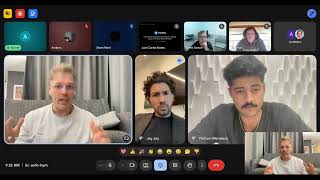
Matt Ryder coaches Victor, Nahum, Ambrose, and Stefano through sales roleplay. They work on tightening openers, using situation-problem-implication sequencing to stay focused, pitching full price before payment plans, and testing show-rate processes systematically.
All right. Okie dokie. Should be good. All right, guys, what we're going to do is go more advanced roleplay stuff today. So what I want to do, I want everyone who's available to come off camera and sort of get. And get amongst it so that we can, we can see what we're doing. And then we'll go through, we'll focus on an area of the call that you want to focus on. But what we're going to do is we're going to do some exercises to kind of dial in specific parts of it. So what is less effective is just doing big, giant roleplay top to bottom. There's a time and a place for that. What we really want to do is sort of focus on a more specific of the core. And I think usually that the most effective area to role play that has the biggest bang for buck is usually the beginning phase.
Right.
Because I can usually tell by listening to a role play if it's going to be a sale or not in the first few minutes. And that's usually just because people just get squirrely and get off track.
Right.
So, Victor, you want to go first? First of all, like, what do you sell?
Yeah, I sell boxed curriculum to like in home daycares and daycare centers. So it's more of like an upsell. There's a software that everyone I sell to is already subscribed to the software. It's like a business management software for the preschools, but I sell the actual curriculum.
Okay, perfect. Who wants? Who wants? He's going to be the role play partner. He's going to be half decent at being a prospect for this. No. Okay.
Yeah, I could do it.
Sounds good. Yeah. All right.
Was the author again?
So you're. It's, it's. Yeah, yeah, go just like describe it again. It's.
It's curriculum for like preschools.
So would he be the principal or a teacher?
You'd be like the daycare director or, you know, principal daycare director. You can be a daycare director. And like you, you already use our, our app.
You use our app.
It's advantage to manage your business. But I'm. I'm calling you to upsell curriculum.
All right, and what's the context of how the leads come in? So you're just, you're so you're actually just. You're calling them because they're a customer and so you're trying to do an upsell. Is that right?
Yeah, so I outbound into these, you know, existing customers, like they don't opt in or anything like that?
Yeah. And do you have a relationship with them? Did somebody else buy them? Did somebody else sell them? Did you sell them? No.
Yeah, someone else sold them.
Okay, so your specific job is upsells? Yeah.
Okay.
All right, cool. And would they've had the. Would they have had the software for a while?
In some cases, they've had it for a few years, and in other cases, they might have signed up, like, last month.
Okay, cool. What's the key problem that your software solves?
So the key problem that our. Our curriculum solves, like what I'm selling or what they're already using.
What they're already using.
What they're already using. It helps them to manage their business. So they save time. Mostly it's, you know, saving time.
They can.
They move from paper to software.
Okay.
All right, let's do it.
The benefit.
The benefit of what I sell is, like, they just save time because these daycare directors have to, like, make their curriculum from scratch. They have to, like, use Google and Pinterest to make stuff. So for this, I'm just going to role play the discovery phase. Like, we already set a meeting. Okay, awesome.
All right, Nahum.
Am I saying your name right? I just want to make sure I'm not butchering it.
Yeah, Nahum Naom. I don't even know how to say Nahum.
All right, Nahum, welcome to the call here. Looks like we just. Looks like we put some time on the calendar to take a look at experience curriculum, see if we could possibly help you, maybe save some time so you don't have to manually make everything every month.
Is that about right?
Yeah, yeah, yeah.
Awesome. Yeah, Nahum, these calls are really basic. It's really for us to kind of figure out, like, you know, what you're doing right now, you know, how you make your learning activities, how you kind of organize it all compared to any possible, like, improvements or time savings or anything you would like to see done a little easier. And then we just take a look at that area in the middle. And then by the end of the call, if it seems like we can help you, then, you know, you and I can kind of work together to set up some curriculum for either, like, December or January. That's kind of like the setup of the call. Is there any, like, anything you want to add or subtract from that? It's kind of like the setup of the call.
No, no, I think that's awesome.
All right, cool. See, I know when we first spoke, like, a couple days ago, maybe what was it about? Maybe something I said or maybe something that you kind of saw like on the Internet, or maybe it was a banner you saw on the app. Like, what actually caused you to book this meeting? Look into this a little further.
Yeah, I mean, I think there's always ways to kind of make things more efficient and easier to run with all these screaming kids in the background.
So, yeah, for sure.
So more efficient, I guess. Like, what are you doing right now for your, like, learning activities? You kind of like making them on your own or you're using someone already?
Yeah, we use someone.
Yeah, I mean, we have your app.
That helps us for sure.
And.
And yeah, we just use someone. Mostly xyz.
Well, okay, sorry. Cool. So timeout. So straight away, okay, so first of all, you're. It's too wordy. Your opener, right? So you're, you're allowing the prospect to kind of. You're. You're a little bit wordy and a little bit vague, right? And so you're not being concise and precise, which is, it's going to cause that person to kind of take the call in a number of different directions, which means that now you're introducing tons of variability.
Right.
I think especially in like the first few lines, you. You can be more direct. You don't have to be so leaned out or neutral. The issue is if you are that neutral leaned out, you're a little bit apprehensive. Now you could be nervous because you're on a role play, people, stuff like that, but. Or it might be that. Are you newer to this job you done for a while?
I've been here for about maybe four.
Or five months now.
Okay, cool. So still relatively new, right? But it sounds like all those neutral words, like the possibly maybe could be all that stuff. It's making you sound like you're not sure what you're talking about. Right. Okay. So when you're super forthright. Okay. Like me and it's like you're very. You like, have confidence in your forthright. Using neutral words. Okay. Is great because it's like, softens you, right? And so it's sort of like, hey, so it looks like you booked in a call about, you know, possibly looking at some curriculum solutions. Is that right? All right, now that is good. But if it's like, hey, this isn't you, I'm just exaggerating. Hey, it looks like you maybe booked a call about some possible curriculum solutions. Is that like, you sound like a pussy, right? So like, it just makes people not want to give you money because it's hard to trust you. So what I would do is have a look at your opener, remove any, like, filler words, remove any of this stuff. It's really hard to pull off. Right. You know, all the, all this shit.
Right?
Okay. And then just like simplify it a bit and try and make it a bit more punchy. And then like sit down and then go like, what are the possibilities of this opening line? Because the openers are so important. And there's initial that initial, like, phase because it's what allows the parameter of acceptable conversation. And you want to really tighten it up so that you're talking about something quite specific. Whereas if you leave it broad, although that's a great sales technique, it is very difficult because now you have to like, learn to bat them down with probes, which is like a really difficult skill set to. And after four or five months of an offer, you're not going to know enough to be able to do that. Right. So tighten it up, be more concise and be slightly more direct than what you are. And I think that you'll find it'll be an easier conversation to pull them down through that sort of problem awareness phase that you're trying to get to. Awesome. Okay. Makes sense. Yeah. All right, cool. Nahum, did you want to, did you want to be the, the role player?
Yeah. Yeah. So I started this offer about a month ago. It's a coaching program for we, you know, so we help people develop soft skills like networking skills, communication skills, personal branding so that they can land their next job. Right. They're sending out a bunch of applications. They don't hear back, they show up to interviews, they don't hear back. So we teach them how to interview properly so that they can stand out from the car. So what I'm, yeah, what I'm struggling with now is when I get to like, situation. Right. So taking them down the path of the funnel of where I want them to go to.
Right.
Kind of situation. What are you doing now on your own to find something new, right? Oh, I'm sending out a bunch of applications. How many have you sent out? And then when I get to problem awareness, and that's not.
But that's not the best of the problem you solve though. You don't, you don't help them get something new. You help them actually get callbacks. You help them like not even required to do that. So, so why would you have that conversation?
Okay, so, yeah, I'm open to suggestions. What would you suggest?
Well, this, the situation Is supposed to lead into the problem, right? And so the situation is like, what are you doing to solve your problem? The situation is, what are, what are. Like, if you. It's a really difficult conversation to have. If it's, hey, what are you doing?
Right?
Because now you've got to like, transition. I think, I think most people get this wrong, right? The, the situation is, what are you doing to solve the problem? So what strategies are you using to get those callbacks? What strategy are you using to get better? Because now it's a seamless into your problem. It's like, okay, well, why, how's it working? Is it working like what? Like, like, like what's not working about it? It's like, if I'm trying to sell you sales training, I don't give two shits about how you sell.
Yeah.
Like, if I go into, like, so what sales techniques are you using now? Like, I don't care because we're gonna throw them in the bin. But if it's like, hey, like, what, what, like, what prompted you to book the call today? Oh, I wanna, I'm, I'm struggling to get callbacks. I seem to be interviewing just kind of this. And then if I go like, that's what the initial thing is going to be, right? That, like, why are you here? And then if I go into, okay, so what are you doing to get more callbacks to ensure that you interview better? Super, like pointed, right? And very contextual. And so that next part's quite easy. But if I go like, okay, so like, how many interviews are you doing? Like, you know what I mean? It's like, that's a gap building thing that you're going to use later on in order to build more urgency. But if you go into it now, you're going to go into rabbit holes of like, oh, man, I tried everything.
That's exactly what it's been happening. It's like this situation.
But if you think about it, that's the only logical conclusion to the questions that you're asking is you're opening up a rabbit hole, right? Of like. And also what that can do is that can make them like throw a pity party for themselves. And that pity party is gonna, is gonna, is gonna bring them out like Taylor Welch or like the buyer's gap, if you guys ever heard of that. Right back from Reflex selling.
It was a great.
I was actually just on the phone with Taylor. But like, you know, there's that like, buyer's gap where they have to know they can do it, but they need your help. So if they're too far down this way, then it's like they don't think they can actually do it.
Yeah.
And so like, then it's difficult to tell them. And the too far the other way is they're like, ah, I can do it, I can do it. I don't need you type stuff. So it's putting them into that gap, which I think is really important. And a lot of you are like probably going, oh shit, I do that too. The situation questions, like that phase or whatever you want to call it, is to describe what they're doing to solve the problem in which they are there to talk to you about. If you do it in a different way, you have to be insanely good because you are in like opening up rabbit holes. So if you're someone like say Jeremy, right. So if you guys are using like, like an apq, he's so good at the problem awareness stage that that's a great way for him to do it. I'm nowhere near as good at that stage. Right. So I like glaze over problem awareness, like it's nothing.
Yeah, I've noticed, I've noticed in your calls, yeah, you focus more on the future, which I like your strategy because to me it makes more sense because it's, it's positive future and like it.
Keeps the vibe, to be honest. It's pure consequence of what you sell, right? It's your personality style combined with what I've sold. I've sold more B2C than I have B2B, right? So like I've sold more on a person to person basis. Whereas if I'm selling alarms or I'm selling solar, like it's going to be less driven by that and it'll be more problem driven. So some things are solution driven, some are problem driven, right. And so, you know, like for what you're selling, it's for sure more solution selling driven, right. And so you've got to kind of be able to shift like with dialer, like my software, like the way that I sell it is a little bit different. Again, it's more like kind of unraveling the matrix for them, right? You know, it's like, hey, all these things that you've done, it's not your fault, but it's your problem. This is how we fix it. And it's like, oh shit, you know, and so, but, but for me, if I uncover five problems, it actually, in a lot of the things that I've sold, it actually becomes more difficult to sell Them because. Yeah, they're like, oh, my God, you give me so much to think about. And if you get that a lot, it's because you're inducing that.
Yeah, 100%. Okay, so this, this makes more sense to me. So, like, what strategy are using now to get more callbacks, you know? Okay, what are you doing to actually, like, prepare for the interviews, going into them type of thing? What are those type of questions work and why do you feel like maybe it's not working to go into problem awareness?
No, let me just role play it as you.
Right.
Okay.
So I'll be the sales rep. Is it inbound?
Let's try outbound.
Okay.
All right, cool. Have they opted in for something?
Yes. So they fill out a form on Facebook right through an ad. The ad says, I'll review one right now. Just so you have some contacts here. It says some people blend in, others break through. You've got the talent. Let's build the visibility strategy to match. From stuck to sought after, our clients go from being overlooked to being recruited because they know I like.
I like that messaging. Okay. Ring, ring. Hey, Nahum. Hello. Yeah, yeah, hey, Nahuman, it's just Matt from XYZ Buddy. How are you?
Oh, you know, just. I'm doing all right. Where'd you say you were from?
Yeah, just from XYZ Buddy. It looks like you'd asked us to give you a call about some strategies of how to sort of, like, stand out in the crowd when it comes to looking for new jobs or doing interviews. Is that. Does that kind of ring a bell? Yes. Yeah, yeah, yeah, for sure, man. Did you have a chance to kind of. I don't know, do you guys? Tell me, do you guys send them anything?
They start getting emails. Yeah.
Okay.
Okay, cool. I'll skip that. I'll be like, okay, man. So, like, what did you see that kind of prompted you to reach out and think, oh, maybe these guys can give me a hint.
But yeah, I mean, I've just been. I'm in between positions right now, so. I mean, I've just been sending applications and, you know, like, I started as a, like a software developer over at a company and I was there for three years.
Years.
And they had a layoff.
How long have you been in between positions, sir?
A couple months. Three months now.
Okay, and have you. Have you been doing interviews? You just kind of been holding your cards close to your chest, like, what's been going on?
Yeah, I mean, I've been sending out applications through, like, LinkedIn and ZipRecruiter I've had a couple interviews, you know, then just. I just don't hear back from them.
So. Okay, so what, what kind of prompted you to reach out and maybe look for some help?
Well, yeah, like, I mean, I haven't really been hearing back and, you know, it's been three months now that I haven't had a job, so, I mean, I feel like I.
Okay, all right, so it's getting, it's getting, it's getting. Getting pretty close. Right? We need to do something. All right, well, like, what are you doing to, I guess, you know, like, increase the resume, maybe increase your interview skills and sort of start to stand out and sort of blend in. Right. Because there's a lot of people, especially software engineers right now that need jobs with some of the recent things that have happened. So. Um. Yeah, man. Like what, what are you, what are you doing to stand out?
Well, I mean, I. I mean, I've had plenty of experience. You know, I was, I've had. I was at this previous company for like three years, and before that I was somewhere else, you know, for like six years.
Sorry, man. I might. I might not have been cleared. Sorry. That's not my fault.
Why?
You didn't actually stand out though, right? Because a lot of people with experience, a lot of people with great resumes. What do you. What are you doing to actually separate yourself from the other guys with 10 years experience and great companies and yada yada.
Yeah, I mean, I just. I mean, I. I don't really know what I can do. I've been looking up stuff on YouTube for, like, interview preps and.
Okay.
You know, I have AI do my resume.
I mean, the same. The same AI everyone else is using. Right, Right. That could be trouble for sure. How's it working?
Well, you know, you know, like, I mean, I've gotten some interviews, so it's not too bad. You know, I have confidence in myself, definitely, like, going into them.
Okay.
It's just, you know, I just, you know, you know how it is, like, the market, it takes time, you know.
Okay, well, hopefully not too much longer.
Right.
Unless you've got some sort of trust fund that we don't know about.
No.
Okay.
Okay, cool. So. So I guess, like. So what's the problem? Like, what are you seeing as the thing that's preventing you from getting those? Cause, like, it's great to have interviews and that kind of stuff, but at the end of the day, it doesn't result in a job opportunity. It's kind of waste of time. Right. So, like, what do you think is the issue between, like, you, I guess, going through the motions, doing what you've been doing, and actually standing out enough to get someone to actually give you an offer?
Yeah, well, I guess. I don't know. That's.
That's what.
I don't know. I don't know what it is because I have any of.
What do you want to do? You want to do and change that?
That'd be nice.
Yeah. You sure? You could just keep going interviews, you know, that could be fun. I hear. I hear. I hear Starbucks is hiring now. You could. Yeah, yeah.
No, definitely don't want to do that. No. No.
Okay.
Well, just so I can. Just so I can see the rationale behind why you might be looking for someone to actually come in and help you and actually increase your skill sets that you can stand out. What's the main reason for doing that and actually getting some help with this rather than just kind of, you know, you could always, like, double the amount of resumes you send out. Double the interviews, like. Well.
Yeah, I could. I could do that.
It's just.
I mean, I feel like it's taking already so long. So, I mean, I feel like. I mean, there's gotta be. Must be a better way. What do you say that you guys do, though?
Okay, well, what we. I mean, you know, we do a bunch of different things, but essentially we help people stand out from the crowd, right? So people like you are in a situation to where they're just kind of stuck, you know, they. They're. They're good at what they do. Because I'm going to make a preface. You have to be good at what you do. So are you good at what you do? Yeah.
Yeah, yeah, yeah.
You sure? You don't?
You don't.
Yeah. You sure? Okay, cool. So as long as people are good at what they do, what we do is we teach them strategies and how to stand on the modern world, right? Because unfortunately, you know, getting a job is like Tinder, right? You can be a piece of shit, but if you have nice photos and good. And a good profile, you know, people are going to swipe on you, you know? And so what we need to do is need to create you a more appetizing prospect and teach you how to stand out, not only online, but in interviews, so that, you know, you can learn the game of the interview. And then from there, once you have multiple offers, right, it's just about kind of picking which one you want, then you're more in control of your own Career. Does that make sense?
Yeah, no. 100%. Yeah.
Yeah. Cool. All right, so what might be, what might be easier because I think what we do might actually work for you and I've just, I've got another meeting I got to run to. We could, we could book another call that would give me an opportunity to go through, have a look at everything that you're doing, you know, have a look at your LinkedIn. Just kind of look at some stuff. You can send me your resume and then that way I can have a look and see what I can see as low hanging fruit that might be potentially holding you back from, from those interviews. And then, you know, we can talk about possible strategies and next steps if that seems to make sense. But would that, would that help you if we sat down, had a bit of chat about it?
Yeah, no, that'd be great.
Yeah, for sure. I just book them, dude.
All right.
So you know, like, like off the cuff, whatever, that was fine. But like that, that shouldn't be too difficult, dude.
That was.
So.
Because, because normally, like, for some reason, dude, like once the, once the phone starts ringing, I, in my mind I feel like I need to turn into somebody else. Whereas like, normally, like I talk like I'm talking to you right now, you know, I'm pretty, like, I don't know, like loose, I guess. And then for some reason, like I gotta turn into like this professional. You know what I'm saying?
Nah, man, you don't have to. People are like, people like you, it's way easier to sell them. People who say that like they don't need to like you to buy are just like unlikable people. Yeah. You know, like maybe you're a piece of. But I'm fun to be around, you know, you know, so yeah, like it definitely. Being liked definitely helps. Being attractive helps. Like, I mean, you guys want to, if you guys are business owners and you want to make your ads run better, just if you're the face of the ads, just run it through an AI that makes you a little bit better looking. It'll work better. Like 100 garon. Like that works every time, right? Use attractive people, you get better things.
Right?
So if you're funny, people will like you more, you know, and the cool thing about sales is like you can have the same jokes over and over again because you're only going to tell them to that person once.
One time. Yeah, exactly. About all the bad jokes that you want.
Yeah. You know.
Well, thank you. Is this recording gonna be posted somewhere?
Because that was it's being live streamed right now, so you just gotta watch it. It's on YouTube right now. Go back and watch it immediately. Yeah, it's literally being streamed right now. So you're good to go.
Technology, dude.
Well, thank you. People saw the glory of my sales prowess. Right.
I'm gonna take this time to fan fangirl you for like five seconds, dude. You're the man then.
I agree. Yeah. So you did the discovery.
You did the discovery right there. When you get on the, the actual sales call with them, do you like go over that briefly or like, how? Like for like a minute. Like, how exactly does that work?
I mean, you can, you know, depends, like how much time has gone by. Like, hey, dude. So like, you know, last time we spoke, we're kind of going over this. It seemed to be the biggest struggle, you know, has anything kind of popped up in between now and then of like, you know, anything kind of come up, you're like, oh, like, after thinking about it, like, this might be an issue. This might be an issue. You know, Are there any, like, particular points in an interview that sort of stuck out to you as like, oh, there's a bit of a douchebag there. Like, I can probably fix that up. Like, you know, like low hanging fruit. It's always easier to remove negative before we add positive. You know what I mean? So like, if you had to kind of break it down, like, what would be some of the negatives that you're doing? You know, so I could, I could do it that way, you know, like, it's super simple. You don't need to, you know, stress too much about stuff like that. It's really more important that you just get through the phases. Like, I like selling on outbound too. I probably would just pitch the guy. In reality, if I have him on the phone, I'd be like, or if you have another like 20 minutes now, we could just go through the whole thing and someone's like, yeah, I got the time. And I'd be like, yeah, sweet, dude. Let's like, I'll send you a link, we'll jump on Zoom and I'll go over it with you. Yeah, I mean, or like, I can. Or I can just sell them on the phone. Like, it's no difference. People would think, like, you have to book a sales goal is stupid. Yeah, right. Like, you just don't. You can sell people 50k programs on Outbound. Like, it's fine. It's no different. I've done it tons of times. Look, you can't do that. Can. I'll do it right now.
Just love.
Not that.
Love that. Yeah, dude, it's. You're right there. So here's my question for that. Like, how good does the marketing need to be for you to be able to do that?
It's just.
Or how much are you relying on the marketing?
Well, I mean, you gotta understand, like, so first of all, like, you know, obviously, better marketing, easier everything is right. But essentially, like, it's a bad marketing just does a bad job of segmenting leads that are closer to buying, right? So when you're doing outbound, like, you get to decide if someone's close to buying. So if you're deciding to pitch them, it's because you think that, like, this is a buyer. This is someone who the problems match my. I can help this person. So I'm going to pitch them. Who gives a shit, right?
Like it.
Who cares? But what you're. What you really want to do, it's like, it's the decision making of the buy. The price point has a bit of a thing. But I've sold like 30k programs. Like, when I got asked to run Brunson stuff, I came in and the sales team told me that, like, they had this crazy sales process. And I was like, I think we can just call people and sell them because Russell Brunson's name, they're like, nah, can't be done. And I was like, bet you can. So I sold seven deals off outbound that week myself. Right? 30K, all of them. And I was like, see? Turns out people know who Russell Brunson is. Surprise. You know? And so I just sold them off outbound. I outbounded them, like, just talked to them. I was like, hey, I could book a call or if you have like an extra 20 minutes, now I can take the whole thing. Yep, sweet. Took them on the phone. Boom. Handle objections. Close. Fine. Right? So that helps because it's Russell, but you can do it for anything. It's just. It will be easier with a 30k. If it's Russell, it'll be harder because, like, you might have to nurture the prospect. It really just depends on, like, that individual, you know, and then also, like, how good the sales rep is because, like, it's not harder, but it's like, to be honest, like, I started doing phone sales because I had gyms and the entire industry would, like, generate leads, call them, and book them into, like, an office consult. And I just, like, only 50, 60% of people showed up and I was like, this is lame. So I was like, if I sell 20% of people and 50% show up, that's 10% of the people that I speak to and book are only going to buy and I'm only going to be able to speak to like, say half of them, you know, I mean, so now I'm at like 5% lead to sale, which is. So I was like, what if I just pitch everybody over the phone?
Yeah.
My close rate went from say, 20 to 15, but I pitched everybody. So I made like five times the sales. Right. If I get time. No, actually, you know what, Patrick? The answer is no, I'm not going to do that because then that makes. I want to anyway. Sorry. So Manchin, I said, no, I don't.
That makes way more sense, dude, in my mind, because then there's less time between calls. So, like, people forget. The pain kind of dwindles. I mean, you're right there.
Yeah.
Our offer is ten grand. I don't know if that matters.
Just sell one over outbound. You'd be. Then all of a sudden all the dominoes will start falling into place. All right, cool. Ambrose, let's go with you first. What's that question? Or.
It's a bit of like a question, but also my process. And first of all, I applied your. Your specific advice on change my tone when I talk with people. I'm working in the committed coaches deal. So something that I'm. I'm getting stuck at is at the end of the pitch where I say to the people, the, the price for the offer is, for example, 200amonth because it's a financial pitch. But I always get the same problem, that, no, that's too much money or, no, I'm not going to pay that. And I feel like maybe I'm doing something wrong in the process, like not bringing. Bringing them their pain enough to the surface so that when I pitch the solution, they go, of course I need this. Is there some advice for me?
Well, I mean, I would say your underlying problem seems that you're not convincing people that they need it. Right. Otherwise they would, they would not do that. Also, don't pitch payment plans. Don't. Don't pitch it like that. Like, where are you going to go from there? Right? Like, pitching payment plans is like, it's death. You know, pitch PIFs, only PIFFs, then you can drop to a payment plan. That's fine because the person is going to bulk at the door at 200 bucks a month. They're going to. It's the same Level of resistance. If you just say it's 2,500 bucks, whatever. Right. Because then from there you can drop it. But there's now a process that you can go through to re espouse the value and you can take them through something to where the 200 bucks a month actually happens. Whereas if you just pitch them at 200 bucks a month, like if they're price sensitive, they're price sensitive at 200 bucks a month versus 2,500. It makes no sense.
Right?
It's the same thing.
Yeah.
So like, I wouldn't worry too much about that and I would do it that way because then now you can actually. Objection. Handle. Whereas before you're just, you're arguing people over payment plans. And then also you end up inane conversations that make no sense when you go, like it's this, this, this, and we have payment plans available and they go, what are the plans? Whatever. Right. You know, so you end up sort of like never actually addressing the real problem. So first things first is what I would change. The second thing is that you're just not getting people to want it or need it, which means that like, you're not attacked, you're not finding the right problem, which means you're not getting the right solution, which means you're not attaching any sort of level of consequence to that.
Right.
And so the way that you would probably do that is because you're probably not probing, I would say, when someone or you're allowing people to give you like non answers. So it's like an example of that is like if someone gives you a partner. Objection. And it's like, hey, so like what happens if you go to your partner and they, they're, they're not on board? Well, I don't think that would happen because, you know, my partner is this, this and this. And they're just supportive. And so now this, it's like, okay, that's not an answer. It's not the question I answer. I didn't ask, like, give me a rundown of like how your partner is. I said, what happens if your partner says no? Right. I don't think that will happen. Is not an answer to the question. But most people will accept that as the answer. And what they're going to interpret that is it'll be fine. But that's not, it's not what they said. It's not what I asked. Right. So I would say that's probably what's happening. And you're accepting answers that aren't answers.
Okay. So I need to have like a real tangible pain and clear cut answers and then go through a fifth and then drop down to a financial planner. Is that right? Yeah. Okay. Okay. Thank you, man.
Easy peasy.
Alrighty.
Stefano.
Hey man. So yeah, for me, my biggest, well, first deal is we wanted to optimize the close rate, so we optimized the closure rate. But then I realized that the cash collected wasn't great. So now we're optimizing for cash collected and the cash collected has increased because we're going harder on. But now my biggest, our biggest bottleneck is the no show. And I just watched one of your podcasts as well about no shows, saying how like, you know, double booking and stuff like that. I just want to get a little bit of an understanding like how we go about efficiently double booking without then just getting shit ton of people.
Like 60, no show right now if you're 60%, like, like people aren't showing up. I would, what I would do is a bit bold. Instead of double booking, I would remove every single like process that I have for shops. Like every single one, every reminder, every text, every email, everything. And remove it all. And then, and then see, let's see what happens then. Add one text, add one email, add one text, add one email. Because like if you stay at 40% show up rate with nothing, then everything you're doing is right and you never go full retard. See.
Yeah, because we, we once got the device to be like out that like moment they booking outreach. Now we've got an intervention page. It increased it slightly. Maybe we had like a 70% no show. We're now like at 60. But you're just saying like wipe everything out, then just bring in things systematically.
See what, maybe it goes up, maybe it goes down. Right. But like at least like, because what are the odds that, you know, what's that?
How would they get reminded of like.
Well, you could do like one reminder, just be like, hey man, three hours show up. You know what I mean? I'd make sure they're adding it to their calendar as well. Like, you know, Google Calendar in 2023. Did that change? You know about that.
Yeah, I watched the podcast.
Oh, okay. Yep. Sweet. So, you know, I would, I like to sort of, you know, you clearly have a problem and I would like to ferret out where it is. But adding a bunch of shit probably isn't going to help that because you might have like five things that increase the show rate and five things that decrease the show rate. Right. And like I don't know which ones they are. And so I would just nuke everything and just go like YOLO, maybe have a 20 show up rate for the week. Right. That would be interesting because that would mean that like there's a brand issue there. But I would also want to segment between no shows, cancellations and reschedules because like they are different issues but it's.
Just a no show. When they get on the call and they talk to us. Good, good. You, they know our brand, we're recognizable, what we do makes sense.
Sorry, I don't, I don't think, I think you heard what I said. Sorry. So I want to, I would want to know how many no shows versus how many cancellations versus how many reschedules. Because if you have a 40% show rate, right, then you probably don't have a one 60% no show, which is 100% of the people that don't show up no show, which means you have no cancellations and no reschedules.
Talking about like 5% cancellations, maybe 10 or 8% reschedule.
Then something in your process went full retard, right? So you just nuke it back and then add things like every, I don't know how big your sales team is but like because it's, it's not really time, it's more like instances, right? So it, you know, like added in systematically maybe to add one thing every five days or whatever. Right. And then you're basically going to like spend the time to systematically kind of build it back up and then doing it that way, which is the patient way in the long term way and I think the correct way, but probably the more painful way then you will know the efficacy of everything you're doing. Because right now you might send out all this crap and you don't even track the open rates of the emails that you send out for or the response rate to the text messages and stuff like that. Again, I don't know if you are or not, but there might be a bunch of stuff that helps and a bunch of stuff that hinders. Until you are able to figure that out, you're just going to add stuff and you're going to keep all the things that are hindering and just add stuff that's helping. Whereas the easiest way to a net positive result is to remove negatives.
What if we do it depending on the source like that they're coming in from?
So you can do it however you want. I like, I gave you my way of doing it. You can do it however you can do it however you want. I couldn't give a single fuck about how you did. Right. But I'm saying, like this is what I would do. I would just go like, like that. But you know, if you do have it fully segmented out by lead source, you know, but the only problem is then you're sort of assuming that all lead sources will react the same way to all things.
You know, it'd be a good way to test out different things like meta only icon, Google, just automation and see which one.
Yeah, I think that you would. I think that you would glean less insight than what you think from doing it that way because you have to take into account the type of people that come from each thing. You know what I mean? So. But you could definitely do it that way. I don't. Yeah, I think if you just left extremely basic one or two reminder automations like in there, like the basic stuff that comes sort of inbuilt on all the platforms, type thing that are relatively innocuous, I think that you would probably be able to maintain a. A 40 to 50 show rate without anything.
Right.
So if I nuke it back to that, it stays the exact same. Then you're just like, oh my God, we were just doing all that crap for no reason. That's interesting.
So, okay, I'll speak with the.
No, it's a bold move. He's not gonna like it.
I don't think he's gonna like him. I'll fit you.
I've done it a bunch of times. I think it's fun. All right.





