My experience of war
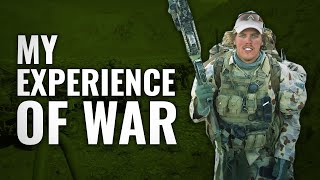
Matt Ryder, a sniper with Australia's Special Operations Unit, talks about his deployments to Afghanistan and what combat taught him about business and sales. He reflects on the bonds formed in war and how those experiences shaped his approach to leadership.
Hey guys, what's up?
Matt here.
And this is a little bit of a different video. It's going to take you through my experience at war.
For those of you who don't know.
I was a sniper in the Australian Special Operations Unit 2 Commando Regiment which.
Is one of the Tier 1 SF.
Units in Australia and had multiple deployments. But today what I'm going to talk about is just a candid discussion, not really sales related, but I hope you guys find it interesting of what it's actually like going to war. So I did a few deployments, some to Indonesia, some to the Middle East. But what I'll be talking about specifically today is Afghanistan because that's where most of my really war like deployment and time was spent. Last time I was in Afghanistan was in 2008. So it's a long time ago now. Obviously war changes and environments changes, but I think that there are a few really, really, I guess steady constants that I can see from talking to old soldiers, new soldiers, world 1 guys, Vietnam vets, stuff like that.
And that's that war.
It sucks, right? It's not a great place to be. It's somewhat, there's parts of it that are really enjoyable, the camaraderie and like all that kind of stuff. But in generally speaking it's kind of a shit show of a place to be. You want to go there as a soldier. I don't know any soldiers that were in my line of work that didn't want to be there. And I wanted to be there and enjoyed myself. Getting a chance to actually do the job that I was spent years training for. Especially in special operations. Like you get to do other cool jobs and helicopters and jump out of planes and kick doors in and blow stuff up and all that kind of good stuff. The danger of it makes it fun too. It's the same reason why people, you know, jump out of airplanes and do all kinds of crazy stuff like BASE jumping and ride motorcycles really fast, all that kind of stuff. The closer you are to death, the more alive you feel. I suppose at times now that can be a drug for a lot of people. It didn't really affect me in that way. I wasn't someone who like craved going back to war. But some of the things that I learned, there's really no situation where you can't get out of if you have a good team of people who are highly motivated. I've always taken that into business and I guess like war taught me a lot about business. It also gave me a tremendous amount of Context, life is really shitty for a lot of people. If you have the ability to watch this video, chances are your life's pretty good. And so I think it's really important that you know as soon as we look at life through the lens that life can suck and it's really crappy for a lot of people. And it puts all of my problems into perspective. Not to that my problems are not serious or real, but it gives me a level of perspective and context that allows me to think my way through things because I have enough money to be comfortable. I'm not looking where my next meal comes from. I don't have to worry about when I drive down the road if there's going to be bombs laid there. I don't have to worry about someone coming in and stealing my daughter because she's learning how to read and write. I don't have all these horrible things that happen in these countries. And that's a amazing. And one of the reasons why we have those freedoms is because there are, you know, one of my favorite quotes which I have tattooed, people sleep peacefully in their beds at night because rough men stand willing to do violence on their behalf. Which is a great quote. And for me I think it's really true.
All right, guys, so I decided to go out and about because it's a little bit easier. And I thought this was kind of an interesting one. It's a very unscripted video. Let me know if you guys want more of this stuff. But essentially 2008 went to Afghanistan, essentially went over there. I was a platoon medic, patrol medic, stuff like that. Because I had some really cool qualifications which I can do another video about. But basically I was really into the medical side of things. And so all the life saving operations, good stuff like that, I got to do like live operations. I amputated someone's arm. I got to do life saving operations after IED blasts and you know, chest tubes, like all that kind of good stuff which I really, really enjoyed and actually considered becoming a doctor when I got out of the military. But then by the time I got out I was kind of like, didn't want to go, have to, didn't want to have to go back to school for that long. So what is war like and what does it teach us about business? I think, you know, the context side is key. It makes it a lot easier to do tough things because like I've done way harder. And I think that that's one of the things that people in business don't really understand. It's like I get asked a lot, like, man, you do so much and like, how do you find the time? Because what we're doing is extraordinarily easy. Like it's not difficult. If the most difficult thing you've ever done in your life is an hour and a half long sales call. It's like you need more life experience essentially. And the only way you're going to get is by going out there and putting yourself in situations where you do hard things. And that's incredibly important thing to do because you need to be able to bring those kind of things to a sales call. Some context and empathy, some sympathy, all that kind of good stuff. And that's really, really hard to do if you never put yourself in a position where you have to do something difficult. Alright, so what is it like? Like there's a great line where it's like 99% super boring and then 1% uncontrollable chaos. I think that's really true. It's probably a little bit more than 1% uncontrollable chaos. Especially in places like Afghanistan where there's just so many bad guys around all the time. A lot of the time we would sort of, you know, work for 24, 48 second, 72 hours at a time without sleeping. We wouldn't be able to eat because it'd be so busy. We'd have to hump in like, you know, our own water, like 14, 18 liters of water at a time. Plus we had, you know, our packs and our rounds, all that kind of stuff. As a sniper, our packs were like 40 kilos. So what's that in pounds? Like I don't know, like 90 pound packs plus a 10, you know, plus a 15 pound rifle, plus ammunition. So it was difficult. Like, I'm not gonna lie, it was a very hard thing. Was it incredibly rewarding? Yes. What's the best thing about war? The best thing about war is the bonds that you, the bonds that you build when you're there with people. It's hard to explain. Like, even if you don't like someone, if you've been to war with them, you have a bond together that's really, really difficult to break. You'll just do things for each other, even if you don't like each other. There are a couple guys from the army, I really, really don't like them, but if they called me up needing help, I would do it immediately. Just because, like we've been through some raucous shit together. You know, one of my guys or like a friend of mine. I don't see him that much anymore, but there's a friend of mine. Me and him were stuck behind a rock getting shot at by Chechen snipers for about six hours trying to figure out where these guys were. And that's kind of like a very, very bonding experience. And although we don't see each other very often, when we do, it's just kind of like that knowing nod that we've done something. I wouldn't say traumatic, but something very.
Difficult together, which is a really, really.
Interesting bond to have with people. And me and my friends are very, very close. We do a lot for each other, and we're more like brothers than what we are, friends. And so that, to me, was like. Probably the best thing about my military experience about going to war was the bonds that you create. The worst thing about going to war is not coming home with as many people as you went over there with. I was part of some relatively big contacts or whatever you want to call them, battles or whatever. Not a lot of them, but enough of them to where we had a bunch of people not come home. And that's probably the worst part about war. It's a weird dynamic when you hear over the radio that someone's been ka. Especially the first time you hear it, it's like, oh, okay, this is real now. Which is interesting, because I think, like, when you go over there, you're in your early 20s. I think when you're in your early 20s, you really don't know what the. Is going on. You don't understand the consequences of your actions very well. And then when you hear it come over, I think you, like, you grow up the moment you hear on the radio that someone's died, especially someone that you were having breakfast with that morning, and then having to go and get the body and carry them and all that kind of stuff like that. That. That tends to. Tends to allow you to grow up emotionally very, very quickly. Having to go through that and deal with that, obviously, I came out relatively unscathed, which is. Which is pretty lucky. I have a lot of physical stuff that's happened, so I don't really have any mental stuff, which is great. So managed to handle it all relatively well, which I think is more luck of the draw than it is anything about toughness or anything. Yeah, I know a lot of incredibly hard individuals that were hit very hard mentally and that are, you know, years and years and years later still struggling with that. So kind of going back and looping it around to Sales. And I guess what you guys are here for, for my channel in particular is that, you know, sales, we're not saving lives. We are trying to help people through the good things that we sell. Whether it's solar or whether it's a good quality car or whether it's, you know, a coaching consulting program.
We're trying to sell them into something.
Good and make their life a little bit easier. Right? But we have to put it in the context of like this isn't the most important thing in the world. So stressing out over it like it is, it's just not worth it. And I think for me it made that context and having that understanding made it so much easier for me just to like not worry about all this mindset stuff and just kind of get on with the job and do my process. The way I was taught in the army was like this, do that, right? I was shown something, they would then demonstrate it, I would then replicate it, illustrate, demonstrate, replicate something like that. I can't remember the acronym, but it's an incredibly effective way of teaching and it's a very, very effective way of learning. And so when I coach my guys, that's how I teach. And I usually break things down in the same way so that I can absorb things very easily. And just do your process. That's all you really have to worry about. Do your process, do your best, try your hardest. Understand what you're doing well and what you're not doing well. For what you're not doing well. Try and fix it. If you can't fix it, get coached, right? And that's, and that's how I learned and that's how I've done it. And you know, when someone comes into sales sniper, it's probably very different to what people think it is. People, people think that we roll with an iron fist. I'm really cruisy. I don't ever want to yell. I think if you yell at someone, the amount of mistakes that you've made as a leader is almost incomprehensible. If you have to yell at people, I think that if you lead by example and if you do the right thing and if you people know that you're out there for their best interest, then people are going to work really, really hard for you. That's what, that's the mentality that I've taken from the military. When I was in normal military, like non special operations, the leaders were weak and they would yell and they would scream and they would do all this kind of stupid shit. And then when I got into special operations, everyone was far more calm. You know why? Because they understood their process. And then when we got to battle, everyone was cool, calm, and collected. I didn't see anybody freak out. I didn't see anybody go, oh, my God, we're being shot at. Like, everybody understood their process. And when they were under pressure and when the things were hard, they referred to their process. So this is. I know this is kind of an all over the shop. This is more of a brain dump than what it is like a set video. But, you know, not many people have had the experience, and especially a lot of the young guys in this channel have had the experience of going to war. And I have, and it's something that I'm very proud to have done and something I have no desire to go back and do again. But, yeah, I think it really has helped me in sales, and I think hopefully some lessons that I can convey to you today has, you know, helps you guys as well. All right, guys, hope that was helpful. Talk to you.





