Ranking BEST Vs WORST Outbound Dialing Softwares
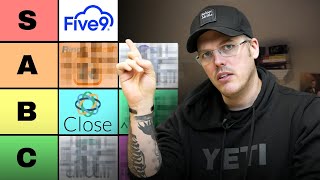
Matt ranks outbound dialing software, comparing features, pricing, and compliance across options for different business sizes. He breaks down which dialers work best for specific needs and budgets.
Hey, guys. What's up? Matt here. And today I'm going to be talking to you about the absolute best dialers that you can use for outbound dialing. It's a whole minefield. There's tons of things to choose from, and they're all good, kind of in their own way, and all bad in their own way. There's nothing that really solves every problem unless you really know what you're doing with them. There are some things that I think you're probably not doing and probably not thinking about when it comes to picking what is the actual right dialer for you. And today's video, what I'm going to do is break that down step by step and tell you exactly what you should be looking for. So kind of go through. I'm not going to talk about every dialer. I'm just going to talk about a good swath of them, talk about which ones I think are best and why, and then how we use dialers. First of all, there's a couple of different things that you should probably know, and that's really about, like, dialing conventions. Like, what can a dialer do? So one of the first things is like, what kind of dialing do you want to do? So you've got power dial, predictive or parallel dialing. You've got like, manual click dialing, and then you've got auto dialing. So they all do slightly different things. In Australia, for example, where I live, like, power dialing doesn't really work because. Because it's picked up by the telcos. Like, not that you can't power dial, but most of the times the people who are doing it are scumbag scammers. Like, they're. They're sort of figuring out ways for that. For that not to work very well. Predictive and parallel dialing is that thing that you sort of think of when you think of a call center. And it's kind of like it just calls a bunch of people at once and you get that like, you know, and it's like there's like that little pregnant pause. Okay. And that's like, that's a. That's a. That's an agent being connected. So it's dialing like a hundred different numbers at once. And there's agents there just sitting there waiting for someone to connect, but they're not really actively dialing anyone in particular. Preview dialog is what I prefer. Preview dial sort of ticks a lot of the boxes that you need. It's one of the slower dialing conventions but if you have things set up correctly that doesn't really matter. So what you do is the lead comes up, it sees everything and then it's like an auto manual dial if that kind of makes sense. The lead's gonna come up. There's times to sort of stuff around, figure out, make sure it's right. You still get access to the touchdown pad which is important for a lot of the Google and Android, sorry a lot of The Android and iOS kind of updates that have happened recently in order to stop people from being able to robo or autodial. So you need to figure out what kind of dialing convention you want and that's gonna narrow it down. The next thing is like you know, what are you looking for? Because the more you pay, generally speaking, the more you get. Not in every case as we're going to see. We're going to go through. So ones that we're going to cover today are going to be 5,9 ringcentral. Just call alaware close.com so which is a full CRM and then air Coal Phone Burner we're going to go through and do it on features, price compliance and ease of use. So I'll start off, I've already ranked them for you, so there you go. So foam burner all the way down the bottom. One of the good things about Phone Burner is that it does integrate with like basically every CRM. It's got email court, it's got pret good features. Like they're, they're adequate I would suppose but it is quite expensive for what you get like $149 per user per month. It hasn't really got a lot of compliance features. I'll go through like with the top 1 which is 5, 9. I'll go through the compliance features that it has because I'm going to go from bottom up. It's super easy to use though. Like it's instantaneous, everything's quick. Like phone burner is, is I think the name is very apt. So it's good if you're, it's like a high end for small businesses, right? So you're making money, you're doing pretty well. You, you want something that's going to be aggressive and good and have kind of all the tools to be after people. It's going to do it and it's going to do it really, really quickly. However, like it's super limited in features. At the end of the day it's really just there to call people. But it integrates with every CRM. So you can have it as like a dialer. Right. So the next thing is Air Cool. Air Cool is like one of the biggest players in the space. They've raised a ton of money. Their website's beautiful. Everything's kind of there and they seem to be like a lot of the go to I think for a lot of things because like they have definitely spent that money they raised on their whatever. How many raises they've done on creating deals with like Salesforce and HubSpot and all these ones. Because it seems to be like the go to for a lot of people now. It is very, very easy to set up. It's got power dialing, call queuing, you know, call recording. It's got. And it integrates with basically every CRM. Not every single one, but all the biggins. Like it sort of integrates with them. It's not expensive. Like it's quite cheap. Around that kind of 30 bucks a month per user. Obviously that's for like basically access to a phone number, which isn't much. I don't even think you get power dialing for that. But you can go onto their website and check it out. Or we'll put a list of the features up here of what you actually get in terms of like everything. So it's like a land expand. They come in, they give you a n cheap dial and then from there if you want to pay for all the fancy stuff, you just pay for it, right? If you just want something to click dial, then you know, it's probably a good thing. It has some compliance features, but really nothing compared to like some of the big boys, like 5, 9 when it comes to compliance may have access to certain scrubs, but I don't think it does. You can't do preset call cadences. You can't sort of map a process very well. So it's like, it's meh. It's okay. It's a cheap, easy, very, very friendly solution for a small business. But it doesn't like give you much control. Closed is like a full solution, right? It's like more of a CRM. Like a sales CRM. I use close for years. I think it's great. Starts at 99 bucks a month. Not super expensive. Again, it's not going to help you in terms of like compliance. Like it's not going to like make sure it's not like you can't like DNC listing people. Like, it's not a straightforward process. It's not going to limit who you can call and how often you can call them. So you can go as rogue as you want. I know I've seen it, seen people go absolutely mental on clothes but it does have like a 2P built in, right? So you can get that done. So there is that for the texting and stuff like that and it is really easy to use. It is a good like full solution because you get text, email, workflows, all that kind of stuff. Again you can't do like dialing cadences but you can set up workflows and you can set up smart views and stuff like that. But again you know it's a pretty decent solution I'd say it caps out pretty soon. It's got a power dollar and a predictive dollar. I don't think either of them are that good, you know, but you can get numbers quickly and cheaply and all that kind of stuff. So like if you really knew what you were doing you could probably make it work for a decent amount. But most of the time what's going to happen is when you use clothes is you're going to end up having 2% pickup after a while. Happened to me a lot of times and it's what happened to a lot of people that I've spoken to. Okay, now we have kind of like the. I think, I don't know why it's so expensive because it's like $80 per license but like it has nothing. Like it is a no frills approach. It's just dialing. If you want to be able to just dial then use alaware. I don't know why you wouldn't use air. Cool. I see no tangible benefit to paying the extra money but it is a business that exists and it works and it's very straightforward and easy to implement. Okay, just call another one of the huge ones, right? $49. So super budget friendly. Integrates with basically every CRM on the planet. It's been around forever. It's incredibly simple to use. It requires basically no expertise. I've used it before. It's super easy. Like it's very, very menu driven. You can do SMS through it as well. It'll just basically be a set and forget sort of thing. You know there's some automations in there. It's not going to really do much for you if you're looking to do like large volume really you know like aloe air, just coal say like even, even air coal I would say they're really more set up for like an inbound or like outbounding clients or B2B. I would say that's what they're for because you're not doing high volume dialing. You just need to click dial. Like you're not going to be doing huge amounts of, of you know, high volume dialing because the moment you get over like say $50 a day per phone number, it's going to get spam flagged. So like if you're doing a hundred dollars a day, like you're going to get flagged. If you're doing 20 or $30 a day, like you know, fucking go for it. You can't set up any if this then that like you can't do that. You could do it through the CRM. It'd be a bit complicated, but it's got all the features that you would need and it's nice and cheap and it's been around forever and it works. The next one is Ringcentral. Ringcentral is a very, very solid dialer. You can turn it into a call center if you want like some built in gdpr, TCPA and some other regulatory stuff built into it which I think is really solid, which none of the other ones really have. It is really easy to use and it doesn't require a huge team to do it, whereas the 59 does. Right. But like these two are probably the most comparable. RingCentral and 5 9. There's a bunch of other ones in like the call center space, like Vicky Dial and all this kind of stuff. I think that these are probably the two that are worth talking about. It is very intuitive. It's a very good system. Ringcentral has been around for a long time. Like it doesn't have some of the things that I think you need in order to really ramp it, but it has everything that you would need as long as you don't go too high volume or you paid someone a lot of money, like I would say 70 to $100,000 plus to build it up properly to where you could have everything you need in order to run like a long term high volume proposition out of it. Then you got 5:9. 5:9 is the best of the best, like by a country mile. But it is like it is Salesforce like, like sort of like the equivalent. What I mean by that is Salesforce is the best, but it's a nightmare. This is the only one with HIPAA compliance, right. So if you're doing anything like related with health, you know what I mean? It's basically the only one. It says slight learning curve here, which is very nice. It is a Nightmare to work with. It is not easy at all. It is extremely technical. The reporting is massively comprehensive and difficult to decipher. It is not made for anyone doing less than $100 million a year. Like it requires at least a tech team of four or five to run properly in terms of like if you're doing high volume dialing with it. And it's mainly built for enormous businesses and like large legitimate call centers. The reason why I say legitimate call centers is because most call centers are not legitimate and they're doing like lead scrap and non TCPA GDPR HIPAA compliant leads like et cetera, et cetera. And so like what they want is a system that you can stand up and burn down easy. Which is why they use like go high level dialers and stuff like that. Right. Just integrate with other stuff so they can burn it to the ground. 5:9 is so expensive you can't burn it to the ground. It's actually what SDR call center is built on. Well part of it. We have a few other things going on to make it what we want it to be. But it, you know, it's a minimum 300 seat, you got quite high seat costs. Everything is expensive on that platform. I mean I would say to have a team on there, you're looking at a minimum 60, $70,000 a month in recurring expenses and you're looking at a build fee of a few hundred thousand. What we're actually doing is one of the things that we've built it specifically for high volume outbound for like more of the, you know, for businesses that are, want access to this enterprise level software but don't really, can't really afford it. So what we've done is we've sort of our call center, we've built out and we can build out subdomains and, and all that kind of stuff and we have a bunch of extra stuff that goes on top of it to do with like call monitoring, anti spam flagging and like we've worked in all the compliance and all that kind of good stuff with it. But it's a, it's a phenomenal, phenomenal tool. It's just very, very expensive. And then for larger businesses not even I would say you know, probably 100 million plus. The only people that I know it are doing around 100 million. That's the smallest business I know of that's using is $100 million a year. And then we have a whole bunch of other things. One of the benefits is if you know how to do it you can build automatic phone number rotators. You can build full if this, then that. So like when somebody comes into our ecosystem, there' full if this, then that. So depending on how the lead reacts to certain things, we've built the entire journey. The person doing the dialing has no control. So like essentially it's all done for them. And then there's a super high level of tracking that goes along with there. You can live, listen, you can barge, you can do hot transfers and cold transfers. You can basically anything that you can do on a phone then that's possible. Things that you know and things that you don't know are possible through that dialer. But everything is extremely expensive. Like you know, phone numbers from Twilio, a dollar phone numbers from here 10, you know, you, you sort of pay for the ple. However, it is a great solution. That's sort of my wrap up of all the dialers. If you want more information, just like, you know, comment down below or whatever and I'll go through and give you a breakdown by breakdown of it. You know, answer your questions or whatever. But I hope that was helpful and look forward to the next time. Bye.





