The Art of Balancing Business and Life - CIFC Episode 155
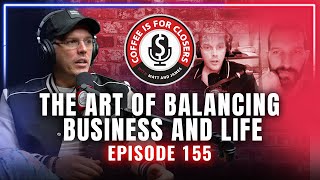
This is a YouTube video titled "The Art of Balancing Business and Life - CIFC Episode 155" published in April 2023. It features a conversational podcast-style interview between Matt Ryder, host of Copies for Closers, and Vince Del Monte, an entrepreneur and mentor. They discuss the challenges of entrepreneurship, the importance of balancing business success with personal life, mental health, identity beyond work, and building sustainable businesses with family involvement. The conversation includes personal stories, reflections on growth, and advice for fitness professionals and business owners.
Hey guys, what's up? Matt here from Copies for Closers and we got Mr. Vince Del Monte on today. We're going to be talking about sort of how to build a better business, not a bigger business. You know, everyone's talking about nailing it and scaling and all that kind of good stuff. But I think the question that a lot of people don't ask is why? So we got Vince on here to sort of get some, some life lessons. So if you like that kind of stuff, make sure you watch. Ex special forces sniper turned entrepreneur. I've scaled numerous businesses to eight figures. My Matt Ryder. This is my podcast and I'm telling you to put that coffee down. But how you going Vince?
I'm doing good, Matt. I'm excited to have this conversation. I think it's resonating with a lot of people in our community and said why is it resonating for a lot of people? And I grew up in the whole scaling, scaling and nailing, but the whole, you know, empire building and you know, man up and get to the next level. And I think there is a lot of value for that. But I think a lot of that already comes factory installed for guys like us who are entrepreneurs or accomplishers, performers. And I've been going through a very powerful, very, very self reflective last couple months trying to understand why enough is never enough and why I've put all my currency in growth. And there is a healthy version to wanting to grow. There is a healthy version of being a performer. A lot of people benefit from that. But there's also a very dark side, a very unhealthy side. And I don't think it's from a malicious, not from a conscious place, but it does come from a subconscious place, from traumas in the past. And I've been trying to figure out why do I have such a hard time connecting with people, being present with people. Why do I feel having just a conversation and sitting around is unproductive and boring? And you know, big revelation for me is that I found my identity, I think, as most entrepreneurs do, in what I do and not who I am and what I do in terms of how many attendees we have coming up at this next event, how much we made this year. And just it's all about what's happening come what questions as opposed to who questions in terms of, you know, who are you becoming, you know, are you happy with while you hit that milestone, but are you happy with who you've become to get there? And I've gone through some really, really really dark storms. I'm still in a really, really dark storm right now that I don't know how it's going to end up. And as you start to question like why, why was it worth it? And I can tell you right now, you know, it's not worth it. It's 100% not worth it. And sometimes you have to hit rock bottom, sometimes you have to lose things that you didn't think you could lose to actually wake up. And, and you know, I think this would be my new chapter and sharing with men and women that, you know, before we start out on this journey, like whether you want to have 100k or 100k a month or 100k a day business, whatever your goals are, you have to ask why. And, and, and for me, a lot of it can comes from feeling unworthy and not like what I have currently is sufficient to bring value to the community, which leads to constant comparison syndrome to see what other people are doing, to figure out what I could do more of so that I can try and meet this feeling of not being worthy, not being good enough. And for me, it all comes from my, my long distance running days.
Okay, talking about, what do you mean by that?
So you know, through therapy, when you start to experience, you know, behaviors in your life and you start to wonder why, why is this affecting me so much? So last year our company hit a revenue record month. It was a number I always wanted to hit and I couldn't believe we actually did it. I was like, wow, wow. Like we made it.
We made it.
Shortly after that, we made more money in one weekend than we made in almost an entire year, like a few years prior at an event. And it brought in so many new customers. Big high ticket program was launched. And then slowly after that, you know, we bit off more than we could chew. Operations weren't in place and things slowly started unraveling and I was not in an emotionally stable place to handle. We got some big refunds. Never experienced refund requests like that before from great members in our community. And I was experiencing loss, disappointment and rejection. Now I wasn't using those words at the time, but they triggered me to a point where I started using frustration as fuel. I started using negativity as fuel to drive the team as opposed to connecting the team. I disconnected the team. And then that created more problems to a point where I became very emotionally unstable and I wasn't able to regulate my emotions and I started to really treat my family poorly because I was so mad. I was frustrated and I treated my wife poorly, my kids poorly, and became a guy that I didn't even recognize.
So it's easy to do though. I think it really is and I think it's important. It's hard. When you run your own business and people listening to this podcast are business owners and sales reps. When you run your own business, a lot of your, A lot of your self worth is tied up in the performance of the business. I saw this a lot in special operations. I, for whatever reason never fell into it. In special operations, where your self worth is from your job, right? I was in snipers and people are like, I'm a special forces sniper, I'm killing it. I never really understood that, but in business I did. Because as soon as I became a successful business owner, I was like, oh, this is, you know, kind of my identity. And I think there was definitely a period where like, you know, and I probably only came out of it maybe six months ago, I think, where I became sort of assure enough in myself to where I didn't really care. I sort of posted a lot less on social media. You know, I would go on holidays and do things and wouldn't post anything about it because I didn't need the validation, as it were. But you know, it really does. Like there was a time a while ago where we went through a really difficult time in one of our businesses and I had to sort of steer the ship and I was quite worried that we're going to shut down one of the major divisions and yeah, like super emotional, very much like conflicted between, like, what should I be doing? Do I even need this? And then from there, like that stress level escalated to where I was. I was not good at home at all. And that was a huge wake up call for me because my wife was like, oh, you motherfucker. You had to snap out of this. Like, you better sort shit out. Um, and then that was good. You know, she called me on it and I was able to check myself a little bit and calibrate and then, you know, kind of like detach myself. But it really is so easy to get into. You know, you see Instagram and you know, you sort of can understand how little girls want to look like models and little boys want to look like superheroes because you're just sort of fed these dopamine hits of people's ideal life and you know, you know, especially, you know, you see these people making money, but no one ever talks about net.
Yeah. What it's costing them. Health wise relations, emotionally wise and you wonder, like, you could, would you take all that in exchange? And that's the thing, you know, also.
The context of their life. Like, me and you both have a wife and kids, right? Like, we have obligations. I'm not a 30 year old single man who lives by myself. And if I was, I would do nothing but work. Like, I know that. And I'm sort of glad that I have people going like, hey, let's go do something. Otherwise I would literally just work all day, every day. And like, so your ability to drive a business when you have absolutely no responsibilities really whatsoever, and you have no time constraints, you don't have kids, you know, waking you up three times a night and stuff like that are just very different. So I think like people's, people's conception of what's possible don't take into account the compounding factors. And then you're all of a sudden putting yourself up against people with an extraordinarily hot offer that just happens to hit really hard in the marketplace, which is almost serendipitous in, in, in some respects. And then they're, you know, 28 years old and single, doing nothing but working 19 hours a day, you know. Yeah, it's like, well, it's different.
Yeah, yeah. And you, you can't compare yourself to that. I mean, when you're single. Yeah, put the pedal down. But at the same time, you know, start to figure out that number, you know, something I never figured out. And here's, you know, first tip, like, what do you need versus what do you want? Because those are two completely different numbers. And you know, I think probably everybody listening to this podcast is, has everything they need, if not way, way more.
Most do.
Yeah, most people have. So what you're stressing about is what you want. And the question is, is why do you want that? Because that's out in the horizon. And so you live in this gap instead of this, this gain mindset that look how far we've come. And you don't live in the state of gratitude and humbleness. So you get caught up in, hey, we should be here. And what happens is you start to disconnect from your own journey. And when you're not into your own journey, you're not grateful for the experiences and the lessons that you're having and, and the timing that you're receiving them at, which is unique to your story. So I think that we, we get caught up in just trying to, you know, be where we're not actually meant to be. And then that takes away from from the joy and the process and being able to just be at peace with where you're at right now. Because if you think you should be further along, then you're going to try to take more control. And if you. And if you think that you gain peace from having control, you're sadly mistaken. I think I found that the most peace comes when you realize that you're not completely in control and that there things can happen outside of your control and you have to be okay because there might be lessons that need to be taught to you. I believe in God and a higher power that is navigating a better version of you. And if you don't have that awareness, then every time you hit a roadblock or something negative happens, you're going to spiral. So I think I've learned that peace comes from not having control and not needing control. And that doesn't mean you don't have goals, doesn't mean you don't have a team, doesn't mean you don't work your butt off when it's time to work, but also doesn't mean that you go crazy or freak out when you have a bad day or a bad week or a bad month. And it doesn't mean, like, you have a bad life or that you're a bad person. I think that's what happens, where our identity becomes what we do. And that's a very dangerous place.
Yeah, absolutely. I remember watching people lose themselves and left the military, and I think I see very similar parallels because, you know, people in the SF community are highly driven, motivated individuals in the same way that business owners are highly driven, motivated individuals. And if you tie yourself worse to a thing that you do, you can't do that thing forever, right? Like, no matter what it is, you can't do it. I can't run a business forever. Like, I just can't, you know, like, especially on the capacity I do now. Um, and I think, like, you know, the more you can kind of realize some of these things and, And I think you hit it on the head. What it is you need versus what it is you want, I think is a very important exercise for people to go through because, like, you know, and by all means, head down us up, you know, until you get what you need. And then once you're there, like, take a look around. Someone. Someone told me once, it was like, it was. It was like this couple years ago, and it was like a mentor of mine, he goes, you live life like someone trying to get to the top of Everest. And I Took that as a good thing. He's like, no, no. But you look down the whole time, and he was like, the view is good. Along the way. You should just take a moment every now and look around about how far you've actually come. I was like, oh, that's a good. That's a good piece of advice.
Yeah. Gratitude is the ultimate mental lubricant. You know, when you're state of thankfulness, you can't be in a state of anxiousness. Those things can conflict. So if you're always anxious, how do you solve that? You're always worrying how to solve that. You become thankful and you start to look at what you get to do and. And the impact you're having. And that, that is the. That is how you shield yourself, guard yourself from. From those feelings of, like, performing from a place of I need to versus like I get to. And that's been really. And just knowing that, like, hey, this isn't a race, right? This is.
Yeah.
And I think a lot of performers, like, we're competing, but, like, against who? And.
Yeah.
Because you don't have the context to what they're sacrificing. And what does it matter, you know, what anybody else is doing? So I think, like, you're building something that is best for your best life and for what matters to your values and to your family. I think it's just. It's so easily missed. I think what I see is, like, a lot of people then you take your loved ones for granted. Right. And you take your kids for granted. My kids always be there. My wife will always be there. My. My health will always be there. Or I can always get to that later. I can get to that later. And you just. You get so entrapped that it's very hard to come out of unless you do hit rock bottom, you know, only time I've kind of seen most people kind of say, wow, what's going on here is when they start to lose stuff that they didn't think that was possible to lose. And then all of a sudden you realize you've been building your entire life on, you know, better sand, you know, on unstable foundation. And you're building. You're carrying all this pressure on. A good analogy is like tightropes. You're trying to carry all this pressure, this reputation you built, this identity you've built, all the success you've, you know, found your success in. And it's a lot of pressure for one person to carry. And most guys aren't sharing this openly, so they they continue. They continue to project a certain. A certain life that they've accomplished, but it sets you up for a major, major fall. And I think a lot comes from, you know, there's maybe. Maybe it's arrogance, but. But arrogance, hurdy, great definition comes from fear, doubt, and insecurity. Like, the guys who are the loudest, the guys who are projecting. Look at us, look at us, look at us. Why do you have to tell everybody? You gotta tell everybody. Like, if that. That's actually what I'm trying to walk in and I've learned is like, to walk in humbleness. And humbleness is knowing exactly who you are and what you're bringing to the table and not projecting anymore. Not projecting anything more, not projecting anything less. Like, I know who I am. I know who I am.
So how is this changing you as a mentor? So you mentor fit pros. You mentor people who want to. They want to come in. They're young, usually young guys, motivated, you.
Know, first figure out your desired end state. You know, it's like, it is that why? Question. And it is tough when, you know, a young guy doesn't have any responsibilities and, you know, what's he doing? He's not talking to his mom and dad as much. But guess what? That has consequences, too. I think you can definitely get away with going harder when you just have less commitments to people in your life. But the way it's changing me as a coach is I'm able to connect with people and let them just embrace their own journey and reassure them that you're going to get there. You want to get there. Like, first of all, let's figure out why. And it helps them normalize a lot of the highs and lows of entrepreneurship, like the bad months, the bad days where they want to quit. And it just helps them realize that they're probably way closer to their goal than they thought. Having somebody who's way further along tell them that, like, hey, I've got multiple homes. I've done all this. It's not worth it. I have friends who've achieved what you think you want to achieve. And I have private conversations with them, and they're saying it wasn't worth it because of what I've lost. The sacrifice wasn't worth it. And they're not happy. They're. They're actually sad, and they just don't know how to. They're now picking up the pieces, and when they hear that, it's. I don't know if they're really hearing it. The warning signs are definitely going out. But to reassure people, like, your identity is not how much you make your identity like, should be like your community, right? You know, you look at companies, I forget the one that they sell the shoes. But like their companies, their, their brand, their values, like they give a set of shoes to every person that buys a pair of shoes. And like their identity isn't like Lambos and their identity isn't like, look how many trips I go on. Look how big our company is. It's, it's. Look at the impact we're having. Look at the community we're building. Look at the results of our students. So what I'm teaching our students is to build a thriving community, right? Like how, how can you build, like, let's get 100 world class transformations. How do you build a reputation around? Everybody knows you because your clients get amazing results. They just keep producing incredible results. And why not get really, really good with a few people and really develop people and just have that give an F factor. So I think have the given F factor. Build a thriving community, embrace your story and just really play the long game. And like, what are you doing in order to be able to do this in 10, 15 years from now so that this becomes sustainable? What, what does the frame, what are the frameworks and systems look like in order to be, be able to go the distance? I've been doing this for 17 years now. So having boundaries, having. And having, ending your day at a specific time, having trips, making sure that you're, that you're building the business for your family and not for you. I think, here's a good, a good way to put it. Are you building the business with your family? Are you building it like for your family? A lot of us guys, I was the guys. I'm building it for my family, doing it for my family. The truth of the matter is, is I was building it for me. Not like maliciously, but like I wanted to grow. But the question is, are you building your business?
Once you hit a certain level of income, it makes borderline no difference.
Or. Yeah. And I think when you built the difference, when you build your business with your family, your spouse, your kids, like, you know, the things that mean the most to you, they're involved in the decisions. Daddy, we want to go away, you know, or two weeks every summer and we don't want you to work, you know, say the kid said that. Great. So we don't run promotions, we don't do anything in July. Hey, I'd love to be able to do this Every year. Okay, great. I guess December. We're not running promotions either because that's when we all go away as a family. So build the business with your family, not for them. And think if you're leaving your family the leftovers. If you're leaving them the leftovers and you're scaling, you're not winning. I think, you know, my dad always warned me of this is the biggest failure is having worldly success without home success. It's just you'll. You missed, you missed it. So I think just starting to have those real and just. I want everybody to hear what I'm saying. Like, I'm not judging. I'm speaking from personal experience and I'm speaking from a place of warning. And I think if people can just start getting self reflective and just start to ask themselves, you know, how do I manage this drive? Your drive is amazing. It's a gift. Like if it's out of control where all, you know, you know how to do is hit the gas pedal, you don't know how to use the brakes or the steering wheel, you're gonna crash.
Yeah. And I think it's, you know, have you, have you ever had a mentor that kind of sat you down and told you any of this stuff or, you know, you know what I mean? It sort of broke it down for you. And I think, I think one of the biggest mistakes that I made was the, was a really aggressive reinvestment back in my business. That was one of the largest mistakes that I made. I brought on a mentor about, about two years ago now. He was the CEO of Smirnoff. Name is Kim. Phenomenal human being, great guy. He's actually my neighbor. Randomly met him. So I talked to him on the balcony. Turns out he was a CMO of Altamac. CEO of Smirnoff. Like really successful. It was a monster of a house, right? My house was like a tiny little thing compared to this. And Sydney's quite cramped and small. It's very urban. And I brought him on as a sort of mentor for me and Marco and the business. And I brought him on to really teach us how to scale the business is what I was like. So, man, you've run all these huge businesses and he's taught us how to be more corporate and put in systems and structures and work in progress reports and which has tremendously freed up my time, tremendously made me and Marco more efficient and put a more corporate structure in. It's a much more expensive business to run than what like a traditional coaching business is however, we have a lot more time. But what he was actually doing was stopping us from, like, the mandate that he said is, my job here is to actually make you wealthy so that you can do the things in business that you want because you want to, not because you have to, and not because you feel like it. So it's like his job was to help us set up a business that made us wealthy. And what that, you know, it's not done yet or anything like that. But what he was constantly looking out for. And he's in his 60s, and he made all the mistakes. Right. Like, he spent, you know, his whole 30s and 40s working, being away from his family all the time, flying around the world. They had three. Three private jets for himself. Right. Like being the CEO of Smearing Officer. Serious job.
Right?
Yeah. And he was away all the time, working seven days a week, 24 hours a day type thing. Made other mistakes. And I think one thing that he did really well, this is why we've changed so much over the last couple years, is because he was like, guys, like, the business is there to make you money. It's your business, it makes you money. And then you pull that money out, you. You put it personal, you invest it wisely, you grow it until you have a nest egg where you never have to work again. And he goes, and then you're in a position to where you're done, and anything you choose to do from there is voluntary. And if one of your businesses goes down, you go it. See you later. Bye. Right, Right. And that's been a really interesting experience for me, especially having the interaction with someone who's like, not my dad. You know what I mean? Cause I didn't, you know, sort of talk us through that. I've calmed down a lot over the last couple years because of a lot of his influence. And I think a lot of the things that, you know, he's kind of taught us and. And put some of the systems and structures in. So I'm very, very serendipitous, very lucky just having my neighbor, you know, he's on the board of our company and all that kind of stuff. So really, really interesting guy, But I think it's. It. It sort of reigns true. A lot of the stuff that you said is like, you know, especially because the businesses that he run were in the billions, you know, so, you know, so it's not like we're gonna, you know, be able to flout our success and you know, and sort of big note ourselves when he was, you know, his smallest division was doing 150 times what our. What our best year ever will be, you know, so really interesting transformation over the last couple years with some of that stuff. And I think that I'm very lucky to be able to say that we're sort of front of mind and, like, with that. But. But, yeah, man, like, I think it's super interesting and I think, you know, I. I see a bit of a shift in the industry right now. You know, I think when I. When I first came into coaching consulting, you know, 10k a month was the number, and then it magically became 30k a month, and then it became 100k a month and the number became a million a month. And now I'm hearing Everyone say 2.5amonth. Not that many people are hitting those, but, you know, everyone's like, always seems to be reaching for, like, the next milestone. And it seems to me like there's some sort of, like, leader or pseudo leader of an industry that sort of says their numbers all the time. And then from there, everyone tries to kind of replicate. But I think, like, when Sam Ovens was like, this is stupid, and he scaled his business down From, I think, three or four million dollars a month to 300k and said he's capping it at 300k, and then he eventually just went. He signed up a shitload of people, decided to scale it back up, sign up a shitload of people because he's Sam Ovens, and then refunded everyone and set him out.
So he's running his business at 300k per month?
No, he got rid of it. He has school, you know, school. The online platform.
Yeah.
So he's just. He's just doing that. But he had consulting.com. he sold that to Rhian Doris, I believe, who's the CEO of Zero to Zero to Dangerous. Yeah. Flow Research Collective.
So Taylor Welch is on the same, you know, drumbeat now to preaching, you know, less, not more, community. How do you hit your goals with just 100 clients? You know, why do you need a thousand clients? You know, why not have 100 great clients? So this is a great shift. It's. It is a great message. I believe it's. Again, I don't know if it's right or wrong. Again, it's how you do it, you know, Again, it's like, there's nothing wrong with being £250 and rip, but, like, how did. How are you getting there?
Yeah, exactly.
You know, how are you taking. You know, it's like, it's how you're getting there. I think that's the big, that's the self reflective question you've got to constantly ask yourself, do you like who you're becoming and how you're doing it? Because that's, that's going to dictate your, your character and how you look back and whether you're, you can say that was worth it. You know, I would actually say I hope my son does it this way too. Like no, I don't want my son to do what I did. Like, so I think you can start asking some very, very raw and real questions and then just hey, good for them. Like, hey, if they're growing and that guy's got everything intact with his personal life, good for him. Like God's spirit as just. There's maybe what is possible but doesn't matter. I just got, dude, I'm just, I'm just like in a place now where I want to set this business up and I want it to be an inspiration to people in terms of, you know, you, you don't have to sacrifice your values. I don't think anybody does it consciously. I think it does come from us not ever understanding who we are. That's the process I'm in right now in therapy. I have a therapist and I ask her questions like, am I selfish? And she says, no, you're not, you know, you're not selfish. You don't have your priorities in alignment. Doesn't mean you're a selfish person. Like how come I don't know how to connect with people? And well, let's go back to when you first started experiencing all this trauma, disappointment. It goes back to my running days when I was supposed to perform at a certain level and I didn't. And I had this massive blowout in a race and I, and at the end of the race I was in my parents car and I smashed the windows and I was. And I had the first experience of rejection, disappointment and loss. And you know, my therapist said, you know, have you ever talked to that 15 year old boy before? And I said, and she, as soon as she said that I started to get emotional and I, and I started to cry and I said, what's happening? She goes, would you like to speak to him right now as a 43 year old man? And I said, and then all of a sudden I just completely broke down and I've told this story many times and I normally cry when I tell but I said I've never talked to him before. And she said, talk to him now. And I started just talking to him and I said, it's okay, buddy. We'll get him next time. You did your best. You ran your heart out. And for about 45 minutes straight, I just literally bawled my eyes out. And I said, what is happening? What is happening? I'm not like. Like, this is. I'm not faking this. She says you're grieving. Like, what am I grieving? He said, you're grieving loss. You've never stopped to grieve the loss you've experienced. In your rate, your life has just turned into a non stop wrong where you just keep. And all the stuff you keep doing is just another race, another race. And I've answered that date. Why I have a hard time connecting with people. It's because I never learned how to connect with myself. And I never learned how to love myself. And I never learned how to be patient on myself. And I never learned how to understand extended understanding to myself, which is why I've never. I've had a hard time doing that with others. And that therapeutic process of understanding why I am the way I am has helped me now start to, you know, I journal every single day. I reflect every single day. I record my top three wins from the day. I'm always in a state of gratitude. I have a lot of time I spend just talking with my brothers and my parents. And I've never spoken. I've never. Me and my middle brothers, we were really distant through Covid and all the politics and stuff. We didn't see eye to eye and we've reconnected. He's my best friend. We built a business together. In the last year. Everyone in my life, completely different. And I'm not bragging or anything. Like this is. I just questioned is there. I always wonder, like, who am I? Like, am I just a guy who works hard and a rich guy? My brother in law is like, oh, Vince is just a rich guy. I'm like, no, that's not who I am. I've had success, but. And I've just reshifted my priorities to being. And sometimes for an entrepreneur, that is really boring. And just being with my kids and sitting on the ground and playing with my kids, like, it's really boring. Sometimes I want to do it. It's boring. It's like sitting there on the floor do it like, you know, playing different funny games. And I'm. I'm like, no, that I don't need to judge how I spend my time because my identity is not what I'm Doing it's being and giving my presence. And my presence is my gift. And, you know. Yeah. The other day on a team meeting, I said, hey, I don't know you guys. I don't know you guys. And, you know, I found out, you know, my team, five, four out of five people in the room on a zoom call were divorced. I didn't even know that. Like, tell me your story. And instead of doing our 90 minute L10 tactical marketing meeting, we spent 45 minutes just talking and getting to know each other. I'm like, I would have never done that. Year ago, years ago, that would have never happened. It would have been, okay, guys, what's the content calendar? Let's take a look at all this stuff. Like, it was issues discussed. So now I want to, like, tell me your story. I want to understand, like, where you come from. And holy crap, you had so much in common. And I'm like, okay, now I know who you guys are. Connected. And I never saw value in connection. I didn't even. I saw value in currency, but not connection. And it's a better way to live relationship. I want to live, you know, I just want to live differently. And if that means not hitting certain metrics, I'm okay with that because that's not my identity anymore.
Because I understand, you know, there's more than one success metric.
Right, Right, exactly. You know, competitor of ours, they got a big event coming up. I think they got 800 attendees. And that was the number we wanted to do next year. And we want to do like 4 or 500. I don't have my Visa. At the time that we were gonna, you know, we would have had to start to promote. And we said, you know, I'm gonna have a smaller event. Our events probably about, I don't know, nine times smaller from a number standpoint. And last year, that would have triggered me. That would have. That would have messed me up. I would say, guys, what's going on? We need more. Like, what's going on? What's. We got to do more. We got to do more. We got to do more. I'm like, good for him, man. That's fantastic. I can't wait for our event. And our event is how going to have 80 to 100 people, and they're going to have a connected, intimate, interactive experience. It's going to be different. And I just not.
By the way, next time you do those, I expect a message saying, do you want to come talk? I'll happily fly to Mexico and talk.
Okay. Amazing.
Nobody invites me Because I'm in Australia.
Yeah.
Nobody invites me anything. I have friends too. I got things to say. I also think that, like, just. Just hearing you say that, I think being in the sales and marketing world reduces your. It reduces the humanity of people because you look at people in market segments and you think about target markets and demographics and pain points and avatars and. You know what I mean? You don't actually think about people and so you see names and thousands of names and people coming through in sales calls and you just sort of. It's all numbers and it just. It really dehumanizes people a lot and. Yeah, it's very interesting.
You know, that's a really good site.
You know, I think, like, you know, all this stuff is so new. It's like being famous, right? Like, no one's figured out how to be famous because being famous is such a new thing that evolutionary speaking, it's. It's so insane, like for someone to be really famous, like the rock or whatever.
Yeah.
Like, I don't know. I don't know how you don't lose your. Lose yourself because we're not equipped for that in the same way that we're not equipped to have a fridge full of food, you know, but having this sort of like dopamine hit rush, crazy world, you know, where, you know, you're making money in marketing and online and you're working from home and you're speaking with people on Zoom. All different. It's just weird, you know, And I think everyone needs to give themselves a break.
Yeah, no, exactly.
I don't think I figured out how to do this.
We put a lot of pressure on ourselves. Actually. That's my. That's my training I'm doing today at 9:00am Eastern here. But how not to beat yourself up because. Yeah, you know, because guys come in and they just. People torture themselves with these expectations that are so big in the short term. Like, why don't we make these expectations in the short term a lot smaller and it sets them bigger expectations for like, way down the road and that way you can enjoy this. But like, yeah, people just really destroy themselves just with like, I should be here. Like you said, it's who.
Yes.
You're like, what does that even mean? Like, where'd you. I. Based on what? No, this is exactly where you're supposed to be. Everyone receives their lessons when they receive their lessons. So I. That. That's been a hard one for me to learn because I've been doing this for 16 years. So you see, guys come up and they pass you, if you will. They catch up, and then they soar way beyond you. And you started at the same time, and you have access to the same resources. And I just learned that you got to really be gracious on yourself, and you got to love yourself in this process and just say, hey, I'm just really grateful that I even have awareness that this is an issue and that we're working on it right now. And I've seen people just. I can't take it anymore. I was like, yeah, of course you can't take it anymore, because you're putting so much pressure on yourself, and it's not good pressure. There's two types of pressure. Some pressure can heal you, like, if you get a nice massage. But there's other pressure. If it comes from a ninja that could kill you. You're putting the wrong pressure on yourself. So put some good pressure on yourself that, hey, if we keep moving in this direction, you know, your family's gonna be taken care of, you know, forever. My. No, no. I just wrap up with this story here. Just passed away, 96 years old, and I came over from Italy, you know, literally on a boat. He had to actually sneak onto the boat because he didn't qualify for the medical exam they did back then. It would have been the equivalent of people getting fake vaccine, passports to, like, travel right now. That's what he did way back in.
Like, runs in the family.
Yeah. Yeah. And he came over, not knowing the language, and started a new life in Niagara Falls, Ontario. And he built a lot of property, including Club Italia, which is a famous landmark, and Fairview Mausoleum, which is a famous upground cemetery. And long story short, to say all that, just. Just a few days ago, my. My nun, who's still living, you know, just gifted me and all my brothers and all the cousins a substantial amount of money. And it was money from my nunno's hard work for over 90. Over 90 years, sir. What am I talking about? Since he was 26 years old when he came to the country. And, you know, I know he had a vision of always wanting to provide. You know, he was your classic provider. He didn't provide in love. That was maybe a deficiency in the family. Now I'm hearing these stories, but he provided financially, and he gave his family. They never worried about anything. And now here, me, his. His grandson, the oldest grandson, and my brothers and all my. All my nieces and nephews and my cousins were all beneficiaries of that vision he had of coming to Canada for a Better life. That's why he left Italy, because there's no opportunity in Italy. He came here for a better life, and I'm a beneficiary of that. And I think if you can get wrapped. Your mind wrapped around, hey, I'm doing this for my kids. My kids. Kids. Not to, you know, I don't. The fame, you know, fame, fortune and all that, like, that's the stuff that destroys men, you know, power and pleasure. Those are the four things. That's another podcast, but I think just getting real clear on, you know, hey, I'm going to take care of my family, and it's probably going to require to impact a lot of people along the way and. And just. Just enjoy the lessons that you gain at the time that they come and be grateful that other people are gaining their lessons when they need to receive them, and that's it. You know, just don't let other people's blessings block you from become, you know, receiving your own blessings.
Perfect, man. Well, I appreciate your. Your forthrightness and honesty and, you know, as someone who's worked with you in a pretty, pretty. I mean, we've had it. We've known each other for a while now, had lots of conversations.
Yeah. Yeah. I always learned a lot from you, Matt.
Yeah. And vice versa, man. You are. You're a good dude, and you know what you're talking about. And if you're a PT and you're looking to, you know, grow your business to an appropriate level that's going to provide you with happiness and security, then Vince is your guy. Tons of fitness guys listen to this, because I used to be a fitness sales dude, so. So. All right, man. Perfect. Well, I really appreciate it. If you guys like that kind of content, make sure you, like, subscribe. Go hit up Vince on Instagram. Where can they find you, Vince? Just Vince Del Monte on Instagram at Vince Del Monte.
That's the podcast, that's the Instagram, that's the YouTube, that's the Facebook at Vince Del Monte.
Perfect. All right, guys, thanks very much. See you. The next one. Bye. Put that coffee down.
Sam.





