The Sales Framework Gurus Won't Teach You (Ridiculously Simple)
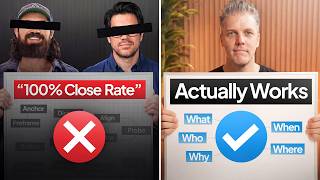
Matt Ryder breaks down sales into five simple questions: who the buyer needs to become, what their current and desired states are, when and where the gaps create urgency, and why they'll feel relief closing the deal. It works for any sale, B2B or B2C.
Chapters
Sales trainers want to sell you a 17 page framework that's like playing underwater 4D wizards chess. But in reality, the best sales framework, the one that you already know and is ingrained in you for a very long time, was not even invented by a sales guru. It was invented by journalists like the 1800s. And it's five very simple questions and words. It's who, what, when, where and why. And in today's video, I'm going to break down the exact way that you can use that framework in any sales environment and just keep it incredibly simple. So if you like videos that are not only information based, but implementation based, then stick through to the whole. But if you like videos that are not only information but also implementation, then watch the whole video. My name is Matt and I have sold in many different industries. I've been a seven figure earner in those industries as a sales rep and as a business owner. What I talk about is not only From a offhand third party basis, it's for me selling B2B, B2C software sales, selling to enterprise level companies all over the world and being very successful at it and trying to figure out a way to not overcomplicate it to where I have a constant series of questions in my head all of the time on what I should be saying. So I'm going to break it down for you really simply in three key concepts. So quick history lesson is that the who, what, when, where, why is so ingrained into us because it comes from newspapers. Back in the 1800s, basically news was like the Instagram or the Twitter of the day. And so people, there was a lot of competition for the print space because as you can imagine, there's just only so much paper they can have in a newspaper. You guys are fighting over who's going to be the next hotshot, huh? And so the editors came out with a strict rule where if your story did not answer who, what, when, where and why, then it was not newsworthy. And I believe that we have gone so far away from this that we're over complicating sales to the point to where it becomes almost a daunting task of even considering getting into sales or selling something new. And the questions that I see from people are so specific and like intricate that to me it seems like people are missing the forest, the trees. So if we have to hold people's attention, okay, what I want to do is figure out a really simple framework and then today I'm going to give you three key concepts that I want you to understand as to how we can take who, what, when, where and why and adapt it into any sales environment. And why sales is actually much simpler than what you might be doing. Now this is key concept number one is the who and what and that who and what control the call. Okay? Now who isn't based on like who is the prospect? Like that's obviously an important component, right? But it's really who do they want to become, who do they need to be? And this works for B2B B2C. Because the person or the skill sets or whatever processes you have in place now, something has to change in order to kind of get that next outcome. And so you're not like selling the person on the phone. There's a lot of things that state like you're selling the identity of what they're trying to move forward in right now that can be really deep and meaningful. If it's more of like a B2C or some sort of, you know, fitness thing and they've been struggling their whole life in it, or it can be quite simple. Like the management isn't where it needs to be. We need to get better management skills, we need to be better managers. Okay? So but you need to understand the identity or where that person or business needs to go in order to be there. So the who is not who they are, it's who they need to be in order for someone to solve a problem, okay, they need to act like the person who's already solved it. So if I take two people and I take one person who's morbidly obese and one person who is a triathlete and I have some sort of brain switching power and I swap their brain and so the triathlete wakes up in the morbidly obese 600 pound body and vice versa. Now that triathlete brain will immediately start, okay, doing triathlete things. Now you are a triathlete when you decide to be one, right? And then it's up to you to sort of finish that road. But now that triathlete in the, in the 600 pound body is not going to go for a massive run, a massive bike and a massive swim. That day it's going to go for a small walk, next day it's a little bit bigger walk. And then months later it's a walk and a bit of a swim. Then it's a walk and a swim and a run and then it's a run and a swim and then it's a. So over time, because they're in Making the decisions as the triathlete, the body will follow suit, and the exact same thing will happen to the person with the brain inside of the triathlete body. That person will start making the decisions as the morbidly obese person. They will not go to the gym. The body doesn't force you to do it, the brain does. So you have to act in accordance with what you need to be or who you need to be or where you need to go in order to get that outcome. I was a special forces operator. I was a sniper in 2 Commander Regiment. I needed to act as if I'd already made it. Not from an ego point of view, but I needed to have that belief within me to make sure that I could actually do it. Like, I had to believe I had to act in accordance with what the people that I saw had achieved it. If I had a thought process, it was like, well, what would the person who's already achieved this do? They would do this. Okay, cool. I need to act in accordance with that in order to get the outcome. Okay, now, so that's the who. Okay, so we're already fairway into it. Right? Then we've got the what. What is actually what's happening in their world right now and what do they want? So we have a few questions, and most people just keep this very surface level, but we want to dig a little bit deeper into it. So what's working? What isn't working? Okay, what have they tried? What do they wish would be different and what do they need to do in order to get the goal? Like, what is the outcome in which they're searching for? You can't hit a target that you can't see. So the what is incredibly important. And the order of these don't really matter. It's not like you have to do it in a particular order. It's really about just understanding what key pieces of information do I need in order to get a sale. And we're trying to simplify it as best as possible so we know that we need to know who they are and who they need to be. And we know we need to know, like, what they want, what they're doing about it, what they've tried, what worked, what didn't work. Right. And what do they wish would be would happen differently? Okay. So that it's going to give us a nice aiming point of, like, where they want to be. Right. We're going to get a really nice, like what and who? Because the next thing that we're going to do is Big concept number two, which is when and where. These are the things that make the gaps big and obvious to the prospect. Okay, we'll go over when first. All right? The difference between a dream and a goal is a time frame and a plan. Okay? You have to understand this. If somebody just wants to achieve something, like. Like, what do you want? I mean, I want to lose weight. Well, when are you going to do that? Like, there's no way that I don't do it. I'm going to do it no matter what. People who say, I'm going to do it no matter what, never do anything. It's the same people as like the New Year, New Me crowd. If you really wanted to lose weight, you'd it now. If you really wanted to get better at sales, you do it now, right? Like, that's just the way that it is. No one who ever achieved anything great ever put it off, realized that they were putting it off and then did something about it, right? So we have to understand it. When we say when, it's like we're. We're looking for specific. So one, when did the problem start? When did they realize it was a problem? Okay, when do they need it fixed by. And this is going to start to show the urgency of the situation. Then from there we can start to actually really tangibly calculate, right? Like the gap, because we have where they are, where they want to be right now. Hopefully what we do is we also bring it back. Like, where will they be if they don't implement something? Because it could just get worse. Like if you're gaining weight or your business is going backwards or whatever. So the key is we need a time frame and a plan. If there's no way to fail, it's not a goal, okay? You can't have a goal of being a gold medalist. You have to have a goal of being a gold medalist at ex Olympics now. So that's when. Okay, so we're looking for tangible time frames. Very, very important, right? The next thing is where now. Where is like the future and the hope. Okay? So like people don't buy a house. They buy Christmas morning, right? So there was a study done years ago where they dropped a bunch of rats in water and they timed how long they would give up before they drowned. I don't know the exact numbers, but it's like the first one was like 20 minutes or something like that. So, you know, they swimming around, swimming around and drowned. The second time they did it, they put rats in. And then just before they were about to Drown and give up. They pulled them out, dried them off, came a little bit of cheese, a little bit of a rub, warmed them up a bit, then put them back in the second time. They lasted for like 20 hours. Okay, so what does that tell us? It tells us that hope is the most, like, ingrained, driving motivator of anything and anyone. Okay? So that's why, like, life without parole, if there's no chance of getting out of prison, you're just going to be horrible, right? If there is a chance of getting out of prison, then maybe you make a change. Right? So, like, we need to instill hope. And I released a video a little while ago on like the emotional roller coaster of a sale. So I'll link that down below as well if you want to go and sort of, you know, finish watching this video and go to that. So you can see how hope and all that kind of stuff marries in together. But you need hope in a sales call because hope is what gives the person the belief and the. The ability to like, see that it can be done in the future. And so without it, we're just kind of up shit creek without a paddle. Because it just sort of seems like this enormous sort of issue that they have to solve and it just becomes too hard. They have to have hope that they can actually do it. Right? And like, what is life without hope? It's boring as. Okay. And so like, the where is, like, where are they now and where do they want to be? Okay. It's literally the gap where. So like, there's a. There's a bridge. There's a whole bunch of, like, pillars that have to be in that bridge. Okay. In order for support the journey across it. They're here. They need to be here. Let's establish what that looks like. Okay? Like, it's. It's really simple. It doesn't have to be more complicated than that. People buy based off the potential future state and the understanding of the. The gaps that is in between that and then the driving of the urgency. Right. In order to want to fill that gap or like be able to get to the outcome. And they have to know that it can be done, but they have to know they need you to help them do it. Okay. And you know, quick one, if you guys are liking this kind of content, I have a really affordable group. It's both on YouTube and on Patreon. It's like anywhere from 50 to 200 bucks a month. And we have like 30 coaching sessions a week with a whole bunch of different coaches all Kinds of different role plays and like over 200 videos now, I think. So I'll link that down in the description. But if you like this kind of stuff and you don't want to pay a fortune for sale, then you can just go down there and have a look. That wraps up big concept number two, which is where and when they control the gaps and they make the gaps obvious. Okay? Now why and how is closing the deal without being pushy? So the why is the urgency and the how is the relief. Okay? It's the pitch. Okay, so why is, I think, the most important question. Because people don't do things without a reason. Everyone does something for a reason, right? Actions are usually predicated by an emotion. I had a friend when I was in the military and he was in a really, really bad helicopter crash, okay? A bunch of people died. My best friend actually died during the helicopter crash. And he was left without the ability to have emotions for a long time. And one of the sort of strange byproducts of that was that he wasn't able to really make any meaningful decisions for himself, even down to sort of like, what shoe to put on first. Because without emotion, there's sort of no driving need to do anything. And there's a really difficult ability for your brain to reason why you should do left or right first because you just feel like putting your left shoe on first, you know? And so also, he doesn't really make any memories of that stage of his life because the, you know, when you have no emotions, you have very little memory. People, like, block out really bad stuff because they just go dead inside. The underlying emotional motivator behind why we're doing stuff is the reason why, why people buy. So the why is the urgency. It's the need to act. Think of it in the way of, like, if you smell that your house is on fire, do you walk out or do you kind of run out, right? And the answer is you, you, you run out because you realize that the enormous consequence of your inaction and it's not because you're like, oh, this would be unpleasant. It'd be like, it's. It's that knowledge and that like, the feeling of being the potentially burned alive is horrible. And so like, that motivation and the recognition of cost of inaction makes you do stuff. So the whys are, why them? Why now? Why hasn't it been fixed? And why does it matter? These are designed to get the emotions going and to understand the underlying reason and drive more urgency so that, like, they can actually push Forward. Okay, the how is the pitch? If you guys want me to do a specific video on the pitch, just comment like pitch down below and I'll go ahead and do that. Which is like how to break down a pitch and how to actually write one. Like kind of like real like nitty gritty. But the overwhelming thing that you're looking for in your pitch is just kind of relief that they finally have a solution. So it's like this is the part where like you do more of the talking, you're going to really try and lay down like that the, the, these are the problems that you're having. And this is like how on a high level, not in too much detail how you solve those problems. You want to go over how those processes works and then how they get started. So as you can see, like it's a pretty simple framework and if you ticked all those boxes, you're in a good opportunity, you're in a good place to make a sale. Now is there a sales framework that solves every single problem? No, there is not. But there are a lot of things that create a lot of problems through the mechanism of just over complication. And if you don't understand like the basics of the information that you're trying to get, then all of these things are tactics that are bolted on to an insufficient or not, well, very, not very well thought out strategy. Whereas strategy is more important than tactics. And so what I'm trying to give you with this is a really simple framework strategy of these, just the core pieces of information that I require in order to get the best outcome and to know that I've got all the information and the prospect is all the information to be able to make a good decision. Does this solve every problem? No, it doesn't. Right. But what we want to do is we want to start off with a good jumping off point to where we are not kind of over engineering from the beginning. Because when you do that, you end up usually as a human, just as a normal thing, you just add more and more and more and more and more. And that doesn't help you. Right. If anything you want to start removing stuff. So starting with a baseline skeleton framework I think is the best way to go. And then over the course of time, by recognizing patterns and seeing things, you can just add little bits on bit by bit. Okay, so if you guys like this content and you want more of it, then make sure you subscribe to the channel. If you do want extra help and you want coaching, all that kind of good stuff, you can go down below. I have a super low ticket affordable community that you can join and you can get access to basically 50 grand worth of sales training for like 50 bucks. So go there, check it out, make sure you like subscribe notification bell, all that kind of good stuff and I'll see you in the next video.





