The Top Lessons From Scaling Sales Teams To $10M+
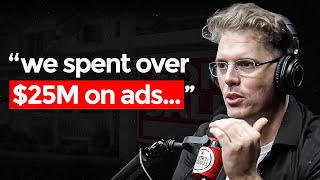
Matt Ryder and Ben Gower discuss what they learned scaling sales teams past $10M in revenue. They cover sales operations, funnel optimization, and the specific moves that worked for them as their teams grew.
Like, I remember, like, when I was running seventh and the team was, like, freaking out that, like, everybody was no showing and, like, the leads were down, but it was like July 2nd, and I was like, yeah. And so they go, we're going to do all these things. And I go, I don't think you should. I let them run around like crazy people until then. I go, in front of me. I want you to Google how many people go on vacation in the first week. And it was like, 80% of them.
We would have, like, tiny things that we would split test in. The VSL option A had like, 10% higher shower rates than this video. Does that mean that this wins? Actually, no, because this one, even though it had a lower show rate, had an extra $500 cash collected on average per video view. So what are we really optimizing for?
There's sort of nothing more powerful than a strong personal brand. And it doesn't have to be big. So I would say my brand is not big, but I would say that from a monetization standpoint, I'm not there with the best of them. So, you know, but it. It just takes years of people not listening to you, and then all of a sudden, enough people do, and like, that's. That's the game. All right, guys, what's up?
Matt here.
Coffee is foreclosures. And I got the infamous Ben Gower, salesman extraordinaire. So, yeah, me and Ben, I think we connected a long time ago. Then from there, because we're both really cool and too cool for each other. We didn't. We didn't speak for a while. Not because of any reason. We just didn't. And then from there, you know, he was sick of his clients having terrible pickup rates, so he reached out to me, desperate, and I. And I helped him out.
Yes. Yeah.
Well, it was actually. It was funny. I actually was a couple guys, because I had seen you've been posting about dialer, but I was able to just, like, reach out to friends that I knew were managing teams using dialer. I was like, yo, is this legit? It's like, yep. Our average pickup rate is 20 on single dials. Like, I've never seen anything like it.
It's like, wow.
Then another couple weeks and found out somebody else I knew was that was using it. And it was just like, okay, I. I gotta have that conversation, see what's up.
Well, we. We appreciate the business. Yeah. So tell us, like, you've been running, like, you've been sort of, like, doing. I guess not Dissimilar stuff to what I was doing really. Sort of like in the back end running some pretty, some pretty hectic teams. Like, I know, like what was it? The formula? I think it was right in the formula.
Huge.
Yeah.
Like what were you guys doing over there?
Yeah, we were doing a couple million a month. Without getting into the crazy details of how that relationship started. I got, I got into that environment where they had just removed a, a third party company that was like their sales agency.
Yeah.
And so I had to.
They asked me and I did a sales call with them and I think you beat me out. So really well played, sir.
Yeah.
That's fascinating.
Yeah.
Because I had no idea.
Jeremy did an introduction with Brian. So I had a couple sales calls with Brian and they were just exiting out whatever sales agency was there at the time. And I think like we had a couple calls, but I just don't think he wanted to do another agency.
Right.
Yeah, that was his thing. He wanted to build it internal and I was happy to, to like, you know, try it out. Like, I had, I had zero experience. I had experience prior to the coaching space running a door to door team where we had 50 sales guys in three states. So like, okay, I had some of the foundation of knowing what it looks like to manage a big team of door knockers.
Yeah.
But I had no idea what that looked like until working on an agency like that where we had I want to say 70 salespeople between closers and setters. And so when I saw what that looked like to intentionally dial in the culture, the systems, processes, the technologies used for all of that to work, it was just like, okay, when Brian Page asked me to come in and build it internally for him, you know, here we go. So. But we got that on track for 500k cash collected week within about two and a half, maybe three months. So. And it was crazy, man. It was crazy mainly because like none of the technologies that that other company was using, the sales agency was using, were on Brian Page's like internal side. So I had to like figure out a Google sheet payroll system on top of like how do I even set up clothes on. It was like pure curiosity.
Yeah. Yeah.
At Sales Sniper, I always had it so that they paid all the software and that the software was theirs. Because the little thing I used to say was, I don't want to hold your business hostage. I feel like that'll create a really shitty working environment because like you can't always hit a go, you can't always hit a home run. Sometimes it just doesn't work out. The worst thing you can do, though, is have it not work out and then have a shitty exit. You know what I mean? Whereas, like, I've had ones that killed it and I've had ones that didn't. But I've got a good relationship with all those people, you know? At least I think I do anyway. I might be delusional, but, like, I think they're fine. So. But yeah, so that's.
That.
That's a really tough one when you got sort of like when you nuke a business, you know, you walk out and it's a big stink. Like, you know, they're going to tell everybody that.
Yeah, right.
Which is like a. Just a bad decision.
Right?
Yeah. I've had a. I've had four different relationships where I've come in and, like, taken over on sales team. And, like, I typically make the decision that, like, all right, this is probably not going to work for me, like, long term, four to six weeks ahead of time. But it's just like, I use that time to. Because I'm like, dude, I have to make sure that this company is in a better place than what I found them in for my own reputation if I'm going to continue doing this type of work in the industry, you know?
Yeah, absolutely. Yeah, man. Yeah. Well, that's crazy. Like, you know, people don't realize the amount of things that you learn when you have, like, tons of channels and marketing, lots of different types of leads coming in, tons of different reps. Like, it is a very, very different ball game. And like, the way that you look at metrics becomes very different. And there's like, not many people that you can actually, like, talk to about it, you know? Like, it's interesting. Like, I see. I see sales management dudes, like, problem solved data, and it's like, oh, you haven't seen much. You know, something like, it's like their. Their thought process is not wrong. Like, they're not bad. But it's like, oh, I can tell you've only seen small teams, very particular types of marketing.
Right.
Like, you know, you don't know how all of that's interplaying together and then like, what the economy does to it, you know? Like, I remember, like, when I was running seventh, like, because I'd seen it and like, you gotta let people make mistakes, right? And the team was like, freaking out that, like, everybody was no showing and, like, the leads were down, but it was like July 2nd, and I was like, yeah. And so they go we're gonna do all these things. And I go, I don't think you should. And they go, oh, no, we need to. We gotta. We gotta try. And I go, all right, just make sure you document everything you've done. I let them run around like crazy people, right, until then, right? And I was like, oh, yep, it's like Sunday the 9th. And I was like, hey, undo everything you did. They go, what? And I go, undo it. And they go, oh, but I go, you're fired if you don't. They go, okay, all right. They undid it and sort. On the 10th, it was back to normal. I was like, yeah, I'm a genius.
There you go.
I was like, dude, you see, guys, because you're in your 20s, you're. You're idiots. And you forgot to Google how many people. I go in front of me, I want you to Google how many people go on vacation in the first week. And it was like 80 of America.
Such a good point.
I was like, no one's here, mate. What are you doing? Take a chill pill, you know? But like, again, unless you've done that or like an election, right, Like, I remember the elections. Like, I was like, oh, all the ads are going to bed, every single one of them. You should just not advertise in that, like, three week period, mate, because you're not outspending, Kamala. Like, it's not happening, you know, so everything gets. Gets eaten. And it's like. It's really interesting when you start looking at that stuff. Me and Taylor were sitting down and we were having dinner, like, Taylor Welch. And, you know, it sort of. It sort of came up and like, Dean and all the Hardly Selling guys were there and they had an opinion on something. And I go, oh, I don't think it's that. I think it's this. And Taylor goes, yeah, I agree. And they go, well, for these reasons. And Taylor goes to me, goes, matt, how much of your own money have you spent on ads? I said, oh, probably 25 million. He goes, yeah, I spent 35 million. And then we go. He goes, so we've spent 60 million collectively. But you're probably right.
It's like, yeah, there's a lot of.
Money on ads, you know?
Yeah, it is.
It was funny. And now what you're doing, so you sort of. You've sort of taken that space, right? You're not doing something dissimilar to what I've done, so identified a problem in the market, which is like, for me, it was like shitty pickup rates and it's about what, like what the problem that you've identified. Yeah.
So it's really two things. One of the things that I've been really intentional about, I guess lately, starting to post more content again and like really figuring out how do I want to build a personal brand. And I'm going to start doing YouTube and these different things is kind of where I'm going with that. But it's going to be built around sales executive leadership, specifically coaching. I don't know the, the owners and sales managers of different companies on what to do. I think there's, there's some companies that are, that are teaching this stuff. But you know, from the perspective of like the owner is running the sales team themselves and that's important when you're at a certain stage in business. But when you, when you're trying to go from 200k a month to a million a month and beyond, like, you need somebody that isn't just a sales manager that is going to, you know, the call reviews are important, the holding people accountable to KPIs are important. But there's so much bigger of a picture that most people are just not even being taught. Unless you've worked in some of these bigger teams, you don't even know what kind of questions to even ask when you're looking at the data.
Yes.
And so thankfully I've had that experience and then like I was almost like taught how to think and what questions to even ask of like, okay, what is the constraint based on what the data is saying and what are some potential solutions here and how can we apply those things and test those different theories? And so like when you, as you pointed out, like when you have like a team of 40, 50 setters that are full time and eight to 10 closers that are full time on your team and it's just like that's, that's way more than one person can handle. Even from like, okay, holding people accountable to KPIs and doing call reviews, it's like, but how do I, how do I look at the data that's happening in between and before and make sure there's a feedback loop going from sales calls back to marketing. And how do we, what, what are the resistances that are still coming up on those calls that we can break down ahead of time? Yeah, like that's, that's how I view the bridge of like an executive of, you know, there's the marketing, there's the fulfillment. But how you are leading the team is like that bridge in between.
Right.
And so like it's not like this stuff is, is no one's doing it. It's just there's people running like Pace Morbi's team or Andy Elliott's team or like these big companies that are doing big numbers that like, that's how they're thinking about these numbers. But there's very few of us, like yourself and myself now that are like actually posting like how this stuff is thought through so that a sales manager can look at like, okay, how do I just get, instead of going after 20 more production from each team member, how do I smooth out the whole process so that we can get from like a 4x roas to a 7x roas and at the current budget so that we can scale the budget and then get it to a Forex roas at a million dollars a month instead of 200amonth.
Right? Yeah.
And these are like, you know, it's one of those annoying things that you sort of have to have done, right? You have to have it up enough times.
Yeah, right.
And like, like, because you can't, you just use. There's certain things that you just can't know. Like I remember I was, I was at an event, right? And Dean, right, Dean Crozzi, who's problem solving, Dean and Will, they're problem solving an account right in front of me. And they're both very good at what they do, right? And like really good. And they were looking at stuff and I go, that's not it. Like that. I was in the corner hearing them talk and I said, that's not it.
And they're like, remember what it was?
Yeah, yeah. So they were, they were trying to figure out like because the roas wasn't high enough, right? But they were looking like all these numbers made sense, but like the show rate was a bit off and all this kind of stuff. And I was like, cool, man. Like, I go, what's the watch time on the vsl? And so. Because like the close rate was low, right? Like that was the problem. And I was like, but the lead volume was, was high and they were like stacked out, right? And I was like, oh, what's the watch time? So they're like, oh, I don't know. I was like, well, I mean you gotta know, like, and, and I said like, when does the opt in pop up on the vs? They said, oh, it's just always there. I go, well, that's your problem. I was like, you don't have a front end fine tuning device. You have sledgehammers but you need a, you need one of these ones, right? So you don't have a way of dynamically every day making your leads better or worse. You need to, right? And so because everyone can just come in and opt in straight away, they're not watching the vsl. So like there's no way for you to filter for lead quality. And so like start there. And then I was like, you know, once they went and they got the average watch time, I think it was like 12 minutes. I said, sweet. Well, the DSL is 30, make it 20.
Right.
Put some audio glitches in there. Because audio glitches will like like a random mute or like a random matrix thing going across it or like a random like loud bit. It really helps the watch time.
Interesting.
Because there's little pattern interrupts, right? And so I was like, sweet, like start with that. Like re edit the vso or I go. Even before you do that, just put in a button that pops up at a certain time and you can dictate the time. So the countdown timer. And then it's like, say it's one minute because if you do one minute, you will reduce your lead flow but increase your lead quality straight away. Now there's a, you know, there's a ratio you have to have. But like I ran accounts where it was like 100,000 a day in ads, right? So we had like 40 full time reps. This isn't seventh, but it was like, and we had like application forms and we had all this stuff and we would change twice a day. We would change all the like, all the questions. And so like this is what we had to do to start like learning how to filter at different levels to make sure that teams were full. But it was like as full as the best quality available. And that's just stuff that like you have to learn. And so it's like by only looking at it from like MQL SQL, like you're, you're missing like some of your filtration systems where you can have very precise fine tuning of a sales process.
Yeah.
You know?
Yeah.
So yeah, to that note too, like speaking about VSL is like one of the things that we did on these offers is we would have like tiny things that we would split test in the VSL and just do like a 50, 50 split test where because with the amount of volume we're doing, we would get through like a thousand iterations on both sides, like views on both sides over the course of like six weeks and we would be able to see, okay, A thousand views on this video. Thousand views on this video. This video had or option a had like 10 higher shower rate than this video. Does that mean that this wins? Actually no, because this one, even though it had a lower show rate, had an extra 500 cash collected on average per video view. So what are we really optimizing for?
Right?
Like that's all that matters at the end of the day. And like those are the things that most people aren't really thinking about looking at. They're trying to optimize for show rate and you know.
Yeah. And then they don't even know what they're like. They don't even know if it's a reschedule, a cancel or a no show. And they just go, I have a show rate of this, which means I have a no show rate of this. It's like no mate, it doesn't mean anything. Because if you're, if you have a reschedule cancellation, no show, that's three different things, right? If 33% across the board, you're sort of not doing anything to induce one. But if it's like 60% of them cancel, like I would dare say that that would be an online reputation issue.
Yeah.
Like you google them and it's going to come up with shit.
Right?
So there are ways around that. Like there are things that you can do, right? You can site map your way through that, right? So you can do AI blogs using, using a sitemap to then like artificially boost certain articles. You can create your own review site. That's really common. So like I used to own the domain seventh level review.com, right. It was a complete white labeled like normal looking website. It wasn't seven double branded at all. But if you googled seventh level review, it fucking came up and it was testimonials, you know, I mean, so, right, so like you can do that kind of stuff to like kind of bury, you know, Reddit idiots, right? And, and, and that's going to be that. And if it's rescheduling, like you can have a look because you can usually tell the link that they press to reschedule, which will give you the timeout and then you just remove that one link and that'll find it'll decrease your reschedules because you haven't given them the option at that particular time, which is the most common one, right? No. Number of different reasons, right. You know, maybe your product sucks, you know, you know, you ever, and have you ever looked inwardly? Maybe it's all just too Hard for a reason, right?
Hey.
But yeah, it's true though. I mean dude, a good product is not hard to sell. A, a bad one is.
Yeah.
Like if you've gotta like rebuild the matrix to make it work, like chances are you're just bamboozling people into buying a piece of, you know, like yeah, I've sold shitty things by accident. As soon as I realized it was shitty I, like, I stopped selling it. But like, you know, I sold the, out of some, some shitty things. They weren't like scams. They just weren't people who weren't that good at their job. I just, it took me a while to realize, you know, I feel that one.
Yeah, exactly.
But you know, it's, it's sort of a funny one. So the new project, are you doing something in funding as well?
Yeah, yeah. So that's, the other side is two of these offers that I help scale pretty quickly. One of the primary ways that we did that was through using financing and so like offering somebody a lower affordable payment plans specifically with beginner biz op type offers is just like there's nothing better for scaling an offer if you can work it properly into the sales process. So what I did, and at the time there was Fin Phi and then Special Fi that I, I wouldn't necessarily recommend based on data we saw on the back end with how they would operate. I mean there would be, there would be sometimes like payments that they wouldn't even attempt to charge the customer in that recourse period.
Well, they would, they would change the, they would change the billing.
Yeah.
And not update the customer to say where the new billing was coming from. And so they would get disputes because it was a charge they didn't recognize. I had that happen in seventh, maybe seven or 800 times.
Right. Right.
Like it was crazy. Know. And I had a direct line to, to fin market.
Right.
Like we were a big customer of theirs so I knew things that were happening before they were going to happen.
Yeah.
Remember when everyone started getting approved randomly for like a month? It was in like July of 22 or something.
It was nuts. Yeah.
It was so good. Yeah. But like I figured I, I, I got really suspicious.
Yeah. Right.
Yeah. I mean the, the thing about them, they're, they're still in bankruptcy. US credit, it's still not even settled for like a $32 million bankruptcy.
But.
What I feel really grateful for is that we've had those types of situations with US Credit and Special Fi and those different situations in the industry that kind of shit. The Bed and we're coming in and figuring out like we paid the leadership from those companies on consulting us on like what are you finding? Like, like with us credit, for example, what were, what were the things that were or how did I say this when I asked? When I talked to the coo there is like, okay, what percentage of your downfall and failure came down to you making bad decisions versus the coaching space being shitty? What we found is like when we were able to optimize as early in the funnel as possible for affordability, then it was just like people were. The way we do it is have the setter call like hey, if everything made sense and you were down to move forward, is 400amonth even within the realm of doable for you? Was pretty much the talk track. Now when they showed up to the close call, it was a 10k thing and we're going to finance it for 36 months at 25 interest or whatever with, with special fi. But that's how we were able to optimize for those things. And when, what was powerful about that is when people were showing up to a close call, they already knew basically what it was going to cost them if they decided to move forward. So they're showing up with their guard down in a sense knowing like, okay, I'm genuinely asking questions, seeing like if this is going to get me what I'm actually looking for. So it really and the way that we were, we were modeling the car industry basically. So with car commercials they get you excited about the vehicle, you know, they have all the visuals, whatever. Then at the end they're not hitting you with a $50,000 price tag. They're saying for, well qualified buyers, you can drive away today for 400 bucks a month. And so that's what we were specifically modeling and bringing into the, the coaching world with how we were doing financing. And we even tested on one offer having straight up on the ad itself get coached for 600 bucks a month. And it was a 15k offer.
Right.
And so and then we tested an iteration where it's just like there was a four minute VSL in that. So as early in the funnel as possible we were testing these different ways of doing that. And so that was especially powerful for those beginner biz op offers. Anyways, seeing what all of these other companies had done similar to what you've done with dialer, it was just like, okay, what's working about their platform? What's not working? How's their technology? What can we improve on? And we're Just like building literally the best financing product for the coaching space. And we're vertically able to get into medical elective as well because it's just as competitive in terms of how the discounts work and everything else. So pretty exciting.
Okay, got a good referral for you.
Let's go. I like that.
Very and very.
A really good like neuropathy clinic.
Okay. Yeah, appreciate that.
Very, very good.
So yeah. What's. So that has been a product. We've been live now for. For eight months. We have less like financial purchasing all of our contracts. They're the biggest subprime auto loan company in the U.S. yeah. But now we've got somewhat of a foundation of data that we're able to leverage for getting with some investment banks that want to give us $100 million credit facility to start which credit facilities like a line of credit that can only be used for purchasing those contracts.
So.
And then we're going to internally finance, essentially. Exactly, you're right.
Yeah.
That's cool. That's freaking cool. That's terrifying and exciting.
Yes, sir.
I imagine like, you know, getting side inside it's like what are the. Who's guaranteeing this?
Right?
Who's the sec?
Yeah, yeah, yeah, yeah, yeah.
That's, that's, that's, that's really cool, man. It's really cool. So what's the vision for that? Like what's the outcome?
So the vision for that is to basically empower people that want to improve their lives because like as. As many problems as the coaching space has and like I'm, I lean right on most ideas, but I think this industry could use more regulation and how for sure, I mean delivered.
I'm the exact, I feel the exact same way.
Yeah.
About compliance because like everyone's running around thinking like they're not going to get sued.
Right. Yeah.
So I think, I think what's going to. And nobody's got a crystal ball. But it's just like I think that as colleges and universities where it's like debt that you cannot even get rid of with a BK and it's outpacing inflation in terms of how the prices are going up like 7% or whatever a year. Like I think I'll. Alternative education sources with like coaching programs and things like that are going to continue to grow more and more because people will want to say, well I don't want to go learn underwater basket weaving from this university. If I can just go learn how to flip homes and that get the lifestyle I'm actually wanting to here from Learning from, from math. You know what I mean?
So like, you know, a marketing degree is an absolute waste of time.
Yeah, right?
Yeah, you know, like marketing degree. What are you gonna learn, right? You can learn theory about how to scale Coke. Like you, you're not going to be the CMO of Coke. What are you doing, you know, engineers.
Lawyers, I don't know, business degrees in terms of like business management, maybe MBAs.
Oh my God, MBAs ruin everything. You know, like I've, I've worked on companies where like, you know, I came into like. So I've, I've been lucky enough to sort of look at some multi billion dollar companies, right, Come in as a consultant and go like, they go, hey, we're doing this. Can you like wash your eyes over it?
They're good.
They pay me, you know, good amount of cash to look at stuff. And I remember I was on a meeting maybe like five months ago and this is a multi billion dollar company and it was with their whole marketing department and they go, so what do you think? I go, it feels like you have a bunch of MBAs doing your marketing who've never spent their own money. I go, this is ridiculous. And they're like, what do you mean? And I had like a mirror board that was like, this is all the ridiculousness happening in real time. None of this talks. You have all these like Error 404 pages Landing pages out there. You haven't got any tracking on here. None of this is connected. This isn't happening. This copy doesn't match this copy. This is stupid. This is run by morons. Like, is everyone here marketing degree in mba? Raise your hand.
They were like.
And I was like, say it with me, I suck at marketing. You know, like, you know, like marketing is like, you know, I don't consider myself a marketer, but like, I know how to get leads. You know how to get people to do things. Which is why like a dialer, like, you know, we have, you know, we have absolutely no marketing whatsoever. We don't have any ads, we have no SEO, we have no one on doing content. It's me, right? And you know, we drive seven to eight high quality leads per day to the website. They opt in, then from there about 30% of them book themselves. And we're don't even call the ones that don't right now. If you want to call me, you call me, right? But we're just too busy because everything's like a two to three call close. So like, you know, you have 20 a week and it's 50.
Yeah.
So that's about as many as we can handle. And like I onboarded 41 accounts, which from a B2B standpoint, like 41 accounts, you know, 221 seats, an MRR of 68, 000 increase in a month with zero advertising. You know, that's a good way to get leads.
Right.
But I love referral partners and then, you know, you got to give and you get.
Right.
A lot of people get take referrals but they don't give them. That's the reason why referrals start coming. Then you get a network and I think content, I think for someone like you, you know, doing that content game, I think is, is so incredibly important. And people just, you know, they have a really short term view of how to do it. But there's sort of nothing more powerful than a strong personal brand. And it doesn't have to be big because I would say my brand is not big, but I would say that from a monetization standpoint. Yeah, I'm up there with the best of them.
Right.
Like I, I can, I can make some money from my, you know, my 13, 000 YouTube subscribers now, my 30, 000 Instagram subscribers. Like I can do one post and get 100 applications for like a sales position.
Yep.
And if I put out sales training, I'd make 100 grand the next hour.
Yep.
So you know, but it just takes years of people not listening to you and then all of a sudden enough people do and like that's the game. And I think that's the trick that most people miss. And for someone like what you're doing, you only if you have 10,000 people that listen to you, bro, you'll never need to advertise a day in your life.
Yeah, that's, that's thought.
Yeah.
Because like, and the reason I'm like, okay, if I have this finance company, why would I not just be all in on trying to market that? And I, I think that there's going to be them feeding into each other. And the reason why that I'm doing the, the sales leadership education is because I think most coaches will look at financing as a way to pick up an extra deal or two or three deals a week on people that are currently not buying. And if I allow them to think that way, then we're just going to get the bottom of the barrel in terms of the FICO scores and everything else. Because they didn't have the available credit to actually just pay.
Right.
Or the income and so the thought there is like, if we put out the education of how I've scaled things in showing affordability earlier on in the funnel than the overall roas, I mean it would have been impossible on a beginner biz op offer like BNB formula or the other house flipping one that I did to get to a couple million dollars a month cash collected at a better than 4x roas. No back end offer like at all. Nothing was being upsold to at all. And. But that would have been impossible without financing because I'm getting somebody to say yes to 3 or $400 a month and then the company's receiving 7 or $8,000 cash collected on that deal.
Right?
Yeah, that's a huge.
How many.
What's that?
That's a huge. Especially with no back end. That's tough, man. If I was asked to do that, I'd be like, ah, next. Yeah, yeah. Like that's too hard to figure out, right?
Yeah, I mean I, I've been blown away talking to people like Mitchell Miles or whatever that helped Cole, you know, with the ASM side. And like I'm just like, I've never even tried to figure that site out.
And I'm, I've never done, I've never done high level, I've never done a lot of financing. I've never. We had seventh level. We had it and we did a lot of it, but not in comparison to the volume of sale.
Right.
So for me, because we were, to be honest, it was purely because of the volatility of fin market.
Right.
So I was really risk averse with that. And I would see them going from two metrics. They were looking at whether it's like credit score and like loan to value.
Right?
The credit score and like sort of like, like, like a debt to equity. Then it was like them plus income. Then it was that plus income plus you know, like, like the interest rates in like the state. Right. So it started like in that. There was that month there where everyone got approved and it was really weird and I was like, this is odd. So I actually called our rep who was like one of the top people there and I go, what's happening? She goes, oh. And I go, no, this is very strange behavior. You need to tell me what's happening. Because like if, if you're. I go, did you lose a paper buyer? And that's when they lost American credit. And I was like, are you buying? Are you trying to like paper your way out of a situation? They go yeah. And I go man. So I called the reps. I go from then on because, like, it's 50, 50 whether, like, someone comes after us for that cash.
Right.
So. And I was like, I don't think we're gonna get paid out on it. And then all of a sudden, like that, like, what do we tell the client? You know, like, if we don't get paid out, but they paid some, you know, money, like, what do we do with that? Then we're gonna have to deliver services for free to not be a bad guy. And so I, I asked it there then, but so I always kind of avoided that because, like, you know, there was just that ever increasing kind of weirdness, you know, I mean, and so, like, for me, I just kind of, like, always ran without it. But it was always one of the things everybody wanted. But I was like, I. I don't have enough understanding of whether it's going to work next month. Sure to be okay with it, you know, but that's like, if someone. Because they don't. People don't understand the space. Like, like they didn't understand how much money we were spending on ads. And it's like, I'm. If, If I'm willing to break even on the front.
Right.
Then I have to ensure my back comes.
Yeah.
You know, but if you then withhold my back because, like, you've done something stupid, like change what your billing looks like without telling the customer, like, me.
Drunk, which is, I mean, with fin market. Exactly what happened? Because I. I mean, if you weren't using them, you didn't see this. But like, there was literally when they shut down, it was like, oh, by the way, none of the deals that you've transacted for the last two weeks are going to get paid out. Yeah, it was. It was an ugly day.
Yeah.
So we. That's like, literally I had that conversation with them and I was like, now we're out. And I just, I ended it there and there. So we probably came out, you know, probably a few months before, maybe six months before they shut down or something. But I left seventh after, soon after that. And like, I was. I didn't give a. So I didn't look into it. But yeah, man. So I'm glad that someone who understands the space and who understands how these things work. And, you know, I think I really like the idea about being upfront about it because, like, it takes away like that inherent, you know, kind of, I think like inherent kind of sleaziness that can come with it. You know what I mean? Because I Feel like it's. But you, you're totally right because like you know I'm not going to go and spend four years and $300,000 on a marketing degree. That's ridiculous. Like I would much rather do three, five or ten thousand dollar courses and I would happily finance the college which is basically worthless for a lot of jobs. But you know, that is like it should be. But I think that like you know, hopefully that requires the, the companies to be held to a slightly higher standard at some point. You know, I think brings in that regulation. In Australia we have what's called an rto. Right. So like a registered training organization so you can jump through the hoops. You get all your courses government accredited. Now you could argue that doesn't make them any better and I don't think it does. But it puts you under a strict set of regulations. But then you can offer government funding so you get the same sort of treatment as that and you can go through that process and you can do it. And there's all the kinds of audits and you know, you've got to sort of put it into a category. I thought about doing it for sales because there is no one, there is no sales degree. Not even a sales qualification. Interesting. It doesn't exist.
Right.
So like what I was, what I was going to do was going to do a. A degree. It was going to be like a certificate for. In business with an emphasis of sales is what it's going to be called because you have to do it under a business one.
Right.
Because sales marketing degree is. Sales degree doesn't exist. Which is crazy because one in every eight positions is a sales position and there is no qualification for it. Yeah, it sort of mind blowing.
Right? That's crazy. Yeah.
But to be fair they would come out terrible and then you get like imagine, imagine dealing with somebody in a Masters in sales. Oh, could you imagine that conversation? Like how much money do you make, mate? Oh well I have a master's. Be like. Yeah, but are you any good?
Yeah.
Oh, you make 11,000amonth.
Oh cool. Oh cute.
How do you pay the bills?
Yeah, yeah, yeah, exactly. Yeah.
How are you going to pay for your Lambo? Like what's going on there? That's, that's fucking brutal. That's cool man. So like what do you think you're so you're live now launch. Like how do people go and yeah.
So it's shifi shilohfinance.com or shifi IO actually shifi IO forward slash coaching which is s h I f IO coaching. That's where you can see like how the, how we've done the pricing breakdown and I know when we have our own credit facilities set up that there might be some changes to how that looks in terms of like we're probably going to drop the interest rate from what's on the website to a lower interest rate. We're probably going to add in like a 12 month, same as cash promo on everything but also lower the term length because that's what these banks want to see is to like 36 months max, maybe 48 months. But they're really comfortable at the 36 month level. But yeah, it's. So there's different offerings and things that we'll be able to roll out. We know that. But Westlake loves the 60 month long term contracts for whatever reason. So you know, in terms of affordability we're able to, in the amount of cash collection that you can get with a full spectrum like prime to even below 600 ficos, we're going to obviously take a massive discount on that. But in terms of you know, optimizing for affordability to cash collection, hitting your bank account, there's, there's literally not a better finance tool in the market right.
Now for and like what's the criteria business that you're looking for?
150K a month in current revenue is ideal. We've seen some approvals down to like 100k a month but like everything else has got to be squeaky, squeaky clean. US entity with US principals, meaning people, Social Security numbers. We're looking at other countries of course, but got to scale deep on us before we scale horizontally.
Yeah.
Also to be honest, like yeah, there's enough people in the US for a while.
Yeah.
100%.
Yeah.
Australia, you know, people don't, there's nowhere near the use of credit facilities really.
Yeah, yeah, yeah.
Just doesn't happen as much. What about like you know, high ticket fitness business, you know something like a V shred?
Yeah, it would work for them too. I found for a lot of fitness though people typically can more comfortably just pay out of pocket for that. But like so it's not as powerful of a tool to optimize for affordability there. But you are going to pick up extra business. Like the Shifi CEO side of me says, yeah, push everything through financing but like from just like general wisdom standpoint like get the credit card transactions when you can. But where I think that shi fi like really shines is like do I put this person on an in House payment plan or do I put them through financing? Well, if you put them through financing because they can't pay in full now, you don't have any kind of accounts receivables that you have to worry about. That whole, you know, department's gone now. It's not a headache.
Yeah, that's brilliant.
Yeah.
Okay, cool. And then like, what about like, like you're doing software or anything on that?
No, not at the moment.
Oh, sweet.
I mean, we have our own application there in terms of the shi FI application, but.
Yeah, yeah, no, I mean, you work with many software companies.
Oh.
Like, because it would be safer. Right. So like, you know, I mean, because like, you can't charge back something.
Oh, you're talking about financing a software.
Yeah, you know, I mean, so like, you know, you could, like, you know, if someone has an app, it's 200 bucks or whatever. Because like, I think one of the, one of the issues would say chargebacks is like, oh, I didn't use it, or whatever like that.
Right.
But it's like if you can track it and it's like, no, you definitely did.
Yeah, yeah, we are set up to do that. We haven't found many people wanting to use that. They want to get the actual cash up front if possible. But we are set up for somebody to be like, hey, I just want to have like an in house payment plan where I can charge interest. Which you can do legally without being a lender as long as you're financing your own services, in a sense.
Yeah.
And then. But have like the payments being reported to the credit bureaus, you know, and basically you have your own retail installment sales contract. You're able to set that up within the rules of the state of where you're located as well as the state of where the prospect or the customer is. But we're set up to. To do that where we could just like manage those payments and take a fee for reporting to the bureaus and everything on your behalf.
So. Yeah.
Cool, man. I like that. That's. That, that's excellent. All right, well, so I got some clients for you. So I got a couple monster ones too.
Let's go.
And I'll give you Cor after this and see if you know him. And do you, do you know, do you know Douglas? Are you working with him at all?
Yeah, he just onboarded into shi like three days ago, so.
Because he's got that leapi. Yeah, yeah, it's pretty cool.
Yeah.
I don't know. I. I've sent a few people his way. But yeah, man. So, yeah, it's him.
And Simple Check are kind of like the two big ones right now. The difference between the data they're. They're pulling from what I understand when I talk to those guys is like lead fi is pulling a vantage score 3.0, which is the same thing that if you open up a credit Karma app, like, that's the score that you're going to get. The difference is with and it just depends on. For a lot of credit card stacking, that works really well if that's like the financing tool that you're going to go for. But for direct to merchant financing, where it's like. Or even direct to consumer, where it's actually a personal loan with unsecured debt, you're going to want a FICO score. And so it's a little bit more expensive, but that's what you can get from Simple Check.
Okay, makes sense. Makes sense. All right, man. Well, awesome. Well, people can go and check you out. I don't think anything you're going to do is done in hops. And it seems like you've. You've well and truly done the due diligence and that's awesome, dude. I'm going to send your way.
Awesome, man. Appreciate you.
Awesome. Well, we'll speak to you on the next one. Bye.





