Wait…I thought you couldn’t do that?
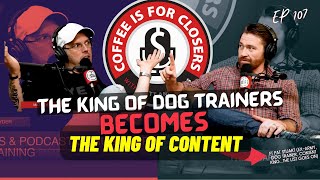
Matt Ryder and Pat Stewart discuss why content creation matters for building a business. They share how podcasting, repurposing content, and coaching in niches like dog training and sales can grow an audience and generate revenue.
Hey, guys. What's up? Matt here. And this is coffees for closers. This is another one with me and Pat back by popular demand.
Yeah, we had one demand.
Yeah.
Yeah. Your mother rang me and she demanded that you get back on this podcast today. What we're going to be talking about is going to be talking about the importance of content and I guess how. How I think and how Pat thinks that you should be coming at Content, not only from maybe some, like, logistical and some gear stuff, but also just from a mindset perspective as to what your expectations should be. For those of you who don't know, this is a podcast about entrepreneurship, sales, business, and all kinds of things, growing businesses and sort of getting. Getting better at things in the entrepreneur space. So if you like this stuff, make sure you like, subscribe, hit notification bell and we'll see you after the intro. If you listen to this podcast, you will make your first million within three years. I'm going to repeat that. You will make a million dollars within three years of the first episode you listen to. We don't want p. We're not here to save the manatees. We're here to make podcasts. You really want this? You listen and review.
Put that coffee down.
All right, Patrick.
Hello.
Hi, Content.
Yes, that's my job now.
Yeah.
How does it feel?
Wonderful.
I can imagine.
Shocking. Congratulations on the enormity of my success. All the other catch cries.
Yeah, I'm just happy to have a front row seat. Yeah, yeah, I'm here.
Congratulations to you.
So I'll actually start off by asking you.
Okay. Right.
Because, I mean, obviously this is your show, but you attained a fairly high level of not only acumen, but also of business and sort of standing in the community that you're in. And I feel like Content was an enormous piece for that. And I actually think you potentially shifted the way the entire industry kind of looked at it.
Definitely gave it a nudge for sure.
Yeah, yeah.
So kind of explain, like, I guess explain to the people who don't necessarily know what I'm talking about. Yeah. Background on that and then we can.
Yeah.
So I'm a dog trainer by trade. That's my job. And I was super lucky in that I was coach mentored, guided by, you know, a guy, his name's Bart Bellon, is arguably sort of, you know, amongst, if not the best dog trainers ever and has a particular, like a proprietary system. It's not like there's any magic to it. It just has a name and it's his system. Nepopo And I got pretty good at implementing that and was very, very lucky that at the same time I began to really understand it. He stopped teaching it to the masses and would only teach it privately in his schools. And he doesn't do any content. Refuses, doesn't. Like, he's, you know, he's an old bel. Dude. He's not. He's not into it, and there's no cause for it.
Right. Like, he.
He has demand beyond imagine.
Okay.
Demand beyond what could ever be filled.
Okay.
And he only wants to do that in person. He doesn't want to do it online. And so in reality, what ended up happening was I and many others, like, not me alone, but I and many others became like a feeder funnel to his school. So having completed his school, I can teach the. Yeah, I can use the brand and I can teach the whole lot, but I can't certify others and give them the bless.
Right.
So I have a podcast called the Canon Paradigm, and had been, you know, even prior to being, you know, certified by him, had just been talking to the masses, like talking to whoever will listen about dogs. And the podcast was beginning to get a fair amount of traction. And really what happened content wise and how it sort of elevated me, like, business wise within the industry is that the podcast proved to people that I could talk.
Right. Yeah.
And that I could teach and that I could effectively pass on the information that I had. The dog training space is really interesting in that there are some incredible dog trainers, like, people I couldn't hold a candle to. They're so good at what they do, but in many cases, it's intuitive to them. They'd never learned a thing about dog training. It's just how they. They are. And in others, they're, you know, they did learn it. They went through the process of having to digest and understand the information, but they're not really built to pass that on to people or they just don't want to.
Right.
A lot of dog trainers would just, you know, they have capacity to do everything that I do. They just would rather be on the tools with dogs every day.
Yeah.
So for me, I got kind of lucky in that my. I had a reasonable track record. I had a dog that, you know, there's plenty of footage of me training dogs. Right. There's heaps of footage online. So there's evidence that, like, I know what I'm doing. Right. I'm good on the tools. But then the podcast became the vehicle by which to prove I can teach as well, I can talk. So then There was this huge demand then for coaching calls and people wanted to do online sessions. And all the training that I had been doing was just imperfect person. That's how dog training is.
Right.
Like it never occurred to me. And then actually I was listening to a different dog training podcast and it was a lady who specialized in separation anxiety and dealing with that. And in, in dealing with separation anxiety, it's very rare that you ever touch the dog as a dog trainer because it's not your problem. It's, it's a owner, it's a, it's a lifestyle issue, almost environment.
Yeah, yeah.
So you're just explaining to people what to do. At no stage in dealing with separation anxiety do you ever say, like, here, give the leash to me and I'll show you what I mean.
Right.
It's totally unnecessary. And so she had gone to 100% online because she was like, there's no point. Like, why leave my house?
Yeah.
And that way I can run back to back clients. I can be virtually in their home. So that kind of like I was like, okay, I could give that a go. And so I started doing these online coaching calls and what I ended up doing, I, I didn't think there'd be any demand. Ridiculous demand.
Right.
And because I was doing seminars all around the world as well. And what would happen is, you know, you teach for two, three days to people, but then they have follow up questions and that kind of stuff. And I was stupidly just, you know, people email me and I'd spe spend ages answering emails and stuff because I love it. Like I'm passionate about it. When I eventually decided to do these calls, I was just doing them on my iPhone in the garage of all places, because I didn't have an office set up or anything. Like that was my dog training space. Yeah, it was. I thought that I should have my dogs there in case I needed to demo anything. I had my whiteboard in case I needed to hash things out for people.
I remember those first. Yeah, few things you did. Yeah.
So I never use the dogs. I think in, you know, the first 150 calls, I think I got the dogs out of the kennel twice and demoed with them. So I was like, okay, I just.
Want to put, just, just stick that there for a second because like, if, if I were to listen upon this without, without knowing the timeline that this took, like it sounds to me like I started a podcast, got a certification, immediate demand for people. And this is like, this is a three month thing.
Yeah, yeah.
You know, like, what is the actual timeline? Because I think it's important for people to know because I see a lot of podcasts start and finish.
Yeah.
We're on episode 100 and something now.
Yeah.
And I, like, I would never plan to stop. So if you're watching this, like, whatever. Even if, even if no one watches, I'm still going to do it.
Yeah.
So we're, we're about 250 episodes in of a weekly podcast. So there's a few years in there.
Yeah.
And I think the tricky part with podcasts, like, there's. We first marketed it into dog training groups. There's, you know, plenty of like, Australian dog training groups. And since then there's like Facebook groups. I mean, since then those have grown and we have one, of course, for the podcast. You're crazy not to have a, a group for your product. But. Yeah, so it's been growing steadily over time to the point now where, you know, I don't know where it ranks. I don't look at other podcasts. Like, I don't know how to gauge their numbers and that. But it's certainly one of the more popular and most listened to dog training podcasts.
Yeah.
We have about 40, 000 downloads an episode.
Yeah.
And we, we've monetized that. Not through, through ads. We do have ads, but it's a very small amount of money. We could charge much more. The issue is, I think ethics gets in the way of us placing too many ads because it's the people who very often want to advertise with us. We sort of say to them, like, we can't really convert sales for you. Like, there are a lot of dog trainers that want to, you know, put their product or the name out there. And it's like, you know, only other dog trainers are listening to this and you have a local service, so there's not a lot we can do. So we have like two main sponsors really like that are equipment selling places and one in Australia, one in North America. So that sort of covers most of our audience. But the, the money that we make for it comes through Patreon and we provide content into the Patreon. But what has happened is we outlaid a lot of money to start that podcast. You know, like there's, yeah. Thousands of dollars worth of equipment to get going the way that we wanted to.
Yeah. And now why, why do it that way, though? Like, what was the, what was the catalyst behind wanting to create it? Yeah, just whacking an iPhone and going.
Yeah, yeah. So you totally can do that. And that was what I wanted to do. I was like, yeah, when. So I do it with a friend of mine, Glenn, and he. It was his idea. He asked me to do it with him. And I was like, yeah, we just put the iPhone down and hit record, and that's the audio. And he was like, no, no, no, no. Like, this is how we're going to do it. And I've seen a lot of people come and go that have done the, like, put the iPhone down and record. And it just doesn't get the traction because I think the thing with podcasts is it's just audio.
Right.
So, like, this is a YouTube. People might be just listening to the audio of this, but they might be watching. And so that's something else to see.
Right.
But for the most part, you need higher quality sound. And I think the barrier to entry was. And Glenn did all the work on this. But setting up a podcast is tricky as well.
Right.
Like, it's not as simple confronting.
Yeah.
And it's not as simple as just going live on Facebook. And that's where a lot of people in that space who, you know, rightly were like, hey, I'm going to make content. I'm going to put it. I'm going to go live on Facebook. That's just not a great way. It's good. There's merit to doing it, for sure. And to convey a message.
Yeah.
And to convey a message that's time sensitive, certainly the dog training space, it's fantastic for that. But it's quickly lost in the newsfeed. It's not easy to search. It's not going to come up in anyone's search in the future.
There's not really any way for you to then use that later.
Yeah.
As well. Like, it's. Now that belongs to Facebook.
Yeah.
It's not yours anymore.
And as a. Like, the watching experience is a commitment to most of your senses.
Right.
So, like, you have to have your screen open. You know, if you're going to do it on your computer, you're stuck sitting there in front of it. And very rarely are people doing anything that is, you know, interesting on it. And if I want to listen in the car, I have to have my screen on.
Yeah.
So it's not. It's not ideal.
It's not ideal for the platform either, which is why Facebook lives. Unless you're in a group and it's a scheduled thing, and then it's more of like a. It's a. It's a Thing or if you schedule like, you can do it, like if it's like the episode of the week, can you do it every week? And it's a thing and people can, can be prepared for it. But if it's like an ad hoc thing, I don't really think it works that well.
Yeah.
Because like again, that medium is not conducive to long form content.
Yeah.
And like, again, this is me personally, but editing goes a long way.
It does.
And when you're live, that there's, there's a, there's a purpose for life.
Right.
But if you're trying to convey a detailed message, live is not the way to do it.
Right.
Because you'll stumble your words people out.
Yeah.
And one of the things that you see people do a lot in Facebook lives is keep acknowledging the audience. Oh, Jono's here. Hey, Jono. And they derail themselves and they never find their way back to their original, you know, like, point that they were at. And so you see, in the end, long story short, we're getting to the point was when I started doing these coaching calls, I realized like I should be recording these because I used to record so much of my actual dog training training. And that's how people knew that I knew what I was talking about.
Right.
Because I'd be in the park or I'd be in a training session with someone, whatever. And those people right there can see, this dude's got skills. He knows what he's doing.
Yeah.
But you record that and you post that on Facebook or YouTube or wherever you post it. Just so like, hey, there's evidence. And they were not polished. They were just like, hey, here's me training a dog. I know how to do that. So it occurred to me, I record physical training sessions. I should be recording these like Skype training sessions. And I ended up started doing it just by another iPhone.
Right.
Because I was on a call on that iPhone. I'll just use another one there. And so I had this must be nice. It was the old one, right? So like really crappy quality forward facing camera from a, you know, a six year old iPhone. So, you know, like it's a 720, it's not great. But then what I realized was like, there's these moments where I was saying things that are interesting or even not necessarily always interesting, but maybe a little bit controversial or not controversial. And I'm going to stir a problem, but different to what people might expect.
Right.
And I was like, I could make a snippet of that and then I could have like a little demo of what I'm talking about, like with the actual dog. So now I've got. Because I've got all this footage of me training dogs and now I have all this footage of me talking. I could put those together and make some credits. I started doing that and then I started getting some traction on Instagram. People, like, it was, you know, getting traction. And then I put it on YouTube and just sort of set and forget. No, no title page, no end screen, no nothing. Just like, here's the video. No SEO on the title. Like, not searchable in any way, shape or form. I just put it there. And so that started. No one else was doing that. And then that started building up to the point where I was like, I should be recording much more of this stuff and I should go long form. So then, you know, what I was relying on was like a 15 second sound bite and a 15 second video of dog training before I realized, hey, no, YouTube will. Oh, Instagram specifically on Facebook will allow a minute of video. So I should go draw it out to that. And then I started figuring out, okay, here's a good chunk of it. That is three minutes. So that's got to go on, on, on YouTube. And I started just putting all this stuff out and really not paying any attention to who was looking at it. I just was putting it there because it was so easy to do.
Right.
And then before too long, I realized, like, holy demand's gone through the roof.
Right?
Like, people are starting to pay way more attention. And that's why.
Right?
It's because the podcast enabled one thing and it fed into the other. And that repurposing those calls, it's like free marketing. Not like it is free marketing.
Well, you're getting paid to do the session.
Yeah.
And then you're using that session and you're repurposing it to get more sessions.
Totally.
Right.
So then the biggest one for me was I had a guy that Skype session starts, or the Zoom session starts up, and he's a guy that had messaged me a few times and he. I think he's Swedish and English is, you know, second language. He speaks English, but not super well. Fine. But long story short, he said to me, I want you to explain the system to me. Nepopo the system. And is it okay if we record? Because I don't want to interrupt you. I just want you to say, and I will like, you know, go through it many times later, because English is not my first language and I just want you to hash it out as your thoughts and. And then I'll review it later and make sure that I understand it instead of interrupting you. No worries. So we record it, hash it out, and then at the end I was like, oh, my God, dial on.
I spit, not fire.
Yeah.
I was like, he didn't interrupt me at all. Or he might have at one point, which I was easily able to cut out. We had the hello and goodbye. They're 50 minute sessions. There's 10 minutes either side of that. I ended up with a 40 minute recording of exactly the whole system, start to finish. And I was like, hey, I should do something with this. And I showed it to a few people who didn't really know the system and would have otherwise been clients. And they were like. And some other people who did know the system, they're like, that's everything you just created in that. And so I made an online course out of it. It's like six figures come in just from that one coaching call.
So more of the story. Kids just do one coaching call, turn into a course, make six figures, you.
Know, but so it was just fortuitous that, I mean, not for sure. I put in a lot of work, right. And made sure everything was in place to be able to do that. But I didn't plan it. It just came to be that, like, I accidentally made some really good content and then was like, okay, I have that. I've got to reuse.
But I think it's like, the harder you work, the luckier you get. Totally.
Right.
And so if I draw some parallels, you know, I met Jeremy. Same sort of thing. Jeremy definitely is not the person where he does not want to be out there. Right. You know, enough is not enough. But. And so like, what I did, like, because I had an active thought. I remember sitting down with James and we were like, really new. And I was like, I need to be known as a guy that's good at sales because I wanted these people to ask me to do their sales. And I was like, I have no idea how to go about doing this. And I didn't like the strategy which is out there, which was like, DM everyone who you know and convince them that you're good at sales. And I was like, that just doesn't seem like the play. So I said, okay, like, what is the one place that I know I can easily get the right people? And that was Facebook. Personal Facebook. I was like, because I can literally just friend loads of people that are within my niche. And so I was like, all right, I'll just do that. So I literally, like went into groups and just started like friending all the coaches and consultants and sales guys because I knew I was going to need sales guys at some point. And I was like, okay, if, like my goal and we laid this out was, if you know me, you will get better at sales for free. Yeah, that's it. That became the mandate of the Facebook group. The closing code, which has now got 4,000 members, just pretty much grown it very, very organically. Just sort of like the group for this podcast sort of thing. Right. And like the low end sort of sales training offer that we have on the back end of it, which is like ridiculously priced. And so we were like, okay, and then let's just create these. And I would do a video every day and it was like, I would purpose make it almost like just a mini YouTube video. I would purpose make it for YouTube and I would cover a specific subject and it was two to four minutes. And I would do that and I would edit it on my iPhone. I would shoot it on my iPhone with a ring light, and then I would edit it using Imovie. And I paid some guy on Fiverr to make like a cool intro outro. I actually realized that the intro outro on personal Facebook makes it, doesn't it kills your engagement.
Yeah.
Because people think it's a business thing.
Yeah.
And like, that just destroys it. So I was like, okay, cool. Like, I. And then that's when I figured out the different platforms required different editing.
Yeah.
So I was like, well, if I'm going to put this on LinkedIn. And I was like, oh. So we started. Started making different templates and I was like, okay, that's Facebook, that's Instagram, that's like personal Facebook, that's business Facebook, because they're different, even though it's the same content. And then my Facebook page, my Facebook group, sorry. Had to have a different edit as well. So, like, things with borders you can do in there, but you can't do borders in your personal. And it's really weird, right?
Yeah.
And so I started kind of doing that and then I started to, like. I wasn't worried about the likes and comments. I watched the views because when you put it up, you can see the views. And I would go. I knew I had a winner if I had like a hundred views in the first hour. I was like, oh, sweet. And then I started to figure out when I got the most views. And then all of a sudden I started to get more likes and comments and that kind of stuff. But really, it was about. All I cared about was the view number, because I knew that the more people that watched it, the more people were starting to watch it. And I post at the same time every single day. And then I had, like. I had sort of, like, content Monday, Tuesday, Wednesday, Thursday. And then I had, like, a Friday meme that I put up every single Friday. And I would invite people to put their memes in stuff like that. And so I started doing that. And then from there, like, I just had people start contacting me. And it was like, hey, man, what are you doing? And I would post up, like, my wins as well. So, like, I'd post up a screenshot of, like, I closed at 77% for the last two weeks. This is how much commission I made. This is what I've done. This is, like, my thoughts as to why it's happened and what I could do better or what I think I'm doing well. And people are like. And it was like. It was like the warts and all type thing. And then I started putting up, like, content of my own calls. I was like, hey, I did a sales call. I think it went pretty well. Let me know what you guys think. And like, no one does that. Mm. No one. No one will put up a legit sales call. And I've put up, like, five of them. And then I started opening up. I was like, what else? I was like, what would no one do? Because, like, most people are not that good, but the perception is that they are good show. And so I was like, well, what is the one thing that you would have to be good? And I was like, I'll sell people live, right? And so I started jumping on. I was like, hey, I'll do it. Like a live sales goal at that. And I'll role play with you anyone. I role play with anyone. And we can record it and you can send it to whoever you want. And so I started doing that kind of stuff and then just being as open and transparent and like, hey, look at me. And like, there's not many people now that would argue that I'm not a very good salesperson. They can disagree with, like, my methodology, but they go, well, that's pretty effective.
Yeah, yeah.
You know, and it's just because. And then from personal Facebook, we added in, like, the podcast, right? The podcast was a big one. Like, I listen, look at the first podcast. They were terrible. We just use zoom. Yeah, yeah, like, just zoom. And, like, then we were Just using like these little microphones. And then from there we kind of moved on. And like, as we started doing this, we started getting more inquiries. And the more inquiries we got, the more sales we made. The more sales we made, the more money we made. And then I would take that money, I would reinvest it back into better quality stuff because to me, all of that came from the content, even though we didn't have any funnels set up. So I could actually tell it was coming from that. But all I knew is that the more content I did, the more views I got. And like, we don't get like crazy amounts of views. Like, I mean, you know what I mean? But it's their quality views.
Yeah.
You know, I think that's very interesting now being in this space and exactly the same in my own. It's like we don't get a huge amount of listeners or downloads or views of any kind of. But they're. They're the exact ones that we wanted.
Highly monetizable.
Well, and not just monetizable, like highly targeted to the point of like, these are the people I'm trying to reach and it's not always for financial reasons. I'm trying to reach them.
Right. Yeah.
I mean, long term, I suppose everything is that right. But we, you don't need this giant audience and everybody sort of talks about viral stuff because there's plenty of dog trainers, say, who have half a million followers on, on YouTube, but they're not targeting like, there aren't half a million people that are interested in what I do or that I can target to because I train a very narrow bandwidth of people. I don't train pet dog people. Like, so, like, if you just a pet dog owner and you're interested in what I have to say, you're bought. You're probably as good or better than a lot of professional dog trainers. And mostly the people. It's your passion.
Yeah.
Mostly you're not like, oh, I've got a problem with my dog and I'm looking to solve it.
Right.
Like. Or that is actually how most dog trainers start out. They got a problem, then they, they in the solving of the problem. They enjoy it.
Yeah.
But. So there aren't that many people that are my target. And our goal or, you know, certainly my goal has to been to provide them. I want to solve their problem as much as I possibly can without curated content. So the podcast and everything I put out, like, I put out everything, there's nothing. There's never once on our podcast or in a YouTube video or anywhere. Have I said, oh, no, that's. That's going behind a paywall.
Right.
Like, that's that secret. You have to. You have to pay for that.
Right.
But we put it all out, but we don't just curate it.
Right.
So you could. And plenty of people have, is just from the content that me and others put out for free. You can become really good. And I've got. I've actually got like my antidepressant kit in my phone of. I've got like an album of screenshots that I of. Of people who've given me like this incredible feedback.
Right.
And whenever someone gives me some horrible, like, says some horrible mean, I go and I cry in the corner and I read these like, screenshots of people like, you changed my life and all this kind of stuff. So it's really, you know, I feel like we've done a good job at that. But like I say, it's not curated. You're going to have to listen to 250 episodes and pretty much every.
Every cognitive thought, not an order.
And yeah, every cognitive thought I've ever had is in that podcast, but it's just vomited onto it.
Right.
And you're going to have to find it, but lots of people do. But if you want me to curate that for you, that's a course.
Yeah. Right.
Like that. You're gonna have to pay for that.
Right.
Because that's me putting the time together. Okay. This is the order in which you should learn it. And that's an extra time commitment for me. But there's no extra information. None.
Right.
It's all, it's all there. And I think that has been from. From my point of view and business wise, like the developing that audience trust and not in a. I think what's super important when I talk about that, because I get uncomfortable talking about it is it's not in like a sleazy way either. In a. Like, I trust me because I provide them good information and because I do have their best interest at heart.
Yeah.
Like, not because I want them to think that I think. And there's been people I've seen come and go that want you to think that and it just gets uncovered super quick.
I think it. Yeah, it's. It's. There's a level of transparency. So like the one thing that I don't give away is a script, but there's actually a very specific reason for that. It, like because I have. You could listen to my. I have like five Sales goals that you can just go download in there using my script. You could just transpose that. I've had people do it and then by coaching off me. And I'm like, okay, let's get your script up. And I'm like, oh, it's my script, right? And they're like, yeah, I just transcribed it from what you said. I was like, yeah, that's a good way of doing it. However, like, I think giving a script actually does detriment to people.
Yeah, right.
Unless you like, you know it. And I was talking to a business or any other day because they were asking us like, hey, can you come in and train my clients? And I was like, okay. Like, yes. I was like, they're like, what do you want? Like, scripting? I was like, no, I can't do it. Like, oh, you don't give away. I was like, no, I don't have enough time with them. I was like, I would be doing your clients a genuine disservice by like, yeah, you pay me ten grand a month. Great. Like, go in there and teach them stuff. But if I give them a script without taking them through, like, you have new clients running every week, right? Like, yeah. I was like, I can't do it that way.
Yeah.
Like, I have to take them through a foundational learning period where I teach them the principles of why things work and how things are done so that I can teach them a script which then they can use and adapt. But if I just give them a script, I go, they will go backwards and they will make less money and then they won't pay you. So I was like, if that's what you want, like, you need to hire someone different because, like, it's just going to end up up your income.
Yeah.
And he was like, oh. And I was like, but what I can do is I can like have a foundation that I put together in like a portal for you guys. And I have that. We just white label the NPQ portal and then they can have the foundation and then from there I can teach certain elements. But scripting, because you have new people coming through all the time, it's a 12 week course. I don't have enough time with them. It's my inner circle. Six months.
Yeah. Right.
Like, I need the time in order to make it effective. And so, like, I don't want to do people a disservice. It's not that, like, I want to hide scripts. It's just like, I don't want to give people things that they're then going to use. They're going to go backwards because they don't understand it and they're going to blame the script.
Yeah.
It's the same as delivering the punchline without the joke.
Yeah.
Like, yeah, when I teach. It's the same thing. When I teach live events, I actually do it this way on purpose. I draw this diagram on the board first up, straight up, and I go, you came here to learn a particular system for me. Here it is. And I draw this little triangle with all these symbols all over it until the end. That's. That's the whole system. You can go home or you can sit here for the next eight hours, and I'll explain so many things to you, and then I'll redraw that diagram and you'll go, whoa. Like, blows my mind.
Right?
So I think it's the same kind of thing.
Exactly. But I think, like, if we go back to the importance of content and, like, the reason why we're sitting here in the studio and, like, besides the fact that, you know, we have the, like, just the financial ability to do so. But it's like, I feel like people give up on content very quickly, and they give up on podcasts, they give up on YouTube channels because it's like they're looking for immediate gratification.
Yeah.
And if we have a look at, like, the most successful, like, Mr. Beast been on YouTube, she was 11 years old, so 10 years. MKBHD, Sir Marcus Brownlee, we're talking about him at lunch. Never had a viral video. What has he got? 10 million sub. 20 million?
I think 14 million.
Yeah, 14 million subs. Just grinded the whole time. Making videos about iPhones.
Yeah.
And other, like. Like, relatively boring. Like, this is just tech stuff, you know, like Linus tech tips again, like, all these big channels, like, they have, like, because they enjoy doing the content. Like, they're doing it for the passion. Like, I really enjoy doing content. I like being on camera. I think it's fun. I like the gear. I think it's good. And, like, my intent for doing content is to educate people. It's not to get clients.
Yeah.
The happy accident of the more content that I do, the better quality the content becomes and the better I become on camera. Like, to look at how I was on camera two years ago, and I thought I was pretty good and natural on camera. And I look at it today, and I'm like, I was trash. And I'm sure it's good. And, like, my intent for doing content is to educate people. It's not to get clients.
Yeah.
The happy accident of the more content that I do, the better quality the content becomes and the better I become on camera. Like to look at how I was on camera two years ago and I thought I was pretty good and natural on camera and I look at it today and I'm like, I was trash. And I'm sure I'll look again in five years time and go, ugh, like so many little mistakes or whatever. Like looking out, not looking down the barrel all the time and moving my head around during a podcast. Right. But all these things, like, the better all that gets and the better production quality I can, like the best production quality I can afford. That's an important distinction. Like sometimes it's just go back two years on this channel and you'll see it's all done on an iPhone or Zoom.
Yeah.
Because it's really easy to edit on Zoom, but it's a poor quality. But hey, it's a video.
Right.
And so I think it's like that immediate gratification. It's like if your intent when you start a podcast is like, man, I'm going to get so many clients from this. It's like you're going to get six months down the road, you're going to have 35 listeners and you're not going to keep going.
Yeah.
Whereas, like, what I would say is like, okay, you have 35 listeners. I guarantee you one of them hops on a phone call, they're closed.
That's right. And I think the focus should not be on building a giant community, but a strong community. So if you only have 35 listeners, like, holy. You can provide an awesome amount of value to 35 people. Like if you've, if you've allocated two hours a week to, to this task.
Right. Yeah.
And you've only got 35 listeners. Holy. You can, you can give 35 people a lot of good info in two hours.
But, but imagine if every single week you did an in person event in a small room and you filled it with 35 people.
Yeah.
You'd be considered a very successful speaker.
Yeah. Yeah.
Like 35 people every. God, every week.
Yeah.
Wow, man. Like, you know, these guys spend, like Jordan Belfort came to Australia and they had to give away almost all the tickets.
Yeah. Right.
Because like, people just don't go to events. Like people, they have stuff to do. Do you know what I mean?
Yeah.
Not that Jordan Belfort's not a big name. Because he's a big name.
Yeah. Right.
But it's just value Being there. But it's hard to convey that people are busy.
Yeah.
You know, I'm busy. You're busy. I wouldn't go.
I didn't go.
Yeah.
Even when it was free.
Yeah, exactly. Like, we. We got. We got meet and greet tickets to comedy venue the other night that we were at.
Yeah.
And the comedy show started at 7, and the meet and greet was at 5. And I was like, who are kids, man? I'm not gonna that. And they called me. They're like, you coming? I was like, no. And they're like, why? I guess two hours early. I got kids. I'm not coming. I just bought the best ticket because I wanted to be in the front row. And it came with a meet and greet.
Oh.
I don't want to meet him.
I don't want to break the fourth wall.
Like, I don't care. I was like, whatever to do. It was very funny. But it's just like. So I think, like, people look at it from the wrong perspective. I saw a guy. A guy. He's like, in the same space as us. And I check out competitors. Competitors, right? People in the same YouTube. Because I'm like, oh, like, what are they doing? What are they innovating? Like, can I get some ideas? You know, I mean, stuff like that. I don't read their content up, but I'm like, oh, that's a really great idea. What can I take from that? Get inspiration. Stuff like that. And, like, I would shout them out. Like, I really like some of Cole Gordon's videos. Like, they're phenomenal. When he sits down there and he really explains the process in depth. Like, it's not how I work. So, like, I don't know that I could pull that off, but I like the idea of it, and I would like to figure out how to bring something like that into my content. But, like, I just, you know, went on a Guys and, like, guys and posted in three months. And I specifically remember this guy posting up, going like, this is the year I'm a podcast, and my YouTube, 10,000 followers, and I'm going to go all in on content. And I'm like, you gave up after six months because you're not getting, what, tens of thousands of views? And I was like, what did you expect? Like, I've had my podcast for two years, right? And I think we get. I don't know. I don't even know we get. I think we get, like, say, 30,000amonth, right? We release four, so we probably get, like, five to 7,000 downloads. An episode. But it's like those five to 7,000 people are really bought into what we do.
Yeah.
And like, I can only service two new clients a month.
Yeah.
Like, do I really need any more than that?
Yeah.
I mean, or is that just my ego going, I want more?
Well, that's it. I think that a lot of the times when you look at, you know, social media and the amount of followers, you know, YouTube especially is, you know, views and follower driven. And that's fine if your intention is to be a famous entertainer. You need both of those things.
Right.
But if you're delivering value to a target audience, you don't.
Right.
You just need your target audience. So, like, you know, on YouTube, I've got like four, just under 5,000, I think, subscribers. But like, that's my whole market.
I got everyone. Hey guys. We got everyone.
Like, that's, that's a, that's a ton of people in my space. Because there aren't that many people interested in what I have to say about dog training stuff. Because I fit, like I say I fit in a weird bandwidth where the really, really good dog trainers are as good as me and. Or better. Doesn't matter what I say.
Yeah.
And then there's the average pet dog owner who like, couldn't even begin to understand the stuff that I'm saying. So I have this like tiny little slither of people in the middle there and I provide them value. I don't, I don't try and like, reach for the masses. I don't, I don't want or need that. In fact, to do so would be counter to my message and would degrade the brand.
Yeah.
Like, for me, like I could say like one in every eight sales. One in every eight employed individuals, a salesperson. However, for me, first of all, like, I personally don't, like, I own part of seventh level and we sell salespeople stuff. But like, that's Jeremy's thing. So with Jeremy's thing, like, spreading wider is important. So, like doing all the amplification and like trying to really go wide is very important for that. And it's working and his channels grow and stuff like that. For my stuff, it's like I need to connect with a very small subsect of the entrepreneur community. And also sales reps. Right. Because I want sales reps seeing how good we treat our sales reps. They want to come work here because they want the opportunity to work with the best business owners. And so I only want to speak to the best business owners. Right. And most of them are in the coaching consulting realm. We're trying to kind of expand outside there. But right now, really, like, you know, like the most. The. The biggest and the best. Like, coaches who coach coaches.
Right.
They might have 300 clients.
Right.
So let's say there's five of them. So let's say there's like, really active, very, very good coaches and consultants. There's like 1500 of them who are really good that I would ever want to work with. And I get like, you know, we get 7,000 downloads. It's like, I probably got most of them.
Yeah.
You know.
Yeah.
Through. Through any one of the mediums that I'm working on. Like, I've got most of them either on YouTube, on my podcast, on my personal Facebook, on my Instagram, whatever. It may be, like, Shannon Briggs reach out to me asking for marketing help.
Yeah, right.
Like two time heavyweight world champion. I didn't think it was him. And he messaged me on audio. He's like, hey, man, what's going on? Let's go, champ. Like, what is happening? I remember I called Marco. I was like, what is happening? Anyway, I got a meeting with him next week. He's going on Rogan.
Wear your math.
God.
Yeah, this is how we get to Rogan. Step one. Rogan.
Yeah.
Hey, I want to circle back something you're just talking about before equipment, right?
Yeah.
And I think just shot an iPhone.
Yeah.
We've got a funny video about that coming out. And like I said, like the podcast we started, we spent some money, like, not a ridiculous amount, but a couple of grand to get good audio going. Because it is just audio. So, like it's.
Well, let's have a look at this setup. Actually right now. This is a road caster.
Yeah.
This is about bucks. 800 bucks Aussie.
Yeah.
These are 350. These are custom mics. So you can get them cheaper than that.
Well, actually, yeah, these are pretty cheap. Like, compared, like.
Yeah, These are sure. SM7 something. Seven Bs, I think. SM7 Bs?
Yeah.
These are like 350 bucks. And these are like powder coated custom ones. You can get them for like 300 bucks flat.
Yeah.
These XLR cables are, you know, 50 bucks each. And this is an elgato. This is kind of an extravagant expense that you don't need. These are a couple hundred bucks a pop. But, like, this whole setup right here probably costs 1500 bucks.
Yeah. So like, that's not too big a barrier to entry to get into.
Yeah.
But then what I found was, you Know, everything was iPhone, even the training stuff that I was doing. And then I like, my first investment was an app that let me use my AirPods as a microphone so that I could get further from my. I think you can do that natively now, but you couldn't do that. You're you when you.
We live in the future.
Yeah, totally. But what I found is that, you know, the Patreon that we have for the podcast, we don't spend any of the money that it's like, we don't take any of the money. It's all to, you know, buy equipment for the show.
Oh, you spend it.
Well, yeah, we spend it on gear to make better quality stuff. But what I have found, to be totally honest with you, is like I've kind of painted myself into a corner with that because I made some really high quality.
Right.
I made some really good stuff and I put in a ton of work.
Into doing your reels from next level.
Well, not, not just the reels, but like for the Patreon. So like behind the paywall that they just get to see, like I put work into making some amazing.
Right.
And it didn't get any more views. It got like, people got me some, like, because there's a limited number of people in there.
Right.
So yeah, it gets the views that it gets. And a few people sent me some messages saying, hey, wow, you did a really good job with that, Pat. Like, hey, good work. But now, but like now I feel compelled that that's the standard that I've set. And I find it really hard actually to go back to just like me talking in front of the iPhone.
Right.
And it's probably just as effective. Like I'm probably producing the information that I'm providing is just as good.
And the quality of the content is the most important thing. However, yeah, the method of consumption does matter. Like, if you're gonna be on YouTube, you better spend a bit of money.
Yeah.
Like YouTube, there is a high production, like, dude, like the top dude. Like even like low end youtubers like us use top tier gear.
Yeah.
Like if you're not uploading in 4K, YouTube goes. I don't care.
Yeah, right.
If your audio quality is not good, nobody will watch.
Yeah.
Like you can get away with not great video because people would just assume it's their Internet.
Yeah, right.
If you upload in 720p, it's a little bit grainy. They won't turn it off because they go, oh, my Internet's a bit whatever.
Yeah.
But if the audio is really good. If the audio is bad, they'll just go, doesn't matter. Right? So, like, if you're going to focus on something, focus on your audio first. Even if you plug in a microphone. Like, I know Chick is a super successful YouTuber. She just uses her iPhone, Max Pro with an. With it. With an external microphone.
Right.
And it looks phenomenal.
Yeah, right.
Like, it looks fine. It's great. Good to go. Like, so phenomenal. But because you, you lack a lot of like the, the visual interest of YouTube is like being able to keyframe and stuff like that. Like, you have to have some of that. I think, well, maybe I'm just boring and we need to kind of put some of that stuff in. So you definitely lose some of that in post when you're just doing it on iPhone. Like, you don't have to go insane with it. But I think, like, it needs to be reflective of the medium that you want and how you want to be perceived.
Yes, exactly.
Like, I wanted, I wanted to. My goal, I remember going like, I am going to outpace everyone. And it was an active decision. And I think I probably spoke to you about it.
I was like, okay, that's what I'm doing here.
Yeah, exactly. So it was like, okay. I started off with videos on YouTube and then a couple of my competitors. I'm sorry, videos on Facebook. A couple of my competitors started doing it. And I was like, perfect, because I'd already started leveling up my content game to where I hired an external editor and I was like, sweet, now I have a great editor. I can make my stuff look better. I won't just do lives and upload it and put it straight on there. I'll have it edited, I'll upload it, I'll copyright it, I'll make it better. Then people started doing that, but I'd already moved on to YouTube and then creating, like, shorts and I had segments called Just the tip where it's like, you know, a really well edited, very short, like, very, very precise bit of content. No call to action, no nothing. Then people kind of started doing that. And then it's like, okay, my podcast, okay, we're going to go hard in the paint. We're going to get a studio. We're going to do this. And I was always, My plan was to be like, I will always be a level of barrier. There's. There's going to be a large barrier of entry to beat me in terms of, like, the amount of volume and the amount of quality. And I've Watched most of those people stop trying.
Yeah.
And probably not for lack of quality. Right. It's like not actually creating it because it doesn't matter whether you say it into a twenty thousand dollar cinema camera or you say it into an iPhone. If you're talking, you're talking.
Exactly right.
And if you, if you're a very, if you're subject matter knowledge. Depth is narrow. It's narrow no matter what camera you're talking into.
I think it was you that said I'll either talk so much that people think I'm a genius or full of.
Yeah.
And they can decide. But there's going to be two camps.
Yeah.
And it's like as long as I don't have people mingling in the middle, there has to be two camps. And it's like these people will think I'm a. And these people will think I'm a genius. And those people are going to buy something off me or follow me or send people to me. You know, and one of, one of the ways that we've, that we've done to be able to kind of like. Because we do a lot of content, but I don't necessarily. I spend less time in front of a camera now than what I used to. But we have the, the dial on cam, which is the spit and hot fire cam over there and then we have the main cam. And so like we do that because like, well, we're gonna sit down here so we can repurpose the content.
Yeah.
And like I'll kind of let you explain that.
Well.
So that was when you brought me on and there's a team of people that is managing all the content for the, the organization. And my first sort of directive in coming up with it was we need to minimize your time that you have to be doing this rather than actually running the business and doing the business stuff. So I was like, we need to find a way to maximize everything that is recorded. How can we use that to the absolute fullest of our ability? So from every podcast that we do, we need to be able to take snippets that we can put places we need to be recording so that you can get reels from this or vertical content from this. We need to like with every YouTube video that we create. There's multiple facets to that. And, and it like, it only like for the one hour of your time that I take. That's my time. Like yo, I can reformat that. And that takes me 10 hours to reformat it. But that's my job to do you don't need. I don't need to be saying to you, okay, now let's do it again. But I'm going to hold the camera this way.
Yeah.
Like, yeah. I say from that, but I say from the start, like, we're going to film this at wide enough an angle that I can repurpose this to be a tight shot or a wide shot or whatever. I'm going to use the right kind of lens and all that kind of things just so that we can say for the minimum impact on your time, because you are the functional head of so many businesses and it have so much to do for me in the creation of the content of this space. Like, we need to maximize what we can get, like from flash to bang. You actually saying it out of your mouth. I want. I want a machine gun effect at the other end because I want. I want to reuse that in as many possible ways to minimize the impact on you and have the greatest effect to. To your audience that you can provide information to.
And that's where the gear becomes important.
Yes, that is.
Yes.
That's when it becomes like, you can't do what we do with an iPhone now. Like, it can't be done because, like, you know, some of the stuff that we've done, like, we've shot it from like you've been. You've been 100ft away from me.
Yeah.
And we've been shooting that fully zoomed in an 8K.
Yeah.
On a 200 mil lens in a.
Case for a reason.
Zoomed in 22 times.
Yeah. There's a reason. Why. Because we wanted to have a particular effect. And, and it's like, so we can use that. And so like when we do a podcast, like, we can pull that out. We can have that as audio only here. We then have the video that's going to get edited then from there. There's that camera right there, which is straight on me, which is like, has a much longer lens, which, you know, much. I think it has a 170 on or something like that.
Yeah, it's pulling to 70 mil.
Yeah, yeah, yeah. So we have that. And that kind of gives the allure of like, it's further away. So it's very voyeuristic because that one that's just watching us have a conversation that's meant to be there, that you're like the third person in the room. That one you're not quite sure if you're supposed to be seeing.
Yeah.
So it gives it a little bit of like, A bit of an edge that people want to view, which is how we've had some of our. Like, we have 15,000 followers on Instagram, and we usually have at least one in five people watch a reel, but sometimes we have 90, 100,000 people watch a reel.
Yeah.
It's because it's visually interesting.
Yeah.
And I think I told you so. I got stuck in a hotel in Queensland in lockdown. So I was in Queensland for two weekends, and Sydney went into lockdown in between those times. So I just thought, well, I just can't go home, because if I went home, I couldn't get back to Queensland. So I sat in a hotel room.
He wants to be stuck at home with your family.
Yeah, I know, it's the worst. But here's the thing. So I wasn't expecting to do that.
Had.
Didn't have, like, I didn't have a computer, didn't have anything. I sat in this hotel room with my iPhone for a week, right? And, man, did I digest some reals in that time. But what I realized, and as I was watching heaps of them, I was like, the ones that I, for some reason, regardless of the content, regardless of what it's about, doesn't matter whether it's a chick shaking her ass or whether it's someone spitting hot fire, it doesn't matter.
Right.
There's some of them that just capture me more than others. And then I realized what it was. And there was a particular video that I saw. It was a. It was like someone doing a TikTok dance into a mirror. And then like, the person that was filming it was like, you know, adjacent to the mirror and was filming the reflection. So, like, there's reasons why you do that. And like, I came to sort of understand that videography wise, but I caught a glimpse of the cameraman in the reflection in the mirror and realized he's got, like a giant lens on. And I was like, oh, it's compression. I was like, the thing that catches me in the vertical content is compression. And by that I mean long lenses, right? So, like, zoomed in. So the. The quality is still the same, but it's zoomed in and that gives a really different effect. And. And there's plenty of, like, YouTube videos. You can see out, like, to see the difference between, like, a 15 millimeter lens and a 200 millimeter lens, but with the subject the same size. So you just keep moving the camera back, and it's not the same at all, Right. Like, it looks really, really different. And so when I started filming dog training once. The dog training is just like. Okay, right. Like, it's. It's. I don't do anything amazing in it.
Right.
Like in none of those reels I do with my dog. Is any of the training spectacular. It's.
I don't know anything about dog training I don't know about. Because I like to say. But they're entertaining to watch.
Yeah. And there's something about them. When you watch them, you're like. Like, this is not how my eyeballs see.
Right.
Because your iPhone is like, you.
Miles away from that camera.
Yeah.
So your iPhone is like a. You know, either a 22 to 26 mil lens, depending on the type 1:1 that you have.
24 is like the human eye.
Yeah, roughly. Right. That's kind of how you say.
So for those of you don't know, like, the lower the number, the sort of wider the lens.
Yeah.
Right. So, like, I think we're filming that on a 24.
Yeah.
Because the 24 is like the human eye. So for our standard podcast, like, we want it to look like you're in the room.
Yeah.
So it's at the same eye level as us.
Right.
And then we're filming on 24 lens in 24 frames. A. Sorry, 30 frames a second. Because that's what we have to upload. Because Facebook, Instagram and YouTube all use 30 frames a second.
Yeah. Right.
But then that one, which is the real camera, is further back with a. With a longer lens on it, so it gives compression. So it's like it's. It's. Well, like it's wide enough to where we can edit it, but it's like, it's tight enough to where you're like, oh. Like this is sort of like looking through binoculars. So you feel like a bit of a voyeur.
Yeah.
And that's exactly what it is. Like, you get the sense that you're looking at something that wasn't made for you.
Yeah. Right.
Like when. When things are. Especially on a. On a static trip, on a tripod filmed at like, you know, 20 to 30 mil, it just kind of was like, oh, I'm watching something filmed.
Right.
And. And a lot like most movies are filmed on either a 24 or 35 millimeter lens. Right. So it just feels kind of natural. That's what. That's what we're used to. Like.
Yeah.
And what I found with the reels is there's all these rules to cinematography. Like, the frame rates that you film in. Like, there's. There's Lots of different rules. But the number one rule is horizontal. That's the number one rule of cinematography. Because cinema screens go across like this.
Yeah, yeah.
So the second you're making vertical content, you have broken the first rule of cinematography.
Right.
So then I kind of had the idea. I was like, I'm break more like I'm going to like.
And dirt.
Yeah.
I was like, once it's out the window, it's out the window.
Yeah.
Right.
So that's why I like the reels I started making. You can check out my Instagram. Instagram Opera. Oh, I changed the name. It's just Pat Stewart now. That's a 200 mil lens and I'm like 100 meters from that camera. But you can't tell that like it's it. And the barrier to entry is you need an incredible camera to pull that off, which I have.
Right.
I am very thankful to our patreons that bought it. But It's a Canon R5 that has like incredible autofocus that can snap onto me at that distance even. Most cameras can't even identify you at that range. Right. Like that one can not only attached to me, but I can make it attached to the dog, which we've used to shoot stories.
Oh.
And shot stories at, you know, 150 meters away that I can then zoom in and track you walking the whole time so that your head just stays completely.
Why do we do that?
Well, it fits the brand, right? Because.
Yeah.
And so no one else can do it or no one else does do it.
You.
They can easily and you die.
$12,000 camera and a $10,000 lens.
Yeah.
Thousand dollars, something like that.
Thousand dollar memory card.
But it's on brand with the sniper thing because it's like we're looking through a scope. Like, that's why I like it for the sales sniper brand and for you especially is because it's on brand targeting like it's. It's on brand, you know, what do you call it?
Like visual messaging.
Yeah, like it fits because it's like it's through a scope and it's exactly like a sniper would look at a target. And we're not. You know, it fits the whole message of everything we talked about. Like we're not machine gunning into the open and hoping something catches.
Right?
Yeah.
We have a very targeted approach, a targeted audience. We know who we're after. And the idea is we're trying to speak directly to them and by filming it in that way even gives a greater sense of that. Like this Is like targeted. That is straight for this purpose and nothing else.
Yeah.
So, like, if I, if, if I was to ask you, and you can ask me the same question, like, what would you. If someone's trying to make a name for themselves in any industry, whatever it may be, what is like the baseline. Not from a gear perspective. We can go to that next. What is the baseline that you would recommend that somebody get out there to the masses to actually be able to start making some waves?
I think that what I would say first is that you actually do need to be good.
Oh, yeah. I mean, I should have said that's a prerequisite, but.
Yeah, but I see that a lot. I say, especially in the dog training space, there's a lot of people and, and it was me 10 years ago or more.
Right.
Where you're like, like, hey, guys, I'm killing it. So, like, just make sure you are killing it first.
Yeah, right.
Like that you do have the skill set that you think you have, comparatively. But I think you gotta just start putting content out there on whatever platform you have, and there's no barrier to entry in signing up for all of them. But I think one of the traps that I see is, you know, people trying to ride the back of controversy. And you will for sure, you, you can increase followers very, very quickly. Like, I just did a whole podcast on this recently about how, like, if I wanted, I could get a hundred thousand followers on TikTok in a month. And I know exactly how controversial.
Yeah.
I just have to go and fight some people that. That's it. Like, I just have to go and, you know, there's different camps in dog training. All I have to do is stir up amongst them.
Yeah. Okay.
And for sure I could hit the algorithm and, and get picked up for sure. But that, that audience would not be a targetable audience. They're not. They're not my customers. They're not people that.
It's an ego metric.
Totally.
Right.
And it would have no value to me beyond making me feel good.
Good.
Right.
And it wouldn't make me feel good to have to do that. So I think that, like, my advice to people in, in starting is, you know, be true to what you are and want.
Right.
And. And post in accordance with that.
Right.
Like post in accordance within your skill set and with, you know, the value that you're trying to give. That has to be the core tenant that, like, this is the value that I'm trying to give. And if this doesn't result in any sales or conversions that's that's what it is.
Right.
And in fact, I was creating online content for a long time with nothing to sell.
Right.
Like, I was just creating the value. And it wasn't until that I accidentally recorded something and was like, oh, I could sell that because. And then I had years of people in the bank watching free stuff. And then when I was like, hey, hey, I've got something to sell that people like, oh, cool, I'll buy it.
Yeah, I got two funny stories on that. Is like, remember when we bought, when we got this office, like, the business was doing well, but I think we had reached 100,000 bucks a month by the time we'd kind of opened this office. Right. Which is much less than like a 15th of 20th of what we do now.
Right.
And it was only 18 months ago.
Right.
But I remember going like, okay, we have some money, but I don't have enough money to do all the things I want in this office. And I'd never sort of really actively asked for money. We had like the closing code, which we've had for like a long time. I've never pushed that ever. Like, it's like the postscript of all of our content. Hey, just so you know, we have this thing. It's closing code. It's like 50 bucks a week. You want to join? Join. Cool. High five. Never run a marketing funnel. I never will. Right, Right. But we did this thing and I was like, man, I like, I've been doing content for a long time. We're doing this podcast. We have viewers, we have downloads. I was like, I've never asked anything from my audience. I've always just given. And that's a real thing. Like, if you're gonna, if you want to do this, like, you have to want to give.
Yeah.
If you don't, you'll give up. Because I do it because I like sharing knowledge. I think I have some things to say, otherwise I wouldn't talk so much.
Right.
But so I was like, I have knowledge to pass on. I'm good at a couple of things. Hey, amazing. Take it. Hopefully you get value from it. I'm not going to charge anything for this. Like, go for it.
Right.
And I go, man, I think I've done enough. And so I was like, okay, I'm going to run a course my first time. I was like, I'll actually do like a six week course. I'll get people to it and I'll. And I'll. And I'll charge three grand for it if I can get like A hundred thousand dollars. I can just take that in and I can put that down and I can get the fit out. Right? And so we did it, and then we charged $47 for the masterclass, and it was all charity. So I was like, we'll do a charity masterclass and I'll pitch off the back end of it.
Right?
So I kind of wrote everything out pitched. And we did 150,000 on the day.
Us, Right?
Like, collected. I was like, yeah. Plus we got Will Hinkson out of it. A bunch of our sales dudes. Because, like, the way that it kind of works usually is like, I'm quite good at coaching, especially, like, when it's an intimate environment, and so those dudes generally want to work for me. That's kind of how it works. Right? And so we did that, and I was like, this is amazing. And, like, that was like, wow, like, brand equity is so important. And I was like, I then actively. I was like, I won't do anything for at least. At least six months. I will not ask for money again because I now have cashed in my equity.
Yeah.
I need to build my equity back up so that I can borrow against it later on if required. We haven't really done another one. You know what I mean? But then with the closing code as well, like, again, I don't know how people find it. Like, it's at the bottom of things, and it's like, in the Facebook group. And it's kind of this thing is a $40,000 a month recurring coaching business. I could sell it.
Yeah.
It is zero input. It just utilizes my staff portal, which I update anyway because it's my staff portal.
Right.
And, like, it's gone through different iterations because, like, it used to be, like, all Zoom recordings. I was like, oh, that's trash. Doesn't really reflect our brand very well. So I redid it with good cameras, and I'll probably redo it again in the next six months because now we have much better cameras and a bunch better studio and update that content. But I do that because it benefits my staff anyway. And then we just turn off certain. Certain things, you know, I mean, because I don't want them having all of our internal pros. It'd be weird.
Yeah. Right.
And so. And it's 50 bucks a week, 25 for your first week, and you get five role plays a week plus access to a lot of content. And, like, I literally remember going like, oh, what's that? Like, this closing code. I was like, we make 40 grand a month. I was like, I was like, what's our cost on that? And they said zero. Jesus christ. It's a 40 grand net per month business, which is the equivalent of most businesses running 120 grand a month.
Yeah. Yeah.
And it's in, it's.
That is like literally pure content.
Yeah.
I could just do nothing but have that and I would be a very comfortable living human being.
Yeah.
And I wouldn't have to do anything different than what I do now on a day to day basis. I do a lot less actually than if I pushed it. God knows what would happen.
Yeah.
But it's crazy that, like, you know, that's sort of like one of those things. It's like the harder you work, the luckier you get. But that's like years of me just going, this is a great value product. It's just like, hey, if you can't afford sales training, you can probably afford that.
Yeah.
So it's like, start there, guys.
Yeah.
High five. Start there.
Yeah.
It's, it's wild how that works out. And I know this is like sacrilege to say on this podcast I'm aware of I can get myself into trouble, but like I'm just not that financially motivated a person.
Right.
And it, it's a happy accident for me that that turned out to be the case. So, you know, like I. Twice a year, well, I've got my online course, it's 500 bucks and people buy that through the year. It sort of trickles through. I don't really promote it anywhere, but twice a year I'll put a sale on it. 50%.
Right.
And I just, it's one post that's literally, I just put one post on Instagram and say, hey, it's 50% off. And yeah, that's the majority of my income comes from that twice a year.
But that's what, like, that's what building a brand and genuinely going out there and wanting to give back to your community or give or give to your community I think makes such a massive difference. And I think what I see just to kind of wrap this up in a book has been going for nearly an hour now is like, if you, if your intent to do content or do a podcast or do a YouTube channel is like, I will make a ton of money from this. It's not going to happen.
No.
But if your intent is to go, I'm going to do this because one, this is a good way for me to kind of get my word out there and you just enjoy it. As a process.
Yeah.
And you get better at it and you. And you start to get better at content and you start to kind of build out your. Your gear. We went from iPhones to like a good webcam, to then a Sony, a 6400 and then we went to a FX3 and now we have multiple cameras and yada, yada, yada.
Right.
And it's just next to the Ronin 4D.
Right.
And it's boss that you're gonna buy.
Right. It's just a progression, but it's a natural progression. And it's like the intent behind it all for me and you has been, let's just do it to give the content out there. And that law of reciprocity will probably come back. But like, the reason why these podcasts come up and they come down, these YouTube channels come up and why that guy was talking about it hasn't posted in three months is because, like, just looking at it all wrong, like it's not the go. But this will get you clients, but it may get you clients through a means that you have no idea how to track it. And it may just make your sales calls a little bit easier and it may get you a couple more referrals and all this kind of stuff. It's like. And that will snowball, but you have to do it for the long game. Now, listen, I understand that administrationally it is. It can be difficult to do. It's lucky that you can hire us to do it for you now. But we have a content repurposing business where you can come us, pay us money, give us your podcast, and then we'll edit it, turn it into reels, post it, all that kind of stuff.
Right.
Slucky.
Slucky. It's fortuitous. It's fortunate that I've been employed to run that service.
Exactly right. So if you do want that, make sure you comment down below, get in touch with us, go to the website. I don't know, there's links somewhere. Just do something. But, but in all honesty, I want you guys to. I think there's. There's room for more Codecast, there's room for more YouTube channels, there's room for more Instagram. There's a tremendous need in this world to get the information from the people who have it to the people who need it.
Yes.
And if you go about it, and that is your express intent, I think there is no way that it fails.
Yeah, I agree.
Huzzah.
That's it.
All right, well, if you like this stuff, make sure. You like subscribe, hit notification bell, Share this to a friend. Do you think we'll get value from it? If you have any questions about, you know, starting a podcast or any of that, just hit up Pat Stewart, his Instagram, and I'm sure he'll happily walk you through stuff. But yeah, guys, thanks for coming, and we'll see you in the next one. See ya.
So the arsonist had ugly shaped feet.
Sibilance. All right. Hey, guys. What's up? Matt here. And this is coffees for closers. This is another one with me and Pat back by popular demand.
We had one demand.
Your mother rang me and she demanded that you get back on this podcast.





