What Makes an Incredibly Successful Salesperson?
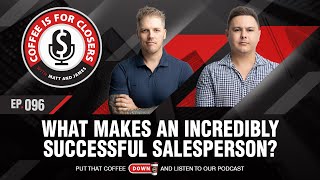
This is a YouTube video titled "What Makes an Incredibly Successful Salesperson?" recorded in February 2022. It features a detailed conversation between Matt Ryder and Marco discussing the traits, challenges, and strategies of successful salespeople. The discussion covers topics such as accountability, sales processes, lead quality, commission structures, and the emotional aspects of sales, providing insights from their experience in sales and business leadership.
Hey, guys. What's up? Matt here. And welcome to another episode of Coffee is for Closers, myself and James today. And we're going to be talking about the attributes, characteristics, and all things of what we think makes a good salesperson. So with that, cue the intro. If you listen to this podcast, you will make your first million within three years. I'm going to repeat that. You will make a million dollars within three years of the first episode you listen to. We don't want pike not here to save the manatees. We're here to make podcasts. You really want this, you listen and review. Put that coffee down.
So what do you think makes up the characteristics of a good salesperson?
I don't know. Yeah, no, it's. It's an interesting question. Right. Because, you know, we have a lot of salespeople and, you know, we're constantly getting people want to come work for us or accounts that want to come and get our salespeople to do the sales for them, which we love, by the way. So, you know, come on, come on, come on. I think we've done a good job of determining the core characteristics of who will be a successful salesperson for the most part. Yeah.
At least within our network.
Yeah.
Like in other niches, there could be far better, far different qualities that are, you know, not in line with what we do. And that would probably.
Yeah, like selling pharmaceutical sales or something might be.
Just.
Might require a different type of person.
Yeah, you have to be very.
Hate children or whatever.
Sociopathic.
I'm not. I mean, no offense to all the pharmaceuticals guys out there, but. Yeah, like, I, I think, you know, we have a very particular culture here which is getting harder and harder, to be honest, to, To. To maintain just because of the size of the business. But we're doing our best.
I think it's actually getting easier and easier.
Yeah.
To be honest.
Well, that's the other side. We could argue that's the other side of the coin. Yeah, I think, like, what I see is like, okay, so the characteristics that made me a successful salesperson was like the constant and persistent back end, terrifying prospect of like, the leads and the what in the whole, like, delivery system that gave me leads falling apart, which, which drove me to do lots of follow up, lots of referrals, all that kind of stuff. And there are times in where that stuff gets a little bit down below KPI and we have to sort of go in there and reinvigorate that stuff. So, like, that stuff is harder to. It's harder to get the Engine re going because there are so many more people. But in general, we do it a lot more than everybody else. But I think like, you know, the sales guys that treat the sales process as their own business are the ones that are the most successful.
Absolutely. And it's just accountability and not blaming the leads.
Yeah.
It's like the leads aren't as good. I'll make more calls, I'll get on the outbound. I'll find another way to bring in extra calls for myself, you know?
Yeah.
I'll pay someone to, I'll hire someone to do follow ups for me. It's like you, you got to treat your sales process as a business.
Yeah, exactly. And so I think like, what, you know, that's a key characteristic is like, it's not your fault, but it is your problem. That's a big one. And I think the other one is like, there is a real ego of someone who makes like say 100 to 200k a year as a salesperson, which is like very, very, very unproductive. Yeah, super unproductive.
I feel like the guys that make 3, 4, 5, 600k a year, they kind of lose that ego. Right. It's. I think it's. You see a lot of those guys come in where they were the top guy and they might be doing 100, 150, 200k a year, whether the top guy in that field. But come into a different industry and they can't replicate it. And because they've been like that big fish, little pond for so long, it just particularly with sales guys, because a lot of them do have huge ambitions and like to be like the dominant guy.
Yeah.
As soon as I step out of that, they're like, oh, holy, what just happened? Yeah, I'm at the bottom, I think as well.
There's just a thing of like, I saw a guy of the day, like, I've mastered Sales, I make 200k a year. I was like, well, clearly you haven't. Yeah, I was like, because there are guys that make way more than that. And then, and then those people go, oh, yeah, but what are they selling? It doesn't matter.
What's your conversion rate?
Like, it just doesn't matter. But it's. The thing is like, you know, we have guys that make 50, 60k a month, but they're selling like $15,000 programs. These are not super expensive sales. We have guys that are making 60k a month, but they sell a $500,000 program and it's like they only have to make two sales, like they're good so you know, like, so they don't have to make. So like it's funny, like we've been like, because of our name, I've been like exposed to more people who are like 80, 90k a month closers and almost all the ones that I've been exposed, not on all, but I would say 80% were absolute trash at sales. Like they were really bad. Like I listened to the calls, their attitudes were bad. But what they were selling, like it was really easy to sell and it was a very process driven sale.
Yeah.
So like it's a very particular type of sale that has a very clear and concise process and the salesperson takes them through. I remember we brought on this, this one, this like sales duo and like we put them in. They were like, oh, these leads aren't ready to buy. I was like, well I mean like you got to sell them. They're like, no, we only speak to people who are ready to buy. I was like, that's not being a sales guy though, that's just being an order taker. I was like, I was like, oh yeah. I was like, I was like, what are you talking about? They go, no, we only work with funnels or this and this and this. And I was like, oh, so you've gotten really good at finding super easy things to sell. That doesn't make you good at sales because I know guys who like are ten times the salespeople they are. But they're only making five grand a month because they sell fitness or whatever. We're only getting 30 bucks a sale. But like at the end of the day you can be really, really successful. Like as soon as you get into something that's half decent commissions, like half, you know what I mean? Like say 500 bucks and above per sale, you can start making a lot of money.
Yeah. By that logic then all the waitresses in the world should stop working for tips and work for commission. Because in that vein that making a sale.
Yeah, it was so weird. I was like, I was so baffled by the conversation and I was like, what are you talking about? Yeah, and a lot of it comes from real heavy biz op, like real big time biz op companies, like companies making 80, 90, $100 million a year. Who is selling like biz op programs or like, you know, selling off the back of events and doing this kind of stuff. Like their systems. Their systems are so good, sales people can make a load of money, but like they're short lived, you know, like, like we Brought a couple of them onto, like one of our. One of our sort of more busy OPA accounts. They bit. They could not close a door. And we had guys like, who were like six months into sales who were selling rings around it. It was really interesting.
Yeah. It's like they go to the back of the room and you can buy. Now the guys that had to leave 20 minutes early to catch a flight, they're like, I will book you until call next week. It's like, yeah, I want to do this. I mean, okay, cool. I'm going to sell.
Yeah. Yeah. Yay.
It's funny you say that. I master sales. I made 200K. And it's like, no, you haven't. It's like, oh, but what are they selling if they. They make more? It's like, well, if you think you've mastered SAS and your whole argument point is, what are they selling?
Yeah, you don't think it's big enough.
Like, go figure out how to sell that. Like, sell your way into that job.
There's a real, like. Because I find a lot of sales guys either make no money. Yeah, they make like 150 grand a year or they make a million or like, you know, half a million or whatever. There's not like a lot of in between.
Yeah. The right offer is a crucial thing.
Yeah.
Right. But you have to have skills.
There are guys making a. Like, you could take someone like Marco.
Yeah.
You could put that guy selling cars. He'd kill it. Yeah, he'd be like, you know, mid six figure earner, no dramas. Any. Any car. You could put him in insurance, you could put them in whatever. And the guy's going to be a super successful sales guy. Like, that's, to me what like a sales guy is. It's someone who's like, not a one trick pony. Like, I never want to hire someone who's a very specific. And I can usually hear it, like, if I listen to a call, I'm like, they're only going to be good at selling that one thing. So it's like if they come over, we have to have the conversation. Like when we brought, like when we brought Anthony over. Right. And I've had tests about this. Like, he was really good at selling that one thing and he needed like a transition period. And it's like, we have to talk you through this. Like, there's going to be a down period because we need to get you to sell anything now. Yeah, he's, you know, top three sales guys that we have in the whole company.
We were confident he'd figure it out, but we were also. That he's going to the bed for a little bit. Yeah, yeah.
Now that he's figured it out, man, like, I did lots of training with him one on one, like, lots like every single week. And he would call me all the time and stuff like that. We did a lot of, a lot of very nuanced training. And now that dude sells everybody.
Yeah. I, I think, like, he's better than.
Me now for sure.
The two key things for making those, like, big million dollars in commission is one, the right offer plus the skill set. Put them both together. Kill it.
Yeah.
And you can be successful either way.
Yeah.
You're gonna be most successful when you got both.
Yeah. Because I've, I've made decent money selling really hard offers. Yeah. And then I've gone to easier offers and going like, oh, my God, this is crazy. And that's why, like, when, when we have an easy offer, I always let the team know, hey, guys, like, this is the gravy train. Don't get an ego about it. This is a relatively easy sale for now and that will change. And like, don't start to get upset about it because marketing goes in cycles. Sales goes in cycles. Like, it's something that we have to be aware of that, like, you know, if a new offer, like a crypto offer right now or was at least like 6 weeks ago extremely hot because the market was. Now the market's tanking, people don't want to buy it. Right. Like, everyone's a little more skeptical. That a bit harder to get people on calls. You know, marketing, you know, everything's not working as well now in February, if that flips again and it starts skyrocketing, all those people are going to have a ton of extra cash going to be lay downs again. So it's like, like don't get complacent.
Yeah. As soon as we hit a bull run like that, off it goes to the.
Oh, man, that thing will go through the roof again. But it's when we're still making a ton of sales. But. But yeah, so it's, it's, it's a funny one. It's like, you know, the good salesperson. I think one looks at time frames on a much longer scale. Like, you know, you can tell how inexperienced the salesperson is by how fast they make changes when they enter a stump and how they rationalize slumps as well. Like, because I remember I've gone through times where like, I had a couple of slow Weeks. And I was like, like, you have to really take a look at it from a very unemotional standpoint and go on. Is there an element of circumstance that's. That's here and if there is, that's fine. I can cop that. Is there an element of things that I can control? What are the elements that are out of my control and how do I take back the elements that are in my control and maximize them? And how do I somewhat compartmentalize emotionally the areas that are outside of my control?
Yeah. I also think like a good sales guy doesn't let them get in a slump. Like they notice or foresee a problem. They fix it before.
Yeah. I say, I think by slump, I mean a period of down sales.
Okay.
Yeah, Right. Like a slump is usually emotional. I don't think good sales guys have slumps, like really good ones. I don't, because I just don't. I think if you have a good process, you just do the process and the numbers will bear out.
Yeah.
Which is why you can't call not making any sales for two weeks a slump. Because, like, well, what if you make all the sales in the next two weeks and just evens out to be your numbers anyway?
Yeah, yeah, yeah.
Was that really a slump?
Okay, for reference, when I say slump, I mean not closing the deals that you would have closed if you weren't. If you're in a different state.
Yeah. That's weird to me. Like, I don't understand why that happens for me personally. And this is, you know, you know, everyone who talks about mindset blames everything on mindset and thinks everything is because of mindset. But I just think that you just do your process. Like, I remember when I was doing calls for seventh level, like I was getting up at 3am doing sales calls, super tired with little kids, getting out, woken during the night on like three hours sleep. And I was like that. But I just did the process and the process didn't change. Like, I don't understand why, like your mental state would change the way that you do things. Unless you don't have a process and you're selling on like your ability to emotionally connect or something like that. And you just don't have the ability because of some externalized factor. But that's just not being a good sales rep. Yeah, well, exactly.
What, like, that's my point.
Right. Yeah.
A good salesperson doesn't let that happen because they recognize I've fallen out of my process. I need to get back into it.
Yeah.
You know?
Yeah.
But like you could have down weeks in sales because of marketing got switched off. That's exact slump. But if you had the same 10 leads week one, the same 10 weeks, like week two, and you say eight of them were closable, right? You go eight from eight one week, next week you go two from eight, same leads. Yeah, like that a good salesperson doesn't let happen.
Yeah, yeah. And then it's like if you are going through a period where like you're closing lower than normal, you have to look at that and go, like, well, why?
Yeah.
And not look at it and go like, I, I. Most of the time when people come to me with problems, most of my answer is, well, we just don't have data. Yeah. Like, and then I never hear from them again because it was never a problem. Yeah, yeah, like, oh, man, I'm really struggling to close. It's like, wait a second. Are you struggling to close in general or has this week been slow? Oh, this week's been okay, man. Cool, cool, dude. Like, who cares? And I think that was really frustrating for the accounts that I was on when I was a sales guy because they'd be like, oh, sales are low this week. I go, yeah, cool, cool, man. They go, well, what are you gonna do about it? I go, nothing. I do everything already doing what I'm continuing to do.
Like, I won't change.
I used to go, hey, man, like, my only job is to make sales. So I literally, like, every part of my day is devoted to making sales, generating my own leads, doing my referrals and my follow ups to make sure that I do the most amount of sales possible. Do you know why? Because I only get paid when sales are made, so I need to make sales. So I'm always doing everything. So it's like, if you want like the rationale behind why they're down, it's because of this. But it's like, you know, I've got a few follow ups coming up. I've got this. And one thing I never do is point. Nothing I don't do anymore is point. Is no, is point at the wall. And give a prediction. Yeah, giving a prediction is like the worst thing you can do as a sales guy because you go in there and you're like, yeah, like a couple of guys used to be really bad for it. They go, it's going to be massive. I got like 11 sales closing this week. All right, cool, man. Well, let's say you close 10.
Congratulations. You failed.
You failed. Yeah.
You have not managed expectations whatsoever.
Exactly. And so, like, if the best case scenario is you close 11 and you close 10, you fail to meet expectation. And if you close 11, I go, okay, yeah, that's what you said you're gonna do. Why should I? Like, I don't give a. But if you say if you think you have 11 in the barrel and you go, yeah, you know, my. Close two or three, and then you close seven, I'm over the moon, bro. I'm like, holy sh. T. This guy smashed out of the.
Park more than what he promised.
Yeah. So it's like, always under promise, over deliver, especially with sales, especially when you're talking to business owners. Because I think, like, sales people think they're, like, doing the right thing, but, like, oh, man, I've got all this. It's gonna be a huge week. It's like, no, no, no. Because that business owner might forecast from that, might make a couple of decisions, thinking that you've got 50, 60k worth of drinks, and then they. Even if they push to the next week, that might put them in a cash flow position. Yeah. So it's like. Like, whenever we sign up an account, I always say, no, you won't get any sales for the first four weeks.
Yeah, it's also. We look at it. It's like that doesn't exist until money is in the bank, you know, until, like, they've paid. Doesn't exist.
Yeah, exactly. So, like, I think, you know, good sales. I don't know. This is, like, helpful people, but there's a lot of, like, lessons from experienced sales guys. It's like, you can't. Can't do that stuff. And, you know, one of the ways that I can always tell when we have younger sales guys on is they'll always tell me how many sales are gonna make. And I'm just like, hey, man, this is just not a good idea. I tell him. I'm like, hey, don't tell me that. I was like, if you think you're gonna do that, just do it, you know, and then it's like, you know, be the guy who's in the end zone, who's used to being there. You have a big week. Sweet. Well done. Cool. I will never expect that to be the normal, though. That's a big. That's a big no, no. For business owners. If you're listening to. To get your. For them to have a big week and then try and make that, like, the new normal.
That's the new normal.
Great.
Let's. Let's aim to beat that next week. It's like, yeah. You realize that we had three weeks worth of people pushing back and had a full back to back four days worth of sales calls. Couldn't take any triages this week because it was all sales. Next week. I got no sales calls booked in because I booked them all this week.
Yeah.
So now that's physically not possible to make happen.
It's a funny one because I think people are so emotional about sales, you know, both salespeople and also business owners. Because sales is like such a fundamental. Yeah. But it's like it just ruins things. Yeah. Like, I try and have a. I'm trying. I think we're getting better. Better at having very unemotional viewpoints about stuff. Like we're doing a challenge at the moment. We're doing the build up for it. It'll be over by the time this gets released. But it's like institute of stop loss. It's like, hey, this is going well. This isn't going well. Okay, cool. Well, I will allow you to spend this much more money before I cut this project away. It's like, oh, we don't have this work. It's like, yeah, I don't care. So it's like, I don't care, man. Like, yeah, we've done work. It's like, like, what are we going to do? Keep digging a hole knowing there's no gold at the end of it, and then just keep digging on the hope that there's gold? Like, no, no, no. We know there's gold over here. We're mining over here because we think there's a vein. How like we can only go so deep before we go. Let's just go back over here where we know we can mine. Like, you know what I mean? So, you know, it's just like having those unemotional factors. And I think that that really helps. I think having a business owner that can remove emotion from that side of things, I think it's much better. And I think one of the things that I'm learning, I think I was talking to my wife the other day. I was like, I think my job and your job as well as a leader is to be the one. I was telling Marco this as well. You have to be the one that when everyone's freaking out, you're like, hey guys, it's cool. Like, let's just sit down. Let's just sit down.
It's a terrible decision. You're stressed out.
Figure it out.
Let's figure it out tomorrow.
Yeah, but my job for everybody else is usually all Right. Let's just take a show. You're the person that I can go like and actually have a vent to. I can't do it in front of anybody else. But yeah, so, you know, it's like you want to be cool, calm and collect. And I think like when you're the sales guy and you're in an account, you know what I mean? Like, you have to be cool, calm and collected. You need to think about things on longer timelines because you need to go, hey, listen, like if my process has worked for three months and I've made four sales every week for three months on average, and all of a sudden, like I've made, you know, one sale a week for two weeks, like that, that's just not enough of a variation over a long enough period of time to dictate a change of process. Yeah. Because it changes like, and if you change everything, which is the go to for a lot of people, then it's like, now you don't know what wasn't working. You don't know what was working. So it's like, pick one metric. And it's really funny because the biggest thing I see like, is like, oh, fix your show up rates, right? Fix your shop rates. You know what I've never seen anybody teach on how to fix shop rates.
Is how to turn their reminders on.
Yeah, like, are your reminders on? Because I can tell you, I can tell you right now, 80% of the time it's because you run out of credit on text messages for reminders. Yeah, that is literally 80% of the time. I've gone into so many accounts and they're tearing their hair out trying to fix stuff. And I go, are your minders on? And I go, and I go, how many are you sending? And then I'll, then I'll figure out that they've, that they don't have any tags set up to take people on and off different lists. Right? So you'll have like, I went to an account that I go. You realize that when somebody like they've opted in for something, which means they're getting promotional emails, now they've opted in for a call as well, which means now they're getting promotional emails, plus they're getting your emails for following up. I go, and then you also have a manual outreach. So like in between, for one of the clients, for in between, if they had four days in between a triage and a sales call, they would receive 19 different communications. And I was like, I don't want to show up to that. It's too much, man. Like, you just over. And it's like, okay, we. So we set up some tags and, like, activecampaign so that, okay, they go on this list. They remove from other ones. And they had, like, seven text reminders, which is way too much. And they tried to make them, like, all personalized. They look personalized, but people can see right through it. They know it's not real. So we went back to, like, the stock standard messaging that just comes with it. Right. With a small tweak. And all of a sudden, like, now they're getting a 48, a 24, and like a 3, and, like, they're fine. The shop rate just skyrockets. You know what I mean? It's like, these are like. But people are like, oh, no. It's all about what you say. And, like, yeah, there is an element of that, but let's just fix the basic first.
We talk a lot about, like, sales resistance, but there's also marketing resistance, which is something that doesn't get touched on.
Yeah, right. This is stupid.
Yeah. Okay. So we went through, like, what makes a good sales guy, what makes a bad one? I'd say the first and foremost is blaming leads, and.
Which is frustrating because sometimes it is the leads.
Like, well, it can be, but as soon as you put blame onto them.
Yeah.
You take away the accountability.
Yeah, totally.
And then you're just digging yourself in a hole, and that becomes, like, habitual. And if you just blame the leads, you miss the problems with it. It's like, okay, well, let's say if it was the leads, it wasn't you, because you. You're playing the boy who cried wolf, right?
Yeah.
So every time you like, oh, it's the leads, it's the leads, it's the leads. Then let's say something does happen with marketing. Shot rates tank, and you just like the laser. No one's gonna believe you. They're not gonna do anything to fix it because it's the go to problem. It's like, why don't you just submit? Maybe you're off and you can sell.
Yeah. There needs to be, like, a really good. That's why having, like, an intermediary.
Yeah.
I think, like, us is good because, like, we're not emotional at the sales guys. We can provide honest feedback about the leads, which is why we have a lead quality metric that we try to do before the sales call. And it's like, if you have a lower quality of lead, you just need to have a sales process that can Sift through it without being a massive time drain on the individual. Because, like, if you have really poor quality leads, like, which is fine as in poor quality. They just. They're not particularly in niche. They don't have a lot of brand awareness, stuff like that, that's fine. It's not abnormal. But you just have to have a higher volume of them. They should be cheaper. If you have a low volume of leads that are expensive, that's a real problem. That's a marketing issue. Yeah, right.
It's that or it's a branding issue. And the person you're selling for, it's just not good at that job.
Yeah, exactly. And so, like. But you. Generally speaking, if you have a. The. When you have lesser quality leads, it's because they're going out to larger audiences. So that means you usually get a lot. A lot of them. Yeah, right. So you just have to have like a sifting process. Because if you. Like, for example, like, I remember one of the accounts we were on, we're getting like something like a thousand leads a week. But there was like, at one point there was like a 60% no show rate. Oh, yeah. So it's like, well, that's 600 leads a week that are no showing. So they wanted them to go order a sales call. That would be a thousand hours a week booked out for sales calls. That's like a team of 50, you know, I mean, like.
Like, it's not gonna happen.
Which is crazy. And that's why, like, a lot of the biz op accounts, like, not the ones that we're on, but a lot of the ones like, you know, like all these big Amazon ones, like, oh, just say one. I don't know about their situate, like nine universities, stuff like that. I don't know anything about them in big. I'm just using them as an example of like, you know, Kevin David, 98 Percy, all these. All these big guys. Right. I don't know anything about their sales process in particular, but a lot of them have, like, an incredibly high volume of lead that is relatively unqualified, which they then send to a sales call. So they have a huge sales force of really unsuccessful salespeople. They might have one or two guys that are doing pretty good, but for the most part, most of them are unsuccessful and they're a victim of the process. Like, who was I talking to you today? Where they were doing. Mark, that was a girl. It was a lady who's in inner circle, which, if you want more information about, you can go to Sales Revolution Dot Group, which is one of our coaching programs. Sales coaching programs. She's an inner circle and she was telling me she does a tripwire sale, right? So tripwire sales, where they opt in for like a coaching lead magnet. And the sales call is part of the deal, but they don't know it's a sales call. They think it's something else. You gotta try and sell it. It's a really difficult way to sell. All right. But then also, like, they get that, then they send them to a webinar. So they do that as like a 20 minute call, which is like a triage. And they get sent to webinar and the salespeople only get the people who didn't buy from webinar. And I was like, you have the worst gig ever. I was like, that process is designed to have a free workforce. Let's be very clear. That's a free workforce to sift through all your junk leads so you can sell people and not pay any commissions. That is exactly what that's designed for. There's no one else will convince me otherwise because those people are on commission only. And they're on commissions for the people they close to, the people that the owners couldn't close, which is a way to do it. That's a really. I was like, that is a rough deal, man.
You gotta wonder like, what the quality of the sale coming through is like going through that process as well.
Like, I mean, I told you gonna.
Get people really bought in. Probably not.
I told her. I was like, man, if you figure that out, you'll be a beast. Yeah. I was like, you will straight up be a beast of a salesperson. Because that's crazy.
You could sell. Like, if you figured out that process, you could sell so much trash.
Yeah.
Like, people will buy things. Like, it's the way it is, man.
That was a ruthless. I was like, that's the worst sales process I ever heard. I mean, it's like, I get it from a profitability standpoint from the business owner, but like, that's a rough, rough sales process.
Yeah. I mean, like, if that business owner came to us, we would say, no.
I'd be like, no way. That's just mean. Yeah, it's a mean. It's a mean business model.
It's also like, it's cringeworthy process.
Yeah.
Like, that's just like scan alert type stuff. That type of advertiser. It's just like.
Yeah. I mean, like, there are a lot of like, legit people who do that model of Selling. But I think like that there should be a commission for everyone that they triaged onto the webinar. You know what I mean? And even that's a little bit much if you ask me.
A base. If I was taking all those triads.
Yeah. You'd want to have just pay to people a base and just.
No, I do. If I was her. I just start pitching them in that 20 minutes.
Yeah.
Before they go to the webinar or book them into a call and don't.
Give them the webinar, tell them not to buy on the webinar. That you have a better discount.
Say, hey, get a discount. So I mean, it's pretty unethical.
But the whole thing's when you're playing with fire, like, it's a weird one, but yeah. Other bad sets. So blaming the leads is one, I suppose. The other one I think is like just wanting to be like, I only take inbound. Yeah, that's a really bad one because, like there's just not many ego in general. There's not many successful, really successful salespeople that like only that will rely on the business to be their entire source of lead. Like, if you don't have a referral thing going on, if you're not doing a little bit of your own stuff to like generate leads. Like, it's not that you need to be out there on LinkedIn doing stuff, although we've had people do that. But like, you know, just creating your own little info like ecosystem. I don't know any really top enders. Yeah.
I think like eager. We've seen like sales guys get too big for their boots and think that they're far more important and it's like, oh, well, one of the the things sales guys like, I've noticed, particularly ones with certain like attitudes coming in, is I'm making you all this money, so I'm doing the sales. I want more. It's like, well, you're just a sales guy. Like, you didn't take any risk.
Yeah.
You didn't put any infrastructure. You didn't pay for these leads.
I did a video on that ages ago. Like, you're not worth 20. You know what I mean?
Yeah.
Like a standard. Like we charge more than 20. We charge between 20 and 25. Usually most than 25. Now the. So that doesn't all get past on sales guy. I've been very transparent with them. Like, we take a big chunk of that, but like we provide so much more than a sales guy ever would. Yeah. Like, and so a sales guy Getting paid 20% to me is kind of crazy. Unless they're like a very senior sales guy that has a lot of insight and can help you grow the company. But like when you think about it on the face of it, like let's say you're selling a $30,000 program, like there's a, there's a one. They have to get there, they have to. The brand awareness has to be there. And like for someone, we do a lot of brand awareness stuff. We don't do any direct advertising for sales sniper, like none. But we do a lot of brand awareness and a lot of content, all that kind of stuff. Like so you know, this studio costs well over $100,000. Well over. Right. And it's like that's all part and parcel to getting leads. Right. And so it's like now we don't have the money that the guys making the sales, but there is no sales to be made without us doing all the back end stuff. And especially when clients come to fulfillment side of things, like if you have to fulfill on that client for 12 months and you're taking one fifth of it with zero risk, it's a difficult proposition. And I think a lot of sales guys are a little bit. Greed is the wrong word because I think it's just ill informed where like they think they should be getting 15, 20% for sale. It's like you have a skill set which is important. However, like there's so much more that goes into running a business than just sales. And sales is a crucial component. But so is marketing, so is delivery, so is finances, so is branding. You know, so is just internal communication structures, operational systems, all that kind of stuff. Like that's all integral. And so like, like with us when we come into a client, like we provide so much consulting as a part of our fee that like we end up like for four of our clients. We redid all their funnels.
Yeah, yeah.
Like as just. We're like guys like you can't get it right. We redid them and we literally quadrupled sales.
Yeah, there's greed there. And I think that comes from like when the sales guy, they're performing much better than the rest of their team and they see that business owner not doing much because they're just on a camera or whatever all the time and they think that oh, without me you'd have nothing because they're the best sales guy by far and a team and it's just such a dangerous.
But then you get the business owner who thinks the same thing. Which is, without me on camera, you have nothing. So it's like both are right and both are wrong. At the end of the day, there has to be like, I want to take the most amount of commissions possible given the value that we provide and without limiting the scalability of a company. Which is why some companies have totally different commission structures because they have very different business models. Like, if they come to me with a specific business model and I understand their numbers and how their business work, then I'll work off a net, Right. Like, very, very, very rare, but, like, for a very particular business model. So I'm like, okay, if I take 25% gross, I'll bankrupt you. I get that now. And we've done it before, right? And we've done it before and we've held, like, we've taken too much. We've taken 30% from some people and then we ended up going, hey, this is too much. Like, this is too much of a burden. We're going to lower it, stuff like that. Right.
So I think that PNLs.
Yeah.
Cost delivery.
Yeah. So, yeah, it's. It's really interesting. But I think, like, it's. It's good for, you know, sales guys. But I think it's why more transparency amongst business owners would be helpful. Because, like, you know, if you can articulate as a business owner why you have certain payment structures and bonuses and all that kind of stuff in place, like, people are always going to want more. But if you can articulate why, it's okay, I could pay you more. But just so you know, like, I would not have enough money to reinvest in marketing. So this is the most you'll ever make.
Yeah, yeah, exactly.
Right. So we can do that. But just to know the business will not grow. Now, if you want to grow with the business, then, like, we all have to make sacrifices, you know, like, our salaries at Sales Sniper are not big. Like, they're just not, you know what I mean? Probably much less than what people assume they are because we intentionally reinvest back into the business. Like, so, like, we're making less than some of our sales guys. Oh, yeah, yeah, right. It's intentional. We could make a lot more than what we do. And we take, we take dividends and stuff, which is a bit different. But like on a, on a. You know, some of our, some of our management have higher salaries than us.
At one stage, we were like eight months ago. We were probably like 10th and 11th highest paid people in the company.
Yeah.
With the intention to take a lot more once. Yeah, we've reinvested enough.
We got some pretty decent dividends last year, but. But again, like, we foregoed. We didn't pay a dividend until 18 months in.
Yeah, yeah, we just reinvest. Yeah, but, like, I mean, and we actually.
We wouldn't have done it then, but we had to, due to an ownership structure thing. Yeah.
So we still. Yeah, okay. Like. But the point is, like, you're happy to take those sacrifices so that in three years, it's like, okay, well, that's stupid money.
Yeah, exactly.
And the only way that you do it is when you put employees first. Yeah, but talking about, like, those structures, I mean, look at insurance. Was that like 120% upfront plus 3, 4, 5% residuals? Like, different business models cater for different commission structures.
If you guys like this kind of content, make sure you, like, subscribe. Hit notification bell. All that kind of good stuff. Appreciate everybody listening. Have a fantastic day. Enjoy. I'll see you soon. Bye. Bye. The intro.
So. No, no, dig up stupid.
Yeah, dig up, Dig up your mic's just. It's Bandit decided it doesn't.
Like, it's as sick. As sick as hearing you as these listeners are. Should probably wrap it up there.
Yeah, I'm saying that.





