3 Ways to Do What You Love (and get wealthy too)
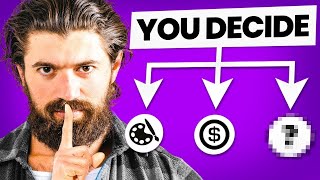
Alex Hormozi lays out three paths: the Artist who does the craft, the Entrepreneur who builds businesses as art, and the Hybrid who keeps the craft and delegates the rest. He argues product comes first, then marketing, then sales, and that exceptional product drives word-of-mouth growth.
Chapters
I really loved fitness, macro, counting, different ways to exercise, different programming stuff, and I was obsessed with it. So much so that the people that I worked with were like, dude, if you don't start a gym, I'll pay for the gym so that you stop talking about this stuff. There are three paths that every entrepreneur eventually has to take. You have the path of the pure artist, the path of the pure entrepreneur, and then a hybrid path. So the path of the artist is the person who loves doing the thing. Your art form might be plumbing. Your art form might be carpentry, coding, software, making media, and making wallets. You have something that you enjoy doing, and you do it well. The second path on the extreme is that you love business. Business is your art form, and it doesn't really matter what business you're in. I love working with different portfolio companies, whether it's solar sales, mortgage sales, physical products, software, service businesses, brick and mortar chains. Like, we have all of those in our portfolio, and I love growing them all. And that's because the art, for me is the actual business itself. The third path is a hybrid path, and each of these paths can go all the way to the max limit here. So an example is Tobias Lutka, who is the founder of Shopify. And so he loves building Shopify pages, and he loves the coding, and he loves the product. And so what he did was he found somebody else and have them build the business around him while he stayed focused on the main thing that he loved the most. The key here is that there is no right path. It's more about the path that works best for you during the season you're in. Because guess what? You can also change paths later. If you start in the artist path, you might transition to the hybrid path, or you might start in the artist path and go all the way to the entrepreneur path. When I started, I really loved fitness. I was obsessed with fitness. I had spent years I had competed in fitness, and so all I read all day, besides a little bit of personal development, was like, macro, counting, different ways to exercise, different programming stuff like exercise for ways to layer workouts, program, all that kind of stuff. And I was obsessed with it. So much so that the people that I worked with were like, dude, if you don't start a gym, I'll pay for the gym so that you stop talking about this. As soon as I actually started a gym, I realized that I enjoyed business even more than I enjoyed fitness. I started as an artist of fitness, and I became an entrepreneur. But let me play out all three Paths to their natural extremes. The artist, at its extreme, is somebody who continues to not scale an enterprise around them and continues to do the thing at extraordinarily high levels. And so this ultimately goes from a commoditized price point to a premium price point to a luxury price point. All right, so commoditized price point is like if you're a plumber, you do the same plumbing work everyone else does. Right now, if you start doing it really well, word of mouth starts to build and you can start raising your prices because you are now a premium provider. You do better work, you do it faster. People come to you because they trust your work. Right now, at the highest level, it becomes luxury. You become so advanced in plumbing, you can do it for a massive building or you can do it for luxury homes, and you make it look ornate and awesome and cool and whatever. What happens is demand continues to increase for your services or your product. And so rather than increase the number of units you sell, you just increase the price. You still make significantly more money and a lot more profit in that business model, but it still keeps you doing the core thing, which is that you like plumbing, you like making wallets, you like being a carpenter, whatever. You can have incredible artists who sell their paintings for millions of dollars a piece, and they don't have a massive organization around. Their main thing that they focus on every day is the art. Now, there's obviously elements of entrepreneurship there because they make money. The hybrid version developer who built the little website because he wanted make some sort of physical products business that he didn't like the tools that are out there, and he started making it. But then other people, because the product was so good, started asking for it. Now, he could have just continued to raise the price of the thing, but at a certain point, especially with software, it made more sense to make himself chief product officer rather than CEO, and then hired a CEO and hired an executive team to build everything else around him. Because he's a big shareholder, he has a lot of sway, but on the actual chart itself, he might be over here, not necessarily at the top, because he doesn't want that life. You still do your art every day, but then you find the people. Now, that does require skill because you need to have the perspective from which to make a judgment on who is good enough to be able to lead your company. Now, that's where having outside advisors and things like that to help you find those people who you do trust, who already have that skill, who don't have a vested interest in your business so they can give you the cleanest, purest advice. The highest level of advice is someone who has been there, done that themselves, and taken other people just like me to where I'm trying to go multiple times. A level below that is someone who has taken multiple people like me where I'm trying to go, they haven't done it themselves. The level below that is someone who's only done it themselves and helps no one else. The level below that is someone who saw someone go all the way themselves or saw multiple other people go there themselves. Below that is only seeing one person. And below that is your mama, uncle and your neighbor telling you their two cents about how you should do business. When they've never run a business and have no no right to have an opinion, you can leverage their experience to find the right people to fit inside of your business, to build the business around you. The third path is that of the entrepreneur. That's the person whose art form is the businesses. And so rather than thinking about making wallets and making more wallets, the business itself is the painting. And so they will have multiple paintings in their career. As they develop as an artist, so too does their expression of their art. And so types of businesses they build get bigger, more complex, more innate or simpler. Right? It just depends on what type of entrepreneur they are. I'll tell you right now, the amount of businesses that I've started. I started a non profit online training business, I switched to a for profit training business and then I switched to a brick and mortar gym. Then I had a chain of gyms, Then I had a gym turnaround business, I had a chiropractor agency, I had a dental agency, I had a licensing business, I've had an e commerce business that sold physical products, had a software business, software as a service, B2B. And now I have private equity firm and I'm 33. As you develop as an entrepreneur, your art will change and it will be continually a changing expression of who you are and it will evolve. So the biggest question is, which of the three are you? If you love the actual doing of the business, the thing you do, the product or service you deliver that is your art, then I would say start with the path of the artist. And if you're good, because if you really do love it, you should be able to beat other people who don't love it. And so you should naturally, through word of mouth, be able to get more demand than you have supply of time. At that point you'll have to start making the decision am I going to go hybrid or are I going to go all the way entrepreneur? If you're starting out right now and you're watching these videos and you just love entrepreneurship in general and you don't really care what you sell, you just want to make money, then you probably are more the entrepreneur path. You just want to hustle. You want to figure out needs in the marketplace, figure out stuff that people are buying, connect the two dots, build the organization around it, put an operator in charge, and then let it run and make cash flow. That's the entrepreneur path. The middle path, the hybrid path, is usually someone who starts as an artist and then becomes that because they still want to build, build the big enterprise, but they don't want to sacrifice the thing that love the most, which is actually building the product. This little product thing, as a side note, could also be marketing, it could also be finance. If you like a certain component of the business, you can own that component of the business and have someone build it around you. You could just be the guy who loves fundraising and you just love raising funds. And that's how you build your business and you get everybody else around you to run it. You will still leave your thumbprint on different aspects and be more heavily involved in different departments, the ones that you love the most. But at this point, you do it by choice rather than do it by obligation. Do I love the thing or do I love the business of doing the thing and then walking that path? And the best news is you can always change your mind later. The most valuable skill that you can have in order is product first, then marketing, then sales. And so right now, if you know how to sell, it's because you don't know how to market. You know how to build product. If you know how to market, then you can sell lots of stuff, but you're only going to sell it once because the product's usually not that good. If you know how to sell product, you'll get more promotion from your customers than anything else. And that is ultimately what scales the enterprise. Marketing can scale anything to a point. And then what happens is the marginal cost of getting the next customer continues to get up and up. And if you don't get word of mouth referrals from customers who use your product, then eventually it becomes untenable and your company will plateau. And so the key to building a very, very big thing that lasts for a very long time is having exceptional product. And I get that you're like, sure, but how do I make money? And you know what? If you just sell shit, you can make money. If you market shit well, you can make even more money. And what happens for most entrepreneurs is they actually go in that direction. They just learn how to sell shit, because that's the easiest skill to learn. You can learn it in a couple weeks. Learn how to market takes a little longer. You learn how to write copy. It's really just translating the persuasion of sales into different types of media and selling to many people at once. And so the highest leverage thing you can do is make an exceptional product that other people want to promote for you. My first real big experience with this was the book. So $100 million offers is a book. It's 99 cents you can get on Amazon, like, right now. It sells 25,000 copies a month with no paid ads. The reason for that, and a lot of people who knew me from high school or knew me from college are like, dude, it's so crazy. Some guy I know from work is like, dude, you got to read this book. And it was your book. You have more people who send you business than people who leave just based on how good your product is. That continues to compound to the end of time.










