A Magic Ladder Worth $10,000
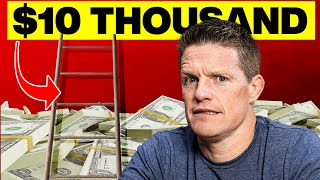
Podcast episode (Marketing Secrets, host Russell Brunson) discussing Napoleon Hill’s early booklet The Magic Ladder of Success (published 1921). Brunson summarizes and interprets the 16 rungs of Hill’s ladder—from "definite aim" through "the Golden Rule"—and frames them as practical principles for business and personal success. The episode includes personal anecdotes (Brunson’s $10,000 purchase of a rare copy), examples, and calls-to-action linking listeners to a downloadable PDF and related resources.
Chapters
Somebody asked me today, did you really spend $10,000 to buy that book? The answer is yes. It is rare. It's the only copy I've ever seen. There are 34 pages, which means that's $294 per page. So why would I spend that? Because inside of here is some gold I needed to bring to you. Hey, this is Russell Brunson. Welcome to the Marketing Secrets podcast. Today I'm going to be talking about the Magic Ladder of Success. This is a book that it was written by Napoleon Hill in 1921. So I bring it today to you guys. On this podcast episode, we're going to go over the 16 rungs of the Magic ladder success Napoleon Hill wrote about. I think you guys can get a lot of value from this. Even if you just master one or two or three of these rungs, it'll help you get closer to the goals that you are trying to achieve, whether it be in business, sports, relationships, whatever it is you're trying to be successful in. I hope this episode is going to help you. So in this episode, we're going deep into the magic ladder of success. Walk through all the principles and. And I want you to look at what things you're missing, what things you need to tweak and change so you can actually get the goal that you are looking for. This episode today is actually brought to you by one of my new companies I'm about to launch called Secrets of Success. This is going to be my personal development mindset. All sorts of cool things we're talking about in that company, that business over here. So if you enjoy this stuff, I want to make sure you go and subscribe. So right now, the site's not live, but there is a page, if you go to secretsofsuccess.com magicladder you actually download this PDF right here, which is on the PDF, what we're talking about during today's episode. So they're the sponsor. Go get on the list and that way you get the PDF and a whole bunch of other cool things on top of that. Please. If you enjoyed this episode, rate a review wherever you're watching. If you're on YouTube, drop a comment down below. Let us know if you're on the podcast, Please go to the podcast, drop some comments. I want to hear where they are. And if you are somewhere else, maybe you're on your phone and you're listening to this right now, take a screenshot of the episode and go and post it on socials and tag me on it. Let me Know your favorite thing about this episode, what you learned, what you wish I would have talked about. And you can also go to marketingsecrets.com scroll down on that page. There's a spot where you can submit your questions. Those come directly to me. I can look at those and potentially cover them in a future episode. So with that said, let's jump right in into this episode of the podcast. You're listening to Marketing Secrets with your host, Russell Brunson. All right, everyone, this is Russell, and I'm excited for today's podcast episode. We were talking about a book written by Napoleon Hill that I actually bought on eBay for $10,000. And you'd be like, Russell, this book is like 30 pages. Why would you spend $10,000 for it? And it's because, first off, Napoleon Hill is my favorite author. Second off, I am, like, literally scouring the country trying to find all the first edition everything from Napoleon Hill. And this is a copy of a booklet that I found that I hadn't seen before. I actually had owned this copy of the book the Magic Ladder Success, which is really fat and big and was published, I think, in 1930. And this one was published like a decade earlier. And this is before Think and Grow Rich, before Laws of Success, before all that stuff. It was when he was first kind of developing these thoughts and this methodology and his philosophy of success. And it's an early version of that. Today I actually read this entire book. I have a whole bunch of notes and things. We're gonna go over it. In fact, I doodled out while I was reading the book, the whole Magic Ladder Success. And I had one of our designers design one for you guys. And if you want this at the end, give you guys a link where you can go and download a PDF version this. You can print it out. Basically, success at the top rung of the ladder and these all things you got to do in order to be able to be successful. And if you've read lots of success or thinking rich other ones, you notice that these steps aren't the exact same steps in his other books. And it's because this is, again, this was early on his career. He was still developing these thoughts, his methodologies, like what he wanted to teach on. And so this is one of the earliest versions, which was kind of fun. So that's what we're talking about today is the Magic Ladder Success, how you guys have success in your life, in your business, whatever you're trying to do, by following the same principles Napoleon Hill taught. Okay, so to begin this, we're going to start on the bottom rung of the magic ladder. Success. The very first step is the definite aim. You have to have a definite aim. Something you are searching for, something you're looking for, something you're trying to move towards. He said in here, in this book, he said that after serving, I think 17,000 people, he said, I found that 5% of people have an actual aim. Other 95% are just followers. So only 5% of people are leaders who actually have an aim. And like, I'm going this direction, I'm trying to accomplish this thing. And it could be anything. Could be in sports, could be in business, could be in your family life, could be in a relationship, but an actual aim of this is the thing I'm going for. And now if you have a definite aim, then a definite plan to actually achieve that aim, right, you can't say, I want to lose £20 and that's. That's my definite aim. That's it. No, it's like you have to have. My definite aim is I want to lose 20 pounds. And then the definite plan to actually get that is okay, I'm do it by following this diet plan, this person, this, you know, whatever that thing might be. So it's definite aim and then definite plan. Those are the two things that are successful for the first rung of the magic ladder. Success. Okay, after you have a definite aim, a different plan, then it takes you to the next step, which is self confidence. So not only do you have to have the aim and the plan, you have to actually have belief that you can do it. You have a self confidence. I think I can actually do this. Right. It's interesting. I always tell people that my head job as the head cheerleader here at Clickfunnels is just to get you guys to believe that it's actually successful because it's not hard. It's been proven over and over and over. I think we're two or three days away from passing 2,000 people the one or two comma club award. The only difference between you and them if you haven't hit it yet is because you lack self confidence. Like, I believe they could do it, but I don't know if I could do that. Right? So I'm their biggest cheerleader for you. Like, I know you can do it. I have self confidence you can do it. But that's the second rung of the ladder is self confidence. Do you actually think you can do it? Right? So after you've got the definite aim Definite plan. Then you go to self confidence. The third rung of the ladder is initiative. Are you actually going to go and do the thing right? How many guys have had ideas, right, I'm going to do this thing. I have a plan to go and do something. But then you don't actually do it. I want to be a state champ. When I was wrestling in high school, tons of people, I want to be a state champ. I want to be a state champ. They didn't have the initiative to actually go and do the actual work. I want to make a million dollars, I want to lose weight, I want to do whatever the thing is. Do you actually have the initiative to do the things you need to do to actually be successful? So we've definitely a different plan. We got self confidence, we can actually do it. And then next is, do we have initiative? Will we actually go out there and start taking the steps necessary to be successful? Run number four is imagination. Not only to have the initiative to go do the steps. When you do, they may have imagination, which be creative, but to figure out new ways to solve the problems. In this book, he starts sharing a whole bunch of examples. Like Edison, he had initiative. He wanted to figure out to create the light. But then he had to use imagination. Like, well, how's this going to work? I got to think through it, right? Because there wasn't a plan yet. And here's how to build light bulb. He had to add imagination. Talked about Gutenberg with the printing press. He had initiative, but he had imagination. Like, how are we going to do this, right? Wright Brothers, over the story after story after story, they says the two keys to having initiative, imagination, those two things together unlock the next level, right? He says these two qualities are the main reasons why the 95% have no definite aim in life. Like the initiative and imagination is the next thing that unlocks that leadership. Run number five is action. Okay? You hear this so much in personal development. You hear this in the business world. Like, you gotta take action. You take massive action and go there and actually do the thing right? It's similar to initiation. Initiative gets you started. Action is like the momentum that keeps it happening, right? Taking action on the ideas, like despite fear and like all the problems that come up, when we're trying to do anything, it's like blasting through that and actually doing the action. We need. One of the really cool stories. And Point Hill shared here inside the book, talking about action, which I thought was so powerful. He said, a few years ago, I went out to Chicago Public Parks and Interviewed seven of the so called down and outs fellows who lie around asleep with newspapers over their faces while work is plentiful and wages are high. I wanted to catch a glimpse of the particular alibi Levy called an alibi. I knew they had what they believed to be a reason for being without work. Each of them said substantially this. I am here because the world would not give me a chance, okay? So think of it. Because the world did not give me a chance. The world ever give any person a chance other than that which they went out and created by the use of their imagination. Self confidence, initiative and those other qualities mentioned in the latter, we are not to argue the point that if there is no action, all education in the world, all the knowledge that ever came from the best colleges, universities on the earth, all the good intentions, plus all the other qualities mentioned in this magic ladder would not be of any value whatsoever. Okay? And so action is the key that getting action after you have all these things. So our job is like as you're learning and consuming and you're listening to the podcast, you're studying, you're reading books, you're watching this video or listening to the audio. The key is not just the accumulation of knowledge, it's the accumulation and turning that into actual action. And that's how you have success in any aspect of your life. Okay, let's continue to move up the rungs of ladder number six. Now is enthusiasm, okay? Not just saying, oh, I'm gonna have to go do this thing. We joke some of my friends, we tease them and call them Eeyore because it's like the donkey. Okay, I guess I'm going to do it. Like those people rarely have success in life. People have success like, oh, this is going to be hard, okay, but I have enthusiasm, I'm excited, I'm going to go do the thing and be successful. So you take action, but not action with like, oh, like dread or remorse or you know, tiredness or whatever. It's doing it with enthusiasm. I do it, okay? If I'm going to go accomplish this definite aim, my chief purpose, the thing I'm going after, I'm going to do it with the energy and excitement and I'm gonna go attack it, right? So rung number six is enthusiasm. Rung number seven now is self control. And he talks about like the importance in here of being able to control ourselves or control our anger, control our frustrations, control those things. Because as you are going on this path and moving towards being successful, there's gonna be things come up Right. And if you can't have self control, to be able to stay focused, be able to keep doing the thing you're supposed to be doing, to continue to take action, do not get frustrated, mad or angry, all those kinds of things, if you can have that, self control can help you be more successful. One of the quotes I love, he said in here, no person has ever became a great leader of other men until he first learned how to lead himself through self control. Self mastery is the first stepping stone to real achievement. Okay, so the question for you is, like, do you have self mastery? We're in this constant battle in our mind. Like, like we want to go do something, but our mind's like, ah, but it's easier to go and watch Netflix. I want to go run and lose weight. Oh, but it's easier to go to Krispy Kreme and get donuts, right? Like, there's this mental battle that we're going through every single day, every single one of us. And learning how to control our mind is one of the big keys to success. Okay, we're going to continue to move up the magic ladder. Success. Rung number eight. He says it in more words than I'm going to say, so I'll say it his way first. He said, rung number eight is the habit of performing more work and better work than you are paid to perform. I like to call this principle, the principle of over delivering. Whenever you are in any circumstance or situation, you always want to do more than you were paid for. He talks a lot about this and think and grow Rich talks about the law of success. Like, this is one of the principles. He goes deep all the time. It's just like, if you want to be successful, I've always do more than you are paid for. Always over deliver. If someone pays you, you know, 50 bucks an hour to do something, give them $100 an hour worth of effort. And if you do that over time, people continue to look at your value and it'll increase. Always over deliver in all aspects of your life. If you over deliver in your relationships, you're gonna have good relationships. If you over deliver in your marriage, you have a great marriage. You over deliver with your kids, you have a great relationship with your kids. Over delivering your job, sports, your athletics, your business, whatever it is like serving your customers. If you're over delivering every single aspect, and that's how you're gonna be able to help guarantee your success. So that is rung number eight. Rung number nine is an attractive personality. Oh, this sounds Interesting. If you've read any of my books, all3.com secrets, expert secrets and traffic secrets, I talk about this concept called the attractive character, right? The attractive character is all about like, who are you putting out there in the world that's going to attract the right people to you? And in this book he talks about an attractive personality. He said the same thing. So people aren't going to want to work with you if you're like always depressed or sad or not putting those things out there. If you want to attract people into your life to help you to reach your goals, you have to have an attractive personality. Doesn't mean to be good looking, that doesn't matter. But like an attractive personality where you're, you're nice to talk to, you're pleasant, you're not angry at people all the time, like people have conversations with you. A good book that isn't this book, obviously, but another one to go deeper onto if you want to go deeper on that is Dale Carnegie's how to Win Friends and Influence People. Like, how do you do that? Like, if you understand those principles of how you present yourself, it's how you. And like Dale Carnegie said, it's how you win friends and influence people, which is a big step in the ladder of success. Rung number 10, accurate thought. This is one that most of the world struggles with. Every time they hear any knowledge or information, they think it's the truth. And sometimes it is, but oftentimes it's not, especially today. Think about Napoleon Hill wrote this back way before the Internet, way before computers, back when they were just typewriters, right before we were having all the social media where everyone and their dog has an opinion, everyone's telling you what they think, and there's, you know, anybody can publish anything. It's insane. One of the biggest things I've learned in my life, that when I hear something, I'm not just always gonna be like, oh, this is true. I'm gonna take it and think through it, I'm gonna test it out and if it works, right, then, okay, this is a good thing. In the Bible, it talks about how this is the principle of the seed, right? Like you have a seed. Like, is this a good seed or bad seed? I don't know. One way to know is to plant the seed and see if it grows, if it grows, like, oh, this is a good seed. Same thing is true with information coming to you. Like, don't just take everything as this is the truth. Until you've planted it, you've watered it, you've tested it, you've seen what's happened. If it grows up in something good, it's like, okay, that is true. Therefore, I'm gonna continue to use that for the rest of my life. All right, rung number 11. Concentration. Are you able to concentrate long enough to actually get the project or the thing done? Okay, can you focus enough to, like, despite all the distractions? And back again. This is, I keep quoting what year? But let me make sure I had the right year. The year that this book was published. 1921. So 1921, how hard was it to have concentration? Right? Probably hard. Like they had telephones. I'm assuming they had. I don't think they had TVs in their houses. Like, and he was focused on concentration then. Like, they didn't have, you know, texting and Twitter and Facebook and Instagram and YouTube and Skype and Slack and Zoom and you know, all like the chaos, right? And he was concerned about concentration back then. Today it's even worse. Like, how in the world do you get concentration so you actually focus and get things done? Right now I'm in a room with a whole bunch of walls and a bunch of books and nothing else. There's a computer, but even I'm on the computer, I try to turn off the Internet so I can focus and actually get things done. Like, what is it you're doing to be able to make sure you can concentrate on the goal at hand so you can actually be successful? Because there are a million things that are fighting for your attention every single second of every single day. If you're not careful and you give into those things, you're never going to get to the finish line of what you're trying to accomplish. So concentration is key. After concentration, next rung up the ladder is persistency. And persistency is going to lead into the next one. Well, persistency, though is like, continue to try and to try and to try. Okay? It's not a one time thing. Success is not something that most people stumble upon immediately, right? If you were to watch a movie and you watch this hero's journey and the hero, when he tried something, he's had success, what would you think about that? I won't let you down, father. Good luck, son. This movie's really boring. He tried. And the very first time he tried, it was successful, right? Like, persistency is what helps you to grow. It helps a character in a movie to grow and develop and become something amazing. And same thing's true for you, right? Your goal of getting Success is not to make this an easy path to the end. It's for you to grow and to become something different, become something better. True success and true happiness and fulfillment in success comes from, like, getting through the trials and like, and struggling and persisting and growing and becoming the person you're supposed to be. So rung number 12 is persistency, which leads us to rung number 13, which is failure. One thing he said here is interesting. He said that this brings us to the lucky 13th rung of the ladder, which is failures. Do not stumble on this rung. It is the most interesting rung of all because it deals with the facts you must face in life, whether you wish to do so or not, and shows you as clearly as you might see the sun on a clear day how you can turn every failure into an asset, how you carve every failure into a foundation stone upon which your house of success will stand forever. He also says that failure is the only subject on the whole ladder which might be called negative. We shall show you how and why. It is one of the most important of life's experiences, persistency and failure. These two runs, they go hand in hand. Like, we are persist and we're going to fail. We are persistent, we're going to fail. And like, that process of failing is how we get things closer and closer and closer until eventually we're successful. I think people have been athletes, a lot of times, have more success in most aspects of life because they've had to fail over and over and over again, right? Like, as a wrestler, I stepped on the mat hundreds of times and I didn't win every match. I lost a lot of matches, right? But I went out there, I lost a match, I came back, we looked at the film, we figured out, what did I learn? Like, how do I fail? What do I need to do differently? We persisted, we went and figured out a new plan. We came back and we tried again. And eventually, through that process that refiners fire, I became so good that I was able to beat most people. If you haven't had a chance to fail in the past, like, it's. One of the keys is understanding. Like, it's okay. Just because you failed doesn't mean you're a failure. But the process, the plan that you had tried before failed, right? Okay, cool. That's okay. Come back and retweet the plan. Like, refigured out in between persistence and failure, persistence and failure over time is how you actually find success. Okay, so that is rung number 13 is failures. Now, as you move to run number 14. This is tolerance and sympathy. This is starting to look outward not just for yourself. And you should have tolerance and sympathy for your own failures and mistakes, but also for the people that are around you. And one interesting thing about the Magic ladder, success, you'll notice is that Pulling Hill, one of his core principles in Law of Success and Think and grow Rich is the power of a mastermind. He doesn't talk about a mastermind here. He hadn't developed that principle, that concept yet. But this is, I believe, part of it, talking about tolerance and sympathy, like, towards the people you're around, right? Like, if you're working towards a goal, chances are it's not just you, there's other people on this journey with you. And like, how do you have tolerance and sympathy for them and the struggles and frustrations they're having as well? Right. By doing that helps you get more people to come, want to help you along your journey as well. Number 15 now is work. Actually going out there and doing the work necessary to be successful. You'll notice that, like, something every four or five rungs are about, like, making progress, right? There's. There's action, initiative, work, like, it's doing the actual thing. But I think it's important because most people think that, like, if I don't, like, they're hoping that they're just going to think and grow rich, right? But it's thinking grow rich. But in the process, like, your. Your thoughts have to become actions. And this is what we're talking about. Step number 15 is work. Like going out there again and doing the work to be successful. If you notice Napoleon Hill's writings, like, he. He always likens things back to nature, like, how are things happening naturally in nature? And then how does that relate back to us? And in this principle he talks about again, he says, all nature's laws have decreed that nothing may live which is not used. The arm which is tied to one's arm and removed from active use will wither up and perish away. So it is with any other part of the physical body. Disuse brings decay and death. Likewise, the human mind, with all of its qualities, will wither up and decay unless it is used. Okay, so we got to work. We got to keep putting these motions in process to make our muscles grow, our mind grow, whatever it is that we're trying to work towards. And then this brings us to rung number 16, the top, the last one before success. And this is the Golden Rule. And the Golden Rule is interesting because Napoleon Hill, I think back in 1912, back in the early years, like, people talked more about this, right? The Golden Rule, doing to others as they would have. As you would have them do unto you, right? This is a biblical principle. It's a biblical statement. We don't talk about it nowadays, but it was. It's such a heavy thing in Napoleon Hill's mind. Like, he actually launched a magazine called Hill's Golden Rule. When I was at the Napoleon Hill foundation, he had a golden ruler. His actual. I got a hold of, got pictures of me holding. Like, this is the golden ruler the Napoleon Hill carried around with him everywhere. Know to remember this principle of, like, Hill's Golden Rule and the Golden Rule, like, it's such a key thing. Like, do unto others, you'd have them do unto you. And so it's the last step on the ladder here to success is the Golden Rule. And I can't tell you all the details, but the Outwitting the Devil book, the part two of that book, I won't tell you the title yet or anything. Just kind of want to ruin the surprise when you get to find out about it. But in this book, it talks about Hitler and has Hitler's one of the most successful people of all time. He says, like, he followed all the laws of success, success, except for two. And I won't tell you all of them, but one of them was a golden rule. And so that's why Hitler was successful in doing what he did, but ultimately not successful in life because he missed one of the rungs, the ladder. And one of them was the golden rule. Doing to others as you have them doing to you. When you start looking at this as a filter through all the choices and the actions you're making in life, it keeps you on the straight, narrow path of success and harmony and mental, like, not being stressed and like all those things right? When you start looking at through that lens of the golden rule. So this book, the Magical Hour Success, you guys, I doodled it out here as I was going, like, I wanted to map it all out. And I decided to give you guys something really cool is I had my designers design this PDF you can take. And you print out and have it on your wall, put it in your books, in your notes, whatever it is, is you're watching this podcast interview, you can take notes along the whole thing if you want. And I will put this up for free for you guys. You can go and download it at secrets of success.com magicladder M A G I C L A D D E R We'll make sure that the PDF is there for this right there. Now you can download it and have it with you as you guys are taking notes or thinking through these principles in your life. All right, I hope you enjoyed this episode of podcast talking about Napoleon Hill's magic ladder of success. Again, so many cool principles, so many great things. I hope you guys got a ton of value from this. If you did, please share this video or this podcast episode with somebody who you love and you care about, especially someone who's trying to have more success in life. It could be in business, could be in sports, athletics, could be in a relationship. Whatever it is. These principles from Napoleon Hill are timeless and they're things that can help serve you and serve them. So please share this with anybody you can. On top of that, if you have any questions you want me to answer about this book or about Napoleon Hill, about any of the cool things we're talking about during this episode, again, if you go to marketingsecrets.com, there's a, there's a link there where you can submit your questions. I get those links directly to me and I'll try to answer them on a future episode here on the channel or on the podcast. With that said, you guys, thank you so much for listening. I appreciate you all go stay Napoleon Hill. He is the man. So many good principles and so many things I've learned from him. We continue to bring you back more cool Napoleon Hill stuff in the future. So that's it. Thank you so much. Appreciate you listening in and we'll see you guys on the next episode.










