How Disney Brainwashes You To Spend $950k
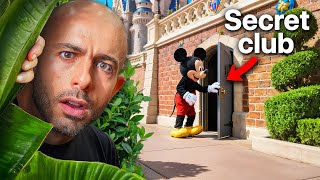
Sabri Subi breaks down how Disney turns Disneyland into a $950k lifetime value machine through scarcity tactics like Club 33, time-monetization via Lightning Lane, and sensory design that keeps you spending. The park tests characters for merchandising, uses forced perspective to make you stay longer, and scents the air to trigger purchases.
Questions this video answers
$22.7 billion per year
$17 billion per year
$34 billion per year
$91 billion per year
4.4 million churros per year at around $6 each (claimed; host estimates $25–30 million revenue from churros)
Chapters
This is the Disney Money machine. And it shows every single way that the company makes money. Their streaming service that brings in $22.7 billion per year. Sports bringing in $17 billion per year. And each one of these mini businesses feeds the other like a well oiled machine. But nothing else on this map measures up to the disgusting amount of money that they make from their steam parts. A whopping $34 billion per year from you. Visiting and spending. Spending every last dime that you have to experience the happiest place on earth. But here's the thing. This isn't a theme park. It is a $91 billion per year psychological lab. Their master plan has remained unchanged since Walt Disney imagined it back in 1957. And I'll show you how you can steal their strategies to explode the sales of any business. This place is massive.
I did not realize it was this big.
I've invited Siobhan, the biggest Disney fanatic in the office to come and help uncover these tactics. But first we to go incognito and acquire some Disney drip. This would give me some shade. Nah, this, this is definitely not a vibe. Is this ones we want? All right. We'll lock them in. The moment they hear that it's my first time in Disneyland, they, they live up to the hype. First visit. So I'll put this bad boy on, see if I can get any special treatment. I'm going to be low key so I can just kind of like flash it. Are you a member? And I'll be like, excuse me. Excuse me.
What do you think of my ears? You haven't said anything.
Oh, you look beautiful. Seriously, what about me? Am I in character?
Yeah.
Is your boy not unfair? A disguise. I'm coming off as a die hard Disney fan. Surely no one's going to spot the Internet daddy with these on. So there are three core pillars that makes the Disney money machine work. And the first one is their content Flywheel. They test certain characters in their theme parks and see how popular they are. How many people come up and want to take photos with them. And then based on that popularity, then they roll them into merchandising. Because it's one thing to see the popularity out on the grounds of their theme park, but it's a different thing to see who's actually going to pay money for these characters. Then move them into actually producing a cartoon or a movie about them. And this is genius because it allows them to do small scale tests that don't have a lot of risk in them. This is $24 for this? That is ridiculous. So the way that you can specifically apply this to your business is you want to start producing long form content, literally just recording stuff on your iPhone. Then you want to use that as the raw material and you want to find out what bangs organically, what gets traction, what gets viral. Then what you want to do is you want to take that pie of long form content. You want to get people on upwork or fiverr that clip up that long form piece of content. You're taking all of the raw materials that you're already posting organically and that you're able to get more distribution on it. And then what you want to do is exactly what Disney does. You want to take the best performing pieces of content organically and you want to run those as paid ads. We take that proven piece of content and we put CTAs throughout it. Right. A call to action that really goes into the pain points that your market has and that push people in to your main offer. You're taking the sawdust from your organic content and you're using that as fuel for your paid engine. And then that acts like a flywheel and you're bringing in more leads and more customers than you even know what to do with. We're heading deep inside Disneyland onto our next side mission. Tracking down and gaining access to Club 33, Disney's elusive $100,000 club that's hidden somewhere in the park. Benefits of Club 33 membership members enjoy special access and access to exceptional service at Club 33 locations, blending refined elegance and Disney magic. Let's go find out. Let's see if we can find it doesn't tell us where.
It doesn't tell us where it is. Yeah.
All right, we're going to ask somebody. Find the most Disney looking person that you can.
Hi, I'm looking for where Club 33 is.
It's going to be Frontierland.
Yeah.
You hit the rivers of America, follow to your left past the Pirates of the Caribbean on the left hand side. You're going to walk into the little hallway.
Yeah. Is it a secret door?
Right in the open, but good luck.
Have you been in?
Never. You don't even get that privilege?
No.
Good luck.
All right, thanks. Thank you.
We've got our first lead on Disney's elite club. But before we investigate, we need to catch the parade so Siobhan can meet her favorite Disney character of all time. The 1:30 parade. This is like peak pandemonium. This is like going to be you in your absolute prime. Who's Your most favorite Disney character.
I mean, I'm going to have to go with Ariel.
Ariel?
Yeah.
It has to be number one.
Yeah.
Is she in the parade?
She better be.
We need to lock down a good view in the shade because otherwise your boy's gonna get burnt. I'm not just some random bald guy wearing Disney ears. I'm Sabri Subi. I'm an investor on Shark Tank. I've generated my clients, over $7.8 billion in sales. And I do these breakdowns on the most powerful brands in the world, like Apple, Rolex, and Hermes. So hit the subscribe button now so you don't miss the next one. Next up is one of their main events, the famous Disney parade. And this is a para social extraction, because characters aren't just mascots. They are a reference to nostalgia. Deep emotional bond that people have with these stories. I don't even know who that guy is.
That's Goofy. And that's Goofy's son.
Oh, okay.
My mom's hammering.
Man, that. That teddy bear in there. That thing is gonna pass out. It's so hot. Can you imagine being in that thing? And it whips people up into an emotional frenzy when it bypasses all the logic that's going on in their mind. And it allows people to spend 10 times more. It removes all price elasticity. All of a sudden you're making an emotional decision and not a logical one. Take for instance, a Disney breakfast adventure. This thing runs you $142 per person. So for a family of four, this thing's going to run you $568. This is all before taxes and a tip. And these characters are all strategically placed at certain points all throughout the park. This is not innocent. This is by design. It's how they are able to charge such ridiculous sums of money for such ordinary things. Oh, I can see the genie.
There's the mad Hannah.
Oh, my God. Pinocchio looks pretty cool.
Aladdin and Jasmine.
Jasmine.
What the hell?
Where's no Ariel? Oh, you've been ripped off. She wants a refund. Her number one favorite Disney character is nowhere to be seen in the parade.
I know why. It's because I'm here.
Oh, no. Now, the way that you can apply something similar to your business is to think about what are the emotional highs in the customer journey. And you want to make sure that you're asking for your next ask at those times. When is someone going to be in the heat of their buying? When are they going to experience an emotional high? And how can you architect that in your business and then make those next asks when you've got somebody primed to say yes. Disney puts on a magical facade with their characters, but underneath it all is a dark reality that no one speaks about. To back up some of these claims that I am making, we actually ran an ad on Craigslist to find ex Disney employees to actually validate whether or not this stuff is true. Let's see, first of all, the person shows up and what they can validate. Hello. Hi.
How are you doing?
I'm good, how are you?
I'm good.
Just want to say that your name or any of your details is not going to be revealed. We're going to distort your voice and we're going to change your name and blow your face.
Okay.
I've heard that employees are trained to never take off their costumes, even if, like, they're going to faint because of heat.
That's true. We don't call it costumes, we call it outfits. We have to be always in character.
Yes, it is true. And Sometimes there is 45 foot walls of fire and no matter how hot it got, you couldn't take off your costum.
The illusion of the happiest place on earth was slowly starting to unravel and I was hungry to uncover more. Back in the park, I stay focused on the mission at hand and hunt down a solid lead on Club 33. Excuse me, where is Club 33? I don't know what door it is. I do know that it's in the area by where Blue Bayou's. It's like a sacred door. Yeah, I don't know which door. I know they kind of move it around sometimes. Okay, how did I show this? Will I be able to get in for first visit? I don't know about that one. Oh, come on. He's told me about a secret door, man. He's like, I don't know which door it is, but there is a door there. And I was like, is it a secret door? And he's like, yeah, it is a secret door. The Club 33 plot is starting to thicken, but Siobhan was crushed after not finding Ariel in the parade. So we had to track down some Ariel merch. Alrighty, we are out the front of the mega nostalgic sales funnel. Let's head on in and see the Upsells live in the flesh. Next up is Disney's Main street money funnel. Right on Main street is the gift shop of all gift shops. This thing is a psychological minefield of persuasion. You know I need some Disney drip. Like I come all the way out here. I need to get official, man. Look, Crocs, these are official up in here. There's a fire. I told you, Air act. This is the business we need to be in together, bro. We love you, bro. Holy smokes. It's getting crazier as we get in here. Disney's retail and wholesale merchandise is a monster part of their business. And they are not going to let this opportunity of the thousands of people that enter their parks every day go astray. They're going to utilize all of that traffic because as we say in business, the hardest. Yes. To get is always the first one. If someone's already come to Disneyland, they spent thousands of dollars to bring their family there. They're going to want to take home some souvenirs. And they funnel all of that traffic from as soon as you walk in and you go down Main street, their gift shop is there. They know they're definitely going to be hitting on some heartstrings like you as a kid, you walking in here. It is a physical impossibility to leave this place without one of these toys and giving them even more money. What I noticed is that the higher the price point, the price price was no longer on the items. You'll notice no currency symbol here, just the number. That has been scientifically proven that if you remove the currency, you don't have an association that you're spending something. Right. But then if we move over here, we've got the high ticket stuff. There's no prices. They didn't have any problem putting when it's $1, $10 or $20. But as soon as the toys or the merchandise went up to a hundred, two hundred, three hundred dollars, magically the prices disappeared. So then you had to engage with a salesperson and then they would further validate the value of this pie, that it's limited. This is a strategy that they have lifted off luxury brands.
Disney's always trying to push you towards products. Whenever you get off a ride, sometimes you're going straight into a gift shop. Sometimes you see products there that are in the thousands of dollars. That is like an angle that they use to get the other products to seem cheaper. So, yeah.
Is there still no Ariel or. They discontinued it. They phased her out. We haven't even seen anything of her.
I found a pen.
Oh, there she is.
She is. She looks a bit sad.
Oh, my God. Finally, finally. They not only get all of the different ages right, they're targeting infants, they're targeting from the blankets and the plush toys. There is a very slick and orchestrated sales funnels all the way from just $1 little keychains up to them taking a deposit for a $70,000 wedding that you can hold inside their park. Do people get married in here today? Oh, yes. Really? Yeah.
It's expensive, but yes.
Like how much is it? I think over $60,000. $60,000 to get married. And where do they do it? In front of the castle before the park opens. In front of the castle.
Then they're brought out and cherished.
When I used to open at 4 in the morning, I would catch it every once in a while. Four in the morning people get married? Yeah.
What?
Because they have to be here before the park opens.
And they even buy their bridal wear here. $450 for the headband. Check it out. That's wild. The way that you can apply this strategy directly to your business is to always have a second offer. Once somebody says yes to whatever it is that you're trying to sell them, make sure for the love of all things holy and all the Internet money that you have a next offer for them. Don't think, hey, I just sold them, I can't offer them anything else. No, no, no. Make sure that you have consequential upsells after your first offer. Do you know what Disney character this is?
I don't actually.
I've seen this guy stick Man Grove or something. Oh my God. Disney magic Man. How does this work? Will this get me into Club 33?
I don't think so.
Are you sure?
Are you Catholic?
Remember? No, I'm not. But I am. Look at this. You look like a lady that could get me in.
I have to work. No, I have to work over there.
I have a first time Disney member. First time in the park. Is that you're gonna hook me up with anything? Unfortunately not, my friend. Oh, no. The credit card gets dinged again. This thing's getting a workout over here. 1650, baby. Which brings us to the second pillar, the cash cow. And that cash cow is the nucleus. It is their theme parks that literally print a disgusting amount of money. Because Disney runs some of their divisions at break even and even at a loss. For instance, Disney streaming services like Disney plus, Hulu or ESPN plus, these things literally lost billions of dollars per year between 2019 and 2022. And the only way that they're able to do this is by subsidizing these losses from the disgusting amount of money that their theme parks print. Now, you might be thinking that this doesn't make sense, but it is actually a genius strategy. So here is how you can apply it for your business. The biggest businesses that I see, they are able to run a loss leader, and that is an offer that you go out to your marketplace with, and you don't need to make any money off it. That offer is completely designed for customer acquisition. And when you have a loss leader offer, it allows you to go out to the marketplace and literally steal all the customers because you have an offer that people usually engineer in a way to make profit for them. But you're saying, hey, I don't need to make profit on this, so I can make the offer so much more enticing. That means that you have the highest converting offer, which gives you all the customers, which means you win. Back on the hunt for Disney's elusive 100K Club. And by this point, I was starving and felt like Disney was playing mind games with me. Oh, can you all smell that? That is legit. There's a smell of Tyser somewhere around here. I can smell it. It's way too strong. Where are the churros? Disneyland pushes 4.4 million churros per year at around six bucks a pop. This equates to 25 to 30 million dollars in churros alone. And they do this through sensory marketing, or as Disney likes to call it, their smell itizer, where they have these vents all around the park that literally pump out the scent of churros. Whatever this scent is that they are pumping out, there's got to be something somewhere, because it feels like the scent is getting stronger and stronger. Oh, that smells so good. I can definitely that. Yeah, that's making me hungry. Surely it's strategic on where it's located. Like, as soon as you get in here, and there's signs everywhere for, like, fresh baked goods and these old school Coca Cola signs. Like, I'm hungry. And I think strategically as well, the park only opens from 11am right, just before lunchtime. So what we'll do is we'll bring people in, we'll pump the scent in here, and then we'll have all the food places as the entrance. Boom. First little bit of money, nice little order bump on the ticket sales. Straight as we get in, and then we're satiated. We're ready to go. We're fueled up and ready to spend. Is it true that Disney pumps different scents throughout the park to brainwash people to buy?
Absolutely, yeah. So if you walk around Disney, you can see where they're actually pumping out random Scents, whether that's like the scent of a churro or pretzels and chips, things like that.
Some of the characters have like a little spray, so you put it in your gloves. They have like a little hole in your left or your right hand. And when you, when you say hi or something like that, just click it.
And why do they do that?
You have to make the people buy the things, buy food, or feel like they are always in the attraction.
And do they like tell you they're doing that stuff or is that just something that you find out for other staff members?
It's definitely not something that they tell you. Even to their employees. They kind of try to brainwash you that things are just how they are. It's kind of weird, actually. So, yeah, you have to kind of figure that stuff out.
One, two, one.
Water is $11.
Credit card's getting a workout to them.
Yeah, that happens here.
It does, right?
Very much.
And the way that you can apply this specifically for your business is say, for instance, in my office I have a custom scent that I put in to what would Disney would call a smellitizer that is both at the entrance and is everywhere around my office. You want to have a place that smells good that not only do your staff want to come to, but also when you have a prospect coming in, it's all of these small little details. If you're an E commerce and you're sending out physical goods in the mail, some people, they put a scent of cologne or perfume so that when you open it, you have that sensory experience and you're anchored towards, oh, like this is nice. This feels special. You want to sweat the small things because all of these little, small little touch points, they all add up and Disney are masters at this. All right, moment of truth on the churro rating. Mid out of the mid. Yeah, I got 5.5. That's $25 million in revenue off churros a year in Disneyland of mid mid churros. I'm all two road up. And despite receiving different directions, we're. We're still yet to find Club 33. I can't leave the park before we track it down, but there's one mouse I know that can help us. Welcome to Mickey's Toontown. So word has it that Mickey Mouse is in here in an AC room just chilling. So let's go see if he's got the answer to where Club 33 is. If there's one person in here, it's got to be Mickey. That's going to give Us the goods. What do you think the queue is going to be like to see Mickey Mouse here? Actually, you give me the ears, I'll put them over my cap.
Oh yeah. Amazing.
Now I'm ready. That has got to be an optical illusion. There's no queue in here. The next tactic that Disney deploys is something called time warping. What used to be a free perk called FastPass is now a paid service called Lightning Lane. And it's where Disney monetizes everybody's time. It says, hey, if you want to skip the queue, just pay this additional fee to enter into Lightning Lane. So Mickey's house and meet Mickey. 30 minutes. I'm always suspicious of round numbers. Let's go in and see if we can find this man. And Disney has completely gamified this by inflating wait times. At the start of every single ride, there is a little countdown clock that shows you how long those times are. But what you will observe from watching these people is they'll say it's 13 minutes, but people are passing through in five minutes. So they have turned time into a product that they can sell to their customers. Is it true that they inflate standby times to push their Lightning lanes?
I think they do. Disney's always trying to promote the Fast Pass, get you to buy like a different kind of ticket. So yeah, I definitely think so.
And storming through Disneyland as a VIP isn't cheap for a family of four. Buying the Lightning Lane multi pass would spend 220 to $140 per day. And if you want to skip lines for just a couple of big rides too, then you need to add another 72 to $112 per person. But hey, if you want unlimited front of line access to all of the rides, that's going to run you about $1,600 for the entire family. It's okay. Come on in. Mickey. That sounds a little bit suspicious. Man, this just keeps going. This is bizarre. Everything feels so old and nostalgic in here. Now, the way that you can specifically apply this to your business is that understand that people will always be willing to spend more for speed. So you can have a certain part of your offer that you can ratchet up so that the delivery is quicker. People often pay more money for the quicker option.
Here we go.
Deep inside the maze, it's Mickey's house. We find a room packed full of people waiting to see Mickey. Man, this is one long ass queue. Javon, we can't do this. We can't wait for 30 minutes. I think it's a meet and greet in here.
Oh, I thought it was a forest.
Menu, but we ain't got time for that. We've got to find Club 33. Before closing time, we decided to bail and to try our luck finding Mickey on the park ground.
It looked so empty. I was like, this is going to be great. No one wants to meet Mickey. Is that. Everybody does.
Back in the park ground, and there's no sign of Mickey, but we found the main man himself. Yo, that's a big dog. 100th anniversary. That's how this funnel is well oiled. This thing has been literally operating for a hundred years. That's wild. I certainly thought that the castle was gonna be bigger than that. It's meant to be like. Like so many more stories, right? So one of the sneaky tactics that Disney uses is something that's called forced perspective. So even though this looks like it's the of 1, what, 1, 2, 3, 4, 5. Each of the levels gets smaller as you go up. It just plays with the perspective, making everything feel, like a lot more grand. And this isn't something that's just carried out in the castle. It's literally across all of the entire park. All of these buildings have that. So the moment that you step in here, you really feel like you're stepping into a much bigger world. Which brings us to the third pillar, customer experience. Disney spends a sickening amount of time on what is the experience like. They obsess over the most minute details in their businesses and in their parks to make sure that people have the most incredible experience. And they spend 80% of the time thinking about their customer experience that is increasing their lifetime value. And 20% on getting new people into their world. So much so that they have a Disney Institute where businesses come in and pay them to do courses to find out how they provide such an incredible experience. I certainly go that extra level here just to immerse you. It's not enough just to look around everywhere and see the characters, but it's the smell, it's the sounds, it's everything that you look at. It's just wrapping you up in that Disney magic. Look at this tree here. Even this tree looks like it's straight out of a cartoon. With the way this thing is pruned, Disney's research shows that it takes 37 magical experiences to overcome one tragic experience. They've architected all of these different magic experiences in their parks to make sure that even if something does happen and you do have a bad experience, that they're able to overcome that. And every single little detail is paid attention to. So much so that when I was walking around the theme park, they would paint all of the bins custom based on what part of the park that you were in, so it would match all of the aesthetics. It is immaculate in here. Like, there is no rubbish anywhere. There's probably like 50,000 thousand people in this place, but there's no trap, not like the rest of Los Angeles. And it's all of these tiny details and the lamp posts and the bricks and all of the manufacturing of the gardens that just wraps you up in the Disney magic that leads to a ridiculously high lifetime value of a client. But Disney's commitment to magical experiences took a dark turn when I asked about this next rumor. Is it true that nobody dies at Disney and that they transfer critical guests off the property? If Disney theft is pronounced, it's like it's elsewhere. It's off the park.
We have a case of a person who had a heart attack on one of the attractions. They tried to call an ambulance and take the body to somewhere else. So people don't know that the person died inside Disney.
Somebody actually did die in the show. I don't know if he was actually pronounced dead at the show or if he was pronounced dead off the park, but I can't imagine that they would want to make it seem like somebody died there.
You might start by watching a Disney cartoon and then really love Mickey Mouse. And then you'll move to their merch and you'll buy a little toy. As a child, your parents would buy you a toy. Then you want to visit their theme park. So now you've experienced the magic firsthand and you've been wrapped up in all the Disney magic, and then you go and stay in one of their resorts. Heck, some people are even going to the park to get married in them. And by doing all of this, this is the way that Disney is able to make $950,000 off a single customer over their lifetime. So the way that you can apply this strategy directly in your business is by spending 80% of your time thinking about your customer experience. Just think about all the single touch points that you've got in your business. And instead of just doing the bare minimum and actually use that opportunity to make it a magical experience. And when you start doing that, you'll notice that people are buying off you more, they're buying in higher quantities, and that frequency goes up, and then they're staying with you for longer, and that's what incredible increases your lifetime value of a customer. It is not a miracle. It is scientific. And you can break these down to an equation, then what you can do is you can take those additional profits and you can reinvest them into customer acquisition. And when you do this, you win the market because no one can compete with you. After harassing what felt like every single Disney employee in the park. Where is Club 33? Where is Club 33? Club 33. Club 33. We're closing in on Disney's elusive but extremely well hidden secret. I can feel it in my bones. The next tactic that Disney uses is the Disney handcuffs. Disney, they have their own hotels inside the park to keep people inside their ecosystem. Most of the people are coming from interstate and they don't want that money flowing into the hands of anybody else. So what have they done? They've built their own hotels where they can extract even more money from you if you stay in there. And then they control the whole thing. Because if you don't need to commute back and forth, you might stay there an extra couple of days. And they know that every extra day is more money into the Disney money machine. They offer you bundled perks, early park entry, shuttles, dining credits, exclusive access. All of these other hidden perks unlock when you stay in their hotel. And this one sneaky move dramatically increases the average lifetime value of a customer. And a way that you can apply something similar to your business is to think, what are the other services that your customers are also buying? Or if once they buy your product, that it then creates a new problem for them in their life or in their business? What is another product that you can create that then solves that new thing? Because that is the way that you're able to control the entire ecosystem that exists around the problem that you solve for your customers. So we know that Club 33, it should be number 33 we're gonna see here. 15 up to 21. Apparently we are close. So we're going to head inside this Disney village and see if we can finally locate this secret club. And this last tactic is absolute genius. The velvet rope strategy. They have a secret club called Club 33. And the crazy thing is that there is an initiation fee of $100,000. But it's not just 100k once off. No, no, no, no, no. You have to also pay an annual fee of upwards of 15,000 dol super exclusive things in life, there are certain hoops that one must jump through, AKA spending a shitload of money with Disney. Because this Service is via invitation only. And guess who gets those invites? It's the people that spend the most amount of money in the happiest place on Earth.
There's 35.
35.
Okay, there's 31 and then it goes straight to 35.
Yeah. So it's gonna be secret.
Oh, wait a second.
Disney uses scarcity and status to identify the whales and signal to them that, hey, you have to be really special to be a member of Club 33. And then it taps into the whole nostalgia of people not feeling enough as a child that really love Disney that is now in a more affluent position and they are just begging to give Disney this money and to be a part of this secret club. Surely we're getting close. Maybe around here. I'll ask this lady over here. Is that Club 33 there? I'm here all the way from Australia. Do you think they'll let me in?
You can see.
Yeah. Now, the way that you can apply this specifically to your business is to always make sure that you have a super high tier package that appeals to people's status. Because the thing is, in business, there is always going to be a percentage of your customers that would be willing to spend more money if you just had an ultra high ticket offer to offer them. Is this the secret door? Yes, this is it. How do we get in here? Should we knock? Oh, it opens. No, it's locked. Oh, there we are. Is it abracadabra? Is that.
Is it bibbity bobbity boo?
Bibbidi bobbidi boo.
Yeah.
Hello. Let's try again. Bibbidi bobbidi boo. When I open sesame. How do I get in this place? Man, we need to locate Mickey. Mickey's the only man that can get us in here. I was almost ready to give up and then suddenly this happened. Oh, there we go. Hi. Is this Club 33? I've built companies from nothing. Closed deals that would make Mickey's head spin. Surely I can talk my way into Disney's most exclusive club, Do I? Can I? I'm a first time member here. Am I able to come in? No, sorry about that. But thank you so much for visiting. Is this a secret? I can't come in? No, unfortunately not. All right, thank you so much. All righty. Oh, they. They were. They were quick to get me out of that place. They didn't want the Internet daddy in Club 33, that is for sure. They went up at the door. Yeah. Didn't want to be seen, didn't want to talk. This is going to be the happiest place on earth. But these people don't want to let me in.
This place doesn't seem very happy.
Yeah. Turns out that even the Internet daddy doesn't have that kind of magic. No bueno. I pulled out. I've come here all the way from Australia. I've got the badge. The first time badge. But if there's one thing I've learned in business when they say no, this just means not yet. Alrighty. Now it's all said and done. We've hit Disneyland. Did it live up to the hype for you all or not?
Truthfully, no, it didn't. Don't get me wrong. The atmosphere was amazing. It was incredible and magical, but there wasn't enough magic in terms of there was no princesses. We searched far and wide for Mickey Mouse, and there was no Mickey Mouse.
So would you say that, like, after watching all of the cartoons and everything being hyped up, that it built it too much up in your mind?
Yes, 100%. I didn't feel like a little kid.
And this is coming from, like, the biggest Disney fanatic I know.
Pretty. Yeah.
Pretty heartbroken. It's okay. We made it in the end. So there you have it. That is the Disney money machine and all the tactics that they use to print $91 billion per year, steal these strategies, apply them to your own business to explode your sales. And if you enjoyed this video, you are absolutely going to love this one that I did on Rolex on how they brainwash people to spend $80,000 on a watch.










