How I Scaled Facebook Ads To 76 million $$
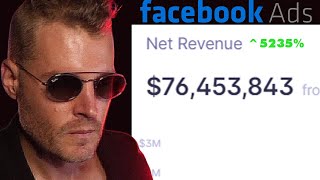
Alex Becker breaks down how to test Facebook ads without guessing. Test one thing at a time in order: message, hooks, video middle, landing page, then headlines. He scaled to $30M/year this way, and Hyros clients average 15.3% scale using the same process.
Questions this video answers
Near $30 million a year.
15.3% average scale (Hyros guarantee).
About 20% more on Black Friday (compared to normal periods).
Chapters
The way most people test their ads on Facebook, YouTube, TikTok is stupid as it's the most complex bureaucratic dumb process I've ever seen. Because what they're doing is they're testing too much at once. In this video, I'm going to show you a testing process you can use on any ad platform. Meta. Let's just call it Facebook. I don't like calling it made it. We're going to call it Facebook. You Zuckerberg, the name sticks. This small ad channel, we've made the decision. But Facebook, Google, TikTok, this works everywhere. And if you do this, this, the ads are going to print money. Let me show you what you need to be doing instead. So at my business Hybros, I speak with people that run ads all day long and we do a lot of their stats analytics. So I get all sorts of requests for all sorts of ways to split test their ads and analyze them. And if you use Facebook at all, you're going to get lost. And because I used to do this and then my ads would get stuck at a couple million dollars per year in revenue, now our ads are doing near $30 million a year and I spend way less money on ads because the ads are just that much better. And it doesn't come from having masterful copywriting or some magic sales funnel. It understands what the customer is looking for and how to maximize that because that's what matters in ads. And so there's a lot of different variables in ad testing. And people get caught up trying to split test a thousand variables on the ad. And so what they're going to do is they make an image or a video, then they have the headline, then they have the description, then they have the landing page and then they all these things, there's so many different things going on. And what they do is they try and test all these all at once. And so they're looking at the video and they're like, well I also want to see like how the headline did and then how the description did and then what's the opt in rate on the landing page. This is so stupid because you will never actually get a coherent answer on what the customer wants and what's going to get them to convert here is what you want to do. So the first thing you need to do when you're doing your ads is you have to understand the message that is going to convert customers. What is the main thing that they want and is going to get them to do anything. If I say I have a vehicle I want to sell you, it's going to give you aids. And then I say I have a vehicle I want to sell you, it's going to make you better looking. The one that says it's better looking is going to get more honey, is going to get more customers than the one that's going to give you aids. I know it's a very simplistic metaphor that I just made. But what you need to understand about the point that I just made is, is if the message is correct, it doesn't really matter how you say it. Obviously the message that is better and hits the customer correctly is going to convert higher than anything else you said. And so what you need to first do with your ads is you don't even try to split testing videos, you don't even try split testing headlines and descriptions and find the micro CPM whatevers that are going on. Every single other media buyer and agency buyer does. They try and make their ads grow through complications of simplicity. What you instead do is, is you find the message that connects with the customer most. So let's say I'm running ads for Hiros and I've done all this since the beginning of time at Hiros, so I already know the answer to this. I can run ads around tracking as the main benefit. I can run ads around scaling as the main benefit. I can run ads around saving money as the main benefit. I can run ads around AI optimization. And so what you do when you first start running ads is you don't, you don't worry about any of the micro testing. You want to go and make, let's say in this situation five videos or five different ads focusing on a different message. And you send people to a very generic landing page, whether it's to get a call, an opt in or sale. Okay, the landing page is just simply not optimized. And so what you want to do with this is you don't look at the micro testing right here. You look at what message gets people clicking the most and buying the most. Now if you want to get a little bit more specific with this, we can make a landing page for each one. So for example, I could make a high risk landing page where the top headline focus around tracking scale, saving some each and then I want to see which ad performs the best. And that's going to tell me usually which message people are most interested in. Then what I'm going to do once I find it, let's say scaling is the top message. Okay, Then what I'm going to do is I'm going to start testing and optimizing around that. So I'm going to get rid of tracking savings AI, this generic page right here and I'm going to go back to drawing board again. And so what we're doing is we're testing one variable at a time. First variable we tested was the message. Okay, so now I'm going to make all my ads around scale. So what I'm going to do is I'm going to make a landing page based around scale. I'm not going to optimize it more than once. It's just going to be one landing page based around scale. Whether it's the opt in call, that's the focus of the land page, that's the only focus we're not going to try and pitch tracking, AI optimization, all this other stuff in that we want to get the main thing that people are interested in. And when people use hire us, on average, their ads scale another 15.3%. This is tested across thousands of businesses. Major companies like Tony Robbins, Playboy, basically every influencer in the space, Pier 1, etc. They all use it for that exact purpose. That's why we literally have a guarantee that if you don't see that scale, you don't pay for it. And those selling points are what I'm going to focus around. And it's also why you're pretty goofy if you're running ads, not running high roast everything. I just stay right there, 100% on point. But back to this. I'm going to make the landing page just around scale. And then what I'm going to do is I want to get back to testing one variable. So I'm going to make five different ads, all with the same headline, all the same description. I'm just going to make five different video, okay? 1, 2, 3, 4, 5. And in these videos what I'm gonna do is I'm only gonna focus on the hooks in the video. They're all gonna be focused around scale. So there's gonna be the beginning of the video and then there's gonna be the rest of the video. The rest of video is going to stay exactly the same. And what I'm gonna do is I'm gonna look at what hooks perform well the first five to 10 seconds, the first 10 seconds of what happens in the ad and I'm gonna see the hooks that do best. Okay, Once I see the hook that does best, I'm going to restart that again. Again, the headline descriptions, everything else is not being altered right here. This is the core difference. What most people doing is they're testing all these things at all times, all the time. I'm going to look at the hooks that did well and then I'm going to go grab that hook that did well and then make five other variations of that hook, maybe with different positioning where I'm at, wherever. So a lot of videos. I started off the video with like an Ironman usb. It was very attention grabbing and I'd say this copy and paste this little script and it will improve your ads 15% or something like that. That was one of the earlier ads at hires. When I saw that worked best, I made five different variations. So I put like a version of the code in the top right hand corner or I'd be at a computer screen already with the results already being shown. I just make different variations of that hook. Once you've done that once, it's good enough. All right, like stop optimizing the hook. Now what we want to do is we want to go and optimize the middle of the video. So let's imagine we've narrowed it down the three hooks so we have three hooks. Then what we want to do is we want to make three different middles of the video or ad. If you're using image ads, you can just stop here. We can move on to the next part. Then what we're going to do is we make three variations of the middle of the ad to those hooks. So we have a total of 9 ads. We then run that. We're going to see which middle does the best. Then what we're going to do is we're going to reduce down to the middle that does the best and leave it with these ads. Whenever we want to go and we're getting ad blindness, we just add a few more hooks. Okay? So we have the best possible hook with a very effective middle. This is good enough. Then what do we do? We start optimizing the landing page. All right, we're going to optimize the headline that's on the landing page, the page itself, the rest of it. Get that to good enough principles. Then finally, this is where we get to the headline of the ad. This is where we get to description. I don't even optimize descriptions. If you're down to the description, you've already won so hard. That doesn't matter. We're going to start optimizing the headline. And for the headline and descriptions in Facebook, Google, whatever. We're not optimizing the conversion rates or anything on the page. Those should already be taken care of by everything we've done so far. All we're going to do with the headline and description is we're going to optimize the click through rate just to get clicks as low as possible. So everything we optimize for up until the headline and description is simply going to be the end result, which is the cost per call, the cost per lead, the cost per sale. Once we get the headline description, we're not going to deal with that anymore. We're just going to optimize for clicks. And this is the process you can get to. And this will get you to your best performing ads that you can use pretty much year round. Of course there's specials, there's other things you can do. Like for example, we're ending the Black Friday phase of the market where people are optimizing for that Hiros. So of course I'm creating some ads based around that because people make so much more damn money if they use Hiros on Black Friday. It's like 20% more. Whereas if you do a million dollars a day in sales on Black Friday like some e commerce stores, it's like an extra $200,000 just from tracking your ads. Corre, whatever, don't do that. But that's what the ads focus on. So I'm running ads using that same process I just showed you. But for Black Friday in a four month period and if you're running your business in your head of marketing, you have time to really like make this process and repeat it over and over again many times a year using different angles based on the timing of the year. So for example, at high risk, when the iOS update dropped, I'd use this angle when it was working, when we're gonna run the Black Friday phase, I'd use that kind of angle and messaging. And so the process is messaging, hooks, middle of videos, landing page, then headlines, then description, and then call it good. If your ads are not converting after you've done this, your offer itself stinks, which is why you should watch this video and then the video which is about getting your offer aligned with the market. If you want to see the ad scripts and landing pages that I use, these are what these videos are for. I have nothing else to talk to you about. Goodbye.










