How I turned $50 into $100,000,000
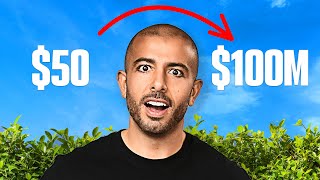
Sabri Suby started King Kong, a digital marketing agency, with $50 in 2014 and grew it to $100 million. He shares his path through failed businesses and cold-calling, then offers three rules: master sales first, start a service business for cash flow, and use your time before your money to find customers.
Chapters
This is how I turn $50 into $100 million in 2014 out of a bedroom digital marketing agency King Kong has grown into Australia's fastest growing full service digital marketing agency and the 17th fastest growing company in the entire country. Someone who has impact over 250,000 businesses. He is just an absolute weapon when it comes to getting clients. But this video isn't just going to be like some self aggrandizing video. In reality, I have had way more than I have had win. By the end of this video, you're not only gonna know my story, but you're gonna know exactly what it is that I would do if I had to start over. I grew up in a small beach town called Byron Bay. Raised by a single parent mother. I watched my mom hold down three jobs and provide an incredible upbringing for me and my sister. I used to wake up early in the morning before school and go with her to job number one which was working at a cafe. Take out all like the heavy metal tables and chairs. She would give me some breakfast and then away I would go. Young boy, like I wanted to do something to contribute to the household. Because I watch my mom carry the burden that is usually shared by two parents carry that all by herself. So I got my first job when I was seven years old, grinding peanut butter at a local health food store for just $2.50 per hour. And I knew after doing that that I was really never going to be making any money that would be meaningful to the household. My mum bought me a harmonica and I started to busk at the Sunday market. I had absolutely no idea what I was doing, but people started to thr into my hat. By the end of that first day, I had $80. I ran home to my mum so excited I handed her the money. Tears just started to stream down her face. I knew from that reaction that $80 was actually meaningful and it was actually going to help her in whatever the bills were that were coming in. So that was my first foray into entrepreneurship. As I got older, I got my first sales job. That was when I was 16. I was selling ink cartridges over the phone. We didn't have computers. It was literally the old school. Pick up the phone and hammer a list of printed leads that we' before. And I was the worst salesperson there. The founder pulled me aside and he was like, look, you suck. You're really bad. I'm going to give you one more week, but if you don't turn things around, you're going to have to go. I had Absolutely nothing to lose. I basically changed the pitch to be like, yeah, you know those empty ink cartridges that you usually throw in the bin? I'm going to give you $150 for those. I'm going to organize the courier, then you can go to your business owner and you can say, hi, I met us an extra 150 bucks. All I need is the serial number on the back of that printer. I will go on hold right now and you can just go and get that for me. And boom, overnight, I was top salesperson. Then when I finished school, I was 17. Not knowing what I wanted to do, I decided to pack my bags and to move over to London. It was a cold, hard slap to the face. I sold everything that you can imagine. I was coming to the time when my two year visa in London was coming to expire. I decided that I was going to basically pack my bags and head back to Australia and go to university and get a marketing degree, studying full time, also working full time for a company that was selling Google AdWords at the time. One day a prospect said to me, I don't want to be in the ads on Google, I want to be in the organic listing. I was like, yep, no problems. We can do that for you. It's going to be $750 per month. Went and spoke to that business owner and was like, I just sold SEO. And it was like, well, we don't do that. You better figure out how to do that. And that was where I first fell down the rabbit hole of digital marketing. And I started my first business when I was 23 years old and that was selling water filters. That was where I learned the most important lesson that I've learned so far in business. To not sell what people aren't absolutely starving for. So I decided to start my own digital marketing agency over a summer break at university. And I went back to my roots of cold calling. I was calling all the businesses on Google that were running Google Ads. I can get you ranked on the free listings on Google where you'll get 40 to 50% more traffic that you get from paid listings that you're on and it's going to be significantly cheaper. I signed up my first client in the first day, then I signed up another client and then I hired some team members to help me. So I dropped out of university and I doubled down on my agency at about 18 months into that, decided to sell the business to the business partner. I started up an e commerce business that was selling children's toys, did Wall Stickers. I did a whole bunch of different e commerce businesses. I built the websites, I used all my marketing skills, got them ranked on Google. So I would basically sell the products on my website and then at the end of every day I would go to a Toys R Us and Target and buy the stock and then send it out. And I was losing money on every order. I know that doesn't sound like a good business sen. I actually got that up to quite a substantial size of the business, but I was just miserable in running that. That was when I went all in, started a group buying website. I thought, who has a huge database that I could leverage and that I could do a joint venture with to then accelerate and basically catch up to the big players in that space. I had to hire external people. I tried to hire agencies, I hired internal employees. They were all like, hey, this is how many views you're going to get. This is how many likes your campaign is going to get. I can't pay any employee salaries with likes and view, right. I need money. Instead of just solving that problem, there was a huge opportunity to be able to solve that for lots of businesses. And that's basically when I started kingpong. I put together a basic PDF, didn't have a website, and I started to go back to my roots of cold calling business. So I started the business from my bedroom in 2014 with no more than $50 and an old computer that my girlfriend had bought me, loaded up my telephone with, you know, $15 worth of credit and literally started just calling businesses. I remember licking my wound. All these people are just telling me to fuck off. I'd made like 100 calls. Day one, day two, I made 150 and still nothing. It was a lot harder than when I had done it initially. And that was because the market was just so much more concentrated with competition. Day three, I got my first client. And then I got another client and I got another client. How difficult that was to start from zero again, farming by night and doing all the client work in the evening, 16 to 18 hours a day. And it was rough. I used $50, $35 on a head so I could make calls on VoIP. And then I put the other $15 into a VoIP account. I did that for about 12 months. I had one prospect that I had on the telephone. They were going to spend $35,000 on a new website. They were just ready to sign and they were like, sabri, we want to come in and shake your hand. I didn't have any Place for them to come in, right? I was working from my bedroom, said like, look, that's not really the way that we, we do business. And I lost that deal. And that moment was a kick to the guts for me. I had to have a serious conversation with myself. I want to build something that is a than me. That was when I made the decision to go out there and actually get an office and build a team. I just started to get clients, just insane results. Before we knew it, we had hundreds of clients coming in. Outgrew our first office. In the second office, we had so many people jammed into it that the sound in that thing was almost deafening. If we turn the AC on, all the power would short circus in the office and I'd have to send everybody home. And it was incredibly stressful. So what was the biggest shift in King Kong to the other businesses that I started? And I think that it was all mindset running around from this tactic to this tactic. I hadn't just buried myself in the fundamentals. What is it that I actually really need to do to grow this business? And zooming out in that 10,000 foot view and look at what are the constraints that are holding me back from reaching that next target. It wasn't shiny, it wasn't glamorous at all to call on 150 businesses a day and to be told to fuck off and get out of here. It was really thinking about, where do I want to land in three years, in eight years, in 10 years time, not how do I make the most amount of money in the next three months. For me, it was about, I'm gonna build a real business with an infrastructure, with a team, put my head down and bury myself and not come up for air for three years. And then, and only then will I look around to see how far I've come. So if you had to sit me down and say, if you are 18 again, Sudbury, what is it that you would recommend? I would say that you need to get a foundational skill. Number one most important and powerful foundational skill, persuasion. Salesmanship. And also storytelling. How do you actually communicate in a way that gets people to take the action that you want them to? The way that you want to think about your skill set is as a T shaped individual. You want to go really deep on one skill set like copywriting or salesmanship, be wide and shallow on a whole bunch of other skills, like you want to know a little bit about running Google Ads or Facebook ads, or a little bit about conversion rate optimization so you can take that One foundational skill that you have and you can apply it to lots of other channels. Where do you learn all of this stuff? When Warren Buffett was young, he said to his hero, Benjamin Graham, can I come and work for you for free? He said, your price is too high. So what he really meant by that is all of the time and energy and mentorship that I'm going to put you in, even for free, it doesn't make sense. I think that working for people for free is probably one of the most underutilized things that you can possibly do. You want to look at an apprenticeship, whether it's three months, whether it's six months, where you reach out to, to some business that you can see that is doing great work, don't just say, hey, can I come and work for you for free? Say, hey, I noticed this, I fixed it. If you enjoy this, I would love to keep on coming and fixing these problems for you for free. In exchange for you guys showing me the ropes and showing me how businesses learn. You're gonna either buy this skillset with time or you're gonna be buying it by money. And if you get mentorship from somebody that knows what they're doing, you will shortcut that learning curve for yourself by many, many years. There is no shortcut that exists other than Lear that is already ahead on that journey for you. So if I was 18 again, I would start a cash flow service based business, take one skill, whether it's Google Ads, Facebook ads, SEO, whatever it might be, go out there and I would cold email business owners, make them an offer to do that service and the reason why it doesn't require a huge amount of startup capital and you can be cash flow positive within your first week. I'd be reaching out to people using LinkedIn messages. I would slide into the DMs on Twitter, record loom videos. That basically showcases a problem that I found on their website, their funnel their business and show exactly how I would solve that. Then I would get their email address using an email scraping provider and I would send that loom video directly to them, solving that problem, using my time as the first point of leverage where I would be sending 20 to 30 cold emails a day, five loom videos a day, maybe 15 messages on LinkedIn per day. Once I got my first client that come in, give me the cash and I had created a surplus of cash, then I would pick just one channel to then use money as my point of leverage and actually buy attention. And that's what I did when I started King Kong. At first I was calling on 150 businesses a day using my time and then I saved up enough money to then write ads that would call on 150,000 businesses per day. Start to use that form as leverage to get more attention, more leads and ultimately more customer as I think it's just a much better and more impactful impactful channel. When Bill Gates first met Warren Buffett, Bill's dad had them sit down and write on a piece of paper the single most important factor to their success. And they both wrote down one word, focus. And that's exactly what I would have told my 18 year old self. Don't get distracted by all the shiny objects that are going to throw your way. Keep your head down. Focus on solving people's problems better than anyone in your market can. Everything else else will look after itself. So to summarize, the TLDR version is don't start with selling low ticket e commerce products that don't have enough margin in order for you to really run the business long term. Because business is about surviving. It's about staying in business to fight yet another day. I would say that you want to start a cash flow business that has bigger margins. You want to invest in foundational skills like copywriting, salesmanship and storytelling. Use those skills as as leverage master one traffic channel, whether that's Google Ads or YouTube Ads or Facebook ads or TikTok ads, it doesn't matter. You can then apply that foundational skill and go out there and get leverage. All of those businesses are in one business and that is the customer acquisition business. That is my journey, that is my story. I hope you learned a lot from it. Like subscribe and I'll see you in the next video.










