How I Went From $50 To Starting #1 Fastest Growing Digital Marketing Agency
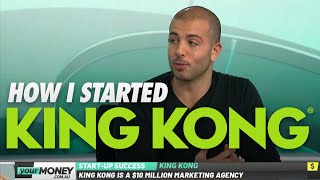
Sabri Suby started King Kong in 2014 with $50 and a phone. He made 150 cold calls a day pitching Google organic visibility to businesses, scaled to 61 employees, and grew the agency 314% in three years. Losing a major deal pushed him to rent an office and go all-in.
Questions this video answers
2014
About $50
$15 worth of credit
About 150 cold calls per day
314% (three-year growth rate)
Chapters
You know, the digital marketing industry. There's like 1,800 digital marketing agencies in Australia and I would say the vast majority of those are run by people in their pajamas working out of their bedroom. Right.
Well, launched in 2014 out of a bedroom, digital marketing agency King Kong has grown into Australia's fastest growing full service digital marketing agency for the second year in a row global. With a three year growth rate of 314%, the agency is not looking to slow down anytime soon. Founder Sabri Suby joins me now in the studio. Thank you very much Sabri for being here with us now. The company, amazing growth rate there as we've just mentioned. Could you take us back to the beginning a bit? We love our startup success stories that start in garages and spare bedrooms and things like that. What was your early days like?
Yeah, sure. So I started the business from my bedroom in 2014 with no more than $50 and an old computer that my girlfriend had bought up my telephone with $15 worth of credit and literally started just calling businesses and I was calling 150 cold call, 150 businesses a day to really go out there and try to find new clients.
150 cold calls a day. That is amazing. So what was the pitch in those early days?
Yeah, so I was calling businesses who were running Google Adwords. So they were advertising on Google and were basically saying, hey, I can see that you're advertising on Google and your ads are coming up the top, but you don't basically appear anywhere on the free listings of Google and really we can help you get up there. So it's essentially it was a very straightforward pitch.
So visibility being a big part of it online, it's a huge thing. I mean, this is back in 2014. Do you think that the same approach, if you were starting out right now, would be the way that you would go? I mean, it's a few years later. But is it still the same issue that needs to be cracked for a lot of these businesses?
Yeah, like you know, 94% of people when they're looking for a product or service, go to Google. Sure. Other channels like Facebook and Instagram are certainly starting to take more market share share out there. But if you're looking for like low lying fruit and the easiest customers to convert, you know, the people that are on Google, they're in hunt mode looking for a solution to that problem. So it's a very, very big opportunity for most businesses.
Yeah, interesting. Sari, we hear from a lot of established entrepreneurs about the early days of Hustling and hitting the phones, 150 calls a day is one of those sorts of stories. It seems humbling in some pretty important ways. Do you think that it's a good way to start out a business to be kind of really grinding like that?
Yeah, 100%. Like essentially, you know, you're either gonna start a business from like desperation or motivation. And typically you're coming from a place where I was, where I didn't have a whole bunch of venture capital or I didn't have any rich uncles or business loans. I had to use sweat equity to get my business started. And we live in a pretty incredible country that you can literally start a business with pretty much no resources, get on the telephone, roll up your sleeves and you can grow your business into a multi million dollar success.
One of the other really interesting things I thought about your business was what you've said about the importance of having a physical office. As it turned out that some customers and some important clients were very confused about the fact that you were working kind of in a Nomad sort of way. So can you tell us about how that came about and were you surprised that people had that sort of feeling about no office?
Yeah, well, sure. Look, when I started the business, as I said, I started from my bedroom, right? And in the first year I built it up to have 70 plus clients. And really that was like a pivotal moment for me is I had a big client on the line that wanted to sign up for a big website project and everything was done. They just wanted to come into my office to shake my hand before the deal got done. And I didn't have an office right then. I was pretending that it was multiple people working at the company. I would put on different accents when I picked up the phone. And I lost that deal as a result of not having an office and not having them a place they could come in. And that was when I made the decision, look, I need to pony up, get an office and really start to build a big business.
Do you think that says more about the client? Are they old fashioned, Are they the dinosaurs that are out of touch here? Or do you think that it's understandable to have that approach?
Yeah, I think it's understandable. Like, you know the digital marketing industry, there's like 1,800 digital marketing agencies in Australia and I would say the vast majority of those are run by people in their pajamas working out of their bedroom, right? And like if you're going to be spending 30, $60,000 on a website, you're going to want to know that the person behind that is credible. So I think for us, one of the big keys to our success is really building a thriving culture in our office. You know, we have all of our team members here in Australia and really have that, you know, that face here in the country that people can come in and have that peace of mind.
Yeah, read that. There's over 50 employees now. Is that still up to date?
Yeah, we're on track. We're about 61.
61. So I mean, for a company so young and you're still very young, that kind of growth to employ people, is that daunting at all or do you kind of feel a bit unfazed by it?
Yeah, I feel unfazed by it. You know, it's obviously we're being able to do that off the back of really strong revenue growth and being able to grow that top line revenue and have a very sound business model. Like our fundamental thing is we don't care what the traffic channel is, whether it's Google or Facebook or Snapchat. Those things come and go. We're basically really focused on solving the fundamental problem that all businesses face, which is how do I get new customers? So that's the kind of thing that we're obsessed with. And I don't care really what the media is where. We're channel agnostic, we're focused on that. And I believe that we've got a very sound business based on solving that big problem.
Well, it is a big problem, isn't it? A lot of small businesses tune in and I'm sure a lot of them would love to come in and talk to you in the office. What sort of thing would you tell them if they were talking about, I really want to get more visible, I need more customers. How do I do it? What's your kind of your first piece of advice to them?
Yeah, so the very first thing that we look at is are people actively out there in the market searching for what it is that you do, that is, are they on Google looking for a solution to the problem? If so, Google is a great first point of call. If not, then things like Facebook and YouTube ads where you can push an ad in front of people that aren't specifically looking for it, but would be a great candidate for the product or service.
Makes sense. So what's next for you and your business? You mentioned that you're very Australia focused right now. Does that remain the case or do you look offshore?
Yeah, so we're definitely starting to look at other opportunities outside of Australia. I launched my book earlier on this year. We're selling that internationally and it's had huge, huge demand. And that's really been kind of like a stepping stone for us to test out international waters. We do have clients all across the world. A heavy focus here in Australia, but we're definitely going to be looking at pushing out into other international geographies.
What's the name of your book?
It's called Sell Like Crazy.
Sell Like Crazy. I'm writing that down now. Look, we talk to a lot of people on this show who are co founders. Have you found it challenging at all? You know, especially challenging, I suppose, is the way that you do put it about being a startup founder to do it on your own.
No, I really, I've been in other businesses. This isn't my first rodeo. I've run businesses, I've run few into the ground. I've launched and sold a few. And in a few of those businesses, I had business partners. And I think that I kind of take solace in that. It's meant to be. It's up to me. It's all on my shoulders. I'm not looking to anybody else to kind of step in. And I really think that that allows me to have the autonomy and take flight, full control over the outcome, whether positive or negative. And that's something that really drives me as an individual.
Fantastic. Well, it's been great to find out a bit more about King Kong founder, of course.
Here.
Sabri Suby, thank you very much for coming in.
No problem. It's my pleasure. Hey guys, if you're enjoying these videos, please like subscribe and hit the bell button as we're dropping a video like this every other day on YouTube. And if you've got any questions, just leave a comment below with heysubri and I will do my best to get to it.
Sam.










