How I Went From $50 to $50 Million (All The Hairy Details Revealed)
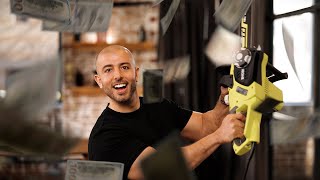
Sabri Suby built King Kong from nothing to $20M annual revenue by mastering cold calling, then shifting to value-based marketing and irresistible offers. He focuses on moving customers off ad platforms into owned databases and obsesses over metrics like customer acquisition cost and lifetime value.
Questions this video answers
Launched Kingcom/King Kong in 2014; grown to over $20 million in annual revenues (transcript claim).
$50 into a VOIP account and he secured a client within three days paying $750/month (transcript example).
He says they've generated over $1.3 billion in sales for clients.
Approximately 3% of a market are 'hyperactive' buyers (ready to buy now) and a further ~17% are window‑shoppers/information gatherers (transcript claim).
Net free cash flow, customer acquisition cost (CAC), lifetime value (LTV), and payback periods of cash.
Chapters
Founder Sabri Subhi joins me now in the studio. I really look at business as an incredible vehicle to really make good and make change in the world.
Hi, I'm Kurt.
And I'm Di.
Our special guest today started his business Kingcom in 2014 and has grown it from zero to over $20 million in annual revenues. It's now the fastest growing digital agency in Australia and the 17th fastest growing company.
Author of the number one international best seller, Sell Like Crazy. Please welcome to the show entrepreneur and marketing guru Sabri Subhi.
So, Sabri, it's a real pleasure to have you on the show today.
Thanks for having me.
No, very welcome. You first appeared on our radar back in 2019 when we dropped into one of your various funnels. It's fair to say we've been following you and your work ever since. The last few years have been pretty, I guess, like a roller coaster really for you in terms of the growth and success of the business. But things weren't always like that. Do you mind just kind of giving us a little bit your backstory and explaining how you got started out in your career?
Yeah, sure. I was raised in a small beach town by a single parent mom. I got my start in kind of sales when I was 16 years old in my first full time job, which was a sales job. And I absolutely sucked at at that. And I did that, you know, for probably about six months. As I said, I sucked in the beginning. And then I became the top producer at that company. And then I ended up leaving and actually moving over to London when I was 17 years old. And I went, and then I traveled the world selling everything that you can imagine over the phone, door to door, one to one, one to many. And it was always the top salesperson at every company that I ever worked for for as long as I worked there. And then that's kind of like how I fell down the rabbit hole of like marketing, so to speak. Like on the front lines doing like, you know, hundreds of sales calls a day. And then, you know, people like, hey, you should probably get into marketing. Like, you're pretty good at sales. And that's kind of what led me to kind of fall down that hole. And then I started my first business when I was 21 years old. And since then I've, you know, run, I've sold businesses, I've run a few into the ground. And, you know, yeah, that's kind of been my entrepreneurial journey. And I've always been faced in all those businesses with the number one problem that all businesses face, which is how do I get more customers?
You mentioned that first business that you started, was that back in Australia or was that.
Yes, it was.
Okay, fantastic. So I noticed that you said that you dropped out of university to help grow one of these companies which you then later sold. What specifically were you doing? What was the nature of that business? Cause obviously that was pre King Kong, right?
Yes, it was. So I was actually at university studying marketing and I had a part time job and I was selling Google AdWords for a company and basically there was a stage in one of the calls where someone said like, hey, I don't want to run ads, like I want to be on the left hand side of Google and those free listings, can you do that? And me being the ambitious young salesperson that I was, I said, I can organize that for you. Signed the person up, got off the phone, went and spoke to the business owner, was like, hey, I just sold some SEO. And he's like, oh wait, we don't do that, so you better figure out how to do it. And then that's when I learned, learnt to do SEO. And it was actually over a summer break where I was like, hey, like I've been working for this company doing this, but I think that I can do it a lot better than that company and decided to kind of start up an agency just doing basic SEO. And I hit the phone, started doing that and basically by the time it was time to go back to university the next year, you know, I had a sizable business on my hands. I was doing hundreds of thousands of dollars in revenue and I was like, why should I go to university and learn this when I've already got it?
Wow, that's amazing. And I think if I can just touch back, you know, when we're, when you're talking about the salesperson, do you think you've got, do you think people have a natural ability in the sales and do you think you can educate people? Do you think you had some personal traits to be the top salesperson? Do you see what I'm trying to say? Yeah.
Like it's the age old question, are salespeople born or are they made? Yeah, yeah. And so I definitely think that you get people that are natural born salespeople and when I say I don't, they don't come out of the womb like that. Like it's their environment that shapes them over their life, that puts them in a place where, you know, they maybe, you know, know more suited to do sales. In the beginning of your extroverted or whatnot. But that's not to say that if you don't naturally have those qualities that they can't be trained. I definitely think that you can train sales, you can train anyone to be a salesperson. But I think the thing that made the quality for me was, you know, I was raised by a single parent mother. I used to wake up before school, go help her set up cafes, take out chairs, do all that at 6:00am, you know, when I was 7 years old. So I think that what I call single parent mother. Yeah, I call it single parent mother work ethic. And it's that work ethic that I got ingrained to me from my mother that made me a great salesperson. As long as with all the skills and everything. At the end of the day, it's a numbers game and you need to make lots of dials and you need to be very good on those dials. But I think that I was, that's the thing that I had. I was just simply willing to outwork everybody.
And if I can ask you a quick question on, again on the sales and the cold call, you know, I think somewhere you were doing up to 300 dials a day, right. I don't know how much you did on talk time or whatever, but 300 dials, that's quite a lot, right? So how did you keep yourself motivated, you know, at those times, like 11 o' clock or 3 o' clock when you think, oh crap, I've got. Everybody said no to me.
How.
What is your, your mindset to keep going, to keep doing those dials?
Yeah. Well, I didn't, like, I didn't come from an upbringing where we had lots of money.
So.
So for me, like, you know, I wanted lots of money, right? So it's like, it was like that, that was like, you know, I wanted to be in a position where there was abundance. And it was like I knew that every dial that I made would get me closer to being in that position because, you know, not having money, it does a lot of things to an individual. And there's a lot of, you know, uncomfortable things that happen in your life and a lot of scars that are accrued from that lack. That basically puts you in a position where it's like, okay, oh, I don't want to be in this position. Like, I actually want to get into a position where money's not a problem anymore. And then when, when that is there and you've got that innate hunger and that fire in your belly, like, you know, I don't I can run through hundreds of no's because that's what it was. You have to run through hundreds of no's to get a yes.
And obviously you made a lot of cold calls, as you just mentioned. But what specifically did that teach you or how did that help you in your sort of sales and marketing journey?
It was the most invaluable education that I've ever received in my life. Like, I have like two daughters and both of those will definitely be cold calling people and be on the phones asking strangers for money. You know, I. Cause when you make that volume of calls, it's. You learn so much about the human psychology and the human position and, you know, especially when I started out, you know, and I was late, I just turned 17, I think I was 16 at the time, and I was doing it in Australia. But then when I went to London and I was on auto dialers and you know, the 350, 700 dials a day, and I was a guy from Byron Bay, a small beach town in Australia, calling people in Scotland and having to understand their accent and all of these different terminologies and then like people in the north, in England versus the south, and all this different stuff. And you realize that it doesn't matter where it is in the world that you're calling, that human beings are the same and the psychology and how they're wired and what you say on a call and how that impacts things is it doesn't really matter the age, the gender, or the location.
Do you think cold calling's dead or is there still a place for it?
There's still a place for it. It's not the most efficient use of one's time. But if you basically are starting a business, right, you can either use human capital, right, that is picking up the telephone and making cold calls, or you can use real money and capital to go out and get your marketing message out there. But there is two forms of capital. And for me, I didn't have the latter, but I had the former when starting my business. And, you know, the ability to be able to call a stranger up, you know, when I started my business, I put $50 into a VOIP account and I had a client in three days, right, that was paying me $750 a month. So that was using my human capital to create that until I had enough actual financial capital to then replace the human capital.
Yeah, makes sense. And you just talked about a little about your journey, you know, you know, the cold calling and you know, the selling ink cartridges and then, you know, a couple of business and so forth. So what made you want to start King Kong? And why is it different to other agencies, would you say?
Yeah, so like, I've always been like fascinated with solving that problem that all businesses have, which is how do I get more customers? And in a bunch of the businesses that I ran and that I sold and whatnot, you know, there was us having to hire internal people, there was us looking to hire agencies. And I could just say that everyone was just skirting away from the real issue, which is like, you know, okay, I need to grow the business. And them talking to me in vanity metrics like, this is how much views or likes or reach your ads gonna get. And being like, I cannot pay my employees with a like so unless we're going to have a better conversation here. Like, yeah, money in, money out. Like, no one was willing to have that conversation with me. And a lot of people still aren't willing to have that conversation today. And I saw a huge opportunity in the marketplace to go in there and help people solve that profound problem that I really enjoy solving for people that no one is willing to solve. Because it's a very complex problem to solve if you're talking about hard unit economics and not all the fluffy stuff. And that was kind of what led me to launch King Kong.
Why the name is some significance or is it.
Look, it's first of all like the first rule of business is to get attention and to be different. And you see a lot of people in digital marketing space. None of these people are creating a brand. They've all got like, you know, the Internet marketing experts or top rankings or something to do with Google and search engines and rankings and things like that. Right. And like when I was cold calling, people couldn't even like remember who their digital marketing agency is. But you certainly don't forget like an 800 pound gorilla called King Kong. Managing your digital marketing, brilliant.
And you're an advocate of a lot of the world's greatest, you know, traditional marketeers, like for example, David Ogilvy. What was it that kind of made you study those? Because it's not something that typically, you know, people coming into marketing would tend to do, but obviously you see the value in doing that. You know, what's your view on it? Why did you decide to do that? And how can modern day marketers kind of benefit and learn from those kind of gurus of the past?
Yeah, the homies, the OGs, as I call them. So I found a route. I went the long Way I took the scenic route to get that wisdom. Basically what happened to me is that I was obviously very effective selling one to one over the telephone. And then when I started like, you know, listening to, you know, courses and blogs and YouTube videos about people doing marketing and then was trying to deploy that stuff and none of that crap worked, then I was like, forget all of this stuff. Like, I'm just gonna basically do what I used to do on the telephone one to one, but I'm gonna make it one to many. And this, the moment that I did that my business exploded, right? The moment that I went from stopping and doing like 150 cold calls per day to writing ads that would call on 150,000 people in a day is when the business exploded. And then I was like, whoa, like, surely I'm not the first person that's ever discovered this, like using this salesmanship and just applying it to ads. And then that was when I started to like read about guys like Robert Collier, you know, from 160 years ago. The Ogilvies like Ogilvy in, in the scheme of things, like is isn't like a super triple og. Like you've got the guys like the Robert Colliers, these are the guys that, you know and the Eugene Schwartz and stuff like that really paved like the way in terms of the old school guys. And then I found like, yeah, guys like Ogilvy that was selling ovens door to door and there was a chef, and then got into advertising and then saw that like a lot of the things that I was innately doing from having to make, you know, all of these cold calls and speaking with so many people over the years and applying that stuff that other people had already also figured some of that stuff, stuff out. And that just kind of confirmed a.
Lot of my learnings on the marketing side. And I think you kind of touching on it now, you're a firm believer in value based marketing and using high value content offers, Right. Can you explain a little bit more to our listeners what that is and if you've got any examples.
Yeah, sure. So basically the whole premise of value based marketing as a concept is to leave your prospects better than when you found them and to make sure that your, your advertising in itself is of value. Because if you look at, you know, conversion rates, if you look at the effectiveness of advertising, you know, just pick a channel, right? We'll pick Facebook. You know, if you've got an ad that's got a 1% CTR at scale, you're doing a good job. That means that 99% of people are not clicking on your ad. And then out of those 1% that you do get to click your ad is you're running a normal style advertisement, a landing page that basically offers to sell something to somebody that is get a quote, get in touch with us, or buy some stuff. You're going to be lucky to be converting at 1 to 5% right on the lead gen side, 5% on the E commerce side, 1%. Meaning that out of the 1% of people that clicked your ad that you're then losing the other 95% immediately because you're asking them to marry you at first sight and there's no foreplay or romance going on there. You're going straight down to the proposal. You know, you can get a disproportionate amount of response by just providing those people with value that are open to receiving information about this but aren't in the market to buy right now. Because you're not jumping on Google, searching for something like mortgage brokers for fun on a Friday night. You've got a problem, right? But still you're gonna be lucky to convert five of those people into a lead because it's just too much of a commitment, it's too threatening of an offer too early in the sales cycle. What we have found is that by leading with value in everything that you do, from the ad itself to the opt in page to the wholesale cycle, just that One strategy alone can 5x the number of sales that you make. Because you're gonna get five times the amount of people opting in to receive something like a high value content offer. Then you are to somebody that says, yeah, get a salesperson to speak to me about getting a quote. And then over time that compounds, and I'm a firm believer is that you're compensated by a percentage of the value creation that you provide into your market. If the only value that you provide to your market is to people that you convert into customers, you're never going to be able to add as much value as me because I'm adding value to everyone, even my prospects. And then I get a percentage of that goodwill that I create.
Do you know what? I think there's a lot of business out there who kind of don't want to do that because they don't see the point of it. And they see like, oh, well, if I give this free content, well, value content, what am I actually getting back? And they're a little bit selfish, shall I say? Or they want it quick, they want A quick win. They don't understand this kind of. You've got to be patient to give that value back.
Yeah, you're right. They're selfish. That's what they are. Right. And the thing is that their selfishness is resulting in them getting less of the thing that it is that they want. Yeah. Which is the more customers and more revenue for their business. And they're being very short sighted. That's the old school way of selling. Like the information is hoarded by the salesperson who keeps it all under their jacket and only shows you it once you engage with them. Right. In the B2B world, like 76% of a decision is made before the time the prospect actually reach out to speak to your sales team. So if I'm controlling all of that information before they even reach out, because people are enabled now, there's just so much more information out there. They're watching YouTube videos, they're reading reviews, they're shopping around. They're doing as much as they can before engaging with a sales professional. So if you're not giving anything out on the front end, but then there's a guy like me, that is when it comes time to buy, who do you think they're calling? Yeah, they're calling me. So you're not even in that conversation because you were being selfish and not wanting to provide value because it didn't serve you as a first order consequence.
Yeah. I guess this ties nicely into the concept of larger market formula which you talk about as well. Can you, can you just go into that a little bit as well? How does that fit in?
Yeah, sure. So basically like in any given market, 3% of that market is looking to buy. Right now we, we had a look at these stats not only on the front end from like the numbers that we were just talking about in terms of like most websites converting, you know, at 3% on average, you know, you're missing out 97% of people there. But then also looking at the bank of leads that actually convert and at what time period that they convert. Like we're in a very unique position where, you know, we've generated our clients over $1.3 billion in sales. When you do that, you, you know a lot of leads and a lot of traffic and there is a lot of data to look at and to analyze. So we found that 3% of any given market is looking to buy right now. They're the people that we call a hyperactive buyers and they're the people that everyone spends 100% of their time on. They're the guys that are looking to get a quote right now. But then there's a further 17% of people that are what we call like window shoppers. They're in information gathering mode. They're not going to respond to a message that is get a quote or speak with our team. They're not there yet. They don't want to do that. They don't want a real estate hounding them or a mortgage broker relentlessly following up with them. Or you pick the industry. Right. Whatever it is like people are dodging calls from their friends and family members, let alone sales people. Right. No one wants to pick up their telephone these days. Right. So that's the, the road that you're going down, then you're going to have a very hard time of going down that road. So you want to be leading with, you know, you got 17% of people that are in information gathering mode. And as you go down like the rest of the pyramid, it just gets colder and colder of people that are just less aware of what it is that you're doing. Right. So what we found is that you want to craft marketing messages that speak not to just the 3% that you will get. You're going to get those guys anyway, the hyperactive buyers, but you're also going to be speaking to that 17% and the further rest of the pyramid that aren't looking to buy right now. And that's where the greatest opportunity to scale most businesses are.
Let's say they understand that and they've got the mindset and they're looking at it from, you know, the, not just the 3%, the 17% and the 30% and they're doing that. Do you think then a lot of businesses forget the bit of okay then analyzing that data and that insights and then using that data to go back to that front end. Like did just forget about all the statistics and the data side, if that makes sense.
Yeah. The thing that I see more often than not is that like a lot of people have tried doing the stuff that I'm talking about, right. And they'll be like, oh, I gave away free report and I didn't have a line of people throwing money at me. And it's like there's, there's value, there's value based marketing and then there's salesmanship and you need to, you can't just give away information and expect people to buy. That's when the next part of it comes in, which is, you know, the strategy that I've really, I guess become famous for which is the Godfather strategy and is to make an offer that is just so irresistible that your prospects can't say no to it. And that's how you capture the 3% and then the further 17, 30, you know, percent outside of that to actually respond to, to your messaging. And it also, there's so many things that tie into why this, this strategy is just so brutally effective. Is like if you have a look at all the stuff that's happening on Facebook right now and on Google and all this cookie less world that we're moving into, it's like I move people off those platforms and onto my database as quickly as possible because then I own that traffic. Then I can still tell what those people whatever I want. Right. I can message them whenever I want, I can build a relationship, I can bombard them with value as much as I want. But the moment that you're living and dying by just the response of the people on that platform, that very short lived interaction of them wanting to buy, right now you're at the mercy of those ad platforms and they can just take your business out overnight.
Yeah, I mean one thing I would say you're very, very good at, obviously there's lots of things, but one thing that stands out for me, Sabri, is the, the emails that you send, do you write those personally or do you have if you pass?
I write them. Yeah, yeah, like, like I write them. I put a lot of time and energy into them. They're, they're incredibly important. They have made me tens of millions of dollars in sending out those emails. So it's not like, you know, I am a big proponent of looking at my time and return on my time. And all I can say is that I wouldn't still be writing them if they weren't worth the time.
No, it shows. That's great. Somebody's going to ask about funnels. So obviously over time, most marketers are aware now of funnels and how best to use them. Do you think there's a danger that consumers are cottoning onto the whole lead magnet thing that the compelling offer. Obviously not a godfather offer, but do you think that they're not so much dead but do they need to be reinvented or is that how you differentiate by using your Godfather offer?
No, I think that like it's a timeless strategy. So I think it will work. In 150 years from now, the same strategy will still be working because if you just look at the market, right. And where the market's at right now, like in Australia, obviously these numbers have been dramatically accelerated because of COVID and lockdowns and people's inability to buy in person. But like, you know, E commerce, you know, accounts for, you know, around 8 to 9% of total commerce. Right. In Australia, I think in the UK it's probably close to around 17%. Right. But 84 to 95% of all transactions start online. So if that's where you know, 90% of the transactions begin. Right. But they don't take place on there, then you just have to look at fundamentally why that happens. And it's because people are in search of information. Right? And the reason that a high value content offer works so well is because it provides the information to the burning problem that your market is searching for. That's why they're online literally by definition on a search engine searching for information. Search, right. So it's like people like to overcomplicate it and think it's about this and it's about that. It's like I have taken businesses from, you know, doing barely nothing in revenue to $25 million a year in 18 months with one two step funnel, a free report and a godfather offer. And then there's all these people on the Internet showing you these like ridiculous funnels that are like 150 steps and it's like, man, I'll just eat your lunch every day. Because you're focused on the technology, not the psychology of your market. So you know, I think if you're putting together like a shitty little like lead magnet and it's like thinly veiled and it's got no value and then you don't make a compelling offer and you're more focused on the technology rather than the psychology. You're more focused on how to say things than what to say. Then yeah, it will, you'll have a tough time and you can funnel, hack somebody all that you want and try to recreate what they're doing, but unless you fundamentally understand down to the marrow of your market, none of that stuff's going to work. Because the technology is this the delivery vehicle to deliver the psychological, you know, warfare that takes place with turning attention into money.
I think that's one of your differentiators, isn't it? You focus on the psychology, not the technology. You say that, you know, basically your channel, platform agnostic, it doesn't really matter what you're doing.
Yeah, because you know, I can move into any market and, and, and, and like any traffic channel and I can, I can take over that traffic channel for my market. Because I'm focused on the things that aren't going to change. Right. The Internet is so fast moving. There's so many emerging advertising platforms. What used to work on Google five years ago no longer works today. What worked on Facebook a year ago no longer works today. And instead of mindlessly focusing on those things that are forever changing and that I don't get any compounding dividends paid to me throughout my life because they've changed and the half life of those skills are very short. I focus on the things that aren't going to change, which is the human psychology and the human condition. And I don't care what the advertising platform is going to be in 10 years. I know that with the skills that I have, I will be able to go in there and wipe the floor with whoever is on that. People want to overcomplicate it all they can, right? At the end of the day, it's about getting eyeballs, getting attention on yourself and on your business and on, on your offers and landing pages. And then after you've been able to do that, it's then about solving the problems that that market has better than anybody else in that market in a more compelling way.
Yeah, you're right. I think I've heard you say it before. People do get distracted. It's the shiny object syndrome, isn't it? A new platform, a new tool, new service comes out and everyone thinks they need to jump on it, but they're forgetting the basics, the obvious thing that's right in front of the nose. So, yeah, great. Fantastic.
I know you've interviewed Grant Cardone. So in true undercover billionaire style Sabri, if you had to start all over again with just $100 in your back pocket, a car and a mobile with no contacts, what would you do now and why?
It's a good question. I think about it a lot. I've been in the situation where I have had to start from scratch a few times and, you know, I wouldn't probably cold call right. Right now. I think there's more effective ways. I would really suss out my marketplace online and I would have a look at what their pains, fears, hopes and dreams are. I do my own Halo strategy. I would be a fly on the wall and to all the conversations that my market was having, I would find out what is the bullseye of the market that really gets people to buy emotionally, irrationally and in huge, huge quantities. And then I would make the strongest Godfather offer that I possibly could that removes any and all risk. And I would find a Scalable way to reach out to those people with no money. So I would do cold emailing, I would shoot loom videos where I send people one to one messages. And I would understand the problems of that market better than anybody else that was in that market because I would do all the grunt work that's needed and then I would start making lots and lots and lots and lots of offers to people to then get them on the telephone and to convert them into a client and solve their problem.
Wow. Yeah, you've clearly thought about that one.
Yeah, yeah, I help businesses do that. I help, I help businesses at all different parts of that entrepreneurial journey. And I speak to people every week that are where I was seven years ago in their bedroom, no money, looking to scale their business.
Do you get a kick out of it? Do you still get a kick out of helping people and seeing their business grow?
Yeah, I wouldn't, I wouldn't be doing this. I didn't. Right. So I really believe that business is like a profound vehicle to drive change and to do a lot of good. And I love being able to take somebody that is stressed out of their mind about money. They're tossing and turning at night, unable to sleep, wondering where the next customer is coming in from. It's impacting the relationship with their partner, their children. It's just a lot of undue stress and giving them a few little hacks and strategies and concepts that they can apply and then put themselves in a place of abundance. Because there's lots of things to worry about in life and money shouldn't be one of them.
Yeah, true. Just, just go back to you mentioned obviously before that the other businesses that you have and some of them you sort of drove into the ground, I think you mentioned. Can you share with us some of the kind of failures? I guess because obviously this is great talking about all the successes, but were there any specific failures and what did you learn from, you know, as a result of those failures?
Yeah, I, that like, you know, I was just young and naive and I was based on like, hey, here's this cool gizmo or gadget or service to sell that I think is cool, but it's not what the market is starving for. So it was thinking about product first and not market first. And then, you know, just realize that that is a very difficult way to build a business. Is you trying to shoehorn something that you've got to sell into the market rather than focusing on what the market is absolutely starving for. What would they crawl across crushed glass to get and then just offering them that. And that's a lot easier way to grow a business.
I saw a video recently and you mentioned that you've got quite an interesting work pattern that you block off three days a week. So I think Tuesday, Wednesday, Thursdays, you pretty much said you were off limits to everybody, including your staff, unless the office was burning down. Something along those lines. How do you actually spend those days? And you know, what is it that you do? Is there like a specific format you follow as well for that time?
Yeah, like I do all of my meetings on a Monday and a Friday. And so that's. They're just all batched. Anything like these podcasts, anything, those things, they're not done on any other day but a Monday or a Friday. And so that allows me to do all of that, you know, busy work and the meeting work. And then I focus Tuesdays, Wednesdays and Thursdays on not what the business is doing this month or this quarter, but what we're doing, you know, this month or this quarter in a year or two years time. And really focused my energy on growing the business and not in running the business. Do a lot of time thinking and thinking about what the future looks like and where I need to steer my company in order to be positioned to really be compensated. On where the world is moving.
Do you still spend a lot of time looking for new talent and recruiting? Because I read somewhere that you were sort of spending two hours a day at one point looking for new recruits.
Yeah, look, that is always like, should take up a lot of time from the founder of the business is the talent of the people that come in within the organization because that is the business. Right. So if you look at really any real high level business builders, like just take a look at some of the interviews on those guys and how much time that they spend recruiting. That's all they do is recruit and foster talent. Like that's really like the sole job of the business is to make sure that you're bringing the right people in.
Yeah.
So do you still. Do you still spend time on the floor with the sales team or are you kind of away from that now? Or do you still.
No, I do. I like to keep my. I like to stay, you know, close to the battlefield. So I still, do. I still meet with my sales team weekly. You know, it's a bit different. Like when we're all in the office, it's easy just to stroll over there. But yeah, like I'm still, you know, very in touch with, with the sales team. In the market and what they're doing. I'm not like in there answering questions. I've obviously got a head of sales that does all that kind of stuff. But that's also the front line, right? That's the front line of what is actually happening in the market. What are they saying? What are people saying? What are objections saying? I'm a student of markets, so yeah, it would be a fool's errand not to, to really pay attention to what's going on on the sales team.
And I guess most businesses, the key to a lot of business success is good, solid systems and processes and working practices. Are you the one that drives that? Do you come up with those or do you have a team that do that in house?
Yeah, so I'm not on the day to day running of the business. I have a phenomenal general manager and I really trust and try to empower her to run the day to day of the business. I'm focused on growing the business, not necessarily just on running the business.
So I guess I think a question might have been alluding to is as businesses grow, the systems and process have to change. Right. So are you involved in any of those from a high level perspective? Is that purely from, you know, your MD or your general manager to do that or do you actually still get involved in making sure these systems and processes?
I try not to. Like, I still get like, I'm still very involved in like the, the customer acquisition systems and I still like, you know, I've got an operations meeting that I got to run to now. But other than, other than that, it's like she's a very solid systems thinker and you know, she brings a lot of that expertise and that was something that, you know, like I have that skill set but it's not as good as hers. So I would rather hire someone that's a case of hiring somebody that's better at, at a certain area than you and bringing in that talent into the business. But you can't do it all. You can't be focused on like the super big picture and then be in on the, the tiny minutia, little, tiny details of things. There's just not enough mental bandwidth to kind of handle all of that.
Yeah, I agree. And do you, do you have, do you actually have any mentors, Sabri, did you hear today? Or do you look up to people, you know, you know, to keep, you know, ahead of the game, shall I say?
There's no one that, that I look at to kind of keep, you know, ahead of the game. There are people that, you know, business builders and stuff that I've spoken to in the past but I guess a lot of like I look at it more from you know, a well balanced polymath. So there's not like one like mentor relationship that I would have and be like hey, like I want to be like this individual or there are where I'm at, I look at like you know, books, books are really my mentors and looking at you know, multidisciplinary things and how do I apply all of those different things in my life to be like a well, well balanced, you know, human being and a business builder. Not just, you know, how do I grow a business and make the most amount of money but how can I live the richest life?
Obviously businesses, business owners have faced many sort of challenges in terms of sort of performance and metrics. What, what sort of things do you keep an eye on and what do you recomm regard as being important metrics.
To track net free cash flow, customer acquisition cost, LTV and payback periods of cash?
Good answer.
Okay, so we're coming near the end. I just want to do a bit of a quick fire trivia round with you Sabri. It's a bit light hearted, a little bit like Gary Vee's overrated, underrated if you've ever seen that. So what's going to happen? We'll give you two options. Just pick your favorite of the two. So I'll kick this one off. Ferrari or Lamborghini?
Lambo.
Neighbours or Home and Away?
Oh, I don't watch any of those really.
Theme here obviously. Okay. Vegemite or Marmite?
Marmite.
Apple or Android?
Apple.
Tea or coffee?
Coffee.
KFC or Burger King?
Kfc.
Summer or winter?
Summer.
Okay. Bali or Byron Bay?
Oh, it's a hard one. I'd probably say like Bali right now because it's the middle of winter here and that's when like you can go over there and it's great weather.
Alcohol or soft drink?
Soft drink.
You strike me as like teetoter, not non alcoholic drinker.
Yeah, like you know, I might have a drink at our Christmas party but other than that I'm not a big drinker.
No, I think I know the answer to this one. Early bird or night owl?
Definitely early bird.
And physical or audiobook?
I do audiobook first and to see that's worth my time and it's a great book. I'll buy the physical book and mark it up and keep it and revisit it.
Okay. And just a Couple of questions on you, Sabri. You know, you work very hard, I can see that. And you're so passionate about what you do in the business and helping people. What do you do in your spare free time? How do you relax? Or is it like you don't need to relax because you just love what you're doing?
No, I need to relax. I have a sauna every night. I cold plunge, I hang out with my girls, my wife, we go on like, you know, long, long walks in nature. I go running, I read. Yeah, these are the things that I do.
And just to talk about your girls, we mentioned before about university and dropping out. What advice would you give them? I know you joke that you get them on the phone doing cold calling, which obviously is great experience. Do you think there's a place for university, you know, for future entrepreneurs?
No, I don't. I just think that like if you were to take somebody and put them through a three or four year degree at a traditional university and that was going to be your choice of putting the child through that and then I was going to take, you know, my child and I was going to get them like a whole bunch of like online courses and nano degrees and things from people that are actually doing the stuff right, practitioners and I was to put them through four years of that content. And if we will look at the two individuals at the end of those four years who is going to be better equipped to be really successful? Like you cannot even compare the two.
Yeah, we totally agree.
I totally agree with that as well.
And can I ask you a little bit about the office? Obviously you moved into nice new offices which I guess you're in at the moment. Is it fair to say that lockdown pretty much hit as soon, as soon as you'd moved. How's that really impacted, you know, the work ethic, the team. And are you going to make any changes sort of to how you operate moving forward in light of, you know.
We had a good, we had a good nine months or so in the office before, before lockdown occurred and yeah, like definitely, you know, being in our six lockdown, it just being extended and really like the dust hasn't really settled on the whole like musical chair style lockdown. But it definitely has had an impact, you know, on the team and on, you know, the, I call it like accruing a culture debt where you know, people are more efficient, efficient working from home. If you take out, they don't need a commute, there's no distractions, all of those kind of things. But the second and third order consequences are just so profound and they're in my opinion, very negative, that, you know, the, the uptick in efficiency that you get in the first order consequence as a positive is a negative second order consequence. In terms of, you know, where we're tribal animals, human beings, right. We thrive off like it's like, you know, is there a difference between, you know, seeing your parents and hugging them and kissing them in flesh or doing that over FaceTime? Like it's dramatically different, right? So it, the same thing goes with building a team and building a culture. Like even the one second of lag on a zoom call breaks rapport dramatically, right? So if you can be in the flesh with people and you know, something magical happens when you get a lot of smart people and put them in a building and there's lots of good to come from that. And I think that there are lots of pros of working remotely and working from home, but those are really dwarfed by the long term benefits of having people in an office.
Yeah, I'd agree.
I'd agree. And what does the future hold for Sabro?
It's world domination.
Yeah, world domination. More growth.
Well, look, we, yeah, we launched into the US in the uk, you know, about four months ago. You know, I'm really passionate about what I do and it's beyond more than money for me. That part that scratch, you know, that it just been scratched a while ago. For me it's just about like what impact can I leave behind and how many people that I can touch in my lifetime and that I can help and that's the kind of thing that kind of keeps me motivated.
I see that.
Okay, Sabri, thank you very much for taking time out to join us today. It's been absolutely fascinating and insightful talking to you.
Yeah, no, really, it's been great. And I follow you YouTube and I think your YouTube videos are perfect. Know the content you have and you killer headlines and it's really good. So thank you for coming on the podcast. Appreciate it. So if people want to get hold of your book or follow you online, how's the best way to do that?
Yeah, you can, you know, if you so much as think of me, I will find you on the Internet. There'll be some, some retargeting that will take place. But no, you can check out my Instagram at Sabrisubi or you can check out my book at Cell like crazy book co.
Brilliant. Okay, thanks. Suva, you've been absolutely amazing.
I've been Kurt and I'VE been di. Thanks for listening. If you found this useful, be sure to subscribe to the Back to Business podcast.
If you enjoyed this video, please like and subscribe. We're dropping a video like this almost every single day on YouTube, and if you've got any questions, leave them in the comments box below with heysubree and I'll do my best to get in there and get get that.










