How To Build Large Sales Teams (Starting from 0)
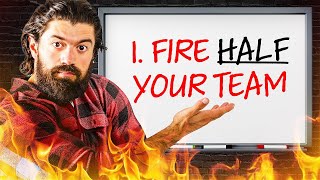
Nate Tilley walks through hiring, onboarding, and scaling a sales team from scratch. New hires spend 14 days watching recorded calls, then drill a question-based script and role-play objection handling. He cuts the bottom 10% quarterly and ramps people on half schedule before going full.
Questions this video answers
14 days.
A half schedule (half-day) while continuing training.
Every 30 to 42 days (every 4–6 weeks).
Bottom 10% each quarter.
About 1 hour per rep per week.
Chapters
In this video I get really in depth on the actual scaling of a sales team process, the training process, the onboarding process, the management process, etc. So that you can scale sales within your organizations. The interview process, what we're testing for is the speed of response. You can test work ethic by how quickly they get back to you because you are a lead to them. Number two, somebody who's intelligent. So if somebody sounds like an idiot, then it's the impression that they're going to be giving of your brand. The next one is you want somebody who can listen. So someone's dominating the conversation. They're talking, they're motor mouthing, it's not a good idea. You want somebody who's kind of an ambivert, who's somebody who can listen and can talk when it's time and socially aware. You want someone who's coachable. And so you can measure coachability by saying, hey, I want you to role play with me in this situation and you just give them a little bit of context. I don't care about how well you sell me. I just want to hear you talk through things and then what you'll do is you'll give them feedback and then ask them to try again. Now if someone can take the feedback without an ego, then you have somebody who's coachable and if they make improvement on the second try, then you know that they can improve. If someone is not coachable and they do not take feedback well, you can already know way ahead of time that they're going to be a terrible fit for the team. Now at this point they have to transition their general knowledge of sales and to your specific product or service. Now, I think one of the things that's overemphasized is product knowledge and what's underemphasized is prospect knowledge. What we should be focusing on is who are we selling to more than what are we selling? Because who matters more in the sale? The person. The product? The person. Right. So we want to understand their problems so in depth. Because if you can explain to somebody exactly the problem that they're going through, they will buy whatever you have because they will believe that you so intrinsically understand what they're going through. Once we've decided to hire this person, I like to have a 14 day onboarding period. What is covered in the onboarding period is that we want them to listen to sales calls that are good. Now if you don't have any sales calls that are good, like I would recommend you go and sell and do it well and then record those calls and have them listen to it. You want them to be bathing in good sales. All they're doing all day long is listening to sales calls, listening to sales calls, listening to sales calls. And you can see if they watched it based on most software, once they've watched, let's say, about 40 different sales calls, they're gonna have a pretty good idea. Now, in between those watchings, you want them to work on the script. The script should be, in my opinion, a question based framework. It's a framework of questions that lead someone naturally to conclusions. When I review the sales scripts of a portfolio companies when they're trying to improve, there wasn't a core decision that was articulated. The sales people in general would multiple times throughout the sale just say, do you have any questions for me? Do you have any questions for me? And that's an indication that the salesperson doesn't know how to close. Clearly not following a script. Because you're not asking the prospect to come with more reasons to not buy. Right? You're asking them to make a decision. And so you have to be very clear at the beginning of the call, which is clarifying why we're here and then labeling them with a problem. So that's the closer format. Clarify why they're there, label them with a problem, overview their past experiences and pains. Once you have that and you've gathered enough info, you say, cool, I think you'd be a good fit. Can I tell you about it? You get invited to sell, which is the size of. And then you explain in very short analogies why you think you're going to be able to solve two to three of the problems that they explained. And then you ask for the sale and then E and R are explaining whether concerns and then reinforce the decision. And so once we have a script, you want to boil down the decision to the most basic unit possible. And the reason you have to do that thinking is because you don't want them to try and think about what the decision is. You want to give them the decision that they have to make by the end of the call. And so if you were selling a B2B service, it would be like the decision we have to make is whether you're going to make more money on your own than you will with us in excess of our fee. What most people do is they just talk for 30 minutes and then they just present the price and they just don't have any structure of the conversation and they don't actually do any fact Finding they go on off onto these, all these tangents. Why are you here? What is your problem? What have you tried to solve? Here's how I think we can help you, given what you just said, to make this one decision, which is, can we help you more than you could on your own? Yes or no? Fantastic. Close. That's it. Once we've clarified what that scripting needs to look like, and that's big picture, there's obviously wording, but for the sake of this video, I want to talk bigger picture. So once you have that and this person has washed themselves in sales, the studying the script, what you want to do is you want to role play with them and you want role play with them every morning during that process. So they get better at it once they pass the role play test. Right. And if you're like, whoa, that sounds like a lot of work. Well, it is a lot of work to build a great sales team. Once they sell you on them being able to have the sales conversation, then you put them on the floor on a half schedule. Not going to give them a full schedule because you don't want them to blow through a ton of leads. You give them a half schedule. The second half of the day, they're still reviewing the calls they had and then you're still meeting with them twice a day, beginning of the day, end of day. The second week of this training, when you're reviewing the sales costs with them, they now have fresh ones that they went through that that you're gonna give them feedback on. Here's how you have these meetings. When you do sales manager meetings, you're communicating the goals, which in sales is usually pretty straightforward. You're making sure they're motivated and then you're training them. That is the point of the job. You motivate and you train as long as they're clear on what their KPIs are. 30 minutes before the call that you have with the new trainee, you listen to one or two of their sales calls at 2x speed. Take written notes of all the things that you would want to improve when you get on the call with them, which should happen immediately afterwards because it's going to be fresh in your mind. You then look at your notes and then you want to bold or prioritize one to two. Highest impact that they can do. Now, there's probably 100 things they're doing wrong, but you just want to start with the highest impact things and then you give them those things. And it takes about five minutes to communicate that 30 minutes to review and write the notes, five minutes to communicate the thing that the one to two highest leverage things that they can do to improve. And then 25 minutes where you role play again with them with the new changes and then they go back the next day they do more calls, you listen to see if they did the thing, they didn't do the thing, role play again the next day. You listen to recordings now, maybe they got it right and you say, hey, keep doing that, you're getting better. Now let's also do this thing. When someone says I got to think about it. When someone says I have to talk to my spouse or when someone says that's a lot of money, let's drill this, overcome this is what I need you to say. You have to flex that muscle as many times you can get those reps in within that 25 minute period. And so as you're scaling a sales team, you need to do that with all of the reps. That is what sales management is. It's not just like sitting there having one weekly meeting and checking in on people and asking them what their pipelines at. You need to be reviewing sales calls with written notes, prioritizing where they can improve the most and then communicating and drilling them on those things. Maintaining the culture of the team through three things. One is having a leaderboard that is visual and up to date at all times. Salespeople are competitive. You want to foster that competition. Number two is that you want to have clear KPIs and some sort of bonus. And we like every 30 days to 42 days, every four to six weeks having some sort of big little thing that they can brag about winning some sort of sales competition. Of the different objectives that we have optimized for, the one that has worked best for all of our portfolio companies is optimizing for cash up front. There's three things. One is the leaderboard. Two is the KPI and competition. And the three is that you have to cut the bottom 10% on a quarterly basis. If you're not cutting, you're communicating to the team that's okay to suck and it will drag down the culture of the team. And so the job of the manager, besides the training is motivation. Motivation comes from culture and the standards that we set for ourselves and what you agree to tolerate. And so fundamentally sales management is a skill of tolerance. Is the person who tolerates the most is the one who has the weakest team. You can tell the difference between the winning teams and losing teams, usually by the coach. How can you have one coach go from a losing team in the NFL to almost undefeated team in one year because of the leadership, because of the culture, because of the mojo, because we say we no longer tolerate these things. Like, if you want to be here, this is a world class sales organization. And if you are on the same, it means that you're agreeing to that. There was a time a few years back where our sales team got a little bit bloated, got a little bit fat, and so I ended up cutting more than half the team. And then I had a meeting with everybody afterwards and I wanted to reset the tone. And I was like, guys, if you're here, it's because A, we value and we think that you're solid, but B, it's because we think that you're going to buy into the vision of what we will have for the future, which is we want to build a world class sales organization. And if you want to stay on this team, then it means that you're agreeing to that. And I don't want to say that you're inherently agreeing to that. I want to let you guys sleep on it. Because tomorrow, if you want to quit, that's fine. You just let me know in the morning. No harm, no foul. I'd rather you just tell me because what we're going to go through is going to be a significant change. And so if you're a sales manager coming into an organization, you say, these are the new standards of what we will do. I expect you to all attend our 5am training for an hour where we drill together. I expect you to show up on time to every single call. I expect you to clean your pipelines every single day and that you put the call notes in the CRM as required. If you do not do those things, even if you're the best closer on the team, I will fire you. Are we clear? The reason I do that is because I want the culture of this team to be one of excellence in everything we do. Because if it's worth doing, it's worth doing well. And so you have to set that tone on the team to get them to want to raise up. And that's where the leadership of sales managers is so important. As a side note, I have rarely found that the best salesperson is the best sales manager. Sales managers tend to be more giving in general and more stable as people. There's less emotional highs and lows. They are more even. They need to be the rock of the team that people look up to. No one respects a sales manager. Who says do all these things and doesn't do it themselves? And so they have to emulate or exemplify what work ethic looks like, what following through looks like. Would finishing your checklist every day looks like being first to show up for the meeting in the morning before everyone else does. Like, you have to lead by example. The last piece I want to hit on here is the cadence, which is what frequency are we talking to our Salespeople? The first 14 days, you're going to be talking to that person once or twice a day when they're getting onboarded. Once they get out of that training wheels period, which is the half week, if they meet the quota, which is the minimum allowable close rate or whatever metric you want to use, then they can get a full schedule. Once on their full schedule, they're still kept on that. And everyone understands that if you drop below KPI for two weeks, you go on a pip, which is performance improvement plan, which means you go basically regress back to being a trainee, which means I now have to train you the way we were, and I'm going to take even more attention to fixing your calls and getting you back on track. If after the next two weeks you still haven't improved, you're up. It's the name. Now, when you hire people, you also set that expectation. This is how this works. This is a dangerous place to work. We do that because we expect excellence. You want them to be fired up and be like, let's fucking go. The cadence after you've graduated someone from training to full time is you would meet with them all on a weekly basis. And then maybe after a year, every other week, if they're just killing it. But most times, most salespeople meet on a weekly basis just to clean the engine, check in on things, give them a couple of tidbits, hear them out, et cetera. The structure of those calls already outlined in terms of how you give feedback. That same feedback structure applies to all of the existing guys too, which is an hour per guy per week is for the sales management. And so you take 60 to hear maybe two calls because you can listen to it on a faster rate. And then you can have your written feedback and. And after you have the call with them, you want to message them or email them the salient blocks. And if you're an organized person, which I recommend you be if you're a manager, I like having a tab of all my sales guys and having the things that I want them to work on each week so that I can Just date it and say like last Monday, I said these two things. Come back this Monday. And so when I'm reviewing it the next week, I'm saying this is the two things I told them to work on. Did they improve it? Yes. No. Cool. When I come back to that call, I'm like, hey, we said these two things. Did you do it? Did it result in you making more deals? Awesome. Big meeting cadence. You've got your weeklies, you've got your monthlies, you've got your one on ones that happen on a weekly basis or more frequently if they're on a performance plan or a trainee. And then you have as a team, daily huddle, end of day huddle. The end of day is a short. Just like, hey, how's everyone doing? Checking in. Cool. Awesome. Make sure you clean your pipelines, et cetera. The early morning one is a training. If you want, you can make it optional. And if you're on a performance plan or you're a trainee, it's mandatory. With the right culture teams, most guys always attend. That's the overarching structure for scaling a system sales team in an organization. The only other thing that can happen is that they will lose conviction. That's when sales can get cold. The things that keep people motivated are the competitions because that keeps things fresh. Because it's a very repetitive job. But also reading testimonials of clients they recently sold in the results that they're experiencing. And you do that so that they feel like they're good guys. Because a lot of times sales can feel very hunt and kill. But you want to sell from a place of empathy, genuine empathy, not nice guy, but like, I really want to help you. Which means you need to make a decision. And that's what like, I'm not going to let you hide in your excuses again because I really am trying to help you not say I am. Because I've seen guys just like you change their lives by doing this. And I know you're just putting bullshit up. You're afraid. And that's okay because we're going to help you. You have to have somebody who, who's willing to push through the. No. Because they believe in the product and the transformation other person's going to experience. Not because they have their ego tied into it and they want to close the sale to be number one. You get there backwards. And you do that by having people who were clients hop on a sales call and talk, talk about their experience. The second best thing is to watch videos of testimonials with the team before you start the day in the early morning huddle. And then the third is just read them out loud yourselves. And ideally, what you want is, if you're going to read them out loud, have the guy who sold the person read the testimonial, because then it'll double down on their conviction.










