How To Have Peace of Mind When Taking HUGE Risks
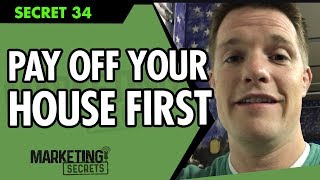
Russell Brunson hosts a Marketing Secrets podcast episode filmed in his home wrestling room. Prompted by a question about whether to pay off a house or pull equity for investments, Brunson argues entrepreneurs should pay off their home quickly to create a stable financial foundation that reduces fear of worst-case scenarios and thereby enables larger, strategic business risks. He contrasts this stance with investment-oriented advice to leverage equity and shares personal anecdotes about business cycles, past financial downturns, and how having a secure home allowed him to take big bets (e.g., multi-hundred-thousand-dollar video and launch-party investments).
Chapters
What's up, everybody? This is Russell Brunson. Welcome to a late night in the wrestling room edition of Marketing Secrets podcast. So the big question is, how are entrepreneurs like us who didn't cheat and take on venture capital, were spending money from our own pockets. How do we market in a way that lets us get our products and our services and the things that we believe in out to the world and yet still remain profitable? That is the question, and this podcast will give you the answers. My name is Russell Brunson, and welcome to Marketing Secrets. All right. All right, everybody. So I spent almost five, five or six hours today with the kids in my little piece of heaven here, cleaning today. So this is an external garage in our house that I decided to turn to wrestling room for those who've never seen it before. And it's awesome. I got wrestling mats. I got gladiator walls. We got Bulgarian bags over here, we got paintings. My favorite wrestlers back here, we've got throwing dummies. We've got the girl stuff here for the girls. These are actually the wrestling mats I used to wrestle on in high school. They were on my back deck growing up. So this little nostalgia for you, that's cool. And then, yeah, this is the weight room side of it. So this is where we do what we do, and it's awesome. So as I was working today, yeah. Cause it was out, like I said, we're out kind of in the middle of nowhere. So there's a lot of spiders and there's bugs and stuff. So all these bug trappers and stuff. And so probably every three or four months, I come and do a deep clean, right, to get the vacuum out and throw away all the dead spiders and, like, re clean and like, yeah, it's kind of a nightmare, but it's really fun. And now it's clean. It's so clean right now. I just. I love it. Makes me want to work out. So. But anyway, during all of this craziness today of cleaning, having fun like that, I was checking my phone a couple times throughout, and I saw a post from Julia Stoin. And I thought it was interesting because she asked, hey, should I pay off my house or should I pull the money out, use that for other investments and things like that. It's funny because I gave my answer. It was like the exact opposite of what I think a lot of people thought I would think, and I think it's good. So I'm gonna give you my advice right now because I know when I was a little kid, my dad, who's an entrepreneur and has a couple businesses. And, you know, someone who first got me all excited by this whole thing, he used to always tell me, he's like, you gotta pay off your house. You gotta pay off your house. Pay off your house as quick as you can. I remember because I was like, okay, that's good advice. And then when I got older, I remember reading Rich Dad, Poor dad and reading other, like, investment books. And like, they always talk about, house is a bad investment. You need to, you know, like, keep. Keep the money as low as possible and then. But, like, use that to pay off, you know, like, keep your house just down to the minimum, pay monthly payments and keep that money and go and invest in other things that can produce more money. And logically, it makes sense, right? Like, if I was an investment dude teaching people investment, I'd be like, yes, you should not pay off your house. Just keep the, you know, keep the payments or keep, you know, keep the equity in there as low as possible, strip the cash out, because you can use that in other investment vehicles. So it makes sense as an investor. But I don't consider myself an investor. Now I am getting dabbling into cryptocurrencies. Todd Dickerson, my partner at ClickFunnels, is making insane amounts of money. So he's showing me the ways of the crypto world, but I still never consider myself an investor. I consider myself an entrepreneur. And it's funny, because when I first started reading those books, I started believing that. Started believing that. And then I talked to my dad and I was like, dad, why don't you pull all your money? Because my dad's like, buys houses, pays them off, and the cash flow. Buys houses, pays them off, cash flow, and then his own house. And I was like, dad, like, what are you thinking? You're crazy. And I remember, like, one night he just kept telling me, he's like, russell, you have to understand, there's something. There's something about knowing that your house is paid off, knowing that, like, the worst case scenario that your house is there, it gives you the ability as an entrepreneur to go and risk. And I was like, huh? And I don't think I really got it. Like, you know, I hear him, I'm like, ah, you know, young son thinking he knows everything. And I don't think I got it at first. I was just like, okay, okay, whatever. Then, you know, the next 10 next decade of my life started happening after that. And in that decade, I've seen some really big ups and some really big downs and Some really bigger ups and some big downs. Downs. And right now I'm on an up cycle and there may be a time when I go back down, and that sucks and scary. And I have a lot of fear and anxiety around that just because I've cycled twice. And I know that feeling. I know the fear. I know the. All those things. I have a constant. I think part of the reason what drives me so hard, people always ask, like, why don't you slow down, dude? You're doing pretty well. I'm like. Because I have this, like, internal fear of like. I remember what that was like to cycle. I'm trying to, like, protect myself through the hustle or through the. I don't know, whatever. Whatever that is. And so I think that's a big driving force for me. But during these cycles, and luckily we recovered from them. But a couple things that I noted, things got really bad a couple times, but at the same time, I never. I'm probably wrong, dude, but I never told my wife a lot about what was happening. And she found out later, actually, she was at last Funnel Hacking Live, where I did the presentation on all my. My failures. She gets off a few episodes back and he. And she was like, what? She's like, I didn't realize it was that bad. I'm like, oh, I didn't really tell you. I'm supposed to be the man. Supposed to be like, anyway, and. But like, for her, I knew that, like, I had to have security. So I knew how much, like, we. There's an amount of money every single month that she would. That she got that would like, cover the rent or not rent, her house payments, our bills and stuff like that. I just knew, like, as long as I can make at least that, like, I was okay risking and trying and doing things as long as the worst case scenario, my stability, my foundation was set. And so that was it. And during those rocky, scary times and everything, it was just like, I knew the worst case scenario. I could always produce enough money that nothing at home was affected. And so it gave me the ability to risk and to roll the dice and then to try things. And so for entrepreneurs, I think that sucking the cash out of your house, investing in other places is the worst advice ever, because then you're on this unstable foundation. Sure, you have more money to invest. In theory, you can make more money, all sorts of things, but it takes away your ability to risk. Okay? Risk is what makes an entrepreneur great. Right? We have to go out there and risk meant to jump off cliffs all the time. But risk is scary. And so, like, the only way for us to be able to increase the level of risk tolerance we have, I think, is also to increase the stability tolerance on the other side. Right. Like, paying off your house is smart because worst case scenario, if everything. If all the crap hits the fan, everything falls apart. If you've done that and you've paid off your house, worst case scenario, you still have the stability of a home for your wife and your kids and your whatever. And that is, like, that's the key that gives you the ability now to go and do the crazier things. Yeah. Like, if. Anyway, so that's my advice for all you guys. Pay off your house, pay it off fast. Pay off as quick as you can. Because as you do that and as you. As the stability, the anchor gets stronger and stronger and stronger on this side, your ability to risk over here without the fear of losing that, it gives you the ability to risk more and be able to do what you need to do. Because entrepreneurship is a lot of, like, literally rolling the dice. This viral video we're doing, I keep telling everyone, I'm like, you know, typically my investments in our business are very strategic, right? We create a funnel, we invest some money, we get it converting, and then we ramp it up really fast. Like, I'm not risking a ton. Like, this is the biggest one where it's like, to create the video, we had to write a $500,000 check. Like, okay, there's half a million dollars, right? Put it all in black. And then, you know, with the launch party, man, launch party between. Everything we've done is probably another three or four. I mean, it's close to. Man, we're all sending. That'll be close to a million bucks. Like, all on black. Like, okay, let's go. And hopefully it'll work, right? But the nice thing is that, like, because of the stability on other things we've set up, like, I can take that risk and it's okay because if worst case scenario, it'll be okay, you know, And I've talked about some other episodes of the podcast. The thing that so often keeps entrepreneurs from success is the fear of the worst case scenario. You have to be able to look at the worst case scenario and be like, I'm okay with that. And if you are, then you can jump forward. So many entrepreneurs, we never look at the worst case scenario. We're just always like, we don't want to look at, like, the thing that we're scared of, right? So we see the Thing we want going forward. But there's this nagging thing back your head. You're just like, worst case scenario, what if I go bankrupt? What if my wife leaves me? What if my kids think I'm a bad dad? Like, all these fears that are happening and we try to ignore them, but because we're ignoring, they're still, like, buzzing in our ear, in our subconscious mind. So because of that, they just keep coming. They keep coming. And I always tell entrepreneurs, like, if you want to be free and, like, be able to risk, you have to stop. You look back and be like, what's the worst case scenario back there if everything goes to crap? Like, what happens? And until you're okay with that, it's so hard to move forward. So a lot of us, we have to stop and say, okay, what's the worst case scenario? Okay. And I remember that a lot of times, you know, I've had a couple times, worst case scenario was bankruptcy. Worst case scenario was losing my house. Worst case. And those are. Man, those are scary. Now at the beginning, a lot of times, that's. You have to take that. You have to have the initial risk. You have to be, okay, okay, If I lose my house, it's okay. If I go bankrupt, it's gonna be okay. But as you get. As you start rolling up into bigger opportunities, bigger risk, bigger things like that, it's nice to look back, say, hey, worst case scenario, I lose my money on this deal. Still got my house, still got my wife, still got my kids. Like, that security gives you the ability to risk big. So pay off your house. There's my advice. It goes against all the famous investing dudes, but I think they're wrong. I think most of those guys aren't entrepreneurs like us. So that's what we do. We're entrepreneurs. We're risking making the world a better place. And I mentioned this on the entrepreneurial Scars podcast, the episode few back about, just like, if entrepreneurs don't risk, the whole world comes to a screeching halt. Like, the government put in bankruptcy and all these laws, all these things to protect us so we can risk. And so that's why it's vitally important. Yeah, and it's awesome. So there you go. Here's the mirror. What? There you guys are. We're all talking together. How cool does that look? If you're listening, you know what I'm doing. But if you're watching the video, marketingsecrets.com, this is what you see. Anyway. All right, guys. Appreciate you all. I'm gonna go back in, put my kids to bed. It's been a fun day. This room does look good. It looks clean. Ready for some workouts? Ready for people to bleed out of our muscles? It really hurts sometimes. Anyway, appreciate you guys. Pay off your house. It'll give you the financial stability you need to risk everything and change the world. So thanks everybody and talk to you soon. Would you like to see behind the scenes of what we're actually doing each day to grow our company? If so, then go subscribe to our free behind the scenes reality TV show at www.funnelhacker.tv.










