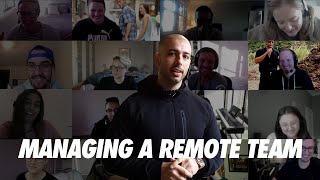
Sabri shares how his company manages remote teams: daily Zoom huddles, weekly full-team reviews called "whips," and Friday social sessions. He focuses on tracking outcomes instead of hours, checking in on individual wellbeing, and keeping goals aligned through regular communication.
Chapters
Hey, guys. This week on hey, Sabri, I'm going to be answering Shafiq and Anui's question. He's written, hey, Sabri, any advice on managing a team of virtual team members? This is obviously a very fitting question because everyone's teams are virtual right now. And first of all, let me come out and say that, like, I'm not a huge fan of. Of, like, having remote employees or working remotely. I think that, like, you know, human beings are pretty kind of tribal people, and we like to be in a tribe, and we like to be talking and interacting and having ideas bouncing off each other. And I think that, you know, you look at the kind of creating a culture or team camaraderie is very challenging to do entirely remotely. And I think that, you know, there's a lot of people that, you know, going through. What we're going through right now with this whole isolation and lockdown is that there's part of parts to it that people enjoy. And everyone was definitely very enthusiastic when it first began. I'm gonna be able to get extra sleep. I'm gonna be able to work from home in my pajamas, all that kind of stuff. And I think that as the time rolls on, do you realize, like, how important that human connection element to your role is and to your job? So one thing that we've done in my company is we've got department heads for all the different teams, and they kind of have a daily huddle on Zoom every morning. And even though you're isolated from the team, you need to use technology to connect with people and to make sure that everyone's kind of vying in the same direction. They've all got a goal that they're trying to do, and just having that communication element to be like, hey, this is what I'm working on today. This is what I'm working on this week. So, you know, in my company, that looks like having those meetings every day and then having like a full kind of whip once a week and figuring out where everybody's. What they achieved for the week, what they worked on, what they didn't achieve, what is it they want to be doing next week and making sure. I think that you talk more than just about work, right? So, like, when, you know, I have my sales meetings, you know, a couple of times a week that I personally run, you know, I want to know how the team's doing. I want to know, like, you know, how they're coping with things, what they're doing outside of work while we're all at remote while we're all working remotely. And also you just need to be more diligent in really getting an understanding of what everybody's outcomes are that they're pushing for both on a weekly, on a monthly and a quarterly basis. And just saying like, what are we trying to achieve here? Where are the areas that you're trying to upskill? What does that look like and what does that person look like that you need to become in order to be able to go out there and actually hit those goals and make that happen? You know, also in addition to that, our whole company has like, you know, a session on a Friday where it will be like trivia or everyone kind of gets together and just has a bit of social life with the rest of the team because everyone's isolated and for people that you know, have flatmates or have other team members and other people that they live with, it's easier. But there's people that also don't have any of that and they might be single, living in an apartment. So you need to look at not only like the work, the producing the output side of your team, but also just their overall well being and being able to connect with other people on the team and have that social interaction even why we are in lockdown. I don't think that it's, you know, when you're talking about managing team members remotely, I don't think that, you know, you can just have like this is what I want you to do and I'm just going to be looking that you're definitely spending seven hours on your computer every single day or eight hours on your computer every day. And looking at it that way, I think what's more important is looking at like what the output is that you're trying to achieve and, and you know, people are going to lull in energy, they're going to have a slow day or a slow week. You just need to make sure that you stay on task for what is that one thing that you're trying to achieve every month and every week in order to make it that your role is a success? I hope that helps. Hey guys, if you enjoyed this video, make sure that you click the like button and subscribe. We're dropping a video on YouTube every other day and if you've got any questions about any of the content that I covered in this video, just basically leave a comment with heysubri in the comment section. And every week we're also trying to go through all those questions and get them answered. So go ahead, click subscribe and we'll see you in the next video.