How To Sell Like Crazy - Sabri Suby Full Interview On Craig Ballantyne Podcast Early To Rise Radio
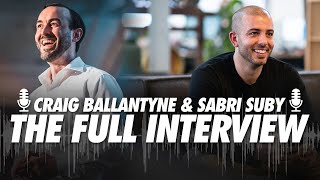
Sabri Suby went from making a million cold calls at 16 to building King Kong from a rented bedroom with $50. He shares how offer engineering, like guarantees so good prospects can't refuse, and ruthless productivity habits turned the agency into a bestseller-worthy business.
Chapters
Well, that was great, man. That was probably one of the most, one of the best hours I've spent with another entrepreneur in a long, long time. All right, Sabri, it's awesome to have you on the show and it seems like you've kind of come on a similar path to me from kind of sort of nothing to something. And now you're a best selling author and you have this amazing brand, King Kong down in Australia. So why don't you walk us through, you know, how did all this start?
Wow. It's definitely a long loaded question. I got my start when I was 16 in sales. That was my, like my first kind of foray into the business world to kind of speak about that was that.
Face to face over the phone.
We were working in a converted shipping container and there was 13 of us packed into this real life boiler room and we were making 100, 250 to 200 to 300 phone calls a day. And we were calling people up to actually sell them ink cartridges, believe it or not. And I started that. It absolutely sucked. It was a cold, hard slap to the face being on the front lines of capitalism. And that was like, wow, okay, this is how the world kind of works. And then that's what I kind of fell down the rabbit hole of marketing and business. And then I started my business, first business when I was 22 years old. I've run businesses, I've run a few into the ground. And at all of those businesses, I was always tasked with solving the number one problem that businesses face, which is how do we get more customers. And that's kind of like the key, pivotal problem that we look to solve in my own business at King Kong for our clients is how do we do that? How do we ring the cash register in high enough volumes at fat enough margins that allows us to go out there and get customers. So that's kind of like the world that I operate in. Business building, growing businesses, building teams. And it all is really focused around that number one problem.
Yeah, I absolutely love it. And I was just reading some of your examples in this one chapter that I really want to spend some time on here in your book. And I just love the ideas that you gave there. Now, just before we get to the sales, when we go back to you as a 16 year old. And I often say that if I could go back and force my younger self to have done something, it would have been some type of face to face sales or phone sales because those lessons are far reaching beyond sales. So what were some of your big life lessons or some of the funny stories that you had there that stick with you today and that still impact you.
Yeah, sure. So I grew up in a small beach town called Byron Bay that's become very famous because there's all these celebrities moving there.
I actually have a friend who owns a company there. Wicked Weasel.
There you go. I know that bikini company very well. So basically, yeah, I was raised by a single parent mother in like a small regional beach town and really watched my mom hold down three jobs and the work ethic and everything that came from that. So that work ethic was really instilled in me from a very young age. Right. And waking up and helping my mom and do all of those things and you know, doing sales. And you know, for me that was just a huge, huge turning point in my life. Like I am going to. I often joke about, but. But it's true. I've got two daughters, right, Both under the age of four and they are both going to be doing selling. As soon as they can speak, they're on the telephones asking strangers for money. And the reason why is that just teaches you so much about people, about what motivates people. And you know, it didn't stop with me in that sales job. Like I went, I moved over to London, I used to work in floors with 200 people on them, you know, and calling people from all over the world. And when, you know, I've made over a million cold calls in my life. And when you do that, you learn so much and you learn so much about people of all different races, ages, genders, and it's just like that in the trenches, down in the dirt, experiences of doing like research, of speaking with literally thousands, hundreds of thousands of people throughout my career. And that is just, that's just a lesson that I was very fortunate to have. At the time. I didn't know it because it really felt like I was just getting my teeth kicked in all day long. But it's just having the ability to communicate and persuade is really the cornerstone of everything. It's in leading people, it's in convincing your partner or convincing your children to do things, convincing yourself to do things that, you know, need to be done.
So what's like the ultimate opening line? Like how do you get somebody who's, you know, maybe sitting watching the telly or, you know, having a snack or something? You call, you get them and now you got to like get them to give you the time of day. What approach tended to work for you?
Yeah, it's a great question. My opening line was like, congratulations, Craig, you've been basically selected out of people in Toronto or wherever you are, whatever that suburb is. That was the hook, right? Regardless of whatever it is that I was selling, if it was a cult call, it was, congratulations, your house has actually been selected to receive this. So and just basically assuming the sale from the very get go. Not like, hey, I was wondering if this person's in. None of that nonsense. It's like, bang, straight in. It's just something that's happening, right? So it's like, excellent, you've been selected. So what we're going to basically go, what that means is for you is where we've selected a few houses and da da da da da da. And we just get straight into the thick of it.
Amazing. And what's an absolute killer of a conversation that you maybe did when you were early in your career.
Oh my God, I've got so many funny stories. I was working on a call floor for a company called Sky Television in London, and I had an arrangement with my sales manager that, you know, average sales people would do would be two sales a day. And that was the average. And I was like, okay, I negotiated. I can do five sales. You will send me home, I will get paid for the rest of the day. And this is the commission that I kind of want to be getting. And he's like, of course, yes, I'll do that. I'll agree to that. If you can do $5,000, that would be amazing. And my best friend who was living with me at the time, also working at the same place, we would go to work together and I would do five sales by midday and I would be, I would be leaving. And I just never forget the look on his face. He's like, dude, like, come on, man, you're gonna leave me here. So it got to a point where we would just have fun and I'd be like, I can close this next person in a Spanish accent. You're gonna send me home for the week paid. And he'll be like, okay, that's agreed. And I did it. And like, it was. That was a crazy story. And the whole sales floor stopped. And they were listening to me, you know, do a sales pitch in a completely Spanish accent. So that's an entertaining story for you.
Well, okay, so, you know, you go back even before 16, and you do have a powerful story in your book about helping your mom, and I'm glad you share that. What did little Sabri want to be before he entered the boiler room at age 16.
Many things. I was really into basketball at the time. I was playing state basketball. I was a point guard. I really wanted to kind of play professional sports like most children do. And I really. That's all that I knew that I wanted to do at that age. I'm being honest with you. And I didn't really have any idea of what I wanted to do with my life other than the passions that I already had. I certainly didn't think that I would be getting involved in business and doing all of those things. And I knew that I wasn't clear on what it is that I wanted to do. I didn't even want to go to university and go down that common path because I was unclear of where I wanted to go and what I wanted to do. And that was when I kind of packed my bags and headed over to London when I was 17 years old.
So you were not even a college dropper, you were just a college night at all?
Yeah, I decided that I wasn't going to go to college at all. I did end up going to college and then dropping out after, after my return to Australia and then I went back and completed it, but I was like, hey, I'm just going to take like a leap year off, go travel the world, go work a bunch of jobs, which I did. I worked the most random jobs ever and ended up back in sales out of desperation. And every single job that I ever had, I was the top salesperson there. Bar, bar any of them. And it was always within a month I would be the top salesperson. And I was the top salesperson for every week that I worked there. Right. And so after reluctantly getting back involved in sales, I was like, like I'm obviously really good at this. And then that was when I really just decided to go all in and really become a master of it. And that's when I fell down the rabbit hole of direct response. And not one to one selling, but selling, you know, one to many. And that's kind of like where it all began.
Yeah, absolutely. So before we get into the business today and all that good stuff and how you get all of this done, while I want to ask you one last question about sales is what was like one of the weirdest non work experiences and most interesting non work experiences where your sales skills either got you out of a jam or got you, you know, upgraded to first class and some, some flight. And what, what techniques did you use in that situation? Because, because I agree with you, like when you're trying to get your girls to brush their teeth, you got to use some persuasion. For sure.
Yeah. The best and biggest sale that I've ever made in my life was probably getting my wife. And when I. When I met her, I met her and one of her friends, and it basically. I don't know how it came up, but she basically told me that she had a boyfriend already. And, like, I knew that, like, I was interested in her. So I just saw that as, like, an objection that simply needed to get overcome. So, you know, most people just pack up, shop, kind of leave at that stage. And I found a way to get her telephone number. And then one thing led to another. She was actually lying to me because she was sick of getting hit on by everybody that she has. So she'd just tell people that she had a boyfriend so she wouldn't have to deal with all of that. And then the whole courting and the salesmanship began from there. So that's the biggest one. But, you know, everything from upgrading. Yeah. Flights to hotels, all of that stuff, like, it is all a sale, and it must always be done no matter what. And it's just whoever has the most conviction is the one that wins. Right. So that's just. You gotta. It's like if you're going into an environment, regardless of what that environment is, like, something is being sold and something is being bought, whether it's an idea, whether it's a transaction for financial things, there are ideas being sold every single day. And whoever has the most conviction around that is typically the person that is the one that is going to get the outcome that they want.
You know, it's so funny that you say that. My fiance Michelle, is absolutely like you. And, you know, like, when we go to the airport, we went on a flight recently and we had bought a seat for our dog, but they had given it away, even though we had all the documentation. And I. I'm the kind of guy who's like, oh, I'm too scared to get in this confrontation. And she didn't get into confrontation, but she had the conviction that she was getting her seat. And sure enough, after six different conversations, not only did she get the seat, she got treated really well. That's not me. And it's fascinating the way that you describe it, because that one line, if people take nothing from this podcast, which they will, of course take a lot from, it is having that conviction. So I really, really do like that. Now, before we get to your juicy Godfather strategy that I'm super excited to talk about, how do you do it all. You've got two girls, you got a great marriage, you've got a massive business, you've got the best selling book, you're doing the shows like this one. How do you do it?
Sacrifice is definitely key, but it's also having a partner that's on the same page as you. Right. So that's just absolutely crucial. And a key to have everything is making sure that you and your partner are clear. You're on the same page with what it is that you're fighting for and where you're trying to get to and what are the roles that each person is going to take in order for you to get there. Right. And it's, you know, one of the things that I see, you know, in society so like so much today is that like, you know, everyone wanting to kind of be equal and doing the same things. Right. And I think I'm obviously 100% on the whole equality piece. But that doesn't mean that there aren't different roles, just as there's different roles on a sports team. Centers and shooting guards and linebackers and all of the different things you need to be understand of like, okay, this is what our life is going to look like. This is what our family unit is going to look like. This is how much money that we're going to need to be bringing in in order to support this lifestyle and to try get to where we want to go. Now let's have a look at what are those roles look like, right? What? How can we have it all? How can we still have a great relationship? How can we have a really good relationship with our children and be present but still have the financial wherewithal to be able to provide that life? Right?
Yeah, absolutely. And I love this conversation and I would love to know then what's the rhythm in communication that you and your partner have? Is there annual planning? Is there weekly meetings? What do you do? Because I think it's so valuable for the couples listening to hear your perspective on that and your plan.
Yeah, the very first meeting that you have is a very confronting one for most people because there's a lot of things that aren't talked about in relationships and like expectations and things that are kind of, they just go unsaid but they're never really addressed. So when you bring them to the service and have that really hairy conversation and you put it out on a one pager, it looks like this is where we're going. This is where let's both row the ship in the right one Direction, then you've kind of got the hardest part done, which is getting on the same page. And then, you know, me and my partner will typically talk about these things, you know, once a year, and we'll plan it once a year. We'll be talking about it all the time. Right. And be talking about, okay, this is what I did. This is the win for us to do what we want to do. Because I tend to plan my year in a year in advance, and then I break it down into quarters. So they're really intensive sprints for 90 days. And then we will have some, like a time. Some time off or a holiday or whatever that that looks like. So there's very clear goals of what. What's going to happen in the first quarter. We're going to be doing a trip to here. We're going to do this. We want to do this with the girls. This is something that we need to get in order. So we're planning it 90 days, you know, in advance on the execution. But the big picture happens once a year. And like, to expand on that, it's like, it's the sacrifice right there is like, you know, successful people pay the price. They do all the things that unsuccessful people aren't willing to do, and they want success to dawn on them. That does. That's a myth. It doesn't happen. Right. You need to become somebody that is worthy success, and then it will flow to you. So that involves, like, discipline. Like, I know that you're big on waking up early. I have a thing where it's like, for every daughter that I've had, I've had to wake up an hour earlier. For each child that I have another child, I'll be waking up an hour earlier because I just don't want to fall victim to. I don't have enough time. I will create time. Right. I'll do what I need to do.
And I really love that in your book because you, you know, one thing obviously here at early to Rise, we're very much about the morning routine. And I definitely want to ask you about that because you have a very similar philosophy about the morning as I do. So I'll let you go on and then we'll ask you about that.
Yeah, it's just basically, that's the thing. That's the way that you can. You can have it all, but there are sacrifices that need to be made, right? So, like, I'm not one of those people that say you can't have it all. Like, if your business is doing well, then Your relationship is going to be a shambles or the relationship with your parents or your health and your wellness. Like, no, you can have it all, but you really do need to make sacrifices about what it is that you're willing to tolerate and what are those ships that you're willing to burn in order to get you to be balanced. Right. I look at success as being like a polymath. I want to be well balanced in all different areas. I don't just want to be like a really good marketer, be a horrible father. Right. So I try and look at ways that you can balance those things and by cutting out ruthlessly the things that aren't important to you and that don't support you in getting excellence in those different areas of your life. And there's so much fluff and filler and fat that can be chopped out. Is your disciplined enough?
Do you put, do you communicate parameters to an assistant or do you kind of have your own set of mental rules that allow you to say, you know, go or no go on an opportunity that comes your way?
Yeah, definitely. You know, I ruthlessly look at my calendar and my time and have everything scheduled out and try and architect a life where I don't have a lot of that nonsense. Like, you'll see me, I only wear black T shirts. Like, I don't want to have the decision fatigue. I don't want to be waking up and wondering what I'm going to be wearing. Like, I'm very simplistic in that approach. And I look at the debt that I accumulate from adding things to my life and the complexity that that involves. If you add other layers in, right. If you add even just different types of clothing is a level of complexity that you're adding. Right. So I try and just engineer a life that's very streamlined. So I am disciplined and I don't need to wait for motivation to dawn on me. I have a life that is like. It's like a kind of. These are the things that are important to me. Let me sit down, take the 10,000 foot view of what it would look like if I had all the important big blocks in there, because the unimportant stuff moves into white space on the calendar. But if there's important stuff blocked out, then it's impossible to fill that calendar, that time up with things that aren't important because all the important things are planned. So, like, I do have, you know, I call them a professional fixer who obviously manages all the life admin tasks and all the things that aren't the big needle movers for me, but then also just having very, very disciplined of like, you know, when I'm going to be doing things, when I'm going to be executing things. And for some people, that might sound boring. That doesn't. That doesn't mean that my life isn't full of spice and fun. I do. But it's like I know I can maximize those times because I know that I'm going hard when I'm away from my family and my kids. I'm not just shooting the shit in my inbox, not really doing anything like I'm violently executing. And then when it isn't time to violently execute, I can unplug, switch off.
That's powerful. And I like that one phrase. I forget exactly what you said, but you're talking about, you want to be. I'll just use the term, well rounded.
Polymath.
Polymath, yes, that's right. And so the first person that popped into my head was someone that you mentioned in your book who's a mentor to me and must be a mentor to you too, is Mark Ford, AKA Michael Masterson, who wrote Ready, Fire, Aim. I mean, every single year that guy writes play, learns a new instrument, I mean, it's incredible. While also building his wealth. And he has three kids and a good marriage and is in shape and so when did you find Mark's book Ready, Fire, Aim, and what were some of your biggest takeaways from it?
I found it probably four years ago. I believe I've been aware of Agora for some time and. But so that was kind of like when it came up on my radar and I read that and I just think, yeah, it's a fantastic book in terms of just those different ascension points that happen in a business. And it's interesting, obviously, hearing it from somebody that's gone out and done it. Right. But again, it's like, for me, I read books and. Or either I do those things. I'm ruthless on the information that I allow into my head because I do believe that there are mind viruses out there. Right. And I don't want to publicly shame any, like, really popular books or anything like that, but there's a lot of false sense beliefs that you can get away with doing a little bit about a little bit of work and get a maximum asymmetric output. Right. And all of those kind of things where it's like, I actually, before I read a book, I'll put that author under quite a lot of scrutiny and go read interviews and get a background of that person and say, is this person somebody that is worthy of learning from? Right. Because just like you can get one good idea from a book that can change your life and can add an additional million dollars or $10 million to your business, you can also get a virus from somebody that, if you don't have the proper critical thinking and way to ascertain and put that through a filter where that can actually take away a couple of years of your life, of you not doing the right things.
That's a really, really great way of looking at it, and I'd never thought of it that way. I really like it. Now, on the subject of books, are there any kind of lesser known books that you think should be more popular among entrepreneurs?
Yeah. Meditations by Marcus Aurelius is a fantastic book. Phenomenal. And it just shows you that, like, nothing really changes with human beings and problems over huge amounts of times, even when you're arguably one of the greatest Roman emperors to ever lived. And just hearing his meditations and his journals and the problems that he was going through and the thoughts and things that he was deliberating on and meditating on and practicing on and solving those things. But it's a fantastic insight. That's a great book. That's less known. Another book that I really enjoy that kind of shows the underbelly to entrepreneurship and business building is the Hard Things about the Hard Things by Ben Horowitz. That's a fantastic book. But, yeah, I like to look at the OGs.
I like it when you say that. Now we jump into the Godfather strategy, where you do quote One of the OGs, Claude Hopkins, and. And the Godfather strategy. I'll let you explain it in a second about power of the offer. But you have quoted Claude and he says, make your offer so great that only a lunatic would refuse to buy. So why don't you walk us through the general framework of what you mean by the Godfather strategy and then we'll go through some of the examples that you give. Because I do agree with you that this is probably one of the biggest areas for somebody to leverage in their business if they're not selling.
Yeah. And this was something that I learned firsthand on, on the front lines of capitalism. Like getting my teeth kicked in and making phone calls is like when I worked for many different companies, is that like, you know, you're limited by how many phone calls that you can make. Right. And it's like the thing that I found to be the most pivotal was the offer that we were making on that Telephone. It wasn't necessarily just the delivery vehicle. That was me or that was a salesperson, but what was the actual offer that's being communicated? And so the Godfather strategy is all around, how do you make an offer that is so compelling that your prospects simply can't refuse it? Right. And engineering everything around that, because a compelling offer is infinitely more powerful than a convincing argument. And most people's marketing is simply trying to have a convincing argument of why you should buy, rather than radically flipping that paradigm on its head so that an argument doesn't even need to take place because the offer is so compelling that it magnetically pulls people towards it where they would be a lunatic to refuse it.
In your book, you use an example of a digital marketing firm. Was that your own digital marketing firm that you changed the offer on or was it somebody else's?
No, it was Al's.
It was yours. And so could you walk through that story for everybody? I think it'd be very valuable.
Yeah, it was like, so, you know, we. I started king Kong in 2014 and was definitely late to the party, so to speak, on digital marketing agencies. The blood was already all up the walls and in the water of competition, of how fiercely competitive the market was. 1,800 digital marketing agencies, you know, in Australia, for a population of 23 million people, 2 million small businesses, like, it's like everyone was like on the ground scratching it out with the turkeys. And I wanted to be like that eagle flying in the air. So, you know what I realized when I was making a lot of cold calls is that most people had been burnt by two or three different agencies. It was always this argument of we're different. No, no, no, no, we're different. We're not like Tom, Dick and Harry. That burnt you to a crisp before, like, where we're different, right? And it's just like, just falls on deaf ears. Like, it's like you just find yourself in these dialogues where you're trying to convince somebody that you're different. So rather than doing that, you know, I came up with the guarantee of actually guaranteeing results or we don't get paid. And when I did that, the tables turned dramatically and I went from having to try and argue and convince people and objection handling, where it's like, no, I'm going to guarantee to get your business on page one of Google in the next 90 days or you don't pay us.
That was so powerful to me when I was rereading it this morning because we're a coaching business to Accountants, mortgage loan officers, that type of stuff. And I was having a call with a woman yesterday who had been burned, as many entrepreneurs are, they have bad coaching experiences. And she said, what makes you different? And I did give a, you know, the spiel about what made us different. And then I realized what made us, what could have made me different, but I didn't tell her was like, hey, listen, just try us and if you don't like it, we'll give you your money back. And we recently did a couple of promotions around the courses that we have where we tried to make it a real no brainer offer by telling people that if they bought, and we've had two people, no, three people take me up on this, if they bought the program and got great results and simply sent me a testimonial, we would refund their money. And I think what you say in your book is, you know, it'll probably triple a great guarantee will probably triple your response and your sales with only a small increase in the refunds. And I can absolutely say that you're right on that. So thank you for reminding me of that.
Yeah. And it's just, that's just a key, pivotal thing. Like you see people just mindlessly trying optimize their funnels and their ads and get more CTRs. And let me add this proof element and let me do all of these things, right? All of these additional things that give you minor increases or you can just change the offer and get a huge uptick. Like you're not going to double your ads, double your revenue, or double your sales by increasing the efficiency of one of your Facebook ads. That's not, that's not going to happen. Right. But you will by making a more compelling offer to your prospects. And most people don't understand is like, let's just say that you spend 10,000 bucks a month on marketing, right? And you know, you convert 10 customers, so your customer acquisition cost is a thousand bucks per customer on the ordinary offer that you're making right now. Right now most people don't understand that if you have a weak offer that just increases your customer acquisition cost, right. They're thinking about the one or two people that they might need a refund. What happens if you could spend that same 10 grand and get 20 customers because your offer is way more compelling and then have to refund one of them? Like that's where, that's where the time is that you need to spend your energy on is the offer creation. And even as you ascend as a marketer from Being on the tools, doing all the stuff, and then just become more of a, like, you know, an oversight and having a look and still being involved in the marketing. But if there's any leverage point that you can do, it's not the copy, it's not how sharp the funnel is, the webinar, the, you know, the replays, it's the offer. That's where you want to spend your time and effort. Is crafting something that gets people to pull out their wallets irrationally, emotionally, and buy in huge quantities?
Absolutely love that. And one quote that you had in the book that seems to be yours is, if the offer and guarantee don't keep the founder up at night, then they're not strong enough, which means you've got to be feeling like the business owner should feel like they're being ripped off by the customer, because this is just so good. Right?
Yeah, and that's. Yeah. And that's. That. That's. That's a screen that I run everything through and that I have to tell, you know, our clients and students about. Like, if this offer doesn't make you uncomfortable, if it doesn't keep you up at night tossing and turning, wondering what's going to happen when you make it, it just ain't strong enough. Right. So you have to tie something on there that makes you feel uncomfortable. If you're really comfortable with it, then it's not strong.
No. Because you're proud. Because you feel like, oh, yeah, I'm getting the best out of this.
Yeah. And there's risk. There's risk that's present in every transaction. Either you burden that or you ask your prospect to burden that. Right. But in both of those instances, like, you know, if you're. If you're saying, like, I'm going to get, like, the prospect to burden it, you think that you're winning, but you're losing because you're not getting as many customers as you possibly can. Your marketing isn't as efficient as it possibly can, and you're just not doing an effective job as a business builder. If you're making an ordinary offer and you're expecting the traffic guy or the agency or the funnel to magically fix that fundamental problem.
You know, it's almost like somebody with a household income of, you know, $70,000 saying, I'm going to save my way to a million bucks instead of thinking, well, how can I go out and increase my income and double it? I can save an extra $3,000 this year, or a Dan Kennedy line around that might be you're stepping over dollars to pick up dimes with that scarcity minded thinking. So I love that. Now if I'm an entrepreneur and I'm listening to this and I'm going, he's right. Sabri is absolutely right. I have a weak offer. What's the step by step that you take people through or at least some of the most important fundamentals where you just take somebody's offer and King Kong it?
Yeah. Well, the first thing to do is look at the environment of which you are communicating that offer. That's the very first thing that people never ever do. It's the simplest. There's no excuses at all. What are the other alternatives that exist out there in the marketplace that our prospects are looking at and what are the offers that those people are making?
Right.
So if people in your market are offering a 30 day money back guarantee and you, you know, there's no point you sitting around in a room, you know, drinking a herbal tea, thinking about an offer and then you, you arrive at the 30 day money back guarantee and then you look at your market and everyone's making the same thing, like then it's not a compelling offer. So the first step is to have a look at what everybody else in that marketplace is doing. What are the offers that are being communicated to your prospects and then going out and as a bare minimum, making your offer twice as strong as that. I like to make it 10 times as strong. And that doesn't mean if everyone's offering a 30 day money back guarantee offer a 60. No, no, no, that's not an order of magnitude that would make me feel comfortable. It would be a double your money back guarantee. Right. Or it would be, you know, for instance, like in my program, like one of our flagship programs, Quantum Growth, is that, you know, if basically if the program doesn't give you it like a 10x investment in 12 months, we will give you a full refund and then we will also give you $5,000 in cash just for wasting your time. Right. So it's just like if you do the work, we're confident it's going to get you the result, but you've got to do the work and if you do and it doesn't work, then we will refund you and give you $5,000 in cash.
Yeah, I mean that's like saying, hey, if you give me a dollar, I'll give you 10. How would you like to make that deal? Okay, yeah, I'll make that deal all the time. So what do you do in terms of like, what are your habits and rituals and routines for when you need to go and solve a problem? Do you solve it at your desk? Do you go for a surf? Do you walk on the beach? What is it that allows your brain to come up with the most creative solutions?
Well, there's different mindsets for different problems, right. Typically, as the founder and CEO of a business, I refer to it as an upside down pyramid where the hairiest, most complex problems are the ones that no one else can solve in your organization that, that ultimately get left up to you to make those problems right. And they take an incredible amount of horsepower and mental ram in order to solve them. So if I'm trying to solve a people problem, the way that I go out and solve that problem will be radically different to whether I'm trying to solve a marketing problem and come up with complex offers. Right. Or really motivating offers. So you know, realistically there's a lot of different ways. If the problem is something that is really complex, it's not going to be solved in one sitting, right? There's going to, it's going to be in my mind marinating for a long period of time on my morning runs, when I'm in the sauna at night, you know, when I'm reading, on the weekend, when I'm having my morning coffee and really trying to triangulate my perspective and look at not only the first order consequences, but what are the second and third order consequences of the decision that I'm about to make in solving this problem. You know, as a business owner and a founder, you really have like a systems thinking mindset and you're not just about solving the surface level problems, but looking at what the spill on effective is maybe 12 months down the road from the decisions that you're going to be making. So you just, it's a really important problem. It's something that you need to think long and hard about.
What do you look for in key employees, the COOs, the integrators, those people that you would keep as a confident in terms of going to and bouncing these ideas off of? Are you looking for somebody who has opposite approach to you or is there some type of disc profile that works really well with, with your approach?
Yeah, like we do, you know, the Myers Briggs and we do a bunch of different personality testing within my organization and you know my people and cultural manager, she's like, you know, ex Facebook. So I've got like a bunch of weapons in our organization. Like we've got a really, really good Team, strong people. And I wouldn't be able to be no way near where I am today if it wasn't for all the people and the team that I've been able to assemble. The first. There's a few different things depending on what positions I'm hiring for. But I would say that one of the most important is EQ and that person having a very acute eq because we're building a team. There's people within our organization. We're not an engineering firm. Right. There's a lot of humans in the business, a lot of emotions and you need a certain level of emotional intelligence and EQ to really understand what's going on. And then also people that are detail orientated and problem solvers. Like I like engineers. I think engineers are like the smartest people in the world, not because of the disciplines that they learned in engineering, but it's the way that they go about problem solving and the way that they break things down to their first principles and then build them up where it's like an engineer, like you can throw any problem at them and typically they'll come up with a very sound decision and an outcome based on logic, you know, scientific approach, first principles, and really using some strong frameworks and mental models to arrive at those things. So it's a combination of them being able. There's no point having someone that's really good at problem solving but isn't good with people. Right? So the first, the people part is the first part and then off that is like, you know, them being really good problem solvers and detail orientated. Because if you understand people and you understand problem solving, there's not a lot that you can't accomplish. Because Google has the answer for pretty much everything, right? But you have to know how to go and separate the signal from the noise, to run it through a mental model and then to be able to communicate those findings with other people.
Man, this is, this is so great. I feel like I'm getting a mentoring session right now. So I appreciate it. So just a couple of questions to wrap up and I really appreciate your time is if you go back to when you started, did you start this at home in a bedroom? Is that what I remember reading in the book?
Yes. So I started King Kong in 2014 from a rented bedroom with no more than $50 and an old computer that my girlfriend had bought me, who is now my wife. And you know, no balling buddies or rich uncles or people just handing me money like I rolled up my sleeves 150 cold calls a day and desperately just called strangers to get them as clients.
Wow. And then so when you started getting clients and all of a sudden you got overwhelmed with work. And for the people out there who feel the same way, what were the first steps that you took to get back control over the chaos?
That's a great question. For me, it was very chaotic because I was doing the selling by day and then I was doing the client fulfillment work by night. So, like, I was working 16 hours a day in the beginning, and it was just hectic. Like, I would wake up, bring on the clients, then do the work. Then I started to get contractors, brought my wife to come and help me out in the business. Then, you know, got it to a point where I was like, hey, like, what am I doing here? Is this a cash flow business? Like, is that what you're doing? Is this a lifestyle, just provide a good lifestyle, or do you want to build something bigger? And when I decided, no, like, I want to build something that's a lot bigger than me, I don't want it to be the Sabri Show. That was when I ponied up, got an office, and started to build a team, right? And there is always chaos. Like, it's. This is the part of, like the game, right? There's this like, you know, you. You bring people in and try and make yourself redundant at every step of the way. So that's kind of like the way that I have always looked at growing my business is like, where is it my time is going, right? And who can I get? Who can I delegate this to, automate this or just remove it completely to make myself redundant in that role? And then you slowly start to ascend up. And for me, first it was like, well, I'm spending, you know, eight hours a day on the telephone. Let me go and hire somebody to basically do a lot of the selling with me, and then let me get an account manager and let me do this and let me do that. So you always are looking to kind of make yourself redundant throughout that process. But, you know, there is always going to be chaos. There is always going to be problems in scaling a business. You know, I often liken scaling a business to like, you know, eating a mouthful of fire ants while riding a motorbike blindfolded through the snow at 100 miles an hour naked, right? There's a lot of uncertainty in doing these things, but it doesn't get easier. You just have to get better, and you have to get better in and building moats around yourself. So there's not the same amount of static and white noise. Right. But there will always still be some level of chaos. But you just don't want it to get so big that you're not able to work on the important things.
Oh, that's fantastic. Now going back to something that we talked about earlier. You know, you're working 16 hours a day, you're not married. At the time when you start this business, were you already on the same page? Had you already had that difficult conversation or was that something that came came up and because a lot of people are probably thinking like, oh my gosh, I would, I'm committed to my business, but there's no way in heck my partner, spouse, boyfriend, girlfriend.
Yeah.
Would. How am I going to communicate this to them?
Yeah, we didn't, it wasn't like it wasn't long term in the beginning in terms of what does the next year, 2, 3. It was survival mode. Right. Like as I mentioned, I'd run a few business. I had built some, I'd sold some, I poured a lot of the money that I had made into other businesses. Some of them worked, some of them didn't. I just, you know, then I also got married and I wanted to pay for everything, you know, for ourselves and do all of that and have a big nice wedding, overseas location, do all of those things. Right. And then it came down to the, to the point of like no, I need to put money in the bank, food on the table now. So let me just get one nostril above water before we talk about like long term. So we were both on the same page with that, you know, because you have to be like, you have to have money to survive. And then once that was all done, it becomes, it's different conversations. That's why the, like the conversations happen yearly and then the execution happens quarterly because you know, from getting it the business with no money at all to getting to the point where it was doing a million dollars a year and then even making a, the conscious decision of getting an office and building a team and taking some short term hits in order to take some long term wins. It's different conversations, right. Again, and then if you're going from 10 employees to 50 employees, like there's just different commitments, it's a different lifestyle. There's certain things like in the beginning, you know, in when you're building a team of five to 10 people, you can't just go away on holiday every quarter. Right. You've got a team to manage. You don't have full on Management hierarchy in place, right? So you know, you have to like eat this shit really to get ahead in the beginning and you have to pay the price in order to get that long term success. So you both need to be on the same page of where it is that you're trying to get to so you can make sense of that stuff. Otherwise it's like, yo, like what do we do? You're working like 16 hours a day. Like what's going on here?
That's fantastic. I really appreciate that. Okay, second last question. What did I miss? What? You know, I'm on the phone with the guy who sold a mill like a ton of books. He's got a great business. What did I not ask you that? I should have asked you.
That's also a great question. I'd probably say that, you know, the big thing is that, you know, when people see like the book or the agency, like they think about like the marketing side of things, right? And they think about like, oh, what's that funnel like? Now in a day and age where everybody's funnel hacking, all the information is available to everybody to be successful is why are some people successful and other people aren't even when they both want to be successful? And that's the thing that most people don't really look at and they don't want to look inside themselves and ask. And that's the like to answer that question, now that I've put it out there, is that realistically it's not like a lack of having resources or knowing which funnel to deploy to your business or that's Google Ads or Facebook ads that you should be running or is it YouTube pre roll? It's just becoming somebody that is worthy to have a successful business because like a business is typically just a reflection of an individual and their own disciplines and their own standards of what to live by, right? And all you have to do is look at somebody's workstation and their desk to find out what kind of person they are. Right Is shit is everywhere and it's chaotic. I can guarantee you their business is chaotic, right? There are business problems that are masquerading as business problems, but are just a reflection of the founder and that founder also or the team behind that business and them being the limiting constraint of the business. And it all starts with who you are and your disciplines and your motivations and what's important to you, right? And that becomes with like, you know, in order to build a better business, you have to build a better version of yourself that is capable of being able to build that business. So, you know, I see people, they feel guilty if they're going to the gym at like 11am or if they're reading books or if they're investing in themselves, which is the pilot to their business. And it's ridiculous. There shouldn't be this, like, this is work and this is not work work, right? It's like you having a sauna at night or going to the gym at 11am is necessary for you to become the person that is capable to build that kind of business that you want. You can't just work 12 hours a day and ignore your health and your relationships and expect to have a flourishing business. You need to look in the mirror and have a look at like, what fires are you willing to walk through, right? What complexity are you willing to solve? What are you willing to give up in order to get to where you want to go and then ruthlessly execute on those things. But don't think that you can just get ahead and get all of those things without being really disciplined, without making sacrifices, and without asking yourself those hard questions. Because the first person that you need to convince every day is yourself. From the moment the snooze button goes off in the morning, you need to wrestle that little bitch and basically get out there and do what you said that you would do, right? So if you make a promise to yourself in the night that you're going to wake up at 4am in the morning and go for a run, by God, you better keep that in the morning, right? Because otherwise you're starting your day off with a lie, right? And people train themselves with these snooze, snooze clocks and all this nonsense. And it's just like, it's that like little bitch inside your head that's getting you into like a rear naked choke and just choking you out before the day's even begun. And it's that internal dialogue and that battle of duality of man that is constantly present that you need to be aware of and that will always be there. The resistance pulling you back and getting you to do things that aren't in your best interest. But you need to find a way to suffocate that internal dialogue and still do all of the hard things that need to get done.
That is wisdom. Thank you so much, sir. So everyone can go and get your book at selllikecrazy. Co. What are you up to next?
For me, I look at solving. My whole thing is about helping people grow their businesses. I believe that business is a huge Vehicle for Change. And I believe that I can take somebody that is barely struggling to pay themselves or to make payroll and then that's having a negative spill off effect with their relationship, with their children, with other people in their life because the financial burden that brings and I can go in there and I can help somebody geometrically grow their business that has a radical difference in the quality of their life and that also makes a difference to their immediate network, in their immediate family, in their friends that look to them with them being able to donate to causes that are like they hold close to their heart to be able to give back and for also as a beacon of hope to other people that are within that person's life to what is possible. Right. So I look at it in quite a profound way. I don't look at it as just going out there and helping people with their Facebook ads or something like that. I look at really using Vehicle as a way to make a lot of change in the world. And I am really obsessed with helping as many people as I can solve that problem and getting, you know, the stuff that I do out into as many hands as possible, regardless of whether or not that they they're going to end up as a client of my business or if we're going to be we're going to get enter into an engagement that's more mutually beneficial. Right. I'm here as I believe that you know, the amount of value that you get in your business, which is reported as revenue and profit, is a direct correlation to the amount of value that you provide to your marketplace and that the market rewards you for the complexity of the problems that you're able to solve. Right. So I look to provide a huge upside for anybody that I come into contact with and as a byproduct of that, I will get to share in a percentage of that value creation that I've been able to type someone.
That's amazing. I just absolutely appreciate this hour of your time again. It felt like a massive mentoring session. Sabri, again, I really appreciate it. Your book is amazing. I've recommended this to everybody who follows me, but individually, probably over about 400 people. It's been very helpful to me. So thank you very, very much.
No problems. Thank you. I appreciate you. I appreciate everything that you're doing out there and putting out into the universe. And thank you for sharing my book. Thank you having me on. If you enjoyed this video, please like and subscribe. We're dropping a video like this almost every single day on YouTube and if you've got any questions, leave them in the comments box below with heysubry and I'll do my best to get in there and get that answered.










