I Blew Up A Secret Business To Prove It’s Not Luck
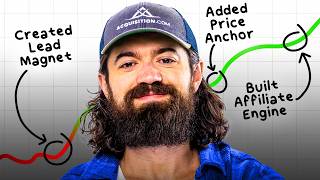
Alex Hormozi evaluates a fashion stylist (Ashley) making $309k/year (profit $130k, 42% margin) and recommends three core fixes to scale: (1) stop a leaky funnel by adding a targeted lead magnet (style assessment), a short VSL, stronger headlines, and better qualification (BANT); (2) aggressively scale affiliate partnerships—she had six partners supplying ~1/3 of revenue found via ~40 emails—by building lists, sending outreach (goal: 20/day), and activating/retaining partners; (3) improve pricing strategy by adding a high-end price anchor, making continuity the default upsell, and raising prices to increase LTV. He frames these within Acquisition.com scaling principles and references his book The $100M Leads.
Chapters
This fashion stylist was making 300,000 a year, but leaving millions on the table. So here's how we fix the three core issues in her business and how you can apply the same tactics to scale yours. My name is Alex Hormozi. I run acquisition.com, a portfolio of companies that last year did over $250 million in aggregate revenue. So let's dive in. So here are the quick facts you need to know. Who does she sell to? Rich folks. What does she sell them? Fashion design and advice for their personal styling. How much is she making? 309,000. Her profit last year? 130,000. That's 42% margins. The number of customers she served lifetime is over a thousand. So kind of impressive. And then this is her mod. She sells an $8,500 60 day kind of onboarding transformation where she picks new colors and palettes and all that kind of stuff. And then she rotates them into a $2,000 per month or $4,500 per quarter, ongoing style thing. Plus she gets affiliate commission because if they buy clothing through her, she gets 10% of the purchase price. That's how she makes her money. Let's dive in. So problem number one, Ashley had a leaky funnel. She has a premium offer, a good close rate, and customers who love her work. But when I looked at her funnel, it was pretty much non existent. She was sending paid cold traffic to a form with no headline, value proposition or reason to opt in. There was just a get more info button. So here's the wild part. Despite all that, she was still getting customers, which told me the quality of her service is probably pretty strong. And so the bottleneck was her conversion rate, basically the number of clicks that actually turned into customers. And so the numbers actually backed up that hypothesis. She was getting about 1800 clicks and turning those 1800 clicks only into eight sales. A huge leak in her process. 0.4% conversion to traffic with high intent. Advertisements fall into two categories. You have interruption based and then you have intent based. Interruption based is everything that you see that you're not looking for. So if you're on social media and you see an ad, you didn't start that day being like, you know what, I want to have an ad for a new pillow. No, you just see the ad that's interruption based. So television, radio, social media, online banner ads, all of that stuff is just interruption. Intent is where you initiate it, so you start to look for it. That's usually when you search for things you, you might Call up friends and get referrals. Like those are high intent customers or at least high intent prospects. And you want to have very different metrics that you track separately for each of those things. And one of the biggest mistakes that I think business owners make is number one, they'll blend that and try and understand their business. Which you have to keep that separate because there's two different people who need two different processes and sometimes two different products. Sometimes people don't know if their stuff's good. They're like, oh man, I think I'm doing terribly. But they're comparing their cold traffic metrics to their warm or high intent traffic metrics and vice versa. The good news is we didn't really need to change what she was selling because she was converting a high percentage and she has decent price points. So I'm not upset about that part. We just had to make it easier for people to buy. So this is what we did. So we made four core changes. Step one is we added a lead magnet and think through all the different versions of what could we give away for free to get people to more interested. Because if you just say, hey, get more info. Number one, not very compelling. Number two, that goes from like zero to let's sleep together. And so sure, she had a high close rate, but she was also dealing with the people who were like in desperate need. But there's so many other buyers that the 80% or more of buyers who like, just give me a little bit first before I take the next step. That's where the lead magic comes in. And I think this is a huge misunderstanding for a lot of businesses because like people think I'm gonna give something away for free, I'm solve their problem. It doesn't work like that at all if you do it right. What you do is you solve a very narrow problem that then reveals the next problem that you solve for the thing you sell. If I were to say, hey, come buy my thing, I might get one out of 100 people to buy. But if I say, hey, you have this problem, here's a free thing. And then I might get 10 people to try my free thing. But then of those 10 people, I can get three of them to buy. So I triple my sales by adding some sort of value prior to making my real money. Ask. And if you think what is content? Content is in some ways hundreds and thousands of tiny little lead magnets that you get for free without someone even having to opt in. So that you can basically give a pre lead magnet to the Lead magnet. And so we can lubricate this entire process top to bottom. So what we did is we created a style assessment offer. Basically a personalized consult based on skin tone, body type and lifestyle. And somebody who's rich and, and feels like their status doesn't match the way they dress and cares about that. Obviously I care about that because my style is impeccable. The thing that makes a great lead mag. Cause I don't want you to take like should I use a style assessment? No. Let me tell you the pieces that make a great lead magnet. Fast, easy, narrow, solves one complete problem. So I'll tell you my favorite lead magnet of all time. I just remembered this the other day, so I'll tell you. So I saw this in the dating space. It said how to know if a girl wants you to kiss her on a date. That's a huge need for, for a guy if he's on a date, but he doesn't wanna seem like a weirdo, right. So there's huge pain that he's avoiding and great promise of if she does like you, you get a kiss. So like literally such great polar stakes for learning this one thing. So what they reveal and the lead magnet is I'll give you the answer is you try and brush her hair behind her ear. If you do that and then she rolls her hand into or doesn't at least move her head away from your hand, then you've got a girl who's okay with you kissing her. On the flip side, if you reach for a hair and she just moves her head back, she probably doesn't want you to kiss her. Now I would also encourage you to not surprise attack because most people would just move away anyways. Always get consent, guys. Let's talk about why it works. So instant perceived value, especially for high end clients who don't want a DIY checklist. Right. These are high end concierge. They want a taste of that concierge experience. So the best thing we can do is let them try it out a little bit, let them ride the bike. Let me tell you the action steps for you so you can actually do this in your own business. So this is from the $100 million leads page 45. If you're struggling to get leads, make an amazing lead magnet. Figure out the problem that you want to solve for the right customer. Figure out how you want to solve it. Figure out how to deliver it. Make the name interesting and clear. Make it easy to consume, make sure it's actually good. And this one like I still don't get this. Like, they're like, they put their trash as their lead magnet. I'm like, 99% of people are never going to buy anything from you. You want the marketplace to judge you on your worst thing. I have now on average spent two years per book that I've written, which is basically the lead magnet for my business. It's important. You don't need to give your lead magnet to everyone. And this is something that Ashley brought up when we were talking about this. She said, I don't want to give every Tom, Dick and Harry free personalized style assessment. And I was like, you're right, you don't want to do that. So when we're gonna give someone this lead magnet, which doesn't have to be automated, so people have this assumption like, oh, it has to be an ebook, it has to be a free video, it has to be a book. It doesn't even have to be a book. You can have a service as a lead magnet. All you do though is it's not for everyone. So in order to qualify for this free thing like I have, there's no rules. We can say who gets this free thing and who doesn't get this free thing. It's America or wherever you live. Like, you're allowed to choose to do business with one person or another. Say if you meet these qualifications, then I will give you this free thing because you're a high likelihood candidate. I would give you a ride in my free j if I want you to buy a private jet. If you can't afford a private jet, there's no point. There's no way you can convert. So it's just pure cost for me. Not a good idea. And so the big four, I always look for, budget authority, need timing. Do they have the money? Do they have the authority to make the decision? Do they actually want this thing? And is now a good time? If I can get those four answers prior and they say yes to all four, now I've got a good qualified prospect. The first thing we did to fix the funnel is we gave something more valuable for someone to take a step with rather than get more in. So the second thing we did was we installed a vsl. So what is a vsl? A VSL is a video sales letter, which is just a fancy way of saying you film yourself doing your kind of your best pitch. VSLs can vary in length depending on the nature of the traffic, the price point of the thing that they're selling, and the sales process that follows. So the three P's for us in terms of making an acquisition process can be product prospect process, what are we selling, who are we selling it to, how are we going to sell it? For her thing she's going to be pre framing this style assessment to then upsell on that call into her main thing. I didn't expect, especially given the nature of the traffic that you had, which was high intent, that you would really need more than call it like a three to seven minute video before the call explaining the offer, setting expectations. And this filters out bad leads and pre sells good ones. The reason pre selling is important, especially as you scale, is that you want to always shorten sales cycles. For example, it takes you two calls to close prospects on average. If you can take that from two calls to one call, you can double your sales with the same size team. So it makes you more efficient to per salesperson that you hire. And some of you guys have three and four call sales processes that absolute can get cut from four to two or sometimes even one if you add in these pre selling components. Because functionally this is the belief that I would encourage you to adopt. It only takes a moment to make a decision. What takes prior to that decision is the information required to make the decision. When you have four calls or six calls or three calls in order to make a decision, it's because it takes that much information or your inefficiently delivering that much information. And so we have to think what are the core elements of all three or four or five or six calls, whatever it is that it takes you currently to close a prospect. And when I say calls, this could be conversations, it could be emails, whatever it is that you communicate with people on. How can we take the most salient elements, bring them all to the front and have everyone watch it so that when you start your sales conversation, you start with somebody who already knows all the main things. And we're really just talking about decision to make a purchase. And so not only can we eliminate or decrease the number of calls from call it three to one call, but we can also take our calls from call it 60 or 90 minute calls to 15 to 20 minute calls. Again further increasing your efficiency with your sales team. And this is ultimately one of the most high leverage things that you can do in building a sales process. Don't worry, I'm not gonna leave you hanging. How do you make a vsl? I'll just give you the quick and dirty. There's obviously more to this, but I'll just give you the things that can get you started. And I will give you this one caveat, which is don't obsess. I would spend so long on the lead magnet that I wouldn't even get it out or I spent so long on my VSL that I wouldn't even do it. You want to make it good, but you want to make it. And it being made, is it being posted, it being live. Now here's the cool part. You can always make it better. You can always make it better. You can always revisit it. There's no vsl, I think that is active in any company that I own right now. I'm just thinking off the top of my head. Don't make a major claim here, but I'm pretty sure that is the first version we make it. We listen to the objections that come up on sales calls and then we add those objections in. And then we listen to more, we add more of those in. And it's really simple. All you do is you record it and then you just add a cut in afterwards. It says, hey guys, I got a couple more questions from people. So I figured I'd answer for you. Now here are the four steps. Number one, review your most common objections in your sales recordings. If you, if you're recording your sales. If you're not, you probably still know what they are. Number two, record you answering those questions as a video. Keep it light. It depends on how in depth your thing is, how many requirements on their part. So again, for her high intent traffic, three to seven minutes works fine. And then make sure it gets sent to every single prospect in the funnel. Here's the little pro tip for you. You want to make sure that they watch the vsl. So how do you make sure they watch the vsl? So the way I like to ask it is, hey, we want it embedded automatically. Now in that process, we'll still follow up prior to the call and say, hey, did he get a chance to watch the video? If you're doing a set call, that leads into this. So a tiny bit different, but let's say you called outbound. You can still add a VSL in. You call the person, you set the call, and then you say, hey, I'm going to give you a video. Would you rather watch it on your own, on your own time or with us? Now most people say on my own time. And so then you just give it to them to watch before the call. By giving them that choice, it makes it like softer, I don't know, just, it feels better. What happens if you get on a call and somebody didn't watch the video, didn't watch the video sales letter, it is my belief that you want to maintain the frame. And this is why I prefer shorter VSLs if whenever possible, because I can say, hey, you know what, John, we got an hour. So let me give you the video right now. You can watch it. I'm going to go grab a cup of coffee. I'll be back in seven minutes, and then we can talk about it. That way, you don't need to change your scripting because then you have multiple variations of prospects that are coming to you. Some have watched it, some haven't. No, you want to unify and uniform the process as much as possible. So we add a lead magnet to fix the funnel. We added a vsl. The, the third thing we did was we qualified harder. There are some things that in my entrepreneurial career have continued to be more true over time. They, like age, like wine. One of them is speed over everything, across everything in the business. The more I'm in business, the more I think about speed for qualifying prospects. The more I think about it for products, the more I think about it for results. I always want to shorten timelines. Another thing like that is qualifications. We always have this big fear that if we qualify prospects, we're going to lose leads. But the thing is that if you don't qualify prospects, you're going to waste your time. And what happens is if you qualify well, you actually turn people who are maybes into yeses because they're like, whoa, these guys are legit. And they serve people only like me. And so qualification, in a way, is almost like positioning yourself within a niche, but the niche is qualified customers. Right. And so I said this earlier, but Bant is the IBM invented this. This is not me. Budget authority need timing. And we include that in the intake form, plus a question about income. And so for her, she didn't have a sales team and she knew she needed. They need to have money. And so she asked that question at a time because if they didn't have to buy the clothes, then we're going to buy our services. She could spot those serious buyers before they even had the conversation. So she could automatically cancel and say, hey, you don't qualify. And then she doesn't have to create a personalized style assessment before talking to them. So it saves her time. Step four, she had this funnel. What we needed to do was rewrite the headlines. Now, if there's ever something to test on your Funnel, it's the headlines. 80% of your advertising dollar goes to the first words that someone sees. It literally frames the rest of the page. That's why headlines are so important. It's not just that it's compelling or interesting. It literally shifts how every other piece of information is consumed. It's the lens through which they consume your copy. We rewrote the landing page headline and sub headline to focus on the freebie. Rather than trying to say, hey, come home with me. Hey, come marry me, we say, why don't we just get coffee? Why don't we just have a date? Why don't we just meet each other first? What we renamed it was free lookbook to dress for your tone or skin tone using your existing closet. If you're like, how do I make a good headline? It's how to yay without boo. Even with greatest insecurity. The yay here is the dress for your tone. Also the free lookbook. The using your existing closet is going to be the thing that they're worried about. What's my biggest objection that someone's going to bring up? They're going to be like, well, I don't want to buy a whole bunch of stuff, so it's like we want to lower the bar for now to get them on the phone. Free lookbook to dress for your tone using your existing closet. Now, there's no true boo on this one, but I would say that using your existing closet is a combination of biggest insecurity and the boo. One phrase that kind of combines both and that would get us way more people to opt in and then ultimately book calls. And so the first thing we did was fix the funnel. And so she was converting barely eight of her 1800 blind clicks before. Now, with this new setup, complete with a lead magnet, a sales video, a real qualification process, and a better headline, she should hopefully convert a lot more. And so the reason we did all this first is so we could be confident our bucket wasn't leaking before we crank the dial on customer acquisition so she doesn't waste money spending on ads that aren't going to convert. Ashley is a textbook stage four in the $100 million scaling roadmap. So she needs to identify and double down on her top 20% of customers. And she needs to make better free stuff to increase her conversion rate. And she needs to add qualifications or friction so the extra volume self selects. So let's just have a look at our handy dandy roadmap here and see if that's actually what we tell people to do because you know what, businesses behave in patterns. They're very similar across industry, across size. Because we hit these stages, these are typically the problems that occur. So specialized product price to serve niche down avatar, which we had fixed, make better free stuff and more creative to boost volume. Great. Add qualification to friction. So the extra volume self selects like every single one of these. And also tracker KPI so we can start managing this. So she had this data because we asked for it for the episode that we did, but she didn't have it before that. And when you do look at the data, here's the crazy thing with data is that when you do look at it, a lot of things become obvious. 8 out of 1800 feels low. You better believe it feels low. What do we need to do to fix it? And so if you want to figure out where you are at exactly on the scaling roadmap, you go to acquisition.com roadmap and if you want us to take a look at your business like we did with Ashley's on the thank you page, book a call. Every month we hold a workshop here at our headquarters. And it's the easiest way that we can make a huge impact on someone's business, is actually meeting you face to face and just working through this stuff. Next up is her biggest untapped gold mine. So this was awesome. I was so happy when I found this when we were doing the diligence. You're gonna love it. So the second problem is that she had a massive missed opportunity. And I remember when I saw this, I was like, this is the Mondo move. We did nothing else. This would be the big thing. And so when I asked Ashley where her best customers came from, she said, probably the matchmakers and social clubs I partnered with. Because I was like, wait, six partners send you a third of your entire business? And she nodded. And I asked how she found them. She said, just googled them and sent them some emails. And that's when I knew we'd hit a big gold mine. Those six partners found through basic Google search, and a few emails accounted for one third of her total revenue. And so then I was like, okay, how many emails take you to get those six? And she said, 40. Think about this for a moment. If you could send 40 emails and get a third of your business from it, which before you had sent those emails, would be a 50% increase, wouldn't you send more emails? And to put context on this, relative to her revenue, that's $2,500 per email sent. Those metrics are Absurd. Most founders would kill for a paid ad channel or paid acquisition channel with those numbers. And she or she was barely using it. Again, a huge missed opportunity. And this is the kind of leverage that gets me excited. And the thing is, is that almost every business has multiple of these. They're just hidden in plain sight. And the issue is sometimes it takes someone from the outside to see this. There's a Yiddish saying that I like a lot, which is, your mouth is an inch below your nose, but sometimes you need someone else to tell your breath smells. We're so close to our own businesses as entrepreneurs. I'm not saying I'm immune to this. You have your own banner blind list. Like, you're so in the weeds, it's hard to zoom all the way out and think, huh, man, this is a lot of work. This is a fire. But if I just did that, if I just poked over here, this will give me a huge return and make all the work that I'm doing right now irrelevant. Many of you might be laughing that Ashley had such a big gold mine. She was ignoring. You and me have these issues within our own businesses. And so sometimes we chase new opportunities without tapping into something that's already right in front of us with massive potential. You do something once it works, and instead of doubling down, you chase the new thing. And this is super common, especially the smaller you are. This is a perfect example of more then better than new. So why do so many business owners fail to tap into their kind of like obvious gold mines? Honestly, I think it's because they're distracted. It's just there's so many things that are going on in the business. And typically when you're a smaller business, you're managing not only acquisition, you're managing pricing, you're managing delivery, you're managing clients, you're managing employees. There's all these things that are going on. Sometimes it's hard to think strategically and think, where do I get the biggest bang for Buck? If I could only do one thing to double my business this year and it had to double the business, what would I do? Great. Why am I doing anything? That's not that. So sometimes these questions kind of open your mind, but you have to ask them from the outside when you have a little bit of space. That was the problem. So what was the solution? This is what we did to scale her affiliates. We didn't change the play at all. We just ran it way harder. The first step we did was we was build the list. So if you're following along you're like, oh, I could do this. Yeah, you could. Everybody can build a list. Alright. So we expanded the affiliate avatar beyond just matchmakers because let's face it, there's probably not a hundred thousand matchmakers in one city. There might be 20 or 50 or 100 or 300, but there's not an unlimited amount. Right. What other types of businesses would have this type of prospect in this particular moment of the buying cycle? And this is key. She identified when we had our conversation that it's like divorcees or single people who are executives who have never found love. Or sometimes it's wives who feel like they and their husbands don't dress according to their social status or their perceived social status. We expanded it to private social clubs, executive coaches, high end personal trainers, divorce attorneys. All of those are people who own a business that contain the ideal avatar for Ashley's business. Ashley could serve their clients and make them look good in the process. And the beauty of this is that she's not competitive with them. Right. Like a divorce attorney doesn't lose anything by referring their divorce client over to Ashley to look better and feel better. If anything, it's a benefit. That list is not exhaustive, but it was a great place for her to start. And for you, if you're looking at your business, we just have to think what other businesses sell to our customers. And everyone typically goes to my competitors aren't going to bring those people over. Yeah, but there's a ton of businesses that are adjacent. And this is also one of the strongest reasons of staying focused in your business. If you try to do all things for all people, you also can't partner with anyone. And so if you stay very focused on one specific avatar and selling them one very specific thing, then you can go to other people who sell something different and then you guys can work together. And so one of the ways that she did this issue would hold these events that then benefit all of their customers because it's all these divorcees. They would want to meet other divorcees because they're all now recently single. And so you have this kind of meetup thing that she could sponsor and adds value to the divorce attorney. And also it works as a way for her to solicit new customers. Win. Win. First thing we did was build the list. The second thing we did was send the darn emails. So I gave her the goal of 10xing her existing volume. So she had done 40 over her lifetime. I said, why don't you do 430 days, 40 emails generated 6 high leverage partners, then 400 might be able to get us 60. If she had 60 high leverage partners, you can do the math on that, it would be a lot. And so she committed to sending the 20 outreach messages per day. No fancy software, literally just on her email, just sending it out. Keep it simple. The third thing we did was activate and retain because affiliates, you have to treat like customers. And this is where people go wrong with affiliates. Like no one's going to do that work for you. You have to work it, you have to work them, you have to work the relationship. So it becomes much more like enterprise farming sale. So there's hunters and there's farmers. So it's more of a relationship manager. But you basically need someone and sometimes that's you to continue to farm the relationship, to keep them activated, keep them engaged, keep them retained. So they keep sending you customers every single month. And so you want to think about them as nodes of customers. 20 people that I need to hit them up regularly so I can provide value to them, buy them dinner, host events for their customers. All these things to remind them to keep you top of mind. So why is this so powerful? Affiliates will keep selling for you. They are a recurring customer generator and they'll send you a few leads a month or sometimes hundreds of leads a month that have demonstrated they're already willing to pay for similar services. So they're most qualified. They're just like warm referrals passed on to you. The likelihood that you close these prospects or super high intent is very high. If you're like, man, this sounds kind of interesting. I would love to have an army of affiliates just sending me customers like she only had six. That was a third of her business. She had 60, my God, it would be a lot bigger. And so I wrote an entire chapter on this in the hundred million dollar leads book. It starts on page 227 and I give you the list inside of the book of exactly what to do step by step to set up an affiliate army. I've grown multiple businesses where affiliates are the largest source of business. School is one of them. More recently, Allen, my software business. Before that, Prestige Labs, our supplement company, all of those built of affiliates. So I feel very confident in talking to you about. But this is the quick and dirty. So number one, find your ideal affiliates. That was that list. Number two, you have to make them an offer. So for her it was like, can we, can I throw events for your customers? I'm going to pay for it. That makes them look good and gives you an ability to sell them. Number three, qualify the affiliates because you want to make sure that they're actually like, good and they have your right audience. Number four, figure out what to pay them or compensate them in whatever way. Sometimes it's like I'm going to do stuff for your customers that'll make you look good. Sometimes it's I'm going to bundle an element of what I sell into your core offer so you can charge more for your core services. Or, or my thing can be an upsell that I give you 100% of the cash on, or you can sell my thing and I'll give you some percentage of it. All of those are different ways to structure these affiliate agreements. I talk more about it inside the book. But once you figure that out, then you just got to get them advertising and keep them advertising. The getting them advertising is how do we launch this relationship? Because typically they're going to have an existing base. How do we promote this new partnership together so everybody wins. And then once that launch occurs, we want full integration. So how do we make sure that month after month they're sending you customers? And so Most people spend $10,000 a month on ads and completely ignore affiliates. That might bring way higher returns. And so Ashley was already doing it. She just needed to scale it. And so we first fixed Ashley's leaky funnel. Then we took advantage of the huge affiliate opportunity that she had in front of her. And now we're going to fix pricing, which is problem number three. She had some big pricing inefficiencies. Her clients were high income. She served CEO socialites, frequent flyers, people who could afford outcomes, not hours. But her pricing model didn't really reflect that. And she was charging a one time $8,500 onboarding fee and then offered either the $2,000 a month for ongoing styling or $4,500 a quarter. So solid numbers, especially for boutique high touch service. But when I dug into her existing clients, most of them weren't actually paying those rates. They were grandfathered in at fifteen hundred dollars a quarter or less. Worse, the website and intake process didn't clearly set those expectations. And so there was no pricing revealed until after the call. No mention of tiers, no mention of value framing. This is supposed to be a premium experience, but it was being delivered like a commodity. This happens a ton, by the way. Like a lot of businesses like want to be boutique, but then the sales process completely breaks the frame. If I could give you one word for what your sales process should look like, it's congruent. If you are high end, your ad should look high end, the lead magnet should look high end, the people you're qualifying should look high end, the price point should be high end, and then the product and service should be high end. Everything has to fit, and if it doesn't, it'll break the frame and immediately something feels off and it'll plummet your conversion rates. And so when I asked her how many clients were actually opting into the $2,000 per month, she said, only a couple so far, which wasn't surprising altogether. And so the question is, like, why wasn't she getting upsells? Number one is she had recently changed this price. So that was for sure a factor. It's also pretty common that as a business expands, especially when you're smaller, that you don't charge enough upfront because you just want to get going. And it's okay, it's normal. But in time, you start looking at your margins and you're like, you know what, maybe I can expand this. Now, to be clear, she had 42% margins. Not bad. I mean, that's probably pretty good. There's no issues there. I'd never limit myself on like, oh, these are good margins, therefore I should not make more money. By all means, make more. There are no rules. The thing that she was missing was two things. Number one, she didn't have a price anchor, which would dramatically affect the take rates on that back end offer. And number two is she didn't have a frictionless upsell from her main offer into continuity. So she was selling the $8,500 thing pretty okay. She just wasn't getting as many as she wanted into the continuity, which is the real value of the business. First thing we did is we introduced a highest tier continuity option that would make the existing $2,000 a month or $4,500 per quarter seem reasonable by comparison. And so Even if only 10% of the people took that high end offer, when that high end offer is 10 times as expensive, it still effectively doubles the revenue of the business. And for everybody else, it makes the normal price, which was once the most expensive price, feel like a deal. Now, if you want a pro tip on this, if you don't really plan on selling a lot of your price anchor, what you do is you want to have it be as similar as possible to your core offer and only change one or two things that most people don't care about. Now, the richest customers will always just want to buy the most expensive thing. But for Everyone else, they'll see, wait. There's a dramatic price difference, but a very small feature difference. This is now a steal, comparatively. So we set the frame, and then we operate within that frame. So the second thing we did after the anchor was a backend. And not only did we have the backend, because you already had that, we actually made it default. All right, so how do we make it the default option? So one of the. I remember the first time I learned about this ages and ages and ages ago was in a book that talked about ace. One country that was able to get like 70% plus of their citizens to opt into being donors, and every other country was at like, less than 10%. And the main thing that country did was ask people to opt out of being an organ donor rather than every other country that asked the people to opt in. And so basically, customers have a customers. Humans have a default bias, which is if they think this is the thing that most people do, they will typically do that because crowd mentality, herd mentality keeps you safe. If everyone's doing it, it is already tested. They're all alive. It is lower risk for me to continue to do what everyone else is doing. Not the best recipe for outsized returns, but a very good recipe and reasonable for decreasing risk. And so we want them to decrease risk by buying. So instead of repitching continuity from scratch, we just positioned it as the next natural step after onboarding. So you've already invested in your transformation. Let's make sure it sticks. And so oftentimes the best thing to upsell people. By the way, if you're like, what do I upsell on my back end? Here are my two favorite ones that you can use all the time because they only always work. It's more of that thing they just bought or more help with that thing they just bought. They work exceptionally well. And what you want to do with this is you want to have an assumed close here. This is how we've always done it. This is how this normally works. We had the price anchor that we reintroduced. We made the back in the default. And the third thing we did is we push price. Now, you might have heard Ashley's original prices at 8,500. She's already priced so high. Why would she raise prices? So there's this thing in economics called a veblen good. Veblen good is a good where when you increase the price, it actually increases the value, which is especially common in luxury items. If people know, especially if people know that something costs a lot of money. They will then want it more. Isn't always the case, but sometimes it is. And in other cases you can just raise the price and it just changes nothing about the conversion rate. The easiest way to make more money in any business is charge more for the exact same thing provided around the same number of people take it. Here's a pro tip for context. The point of maximum profit is after the point of maximum conversion. This should seem obvious. You made it for a dollar so you could get more people to buy than if she did. Now, in her particular case, it might be so cheap at a dollar that few people would even believe it was good. So that gets into a different issue of pricing, but within the context of in general price, supply and demand. Typically as supply shrinks, the price will move right. Given the fact you're selling to luxury people, Luxury buyers don't want the cheapest option. They're literally trying to look better than other people. They want the best, but if you don't give them a premium path, they'll just default to the lowest tier. So we had to make that path forward. What we did, by reframing the offer and adding in the anchor and tightening the handoff from onboarding into continuity, Ashley could boost LTV on the back end and be able to slowly continue to push her prices until people weren't going to buy or until the point where she was making less money than she was at a lower price. But the thing is, in my experience, there's so much more room here because think about it like this. If it were a curve, most people will try and be here where they have like, let's say maximum yeses. But the thing is, is that sometimes the maximum gross profit is here. This is a bad line to illustrate this the point. But your nose are going to increase and your yeses will decrease. But if the price here is 3x this price and you're getting half the yeses, you make more money. And so far, just key takeaways. So number one, we fixed the funnel first. She was already doing 2 to 3x so we had to add it in the VSL, the lead magnet. And we qualified her leads. So that was the first thing we did to improve the conversion rate on the funnel itself, all automated, which I think could give her a 2 or 3x there. We also fixed the headline. Again, that's an estimate, not a guarantee that's going to happen for her, but that's my estimate. The second thing we did is we doubled down on the huge missed opportunity she had, which was that she had 1/3 of business coming from six affiliates. And so we got her to build the list, commit to sending 20 emails a day, and then afterwards activate and retain them by giving them high value that she could deliver to their customers that they would get credit for. And then third, we continue to push pricing. And in order to do that, we re established a price anchor. We made the back end default so we could increase ltv. And she committed to continually increasing price until her conversion rate dropped such that she made less overall money. Now the business could attract more customers, convert them better and retain them longer, and price higher with higher gross profit. And so if you want to see the full video of Ashley's reaction to this guidance, you can check it out here.










