I Lost $100 Million... Here's What I Learned
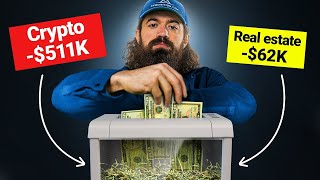
Alex Hormozi lost roughly $100 million across crypto, real estate, bad partnerships, and failed startups. He learned to stay in his lane, avoid FOMO, structure partnerships carefully, and watch ROIC. A partner stole funds, a retail location hemorrhaged money, and a software startup tanked.
Questions this video answers
$1,000,000 (he set up the account and put a million dollars in before hesitating).
He says they put $1,000,000 in and lost $500,000 in a matter of weeks.
He bought the house for $50,000 (flipped to him at $50k); the seller had previously purchased it for $19,000.
First location: $37,000 to open. Later retail location: $250,000 to open.
First-month sales: $600,000 (≈60,000 meals at $10 each). Per-meal cost: about $9 (leaving very thin margins).
Chapters
I've lost $100 million over my career. And in this video I'm going to break down every single one of my mistakes so you don't have to. My first big loss was crypto. And I'm going to be order these roughly lowest to most amount of money. At the very end, I'll give you the big kahuna, the one that I lost absolutely a shitload on, that you'll probably be able to learn the Most from in 2017. A buddy of mine was like, hey man, you should buy this stuff called Ethereum. It was a hundred bucks. I set up the account, I put a million dollars in and like right before I'm about to Click purchase at $100, it like went down to like 93. And I was like, I don't know about this. And so I decided not to pull the trigger. Long story short, it then, you know, 30x from there or whatever it was this next time around, a few years later it had been going like this. And then right here, Bitcoin was at $60,000. Ethereum was really high too. I called my buddy up, not the same guy, different buddy. And I was like, hey man, I'm gonna get in on this. And he was like, I'll put a million bucks in if you do. And I was like, fine. So we put a million bucks in and then lost 500 grand in a matter of weeks. But there's two things that I think were good reminders for me from this whole experience. The first is that me making million dollar bet at the time was not a huge percentage of my income or my net worth. And I made more than that every month anyways. I didn't plan on having this be how I made money. I made money doing stuff that are fundamental business things and, and then I basically made a bet or a gamble, which realistically it was just gambling. The second big point was that Warren Buffett and Charlie Munger talk about your sphere of competence. Business is very much within that. Marketing, sales, acquisition, pricing, product. Those are the things that I'm very good at. Now outside of this is probably real estate and crypto and a bunch of other things that other people do and have spent lots of time developing their skillset. Those people should do those things. I, I have no idea. And I have just noticed the further away I get from my core, the more money I lose and the closer I am to the core of what I'm good at, the more money I make. I will give you a little tidbit that a mentor gave Me, if you know how to create wealth, just create wealth. Don't with investing if you know how to make money. And he gave that to me as advice, and I try to remember that as, like, what am I good at? And so I think it's important to think about what are the themes that are going to be around these mistakes, because you're hopefully not going to repeat the mistake. I'd rather you just get the lesson without the scar. Right? And so, number one, out of my sphere of confidence, number two, I latched on to fomo. I saw these people like, man, I would like to make quick, fast, easy money too. When everyone thinks something is a good idea, it's usually a bad idea. Whenever you feel that FOMO I've now learned. Pause. So the second big mistake I had was in real estate. And you'll notice there's multiple big mistakes that I will make in real estate over my career and. And hopefully I stop making them. This one was actually my first ever real estate investment. So Layla and I have been making a ton of money in gym lunch for a few years now. I think at the time we probably had, I'm gonna say, like 20 million bucks in cash. So a buddy of mine's like, hey, I've got this guy, he sells houses in Ohio. Cause houses in Ohio are actually really cheap. When I got on the phone with the guy and he said, yeah, I buy them for 30, I fix them for 10 grand, so I have 40,000 and. And then I flip it to you for 50, so I make 10 on the spread. He's like, that's my business model. I just sell a lot of them. I was like, okay, that's cool. He's like, well, do you Want to buy 5? Do you want to buy 10? What do you want to buy? And this is from a lesson that I had learned earlier on less money. I was like, why don't I dip my toe in? Like, let's not lose a shitload of money if this doesn't work. But I said, why don't I just buy one of these houses and see what happens. It turned out that the house was not, in fact, a three bedroom. It was actually a two bedroom house. And the third bedroom was actually in a closet that they had put a mattress into. The house did not actually have electricity. They were running it from the neighbor's house illegally. The driveway was so in shambles that the people couldn't actually park on it, so tenants couldn't park there. Fixing the driveway on its own was like $7,000 now for a house that costs 50. That's a huge chunk of what you put into as an investment. Now, remember, I'm trying to get like, 6,000 a year. A friend of mine who is in real estate, different friend, looked up the county records or whatever and found out that the guy who had sold it to me actually bought the house for $19,000 and had put no money into the house. And so his business model was buy it for 19, flip it to 50 to people who don't know any better. That was me. And the tenant's paying $700 a month now. All right, so that was what we got. We were able to rent this place for now, $700 a month doesn't cover the driveway that I had to repair. It doesn't cover the electricity that I had to actually run from scratch into this thing to make it livable. And honestly, really kind tenants, they were like, hey, you think, you know, it'd be nice if we could have our own electricity? And, like, of course they fucking should. I didn't know I was buying it out of state. What did I have to do? Because it was unlivable, I had to put them up in a hotel. Well, we had to basically make this place livable. And so that took, like, 30 days. This family is in a hotel that I'm paying for this whole time as the landlord selling the house with the tenant in it, I think for $20,000. Because I was like, just get rid of this fucking thing. But the thing that I lost beyond just the 30 or 40 or $50,000 I lost in the deal was the amount of time, effort and energy and emails and phone calls that went back and forth about this bullshit thing. And for context, at the time, I'm making 50,000 a day in profit. Like, I was like, just fucking get this out of my life. What a mistake. So anyways, I call the guy up who sold me the house, and I was like, dude, like, what the fuck? And basically, he stopped responding to my attempts to reach out to him because it was apparent what he had done. And I basically was like, I just want to let you know I'm really grateful that you taught me this lesson for so cheap. And he, being the scumbag that he was, said, you're welcome. He very much was aware of the fact that he was totally running a scam. Let me walk you through some of the lessons that I got from this. So, number one is that if it's too good to be true, it usually is. Now, he was telling me about 25% plus cash on cash returns, right? I called a buddy of mine who owns a billion dollar fund and I was like, hey, what do you think about this thing? He was like, this doesn't make sense. He's like, because if he really was doing that, he should just own all the houses. Like why would he, why would he sell these houses? And I was like, nah man, you're just not a believer. Too good to true. All right. Usually is. And the thing is, the hard part about this one, this one's really deceptive, is that if you're in early on something, sometimes it is really good. But the thing that makes it the to be true part is that if no one else is aware of it, there's this double edged sword of like, am I seeing some opportunity that's going to close in the marketplace or am I just about to get fucking robbed blind? The second thing is you'll see this lovely recurring friend we have here is that I saw my friends making money and I was like, oh man, I should do it. And he was a business guy and I was like, oh, if he's a business guy, he could do it. I'm a business guy, I could do it. He lost his ass too. Which leads me to number three, which is now if someone tells me about an opportunity that they're doing for investing, which for me is now much longer time horizon, I say, how long you been in this deal for? If someone says they've been doing it for less than two or three years, I don't care. Point three is that what's the hold period? If I'm hearing about something from somebody, they better be doing it for multiple years before I'm going to even consider it. And so what I would say I do now with these types of things is that one, I'll do it with somebody who, but I want to do it with the guy. So that guy who was on the phone with me selling me the property. What I would do now is to say, I'll buy a property that you buy and if they don't want to go in with me, great, then I'm not doing a deal. In the beginning I was really greedy. I was like, no, I don't want anybody have the upside. Now I'm happy to give partners the upside because the more money they make, the more they want to make it with me and we'll do it together. And I'd rather have a very sure 20% than a really risky 40. And whenever I feel that little tickle in my stomach or the back of my neck where I'm like, ooh, I feel like I'm missing out. I literally just stopped and I say, wait. Because every huge amount of money that I've made has never been from any investment. It's been from me seeing an arbitrage opportunity in marketing and sales and seeing that I can acquire a customer for $10 that's worth a thousand and then saying, great, let's jam as much cash as humanly possible into that. But that takes lots of iterations to get there. And I was there every single step of the way. It doesn't just appear on some spreadsheet showing how rich I'm going to get. So mistake number two, my little house in Ohio for $50,000, that taught me lessons far more valuable that have saved me way more than $50,000 over the rest of my investing career. So $50,000 goes, survey says goodbye. So my third lovely mistake that I had was terrible partners. Now I'm going to go through a few of these and I'm going to ladder up to the worst partnership I had. The first partnerships I made, I made because I was insecure. I made them because I didn't think I could do it on my own. I just partnered with people that I thought would know more than me just because they were there, more or less. And this is not any disrespect to those people. It was my mistake, not theirs. I have had nine failed partnerships in my entire life before I started making money. Nine different people that I was partnered with. I'm going to give you the nitty gritty of every lesson I learned from all of them. So the first partner that I ever took on was an advisor. Told me, hey, you should partner with this guy to start a gym, alright? My very first gym. And he said, he's already got a gym in the neighborhood you want to be in. You can start with his clientele base and just go into a bigger gym and come together. And I was like, okay, that sounds good. And he's like, yeah, you guys both have the exact same skillset and you have the exact same business. You guys should just split it and then I will take 10% for putting the deal together. So you'll be 45, he'll be 45, and I'll be 10 for advising and putting this all thing together. And we both said, sure. Now guess what the worst way to start a business partnership is. You both have the exact same skill sets and you both bring the exact same thing to the table. We're both bringing work and very little capital to the table where we have the same business that we're trying to do. And guess what most people do when they start a business? Exactly that. So lesson number one of partnerships. They have to have something you don't. So they either have to have time you don't, they got to have money you don't, or they got to skills you don't. That's it. If they don't have one of those three things, one of you isn't needed. Alright? Lesson number one, they got to have something you don't. Lesson number two, you lose the most equity day one. So most people are so anal about how they want to sell their company for this amount of money and blah, blah, blah, blah, they're thinking about their equity. But day one, they lop half off and give it to somebody. They go off 2/3 off and give one third here and one third here because they've got three buddies and they say, hey, well, there's three of us, let's cut the pie into thirds and we'll go into business together. Doesn't work that way because oftentimes the economic contribution is not equitable. If you look at time, money scale between all the people that are going to get into business together, if you have more than one of those and they have more than one of those, well, how much is each person contributing? Now, part of that comes down to negotiation, being really honest about it. But people want to avoid these hard conversations early on because they're like, well, if, hey, if it works out we make a lot of money, it's not going to matter. I fucking promise you, the more money you make, the more it's going to fucking matter. I'm not living that from experience. You lose a lot of equity day one. Equity doesn't need to be equal. So for example, if you did want to bring partners in, you could have a 95, 5 split. Just make sure that what people are doing, what they're investing in time, money and skills, is appropriate for their contribution. And if they bulk at that, then thank fucking God you set that on day one so you don't have to deal with it later. Now you have this fear, well, what if I can't do this business without them? I promise you, you can do the business without me. All right? Every successful business I had during the period after my nine failed partnerships, I did on my own with Layla, my OG ride or die partner. So I give half, no matter what. That was from my first two partnerships that I Had the second two partnerships that I had. When I got into business with these guys, I was going to run the business all day, every day I was going to be there. I also invested capital. And I was also the one who knew everything about fitness. And the individuals didn't know either of those things and weren't gonna be spending all their time in the business like I was. They didn't take a salary. Cause they had other income streams. They were far wealthier than and far older than I was, and I didn't. And so I had saved up about $70,000 in the first, you know, six months or so of my business. So you're like, wait a second. You were making money and the business was growing and then you brought partners in? Damn straight I did. And then I sold two thirds of my business for the cost it cost me to start it, not for what it was making me. Every month I made two thirds of what I got paid for the entire 2/3 of my business. Because I was a moron. And so not really I was inexperienced that I didn't know any better. It was me paying down ignorance debt. Which is why I'm making these videos for you. So you don't have to do it either. Okay? And if you're the one who's in the business, you should get paid as an employee as well. Like, there's ownership and then there's working in the business. If you're saying, hey, I want to be 5050 in this business, but I'm going to be working in and you're not, for example, which happens a lot. I'm 50 50, but I need a manager salary because this is what this would be. And that basically makes up for the fact that you're doing the job and taking the risk on make sure that if you're in the business and you're doing a job, that you get paid like you're doing a job. The amount of times I talk to entrepreneurs who are like. I'm like, how much you take home this year? And they're like, nothing. And I'm like, why? They're like, I'm reinvesting everything in the business. I'm like, okay, not making a profit is not reinvesting everything in the business. It means that your business sucks. And it's much harder to say that. And it's way sexier when you say, hey, I'm reinvesting all my. I'm reinvesting in growth. But if you're actually reinvesting in growth, then I would say, then what's your return on capital. And if you don't have the answer to that question, you're not fucking reinvesting in growth. You're just not making money. I'm still going to come back to partnerships. I'm staying on this page because it's going to be a recurring theme. Mistake number four, getting fancy. So my first location in Huntington beach cost me $37,000 to open. I had duct tape sandbags from Home Depot that I used to sandbags. I couldn't afford the nice ones like I was. I had so little money to start this thing. What's crazy though, is that within six months, that business was making 20, $25,000 a month, right? In profit. It was making good money. But the thing is, is that once that business, my Huntington beach location, started making money, I was like, okay, my next location is going to be really sick. So I went from a 5,000 square foot warehouse that was behind an auto shop to an anchor location in a retail center that was 7,000 square feet. So bigger, more expensive, rent, big storefront. I spent $250,000 to open it up. I wanted to be. We got glass lobby. We like, we fucking, you know, we did it all up. It made the same amount of money as my first location. And so the lesson for me was like, I literally just burned money. So I could say I was investing in the business, but all I did was buy shit that didn't necessarily turn into revenue. And so that's why. And this is the lesson here. So this is D or whatever we're on, right? Is roic. I want you to write it down. That's return on invested capital. If you're going to spend money in your business, every expense you have on your expense line, you should be able to say, how is this making me money? How am I getting a return on this? Right? If you buy cost of goods you buy, you buy products for 10 bucks and you sell them for 30, you have a return there, you're tripling your money. That's a great investment if you can get it. If you go from ten to eight, all of a sudden becomes three and a half or whatever it is, right? Wherever the math is there. But where you lose is where you spend $25,000 on something and you do make $25,000 over the next 10 years, well, fuck, that means you make $2,500 extra this year. You're just down 22,005. And in a small business, you should be making 3 to 1, 5 to 1, 10 to 1 on the dollars you spend, because you can, when you're small, you can be way more efficient than big organizations can. You can buy leads for a buck and sell $500 things to one out of five, spend five bucks, spend 20 bucks, make 500. Like you can do that flip. And that's where you can make crazy money really quick. And that's where that's the main economic engine. And so the rule is, don't be fancy. Do the basics. Alright? So I had a really interesting business mentor who I called when I was considering selling my selling gym loans years later. He had been a private equity CEO and so all he did was basically they dropped this guy in when they buy a company and then he would have the job of tripling it in three years or so. And he had done it three times. And so I'm on the phone with this guy and I was like, so, what's your secret, man? And he's like, don't be cute. Backyard football. He's like, everybody tries to get, get cute, get fancy. You know when you're, you're a kid and you're like, okay, so what we're gonna do is with a double deep fake and we're gonna go AI to the right and we're gonna, we're gonna spin it back and then you're gonna toss it back to me. And then, and then Johnny's gonna go to the left and then we're gonna, we're gonna toss it to him and then, and then we're gonna get the spin zone. He's like, what happens? I was like, I don't know. He's like, you fucking fumble and you lose the ball, right? And you lose the game. He's like, no, we play fundamentals football. He's like, two fat guys in the middle to the right. He's like, that's how we play. He's like, don't be cute. I get too cute, right? I get fancy with my expenditures, right? But I also get too fancy in my strategy. Just saying, like, we want to provide superior service. Very easy to say, very easy to understand. And if you do it well, most people get it. If you do a good job, people tell their friends, they come back. Like, it makes sense, but really hard to do. How do you get all of your staff to smile? How do you get all of your staff to remember people's names? How do you, how do you write handwritten cards on a systematic basis so that people see that you're going above and beyond? Like, how do you do those things? Like, that takes systems, that takes effort, right? But the idea of just doing backyard football, of just, hey, if we treat customers well, they're going to come back. If we provide a good product, they're going to come back, right? We think through the details. We actually drink our own Kool Aid, we eat our own dog food so that we know if something comes off. I could write a book on business that if I just gave the people who buy companies, it would take me way less effort because I could just write it for them. But to be able to write a book that somebody who has no idea how to run a business and somebody who buys companies can both get 5 out of 5 value from takes a shitload more work. And so that's the kind of obsession that happens with product, that when you start getting fancy, you don't have time for. A 4.4 product compared to a 4.7 product on Amazon in the same category, the 4.7 might get 10 times the sales. You see a 4.4 and a 4.7. Which one are you buying? It's like, it's obvious you're not buying the 4.4. Neither does anyone else. It's just a game of incremental improvements on the big basics that if you just get those right, nothing else matters. And I got really fancy and I got distracted from the thing that mattered most, whatever that was, me being fancy. Let's go back to partnerships. So I had two different partnerships after the first four that I talked about, where I was like, you know what? I've got my gym business thing going. I'm going to start doing launches, too. And then I'm also going to start these agencies, right? And so I'm going to get partners because that's what smart people do. I was still the main economic driver in all of them. And so I was the one who was doing the sales and doing the delivery. What is the partner doing, right? Besides having the idea that we should start a business together? All the partners I've had, I've learned a ton from, and I wish all of them the best. And it was my deficiencies. It was not their fault. It was my fault. Like, I shouldn't have made these mistakes, which is why I'm making these videos, so that you don't have to make them, too. I was the rainmaker. If you're the one who brings in the customers and makes the money, you should get a disproportionate share of the proceeds if the business can't function without you. But it can Function without them. You are needed, they are not. And here's a really hard truth you might think, man, I need an accountant. Okay, cool. Most businesses do. In fact, all businesses do. But it doesn't mean that when I start a business, I partner with an accountant. Just because I need it doesn't mean that they have to have equity in it. And so just because you can identify a function in a business that is required in the beginning, it doesn't mean that you have to have give equity there. Like you can hire these people, you can have vendors, right? You can have other companies that do this for a living and then you just fractionalize the cost and you pay to them and they have systems in place. And at a certain point, maybe you bring in a house, maybe you don't. But these are decisions that early on I made mistakes for. And so the partners that I had had functions that they could do. They just weren't core to the business. Does it get customers in the door? Is it part of how we deliver? You acquire the customer, you deliver on the customer. That's it. And so if they are not core to those things, they are probably not people that you need to give equity to in the beginning or at least any meaningful share to. A completely makes sense. Partnership is where one person handles product is like, I will just make sure our thing's absolutely exceptional and the other person's like, I will go tell the world about it. A phenomenal split, a great split that many people do. Now I'm going to get to the bad one now because I know you guys are waiting for it. So I lost a lot of money, A lot of money, a lot of money and a lot of brain power when I got in bed with a very bad partner. So I'm going to tell you what I did and what I did wrong. Alright? So this is number five, bad partners. Now I had partners before and they were good partners. We had bad partnerships. This is bad partners. So I want to be really clear about the difference, alright? All the partners I had before, ethical, fine people, nothing wrong with it. We had a bad structure. And so you have the person and you also have the structure of the relationship that both have to be aligned. The bad partners I'll define as people who have nefarious intentions who actually want to hurt you. This was actually the last partner that I took on. So this was punishing enough that it was quote traumatizing. It permanently changed my behavior. And so I had just sold, so I had six locations at this time with my gyms all right? I had bought out some of my past partners, which cost me a lot of money. And so I had six locations. Now I shut down one because it was too new. And I decided to switch gears because I wanted to start the licensing business. And then I sold five. Now I had big pile of money. This is now, like, basically my egg. What I have to show for it, for all this work and all the sacrifice they've done this point, I've got this estate. I was doing gym launches at the time. So this is why I made the transition. I started flying out to gyms, started making money, and I could do, like, $100,000 in sales in about three weeks. And I would keep that cash for myself because I had almost no cost besides my airfare, my hotel, and the ad spend, which usually for me was like one to three grand. So not a lot. And one gym owner was like, hey, you're leaving so much money on the table. Red flag number one. So much money on table. You can't pursue every opportunity. So it's the definition of entrepreneurship that you have to say no. Which means there's always money you could make. You choose to leave small amounts of money on the table so that you can have the one pile of money that is on the table that you're choosing to play at. Get bigger. He's like, you're opening these gyms, and you're filling them up to full capacity. He's like, you should own them. Average gym owner makes $36,000 a year for a full year of work, working 80 hours a week. I was making 100 grand in 21 days and walking away. Way better business. Me being a moron, I was like, sure. This is what a moron would do, so I should do it. He says, how about this? I used to run this gym. $4.2 million a year out of. I know how to run a gym. I don't know the marketing sales stuff. You go to the marketing sales, I'll come behind you, and I'll run the gym after you. So he's like, every month you open a gym, you fill it up. I'll come behind you, I'll staff it. He's like, every month you can open a new gym. And I was like, man, that means at the end of the year, I'll have 12 gyms. That means that my ego will go up and I can tell people I have 12 gyms. So I launched his gym. Crushed that. And so he's like, hey, so now let's do this next Year, as we're about to sign the lease, he says, small detail. You know, I had a little bit of a bad credit situation. Big misunderstanding. But you're going to have to personally guarantee the lease. Sure. Makes sense. We're partners. I'll personally guarantee it. Also, I mean, you just made all this money on my gym. You should front the cost for the new location. And I said, of course. Also, you should run the whole thing and then I'll come after you. I was like, okay, so I'll take the risk, do all the money and do all the work, and then. And then you'll have half. And he was like, yeah. I was like, oh, steal what a great partner. And so I crushed this launch to 370 sales in like, six weeks. Like, new members. I put all the cash in the account. Like, all this cash. My big Easter egg, because I didn't understand how money worked. And so I put all the money into the new bank account for the new nc because I was going all in on this new idea. And then I wake up one morning because I would always check the bank out every morning because habit. All of a sudden, it was at zero or close to zero. It was actually just one withdrawal. And it was to him. Huh? And he was like, oh, yeah, I was just taking my half. I know you're taking your half off the top. He's like, I'm just taking my half. He's like, I did the math. He's like, this is how much my half should be. And I was like, first off, you're accusing me of stealing. Second off, what? I had a coach at the time. And I was like, dude, what should I do? Print out the financials, go line by line and show them where all the costs were. And I was like, okay. So I printed all the. All the expenses. Took me, like, three hours. Itemized everything. And I was like, let's go have lunch. And like, let's go over this. I put the papers down, and he pushed him off the table. I don't need to see that shit. And I was like, oh, I just got robbed. He ended up sending the money to his girlfriend in Sweden and filing bankruptcy, so I couldn't sue him. So remember when I said, like. He said, oh, there's this big misunderstanding early on with the whole lease thing. He had been indicted for fraud before that I knew about. I have my own demons of, like, I fucked up in the past too, and I'm trying to, you know, do good now. And so I want to always give people that benefit of the doubt. And I'm going to say something that probably won't be popular. I don't do that much anymore. There's just plenty of people I can partner with that I don't have to deal with that for. Here's my little TLDR lesson on this. If someone shows you who they are, believe them the first time. Red flags are red flags for a reason. I'm not even going to tell you the amount of money that I lost because I will tell you what's more important is that I lost all, all my money. And what felt like years of work. And so from a loss perspective, it was the amount of money was one of the smaller ones in terms of total dollar amount that I lost. But in terms of emotional significance, I went from a multi location gym owner to successfully exiting my gyms to losing everything that I had spent years building in six months. Use that lesson so you don't have to have the scar. Mistake number six is the classic example between push and pivot. All right, so if you don't know what the push and pivot dichotomy is, for most entrepreneurs and most people in general, there are some times where shit gets hard and you need to push through it. And there are other times where your fundamental assumptions were wrong and you need to pivot. You need to change directions because the thing that you originally thought was true is no longer or you found out that it isn't. And so the hard part is sometimes when you're in the thick of it, you're not sure if this is a push or this is a pivot. It's one of the hardest decisions in entrepreneurship. There are dead bodies on either side of this road. And it's hard because you just got to use judgment to be able to make the best guess you can. And the thing is, you can never replay the game. So I graduated three years from Vanderbilt and I got a job at a management consulting firm that did Space Cyber. At least the projects I worked on was Space Cyber Intelligence for the military. So it's a BT firm, Defense contracting, that's what I worked on. Sounded fancy. That's why I took it. When I was there, I had the desire to learn. I did learn a lot quickly in the beginning. After that period of time, which maybe took six to nine months, I didn't feel like I had more to learn. And so I had two options and I took neither of them. And I think that was the real mistake. I didn't push and I didn't pivot. I did Nothing. I coasted. I was actually in that job a fairly bad employee. You can look at work environment, you can look at people you work with. I was a bad employee. And I would actually agree with them. I didn't get challenged in that last period. And so I just read books all day. At that point it was either go to business school or start something else. And so that's why I decided to start something else. If you are somewhere where you know deep down you are, you are not living up to your potential and you are cutting corners and you're looking at the clock and you're trying to just like count minutes and you're like, holy shit, it's only been an hour. I have seven more hours of this shit. Like, if you were living like that, leave. Whatever the alternative is, is better. It was one of the most costly mistakes I made. Also because of what I started feeling about me, you know what I mean? Because I was like, am I a slacker? Do something. Just don't do this push pivot, push being, go up. Let me learn more. Give me a challenge. Pivot being, I'm going to change career paths. I did nothing until it was forced upon me. So that was mistake number six where I lost a lot of time and honestly a lot of self confidence during that period of time, which cost me dearly later. So my seventh big mistake was actually getting to the food business. Now, the food business per se is a mistake because you're like, what does this have to do with me? It actually has much more to do with getting to a product that I had low understanding of. And so I thought, okay, I'm in fitness, I talk about nutrition, I can start a food company, right? Because we have this big distribution base of gyms. They already sell our supplements. I went all over the US tried to find co packers who could handle the volume that we could do basically overnight and scale. Which means I had to go to really big companies that could handle that kind of volume. We did this big launch, we did this big buildup. The first month sales were a little disappointing for me. So we did like 600,000 the first month. Now you might be like, that sounds like a lot of money, but let me walk you through the margins of this business. So $600,000 and you're like, okay, where's the mistake coming from? Don't worry, we'll get there. The average meal was 10 bucks. So we were selling 60,000 meals per month. It's a lot of meals, right? A lot of meals. You think, wow, this is a successful business. Well, sounds good, right? Times $10. Now here's the part that no one wants to talk to you about. In the food business, my cost was $9. I had to cover every expense that I had in the business. Marketing, sales, payroll, customer support, refunds for shit that went bad, boxes that broke, all of that. On this $1, I was able to make in this business somewhere in the neighborhood of 7% profit margins. That's because I ran this as a skeleton business, because I knew that it was low margin and I already had the supplement infrastructure for support. And so that was a little bit of a help for why I like didn't lose my complete ass on this. Here's a little fun stat for you. 80% of my customer support complaints came from this. 90% of my profit every month came from my supplements from that line of business. So you mean to tell me I just 5x the amount of headache for an extra this much profit? Just because you don't lose money money doesn't mean you didn't lose money. Honestly, I might have made 500 grand on this whole thing, but for the amount of work of me building up to a launch, using some goodwill with my audience to say, hey, use these meals, I had a whole separate website built out. One, if I had just done nothing and taken all of that effort and just put it into the other one that was making 10 times more money, could I have made 10% more on that business to make up for this? Fuck yeah, I could. Alternatively, if I had just done a different opportunity to go pursue, could I have made more money than I did on this one? And the answer is yes. And the main culprit was that I did not know what I was getting into. I didn't talk to anybody in the food business and say, hey, tell me how you make money. Real talk. The only guys I did know were losing money. The co packer that I that I did this deal with was losing money. He had to keep raising funding. He was not profitable. I didn't understand what I was getting into and I split focus. And so right now when we said earlier about there's money on the table, there was money on the table and there was this tiny little pile of money and I decided to take my off the big pile of money and go on the small pile of money. And I lost a year of effort and build up and marketing and sales that I could have just directed towards the big money and maybe growing that by 50% here I did all these new things, had to Figure all these new problems from ground zero. And that's one of the biggest mistakes I've made so many times in my entrepreneurial journey that now I'm so obsessed about it. You hear me talk about more, better, more, better, more, better because I had to learn the hard way of how many times I lost money splitting my focus when I could have doubled down and made so much more. So this mistake realistically cost me probably about 10 to 25 million dollars. Reason being I ended up selling Gym Launch and we had a big multiple on that. And so if I've been able to just make two or three million dollars more in profit on my main business, it would have resulted in 10 to 30 million dollars more in money. To me, that's not hypothetical money. Like I did sell that company and it was based on profit and that took away from the profit I would have made. So don't do that. This is mistake number eight. Alright? So I'm actually going to do this as a two parter. These are two separate mistakes that actually stem from the same principle. So I had my lawyer situation and I had my payroll situation. All right, so I'll tell you both. I wake up one day and I look at my emails and there's this email that says, cost of living adjustment. Huh? I look into it and it said, you have a 0.00 cost of living adjustment. So it meant I had no change. And I was like, I wonder if this was like a payroll change in entity thing. Like they were reorgang something, whatever. So Yas, who's one of our employees who's our executive assistant, was like, hey, I just got a $6,000 raise. Thanks. I was like, Layla, what? She was like, I don't know, I'm figuring out right now. We had a director of HR who lived in California and she had asked for a raise. She was denied a raise because she didn't have enough experience, which you will soon see why. And so she took it onto herself to say, well, I deserve more money because I live in a more expensive area. She then ordered a cost of living study on my dollar, took that very expensive cost of living study, and then looked at everyone's pay and said, okay, if you are living in an area where it's cheaper, we're not going to change how much you get paid, but if you live in an area where it costs more, we will pay you more. Now, after making this decision unilaterally, the way she chooses to announce this is just a blast email to everyone with just the amount that they got paid more. So like if I were actually going to give everyone a raise, I want to get some fucking credit for it. You want to tie it to something that someone does so you can reward behavior. That cost increase cost me 600,000 a year of profit for zero additional anything. By the way, she was in California and so she got one of the largest cost of living increases unto herself. She cost me $600,000 a year. Everybody just gets erased. You now then say like, just kidding, she's an idiot. Like, what do you do? Right? Like, just kidding. You're actually all not getting paid more. Very tough situation that I got put in. So what we did was we got rid of her. So she went from getting a $10,000 raise to getting a zero. Okay, the reason I lost money, and this is my principle, I'm going to give you know where the bodies are buried. If you're too far away from departments, if you say, hey, what's going on? And they say, oh, everything's good. And you don't know how to go one layer deeper because you are too far away, it means that you don't know where the bodies are buried. I don't need to know everything, but I do need to know what problems that every department is struggling with. Just so I'm aware, so I can keep loops like updates on what's going on. Because I was so far away, she was able to carry out a cost of living analysis and execute a company wide pay raise all without me even knowing until it was way too late. Second mess up. My CFO Suzanne came in to gym watch. She said, hey, are you guys in a lawsuit? And I was like, and I was like, why do you say that? And she said, well, you have a legal expense that's $120,000 a month. Yeah. That's like you're on a full fledged like multi million dollar lawsuit that's going on with like litigation and arbitration, all this. And she's like, that's how much that costs. And I was like, oh, I just delegated compliance to my team. So then I clicked down a level and I was like, hey, what are, what are we doing that's causing all these lawyer bills? They're like, oh, well, we do a, we do a bi weekly meeting with the entire legal team. $150 an hour lawyers, two one hour meetings a week. And you're like, well that doesn't it just wait. And then what they're reviewing is all the work that their smaller attorneys that were getting billed at 200 to 500 an hour are reviewing every piece of licensed marketing that we made and that we gave to our licensees. And so we were creating tons of marketing hundreds of ads every single month. We're creating tons of trainings, hour long trainings, two hour long trainings. So if I did a one hour call every day to help my licensees, I had four lawyers watching every hour and then sending notes on what I could have done to be more compliant. Now guess what? I never read any of the notes. And guess what? Neither did anyone else. But because I said we need to make sure that we're compliant, they said, great lawyers. What do we have to do to be compliant? They're like, well, why don't you just have us review everything? And because I wasn't signing the checks and it was someone, it was Uncle Alex's money, they were like, oh, great. Instead of us doing work, we'll give it to this law firm, they'll do the work for us. And not only did they not actually implement anything from all the notes that came in from this, they were happy to just have the meetings every week because they started getting their buddy buddy with them. And of course they were. When you pay someone a million dollars a year, they'll be nice as fuck to, you know, where the bodies are buried. Part of the reason I brought CFO in because I was doing other stuff. She saved me, you know, her first month, she was like, well paid for myself already saved you a million bucks a year. Which is true. She did save me a million dollars a year. And I was very grateful for it. I didn't have the ding on that because I was able to solve it, but it cost me $1.2 million. So that's mistake number eight. Multi million dollar mistake. Let's go number nine. You're like, does it get worse? It gets so much worse. I started software company Allen Use Alan. It was because I wanted to solve the next problem that most gym owners had, which is that they didn't work their leads so we could get leads for them. We give them ads that they get leads for themselves, but they wouldn't work the leads. If you don't work the leads, you don't make sales. It's kind of works. I saw where AI was going and where messaging was going versus.










