I Tried This Simple Business Strategy for 60 Days. This is what happened
Alex Hormozi cut onboarding from 47 days to something faster, added customer satisfaction tracking, and built backend revenue from zero. He increased a company's enterprise value by $6 million in 60 days by fixing three core problems: slow activation, no retention metrics, and no upsell revenue.
Questions this video answers
13
$6 million
47 days
16 weeks
$0
Chapters
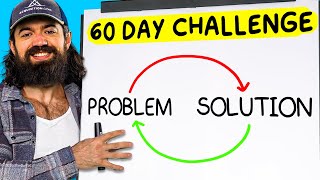
I own 13 portfolio companies and in one of them, I unlocked $6 million of enterprise value in 60 days by solving three problems. And I did it with data. So this is actually a sequel video. And you may remember our three wise men. They came and they were sad because they had problems that they wanted to fix. And they're already making twice as much money just from the fixes that we did from the sales. So we went from 56 units per month sold to 93 units again in 60 days. And so the problem that we encountered after we doubled the sales, now they had twice as many people going to get fulfilled on whatever the thing is that they sold what was shaky had completely been obliterated because it was already tough when they had the current amount, but with double, they were completely lost. So one of the never ending issues in business is that there's something called the problem solution cycle. It works like this. You got problems, you've got solutions, that's ugly as shit anyways. So the problem is when you solve a problem with a solution, you then create another problem. So if I 10x your sales, what's the next problem going to be? And so we had to fix that problem. Now, we wanted to track these three stats because they didn't even have LTV tracked. The first was time to first value. The second was customer satisfaction. And then we had our ascension rates or the absolute amount of money that they were making on the back end, which is after someone buys the first thing, they buy the second thing, right? So let's start with where they were at. And by the way, this E is not something fancy. It just should be there. But y' all are cool, so we'll go with it. All right. Time to first value is a really interesting statistic. It's probably one of the, one of the ones that I care the most about in any kind of service. So in the world of content, like watching tv, there's different shows that you might watch. So each show, they calculate an actual retention point. And so Breaking Bad, for example, is one of the best shows of all time. They found that if someone made it to the third episode, they had like an 87% likelihood of finishing the entire five seasons if they got to that point. And so different shows have a different retention point that hooks the viewer for the long haul. And so that's what we're ultimately driving towards. You can call it a retention point, you can call it activation, you can call it whatever you want. But there's a key moment that, that transforms the customer relationship into a long term commitment with you and what your goal is to pull that as far forward to the present as you possibly can. You don't have to deliver the ultimate result immediately. I mean the faster you can do that, the better. But what you want to do is break it into many small chunks and show leading indicators of success. So in other words, progress. And the more times that you can break down an outcome into tinier chunks, the more reinforced the customer will be for staying with you. So for example, if I was in a high touch agency, so I did marketing services for someone and let's say we touch base once every two weeks right Now I do a lot of things between those two weeks for the customer, but if every two weeks I correspond with them, then they're going to get reinforced every two weeks for me doing stuff. Now consider a different way of doing it. I onboard them and then every day I send them what I did to work on their behalf. At the end of that two weeks they would have had 14 different positive interactions with me versus one. You can take what you're currently doing, not change much about it and simply communicate it differently so that they can perceive a faster time to first value. That's the idea here. For example, in the gym launch world in the beginning it was if we can get someone to do a high ticket sale in the first seven days, it would triple the LTV for us. So then instead of trying to think about churn or any of these metrics, we said let's just try and make sure every single person gets that sale as fast as possible. And so that's what we'd measure it. The way that we eventually would go to was how quickly they would launch an internal campaign for us and how much they generated from that. So our goal then became how quickly can we get them to send the emails that we want them to send. That's two different examples of different time to first values. And without further ado, let us show you the before data. So for the time to first value was 47 days. Got to improve that. Imagine you buy something and it takes you more than six weeks, almost seven weeks to hit that first real value. The second way was the customer satisfaction score. And survey says what was their customer satisfaction? Non existent because they didn't even track the data. I'm giving you the real stuff here. Ascension. Alright, so what percentage of customers they send or how much money were they making from ascensions on the back end? Survey says $0 because they didn't have a back end. When I Say back end. I mean again, the second thing or the thing after the first thing they were selling. These are not pretty statistics. That's okay though. This means that again, for us as investors, huge opportunity for improvement. And that's where I get great returns. So product problem number one, high churn. What's churn, Alex? Great question. It's the percentage of customers that leave from this month to next month. So if I start the month with a hundred customers, those same hundred customers a month later, how many of them choose to renew? So if 95% of them choose to renew, then I have 5% churn. So this particular business was a 16 week implementation. So 16 weeks is how long people were committing to on the front end. The problem was people weren't even making it through the first thing all the way. The reason this is so important is that is one of the largest profit drivers in a business. So let me give you an example. If we had two ways to make X dollars, alright? And X dollars from keeping a customer means they stay for three more months. An X dollar from getting a new customer means we have to pay to get a new customer. So we pay Mr. YouTube or we pay Mr. Facebook $1,000 to get X dollars. Or we could pay $60 in staff or labor to get the same X dollars. So let's say I had to pay for an hour of extra work per month for my team to reach out or hop on a phone call or two 30 minute phone calls with the customer per month. So we got 30 minutes times 2, 30 minutes times 2, 30 minutes Times 2. Now you might be like, man, that's a whole lot of work. Well, let's say I'm paying 20 bucks an hour and so this is $20. This is $20. This is $20. Maybe like, wow, again, so much work. But look at my return. The $60 to get the X versus the thousand dollars to get the X. It's like 17 times more profitable. And if I'm an investor, which everyone who runs a business is just on a micro level, that's a way better return. And so I should be allocating as much effort into that bucket until I can't do any more in this bucket and then go to my less efficient ways of allocating capital. The biggest and easiest problem that we identified was that their customer success team was arbitrarily checking in. All right? Meaning they would just be like, hey, what's going on? Let me go take some of your time. With no agenda. Rather than being one proactive and two, knowing what problem the person should already be experiencing at this point in their 16 week implementation. Because after all, for this particular product, they were taking everyone through a choreographed experience. Except it wasn't a choreographed experience, which is not the way to do business. So if you know that everyone in week one or two is going to be suffering from one of these two problems, then you'd start the call with saying, hey, most people at this point are at point A or point B, where are you right now? And they're automatically, boom, you're right into it. And they're like, this is value additive. This is actually helping me. Whereas you're like, what's going on, John? And then just like everything sucks. And you're like, oh, why does everything suck? It's like you don't seem informed, you don't seem on top of it, you don't seem proactive. And just by doing this, it sets an entirely different tone for the customer relationship because they're like, these guys know what they're doing and I feel better about paying them. And this is why, knowing that key milestone that you're driving towards, that activation point, that time to first value is so key, because what you do is now all of your communication and all of your efforts are going to be targeted and optimized to get this one single outcome. Right? So if I know that I need to get somebody to get their first sale in seven days, that's high ticket in order to triple their lifetime value, think about the resources that I can put there. So if someone goes from $17,000 in LTV to $50,000 in LTV, which is much more like the stats were for gym watch. I have 20, $33,000 of resources that I have at my disposal of almost all profit to deploy to get that one thing to happen. So how many resources do you think I should put towards that? A ton. And so when we get on the call, we're like, hey man, let's send that email out together right now. You're like, oh, I don't know how to do it. Don't worry, I've got my tech guy with me here. We're going to connect the things that you were probably struggling with. Were you struggling with that? Oh my God, this is great. Wow, they're on top of this. Cool. By the end of this call, we're going to send that email and then the likelihood if they sent the email that they make the sale extremely high. And that's how you can drive towards this outcome. If we haven't even defined that we're like, hey, where are you at in the steps? And they're like this. And you're like, okay, cool. Well, I haven't, haven't been able to get to it yet. Okay, don't worry about it. You know, take your time. I don't want to overwhelm you, like waste of time. Waste your time, waste your staff's time and you're ultimately not going to extend the LTV and get them a good experience. Problem number two, survey says no backend. All right? Remember, backend is the second thing you sell. What these guys were doing, and it's a very common mistake, is to say, hey, after the 16 weeks, you can stay in the community, participate in all the stuff that we have absolutely free. And that's usually just an attempt to sell more people on the front end, but it actually creates lots of problems because what you do is you create an endless liability for a one time income, right? So if I say, hey, I'll personal train you for free after six months if you pay the first six months, it's like, well, sure, I got the first six months, but now the rest of my life, if I want to be a man of my word, I have to train this person. That's a terrible unending liability. Even though in the beginning it feels like it's a good idea. The other issue is that it actually drives less client success. So let me explain. If I know that I'm going to have to start paying more at a certain time in the future, I'm going to be more likely to take action faster if I know that I can do it, whatever it means, I do it never. So the idea is we want to have that sting at the end that they know about so that we can drive forward that time to value. So you remember this little problem solution cycle I was talking about? We got our problems, we got our solution. Well, the good news is, is that you can actually use this to make more money. Because if you properly solve the first problem that they're presenting with with your solution, then you should also introduce the next problem. And here's the key point. You should know what that problem is better than your customer does. Why? Because you've done this a zillion times. And so they might think, hey, once I lose weight, all my problems are going to be gone. But that's not true. There's a lot of other things that they're going to have to do as a result of that. They're going to have loose skin, they're going to have to change their wardrobe. Now they want a six pack. Rather than losing weight, you're just going to introduce new problems. And so after you get someone down to their high school weight, the next solution you might have for them would be our six pack program. Right? And so you lead them down to their ultimate goal. But if you said, hey, when someone walks in the door, let me get you a six pack, they're like, dude, I'm just trying to get my high school weight. And so you have to meet them where they're currently at. And so this is how great businesses continue to stay and profit from customers for years is by knowing, well, one, effectively solving the first problem you promised that you were going to solve, but then because you're so good at solving the first problem, actually creating the second. Most businesses don't solve the first problem and then don't give themselves the opportunity to solve the next one. And as a result don't make nearly as much money as they could. Problem number three, no metric tracking. It seems like a common theme, doesn't it? And given the sheet that I showed you earlier, two out of the three were basically not tracked or non existent. Right. And honestly, it's more common than you think. You know what I can absolutely promise you is that if you don't measure a metric, you're not going to improve it. And so one of the beautiful things about once you start tracking the metrics is that then you can tie incentives to achieving those metrics so both on an individual level and at a team level, because incentives is what's going to drive behavior. And so if you want your clients to have this milestone, which we can now track with metrics, then we can incentivize and put real resources behind making sure that they actually achieve them. And people are willing to take the extra step, go the extra mile to make sure this happens because they get compensated for it. But if we don't have this upfront, we can't do any of those things. So we went over three problems on their back end is that they weren't delivering on promises. And we knew that because they had high churn, they didn't even really have a back end and they had no metrics around success. Right. You can predict how good someone is at whatever a skill is based on the quality and the quantity of the data they track. And these guys track none of it. So you can kind of guess how good the back end was. And mind you, that's okay. Right? Like we still chose to invest in this company because we saw opportunity, we saw the spirit of the founders, we saw the desire to get better. And that's all I really need. As long as someone has work ethic and they have desire to continue to improve, cool. We can help this up. Like, that's why we do what we do. But if you're at like $100,000 a year or $500,000 a year, like, it's normal to not have all these pieces. That's why it takes time to build something great. I don't want this video to be taken as like, I need to stop what I'm doing and start doing this. This might not be the constraint of your business, but when you are there, you'll know what to do. All right, so let's look at our handy dandy data sheet. And now you know what's going on, you have some context, you know what the problems are and you know what our current stats are with our weird before. Put in the comments below what you think you would do to fix these problems in this business. I know you guys want to see the after numbers and I'm going to show them to you in a moment. But before I do, I'm going to show you step by step which solutions we did in what so that we actually achieve those. Solution number one, improve customer onboarding. What we did was they didn't have an onboarding process for getting customers to start. They got sold and they got tossed into this big bucket of other customers. It's obviously not good. And so what we did was we created a choreographed onboarding process and that was from the moment the sale closes, the moment they get off the phone, all the way until they begin implementation. So here's a fun stat for you. People will make a lasting impression about your business within the first 24 hours after the transaction. Wild. So many people, maybe you watching this don't really have any good communication or process in the first 24 hours. You might be like, oh yeah, Sandra's going to touch base with you in four days, dude, way too long from now. So if we sell someone, we want multiple points of communication, multiple points of open and closed loops. And what I mean by that is saying, I'm going to make this promise and I'm going to keep this promise. I'm going to make this promise. I'm going to keep this promise. I want to get like 4, 5, 6 promises opened and fulfilled within the first 24 hours. Because they're like, man, these guys are on it. Even if something that you would do all at once, Just take that one thing that has six checkpoints and make it six individual promises and fulfill all of them. They'll be so much more impressed with you. So we did a lot of things to fix the back end and I had my team actually write down the things that we did in this business so that I could have all the up to date details for you. So we did four things just to improve this customer onboarding experience. So number one is that we created a sales and CS team, synchronicity, meaning we just aligned both teams through the internal handoff process. We actually created a handoff process so that like, hey, before we go, I'm going to connect with Sandra. Sandra's going to be a point of contact and as a way of life, I'm going to give you this, this thing that you can give to your team. Bam fam. Book a meeting from a meeting. There should never be a client who's in no man's land. They should never be lost in the process. They should always know when the next communication and the next correspondence in terms of meeting is going to be. The next thing we did was we started tracking all client goals. So on the sales call we would ask client what their goal is. We could understand why they really wanted to buy this thing. Then what we did was we passed it on to the customer service team and, and when they would hop onto the customer, they'd be like, hey, Johnny told me that you're trying to retire your wife. Or hey, Johnny told me you wanted to clean your house or whatever it was because you have a wedding coming up. And so you have this clear reason why that we reiterate to the customer and they're like, wow, I didn't even have to tell this person, these guys are on it. Notice this recurring theme is that they're like, wow, these guys are airtight. They go above and beyond. The third thing we did was reset expectations for the customer. So the sales team is going to set expectations, obviously because they're selling, but now that they're on the other side of the paywall, you get to reset the expectation. And this should be restating and re emphasizing exactly what the salesperson said. If you're disconnected or disjointed between sales and cs, it creates a lot of dissonance and people like, wait, this is what I signed up for and that's what you don't want. So if right now you get a lot of cold feet or back outs or people asking for refunds really early, it's usually because there's.










