If you're ambitious and in your 20s or 30s (pls watch this)
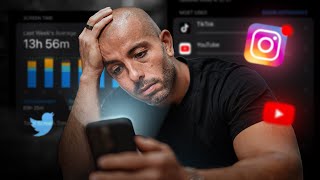
Sabri Suby tells ambitious people in their 20s and 30s how to stop repeating the same six months over and over. Move to reset who you are, pick one high-upside thing and focus hard, live cheap to buy skills instead of stuff, and run 90-day sprints. Your 20s are for concentrated risk and learning, not consuming.
Questions this video answers
23
AFR's Young Rich List
Shark Tank
Chapters
Most people piss away their 20s, and that's why they wake up at 35, still broke. They think that they're living, but they're just running in circles. Same parties, same paychecks, and the same problems. I made a lot of mistakes in my 20s, but still managed to make my first million at 23. I've been featured on AFR's Young Rich List multiple times and became one of the youngest sharks in Shark tank history. And I say all this to let you know that this isn't theory. This is the exact playbook that I wish someone handed me when I was 20. And by the end of this video, you'll know exactly how to escape the loops that most people never break and how to use your 20s to stack cash, mastery and momentum. Starting with phase number one, the traps of your 20s. Most people, they don't live 10 years, they live the same six months on repeat. They hang out with the same people, they're doing the exact same stuff. They're getting drunk on the weekends and they're filling their life up with minutia, and they get caught in this routine and they never stop and kind of question it. It just becomes a cycle that they automatically assume every single week and every single month. And then they wake up at the end of those 10 years and they have pissed away their 20s. They work all week, they get drunk on Friday night, then they recover on Saturday, they spend Sunday just mindlessly scrolling TikTok and social media. And then they unconsciously fall into this loop of comfort, and it's like a chisel that just carves their way in a block. Once it has been carved, it becomes very, very difficult to fall outside of that pattern. And no one ever questions what it is that they're doing. And then that's how it goes on those years compound, right? And then they do that for a year, and then they do that for a decade and never really question it. And that whole pattern that they repeat every single week, it calcifies and it becomes set in their way. And unless you become very conscious of these loops and you can find when you're walking down a path for too long that's leading you in the wrong direction to actually go, hey, what am I doing here? And actually question these routines that you do, and you need to become super, super conscious of whatever these things are, whether it's you drinking or the way that you eat or the daily routines that you do. And a skill that you need to develop in your 20s is just becoming very acute to ca. Catching these Loops so you can cut them when they don't serve you. And you need to be able to do that so you don't wake up at 35 and think, how the fuck did I get here? So a question for you is, are you compounding forward or are you repeating the same year over and over again? Which brings us to step number two. In your 20s, time feels endless. I remember when I was 20 and I was looking at people that were in their 40s, and I was like, man, when I'm 40, like, I'm going to be ready to retire and to die. And you feel like you just got all of this time left and you've got endless opportunities to go and chase. But then when you get to the end of your 20s, you lose the advantage of youth. If you don't make the use of every month and every quarter and every year, then you're going to drift and you're going to end up in a place that you don't want to be. Because that's exactly the way that society has structured up that you work all week, then you watch the football game on a Friday night, you go out and you get drunk and then you recover on Saturday and it feels like it's innocent. I'm not telling you to go live in a cave and become a monk. You can do those things sparingly. But most people, they overindulge in these things. And that's why most people, they never get to where it is that they want in life. 20 is the time of extreme unbalance, right? Most people in their 20s, they don't have kids, they don't have a house, they don't have a wife. So you can use that raw energy and fire that you have in your 20s, because that energy is not limitless. It has a limit on it. You want to use that, right to break out of orbit. Because if you don't break out early, then gravity will simply pull you down. In the later years of your life, once you've got more, more commitments, there's more responsibilities and more going on, you're going to come up with way more excuses of why you can't invest in those things. Now you might be thinking, hey, people are going to judge me. They're going to be like, oh, like this person. All I want to do is work, right? The reality of it is that most of these people that you're hanging out in your 20s, when they hit their 30s and their 40s, these aren't going to be the people that are living the life that Is that you want to live. You want to live five years of your life like others won't, so that you can live 50 years of your life later on like others can't. Otherwise, if you indulge in five years of freedom now, then you're likely going to be living 50 years later in your life that you don't want to live. Which brings us to step number three. If you were to fast forward from your 20s to your 30s, where is it that you would want to be, right? What kind of attributes would you want to have? What kind of skills would you have wanted to accumulate? When I was 18, I moved to London and I indulged in all this stuff. I was working, I was going out and partying a lot, and I kind of did this. I went through a chapter where I did this for, I'd say, three years of my life. And I went hard and I got it all out of my system. And then I thought to myself one day, I was like, hey, like, this isn't fun anymore, right? I used to, like, just do this because everyone's doing it. I had a lot of fun in the beginning doing it. And it got old very, very quickly. And I was able to catch myself and be like, hey, this isn't serving me anymore. And you go out to these places, you go out to these bars, you go out to these nightclubs, and typically, yeah, there's a whole bunch of younger people, and then there's people in their late 30s and their 40s. And you look at these people and you're like, why are these people sitting still here? They never stop and said, hey, this isn't fun anymore. This is not the right place for me. Let me move on to the next season. And I was very, very quick to catch that and being like, the last thing that I want to do is wake up at 35 and look like that dude or that guy over there. I don't want to be like these people. So I need to stop doing what it is that they're doing, Otherwise I'm going to end up here. And so unless you catch that early on that drive that you've got that energy, it gets blunted. Alcohol, weed, all of this shallow shit, that's what it does. It completely bluntens your drive. And this isn't about completely sacrificing your 20s and not getting any memories and not being able to go travel and go have fun with your friends. No, no, no. It's just not about falling into the death loop of making that everything that you do in your life. So what you would rather do is put that into a concentration of planning out what the year looks like or when you want to be doing certain things and having your fun, rather than just getting caught up into. Every single weekend's got to be about going out, getting drunk and having fun, so to speak. For example, in my own life, I work intensely on 90 day sprints and then I go away for two weeks with my family at the end of the 90 days. So I don't live in an entire year like a monk and don't do anything and I'm just locked in a closet grinding all day long. No, no, no. I am also very conscious of like, we only get one life. But instead of trying to just live that life every single Friday night and go out and do all of these things, I'd rather concentrate those efforts and make that time extra special. So the question to you is, what would your life look like if you cut out all of these vices for just 12 months? Which brings us to step number four. Most people in their 20s have either gone to university or they've just finished school. And they are in their hometown that they grew up, and their social circle are the same people that they grew up with. And then they let that social circle hold them back from the growth that it is that they want because they feel judged, right? They're like, I can't act in a new way because all of my friends are going to look at me and be like, what the fuck are you doing? Why are you acting like this? And then late in their 20s, most people, they'll either move city or they'll wake up and then they'll won't feel so connected to those people anymore. But it's already too late at that stage. That's why I think the biggest cheat code that you can do in your 20s is to literally move out of where you grew up. So there is nothing holding you to the identity of who it is that used to be and that you can just start fresh and you can build the person that it is that you want to be. And in addition to this, most people also spend a huge amount of time in shallow relationships and trying to date in their twenties. And to most guys, they spend the majority of their time thinking about girls. So if you have a look at how they structure up their time, they're still spending 60 to 70% of their time just thinking about girls and going out and meeting people and dating people that never really go anywhere at all. And in reality, if you want to be someone of value. That value doesn't just come out of nowhere. It comes from the relentless amount of work that you do on yourself as an individual in your 20s. So instead of spending a huge amount of time trying to go out there and gain people and attract people, you first need to become something, somebody that somebody would want to be with. And the way that you do that is by working on yourself. I even have friends of mine right now that are like, man, I just wish I could find somebody. There's no good women out there, there's no good men out there, right? And I think that the biggest cheat code to all of this is to first become somebody that would attract that person in the first place. And I think the number one cheat code that it is that you can apply is just to get in great shape in your 20s, right? That's something that doesn't cost you any money. There's no excuses. You can literally do push ups and sit ups in your bedroom, and that's one aspect of your life that you can get in order until you figure out all the other stuff that it is that you're working on. Step number five, in your 20s, the downside is really nothing, but the upside is absolutely everything. So what you want to do is you want to take as many swings as you possibly can. You want to be the yes man and say yes to everything, to put yourself in the right situations where luck can spark. Because no matter how clear and how much clarity that you have in your 20s, you're never really going to know what it is that you want to do. And the only way to figure out what it is that you want to do is just to have more swings at bat, to go out there and sample a little bit of everything, try a bunch of different jobs, work in different industries. It doesn't end up anywhere. You lose some money, you go down a road, it's a dead end. You're still young, you still have youth on your side. And then you can try another road. Because once you know what it is that you want to do, you want to cut out absolutely everything else. Because winners isolate and they work intensely in private and then they get rewarded in public where losers, they all congregate together. A question that I get asked all the time is like, sabri, like, how are you networking with all these people and flying all around the world? Like, what's the networking hack that you can give me? What's the source that I can kind of get into rooms and I can network with people? People want to Network with people that are of value, right? Most people go into a networking situation and they look at extracting as much as they can of that situation. Like, who in this room can get me to the next level? Who can open this door for me? It is a selfish thing to look at a networking situation, to think about what is it that you can extract instead of. Instead, what you want to do is you just want to become someone of value that people want to naturally network with. And if you get good enough at one thing, the word gets out there. People start to recognize you from the work that you're doing. And then once you're at that stage, right, Once you have a world class skill set, then you want to go out there and network with people and DM people and don't be afraid of saying, hey, this person's doing this. Something interesting. Let me reach out to them. I'm happy to be in their city. I'll DM them and maybe we can connect, right? In every city that I go, I put a call out on my Instagram or there's people that I know that live there that are doing cool shit, I'll DM them. So in your 20s, you want to take big violent swings at a big goal. There is limited downside, but infinite upside. Alrighty, so now you know what the plateau loops are. But being aware of these plateaus is only going to take you so far, because what you need now is the right weaponry to actually go out and play offense. Which brings us to phase number two, core weapons, step number six. So once you find something that's working because you've been taking all of these swings, you're going to get your first taste of success. And you're going to think, okay, I took all of these different actions, I tried all of these different things, and then I got this little win. So let me repeat that same action and then I'll get even more more wins. And then they start up six different side hustles. They think they need multiple streams of income. They look at all of the richest people in the world that are all talking about diversification and having multiple streams of income. And they don't see that these people only have multiple streams of income now because they mastered one thing. They had one big liquidity event, one big monster win, and then they took all of that cash and then they diversified and now they have multiple streams of income. That's not how they got the cash to begin with to have multiple streams of income. They had one vehicle. You want to utilize your 20s in having big swings and taking big bets. So when you're looking at. If you've got a few things that are working right now, look at the one that has the biggest upside. If everything was to go right, would it place you into a different galaxy? That is the vehicle that it is that you want to chase. And then once you make that decision, make the decision to go all in and to become truly world class at this. Which brings us to step number seven. Every person has a chapter of their life that defines their character. And it's this lonely, gritty chapter that, like a chisel, it carves the deepest line in your characters. And you can't try to avoid it, because all the people that it is that you look up to in life, they all survived a season that you didn't see. And I can tell you from experience that it's not fun while you're going through it, but just remember that the hardest of steel is forged in the hottest of fires. But what happens to most people is that they feel this isolation and they feel this pain, and then it signals to them, hey, I need to avoid this. And I. And I mustn't do this because it's hard, and I don't want to do hard things. But that's the foundation that it requires. The only way is through. You have to go through this chapter in order to get out of the other side. And it's what's going to form you as a character. It's all of these times that you're going to look back on and think about, like, man, that was really rough, like, how hard I was working, all the sacrifices that I make. But when you do get through it, it's also some of these times that felt like hell when you were going through them that are some of the fondest memories, because it's those dark nights that make the sunny days even more sweet and more memorable. And I can tell you from experience is just do not avoid it. Embrace it, and understand that this isn't going to be forever. You're not going to live like this forever. This is going to be a chapter that you go through. Which brings us to step number eight. 99% of people's opinions do not matter. People are going to judge you. They're going to look at whatever it is that you're doing, and they're going to feel that they have the right to tell you what they feel about that. You only want to listen to the opinion of people that you respect or who have done something that you can look at and you say that is great, or they're living a life that I would like to live. Because hate only comes from below, it never comes from above. And you're going to find there's a whole bunch of people they're going to be hating on your decision or have an opinion about you that aren't doing anything that is worthwhile in the first place. The lens that you want to look at is am I making myself proud? That is the only person that it is that you need to answer. And what you must understand is that finding your way in your 20s, it's like unlocking a safe. It's not just forward momentum. There's going to be steps that you take forward and steps that you take backwards. By taking a forward step and then a backward step, you're going to be able to unlock what that pathway looks like. Don't just get caught up with am I getting to the goal? You want to get caught up with what am I learning and what are these foundational skills at? How are they forming me as a character and what is it I'm learning? Because oftentimes you're going to take a step back and then you're going to take two steps forward based on that learning and that pain. And you just want to be taking so much action and putting in so much volume in your craft and whatever it is that you're doing that it would be unreasonable for you to ultimately not end up at that outcome after a decade. Which brings us to step number nine. Your 20s is not about earning. It's about learning. And we live in a day and age where everybody is so concerned about flexing on Instagram and looking rich and getting rented Lambos and doing all of these things. These people are caught up in the spoils of success. They aren't caught up up in the type of person that you need to become in order to be successful. Have all of your focus on just how do I learn the most? And whatever the opportunity is that you're doing. Understand that you might be in a job and it might feel like, hey, I'm not earning the most that I possibly could in this job. And there's more people earning more money than me in this other vehicle that's having your attention on just earning instead. There are three vectors of value when you're looking at an opportunity. And the first one is, yes, how much money am I getting paid to do the thing? And this is the vector that most people over index on. They just like, it's all about I just want to earn the most amount of money. And if they earn the most amount of money now, then they end up not earning the most amount of money long term. Because the second vector of value that you want it is, is what is it that I'm learning and who is it that I'm learning for and what skills am I going to stack in this role, in this opportunity vehicle that I'm in right now? And how are those things, skills and experience going to serve me in the latter years of my life? And this is the most important one I can tell you from. I learned this firsthand. I work shitty dead end jobs earning £5 an hour. But the skill that I learned was the skill of sales that I still use to this day that has helped me build my empire. If I was only focused on making the most amount of money in my 20s, then I simply wouldn't have that skillset. And then the third vector of value is, is what is the network that I'm building, right? Who's the manager that I'm going to work for every day and what are the opportunities that me working for that individual is going to open up further down the road. And I can tell you from experience is you want to focus on the last two vectors more than the first one. Because you can always go out there and you can always earn more money, but you can't always find yourself in a room where you're learning from incredible people and getting foundational skills that are going to put you five, 10 years ahead of everybody else. That is only optimizing on earning the most amount of money. But listen, you don't rise by adding more advice. What you actually do is you rise by eliminating bad advice. And in phase number three, that's exactly what it's about. It's about removing all of the noise and only listening to the signal. Phase number three, amplifiers. Step number 10. Small goals breed small actions. You want to make sure that your goals are big, hairy and audacious. You should look at them and they should scare you. And it's often that these smaller goals, the competition is so much more concentrated on a small goal than it is on the big goal. Because most people just do not think big enough. And it's because they don't think that that goal is attainable. So by the average, most people, they just focus on things that they think are going to be achievable. But by doing that, you're just in a red ocean of people that are all chasing small ideas instead. All of the things that it is that you're pursuing. You want to look through the lens of a hundred million dollar business and you say, hey, could I build this business to be $100 million opportunity? And if you can't, then I would suggest not chasing it. Because something magical happens when you set a big goal, when you set a high target. Your actions, they have to lift up to that level of goal, right? And you actually have to change who it is that you are in order to make that goal attainable. And so not only do you get the byproduct of when it does hit, it's going to hit really, really big, but it also makes you level up as an individual where you have risen up to that standard and you start thinking big about everything. It's like is you looked at your goals and you said, okay, this is my 10 year goal. What is it that I would need to do to achieve my 10 year goal in the next 12 months? Just that exercise alone, it changes your thinking. Which brings us to step 11. And whether you're working a job or you're starting a business for everybody, the one thing is true that they experience some level of lifestyle creep. They get a job, they have more disposable income, then they start to buy useless shit that they don't need. Because they do that, they're using any little bit of extra income that they've got in stuff that it doesn't need that just bogs them down. And when you really look at it and you say, well, why is it they're doing it? They're doing it because of some outside expectation or by lifting your status up. You don't want any of these things in your 20s. Your 20s is not about accumulating shit that it is that you don't need. You want to live very frugally in your 20s. Everything that it is that you buy, it has an attack associated with not a physical monetary tax, but an energy tax. It weighs you down. We've all experienced that liberating feeling of taking a whole bunch of shit that we don't need and taking it down to goodwill and giving it away. That freeing feeling instead of just having that once in a while. You want to live your 20s like that. You want to keep it very, very simple, mattress on the ground, computer, very limited things around you and just it keeps your mind focused on the main thing. It's, it's not to accumulate physical possessions, it's to learn. It's to go through this season and to up level yourself as an individual. And if you find it Hard to kind of budget and ration out your money. And you have a whole bunch of cash that's sitting in a main account and you're like, that feels like you've got a buffer that you can go out there and start buying useless shit that you don't need. Then stick all of that money in an online saver that is not associated with your main everyday account. So you don't even see that that money is just going out. And the thing that you want to use that money for is not to buy possessions. You wanted to use it to buy skills. Don't be frugal with investing in yourself. Buy courses, buy books, join networks. It's going to get you around the right type of people. They're the things that it is that you want to ruthlessly invest in that will give you the biggest compound interest for the rest of your life. It's not in buying all this sneakers or shoes or new clothing or any of this stupid shit. If you so please, you will have enough money to do that stupid shit in your 30s and 40s. Alrighty, so by now you've got the right vehicle, you're thinking bigger. But this is where most people stop. Because this next phase is the phase that actually costs because you have to invest. Phase number four is all about paying the price. Which brings us to step number 12. Sacrifice is unavoidable. You might be listening to all of this and being like, wow, Sabra, this, it is a big sacrifice. Yes, well, like, unless you sacrifice what you want becomes the sacrifice, I'm not going to be sitting here and telling you that you can have everything that it is that you want in life without making a huge amount of sacrifice. Yes, it is. That's the reality of the game here. And don't avoid this. Understand that this is a sacrifice that it is that you're making now. You're not going to lose this part of your life. You're still going to get enjoyment in it, but you're going to be putting in a lot of the hard yards in a time of your life where you have the ability to do that. You don't have all of these other pressures that are weighing you down, like gravity. And you've got youth on your side, you've got the raw power and you don't have a huge amount of overhead or people that are relying on you. And so you can be selfish and work on yourself in this period of your life. To put you in a completely different world in the latter years of your life. Show up every day and be consistent. It is completely inevitable and unreasonable for you not to be world class at that thing. And people won't be celebrating you in the beginning, in the start, but they will at the finish line. If you want a breakthrough outcome, you have to put in a breakthrough effort. And that has to be a trade that you're willing to make if you want to live a life that's extraordinary. Steps tip number 13 stop pretending that money doesn't matter. Everybody loves to say, like, money isn't everything or money doesn't matter, but whether you like it or not, we live in a material world. And if you're going to be operating in life, a lot of the decisions that you make, if not all of them, are going to come down to some monetary system. So instead of being like, hey, it doesn't matter, just understand that this is an area of your life that you need to get in order and that you need to master. And it's often people that don't have any money that love to virtue, signal that money isn't important. Instead, come to terms with, hey, I live in a material world, I need to get this sorted. There's nothing wrong with me wanting to get this sorted. Because we are conditioned in society to think that money is this evil thing. If you look at most of the sayings that are around money that you've been taught your whole life, it's that rich people are evil and that money is evil, the root of all evil and all of this shit. Yet these are the people that have to go through their entire life worrying about money. Instead, just be like, cool. This is an area that I need to get mastery of. I need to understand how to manage my money. I need to know how to create money and it's completely fine. And once you come to terms with those things, your relationship with money becomes a lot healthier. Which brings us to step number 14. This next step is the directive and is the operating system for your 20s. Use your 20s to break loops and to separate yourself from normies. Look at all of the normal actions that everybody around you is doing and that normal society is doing. And literally do the opposite. Go into a season of isolation and mastery so that you can break out of this whole plateau that you have been beaten down and put into. And you can reach a different orbit by isolating yourself from everybody else. Cut all of your costs and live extremely frugally so that you can focus on mastery of a skill set and keep the main thing, the main thing. Set big goals and then take huge risks along the way, because in your 20s, the downside is almost non existent. But the upside is absolutely everything. Eliminate these vices, these mindless things that society just indulge in day in, day out, and never question and remove all of those things and live a simple, simple, clean and quiet life. And then you take that foundation that you've built in your 20s and you use that to compound in your 30s, because you have set such a strong foundation and you've built so much discipline and skills in those areas that the level step changes. It's not gradual now, it's the season for compounding. And if you liked this video, you're going to absolutely love this one on how to brainwash yourself to be successful. Like subscribe and I'll see you in the next one.










