Mastering Your Mental State - Sabri Suby with Ryan Tuckwood on THE SWISH SHOW
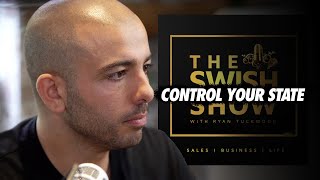
Sabri Suby, founder of King Kong, talks about scaling his agency since 2014, why cold calling still works, and how to build predictable lead systems. He covers managing your energy and state, the difference between sales and marketing, and crafting offers that actually convert.
Chapters
Founder Sabri Subhi joins me now in the studio. I really look at business as an incredible vehicle to really make good and make change in the world.
Welcome to another episode of the Swish Show. As always, I'm your host Ryan Tuckwood. And today I'm excited to bring you someone that was once crowned the king of consulting by Founder magazine and one of the best marketers in the world by Mike Dillard. He's the founder and head of growth at Australia's fastest growing full service digital marketing agency, King Kong, and author of international best seller Sell Like Crazy. Guys, if you haven't read that book by the way, please go and grab a copy today. It will literally change your sales trajectory. Launched in 2014 out of his home, which I do believe, and completely bootstrapped, which is really inspiring. As a serial entrepreneur, digital marketing agency King Kong has grown to become a 70 plus strong team that uses true ROI and only listen to this only charges for success. His company King Kong has carved out a niche by guaranteeing results. Based in Melbourne, King Kong has consorted to and advised businesses in 42 countries in 416 different industries. They've generated $1.33 billion in sales and taught more than 250,000 people through seminars and content and training sessions. King Kong is the 17th fastest growing company in Australia across all industries and has been named the fastest growing digital marketing agency in the country by the Australian Financial Review and Deloitte. And they work with the likes of Metricon, Slater and Gordon, Nimble, Marshall, White, kx, Pilates and many, many more. As I mentioned, with a team of over 70 plus, they bring in an annual revenue of more than $20 million. And achieving that by applying the same methodology that King Kong teaches and implements for its clients as well. Mr. Sabri Subhi. Welcome sir. How are you?
I'm doing well. That was quite some intro.
Thank you, mate. I do a lot of interviews, but I also get interviewed a lot as well. Do you feel awkward when you listen to all of that back?
It's like a G Up song, man. They get me all G'd up. I like it.
Okay, this is not on my question list, but you've set me up there. When you do speak on stage and you do your keynotes and your talks and events, do you have a G Up song? Do you have a little bit of music that you listen to before you go?
Not one song. I'm definitely into hip hop. Like I listen to G Up music a lot, like just to get G'd up. Like I Don't need an event to get g'd up. I try to get jeed up as much as I can. So yeah, like some, some pretty hardcore hip hop will get it going. That's the kind of stuff that jeez me up.
Okay, I'm gonna stay on that for a quick second before I get you to introduce yourself in your and your words.
Yeah.
Is that motion creating emotion sort of factor then? Is that something that you're big on? Does that feed through then to your team? Is there a.
Definitely. You've got to get in state. Right? Like, that was something that I learned when, you know, in my first job, which was in sales, is that like, you know, seven hours on the telephone isn't always seven hours on the telephone, right? Like, because I used to kind of break up my day into like an hour of power and if I was at like level 10 on that hour, like, I would just, I'd have so much more output.
So.
So it becomes a thing of like, you know, your personal renewal and managing energy, not time. Right. And that's, that's a big thing of the high performers. It's not just about time. It's about the energy that you put into those times. And anything that you do, from music to affirmations, to working out, saunas, cold plunges, all of that kind of stuff, that's the things that really set up your energy base that you get to go out there and push out into the marketplace with.
Yeah, well, love it. Okay, there you go. There's some value straight away. Well, before we, before we dive into the crux of it then, and try and get under the surface and to the bone, so to speak, for those people that may not have heard of you before or even heard of King Kong and what you've achieved over the last, I think, six or seven years, give us a quick elevator pitch, quick 60, 90 second overview of who Sabri is.
Yeah, sure. Well, look, I've been involved in building businesses ever since I was like 21 years old. You know, I got my first start in sales when I was 16 years old. That was a cold, hard slap to the face. Since then, I've traveled, you know, all around the world, selling one to one, one to many, door to door, face to face, over the phone. You name it, I've sold it. And basically that was the thing that kind of led me down the rabbit hole of business and business building. And I've run a few businesses, I've run a few into the ground. I've sold a few. And that's all led me to the position that I am with King Kong. And in all of those businesses and in all roles, I was always tasked with the number one challenges that businesses face, which is how do I get more customers? And that's really been like the question that my business has been centered around in solving that really, really big problem that businesses face, which is how do I get more customers? And that's really what we do at King Kong. We help people increase their traffic, leads and sales. And we're all focused on really just solving that problem for businesses because it has a profound impact when you're able do that.
Yeah. Nice. Okay. That kind of leads me into a bit about your background about diving too deep into. I don't want to be the bog standard sort of childhood and growing up on all of that. We might touch on it, but our mantra here is without sales, business fails. But I guess if I take what you've just said there. Without leads, then you can't make sales in the first place. So marketing or sales?
Well, the way I look at sales being a child of marketing, right? And then marketing being the child of strategy. So if you look at like the overall impact of where things are really going, you know, like sales is the lifeblood of any business, right? And if you're looking at, you know, it's the oxygen that fills the lungs of a business and without it you will die. However, that's just looking at it, I guess in its very first principles basis, like we need to get sales. And then once you look at it like that, then you start having to look at a more strategic, through a more strategic lens and start to think about, well, if I'm a salesperson, there's only so many hours in a day, there's only so many phone calls I can make, there's only so many pitches that I can do that you are limited by the clock. And then it becomes a question of how do you actually multiply that sales message. Right? Because you know, marketing is just salesmanship multiplied. So really for me, the big transformation happened when I got off. Like when I started King Kong, I was making, you know, 100 to 150 cold calls per day. And I was doing that like seven hours a day. And then I was fulfilling all the client work by night. And it got to a point where I was like, well, no matter what I do and how sharp my pitch gets and how good I get and how strong my follow up game is, I'm still limited by the number of hours that there are in day time is linear, right? So for me, the biggest, you know, trajectory change was when I basically took that sales message that I was delivering to 150 businesses a day. And I started to put that in ads and other assets that I could use to leverage and multiply that sales message. And instead of cold calling on 150 people a day, I was writing ads that would call on 150,000 people per day. Right. And you know, the question really becomes when you're, when you're looking at sales, is that if you've got a team of salespeople, how do you feed those salespeople the highest quality leads that you possibly can? And the answer to that, the sale begins well before the phone gets picked up. Right. There's so much stuff that's going on pre call that is going to determine the effectiveness of that sales message.
And does that because you've been on the ground floor, for want of a better phrase, like you've had the rejection, you've had the. I don't know whether, I don't know if you did, but I know for me, I'm a similar background. I was engineer in the UK for eight years. Then when I came here, I fell into a cold call type center role and My job was $300 a day. 90 seconds find out if somebody had 15 to $25,000 in their bank, which obviously leads to a lot of abuse and rejection and ultimately for me, a little bit of anxiety as well around even doing the job. Is that an underlying why for you? Is it like, you know how the guys feel so you want to kind of make it as easy for them as possible with the come through? Is that a conscious thought process that you have?
Like I've done, I've done it all. I've been on the auto dialers, you know, three to six hundred dials a day. I've done the hard yards. I've made over 1 million sales calls. Right. In terms of like being on dialers all around the world, selling everything that you can imagine. It's not really that, it's like, you know, the why factor. Right. It's rather, you know, if you want to have guys that are gonna be with you for a long amount of time and that are gonna be closers and that aren't gonna burn out. Like sales has an incredibly high turnover. It's the highest turnover function than any other function in the business. And that's because people, they get people to do stuff like cold calling. Right. Rather than spending money and generating leads. So I look at it like what is the best use of somebody's time? Right. Again, time being linear. Each salesperson only has seven and a half hours in a day that they're on the clock. So it's my job as a business owner and as to deliver them the highest quality prospects in the highest volume possible for me to get the most leverage of that time. Right. So there's. And the byproduct of that is that you don't burn your salespeople out by them speaking to non qualified crappy people that aren't ever going to be in a position that you can help them. Right. Because that's really. You want to create a sales machine that will sift, source and siphon and only delivers people that are pre qualified, pre dispositioned to do business with you and they know what is going on. And I believe that that is the job. That is the job of the business owner and the person who's leading that organization to ensure that that is indeed the case.
Yeah. Nice. I like it. So can I surmise from that then? Are you a categorically matter of fact that cold calling dead, waste of time?
No.
Is there still a position for it?
100% right. Like it's not dead and it won't ever be dead, but it's not the best use of your time. Right. The way that I always look at it is either you have more time or you have more capital. Right. If you have more time, then cold calling is the best thing for you to do the moment that you have more capital than you have time. Time is the only really non renewable resource and the most valuable one. So when you have capital you can effectively buy time. So then when you get into a position where you do have some money in the bank, it's not a wise decision to use human capital which you can't really get leverage other than just adding more bodies to the organization and it makes more sense to use something that is scalable through capital. So yeah, I'm not against cold calling. Right. But I just don't think that it's the most efficient way to get the job done.
Yeah, that was. I could have really set myself up for failure with that question because we're still a big advocate for the fact that I believe that previous old style cold calling is completely dead. But I think professional cold calling and going about it in a very structured way with a bit of a pre call stalk and being able to articulate your value proposition really quickly. Get in, get out, set up the next call. I still Think it holds some value. So I'm glad we're on the same page there, mate. You've obviously got a very entrepreneurial mind. And I say you've started multiple businesses, you're very open in saying that you've scaled a lot, but you've run a lot into it, or you've run a few into the ground as well. Where does that come from? Because I'm still on the fence of whether an entrepreneur is born or made. Where do you sit on that argument?
Yeah, I think it's definitely a factor of somebody's environment. I don't believe that they are born. I don't think there's something inherently different in my DNA that makes me an entrepreneur than the next guy. Right. I think that it's just something that happens environmentally to you over time. And I think that the first time that I got my taste for that was like, I was raised by a single parent mother, me and my sister in Byron Bay. And there was a point where, like, my. My very first job when I was like 6 or 7 years old was working in a health food store grinding peanut butter up for $2.50 an hour. And I realized very quickly that I wasn't going to be able to make any money to really make a substantial difference into my mum being able to bring us up. Right. And then I started busking at the markets on a Sunday with a harmonica. And I made like $70 in that first day. Yeah, this is in Byron. And then I was like, I got that money. And then I was like, okay, well, this is obviously a lot better in terms of return on my time. Right. And that was something that could make, you know, a difference in terms of what that. What would that look like in terms of the output? So that was probably the unconscious first thing in terms of the environmental forces that factored the mindset of working, you know, for myself and being entrepreneurial. But I've. I've always worked for myself. And what I mean by that is I've had many jobs, right? Many. And I've still worked for myself. So, you know, I think it's a fallacy to say when people say, oh, I want to go work for myself, like I worked for myself when I worked in those organizations, right? I was looking at my time, I was looking at the output, and I was always chasing my potential of what I could do. It was never of a fact of I'm coming in to punch the clock and get these hours right. So I think that, you know, you can, you know, everyone, like they should look at it in the way that they already work for themselves. Because they do.
Yeah, I'm a big, big fan of that. That angle as well with employees want to better phrase that you're your own boss within this. So on that note then how is there a way that we as leaders, because we've already spoken about that sales have got such a high turnover. How can we get people to have that penny drop that this is your business within your business. How can we get them to go above and beyond and think in the way that you obviously do to really reach your potential? Is it possible?
100%. The average tenure on my sales team is about three and a half, four years, which is unheard of in sales. You know, the second sales guy that ever hired heads up sales in my company. Most of the others, except for two or three, have been with me for four years plus. Right. Which is unheard of. So I don't think that it's the responsibility of the team member to have this penny drop moment. I think it all starts at the top and you need to lead from the front and show them. Right. You need to engineer an environment that shows them what is possible and that comes down from goal setting. Finding out where it is that they want to go. How can you help them get there and then showing them that merely working in the role is a vehicle to help them get to that outcome. It's not working in the role. Right. If you're not willing to do whatever it takes in the role that you have right now, you will never be willing to do whatever it takes wherever you go. Right. So it's a conscious decision that you need to make. How great do you want to be? And it starts from right now. It doesn't start from all the pastures are going to be greener on the other side or let me go here, let me go work at this place. And it's this non like never ending pursuit of like greener grass that is like a fallacy. Right. It's like reaching the horizon. It never comes. And more so it's about looking at where is it that you're trying to get to and who is the person that you would need to become in order to get to that and then basically build a vision and a life that's in line with that long term outcome that you're trying to shoot for and understand that whatever you're doing, it's a sales role. It's this. It's just a vehicle for you to get to that place that you want to get to. You don't need another vehicle to jump in to get there. You just need to do whatever it takes in this vehicle in order to get there.
Yeah, beautiful. Okay. And then on that note, then if I'm going to take that a little bit more on a granular level. What do you do practically within the workplace with your team? Like you've got I'd say 70 plus staff. We're fortunate that in 2018, Rob publicized went on Shark Tank and you've got the likes of Glenn Richards who's invested in our business and he's got 6,000 staff. And it's always a question that I'm trying to understand is how do you create that or keep that culture as it grows? Are you still hands on? You're still a presence. Every single day they see you, you know, all of your staff and you find out their individual goals. Are you still realistically able to do that?
No, I'm not. So basically like I have a general manager who looks after the day to day of the actual business. My job is to grow the business. It's not to focus on what I'm doing this month or this quarter, but what I'm doing this month or this quarter, next year and kind of bigger picture, however, in saying that I meet with all the teams in my company like every fortnight and have that face to face contact, I'm definitely in, in closer contact with the sales team that I meet every week and like, you know, the goal setting, all of that kind of stuff. It's definitely a little bit more present on the sales team purely because it's a role that faces much more adversity than any other role in any organization is being on the cold face frontline, speaking with customers and trying to convert strangers into clients. There is a reason why salespeople are the highest paid people on the planet is because it is an incredibly difficult role and it is, you know, an emotional marathon and you need to be able to manage your emotions, your energy and everything like that. Therefore, you know, I look at sales being the tip of the spear of any organization. You know, sales cures all. If you don't have sales, there is no team, there is no clients, there is no building, there is no culture, there's nothing. If you don't have customers, then you have no money to hire people and do all of those things. So look, culture is an incredibly important thing to our organization. You know, I'm still doing last round interviews for anyone that comes into the company to control that culture because it is Something that is incredibly, incredibly important.
Yeah. Okay, nice. And you referenced customers just there as well. And one thing that really hit me when I read sell like crazy was you said that customers don't care about you, they only care about themselves. Obviously. Maybe not word for word like that, but that was the message, right? So stop selling your, your product, stop selling your business. Just talk to their pain. Yeah, right. Are there any sort of obvious buying behaviors that you've seen? Is that, is that changing at all? Do you think people do care about more about businesses and personal brand? Are you big on that as well? That more than they did before? Are we still. Let's just talk. They're paying off of a solution.
Well, I don't think that they're mutually exclusive because the way that I look at it is that ultimately like, you know, there's people that care about the integrity of the company, right. And they care about like the overall values that that company stands for. But if you have a look at the thing that even brought them to the point where they were even evaluating companies based on their morals and their ethics, it was a pain, it was a problem that they were trying to solve in their business. And then they're looking at those other things. Right. But like, so you know, as, you know people, they buy emotionally and justify with logic. So you know, you really need to be positioning things to solve problems. Like how many websites that we look at, that's welcomed, you know, welcome to XYZ Company. We've been in business since 1979. Like no one gives a shit about any of that stuff. They just don't. Right. They have a problem and they want to get it solved. And then there's other factors that do come into it, like those other underlying values and ethics of that company. But it still all starts with a problem.
Yeah, the root cause. Nice. I like it. Then with everything that's gone on, it's been a strange old year. But I don't want to get too caught up in that because I think everybody's had an interview on Covid. What does the future of business look like for you in general? Obviously a lot of it's going digital. 99% of our training is now done via Zoom and we've been doing it for four years. But all of a sudden everybody's just changed. Are we going to change en masse or are we going to revert back to certain aspects?
Look, there's going to be a bit of a bounce back effect, but if anything, Covid's just shown people like what is possible to be done digitally. I see the future of business just being direct to consumer, direct to brand, being a lot more middlemen being removed from the equation. And people are gonna wanna have those one to one communications with people and like thanks to the Internet, that's removed all those traditional barriers that you typically could not go and do that. Like even you mentioned for you, what percentage is done via Zoom?
About 95% of our training is now. Zoom training.
Yeah. And if you were running like the old circuit of all the old school sales trainers, the Tom Hopkins, the Zig Ziglar and all that kind of stuff, like you literally need to book out seminars is all like in conference rooms and do a crazy rack up thousands of kilometers on your body, traveling all over the world, training people. Right. And ultimately still selling time for money. And what you're obviously, you know, when, when you can start to move to a digital component and you can have it. So you're able to deliver that value digitally. And it doesn't matter if you train 100 people a month or you train a hundred thousand people a month, you know, it's. You're still delivering the outcome for your clients. Yeah, but you're not selling your time.
Yeah, yeah, 100%. Well, I mean that's exactly been our journey. We were previously traveling. I'd be on a plane every two or three days, which is my wife's dismay. I've got, I know you've got, you've got two young daughters.
I do, yep.
Yeah. I've got a two year old boy. I got another one on the way, another boy, three weeks today.
Awesome. Congrats.
Cheers, man. So in that respect, for me now, not having to jump on a plane every couple of days and be away for a day or two is a beautiful sort of progression in my career because it gives me more of that balance, which I'm going to get to in a second. But there was something that you referenced a minute ago. You spoke about a couple of old school trainers. Now I believe you've also gone through the Tom Hopkins, Zig Ziglar, Brian Tracy, maybe Ron Willingham. I'm not sure if he did integrity selling with him as well. So we've got a bit of an overlap there in some of the trainers that we've studied. But I'm always interested in. Is there a standout sort of either mentor or direct coach for you that you've had over the years?
No, there really hasn't been my mentors always. Predominantly I've gotten them from books and learning that way through people. It's never been a direct mentor to mentee relationship in my life. I've always gone to different books, other areas of training, training on different areas to improve. Right. So there hasn't been like one standout person that I've mentored under or anything like that. It's you know, a lot of the stuff as well that I have learned and I have tried hasn't worked. And a lot of the stuff that I have done is by being on the front lines in the cold face figuring this stuff out via trial and error. Even though I wish that wasn't the case because you know, learning firsthand is, you know, it's not wise when you can learn from other people's mistakes. But that that journey really was for me when I tried a lot of stuff that was out there and like, you know, a lot of the content that is out there is like over the top, like American car salespeople. Right. And a lot of that isn't like it's smaller, more transactional sales. Someone comes into the lot, you're closing them. Like you know, when you start to look at multi touch longer sales cycles with multiple different stakeholders, it's a different game. Right. It's not that normal stuff like you need to know how to follow up over months on end, not burn people, not push people, provide value throughout that sales process. So a lot of the traditional information that was out there didn't serve me right unless I was selling like $30 per month line rentals. It wasn't applicable. Once you get further up the chain.
Yeah, yeah, spot on. We talk about that a lot.
Right.
I think the Google zero moment of truth and you know this better than me that it's what, 20 plus touch points now before somebody sees you as a trustworthy personal business that I want to do business with. So you do business all around the world or you have them. What's the difference between the Australian market and overseas? And if we look at America specifically, that's somewhere we've just been tapping into recently. Recently as well. Yeah. Different buying behaviors. What should we be looking out for if we are looking overseas?
Yeah, like if you just look at the American climate, it's a lot louder. Right. They're very in your face. It's very in order to get like cut through in America, like if you go over there and just get some exposure to the media that's over there, the television ads, the billboards, the market that you're competing for attention with is a violent, chaotic storm of Noise, Right. And you have to grab people by the throat and drag them into your sales message in order to get a little bit of. You have to be so loud. Right. By contrast, that doesn't work as well in Australia. Now, I'm not saying that all the strategies that the American trainers go over don't work in Australia, but it's. A lot of it is very over the top. Right. And a lot of it is based on the old school method of selling rather than like a spin selling. Right. Or rather than like, you know, bringing people in, doing a proper diagnosis and then really writing a prescription based on that, that problem that they have. So I think that that is changing like it's changing in America as more people start to leverage Internet marketing and they start to use more pull then push, right? You're, you're getting organizations that are traditionally had like cold calling floors of 300 plus people out there just going absolutely crazy that have then now realized there's probably a better way and a smarter way to do this through using marketing. And it's a different relationship. Like when you cold call a prospect, the relationship that you have with that person, your approach needs to be radically different to if someone raises their hand in a sea of people and says, hey, look, I'm interested in what it is that you've got. Right. So I think that most of the sales material that is taught is taught on that offensive sale, on the going out there, wrangling it, drumming up business, rolling up your sleeves and getting it done. More so than what is the psychology of somebody that's actually requested you to give them a call?
Yeah. Okay. So we need to be able to actually, I'll ask that question. Do we need to be able to adapt and be a chameleon as a sales professional, or would you have two different divisions that only focus on one or the other?
Yeah. For me, like I'm, you know, I'm a business builder. I'm not a salesperson. So I look at how do I build a business in the most efficient and fastest way, and that just happens to be from Mike experience, not by cold calling. Right. When I stopped cold calling and I took that sales message and I multiplied it is when my business exploded. Right. However, I would not even be in a position to explode my business if it wasn't for cold calling. Right. So I don't look at having a division in my company that would be a cold calling arm, Right. I look at, I'm a marketer. I'm teaching my clients how to generate an Unlimited supply of highly qualified leads that are predisposition to want to do business with you. I better know how to do that at unlimited scale for my own business.
Yeah, that makes sense. Okay. And you started, I think, the same year as this, 2014. Yeah, the growth has been phenomenal and obviously inspiring as well to watch from afar. Was there a pivotal moment one, two, three, four years in, maybe early this year? I don't know where you've gone. This is going, this is going to absolutely fly. And then you just double, triple down and just went all in on this business. Obviously you got quite a bit of experience with business building, which is a phrase I like. Was there a moment where you just.
Knew that this is multiple, multiple different ascension points in climbing, in summiting the mountain? Right. So, like, you know, that was when I had been cold calling for my first week and like, I got my first client after like four days.
By the way.
It was in my bedroom, loaded up my VoIP with $30 and just started jamming. And you know, when, when I did that and I got my first client, I was like, oh, awesome, this is excellent. Right. And then when I got to the point where I had enough money to deploy on marketing and I ran a campaign and I saw all the leads flooding, I was like, oh, okay, awesome. Then when you get your salesperson and you see your first salesperson make their first sale, you're like, oh, wow, it's not just me. Someone else can do it. And then you get the second one and then they can start closing deals. So there's been multiple different points, you know, in summiting the mountain, and then you get up to the summit and then you realize that there's a bigger mountain right behind it. So there are multiple different points along the way. There's not one pivotal, like clouds parting, angels singing, so to speak, moment.
That'd be nice, wouldn't it? Flip down his head then, because I'm sure we've been there. How many or is there multiple as well points where you've gone, I'm over this, I'm going to change direction again. Has there been any sort of crisis points that stand out for you?
No, there hasn't. Not in this business. Because, you know, I was bitten by this shiny object syndrome earlier on in my career and I still see it's so prevalent in the business community now. Like if you have any friends that have business businesses, when you get together, everyone's talking about how each other's businesses are easier to run and oh, I've got all These problems and your business looks great, right? And they all like, they're all. It's just like team members always looking for, like the grass is greener in some other opportunity or some other role. It's the same thing with business owners. And they're always looking for the easiest, simpler, less hassle way to get to where it is that they want to go. I've got news for you, it does not exist. Right. If you're not willing to do whatever it takes in the business that you have right now, you're not going to be willing to do whatever it takes in another business. And if you learn anything, being an entrepreneur is that you must do whatever it takes to get the job done right? And it's that constant pursuit of running through walls and chewing through problems and solving very complex problems that leads you to, like, the outcome that you want. Do I have days that are low, Days that I feel bad? Of course I do. Everybody does, right? And it's just about managing that emotion and seeing the bigger picture. Because business is tough. It's the most competitive sport that exists. It's 24 hours a day, seven days a week, 365 days a year. There's someone out there literally trying to take your livelihood, trying to steal your employees, take away your customers and take you out of business. Right. So you really need to have the wherewithal to be able to withstand the hottest fires.
Yeah, Nice. Okay, delve deeper into that for me for a quick second then with your managing your emotions. Right. That's a phrase that we hear a lot and in all honesty, something I really struggle with in the early stages of business. I started my first business, this business, at the age of 30. I'm 38 now and had none before, so I didn't know what to do blank the first couple of years, as most of us do, and you don't know what the ups and downs are going to feel like. So how do you, and do you have a process of managing your emotions on a day to day basis?
Yeah, I think it all comes down to your routines, right? You know, everyone. Like if you, if you see the, our growth story or I do podcasts and interviews, people are like, oh, like, you know, you must be so motivated. Like, it's like you've got all this motivation and just to go out there and get it done and it's like, no, I'm just very disciplined. Right. Like I have. There's this certain sacrifices that I have to make in order to be in the position that I am in, right? It's like you have to pay the price to be successful. And a big part of that is managing your emotions. And the way that you manage your emotions is by managing your state. And the way that you manage your state is through discipline, right? Having certain things that you do that set up your day no matter what, right? Waking up before the sun comes up, exercising early in the morning, you know, meditating, hitting the sauna, cold showers, all of those things that, that you do to create a habit. Because, you know, everything in life is a rhythm. And like everyone is usually like, you know, conscious of the circadian rhythm, right? Like when the sun comes up and the sun goes down. And then within that, within your sleep, there is also another rhythm, right, of REM sleep and then, you know, deep sleep. And that happens in 90 minute cycles. And it's the same thing for energy, right? And there is a pattern. And it's like your whole molecular structure and your biochemistry works off a rhythm, right? If you go to bed at the same time every night, your body knows to release those certain chemicals, right? It knows when to wake up and knows all of the different things that you've got to do to be in that peak state. And it's something that you can say that's very clearly like with fighters, right? If you watch like the UFC for instance, and there's an international fight, the first thing that that fight camp does is go over to that country and they start training at the time that they're going to be performing, which is they're going to have the fight, right? And if it's in America, it will be like at 7:30 at night, prime time on a Saturday night. But if they're in Abu Dhabi, it's going to be at 6:30 in the morning. So they need to change their biochemistry so that they can have peak energy at that time that they're going to be competing. And it's no different in business. You need to be looking at like, like where am I gonna have my most extreme intense bursts of output and how am I engineering my whole day and all of my energy around me being able to just unload like a machine gun on those hours that I need to.
Yeah, what a great analogy. So I guess that might lead a little bit in towards balance and going, doing whatever it takes. And again, if I reference Glenn Richards, he said to me, Ryan, there isn't balance, there's only counterbalance. You're either all at home or you're all at work. I don't know if you've read the book by Jeb Blunt, fanatical prospecting, which. Where I got my power hours from as well. And he said when you're in that hour, when you're in that 15, you're all in. But you can't multitask, you can't do lots of things at once. So having a couple of young daughters, yourself and having that home life and such a successful business and I'm sure other things on the go as well. How do you get that equilibrium? Do you find it? Are you looking for it?
Yeah, look, I do look at it. You know, I. It's one of those things where. Yeah, I agree. Where it is binary, right? It's either like you're at work or you're not at work. So like, you know, I ruthlessly manage my time and my calendar and the output that I have because I know that when I do leave my family, I am making a sacrifice not to be with them. So I better not come to the office and just fuck around, alright? Or not be high output, right? I'm gonna be working like I am level 10 dialed in with terminator gaze on the target that I need to really go after, right? And then the same thing when I'm not. I really try and switch off from that work and be present with my children during those short bursts that I get with them, right? Because the reality of it is that, you know, I'm not there when they wake up in the morning. Well, I am now because of COVID and lockdown, but typically I'm not there when they wake up. I'm already getting after it, right? But I do get to see them in the evening, you know, and spend some time with them before, you know, we have dinner and I put them to sleep. So I just want to. I just make sure that time that I do have with them is I'm really connected. I'm not distracted with everything that's going on. And then beyond that, I think that you need to have your own ritual for yourself, right? Your own self renewal that you can do. Because, you know, everything requires energy, as I mentioned before, not time, it's energy. And so you need to figure out a way to renew your own energy and make sure that you're looking after yourself and your health and you're getting enough sleep and you're eating right and you're exercising so you can then go out and give a lot to other people, right? So I'm not, I'm not one to say that like when I'm not at work, I'M only with the children. Right. Because then I need. I need time with my wife. I need time with me. Right. I need to. I need. I need to be with myself as well, so I can give to everybody else that is in my life.
Yeah. Okay, cool. And with your wife, obviously, sharing, which is you feel comfortable sharing, getting them on this selfish question, getting them on the same page and understanding your ambition, your drive, and where you want to go. Has that been a challenge for you or was it just like, we both just get it?
Yeah. Look, my wife is my biggest. She champions me more than anybody. Right. And I think that choosing your partner is the most important decision you'll ever make in your entire life. There's nothing, nothing that's more important than that. Forget about what industry you're gonna. Business is gonna be. None of that matters if you're not on the same page with your partner. So, you know, you need to book in that time with them and have the broader conversation of where is it that we're trying to go? What is the life that we ultimately want to be building? And it is a team. Right? So what is it that you're gonna do and what is it that I'm gonna have to do? And let's just get clear on the sacrifices that are going to need to be made in order for us to take the hill. Right. Because, you know, I'm not going to be able to wake up at 9am and drive the girls to school and pick them up and do all of these things. If we want to have this life or as we want to get to this location or this week, I want to help this amount of people. There are going to be sacrifices that need to be done. And like, I think that it's really important to get those roles clearly defined. Every person on the team isn't the goalie and the striker. There's different positions for different things to achieve an overall goal. Right. And I think that a lot of those breakdowns happen because the conversation hasn't happened of what needs, what we're actually trying to do here. Right. And because I wouldn't be able to do all the stuff that I do if it wasn't for my wife, there's this no way that I'd be able to do that. Right. So. And it's vice versa. But that needs to be established, right? That there is a. There is a different role, there is a different part. There's different places, different things that have to get done in order to reach that overall goal. And most people just don't have that conversation. They kind of just drift through life and expect things to find their places naturally. And then there's usually conflict because you know, that conflict usually arises from a lack of communication and being clear on what it is that you're trying to shoot for.
Yeah, yeah. Communication is the key word, isn't it? Right. Having the tough conversations and being comfortable to bring it to the table, knowing that, hey, we want to work on this together. I'd love you to be on that journey with me as well. But, but on that note, then if we talk about your vision, okay, so the goal of the business. I hate this phrase, but when is enough enough? When are you big enough? When have you achieved enough? Is there a legacy piece that you're trying to create here? What's the vision?
Yeah, I don't look at it like that because when you say enough is enough, enough of what? What is it enough money? Is it enough team members? Is it enough impact? What is the measurement of enough?
Yeah.
Right. So for me, I'm looking at like, it's always about chasing my potential of what is possible. Like I get one life to do everything that I need to do. Right? And whether or not you're helping a hundred people in a year with one to one client work or you're helping a hundred thousand people a year, it's the same amount of work. It's the same amount of hours you're going to work every day. It's just how big the goal is. So for me, it's just all about, is this your the best version of yourself? Is this what you are capable of? Or is there a bigger game that you could be playing? Is there something more? And it's not a milestone. It's about chasing what I, what is my potential and what am I capable of doing? And that's the thing that, like from looking at where I am now and the potential of where I think I could be is the distance between those two, is the motivation gap.
Yeah, yeah. Love it. Love it. All right, last, last couple of questions with regards to, I guess, advertising. Right? There's a, there's going back to marketing a little bit and advertising en masse. Right. Moving forward. There's 7.8 billion people, I think, on the planet these days. What are some of the quick mistakes that you're seeing? Are we not niche enough? Are we too niche? Should we be going broad? Talk to me about that. Elaborate your thoughts around what people are doing wrong and what people should be doing.
The first thing is the biggest problem that people make is that they don't advertise and they don't advertise enough. And that's because they look at advertising as a cost on their P and L. Right. They don't look at it as an investment. Where it is the single greatest investment vehicle known to man. There's nothing like it. Like, it's not uncommon to get an 800% return on your money in a 30 day period.
Right.
That's not an unheard of number. It can be quite a common number. Right. And even if you say that it's a 300%, show me another investment vehicle that you can routinely and reliably in your full control without going through any middlemen. Right. Get that kind of return. There's this, there's not a vehicle like it. So that's the first thing that most people look at. Like they wear like the fact that they don't advertising as a badge of honor. Right. Like we don't need to advertise. We get everything from word of mouth. Okay, you're broke. Right. Like it's. You can't build a huge monster business just off that.
Yeah.
Right. You need to have a way to predictably turn advertising into profit then in terms of the mistakes that people make is that people advertise with the statements merely just to project onto the marketplace that we exist and you could come buy our stuff. Right. They don't really look at all the things that are in between that. Okay. Like what is, like what is it that you would need to say to a complete stranger to get them to want to do business with you? Right. And the analogy that I always use is like taking your prospects from Tinder to Netflix and Chill. Most people are doing the equivalent of walking up to complete strangers in the street and asking to marry them straight out the gate. There's no romance, there's no seduction. There's nothing that's involved in that. Right. Where selling is seduction. Yeah. So realistically, you need to look at creating a sales machine that provides value to your prospects in advance of them ever having the chance to buy from you. Because otherwise it's just a wasted opportunity. Because there's so many people that you're going to come into contact with your advertising. Right. And it's, you know, it's basically like dead circulation. Unless you're providing value, there's only ever going to be a small sliver of people that do business with you. Right. Regardless of whether or not you provide value, that's still going to be the case. So why not create value while you're also selling and being able to help and impact such a broader part of your marketplace because you're compensated by the value that you provide to your marketplace. And I think that that's the biggest mindset shift is that you're not here to just make offers to everybody. Right. You're here to provide value to your marketplace, and you will be compensated in direct proportion to the amount of value that you do provide to your marketplace.
Yeah. Okay. And then once you've got them through the door, then you also say that a compelling offer is more appealing than a convincing argument. Elaborate on that for me.
Well, like, if you have a look at what most people are doing, they're making offers that are very resistible. Everyone can resist them. And you need to have extremely talented salespeople that are as sharp as samurai swords in order to be able to convince people to do business with you.
You named your script the Samurai.
Did you know? I did.
Yeah. So the Godfather. The Godfather of it.
Yeah. And so, you know, it is much more compelling to have an offer that pulls people in like moths to a flame than it is to try and convince somebody, because skepticism is so rampant out there in the marketplace. Everybody's already heard the promises that you're making them. Everyone's been promised the solution before. So how do you make an offer that is so irresistible that your prospects would crawl across crushed glass to get their hands on. Right. That is so compelling that only a lunatic would be able to refuse them. And that's where my strategy called the Godfather offer, which to make offers to people that are so good that they can't refuse them. And when you do that. Because if you look at it even just by, like, the unit economics and the logical case and the rational case behind it, if you're spending X amount of dollars on.










